Yeah yeah so um first of all thank you very much Camille we have the pleasure to uh discuss your work with Pier ja and uh there just to let you know there are two versions of the paper there's uh one more condensed one and one of a a longer read and we base our discussion mostly on the longer paper um and yeah so what do we see like how do we see the main contribution of the paper um so many of the critiques of the Orthodox model that We see here uh to most of you
in the room they will be well known uh like most of them at least but what really the achievement of the the contribution is that it provides a systematic uh overview uh of the models that are used by the European commission and a systematic critique of them uh and also a systematic overview of uh the alternative models that are uh developed in the hetero literature and uh what we also found a bit original about the Paper is that uh it rather subscrib to a pragmatic approach um uh using good models rather than this dogmatic device
that also you talked about yeah so in the longer version of the paper you had 11 critiques in the shorter version there were just seven um but we since we based on the longer version I want to mention that these are the four critiques that you did not have in the in the short version um of the paper um and we are are ese talk going To talk about a bit bit about the damage functions yes and therefore do we just had have a few points on um your critique of the damage function as we
understand them you say that they the environmental feedback in should be included um that they should be sector specific in bottom up they should consider uh parameters other than welfare and other than economic factors and they should include other environmental problems such as Biodiversity and you also mention a couple of other things like the non ER ergodicity of damag functions yeah so uh we divided our discussion in uh uh three points uh and I will start with the the first one uh so if we talk about macroeconomic modeling we have to talk about uh the
Lucas critique so um and this is called did Lucas have a point and I'm not necessarily arguing that his Solutions had a point but I think we can with the Lucas critic separate a bit his diagnosis from the the remedy that he proposes and maybe we find some some truth in the in the diagnosis uh so uh Lucas was writing in the in the 70s and during that time um uh the econometric models were really these classical Keynesian macro models that estimated their parameters um on the micro level based on uh yeah historical macro data
and what he observed and it was like the symptoms of the problem so to say is That these uh parameters uh were unstable so depending on which uh time period you used you had uh different uh parameters and this is a problem especially if you want to do uh policy assessment or like want to predict the impact of the policy then which of the parameters uh should you use and how can you not be sure that the parameters change uh when you implement the policies um so um uh his diagnosis then uh to put it
in very simple terms is That uh the macroeconomic relationships uh that we observe depend essentially on the decisions of uh micro agents and a policy change uh will also then induce uh um to change micro uh like will IND induce to change how the micro agents do their decisions and this then correspondently changes the macroeconomic relationships and that's why we have these different macro parameters um and in the in response to to Lucas and all the years that followed I think uh we can maybe uh cluster the approaches in like two remedies that were to
the to the Lucas critique to deal with this instability and the one is more in the uh maybe more the mainstream and the other one is more like other heterodox uh approaches um but let me first start with also what like Lucas uh and his uh colleagues themselves thought of uh these are the famous micro foundations uh so here the the strategy was really uh uh to find um Uh regularities of micro behavior and these micro Behavior Uh regularities may be very minimal like uh we have with these all knowing Lucas um representation representative agent
like this is very um um minimal and and uh we might say also very unrealistic but the key is to really have these very minimal uh models that are then at least stable over time and uh the examples are um yeah the re business cycle the the uh um models or also the DSG models that are Currently used by the uh commission and even one heterodox model that might fit in this Micron one are the agent based models that camil also talked about um and especially with the with the the mainstream model like dsge we
have a problem with this solution so uh and this is also what what Camille really talked about is that uh uh yeah we have this this stable core uh about individual Behavior Uh but then we see fluctuation in the data and how do we Deal with it uh we uh deal with them in a very ad hoc way so we we add these ex exogenous shocks for example the second strategy are richer macro models uh and I think uh this is is where most of the Alternatives that uh Camille suggests fit in uh and and
here um like where is the the first approach really tries to to close the model intrinsically and makes it very very minimal uh the uh richer micro models really like try to expand the model that it uh uh includes Almost everything that there there is and uh so the instability is thought of as uh resulting from omitted variables and we have to expand the system and uh uh that's where many of these heterodox models fit in like uh they include the financial sector for example uh or they include endogenous Innovation um uh and I think
the problem and this is maybe also than the the critique that I would present to to um to Camille is that uh uh yeah the um the Macro economic relationship may still change due to a policy effect on micro Behavior because it's these models still look mostly at the at the aggregate uh macro level so the the question would be uh are the alternative models robust to the Lucas critique and do their macro regularities uh change when policy changes and uh maybe also some more food for thought so I'm not arguing that we should go
back to dsge and the the mainstream and Lucas uh but but uh what I would think is that perhaps neither of the two strategies probably addresses the the Lucas critique uh and uh there's like a paper by Tony Lawson who is very very critical about modeling in the social science and he would say about the Lucas critic that Lucas was was onto something but uh uh something that cannot really be solved by uh just like expanding our models what Luc has observed in the instability May hint at the openness of social behavior and also The
evolution of social structures over time and if we want to like predict the policy for the coming years like the for climate neutrality for example like until 2050 then and if you want to model this then yeah uh good luck so now we come to the second critique which is about the feedback effects of climate change and damage functions in Regional and National models um so I'm basically going to play The Devil's Advocate and argue against The most obvious or the least controversial maybe of your critiques namely that we should include uh damage functions uh
of environmental effects in these models or at least some environmental effects because the question is really what should we include in a model and according to instrument instrumentalist like Freedman you say you should only include what increases um uh prediction or helps with prediction but as realists and heterodox Economists we also we have other criteria we would maybe agree more with Musgrave who said that we can exclude um we can have assumptions that exclude variables that are negligible or uh domain and uh domain assumptions and heuristic assumptions um but I'm going to focus on the
first one on negl negligibility so the question is is the feedback effect of national Emissions on uh National damages uh negligible and the answer to the Question I think depends on what the goal of the model is and the goal of the model of the European commission is to provide knowledge on the effects of the policies for a green trans green transition and what feedback effects are relevant for this well should we include and which should we include this is a question to you should we include all nine planetary boundaries should be uh you mentioned
biodiversity why is that relevant for instance um but the Most um that is why is it relevant for the the purpose of the model why is it not why is it relevant in general um but the most obvious one for the economy maybe is climate change because it's obviously not negligible and the economy has an affected climate change and Etc uh but um maybe because this is not the models you're looking at are not I I am they Are Regional models right and because of the non linear uh nonlinearity of damage functions the effect depends
completely on on what the emissions of the other countri are which means that you have to include predictions uh of course estimations of of of emissions of other countries and uh yeah this is just a graph showing that which is kind of obvious and um Yeah so basically this effect might be yeah it's completely dependent on the total World dimensions and certain especially if damage functions are yeah because of the non of dam function especially if they're are on a sectorial level you see for instance in the gems model um they have a linear in
in their sectoral damage functions are often linear because they find it too difficult to include all the the Possible weather went events that can happen to the um to the different sectors and the effects also might be small especially for small countries so the question is yeah which environmental feedback effect should we include and why is it relevant to include climate damage functions with feedback effect for National and Regional models given the nonlinear function of D functions and what I nonlinear shape of Dem function and what I mentioned and yeah Should we include should it
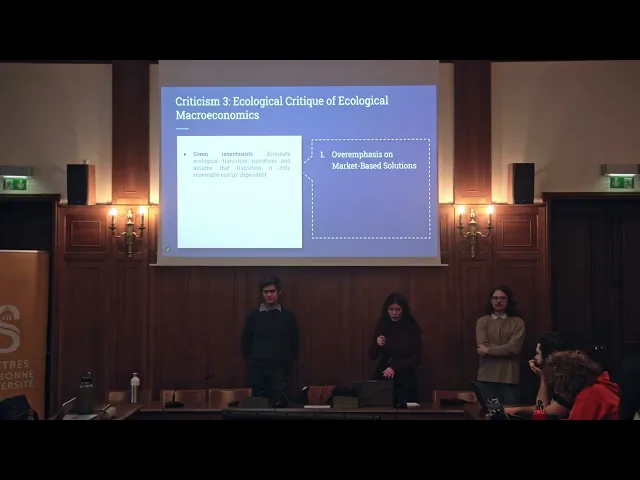
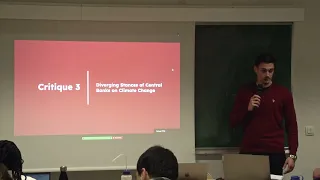
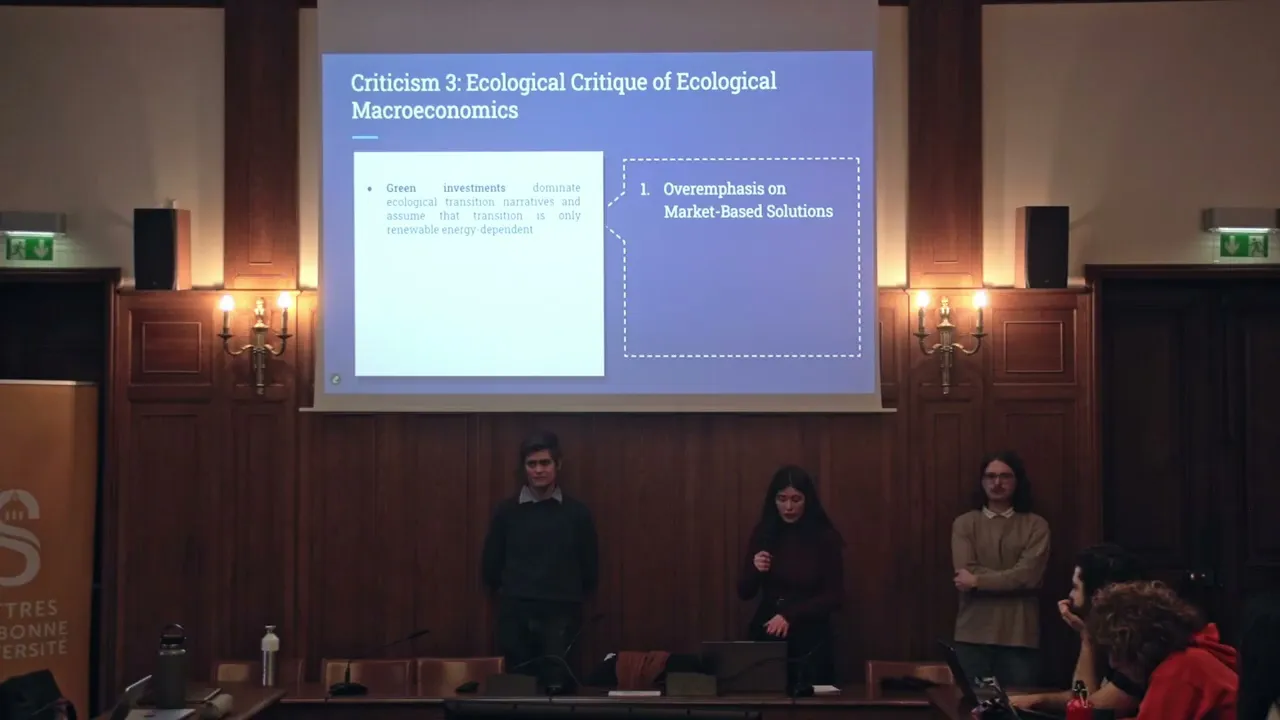
be different for small countries should they also or and should only or should only like big regions like the EU include these feedback effects for instance all right and the last CRI that can be made about this paper cing to us is more General to ecological microeconomics and specifically modelization within ecological microeconomics our argument here is based on zasan paper and has three main Dimensions the first one is the overemphasis on Market based Solutions the second one is the inadequate consideration of biophysical limits and the last one is the lack of exploration of uh degross
Pathways firstly um even though Market based tools can be useful to address ecological matters they are insufficient in most cases it seems that uh ecological transition can be achieved through a specific flow of Um investment shifting from brown to Green assets and the main challenges would would Justus only consist in finding the money and understanding cring out effects we find this very same idea as implied in the paper for instance when you highlight the main takeaway of equest that is the distinction between clean and dirty energy capital capital energy bundles and the idea that these
two can be substituted at a specific rate um Overall we overall the possibility of transitioning seems entirely based on renewable resources and the construction of this uh new energy system is made possible through the so-called um green Investments but ecological transition in fact also requires uh structural Technical and organizational changes for instance if we take the the example of uh occupancy rates um a good solution could be and a much Greener approach to it could be taxing vacant houses instead Of uh building new housing that would be solar powered for instance so the main idea
is that green energy Investments are not always needed in all situations and these alternative solution are hardly modelized today even in um ecological microeconomics secondly this Dynamic of assessing uh the ecological transition from an investment lens imposes specific Financial Logics on the biophysical Sphere in a way that is very similar to neoclassical focus on price and Market mechanisms even though the paper promotes the use of the energy return on investment to measure decreasing availability of energy resources such as your gas oil or um Co ecological microeconomics often fail to discuss the decline of other vital
resources such as water land cement phosphat or any other metals but we know that these resources may not be available to support um an Ecological transition and but we also know that these are at the heart of renewable energy Electric Mobility and ICT transitions one other issue is that even though the extraction of these vital um resources be strong social technical implication ations and have already caused massive and irreversible ecological damages in several producing countries they have often been shaded by this very same concept of uh green Investments lastly uh picturing the ecological transition as
a redirection of brown investment toward uh green assets make us forget that the concept of investment itself must be fundamentally questioned if we are to summarize the portfolio of invest M of a microeconomic system of an ecological microeconomic system for instance it would largely consist in um investment in capital flows directed to better nutrition Health uh education Or ecological resilience and as such the traditional function of investment framed around the increasing um labor productivity is very likely to dis minage in importance and many green invest M could even slow economic growth down so in short
sasman argued that many ecological microeconomic models do not still remain tied to a growth oriented framework and do not consider deoss as a viable pathway so for that reason we were Wondering uh to what extent do you see the alternative models as adaptable to scenarios where economic activity in high carbon sectors are intentionally reduced rather than just transition to uh green alternatives yeah so these are the question that we posed through the um presentation so here as a summary thank [Applause] you thank you thank you for this really Interesting [Music] discussion and that's uh still
very happy to to to do that in sban because thisio Scholastics really the place the place to do that with SM with thas akina so it's really consistent with a really beautiful place to to such a discussion so Lucas critic also to to maybe to put it in a similar slightly different ways so in 1976 Lucas proposed an econometric Criticism of the large scale neoclassical kesian synthesis econom macroeconometric models that were used in the in the the 40s the 50s Etc following the invention of economy tricks by Yan Tim Bergen where we fr the first
recipent Diary of the the Nobel Prize it was legitimate at this time to obain it so Lucas critique what's the point indeed Robert Lucas had really valid point to say That people do react to public policies that's right and even in the especially in the framework of of the ecological transition there is a whole debate about acceptability of environmental policies for example in France we had a really amazing citizen popular movement of the the Gile the yellow Vex the yellow suits of course it wasn't trigger by triggered by the carbon tax on on on Gas
for cars it was the result of Decades of austerity policies precarization feeling of increasing inequalities and abs of real democracy Etc but the trigger The Tipping Point was this carbon tax because of course the angel angle curve in microeconomics uh this share of expenses of poor households in energy is of course far higher than from rich people Proportionally of course and the elasticity of substitution is really low because even if you put the tax people poor people at the minimum wage will still need to buy gas to to to drive their cars and to to
to go to work you know and according to Lucas in the Lucas remark it triggered like lots of demonstration in Paris against President Mac Etc so indeed people do react to public policies and the issue with Lucas is not His criticism it was his answer because the answer was far worse than the problem the answer of luuk is to say as people indeed do react to public policy we will build a frame such a framework that people will not only react they will one except if it's a like really a surprise really unexpected surprise they
will and perfectly anticipate that the meaning of perfect For Sight perfect for Sight is not knowing the future is knowing the future except for stochastic shocks so we say that perfect for agents uh are right in stochastic average stochastic mean and so what Lu said is that we will build a framework where people always perfectly anticipate every changes in variables except surprises when there will be surprises public policy surprises they will immediately readapt Such that that one they will neutralize the effect of the policy and then they won't trust the government of the Central Bank
anymore that the famous controversy of rules or discretionary policies for the central Bankers rules against discretion by K Prescot and so I think Lucas made a big confusion still in the dsgs and still about rational expectations actually in my opinion the issue is not rational Expectations in lots of cases when you look at empirical surveys led by qualitative researchers a social social Economist Etc in lots of cases you know how holds they are right about their expectation about future inflation and so about the future decrease in their own purchasing power in their own real wages
can it be perfect for Sight the problem with those models and this paradig the new classical not NE but new Classical paradigma is to say if people correctly find the future value they will have the ability to change the economy to adapt to this value what does it mean for example households correctly expect the future inflation perfect for Sight but the other implication is that what will the households the workers will do they will bargain for better wages in order to protect their purchasing power expecting future inflation which will lead to inflation You know self
fulfilling prophecy Etc but nowadays for example the inflation following the the the the co lockdown then the Russian Ukrainian War then the The Profit driven inflation with with Judi clan we we published kind of technical not showing that the the half of the inflation in France as of 2022 was driven not by imported imported energy and food prices but by increases in margin rate and profit rates of companies even at a Higher level than the me level before lockdown so it wasn't even a catch up following Etc but people they uh they guess future inflation
will they be able have they been able to to negotiate for better wages to preserve their real wages and purchasing power the last years no the real wages decreased even if people were aware of this Inflation so the issue is not really about oh can people in the economy perfectly predict the future of the variables GDP inflation Etc it's the fact that whatever they have whatever they have the epistemic forecast capability or not it won't imply that they will be able to go to their BS and to say oh I expect future inflation of 3%
so I want you to increase my nominal wages wage by 3% no especially because the Philips curve have flattened because Unions have collapsed because there are lot of neoliberal job laws decreasing the barging power of workers Western workers are in competition with global health workers there is a fiscal environmental and social dumping International trah blah blah blah but actually we can answer to Lucas saying that the real point of Lia is to say that it's not about people perfectly reacting and neutralizing the Policy it's about structural changes because the is of the former models the
DFG the kind of synthesis between neoc classical canian models using institution there were like huge simultaneous systems of linear regressions if you want like you have a a whole system interconnected of linear regressions and you estimated the the parameters for example the the the propensity to consume or the propensity to save by doing an OLS a linear Regression on past data of SP time series The issue is that of course it's not because people reacted like that the last decade that if with a new public policy people won't change their behavior that was the point
of Lucas but actually the real problem of those big macroeconometric model where that I should really have Bor um wait when just so that you can really understand this can I remove the thank You I've taken note of the the question just one just so that you can understand the the the problem up be here actually actually I will give a full class on for2 students next year in EP on on empirical macroeconomics and time series so it will be yeah look at that for example you build a macroeconometric model with free L free Linear
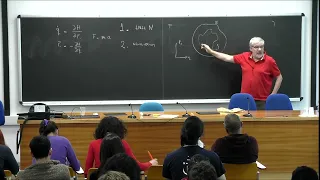
regression one linear regression for uh GDP growth GT one linear regression for Public Policy interest rate so the the Taylor rule for Central Bankers I and one OLS for the phelix curve so inflation depending on the past inflation and past growth rate fre system of free linear regressions okay actually what is the issue with that is that you cannot find coal identification you can you Cannot find the Cal mechanism here if you estimate all the beta so 0.9 0.2 Etc why because for example in G in GT GDP growth GDP growth at time T depends
not only on pass value for example pass interest rate about investment Etc but also from current inflation p t that's the fun fundamental issue why because if you want to if you rewrite this model in red form so you have an equation for p t here you have p T so in JT instead of having p t you write this the issue is that by writing this in PT in JT instead of PT you will have the error term of GT so Epsilon LT but also this your term of the inflation so what does it
mean is that you will have in your OS a combination of several error terms the famous Epsilon or UT you linear LS and so if there is a shock there is An impact on GT you won't know if it's if it's coming from the error term on growth for example a new technology Etc or from the shop inflation that will have an indirect impact through p in JT that's the issue when you buil systems of linears that's the issue and so you if you estimate the parameters you don't know what is coming from inflation or
GDP Etc that was the problem the parameters were in stable especially in Case of shocks or people changing their behaviors actually uh so you needed r you needed to say oh I will say that this coefficient is zero so that I have enough restriction to say this is it Channel but it was adoc it was about theory for example you can build a model to say oh the impact of a supply shock will be longlasting but the impact of a demon shock will last only on the short run it will allow you to do identification
but it relies on your Assumption but the microfounded Lucasian D SG it is the same I think in fact the assumptions on those models are far stronger than the restrictions that you you p on this because it means that agents will always perfectly react to every public policies so that they neutralize their effect in a par optimal way that's much more stronger and actually if your Matlab code doesn't is not even able to correctly simulate the optimal path of the representative Agent how households or people in the street would be able to run this program
in their head so Luc had a point not about having perfect fory and people expecting all public policies ET but about structural changes indeed parameters change so in a model we could have for example before the80s A Philip curve which is which is deep and after the 80s and the Financialization and the decrease in Union in worker Union Powers Etc flattened Philips Cur so indeed we need to integrate regime changes structural changes financialization change in capitalism you know that the concept of varieties of capitalism we need to integrate the structural changes but it is when
Lucas do that it is also about theory about just ideas it is adoc it is even more adoc than that so the idea would be that would be the The whole point of my class next year so sorry for for you you won't have the opportunity to hear that in the terrible English uh it will be to how to analyze time series in order to find those structural changes how to estimate a dynamic Philips curve okay before the80s it was like that there were big unions Etc noway it's like that how can we buy the
data find this and when once you have a empirically validated theory about what You are building the models then you put it in the model not saying okay it's adoc it's just assumption no that's empirical validated data analysis and this answer would be much more satisfying that Lucas actually uh I got admitted as econ super my research project was about an environmental Lucas critique to say that people would totally react to strong environmental policies Etc but we need to study this empirically not say that perfectly Rational and yellow vest were perfectly rational when they attacked
the the Palace of the El with President M inside with an helicopter in the garden in order for him to to get evacuated Etc I don't know if it's fit with Lucas so even in the new classical framework there have been attempt of answers like CL the clan research programs about empirical preferences behaviors Etc people like sent Etc prefer to to use perfect expectations and to you know to Neutralize all those things but he did he had a points it's why you also need for example social economics and sociology we need qualitative researches in order
to make sense of the change in the in the structural forms to confirm the theory and the and the quantitative data and then have a model which at least is able to represent the change the structural change in the economy but a really good point I mean That's a totally valid point at 76 but wow okay okay D yeah so [Music] um and actually if you lbm are microfounded dsgs and lbcs are not micr funding the representative agent is not micr funding even under government form you cannot aggregate the prefer in such a way that
really like really non-trivial mathematic generic um stuff there is a really good Paper by Alan Kirman 1992 on what is the representative agent he's a neoc classical guy really really real intelligence showing that it's not actually micro microfounded other things um damage function question two all of course course if we are looking at for example France and you are doing a model for France of course the ecological transition of France or local Andmental policies in France won't have a huge impact on the climate Dynamics over the century okay but when I'm talking about feedbacks I'm
not talking about maybe the impact of the transformation of the country on the rest of the world I'm talking about the action of the rest of the world on France because whatever do an eological transition or not it will still suffer from the environmental damages that the rest of the world are Creating so it is relevant even if it's a local sectorial policy for a small country because this country will suffer from the consequences and will had to to spend in adaptation policies etc etc um what feedback why biodiversity the dice of n is about
only about climate but when you look at the stock stock residence Center of course there are lots of other limitary planetary limits biodiversity according to the last ipbs report which Is the biodiversity equivalent of ipcc uh biodiversity collapse will maybe impact us even in a shorter time than climate collapse so I think it's important to take this into consideration also because lots of environmental damages are not correlated to carbon emission or even some environmental policies for climate emission reductions are and are have negative effects on other planetary boundaries so we need to take this into
Account there is big I like the page page of fund f and D on that are that have damage functions for example even about anthroponosis because you can totally Le zos like covid Ebola HIV Etc through the capitalist expansion of human activity in forest in virgin Forest where people never went before in 2017 so two years before covid there were by fredman not Freedman but Freedman at Al in nature a beautiful Ther thermic map of the world with the probability of emergence of onop Z the the biggest point where in China oh what surprise uh
the issue with with damage function is that where did I put that yeah just here no oh whatever is that you we we have no idea about their shape why because we don't have time series past data to estimate damage functions Because suchal collapse never happen in history so you can you cannot do ANS on something things that never happened so you you quoted Vol vol no just the three of us they make they make fun of another thought experiment some people B at Al say that if we suppose that climate is erodic then we
can infer the impact of global warming through the mirror the symmetry of global cooling the the ice ages of the the Last not centuries millennials yeah yeah the Pas time of course climate is not erodic and if you do that you will see that actually the GDP of FR with Skyrock when we are under 10 km of ice so of course damage functions it's not a rigorous thing and we shouldn't try to do reg it's not possible the most important thing is to say we need to have a range of value which is consistent with
the risk because saying that the in in the face of State ofthe Art Natural Sciences research saying that the collapse of the environment will only decrease the GDP by 5% that's not realistic so it's not about building realistic empirically grounded ones is to offer us a range of entty in order to understand in terms of narratives of political narratives what is important uh to do actually you can do empirically grounded damage functions for specific event for example for floodings you have places where there are floodings and you Do a ban archical model so that you
can generalize The observed fluing places to a more aggregated in terms of probability and last question yeah CR criticism against ecological macroeconomics uh it's funny because I give the class where Roman says that green investment is still neol liberal Finance Etc so so I agree we with all obviously but I think that I think that's Criticisms that are not valid for those kind of models because for example you take Euro green you take Euro green uh these model have been developed especially to test nonmarket based Market oriented public policies so it's really focus on that
and the point of this model for example the Jes model the Goodwin key model with g z I'm almost finishing the first generalization of a multis sectorial Goodwin King model once you Have a multi sectorial for example Gooding model you can add whatever you want on it you can test nonmarket public policies it's up to the modeler the goal is to to build an open toolbox and then if people want to to integrate gender inequality they will integrate gender inequalities if people want to test for deow or po grow strategy they will be able to
do that so it it will be up to the modelers that want to test the specific Policies uh there are substitutions substitution exist of course not with an elasticity of one but you can substitute that an issue you can you can still have the same level of growth with something and less of something of course the C to Glass Assumption of perfect elasticity of sub is totally you cannot build a plane from wood or from L from Pure L label like Incorporated work ofk but um that's where that's what We we have to do also
empirical estimation and about monetary valuation and other resources it's why I'm talking about integrating other environmental Dimensions because you know georgean the famous physic physicist and Economist who who who talk L about the role of energy even himself in the 70s he denounced what he talk what he he called the energy Dogma about other ecologists saying that the isue it's cool to integrate energy issues but it's not Only about energy it's about resources material and physical resources biomass physical resources rare earth metals Etc and we need to take this into consideration so I totally agree
with you it's why in the defined model of of Yos you have stock for consistent framework for this and last last stuff of course monetary valuation of Nature and ecosystem can be an open door for commodification capitalization and destruction but you need to have Some ristics about what it will require in terms of of load for society to change or to change the structure of the economy and in this case for example so I I won't go into the social Ware but when you have for example the Exon bz thinking catastrophe of oil in the
ocean you might want and it was a great debate with K economists at this time you might want to have a monetary value on these damages at least to have an idea of how bad you want to Punish the company who got responsible for that if there is no value you cannot do it so you just need to be careful about what Open Door it will bring but you also need sometimes to to put value on things when capitalism screw up thank you [Applause] okay thank you for a presentation I have just a question it's
about math uh when I read the L of model when you present I don't see uh the function l v v l and I Just found one CH is your Mentor he presented and I want to you ask your opinion about that so it's it's a real academic impact a few questions yeah let's thank you Mentor you're talking about G yeah yeah thank you for the talk and also for the discussion um I have a question that regards more this case for pluralism that you make in the end which I really agree with um and
I guess from this paper and also from this Approach to do like a a public call criticizing the commission there's like an interesting tension that emerges because obviously you're aware of the damage that these uh mainstream models cause if they inform policies but then at the same time you kind of have to write the paper appraising them uh in order to like get like talk to these people about it that use these models um so I guess I want to ask what danger do you see in this approach and maybe where Are some of the
trade-offs in moving closer to the mainstream in order to change the mainstream is there a danger of getting co-opted in some ways I mean I guess uh the original keynesians also weren't too happy to see what happened to the new keynesianism when yeah it got absorbed into the mainstream so yeah what where do you see also some strategies on how you can do this incremental approaches while also building like a bit of a counter block That helps to to to get absorbed into the mainstream in a damaging way thank you um during our modeling course
with uh antoan godan he mentioned that the biggest challenge for sfc model models is uh to gain the multisectoral granular granularity of uh cge models and you also mentioned the combination of sfc models and input outputs models so um yeah is do you think that this is basically the way forward to meet this challenge or are there maybe other um Yeah interesting ways to circumvent the problem and uh yeah thank you okay where okay hi my name is nikil rampa I'm from India and my question is less towards modeling but more towards the political accountability
of Institutions uh whose models go wrong and they give bad prescription to the governments and they face this consequence so I wanted to ask like in Italy we studied that most of The government debt that has that that exist today is because the interest rates were charged in the 1980s because monetarism was on steroids same in France and you abandoned the policy so should there should be like should there be a retrospective action against those institutions to pay for the interest rates that they wrongly recommended should the government debt be canceled up to some extent
so that they are not responsible for listening to these bad Economists thank you okay please thank you yeah I have already M so so first question about the Z Model so something which is quite interesting it's there are lots of avenues of research thanks to interdisciplinarity why because in physics in biology in demographics Etc even in philosophy and sociology Etc As point of M Etc people have understood emergence people have understood nonlinearities endogenous fluctuation emergence complexity Etc and so lots of people there are lots of models or modeling tools or even mathematical mathematical fields that
we can use that we can borrow from those fields and that we can use in the in for a better economic modeling uh it is what uh Goodwin Richard Goodwin did in the 60s with a in fact he took a Lota model what is a Lota model that's a a system of two differential equations that's a PR predatory model imagine you have rabbits an equation for the growth change of rabbits and an equation differential equation for the growth change of of foxes thank you thank you fox is there is no actually there is one equilibrium
where the growth rates never change but history must begin at this Point otherwise if you are not at this point there will be what we called a limit cycle limit ccle it means that the the that's the values of your Jacobian matrice as a complex complex part and thus what what does it mean that imagine you have foxes and you have rabbits foxes will eat the rabbits the population of rabbits will collapse less rabbits so less foxes so rabbits will increase so foxes will be able to eat Rabbits and there will be more RAB more
foxes okay you get it actually you can do the same for unemployment rate and weight share in the f space you good win is a two two two differential equation system for example if there is less unemployment people will be able to go to see their bus to ask for better wages because the bus won't be able to say oh you leave there are 10 people in the street waiting for your job so the Weight share will increase Philips curve class struggle Etc it will decrease the profit share of capitalist that will lower than investment
or delay the investment which will decrease the growth of GDP and create a recession more unemployment less less ability to B for and reach the the reservation Army of Marx basically that this and you don't have an equilibrium here you have history you have a dynamic historical Conflict about the distribution of added value that's a class trial model and actually it is quite good to reproduce the time series of the 60s 70s 80s and Ken Steve Keen added a third equation about financial asset accumulation financial debt in order to have also crisis e financial crisis
with mean Etc and actually to answer the question it will produce really really well the time series until the neoliberal revolution of the 80s why because after for Unemployment and private debt it still work but for the weight share prediction just explode because the Philips curve collapsed and neoliberalism won and so that's an example of regime change that you need then to adapt in parameters Etc alcas but for me that's the kind of model that I prefer because even in pesan you have equa I don't want equa I don't believe inria in terms of empirical
reality if we if we Quote a bit epy know Vienna Circle carap etc those people said we need to build categories of f from observables we observe Dynamics nonlinear Dynamics we try to build a model that in itself before even flowing short as Dynamics in terms of political impact and so with G I am finishing the multi sectorial generalization so that everyone on GitHub could would be able to download it and do whatever he or she want with This but in terms of political impact when Gil was a chief Eon at the afd uh um
he you know he brought those technical tools for lots of governments of the global South for Vietnam for lots of countries of mreb lots of countries in South America in South Africa Etc and the strategy was not to do you know neocolonialism and white savior stuff bringing the same recite for everyone Etc uh when he he was doing that he he Was going to the country spend several weeks meet with all the economist and statisticians that with qualitative researchers Anthropologist technologist sociologist they were going in the fields in the campaigns Etc to see what were
the behaviors of the farmers because the F the farmer behaviors in Kenya are not the same that in big Latif fundas in artina you know in South America Etc and so it was I think a really interesting mix of good modeling Always qualitatively adapted to the local population with the local population to avoid you know the World Bank wi Savor things that we we will throw the same recite everywhere and so I think it's a really interesting thing of mixed research strategy both quantitative and qualitative and we need the qualitative aspect also to understand the
regim changes and their cause uh and just just um a small word on This and also the the added value of G is that Beyond being such amazing guy he's also a Jesuit priest so for lots of global first countries it even had like a symbolic embodiment so it was kind of interesting Rec but a few words for people who who maybe I didn't heard the question but who say maybe you you might think okay but it's still math and reality is not about math and we definitely need Sociology institutionalism Etc I think some people
are thinking that right now no just a bit no okay but maybe to still give an answer as you might have seen the issue are not math the issue are bad math actually one the the most brilliant aox modelers are all mathematicians G who who who published model he has published more General equum pap Theory paper than neoc classical Economist so he even understand better Their own the than and to to say that it's really okay it's really necessary in combination with these models to do qualitative research sociological research focus group uh field studies interviews
ethnographic studies it's really necessary the issue with NE classical gu it's it's it's not about math versus qualitative approach it's about combin the worst part of both we say that we are doing social sciences because we put everything Inside utility function and IND deference cures so we don't need to read the literature in the field we don't need to read sociology anthropology psychology before doing a paper on this but we are also Engineers because we are using Lan and and dynamic programming which is also not really well done so it's not the conflict between some
people say yeah atodo Areo because they don't like math or someo say I'm erod because I don't believe in Math don't really find this really you know relevant I either you go really good math either you you do really good institutionalist and sociological qualitative research if you are if you have a good Collective team you can combine both but the issue is not doing the worst part of both and saying I'm both a social scientist and an engineer and if you criticize me it's not because of the Assumption or qualitative work it's just because you
don't understand My equations sorry I do I understand your equations so we can talk you know that kind of thing that's that's that's really the strategy in terms of political impact you have actually of course we had much more work with leftwing governments because there is more political demand especially when they got 18 and I think it's really in terms of political economy really important because in lots of countries and even in Greece Etc when you have a leftwing government who get elected there is capital flights there is a spread attack spread attack is an
attack on the interest rate on the public debt so Greece for example from 4% to 30% in in in a few weeks you have Conservatory reactionary cont Revolution from the media when they are owned by a billionaires and private interest I mean winning an election it's quite easy the real deal is how you will be stable after the election and it's here where You might want to have researchers that are able to I have a model for a country let's compute how to preserve your exent R how to renegotiate your public debt how to do
your reforms without having Financial imbalances and collapse Etc and to do the eological transition with a stable macroeconomic and financial structure that's really important also in terms of of political pressure against reactionary revolutions that's really important but my my my bet Is that even in the even in not the radical leftwing countries or Global countries are the most exposed you know to climate collapse Etc and dollar Le B public debt Etc my bet is that in some years in some decades even conservatory and Global North governments will require and demon that because with more and
more pressures people will will will help them accountable and one day if mainstream Economist or public polic makers don't find solution they be they will might be hang in public place you know so maybe we will have finally a job all of us it would be a a great things for your question thank you on on political accountability uh it's quite funny because do you know Mar carne Mar carne he was the former Governor of the English Central Bank the me of England And in 2013 he did a quite Visionary speech first time he he
invited all the the financial guys from the city in London H said the conference saying uh if you don't do the eological transition we be up for few reasons if we don't do it everything will burn and we cannot win money or Ure a world of if we do the ecology cont we need to do it but it will also do a lot of trending lot of companies will no longer be able to produce lot of Financial assets who we for financial assets who won't have any values and the first risk which is interesting he
talked even about um judicial risk to say that if we don't do nothing maybe our children or grandchildren in a few decades will attack us for ecocide or like environmental genocide trials against us because we destroyed the Earth and when a governor of Central Bank tell this to tell this to financial it was quite an thing to to See that the first one to in the economic world to to get focused on climate change actually was finance and in finance was Insurance about political accountability of Institutions I mean it's important why I'm I'm quoting the
papers of kidand Prescot because you might know that for lots of countries public debt is just a a recent convention in the 40s 50s 60s there was the concept the two concept of fiscal dominance and financial repression which Allow states to function without having to borrow at least to borrow their own money to foreign financial markets Financial reparation was for states to say to the banks or all the savings that people that households have on your bank account you will need to lend it to me so that I can rebuild the country after World War
II and if it's not enough I can do fiscal dominance it means that I can go to my central bank which was not already independent not independent yet And monetize some debt without having to pay him back off because it was the same bank sheet if it triggered inflation you you could reduce the aggregate quantity of money by taxation in France it was called the C Tre by m BL and we we we built France and Social Security and nuclear power plant Etc thanks to that and when you read the minutes of the the political
me it wasn't that public debt wasn't a constraint it wasn't Even analytical concept it was it was not even a third category public debt no State didn't had a financial uh pressure the only pressure constraint were real resources do we have enough steel do we have enough iron do we have enough time do we have enough workers and skill workers and unskill workers where money public money was just a veil for those fre resources and it's important to talk about papers because those academic Papers where the scientific legitimation of the independence of central banks of
neol neoliberal revolutions Etc kid Prescot they said oh the Central Bank shouldn't fund the state and belong to the state because the state would for example just before an election print a lot of money to win the election and then it will inflation so we need to have an independent C Central Bank only about rules not discretionary policies so that agents Will be will trust it instead of having you know that kind of stuff so there are intellectual responsibilities about political responsibilities it's very interesting to to do a genealogy an history of the specific political
decisions that created this framework of course we always need to think about systems system of pow Etc you know the even in the preface of the first book of of D capital of Marx he Marx wrote a small part saying oh I know I will be criticized by people by utopic utopian socialist because I don't criticize capitalist and and land owners because those people are not bad they are just the fruit of their social historical determinism as a group but it's also important to see what are the in history The Tipping points where a new
paradigm political Paradigm happen especially when it has been legitimized by um by academic papers and people about celling public debts quite Complex actually the ECB could do it because the ECB according to the the bis the bank for international settlement which is Central Bank of central banks in Basel in Switzerland according to it a central bank cannot go bankrupt in its own currency why because it is printing its own currency the F fiduciary form not the the script nominal form but we could consider that zcb could just buy public debt and cancel it it has
the uh it has the the authority to do it and The possibility the accounting possibility to do it according to the European treaty the article 123 of the treaty on the functioning of the European Union the Central Bank CCB cannot directly Finance or lend to the States but it can first Finance public DS that's the second part of this article it can Finance so Republic Banks like B France in France or Depot and it can there is no legal reason that The Central Bank wouldn't be able to canel public debts it could for example the
co debt why paying back the public debt to our own Central Bank when we are the owners of the central bank that doesn't make any sense and it's totally totally possible about Deb canellation you might want to look at the Alexander saak Doctrine who who was a Russian lawyer of the 20s who developed an international law Doctrine saying That when a country have suffered a dictator and the dictator have accumulate public debts against the interest of the people International lenders should be forced to to canel it and it has a and the club of R
and Club of no not of Club of Paris and Club of London in fact when you really read Alexander sax it was not about dictatorship it was just about public depth against the interest of the population while the lenders were aware Of this why not considering lots of public depths of global first countries about you know physical and natural resource expropriation and extraction from to towards the global North of or the or the environmental public debt why not cons it considering that at the time where it was borrowed people lenders were already aware that it
was against the interest of the population can't think about things like that and the the last question about not the last the Penultimate question on political accountability yeah it might be really tempting you know to oh I'm inviting to do seminars in the ECB they propose me a job oh and of course like when you like when you come from a really poor household in France and you have the the chance for example to to get enrolled in the grand Z which are parall to universities um really quickly there are like system effects that are
trying to assimilate you in the new layers of Powers by inviting you to dinners to Great dinners in Paris you know to make meeting with people so it's first about your ethical skeleton uh what what is about strategies and diplomacy what is about compromis that's a personal balance to to find it's why also you should maybe always do it in a community so that you can have feedback and strategical feedback from your peers I think it's important also not to not to get really Assimilated and um we need to find open minded people because they
are even more and more EPO alumni are hired in some Banks or government Administration so but like like the civil servants the high civil servants and academics of the 50s the 60s they might be socially conservative Etc but they they wouldn't believe in a full free market austerity policies where legitimate stage of centuries and centuries of legitimacy Would have to borrow from foreign financial markets to fund hospitals and schools they wouldn't accept that then step by step those population change changed in those institutions and no we have no liberal maybe it will change again so
it's a long time and we need of course like strong public oppositions also inside the system people that say oh if you in difficulties we also have alternative tools Etc in term of strategy if the Question is is there a reason that those tools might also serve to legitimize austerity policies there is always a risk because of course when you these institutions you simulate a model you have the results you write the the policy brief you head of of um of Bureau of head of department will ask you oh no no before sending to the
commissioner of the ministry of Minister of Economics you should change the results it's well know in terms of Sociology of state and Public action so yeah we need to we need to be aware it's a long time process and we need to to to to act in a ethical and strategical consistent way and about the alternative so I really believe in good win K model the GS one actually in fact is um Supply is turned into a demon driven you could have both a demon R Supply with a B Mar investment function with where there
is both U capacity utilization rate and an investment share profit share or profit rate so I think We we should really look at also other disciplines like physics and biology statistical physics Etc to see what are the out of equilibrium nonlinear models that can be used to to represent this for example there is a reaction diffusion model the Turing patterns used a lot in biology in order to explain you know how with our dnas ourselves secret substances that allow to for example make growth to grow teeth or skin but while stopping when it need to
stop why Do we have Thief like that and not just going to Infinity is through really basic two reaction two two two properties diffusion the diffusion of the teeth of the structure and reaction when there will be a reaction a charge capacity to stop the the development of the the teeth you have you have two you have that's aasan equation you have diffusion of substance reaction of substance and you can for example you can do a beautiful model of ecological And geographical metabolism you metabolism with such equation so I really encourage you Al you are
in par there is a huge intellectual life even all the universities that are part of iog out of Economics just try to go in English seminars about you know statistical physics apply to complex system or so even for people in philosophy sociology cognitive scienes it's really um an opportunity in Paris to to to take Advantage of this interdisciplinary intellectual life you still have a few month so after February when you will have anded your your exam so I really encourage you to to take this this opportunity thank you