hey there welcome to this lesson on the crisscross rule I am going to ask you to draw the Lewis structure for magnesium chloride and then maybe take a guess at some ways that you could kind of cheat the system and get to the chemical formula way quicker oxidation state in chemistry is just a fancy name for charge the way to change the oxidation state is when an atom is going to be converted into an ion when it either gains or loses electrons so the literal charge whether it's plus or minus is going to tell you
if that atom has lost electrons or if it has gained electrons remember you're kicking negatives out of your life so a positive charge indicates a loss of negative electrons and a negative charge indicates taking on more negative electrons and then um if we look at the number the number is going to communicate the the literal quantity of electrons that were either lost or gained so in the case of uh calcium plus two that tells us that calcium gave away two electrons and I know that it got rid of those electrons because the charge was positive
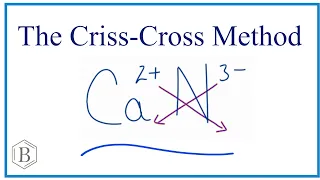
and then bromine with a negative one charge has gained one negative electron so if you already know how many electrons are going to be exchanged then you don't have to draw a very crazy extensive Lewis structure to get to the chemical formula remember a chemical formula is something like H2O it indicates the elements in the compound and how many that there are so if we don't have to draw a Lewis structure and we can just do this with charges how is that exactly going to work it's actually pretty easy you can just crisscross the charges
to figure out how what the quantity is of each element in your compound and this works for binary compounds meaning compounds made of two things remember all ionic compounds in the solid state are called salts they make crystal lattices that kind of look like this three-dimensional checkerboard and if you were to take the three-dimensional checkerboard and reduce the number of let's say sodium and chlorine ions down to the smallest unit you would figure out the ratio of sodiums to chlorines in the crystal lattice and that's kind of what we're working with with the subscripts when
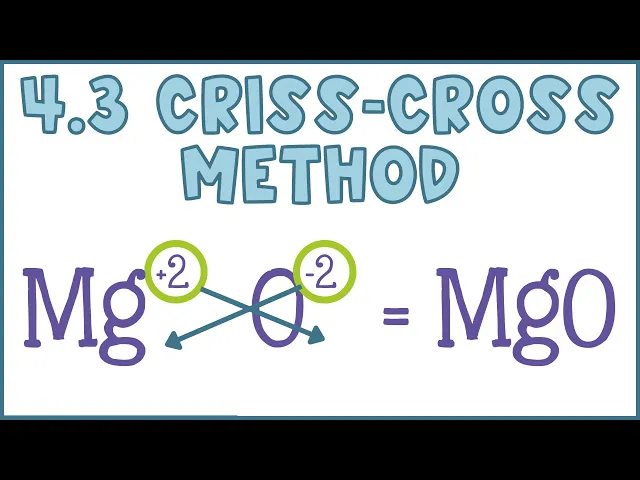
we crisscross if we take those subscripts and reduce them as small as they can get then we are going to find out the ratio or the smallest unit of that crystal lattice let's take a look at magnesium and oxygen from the periodic table you should know that magnesium is always going to take on a plus two charge and that is because magnesium is a member of group two magnesium has two valence electrons and is going to be looking to get rid of those two valence electrons in order to drop down to the lower principal energy
level and instead have the exact electron configuration as Neon oxygen is always going to take on a minus 2 charge for the same reason if it gains two more electrons in addition to the six that it already has it will look like Neon so in this case we would have magnesium give two electrons over to oxygen it would put one electron here and the other would go there now in this case we would have one magnesium giving two electrons to oxygen so now oxygen would total eight electrons six of its original and two that it
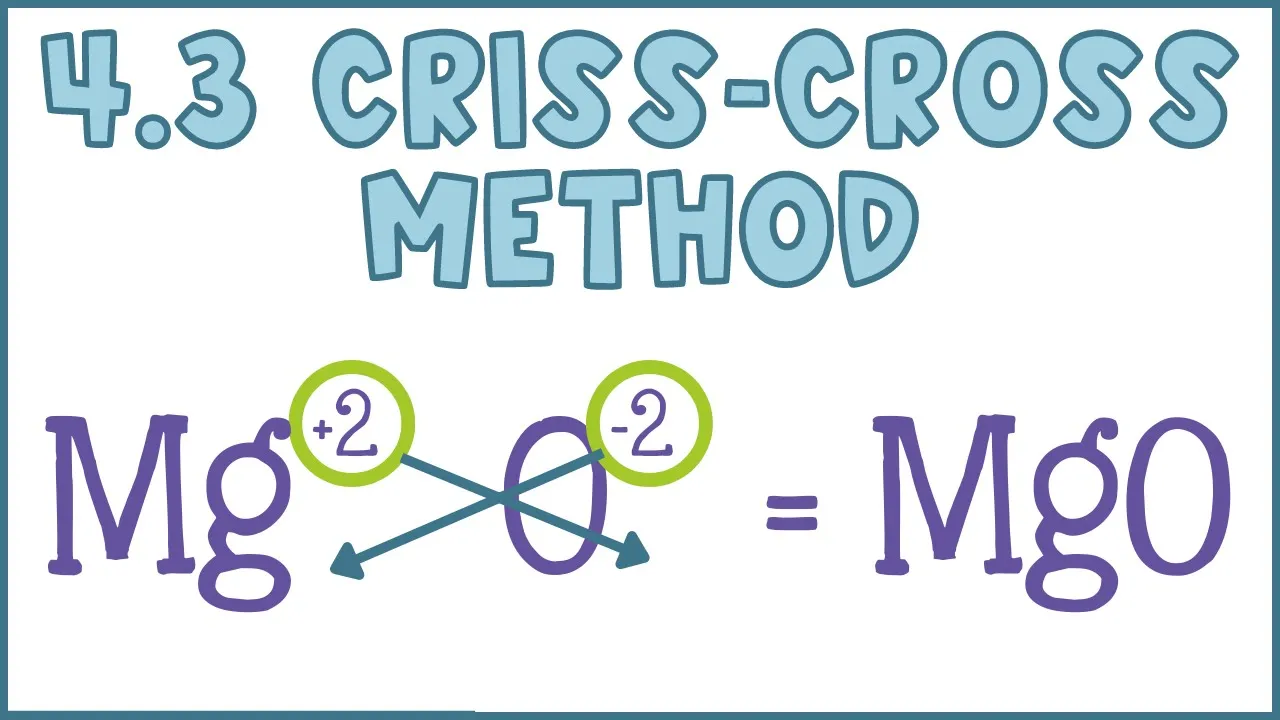
gained from the magnesium in this case we would have m g o as our chemical formula but if we tried the crisscross rule um we would have mg plus two and O minus two and this is how the crisscross rule actually works um you would simply just take this 2 from over here just the two only the two not the plus just the two and drag it over here and then this 2 the minus two you would take this two just the two only the two not the minus just the two and bring it over
here and you would get m g two o two and this is not the correct chemical formula because truthfully we only needed one magnesium to bond with one oxygen because magnesium gave both electrons to the same oxygen so in this case we would take our subscripts and reduce them to MGO and then that is going to give us this correct answer right here this is true for all binary ionic compounds every time you have a binary ionic compound you can use this crisscross Rule and reduce any subscripts that you get to find out what their
chemical formula would be if they were bonded let's try a few more let's say for instance I was asked to bond um let's see lithium and oxygen lithium is a member of group one so it has one valence electron meaning it's always going to try to get rid of that one valence electron leaving lithium with a plus one charge all the time oxygen is a minus two because if it gains two electrons it'll go from six valence electrons to eight valence electrons and then it'll be happy it'll look like Neon so what I can do
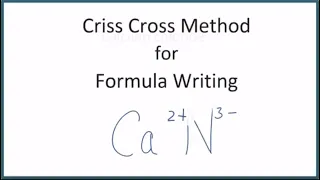
is take this one just the one only the one not the plus just the one and bring it over here and I can take this 2 on the oxygen and take just the two only the two not the minus just the two and bring it over here this would give me l i two o this is exactly the chemical formula you would get if you drew the Lewis structures and started exchanging electrons it is really that simple let's look at um aluminum bonding with nitrogen because this one's very interesting aluminum will always take on a
plus three charge and nitrogen will always take on a minus three charge if we were to crisscross these we would take the 3 from the aluminum and put it on the nitrogen we would take the 3 from the nitrogen and put it on the aluminum and my chemical formula would be al3 N3 and this does not show me that um the electrons had moved properly it's not telling me the smallest unit of that crystal lattice so what I'm going to do is reduce this to a l n for every one aluminum I will need to
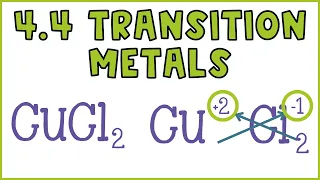
bond with one nitrogen to get my chemical formula one let's look at calcium bonding to fluorine calcium is a member of group two so it has two valence electrons which is going to try to give away meaning it will take on a charge of plus two fluorine has seven valence electrons and only needs one more to get eight and when she gains that one electron she will have a charge of minus one if I take just the two not the plus just the two only the two and bring it over here behind the fluorine and
then I take this one and do the same cross over the fluorine and take it to the calcium I would get c a F2 now I always tell my students that yes you can put the one right behind the calcium if it makes you feel better this is what I call the training wheels um some of us like to see the whole process we like to see the one um and then maybe we'll go in and write it like a chemist c-a-f-2 you like to just have it there so that you know that you've done
it properly that is okay even though this technically is not how a chemist would write the formula it is not an incorrect answer um it's just that just like in math when you have like you know two X Plus One X you can also just write that as 2x plus X the one is kind of optional it's the same thing here this one is kind of like this one where it's optional it is not incorrect to write it but it's not proper if that makes sense so if you need the training wheels for some time
I think that's okay um but try to step up and be the chemist that I know that you are and ditch that one when you feel comfortable if you have any other questions on uh crisscrossing please leave them in the comment section below the video I'd be happy to help subscribe so you don't miss the next lesson and I'll see you there bye