hey there welcome to this lesson on transition metals today's question of the day is what do you already know about transition metals transition metals can be found in groups 3 through 12 on the periodic table and what's special about them is that they have multiple oxidation states which remember just means charges now what's weird about the transition metals and how they act is that they kind of choose how many electrons they are going to give away when they bond they're metal so they always give away electrons um and this is because they have the ability
to rearrange or reorganize their interior electrons so that they can kind of adjust how many are in the valence and that is where the D shift comes from in our periodic table copper is always a good example of the transition metals rearranging because copper can take on a plus one charge but it could also take on a plus two charge so it'll rearrange its electron so it has just one valence electron or it rearranges so it has just two valence electrons and this is kind of determined based on circumstance who copper is able to bond
with and what's going on there are huge differences between copper with a plus one charge and copper with a plus two charge so you can see uh on the left side we have copper with a plus one charge both of our ones were crisscrossed because chlorine is always a minus one and we get copper one chloride this Roman numeral here indicates the charge on the copper so this copper one is telling you that copper is um it has one valence electron and it's giving just one valence electron to the chlorine this is going to be
a white solid so visually it looks different and this melting point is 426 degrees Celsius on the other hand when we have copper with a plus two charge you're going to need two chlorines to satisfy the copper to give away its electrons so um the mass is going to be much heavier it's going to be named copper II chloride and again the two is going to indicate the charge on the copper this is a blue solid so it looks entirely different from copper one chloride and the melting point is much higher at 498 degrees Celsius
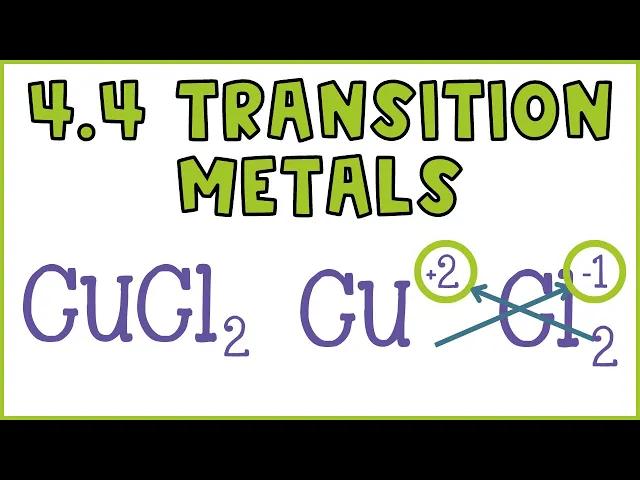
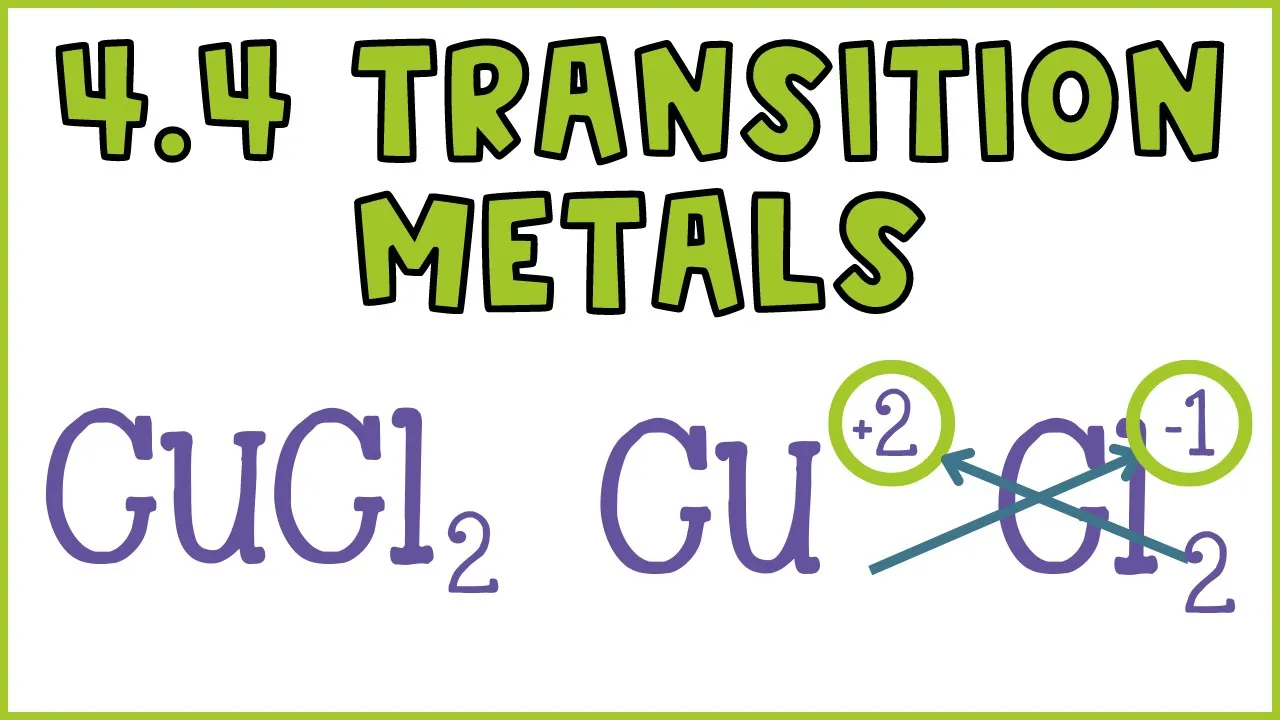
so there's a few ways that we can figure out the specific charge on a transition metal ion and first up is literally read the charge it'll say CU plus one CU plus two it'll indicate telling you hey this is the charge of the ion secondly we can look at the full name of the chemical and the Roman numeral is going to indicate the Metal's charge so in this case we have copper two chloride saying that copper started with a plus two over here and it crisscrossed down to the chlorine and the chlorine has a minus
one which crisscrosses over here to the copper and in this case you would wind up with cu cl2 if you have the full chemical formula like cucl2 you can uncriss-cross to figure out what the charges were so this two came from up here CU plus two and there's an imaginary one right here that had come from the chlorine it's important to see if your um charges may have been reduced when they got turned into quantities so it's important to cross-reference to the periodic table to make sure that your non-metal has the correct charge it happens
a lot with oxygen you could have copper plus two and oxygen they would both have twos and would have been reduced but oxygen won't be a minus one so definitely make sure to look out for that then finally who cares what difference does it really make well the charge is kind of a huge deal we've already discussed how the different charges on copper can give copper bonded to chlorine different properties and here are three examples of chromium chromium plus two is a royal blue color chromium plus three is a nice bright forest green color and
then chromium plus six is this like mustardy gold color and each of these has different properties but alongside that a lot of the time with Metals the property is toxicity you may have heard of heavy metals or heavy metal poisoning and it's important that we take a look at specifically What ions we're working with because our bodies are going to handle them differently some metals are way more toxic than others and sometimes different versions of the same metal can be more toxic than others for instance your body needs chromium plus three but chromium plus six
is toxic for your body so it's important um not just in chemistry terms but it's also important to how we live our real lives so when it comes to the transition metals you should be able to figure out what its charge is either by reading just like chromium plus six and knowing that that means that it is given away six valence electrons um you can use the name and the Roman numerals you should know the Roman numerals one through ten but I don't really think you would need higher than seven but still it's good to
know them up to ten and then the ability to uncrisscross to decipher what the transition metals original charge was let's figure out what the charge of this iron is looking at the um subscripts we can uncrisscross them to figure out what the original charges were so this two had belonged to the oxygen and it originally was a minus two and I know that this is minus because we always write the thing that's positive first and the minus comes second and then this three had to have belonged to the iron at plus three meaning that we
were working with iron with a plus three charge now let's look at Cobalt bondage to sulfur since there are no subscripts behind the Cobalt or the sulfur I'm going to assume that and I'm going to correctly assume that each one of them is a one charge so Cobalt being the first thing is going to be positive one and sulfur being the second thing is going to be negative one I would love for that to be the answer but I know that it's not um but you before you know you're going to check the periodic table
on all of these things to make sure that the charges you come up with are correct sulfur is a member of group 16 and that means it has six valence electrons uh if sulfur had gained just one valence electron then it would be uh it would have seven in total and that is not going to satisfy its valence it has to have eight in total so uh sulfur with a minus one charge is not possible meaning that if this is not possible it means that the subscripts had to have been reduced on the crisscross so
I know that sulfur really would like to have a minus two charge and I know that because it's two jumps from argon on the periodic table if it gains two electrons then it would have eight meaning that Cobalt in this case would have had to have had plus two um because the twos the when they reduce when they crisscross and reduce they have to be equally reduced it's just like math what you do the one you have to do to the other so if going from negative one to negative two is doubling then going from
plus one to plus two I would also have to be doubling so in this case I would be working with Cobalt plus two as the charge on my Cobalt and that is the two um primary examples it's either one that you have to crisscross uh I'm sorry one that you crisscross and you don't have to reduce or it's the one that got crisscrossed and reduced and you'd have to un reduce it I'm sure there's a math term for that um if you have any questions on this please leave them in the comment section below the
video make sure to subscribe so you don't miss the next lesson and I'll see you there bye