hi welcome to the first lesson in unit 4 which is chemical bonding we are going to begin with ionic bonding move into covalent bonding and finish off with one lesson on metallic bonding today's question of the day is what do you already know about bonding I'm sure you know more than you think you do and it's important to write down the things that you already know and maybe find some things that you thought you knew but not just perfectly and iron those things out I have alluded to this throughout my videos and teachings and that
is that all atoms want to have a full valence shell so in order to do this sometimes they're going to go out and gain electrons but other atoms will have to lose electrons in order for that to happen electrons cannot just be flying through the air in in Finn's air they have to come from one atom or another atoms are going to kind of trade their electrons like Pokemon cards until everyone has a full valence shell most atoms are looking to have eight valence electrons in order to have a full valence shell and in that
case they'll look like the noble gases this is why the noble gases don't react it's because they are naturally born with a full valence shell so they're not looking to bond but everyone else on the periodic table is going to bond with other atoms in order to get those eight valence electrons there are a few atoms that are too small for eight valence electrons so instead they're going to look to have just two valence electrons which in that case would make them look like helium um hydrogen sometimes will ditch all of the electrons altogether but
it can gain just one to look like helium and then lithium and beryllium are our primary elements that follow what we call the duet rule we are going to look at sodium as an example of what metals do in order to get their eight valence electrons so here we have sodium with 11 protons 12 neutrons 11 total electrons three principal energy levels that last electron is in the third principal energy level if it were to ditch this 11th electron and only have 10 then it's new valence shell which would be level two would have eight
valence electrons and then it would look like neon so sodium is going to go out on a mission to try to get rid of this electron so it looks like Neon this right here is a diagram of a sodium atom I know it's an atom because it has the same number of protons and electrons but if sodium were to lose that last valence electron give it to some other atom then um it would become a plus one ion and you can see that it has shrunken it shrinks when it loses that last electron because the
new valence shell is level two no longer level three metals lose their electrons when bonding they lose their valence electrons and when that happens they will become a positive ion which is called a cation I know it looks like occasion but it's pronounced cation and there is literally a plus sign in the name cation to help you remember that cations are positive ions now an ion is just an atom with a charge it has either gained or lost electrons um to to get a charge but protons do not move protons do not move one more
time protons do not move so the only way that sodium can become an ion is to gain or lose electrons and in this case it is going to lose electrons and become a positive ion now I know that positive and losing in your brain probably don't go together but the way I like to think about it is um let's imagine that you have a friend who's not really being a good friend they're a negative person they bring negativity into your life when you decide not to be friends with that person anymore and you kick a
negative person out of your life your life is going to become more positive and that's what's happening here because remember electrons are negative you lose a negative and you become positive cations are smaller than the atoms that they came from and that is because they are going to not only lose a bunch of repulsive forces because they're down one electron but also they are going to lose an entire principal energy level so if we go back here um this sodium has lost an entire layer of electrons so it went from being this big to this
tiny so this is true for all positive ions when they lose electrons and empty out a valence shell the positive ion is going to be smaller than the atom from which it came my high school chemistry teacher gave me this silly line to help me remember and still years and years later I use it to help me um and that is melps helps and the acronym um doesn't make a lot of sense but in the little phrase melps helps it Rhymes it makes sense so it is Metals electrons lose positive smaller so metal atoms lose
their electrons become positive ions with a smaller radius we sometimes call that the ionic radius the ionic radius for a cation is smaller than its atomic radius we're going to take a look at chlorine as an example for non-metals and how they try to get their eight valence electrons so here we're looking at chlorine and chlorine has seven valence electrons and this means that it has to gain one more to have the full valence shell and to have eight valence electrons so right here we have a chlorine atom and I know it's an atom because
I have the same number of protons and electrons it's electrically neutral and then it is going to gain an electron meaning some other atom is going to hand over an electron and chlorine will accept it so now it has 17 protons and 18 electrons which in total is going to make chlorine a minus one charge because it has one extra electron than it does protons and you can see that it has grown a little bit it's a little bit bigger and I would love for you to take a guess as to why the negative ion
is a little bit bigger than the atom it came from non-metals gain electrons when they are bonding and they will become a negative ion which we call anions I've always told my students that an anion stands for a negative ion I know that's silly but it works negative ions are called anions now anions are larger than the elements or the atoms that they came from and this is because that extra electron is going to increase the repulsive forces within the atom so it kind of has to pop open a little bit bigger to make room
for that extra electron like I was saying before electrons do not just flow through the air in thin air for atoms to gain electrons from or to throw electrons to they have to come from other atoms because remember electrons are attracted to nucleuses or nuclei so they're not just going to be floating in thin air they're always going to be associated with an atom but some atoms are willing to give away electrons and others are looking to gain them so in this case we had sodium that was looking to lose and chlorine that was looking
to gain and because they want to do that they're going to bond with each other sodium will transfer its electron to chlorine making both of them happy the sodium atom becomes a sodium cation and the chlorine atom becomes a chloride anion these two ions are then attracted to each other because one is overall positive and the other is overall negative this is called an ionic bond we've made ions they're attracted to each other by their charge and they bond in general ionic bonds occur when metals transfer one or more electrons to non-metals we have drawn
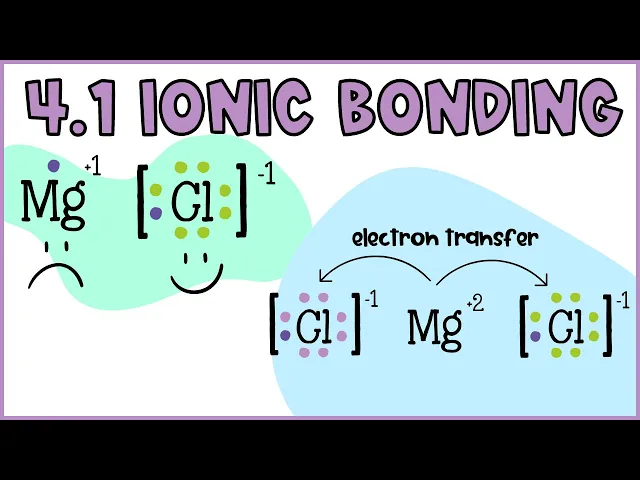
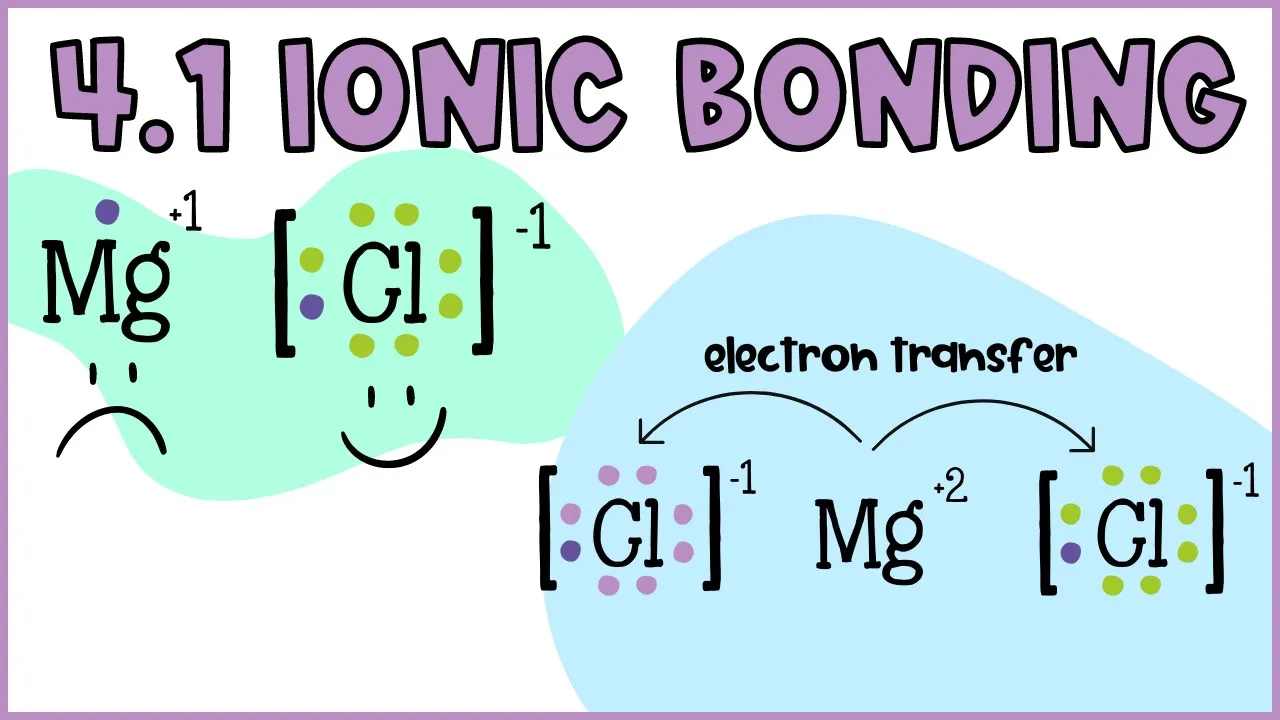
Atomic Lewis structures before and now we will be drawing them for ions and I promise it's not that much harder still our Lewis structure is going to show valence electrons drawn around an atomic symbol but in this case we're going to be drawing um electrons with respect to the ion as opposed to the atom and in ionic compounds we are going to wrap our non-metals in Brackets and we are going to indicate the overall charge atoms can gain or lose multiple electrons depending on what they specifically need or they can gain or lose electrons to
multiple atoms depending on what they need so I'd like to show you the example of magnesium bonding to chlorine so each atom can get its eight valence electrons magnesium begins with two valence electrons I know this because it's a member of group two and chlorine begins with seven valence electrons again I know this because it's a member of group 17. magnesium is going to try to get rid of both of these electrons because underneath this principal energy level with two valence electrons is a lower one that has just eight valence electrons if magnesium were to
get rid of those two valence electrons it would have 10 in total eight in the valence and it would look like neon chlorine gaining one electron would make it look like argon with a total of 18 valence electrons magnesium can give only one valence electron to chlorine chlorine cannot accept any more than what fits in its valence shell and now the chlorine has eight valence electrons seven of her own and one from the magnesium we will wrap her up in Brackets with eight valence electrons indicating with a negative one charge that she is now an
ion we wrap her up in Brackets to hold all of her electrons together and I like to indicate that the non-metals are girls if you think of kind of like a very classic traditional um marriage right the the man will give the woman an engagement ring and when she gets married she'll change her name in this case magnesium is giving an electron to chlorine and chlorine is going to change her name to Chloride chloride indicates now that she is an ion so throughout the videos you'll find that I indicate that non-metals are girls they call
them she's and then the metals are boys and I often call them he's they don't actually have any type of uh personality they are totally inanimate they don't have feelings or emotions or anything it's just something that I use to kind of help me communicate with you how these atoms are gonna work and interact so magnesium he's given away one electron to chlorine who now is happy with her eight valence electrons but magnesium still has one electron he has to get rid of so he asks chlorine hey do you have any friends that are interested
in electron I gotta get rid of this so another chlorine shows up and she has her seven valence electrons just like she's supposed to she's a member of group 17 and magnesium gives his last electron to chlorine when this happens chlorine the pink chlorine now has eight valence electrons seven of her original and one new one from the magnesium and magnesium has given away two electrons one to each chlorine so because it's kicked out two negative electrons its overall charge is now positive two when I arrange my Lewis structure I would draw it such that
the positive is close to the negatives but the negatives are not close to each other because they would repel so I put magnesium in the middle and a chlorine on either side you could also draw this vertically but when I draw the full picture this is what it's going to look like now magnesium has no dots on it and this is to indicate that it has given away two electrons and the third energy level where it's a valence electrons originally were is now empty now chemists call any ionic compound assault and I know that that
is a little bit weird because salt to us means like the salt that you sprinkle on French fries sodium chloride but to chemists salt is just a general term for any ionic solid compounds with ionic bonds or salts have a few properties that we can identify so typically they are going to form a crystal lattice or a crystal structure which is going to look something like this it's kind of I describe it as a three-dimensional checkerboard here you would have um a chlorine and a sodium a chlorine and a sodium a chlorine and a sodium
and it makes a three-dimensional checkerboard these Crystal lattices are typically very strong and difficult to break because there is a lot of charge attraction happening your positives are very attractive to your negatives and vice versa a lot of the time our salts will dissolve in water that's not a blanket statement there are certainly some salts that do not dissolve in water but many of them do and when they do we would say that that is an aqueous solution some will pronounce it aqueous aqueous just means dissolved in water or mixed with water all salts have
very high melting points meaning that um you have to heat them up really really really really really high to break apart the sodiums from the chlorines or the magnesiums from the chlorines because the charge attraction is just really really strong If you sprinkle salt on like a tray of french fries that you put in your oven and then you take that tray of french fries out the salt will still be salt it will not have melted if anything it may have mixed with some moisture from the the frozen french fries maybe and it may have
dissolved and made an aqueous salt solution but it's not going to melt the same way that Sugar will melt to make caramel that doesn't happen but if you are able to melt a salt we actually say that it's molten because it's its melting point is that high they're really crazy high but either when the salt is dissolved in water or when it's totally molten and in a liquid form these salts will conduct electricity and that's due to the fact that now our ions have the ability to kind of swim around and conduct electricity I would
love for you to try to draw the Lewis structure for sodium bonding to sulfur which is n a bonding to s when sodium bonds to sulfur sulfur is going to begin with six electrons and be looking to gain two so in order to do that it is going to need two sodiums so it's clear here that this sodium perhaps had the green electron and transferred it to sulfur this sodium perhaps had the purple electron and transferred it to the sulfur so we have two positive sodium ions or cations in one negative sulfur anion with a
charge of minus two because it has gained two electrons the chemical formula there would be n a 2s this two indicates that there's two sodiums we always write the positive ion first and then we have one sulfur ion in this compound we could write a one here behind the sulfur but writing s indicates there's at least one sulfur and chemists are pretty lazy so we're not really huge on writing subscripts that we feel like we don't have to so that would be our chemical formula and this would be the Lewis structure again it's important to
note that we have positive negative positive and that the positives are not near each other because they would repel so that is everything on ionic bonds and drawing some basic Lewis structures there are some tricks to figuring out the chemical formulas which I will teach you in the next video subscribe so you don't miss it leave any questions you have in the comments below the video and I will see you in the next lesson bye