hello and welcome to my channel in this channel we explain various nursing concepts in a simple form for better and easy understanding these videos could be used by both lpn and rn students as well as nurses who are trying to refresh their basic concepts my name is nassmosh so in this video we're going to start talking about cancers that interfere with the reproductive system or cancers of the reproductive system okay and let's start with our melt and with the males we'll talk about prostate cancer prostate cancer is a common cancer and when do we start
screening for this we actually start screening for it at 50 at the age of 50 unless the individual is of high risk and we'll talk about the risk factors and how do we do the screening we actually obtain a pca level which is a blood work as well as we complete a digital rectal exam and something you need to remember for the test or even when you're practicing always always collect the pcl levels the blood right before you do the dre the digital rectal exam why because when you perform the digital rectal exam it actually
increases the psa levels and you'll end up with a false level or even a false positive psa so what are risk factors risk factors for prostate cancer include an older age risk genetics as well as diet and the signs and symptoms of this include hematuria bacteria urinary frequency retention hesitancy as well as frequent bowel bladder infections and with bladder infections think about it you have something that is enlarged compressing your urinary urethra where the male reproductive they actually urinate so something is blocking it so you're retaining this urine in your bladder and stasis remember stasis
leads to a good mood of growing bacteria infections so how do we diagnose this we already talked about psn levels and our pc levels we are looking at levels above four so a four in a psl level is an indication that person could have prostate cancer trans rectal ultrasound as well as biopsy how do we treat these patients with this patient we could treat them with radiation hormonal therapy chemotherapy as well as surgery some complications that could arise with prostate cancer include of course our urinary issues like incontinence erectile dysfunction as well as radiation cystitis
okay so let's start talking about our female reproductive cancers and let's start about breast cancer so with breast cancer screening for this actually starts at the age of 40 and how do we do this is through mammograms and self checks and these self checks are done monthly but individuals who are at a high risk will talk about the risk factors but people who are at a higher risk would normally obtain a best line mammogram at the age of 35 prior to studying the annuals which are at 40. this is also a question so remember this
community health so risk factors for this include smoking hormonal replacement therapy obesity long-term use of oral contraceptives as well as genetics and early medicaid science and symptoms of this include like nipple retraction ulceration or even discharge dimpling of the skin of course around the breast farm immobility and non-tender lump how do we treat this we could do hormonal therapy chemotherapy and surgery it could include either mastectomy or lumpectomy and what do we need to know about a mercedes patient as a nurse there are some certain precautions that you should have for a patient who has
undergone a mastectomy and what is a to me they'll go and remove the you know the breast t-shirt depending on the side it's been removed we normally avoid using that arm for either blood pressures blood drawls or any kind of injection in that arm okay we wear a sling when ambulating as well as we wear loose clothing and perform hand and arm exercises to increase our range of motion and reduce edema so these patients are the patients you'll see do not take blood pressure on the left arm and normally you see like it's like a
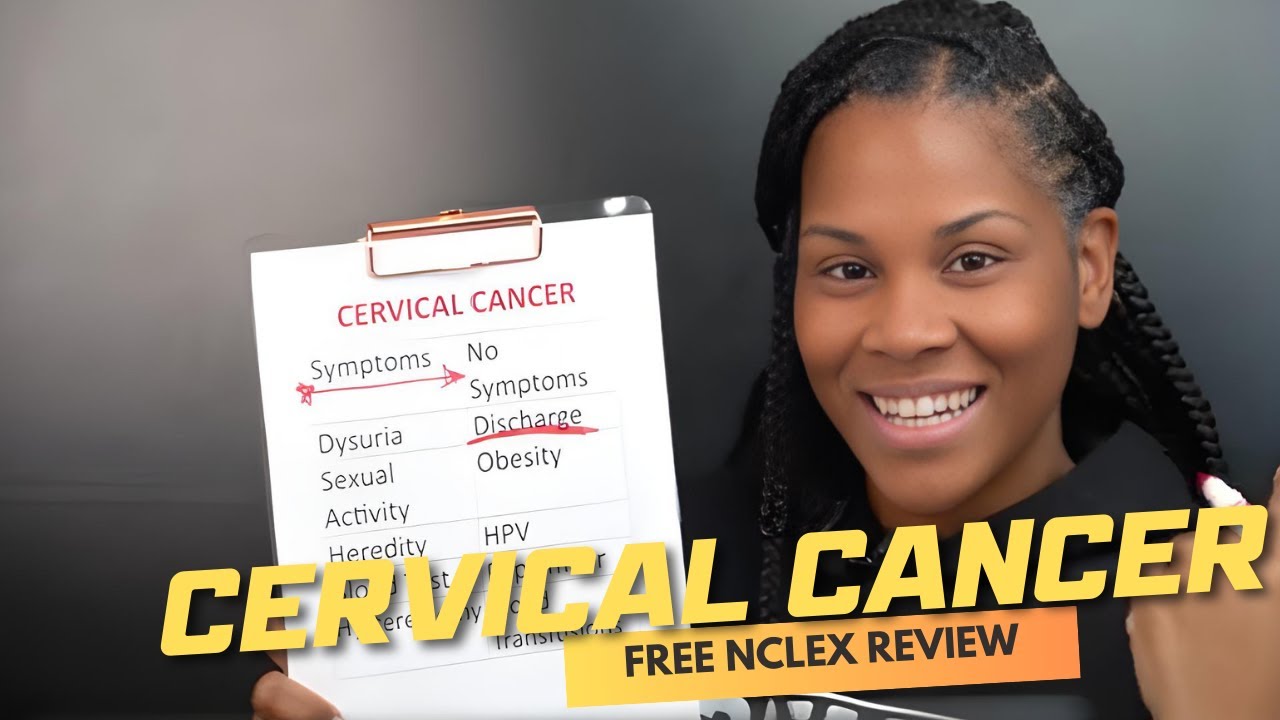
little bit edematous and why cause when they remove they do the mastectomy they normally interfere or interferes with the lymph tissues and the circulation of that arm is kinder reduced let's talk about endometrial cancer what is endometrial cancer endometrial cancer is actually the inner uterus in a lining of the uterus cancer risk factors of this include exposure to estrogen without progesterone symptoms of this include post menopausal bleeding this is somebody who's bleeding after they've already have menopause right and when you have menopause you know no bleed okay cervical cancer with cervical cancer it's usually caused
by hpv that's why we normally do the hpv vaccine and signs some symptoms for this includes painless vaginal bleeding okay and to prevent cervical cancer we do this by getting the hpv vaccine hpv vaccine is normally administered over a six-month period one is given three injections during a six-month period prior this is normally prior to college okay so when they ask you community health when do we administer this vaccine a hpv vaccine is normally before college so a 17 18 year old can get this we also do like cervical screenings and which are completed via
pap smear between one to three years in relevance to the patient's risk profile so if the patient is at risk for cervical cancer we perform this pap smears depending on one to three years right depending on the risk and the pap smears are started remember this pap smears are started three years after starting intercourse all by the age of 20. let's talk about ovarian cancer with ovarian cancer this is an epithelial tumor that grows on the surface of the ovaries and spreads rapidly signs and symptoms of these are vague that means it could be a
late or a poor prognosis with it so they are very vague and this include like a gi disturbance that is low in survival rate so you wouldn't know that somebody has this because the symptoms are vague it's like gi discomfort so you could think maybe constipation maybe you ate something bad but you're not thinking that you're having ovarian issues and how do we treat our endometrial cervical as well as ovarian cancer we do chemotherapy internal or external radiation as well as surgery thank you for watching please like share and subscribe to my channel see you
on the next one bye