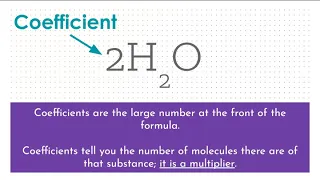
hey there welcome to today's lesson on reading chemical formulas the question of the day is what are some chemical formulas that you already know I'm sure you know a bunch in chemical formulas every new capital letter represents a new element um the symbols come directly from the periodic table and if you notice on the periodic table each new element begins with a capital letter and if it is a two-letter symbol the second letter is always lowercase and the same thing would be reflected in a chemical formula the number out in front of a chemical formula
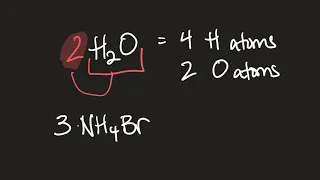
may or may not be there that is called a coefficient and it is going to tell you the number of molecules so this would represent five H2O molecules so there would be five of these pictures here or if we had two then these two water molecules would be represented by a 2 in front instead of the five now the subscripts are the tiny numbers on the bottom they're underneath kind of think like a submarine A subscript is written below and this little two tells you that there are two hydrogens in water and there is also
an imaginary one right here behind the oxygen that tells you that there is just one oxygen in water I would love for you to copy down this picture onto a sheet of paper and see if you can answer each of these questions you are asked to Circle A molecule point an arrow to an oxygen atom and put a star on a hydrogen atom and then determine the total number of molecules hydrogen atoms and oxygen atoms all right here we have it this represents a molecule we have two Orange circles and a blue circle and that
collectively makes a water molecule then we have an arrow pointing at an oxygen that is going to just point to any of the blue ones in the center and then finally the star on the hydrogen is going to be one of the outer atoms either of those would have worked now in total there are five molecules here we have 10 hydrogen atoms we have 10 orange circles and then we have five oxygen atoms which are the blue circles sometimes you'll see parentheses in your chemical equations and I promise it's nothing to be afraid of although
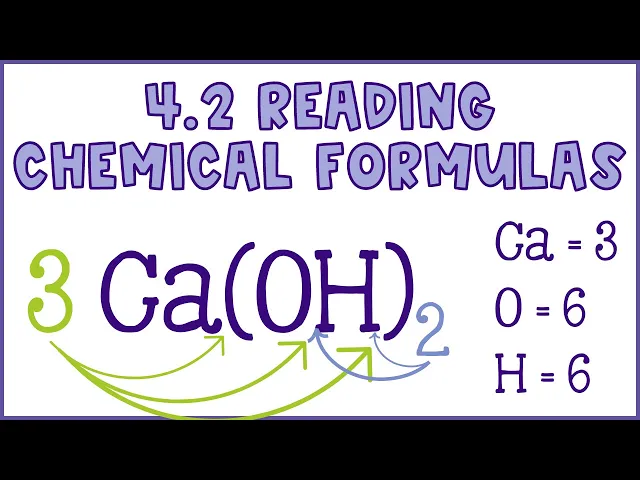
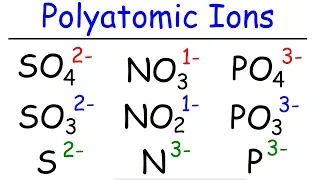
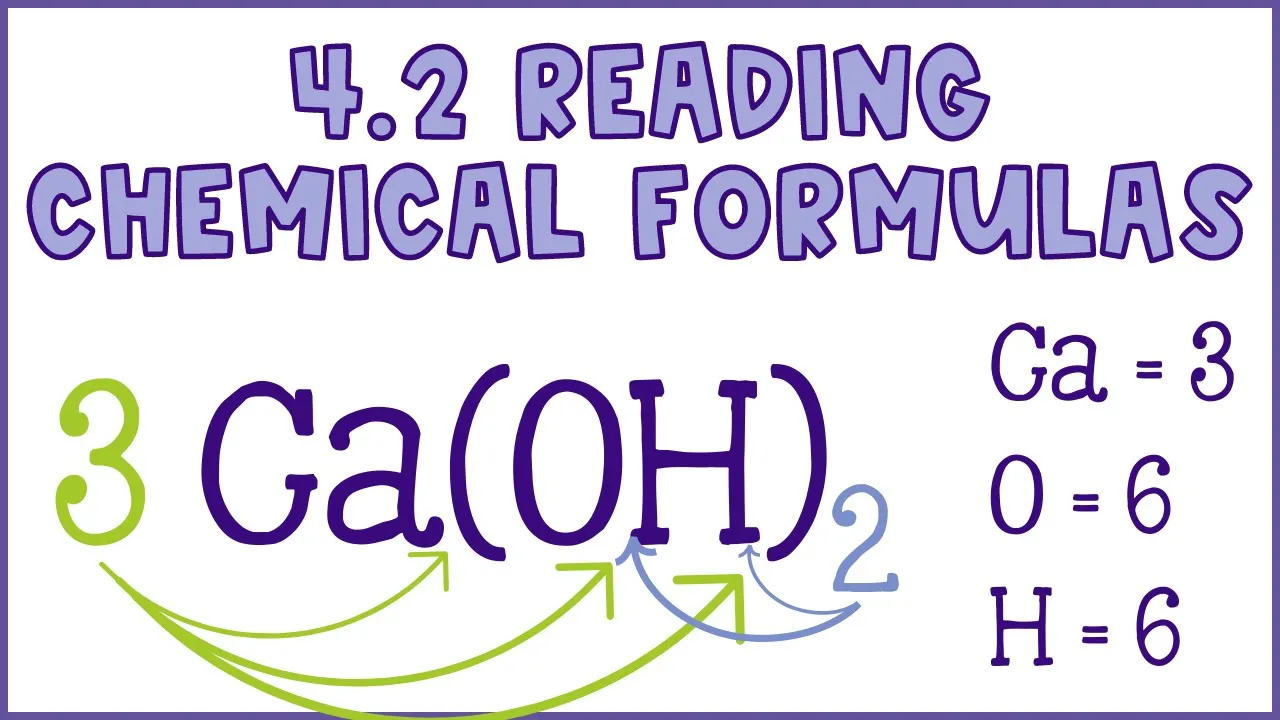
it does look pretty scary at first the parentheses are treated the same way that you treat them in algebra this um is calcium right here and then right beside that we have oxygen and hydrogen and this is called a polyatomic ion there's a future video on that coming up shortly but the oxygen and the hydrogen are kind of like locked together they're besties and they're not going to break apart so what this is saying is that we have two of the oxygen hydrogen bundles so really um if we were looking at this in terms of
algebra in total we have one calcium because there's an imaginary one right behind the calcium we have two oxygens because we have this two out front multiplied by its imaginary one that comes right after it and same for the hydrogen because it's in parentheses that this little 2 is going to apply to everything inside the 2 here is multiplied by the imaginary one right there giving us two hydrogens in total coefficients are going to apply to all of the atoms in that chemical formula so this three applies to everything so when I'm counting atoms I
like to take um I kind of like put my hand over the coefficient so I can't see it just yet and then I count everything so I would have the one the two and the two and then I just go and multiply them all by three because I find that for me that's the easiest to do um sometimes my students like to do it all in one shot so they would take three times the imaginary one on calcium because that's the only little number that applies to calcium which gives us three calciums then because the
hydrogen and the oxygen are in parentheses this little two applies to them so we would do three times the two times the imaginary one that they each have and that would give me six for the oxygen and the same process would give me six for the hydrogen so that's it on reading chemical formulas if it was quick definitely go back and watch it again I know that this can kind of be a flurry and you get used to it with practice make sure to leave any questions you have in the comments section below the video
subscribe so you don't miss the next one and I'll see you there bye