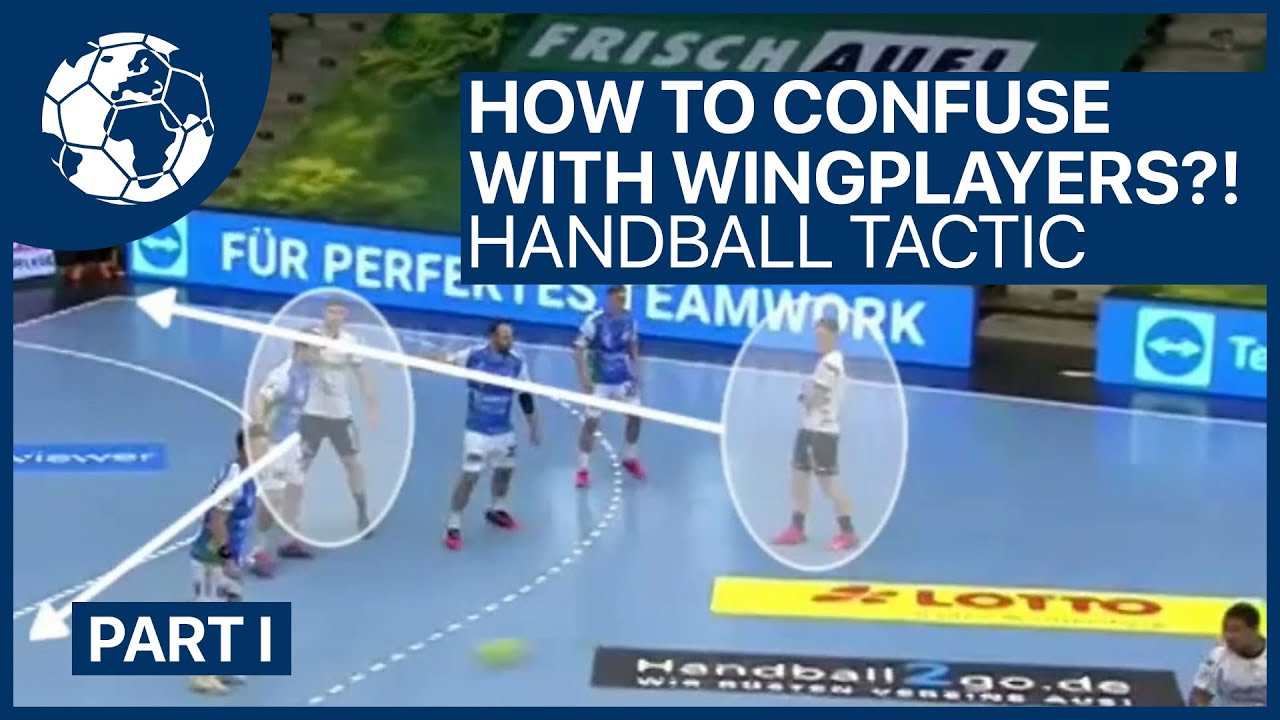
Hey dear handball inspirators, This is Oli again. oday we analyze the empty cross or also called Jugo and its various possibilities in more detail. So if you want to get to know variations of a simple opening action, then you are at the right place.
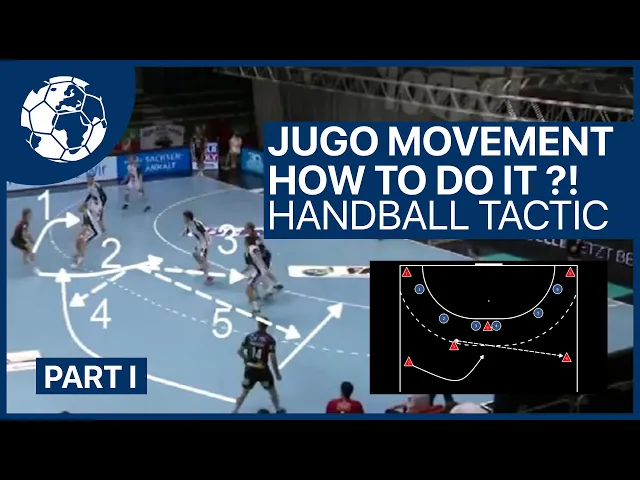
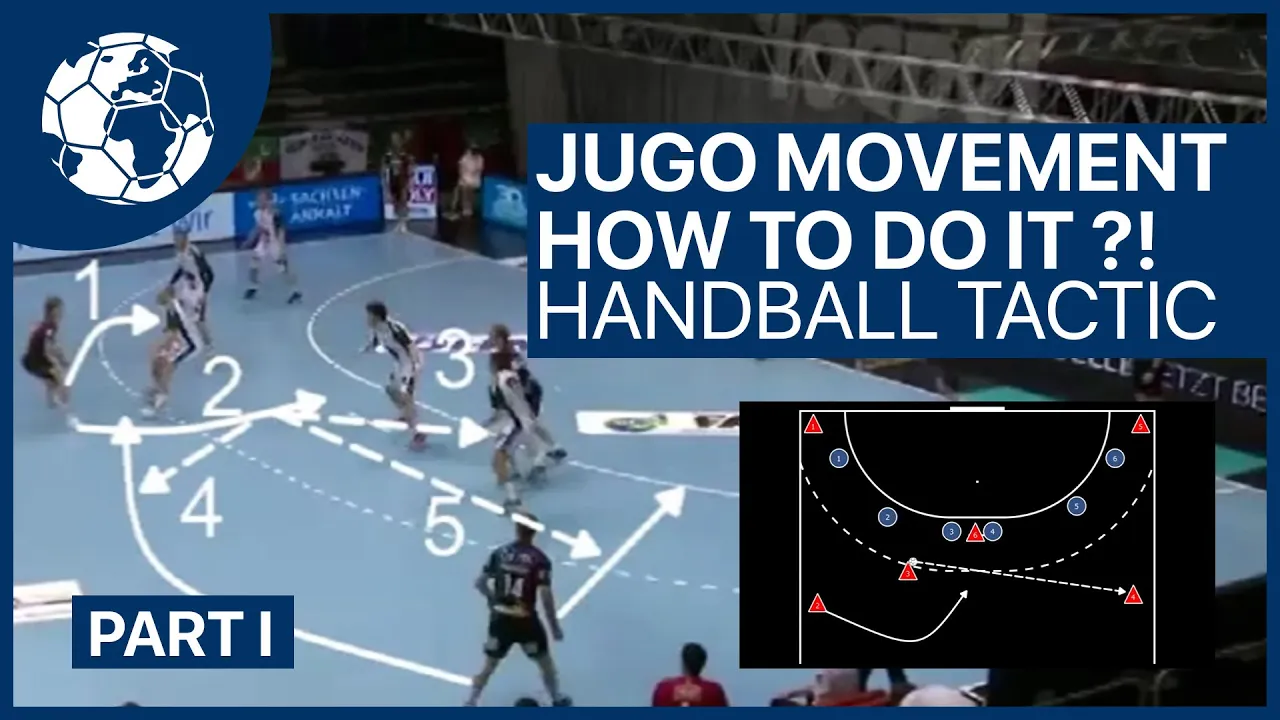
Have fun with Tactic Express First, let's look at Jugo in its basic form. Our pivot starts between the two inside blockers to keep them behind as much as possible. Center back Mads Mensah Larsen shifts play to the left side after a double pass with left back Mikkel Hansen.
Due to the offensive half defenders, Mensah doesn't go closer to the goal in the process to potentially create more scoring threat. Hansen now runs in a wide arc towards the center of defense. In front of him is a promising 2:2 situation with the pivot.
In this situation, he decides to throw because he can take the ball well with a long run-up and throw it on goal at 9m. Another option for Jugo becomes clear here. The opener remains the same.
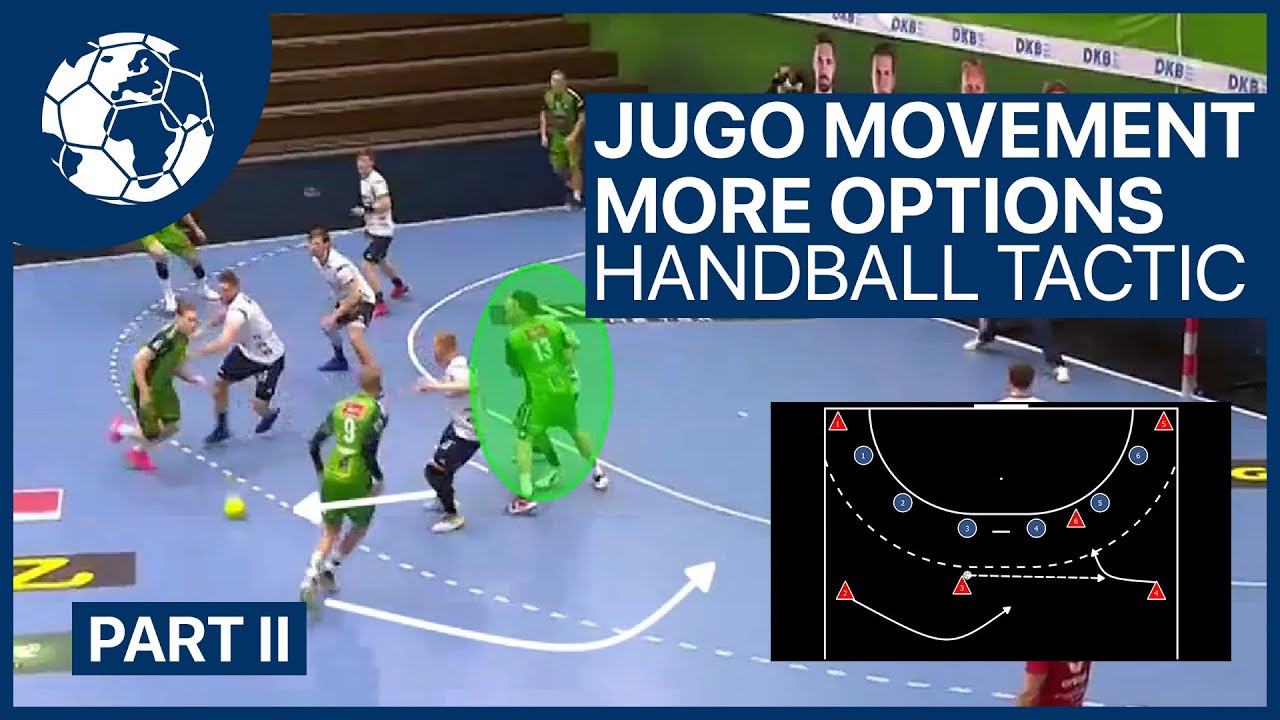
CB shifts the game, but could look for the 2:2 situation much closer to the goal and already goal-ready. Thus, the defense would already be busy for the first time and could not prepare so long for the coming around LB Simon Jeppsson. Jeppsson receives the pass too far away from the goal, so he decides against a throw.
Much more he looks for the 2:2 situation with his LP. Because Gojun is looking for contact here, Jeppson has 2 options. Either he plays the risky pass to his LP or the easy one to his right back, who comes to cross and opens the play again.
On the rebound, the same situation now opens up for the lefty on the center as it did for Simon Jeppsson after the jugo. He runs towards the 2:2 situation with his LP. As the defense remains defensive again and the left-hander has a good distance and good timing, he decides to take the throw.
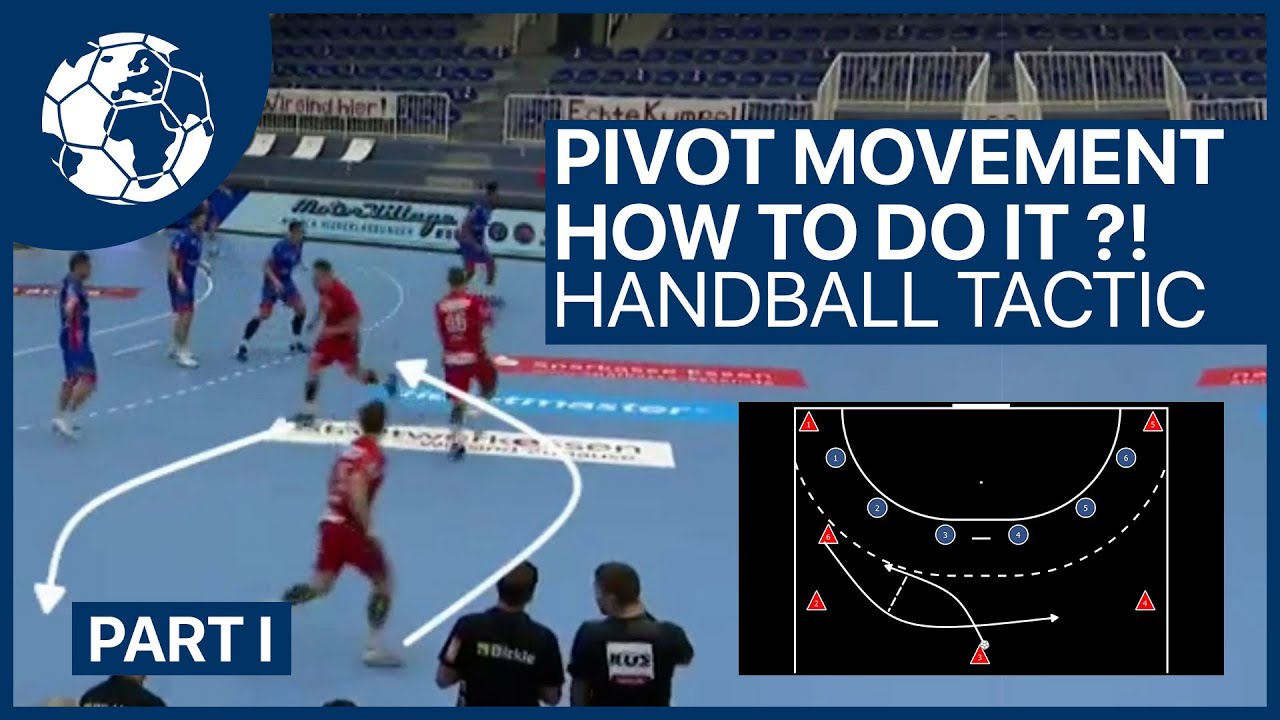
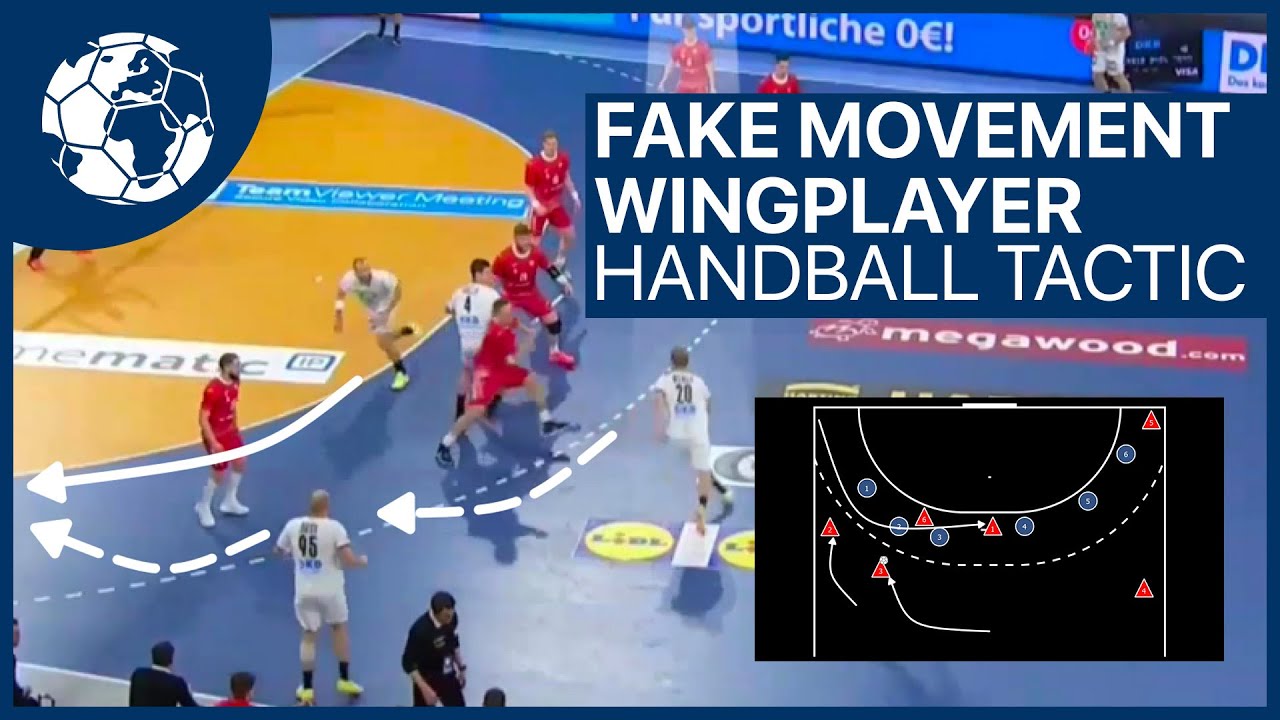
Let's take a quick look at the tactics board to note again the possibilities that have already come up here. So: After the pass to one of the halves, CB shifts the play to the side to which the empty cross is to be played. CB gets the ball from LB again about 9-10m in front of the goal.
This already gives three possibilities: CB could throw at the goal if the second and third defenders do not close the gap sufficiently. Or he could play the ball to the LP if he is in a good position, the fourth defender can't get around the pivot and the third defender lets himself be pulled out of his basic position. However, since we want to play Jugo, CB usually passes the ball to RB.
The first two options are important to keep the defense busy. So they can't adjust to LB for a long time, but first have to clear the 2:2 situation and then find a solution against LB and LP. LB should run a large arc to come straight towards the goal and have all options open.
After the back pass from RB to LB, there are again several options. If the defense stays defensive and LB s timing is right, then throw at goal. If the timing is not right or the defensive center is too high, then the gap between the 4th and 5th defender is attacked.
Due to the run-up, LB usually has a speed advantage, from which 3 options arise: If the 5th defender moves in too much, then RB runs parallel and can solve a 2:1 situation. If the 4th defender comes in, then the pass to the pivot could be free, because the third defender has to work around the pivot. If the pass to the pivot is not possible, then a cross for RB is an option.
And again, several options arise. If the cross is well timed and at a high tempo, then RB may be able to run over the 3rd defender and create a 3:2 advantage on the left side. If the 3rd defender stays defensive, then RR can throw on goal.
If the 3rd defender comes out, then it's worth looking to the pivot again because it has great space in the center if the 4th defender can't get around him fast enough. So much for the basic form. You can already see how complex this actually quite simple opening action can become.
Let's take a look at how you can vary or extend the basic form of Jugo. First of all it is about the follow up action cross. The 4th defender is bound by the jump so that he must make contact.
By crossing, the responsibilities change for the inside blockers. The 4th defender, who just a moment ago played contact against the ball holder, must in the next moment come around the pivot with lightning speed to prevent the face-off. At the first cross Wetzlar still manages very well to keep the compactness, but the same situation as at the first cross is repeated now.
Since Reinkind is a good thrower, the 3rd defender has to get out a bit further. so he loses the connection to the line player. The responsibilities change again.
The 3rd defender must immediately work around the circle after contact against Reinkind. The 4th defender now can't manage the third action in a row well and can't get into a good position against Duvnjak, let alone go out. Duvnjak takes advantage for a throw from 9m.
An even clearer picture of the possibilities that arise when you play Jugo with crosses is shown by this scene. The actual center back player comes through Jugo over the middle. Pekeler and Wiencek know that the CB wants to play to the LP or get LB to cross.
Accordingly, Wiencek works around the LP. However, his position after crossing is conceivably unfavorable because he has his back to his opponent. Since LB is a player who is capable of scoring a goal, Wiencek has to go outside.
Again a cross is made. Since Wiencek is so far out, he has to defend the cross alone and cannot follow the RB after he first has to defend the LP, then the LB and now the RB. Good crossing and running behind the Wetzlar LP creates a 3:2 situation because the RB has run over Wiencek.
So we have seen that Jugo can be extended by the follow up cross. Now we turn our attention to the LP. Namely, there is the possibility to let the LP pull away with the Jugo movement.
In this example, Kohlbacher starts normally between the inside blockers and then settles between the 2nd and 3rd defenders. Petersson gets the ball in good movement and has isolated the 4th defender for a 1 on 1 action. Okay, now what can be created from this variation?
Let's take a look. First of all, Magdeburg is absolutely exemplary in this example in terms of pace, timing and passing. The LP pulls away with the pass from RB to the LB coming around.
The defense can't allocate until they know which inside blocker stays with the pivot and which goes out. Thus, they are tied up at the back longer. In this case, the 3rd defender cannot prepare well for the following one-on-one.
For Gisli Kristjansson at least 5 options for action arise: He can go against the hand and cooperate with his supporting players in a large space. He can go to the hand and throw, play the pass into the indirect block from the LP, play the ball to the crossing RB or pass to the parallel running RB, depending on how RB perceives the situation. In this case, Kristjansson goes to hand and extremely binds the 3rd defender, creating a 3:2 superior situation on the left side after crossing with RB.
Often the way against the hand is chosen after the circle runner has moved away to the other side, because a 3:3 situation arises in a large space, which a good 1:1 player can exploit. Finally, two short variations on how to still act with the running game from the circle runner. We see the large space that the 3rd defender has to defend.
Against the hand he should not lose, because there is more space for Melsungen to succeed. Pavlovic decides to go to the hand and take advantage of the block from the LP, which he puts at the 4th defender. He is with his eyes on the ball holder and doesn't notice the block on his side.
In this way, Melsungen creates a 3:2 superiority on the right side, which must be exploited by parallel play, even if Kai Häfner runs here to cross. As a suggestion for you and to think further about what else can be gotten out of Jugo, you can see a variant in which, after the basic form of Jugo, there is a transition from the LB coming around and the LP counters. The defensive center is tied at the back, so you could throw well from the back.
In this case, the counter-pulling of the circle runner works because the 2nd and 3rd defenders lose the assignment, both are concentrated on the new LB and thus forget the LP in the back. I hope the video could help you to better understand the different variants that can arise from Jugo. Next time we will deal with another type of Jugo, the Jugo wrong or also Jugo short, where the LP is between the half and center backs, from which many completely new situations can be created.
Write in the comments what other variations of Jugo you know. Did you like this video? Then come with us on a handball world tour!