you're listening to the sspx podcast and welcome to episode 12 in our sacrament series and our first episode on the sacrament of extreme unction father stephen reuter will join us to give an introduction into this often misunderstood sacrament while it can seem that this sacrament is sad and indeed it is given when a loved one is close to death we'll look more closely at what this sacrament can give to a soul as they are about to enter eternity and we'll see that instead of bringing sadness extremism brings peace and even joy to these final moments
of course we'll look at what the sacrament is the form the matter the minister etc but we'll also discuss some practical aspects to the sacrament likely at some point in our lives we'll need to make a decision on when to call a priest for a loved one we'll answer those questions and more over the next 45 minutes if you like these series and want to help us continue making them you can help by leaving a small monthly or one-time donation on sspxpodcast.com or by subscribing to this channel on youtube or by subscribing and leaving a
rating for the podcast on apple podcast spotify or wherever you're listening thank you for helping us with this apostolate to reach as many people as possible with the beauty and the truth of what it means to be a traditional catholic now let's join father rooter for episode 12 of the sacrament series right now welcome back to the sspx podcast our next episode on the sacrament series very happy to welcome father stephen reuter hello father how are you i'm well andrew how are you good it's been a little while since we've talked we spoke last during
the crisis series uh how things been for you since then things are are still going canada's opening up a little bit so we pray it gets better yes absolutely well we've been looking at the sacraments obviously um and today we're going to start looking at the sacrament of extreme unction um obviously we'll look at the traditional form of the sacrament first and then we will look at the new form next week like we've been doing with all of our episodes um this is a little bit of a unique sacrament father in that it's not necessarily
always very joyful yes exactly most sacraments are surrounded by much celebration and festivity as people prepare for baptism first communion marriage for example but this sacrament is unique insofar as it is a sorrowful occasion a the loved one is about to die and so that does give a certain sorrow and yet the sacrament when received in fact gives much joy and consolation because it's preparing the soul for the joy of heaven it's the final act on earth by which the soul is strengthened and prepared for the wedding feast of heaven so the sacrament which prepares
us for the final battle with the world the flesh and the devil it's a sacrament we must try to receive and we must do all we can to make sure that our loved ones receive it before it's too late absolutely before we get into what the sacrament is in the traditional form father let's look at where it starts at the beginning we know from doing this series and from our catechism that every sacrament was instituted by our lord jesus christ but it's not as clear as some of the other sacraments when our lord did this
where where could do we look in the gospel to find extramuction father it's prefigured in mark chapter 16 verse 13 when christ sent the apostles to cure the sick and scripture tells us that the apostles anointed with oil many that were sick and healed them so we see a reference in in mark but that's not the institution of the sacrament it was announced to the world by saint james james chapter 5 verse 14 and it's of faith that this sacrament was instituted by christ for the remission of sins and the comfort of the sick and
that's very clear in the councils of florence and the councils of trent and so we do see in saint james chapter 5 a quotation which is clearly refers to this sacrament and we'll give the the full quotation is one of you sick let him send for the priest of the church and let them pray over him anointing him with oil in the lord's name prayer offered in faith will restore the sick man and the lord will give him relief if he is guilty of sins they will be pardoned so here is saint james announcing to
the world the sacrament of extremism okay uh what about any other sources are there any other [Music] is there any other relevant sources that kind of give us this uh yes the source of this of course so the church is built on scripture and tradition and so the existence of the sacrament is then confirmed by the teaching of the universal church we know that christ said he who hears you hears me so we must listen to the church to know what scripture means and the church tells us tells us the sense in which we must
understand sacred scripture we'll give a quotation from council of trent if anyone says the extreme unction is not a sacrament instituted by jesus christ and promulgated by the apostle saint james but it is only a usage received from the fathers or even a human invention let him be anathema so he would be condemned for for denying this sacrament and as the sacrament is a compliment and completion to the sacrament of penance it is probable that christ instituted it at the same time as the institution of the sacrament of penance which we know is shortly after
the resurrection so the most common opinion is that when christ instituted the sacrament of penance at the same time he instituted its completion which is the sacrament of extremism and sacred tradition likewise confirms the existence of the sacrament the fathers of the church who speak of extremism speak of as usage by the church as a sacrament of the new law the fathers the church also agree that the sacrament is for the spiritual and corporal welfare of the sick it's uh it's interesting father we've been looking at again all these sacraments we have just a couple
more to go um but at each stage in our life we have a sacrament our lord has given us the sacrament at the very beginning of our life you know throughout our life when we fall throughout our life when we need help and now at the end of life we have help at the end yes we do see the providential care of god for all of us he wants to care for us from the beginning of our life to the end of our life and saint thomas does bring that up and it's recorded in the
supplement to the summa where extra function is treated as an argument of fittingness so the supplement tells us that that the sacraments are given to us for each point of our life to supply for the necessities of that of that moment in our life and no other sacrament prepares us for death therefore is very fitting that we have this sacrament to prepare us for a good death so that is an argument of fittingness taken from saint thomas aquinas ah it's beautiful well that's that's where extra function comes from now let's dive into what it is
so can you give us the definition or or what extra function is father yes so extra function is a sacrament of the new law by which is conferred through the anointing with duly blessed oil and the prayers of the priest spiritual health and even health of the body when expedient for salvation of the soul on a person who is seriously ill and capable of grave sin so as the doctrine of the church is very clear she gives definitions which give us all the elements that we need to properly understand the nature of the sacrament the
purpose the sacrament as well as the elements necessary for the validity of the sacrament so in that definition we see everything needed for the validity of the sacrament and also tells us the effect of the sacrament okay [Music] so we can consider these elements in order to better understand the sacrament we'll just note before to analyze each more deeply that it is of faith that only a priest or a bishop who possesses the fullness of the priesthood can actually administer the sacrament so okay not much needs to be said there except that is of faith
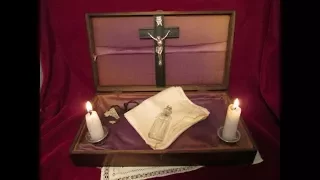
by the council of trent and as you've already seen with father robinson you know a sacrament is an outward sign instituted by christ to give grace so we don't need to go into that but i think we can start with the remote matter of the sacrament which will be very important especially when we consider the change in the new right to the matter of the sacrament but the remote matter is the oil of the infirm and it's olive oil blessed by the bishop on holy thursday in the traditional rite the priests can be delegated to
bless this oil but it is the proper role of the bishop of the diocese and to quote the council of florence the fifth sacrament is extreme unction the olive oil of which is blessed by the bishop and so florence tells us it's olive oil blessed by the bishop and in ordinary times for lawfulness or the saity we must use the oil which is consecrated that year from our diocese of course there are times in crisis where we can't get that oil in in such a case we would use the oil from the previous year until
we're able to get the new oil but for lawfulness we must use the bishop the oil blessed by the bishop of the diocese that year okay and and the reason for a blessing we can look at the supplement again of the suma is that each sacrament receives its efficacy from jesus christ and we know that with baptismal water it doesn't need a special blessing even though there is baptismal water for a solemn baptism but it's not needed for validity and the reason giving a reason of fitting this is that christ in a certain sense sanctified
all water by descending into the water at his own baptism yet christ never had any such contact with olive oil and therefore this oil must be made sacred made holy by a bishop who was consecrated and then that oil receives the power to transmit the grace of jesus christ to the soul and another reason is it shows the hierarchy of the church the fact that all blessings come from god the father through the pope to the bishops to the priest it shows there's a hierarchy in the church by which we receive the good things from
that hierarchy okay that makes that make sense um father you keep saying olive oil so it has to be olive oil not canola vegetable coconut yes so tradition and the theologians have told us that it must be olive oil and we do have doubt as we'll see later as to the validity of any other oil used for confirmation or extramuction and so the reason is that the very word oil comes from olive we say olive oil is oil for excellence it is oil in the strict sense of the word every other oil is called such
insofar as it's an imitation as a resemblance between this the substance called oil and olive oil and so that's one main reason the very word itself means olive another reason of fitting this st thomas tells us is that christ he sweat drops of blood in the garden of olives so it's a real fittingness that olive oil must be used as christ began his passion in the in the garden of olives therefore we do hold that it's most probable that olive oil must be used for the validity of the sacrament so that's the that's the remote
matter um what is the approximate matter father of the sacrament so the proximate matter consists in anointing the eyes ears nose mouth hands and feet so the priest uses the thumb of his right hand and makes the sign of the cross with this oil the oil of the infirm on the five parts of the body prescribed by the roman ritual we'll see that in cases of necessity imminent danger of death and the inability to anoint the other parts of the body the priest can anoint the forehead yet if the person is restored to health the
priest would be obliged to complete the anointing anointing all five senses for the perfection of the sacrament but it's the anointing of the senses by the priest using his thumb of his right hand and then the form of the sacrament yes the form is always most important because we know the form of the sacrament determines the matter it makes the material element intelligible and therefore making a sign and in the case of the sacraments we're speaking of an efficacious sign a sign which transmits that which it signifies so the form is essential and the form
in the traditional right is through this holy unction and his most tender mercy may the lord forgive you whatsoever sins you have committed through and then for each sentence you have the proper word seeing hearing smelling speaking touching walking and so to quote the supplement of the suma again we quote because the healing of the internal wounds cannot be perfectly signified saved by the application of the remedy to the various sources of the wounds hence several actions are essential to the perfection of the sacrament so we know that our disorders were possible and manifested themselves
through our senses so we send through the senses we received information through the senses and therefore we must anoint all those places where we typically sin our eyes and seeing our nose our ears our mouth our hands our feet all these instruments which we've used to wound our soul so the four must express the following the action of the minister who acts in the place of christ so when we give a sacrament we're acting in the place of christ so through this unction as we take our right hand and anoint the senses through this unction
the sense is anointed but we must also express the principle cause which is god that's why we say his most tender mercy may the lord forgive you so god the source of all grace the principle cause of all grace through jesus christ then through the priest as an instrument through his mercy is anointing and therefore healing the wounds of the soul and the subject is the we give it to one person we anoint that one specific person at a time and the effect is pardon pardon which is given through this unction so we see how
contact is required in the sacraments we know the protestant notion of just grace kind of floats around and people receive it by asking for it well it's true god is infinitely merciful he pours grace out but he wants us to receive the grace to contact from another human being using an unction blessed by a bishop and through that holy unction god's mercy touches the soul and one reason for this is to keep us humble the fact that we need to have this contact with these creatures the creature of the oil the creature of the priest
but also to give us certitude when the priest anoints the soul often a great calm comes over them because they have the certitude from the church from christ through this holy unction their their soul is healed from its diseases and as in the case of all the sacraments the actual sacrament is surrounded by many solemnities and rights to prepare the recipient to properly receive the actual sacrament and we'll look at some of these elements more closely in the in the next episode but we know that the sacraments work by their own power ex oprio burato
but we have to dispose ourselves to receive the grace we have to make sure we remove the obstacles and open up our soul to be touched by the grace of the whole junction that's beautiful um it's interesting father looking at the form it says may the lord forgive you whatsoever sins you have committed etc it's different than confession in confession father you say i absolve you um but here in extra motion it's may the lord forgive you what is the difference there yes there's a distinction there so in the sacrament of penance the priest is
a judge the person comes and accuses themself of their sins they manifest externally their disposition to be pardoned therefore the priest is able in the imperative to to really forgive the sins here is often the case where the person is unconscious we're uncertain about their dispositions but also there's secondary effects we'll see later which is the curing of the body and also when we see the effects the primary effect will be the fruits of sin the remnants of sin but also we're also praying that their guilt be removed as well if they're disposed oh interesting
okay that was a little side note um thank you for answering that um let's look at the subject then or the person to be anointed uh what does the church say about this father yes so they must be baptized baptism is the door to all the other sacraments and of course if they're validly baptized we have to ensure they're catholic if they're not catholic we have to at least require some ascent of faith some retraction of their heresy because there are some baptized souls who do believe in last rites but we would oblige them to
make an act of faith as simple as it might be in the catholic church but they must be baptized you cannot anoint a non-baptized person and the subject is obliged to do all that they can to be in the state of sanctifying grace whether it be by a sacramental confession which is the most certain way to be in the state of grace or if that's impossible an act of perfect contrition if they're unable for some reason to confess their sins so baptized if possible in the state of grace likewise they must have reached the age
of reason so if they're under the age of reason or if they're permanent in a state by which they've never been able to use their reason there's some defect by which they never developed their reason you cannot anoint them and so as soon as a child does reach the age of reason whether it be illegally aged seven or they manifest acts of reason and they fall terminally ill they can be anointed because the sacrament is for sins committed after baptism and every sin must pass through the will and we can't choose something unless we know
it and therefore if we don't have at least something of the age of reason we are not proper matter we cannot receive the sacrament of extra munching there's no personal sins to be healed so likewise they must be dangerously ill we cannot give extreme unction to an otherwise healthy person if they're in danger of death from an external cause they're going to war an air raid shipwreck you can't annoy such people because the danger is not internal a sickness because as saint james says if you be sick it was instituted for healing those who are
sick in body and have the ability to be sick and soul from personal sins so we can't anoint people who are otherwise healthy just because some extrinsic cause might take their life and the council of trent tells us this unction should be made on the sick especially on those in such a dangerous state that they appear to be about to be about to depart from this life and the danger of death need not be extreme but real that's really important often people think extreme unction and therefore don't call the priests until the extreme last moment
of their life but in fact that's a great sin we must call the priest as soon as there's a real danger of death so the person can be aware alert and so the priests can try to incite in them create faith contrition confidence in god and a willingness to suffer well so it's extreme in so far as is at the last action we receive but we should not wait till the extreme last moment of our life once we have a real danger of death from an internal sickness we should seek to be anointed so again
it's it's balance like with most things in the church you don't want to give it to someone who has the sniffles but at the same time um you know very real circumstances someone has coveted and they are seriously ill you don't want to wait until they're on a ventilator or unconscious or something like that you want to call in a priest when they are in the hospital and suffering from this yes especially with the way hospitals are today it's very hard to get into the hospitals so today we recommend that people err on the side
of caution and receive extra function before they go to the hospital for any illness which does pose a real threat to their life insofar as hospitals are very very challenging and we've had cases one where we just couldn't get to the hospital because the hospital authorities which wouldn't let any visitors in usually we're able to maneuver around that but we do need special care today to be anointed before we go to the hospital as long as there is a you know a reasonable danger of death right and we could spend 20 minutes going through all
kinds of hypotheticals like i'm sure you've done many times in catechism um but i guess we would just say if you have any questions or thoughts about it just call your local priest and he can guide you through it exactly and when in doubt today then it's more prudent to be anointed than not to be anointed as long as there is some sickness which leads to death even if it's not imminent so okay well what about um what about extreme old age aunt betty is 97 years old can you anoint her so it can be
considered an illness when it's clear that the body is failing and death is approaching so old age in itself is not a sickness but you get to a point where the body is just you know coming apart so to speak the organs are failing and all those failing organs clearly make it so you're you have something wrong it's a sickness a failure of organs and so yes anybody who is getting to a point in their life where death is approaching even if there's not a diagnosed disease they should still be anointed and before it's too
late because people can die in their sleep of heart failure or whatnot without ever expecting it so once you get to that very old age and um it's clear that the body is is starting to fail then they should be annoying too like we've mentioned already again just to reiterate it is much better to anoint someone who is conscious not unconscious exactly because an unconscious person we can't be sure of their dispositions nor can we help them increase their faith their contrition their dispositions to receive the sacrament and so they really should be conscious if
possible now of course when we are in the hospital and all the priests see this recently we're called to to somebody's death bed who we were told they're unconscious they haven't been to the sacraments for many years they never asked for a priest so i was actually wondering if i should go especially with all the challenges to get in there they weren't faithful at all and i decided well i'll go and because we'd rather be safe than sorry when eternity is in the balance so we went and we got past all the you know the
crazy covet protocol and got into the hospital and the person they said was unconscious but i was able to hold her hand and she was able to blink and acknowledge i was there and give certain signs of contrition and so we do it happens every priest frequently so when the doctors say they're unconscious there's nothing left it often doesn't mean that they can't hear you and have some interaction with you so it's um always to be done always to be attempted but there are certain rules we'll see later about when we anoint the unconscious and
when we don't but when they're fully awake it's much better because we can excite them to great contrition and then we can be certain of their dispositions and help them prepare themselves for the sacrament in a scenario like that would you just ask father are you sorry for your sins squeeze my hand if you're sorry for your sins or something like that i usually ask them to blink the eyes because the squeezing of the hand can often be just a reflex so i usually do blinking of the eyes and then if that doesn't work i'll
go to squeezing of the hand and in this case she was blinking your eyes to show contrition yeah great so we've already started talking about this a little bit but then what does the recipient of extra function need to do we've talked about who it needs to be needs to be baptized someone in danger of death etc if i'm receiving the sacrament what do i need to do father so the recipient must have at least an implicit desire to receive it which means if they are aware of their condition aware of the danger they would
want to receive it and this intention is presumed when it's a catholic who is living a catholic life every catholic who is living a catholic life if they fall on conscience but we presume that they want to receive the sacrament and therefore are faithful who fall unconscious we give them the sacrament absolutely with no condition unless of course they express the contrary that's a whole different story but a regular catholic who falls into a coma or unconscious we anoint them absolutely if we doubt that intention is present which can be the case with a fallen
away catholic or somebody who fell in conscience in this act of sinning for example like well their very life didn't really show any dispositions to conversion in that case we can hope that they still have the habitual disposition to receive it and therefore the church in her mercy wants us to give the sacrament conditionally we don't give it absolutely because we don't want to put the sacrament in danger of invalidity without sufficient cause but nor do we want the person to die without this last chance because the sacraments are for men and for men's salvation
and therefore if we do have doubt then we anoint conditionally the only time we wouldn't anoint is if the person before falling unconscious clearly indicated they don't want the sacrament or they refused it or in some way made it clear they don't want this sacrament in such a case they're radically indisposed to receive the sacrament and therefore we would not administer it okay um i i have a medal and on the back of it it says i'm a catholic call a priest is wearing that or having some sort of indication is that a good idea
yeah it's a good idea because it makes it very clear because in a world in which there's very few catholics we come across cross car accidents or we don't know and therefore if you do have an indication you're catholic that's a big help for the priest okay so um this sacrament it's it doesn't give an indelible mark like some of the other sacraments can it be given again and again can someone receive it twice three times yes there are certain norms to be observed but as there's no character it can be repeated and yes as
taught by the council of trent if the sick are restored to health after receiving this unction they can nevertheless have the help of the sacrament when they are once more in the danger of death so if somebody's in danger of death the danger passes the danger comes back they can't be re-anointed again that's for example if they got cancer and then heart disease that's very clear they're nutrition for cancer but then they have heart disease but even the case of for example cancer let's just say at one point they're in great danger from the cancer
there's a bit of a remission they get better then the danger comes back they can be re-anointed again that's confirmed by the catechism the council of trent okay and when there's doubt pope benedict the 14th of the 18th century he said when there's in doubt whether it should be repeated then we should repeat because it comes back to the fact that sacraments are for men and for men's salvation and when we look at the facts of the sacrament will realize that we deprive somebody of maybe their last chance at heaven by not giving them this
sacrament sure well that's um that's all very interesting um let's look next father at the effects of the sacrament and again we'll get into it this is one of those sacraments that has two main effects but where do we start with this father so the effects of the sacrament i think we can just start with the council of trent which gives us so much you know clarity on this point so it is of faith that christ instituted this sacrament for the remission of sins and the comforting of the sick and i will quote trent directly
the anointing takes away sins if there be any still to be expiated and also the remains of sins and raises and strengthens the soul of the sick person by exciting him to greater confidence in the divine mercy by which the ill person will bear more lightly the miseries and pains of this illness and be fortified to resist more easily the temptations of the enemy who lies in weight of his heel and at times when expedient for the welfare of the soul restores health to the body so in that quotation from the council of trent all
of the effects are contained and now we can look at saint thomas aquinas notably the supplement to the summa where he breaks those down a little bit more for us to see the different effects of the sacrament and so we'll give just parts of this of this quotation from saint thomas and each sacrament was instituted for one principal effect so each sacrament has one principal effect though it may in consequence produce other effects besides the principal effect so the principle effect is gathered from the sign conveyed by the sacrament so you saw that in the
first couple episodes each sacrament is a sign if we want to know the principal effect we look at the sign because that tells us what's signified in the case of the sacrament it effects that which it signifies so the chief object of the institution of the sacrament is to cure the sickness of sin like in the healing of the body a living body is presumed so of course we don't heal somebody's body once they're dead they're dead they're physically dead so like in the healing of the body a living body is presumed so the curing
of the soul presupposes that the soul is living which is to say in sanctifying grace and that's what we call the sacrament a sacrament of the living we presume the persons in the state of sanctifying grace but then saint thomas continues since however this strength of the soul is given by grace which is incompatible with sin so we know that as light expels darkness so grace expels sin so as grace is incompatible with sin so in consequence if the sacrament so to speak finds sin in the person right the priest is anointing the person they're
not in the state of grace or they're laden with many venial sins if the sacrament finds these sins in the person it also removes the guilt of the sins provided there's no obstacle which means as long as the person's not attached to their sins and as long as they have at least a attrition a fear of hell then the sacrament will actually take away the guilt of sin in addition to the remnants of sin wow that's that's fascinating so as you said at the beginning often times the confession is done or the sacrament of penance
is done before extreme function but again like st thomas is saying in cases where that may not be possible the extra function can kind of seek exactly yep yeah yeah it can give sanctifying grace as a secondary effect as we'll see in a little bit because grace removes sin and if the person's unconscious not to their own fault they have a mortal sin which they do have attrition for it will remove it so those are st thomas is saying that there's primary and secondary effects what is let's dive a little deeper first into the primary
effects father so the primary effect is the increase of sanctifying grace in a way that corresponds to the purpose of the sacrament which is to remove the remnants of sin so the purpose of the sacrament is to remove the remnants of sin so we presume sanctifying grace in the soul this sacrament increases actual grace the sign that of anointing the organs through which we sinned that symbolizes healing whatever remnants remain in the soul from our past sins so that's the primary effect to to cure the remnants of sin and by remnants of sin we're speaking
of a few different things we have the temporal punishment due to sin we know that whenever we sin we have the guilt of sin which is directly forgiven by the sacrament of penance but we also have the consequence that temporal punishment due to that sin and each one of us must pay for all of our sins the temporal punishment that is in this life or the next in this life through personal penance and mortification or the next life through purgatory so that's a fruit a remnant of sin and so sac the sacrament of extramuction is
meant to take away the temporal punishment due to our past sins likewise our past sins deprive us of many special graces so the sacrament of extramuction can restore all these graces we need to to be holy as god intends us to be holy also our past sins give us an attachment for evil and a distaste for things which are holy that's also cured by this sacrament of extremism it gives us a taste for things holy and a hatred for things evil so you said that extra function uh remits the temporal punishment does that mean if
i received extra function i have no purgatory time left it certainly has that power from christ but a lot depends on our dispositions our spirit of faith our contrition which is why it's so important to receive this sacrament when we do have the ability to be aware of what's going on try to increase that spirit of faith in the power of the sacrament as well as to make acts of love for god and hatred for sin the two go hand in hand our hatred for sin is in direct relation is our love for god and
so yes it has the ability to do that if we're properly disposed which is why the traditional right surrounds extra motion with so many beautiful ceremonies to help us realize what's going on the power involved and what god wants to do to our soul and it's something to pray for to pray for the spirit of faith in all the sacraments and the last of them is the sacrament of extramuction and it also gives us what we call actual graces or sacramental graces which means it gives us all the actual helps we need to die holy
death so each sacrament has what's called sacramental grace those sacramental graces help us reach the perfection of that sacrament the perfection of the sacrament is to heal our soul and to die in the state of grace and to repair all the deaths of sin and therefore we'll be given actual graces actual movements from god which touched our intellect and touch our will to make the proper acts of faith hope and charity with great faith so as to die a holy death so at our disposal are all the actual graces we need to die a holy
death thanks to the sacrament and then the the last thing that you mentioned there's the last part of these primary effects is a distaste for that uh for for sin but that tastes for what is evil yes and that's very important because you know we are creatures of habit and our bad habits have a tyrannical hold on us we see that with people dying you know these bad habits haunt them and they're inclined to these things so this really helps give us a distaste for evil and a love for the good so if you live
your whole life in a state of sin and you're just inclined to the sin the sacrament is a very powerful remedy to overcome these inclinations that's beautiful um next let's look at the the secondary effects father those are the primary effects that we looked at the secondary effects would be what so the secondary effects as a consequence of the increase of sanctifying grace worked in the soul by the sacrament the guilt of sin can be remitted if it be found and when we say the guilt we're saying the guilt of venial sin but also the
guilt of mortal sin as long as the person has attrition and this is clear in saint james where he says if he is guilty of sin so he uses the word guilt if he is guilty of sin they will be pardoned and to give a quotation from the council of trent extreme unction can be regarded as a more certain cause of first grace so of course we have first grace and second grace first grace is the receiving of sanctifying grace which is given generally by baptism and by penance by confession and so extra function can
be regarded as a more certain cause of first grace than the sacrament of absolution given to an unconscious dying person since the absolution cannot have effect unless there's an act of attrition manifested externally whereas for extreme unction nothing more is required than habitual internal attrition so we know when we go to confession we must express externally this attrition for our sins we kneel down bless me father for i have sinned we express externally that we have this contrition this attrition at least the sphere of hell and so you need that for confession whereas this sacrament
does not require that as long as a person has internal attrition even if they can't manifest it the sins will be forgiven therefore all care must be used to see that extreme unction is administered to one who is unconscious so again that's the council of trent so we see a great power somebody's unconscious they can't express their attrition but they have a fear of hell the priest anoints them increases sanctifying grace mortal sins incompatible sanctifying grace therefore their sins are forgiven father do you mind clarifying something real quick um you've been saying attrition and i
think you clarified it just just in a second uh just a second ago attrition versus contrition so we have contrition which we should all strive for which is perfect when there's a perfect love for god and of course with perfect contrition all of your sins are taken away by that very fact as long as you have a desire for the sacraments but when we speak of attrition where it's supernatural it has to be supernatural or not attrition but the supernatural can simply be i don't want to go to hell right that's a supernatural reality so
it's much less than i'm actually sorry because i heard jesus who's infinitely good that's what we should strive to have but that's not required for somebody dying in a coma as long as they fear hell that attrition for their sins their sins can be forgiven so that's basically the same thing as what we've learned in our catechism is uh imperfect contrition that's what attrition is yes thank you and then the last part of the secondary effects is uh health to the body impossibly yes so it's one of the reasons why the form is in the
form of a prayer is because if the health of the body is good for the salvation of the soul there are times when god grants it and that is something we pray for and something which does happen sometimes which is one of the reasons why you don't wait to the extreme moment of death because then you're just tempting god you should receive it when there's a real danger of death and if a longer life will benefit your soul then god will often grant a healing of the body this is fascinating father i i knew that
extra function was important um but going through all of these all of these effects all of these things that it can do it's um it's very powerful it's very important yes indeed and we could you know end with some words from the council of trent on this the importance of the sacrament for although during our whole life our adversary seeks and discovers occasions of devouring our souls by all sorts of means yet there is no time in which he employs his wiles and deceits more carefully and more efficiently to destroy us and deprive us if
possible of confidence in god's mercy than when he sees us about to quit this life and so the devil is a roaring lion we pray every day compliment a roaring lion seeking whom he might devour but he knows as we're getting weak in body as our strength is failing that's when he really tempts us often people think that as they get older temptation is going to go away in fact the opposite is true the weaker our body gets the harder it is to resist temptation and the devil as this roaring lion knows he might have
one last chance one last week to get us in hell so as he's trying to devour our soul this sacrament is so important to strengthen our soul to heal the wounds of our soul to give us a taste for the for the beautiful for charity give us a hatred of sin and to give us confidence in god's mercy we need that when we're dying the devil brings all of our sins before us and we need this confidence in god's mercy as we're passing from this life to the next ah it's beautiful father thank you uh
could you give us a little preview of what we'll be looking at next week then yes we'll show how the new right has really taken away the sense of the battle and we'll see how it focuses primarily on the body and bodily health psychological health and it removes the focus on our soul our eternal soul that soul which is going to be in heaven or hell for all eternity yeah very good father looking forward to it thank you so much for your time great thank you andrew appreciate it you