[Music] you're listening to the sspx podcast and welcome to episode 11 in our sacrament series and our second episode on confirmation father goldaddy is back to compare and contrast the traditional right and the new rite of confirmation we're going to approach this episode in two different ways we'll look at the teaching and the prayers surrounding the sacrament these ancillary ceremonies will show us there's a distinct shift towards ecumenism and towards the new theology for more about the new theology you can see episodes 16 and 24 in the crisis series then we'll look at the specific
characteristics of this sacrament especially the matter and the form of all the new rites of the sacraments confirmation is the one where there is the most serious cause for concern we'll explain why through the next 40 minutes if you like these series and want to help us continue to make them you can help by leaving a small monthly or one-time donation on sspxpodcast.com or by subscribing to this channel on youtube or by subscribing and leaving a rating for the podcast on apple podcast spotify or wherever you're listening and thank you for helping us with this
apostolate to reach as many people as possible with the beauty and the truth of what it means to be a traditional catholic now let's join father goldaddy for episode 11 of the sacrament series right now welcome back to the sspx podcast and our next episode on the sacraments specifically on confirmation hello father goldaddy how are you doing well thank you good day good well thank you for joining us again on this second look at confirmation last week father we looked at uh the sacrament of confirmation itself what is what is it uh what are the
effects what are the gifts of the holy ghost all this sort of thing um this week we're going to do a bit of a comparison between the new right and the old right is that correct correct yes okay maybe with some introductory remarks on the new theology of the sacraments um which i'm sure will be done in other podcasts as well but again just to set the stage here um every sacramental right was affected in the changes but fundamentally as well the idea of a sacrament was affected and it wasn't maybe so much as an
explicit denial of the classic definition of sacraments as a you know a sign instituted by christ to give grace but the uh let's say there's a special emphasis on the sign and more of a de-emphasis on the grace um such that um it aligned uh let's say this this new notion of sacrament with a more of a protestant theology uh whereby they're symbols uh of a moment or an event in a person's life uh in their in their path of faith let's say and we can see this uh as well in confirmation reduction um of
a supernatural element um and uh let's say the more the emphasis upon the the natural uh element the natural side of things also speaking of the sacraments in general i i think of a study that the society made in 2001 on the liturgical reform and there they pointed out identified a very important key to understanding the new theology on the sacraments um or on the liturgy in general in what's called the paschal mystery and the paschal mystery really is a new doctrine of salvation um and it's i think it's very important to have this key
in hand of course there are many new uh doctrinal points in this um obviously errors but among those those points you you have the idea that redemption was not an atonement for sin to appease the wrath of god but rather a way to show god's love obviously it does that and it does it well very well because god chose the best means and he shows his love through that um but it's it's not the only thing it's clear that redemption is because of sin that christ came to earth because of sin to atone on behalf
of man but as a consequence of this new doctrine the liturgical rights well don't feel the need uh to express that satisfaction for sin um and this is subtly seen in the the new rite of confirmation as well um okay before i get into the uh compare uh comparison of the two rights maybe just some general observations to be made about the new right um and the first one is that it's it's it's affected by um ecumenism right um there is there's evidently an attempt uh to make the right itself less objectionable to to non-catholics
and so pretty much everything is touched both both rights have about 400 words hardly anything is in common um anymore right even the form is touched if we're talking about words of course it's more than that that's been affected um and that's not even uh that's not even the most effective part of the sacrament um and it's it's it's a shame because um it's so contrary to the purpose of of confirmation uh the purpose confirmation is to make the catholic a soldier of christ right a soldier picks up his arms the humanism effectively um makes
the soldier lay down his arms right very contrary to the to the very essence very purpose of the sacrament um and again as i mentioned before that in general uh there is more of an alignment with the protestant theology of the sacraments so a true theology sees the sacraments as efficient causes of grace or we'll just say causes of grace to keep it simple they cause a grace and each sacrament has a particular uh grace sacramental grace that it effects um the new or the protestant theology denies that the sacraments cause grace you know again
their manifestations of the faith or they help to renew the faith in that particular moment of the christians life so um again some general observations about the new right which was first instituted or rolled out um in 1971 and when when it was first promulgated in 1971 there was actually on a mission of the laying on of hands which is a big problem because as we saw in the last um episode uh the lane on of hands is part of that proximate matter of the sacraments um of of course there was this was pointed out
and it was subsequently changed but um it gives an indication the mentality behind the change uh for sure i i guess before we start going through the different ceremonies or maybe you want to answer this towards the end father so forgive me if i'm jumping ahead but broadly speaking is the new right of confirmation is it still valid um you you mentioned the you know the laying on of hands being a problem but that was corrected that's correct so as it stands today um you know broadly speaking is it is it a valid right yeah
and and maybe this answers me this question is better answered later in the episode with a little bit more information i'll just say that it's capable of being valid um you know if all the elements are correct all right and and that's where you well yeah we need a little bit more groundwork here okay fair enough so um yeah i guess could we contrast the two ceremonies then father sure absolutely um and so i'm gonna go pretty much uh um i'm not quite line by line but part by part uh through these uh these ceremonies
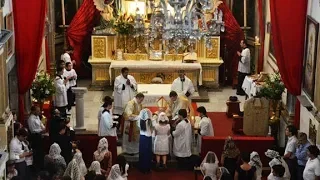
then we come to the actu the action of the ritual it's itself um overall the traditional sacrament of confirmation is a standalone ceremony um meaning it's it's it's done outside the mass it's it has its own you know ceremony beginning middle end and in the enormous order right it's typically done within the mass itself right after the homily again it doesn't affect essentially what the sacrament is i think having it within uh the mass itself in some ways detracts from confirmation um but uh this one general observation and then you have the preparatory parts so
in traditional confirmation it begins with a blessing and an admonishing of the candidates to avoid sin and reminding them without god's help they will fail um in fact we have time on this podcast i'll just read some of that prayer um for you uh the bishop says in fact he starts off uh with uh a verse made the holy spirit come down upon you and may the power of the most high keep you from sin remember he said that the sacraments are you know from the cross the cross was uh because of because of sin
that's clear the theology is clear here in the traditional sacrament uh almighty everlasting god who has deigned to beget new life in these servants by water and the holy spirit has granted them the remission of all their sins sent forth from heaven upon them thy holy spirit the consoler with the seven fold gifts and then it clearly states what those seven gifts are the spirit of wisdom and of understanding the spirit of counsel and afford it to the spirit of knowledge and a piety fill them with the spirit of the fear of the lord and
seal them with the sign of christ's cross plenteous and mercy unto life everlasting um you know each bit of that is very important again for uh expressing the true theology of of the sacraments a reminder that they are sinners they need god's help um essentially uh the norm of sort of right the new order right um starts very differently it starts with the renewal of the baptismal promises after the homily again typically after the homily um and this change resembles more closely uh the the lutheran uh ritual of confirmation for lutherans for protestants confirmation is
not a sacrament so again it's a profession of faith um which may explain why confirmation is placed in the mass where normally the profession of faith would be you know more you know in the traditional right uh the credo common credo it comes out right after the the sermon um and so it's the promises of baptism with the renunciation of satan and this would actually be the first time that the catholic soul would express that renunciation which was omitted in the new rite of baptism right it's not actually a renewal because they never did it
in the first place right right at least that portion of it yeah right um and and then after that comes the the imposition of hands or the general imposition of hands so in the traditional uh the bishop extends his hands over the confirman's as a group and then at the moment of anointing he places his hand on the head while he anoints the forehead okay so you've got that that general imposition of hands and then the particular one for each candidate um the new order has the bishop and all priest president effect extend their hands
over the confirmed as a group but does not have the bishop leia's hand on the head of each candidate at the moment of anointing so the the general imposition of the hands is enough for the symbol um again this is probably an ecumenical nod to the lutheran ritual martin luther claimed that the laying out of hands ended with the death of the apostles but it also goes hand in hand with the emphasis that the nervous sort of rights have upon the the welcoming of the person into the community of christians and their role within that
community um and i mean again there is that element uh we spoke about in the last episode uh how there's a there's a social component if you will uh to confirmation right you're you're part of the army of christ others in the mystical body benefit uh from from your your confirmation um but the first let's say unity that must be emphasized in the sacraments is that unity with god with god through christ there's a community aspect that's secondary okay um so again i read the prayer but when the in the traditional right when the bishop
extends his hands over everyone uh the traditional prayer clearly enumerates the seven gifts of the holy ghost the new prayer doesn't clearly mention fear of the lord right so it also will list the the gifts of the holy ghost but it says instead of fear of the lord it says wonder and awe which isn't the same wonder in awe would actually be closer to the gift of piety um if sure if if you're lined up with any other one of them uh rather than fear of the lord so there's really a mission of that gift
of the fear of the lord in the new ritual um why is that it's i mean who knows i i think in some protestant uh uh enumerations of the gifts uh you have six gifts some protestants will say you can't divide the spirit so i i don't know where this comes from but they substitute for the lord with wandering off well either way it's missing so it's missing okay it's missing great um and then you have the uh well i jumped then to the new right um in the new rights there are general intercessions which
don't exist in the traditional right um praying for you know different groups uh the church so on and so forth there is an intercession in there uh which is clearly an ecumenical request it's an intercession for all men of every race and nation that they may acknowledge the one god as father and in the bond of common brotherhood seek his kingdom which is peace and joy in the holy spirit let us pray to the lord um we're praying for the whole brotherhood of uh mankind's united in the holy spirit i suppose many of them have
no idea that they're united in the holy spirit that goes hand in hand with the whole theology of the new ecumenism sure and again we we have similar to baptism some not all of the emphasis has changed but some of the emphasis has changed from the person being baptized to a whole community let us pray for the whole community here again in confirmation it's not just about the confirmation they're not the object of all of the prayers and intercessions by the bishop we're also praying for other people too it's a community prayer which community prayer
is great but sure you know but prayer has to be how'd you say founded on on doctrine true doctrine sure and that's that's what's missing here right no that makes sense um okay and then and then we get to the the concluding uh parts of the um of the ritual i'm going to circle back to the essential part um with the approximate matter and the form because it deserves its own attention uh but the the ceremonies conclude in the traditional rite the bishop's going to call upon christ's mercy and remind the confirmed of what has
just happened to them and then there is a final blessing in which the bishop says may the lord bless you out of sion and may you see the good things of jerusalem all the days of your life amen why these words well they're taken from psalm 127 which is a very short psalm it's only six verses but this psalm speaks very specifically about the fear of the lord biati omniswitiment dominum and dominion so blessed are all they that fear the lord and walk in his ways the sort of concluding prayers by contrast don't speak about
mercy but rather love and joy um and again fear of the lord is not is not mentioned um it's interesting love and joy these are fruits of the holy ghost they're not gifts we have to use the gifts to bear the fruits and not that it's wrong to to make mention of the fruits but of course the emphasis should be upon the gifts at this point and then the the confirmed has to in a sense prove themselves and bear forth those fruits later they're not automatic right that makes sense okay so well um go ahead
sorry oh i was just gonna move on to the essentials okay so yeah so the the essentials so those are kind of the we're comparing contrasting the prayers before during after now i guess the the essentials of the sacrament so the the five conditions yeah and and with wisdom obviously the church surrounds the essential parts of the of the sacraments with prayers that call down the appropriate graces um and again ex are expressing the proper belief uh in in the sacrament so these surrounding prayers are very important that you know what the intention of the
of the uh of the right is not the intention of the bishop is um the the right helps the bishop form hit the proper intention so the essentials of the sacraments um the essentials we spoke about this last episode as well but just for the reminder of our listeners you have to have the right minister the proper subject the matter the form and the proper intention as well and the form we'll start with that one is again the spoken words which give the precise purpose of the application of the matter right why why is the
bishop anointing the forehead well this is why and in the traditional right again it's very clear you know so and so so the the subject is addressed by their new confirmation name um i that is the bishop right the proper minister assign thee the subject with the sign of the cross and i confirm you with the charism of salvation in the name of the father and of the son of the holy ghost so the intention is clear and in the form it's to to sign to the sentence so the form has only one interpretation um
and and that's important because again you get a part of that uh form wrong it invalidates the form [Music] i remember recently and i believe it was in phoenix um there was a pastor who retired because it was discovered that he had done i believe it was thousands of baptisms over the years with the wrong form of baptism so instead of saying i baptize you he said we baptize you there's no we there's one minister um so invalidates the form which invalidates the sacrament um so the new form is is different um and it is
ambiguous but again uh to be clear we're not talking about an invalidation um so the person is addressed with their name and it continues be sealed with the gift of the holy spirit so in this form the subject is not clearly stated okay obviously it's the person right in front of them you know the circumstances make that that clear um the minister is not clearly stated all right be sealed um you know the bishop could be acting uh on his own behalf or on someone else's behalf it's it's not clear in the formula who who
the minister is and the verb does not help to clarify right so the the passive use of of the of the verb be sealed um doesn't clarify who is acting um yeah i was just going to say there's a switch from active voice to passive voice in the two rights it's interesting which introduces an ambiguity because for example if you tell someone to be seated um the person you're talking to is seating themselves right they're not right um they're not being seated by someone else right uh so not usually unless it's a really rowdy kid
right exactly uh so are we saying that they're confirming themselves i mean obviously that's not the case but you you see where the the form becomes um a little messy if you will um again does this make the the form invalid no this is essentially the form used by uh well the eastern orthodox um and others in the east which the catholic church is regarded as a valid uh form so sure it's also much like the anglican in the lutheran uh form as well um so again ecumenical nod um sure we so we would we'd
be hard-pressed to to make the case for the invalid and validity of form uh it's interesting archbishop lefeve we have in a letter or two of his a calling into question of the validity but what he's really uh calling into question as a question is translation um so there could be a concern about that how the the form in latin is translated into the vernacular right okay now there is moving on to the matter great concern about the matter right all right um we saw that the the matter is clearly chrism um olive oil mixed
with balsam um and the law of the church makes this necessary for validity but the new code of canon law and in fact it predates the new code of canon law but it's clearly stated in the new code of canon law that in the administering of the sacraments in which holy oils must be used and i'm quoting directly the minister must use oils pressed from olives or other plants this is a novelty or other plants it's it's always been olive oil and how is it that the church can declare valid a matter that she's always
rejected um you know at best we could say that it's it's doubtful and therefore a mortal sin or a sacrilege to administer a doubtful matter um but it's it seems to be more than just doubtful um you know a typical uh moral theology book know with this proper doctrine you know says that not only is the olive oil a matter of ecclesiastical precept uh commandment but it's also required for the validity of the sacrament so that's how we have to treat anything else other than olive oil now this came into being in 1970 there was
a decree of the congregation of rights authorizing the you the use of vegetable oils um and of course the question is why um pope paul vi at the time uh said that there was a request of numerous bishops um because it was difficult to obtain in some parts of the world olive oil um which is strange to me because we're living we're in an age where you know exports and foreign um materials are easier to get it doesn't seem like it's i don't know it's it's fairly common everywhere i mean every grocery store pretty much
everywhere in the world has olive oil right exactly exactly and again i mean confirmation as as important and we can say uh necessary is as it is is not a necessity of means right in the sense that baptism is where it would be absolutely necessary that the matter be available to everyone everywhere in the world um it's not there's not the same necessity of confirmation regardless i mean the the the practical reasons which are given uh don't seem to um to justify it well they definitely don't justify it so um i i don't know if
you know if there's a looking back on antiquity um to say that well it wasn't always olive oil um and then certainly in in certain books in certain writings you know the word oil would probably stand alone without qualification of what kind it was but it was always understood that oil properly speaking used you know for literal purpose used for sacramental purposes was olive oil oh sure so okay um again i mentioned last episode that the slap upon the cheek is not part of the matter of the sacrament but i wanted to point out that
in the new right it's been omitted as as well again an ecumenical spirit would explain this omission so there you have it the the essentials the matter the form that make up uh the the symbol uh there is obviously area for concern especially as it comes to the uh the matter of the of the sacraments um and then as far as the form the translation of the form um and and so we can understand if parishioners have concerns about their new order confirmation obviously the main justification for us is the doubtfulness of of the matter
the fact that oil from olives and no other plant has been used for the whole history of the church as a remote matter of the sacraments and even the anointings in the old law the old testament were done with olive oil it strongly suggests that the institution of the sacrament was with olive oil by our lord again our lord didn't administer the sacrament but he instituted um he institute by way of a promise right with certain with certain details and i i think that that question should be addressed you know what what do we say
to those who want to approach us with doubts about their um norma sorto confirmation um well it's it's tricky because usually i mean usually they don't remember all the details of their confirmation um you know that was not a question on their mind as to what was the oil being used by the bishop at the time um and so generally speaking we don't tell people okay uh you have to be reconfirmed or on the opposite extreme know your your your confirmation is is definitely valid i mean if they have a genuine concern because maybe the
bishop or in many cases actually their parish priest because many of them were confirmed by a delegated priest um if there are certain circumstances you know a liberal theology etc or a sort of creativity on the part of the bishop or or priest um that would be enough for them to approach us for uh conditional reconfirmation or conditional reconfirmation okay so this would be a conditional thing uh which is which is sim similar to basically they they go through the whole ceremony um and i'm familiar with this because i had a conditional confirmation as well
um i was confirmed when i was a baby um by by the priest um but anyway you get a little different looking card and the bishop just says a i don't remember the exact words but it's a i conditionally confirm you like that's in the formula itself yes the condition needs to be uh expressly stated indeed okay yeah because confirmation is not one of those sacraments you can receive more than once so they can't you can't redo you can't do the sacrament twice it's just not possible yeah exactly it's simply to it's to preserve the
reverence for the sacredness of the sacrament yeah okay all right so if people are concerned about this people who are listening and and don't know or whatever it's just you know approach approach your local sspx priest and just chat with them about it and they can they can guide you in the right direction yeah exactly exactly okay um okay i i mentioned before too among the essentials of the sacraments are the intention of the minister um it's intention is not something that we can uh we can read right it's in the mind it's invisible to
us um so usually you assume that the minister has the broad right intention they follow the ritual right but again if they are known to get creative you know what truly is their intention there's there's there's doubt about that um actually archbishop lefebvre uh pointed out an example of wrong intention that would invalidate uh the confirmation so again in one of his letters he mentions that of certain monsignor bon tom uh affirmed in his cement religious uh that confirmation does not give the holy ghost but makes one become aware of having received the holy ghost
and baptism he says this is clearly a wrong intention these confirmations are not valid so if a bishop has made some of these public statements akin to this and then he does confirmation there's reason enough to doubt his intention yeah exactly um so uh i mean the the new order right is already you know weak enough and it's ignoring of sin uh the struggle for salvation and and judgments uh when you see these irregularities um that's that gives positive doubt um and and and allows one to approach uh for for a conditional confirmation right um
yeah it is interesting i i just it keeps coming back to that community aspect which is just so striking but that's you know and we've gone through three sacraments so far uh here father but it seems like that's kind of the theme for the sacraments that we are that we're seeing moving forward yeah again and it's an emphasis emphasis upon the natural side of things rather than the supernatural goods supernatural effects of the sacrament so very interesting maybe maybe just to wrap up um we could you know certainly say that traditional confirmation seals the candidate
and strengthens each to be an active member a struggling member of the church militant whereby in contrast the new order right suggests a passive acceptance of god's gifts of love of joy and again is more in line with protestant theology and it also um let's say lends itself to a new idea of apostolate in the last episode mentioned that the apostolate that is to say the carrying on of the work of the apostles the apostolic action is part of the work of the confirmed and uh it was very clear from the uh from our lord
you know what what that was he says in the acts well it's in the acts of the apostles it says you shall receive the power of the holy ghost coming upon you and you shall be witnesses unto me in jerusalem and in all judea and samaria and even to the utmost parts of the earth right so they're going to be witnesses to to christ and you know history has shown the extent of what witness means in fact the word martyr uh means witness so it's even to the extent of being a martyr for for christ
you know to spread the kingdom of christ and giving priority to the supernatural methods right so through preaching through catechism through catholic schools the holy mass right the sacramental life is as well of course these come first be before the material methods um whereas in the again in in the in the new theology which gives this preeminence to the natural goods um we've got this uh what you call this this this flipping of priorities of the natural over the supernatural for example i remember someone approached me about their confirmation they said they had never learned
about the gifts of the holy ghost in their catechism classes preparing them for confirmation in fact all they remember doing was being given a basket to go out into i don't know what they had to do it was some corporal work of mercy uh but that was their preparation for confirmation which again goes hand in hand with that with that new notion of apostolate their purpose is to do social justice essentially so right right it's kind of missing the point again [Music] corporate works of mercy great but in their proper context exactly exactly yeah so
well no thank you so much for for going through these with us um and thank you for the time it took you to you know kind of prepare this i know you're probably not super up to date on the new right of of confirmation unless you have a hidden life somewhere but no this is a special study yeah so thank you for taking the time to dig into it with us um and to give us this explanation thank you so much andrew all right thank you you