[Music] please sir may I have some more hey I am Chuck the bureaucrat and we're working our way through the stages of ppbe planning programming budgeting and execution for each step I'm focusing on the major events that happen throughout the year and for reasons that might seem a little counter-intuitive I'm stepping backwards through the process last time I talked about execution and how comptrollers are responsible for spending the funds that Congress appropriates but how does Congress come up with the amount of funding that they do appropriate well they don't do it themselves the president submits
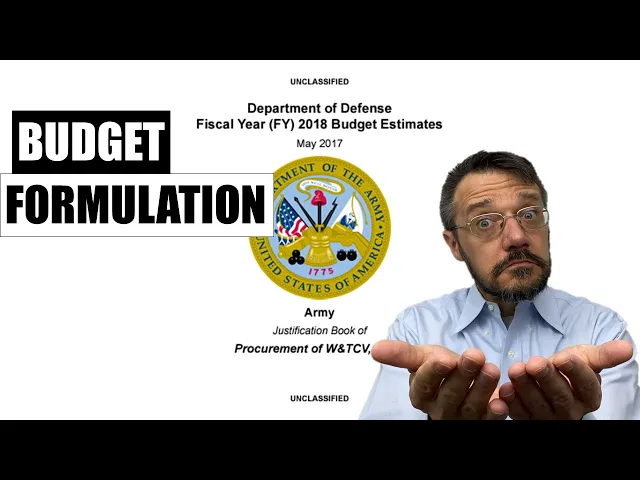
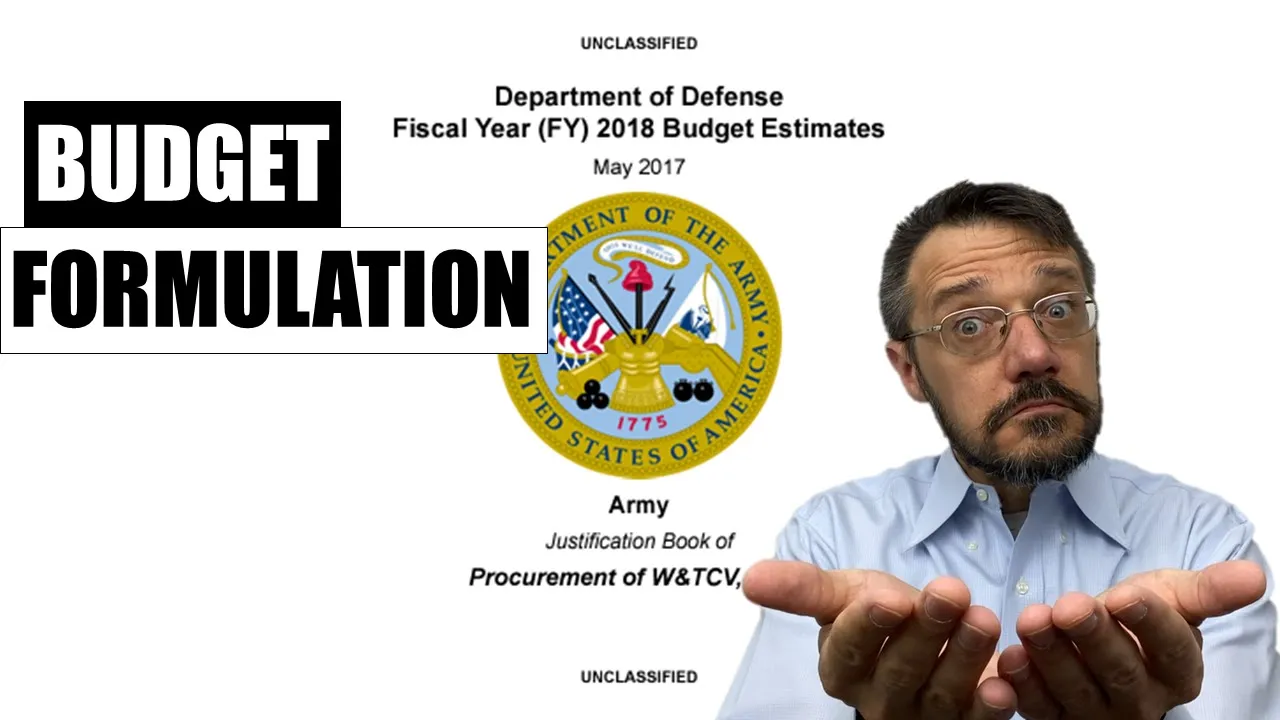
a budget request that sort of serves as a rough draft for what finally becomes the Appropriations act and here is one of the big secrets that word budget in ppbe it actually stands for presidential budget request formulation it's the process of taking the services priorities and cost estimates and turning them into a document that Congress can review for any given fiscal year budget formulation usually starts in June or July this is when DOD asks all the services to provide a budget estimate then through the summer DOD kind of chews over this document they ask questions
they hold meetings they make sure that service priorities are in alignment with DOD priorities and all of this ramps up in intensity until like November or December when DOD starts issuing specific guidance for how they want the services to adjust their budgets in fact the timing of this around Thanksgiving and Christmas leads to something that I call the Holiday stunt after DOD finalizes their Guidance the effort shifts to producing the tens of thousands of pages of documentation that will eventually be sent Congress by law the president is supposed to submit his budget by the first
Monday of February but that doesn't always happen especially when there's a change in administration that budget rollout can get delayed and this has two big implications for the Comptroller community first they're always working hard to meet that first Monday of February deadline but they also have to be working really hard to meet the guidance of the executive branch so when rollout gets delayed the comptrollers can get stuck in this weird limbo of hard work but nothing's actually moving forward the second implication of a delayed rollout is that if it's delayed long enough it starts tripping
over the beginning of the next cycle and I know staff offices can adapt to just about anything but it also tends to stress them out and frustrate them now even if the budget goes to Congress in early February that doesn't mean that the budget formulation process is over as soon as Congress gets that budget they got questions and they expect that they're going to get answers fast and then there's media rollouts and Congressional testimony and through all of this those budget formulation people are trying to keep the service on a clear and consistent narrative all
right so we've looked at budget and execution and you can see how each of them has their own period of intensity now let's back things up a little further and see how the service programs for its budget