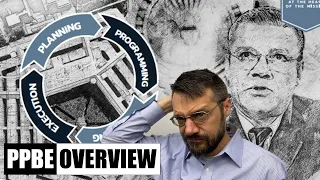
[Music] this is where math meets the mission hey I am Chuck the bureaucrat and I've been talking to you about the department of defenses planning programming budgeting and execution process in earlier videos I walked you through the major steps of budget formulation and execution budget formulation is where the president consolidates his budget request for Congress and execution is where the services spend the money that Congress appropriates for them you might wonder how does the service get a say in all of this well that happens in the programming phase it is a colorful and roxious time
when the unlimited wants of the service bang up against limited resources and it's one of the places where the cultural differences between operators and analysts comes into stark contrast you see The Operators are coming at this from the planning side of the equation and they are experts getting stuff done and you get things done with soldiers and trucks and ammunition but you can't just ask Congress for soldiers trucks and ammunition you have to ask them for dollars meanwhile on the right hand side of the ppbe equation you've got the comptrollers and they have a particular
quality they make the numbers balance they're really good at it and they've saved plenty of Commander's butts by doing it so they are going to keep keeping the books straight but if you leave comptrollers and operators unsupervised together you get a lot of yelling like a lot and eventually both of them just say fine I'll do it my way and then some unpaid Congressional intern eats you for lunch so between these two communities you have the programmers and they're going to translate the operator's plans into cost estimates that the comptrollers can use they're going to
enforce budget constraints on decision making and they're going to facilitate the negotiation of all the different layers of command priorities but when does the annual cycle of programming begin well it is a little fuzzier than budgeting and execution preliminary work starts as early as August or September once the the budget estimate submission is safely handed over to DOD before DOD really finishes all of their work preliminary programming efforts get underway usually hyper focused reviews of specific programs then when DOD issues its final guidance on the pre previous year the programmers take that as guidance for
the next year I mean it's kind of foolish to reverse course on guidance that your higher headquarters just gave you then the programmers set up meetings to get direction from senior leaders like the service secretary and Service Chief they have the teams that have been doing those hyper focused deep Dives come in and give the senior leaders an overview that usually uncovers a host of expensive problems that are going to interfere with the senior leaders goals and then in April or May it is time for the hard decisions sacred cows are going to be sacrificed
promises are going to be broken these are not easy decisions and they often happen in very small groups so by June the programmers have to tidy up their work in preparation to submit the budget estimate submission to DOD but that does not mean that their work is done those hard last minute decisions well they're not going to sit well with some stakeholders some stakeholders will go Rogue they'll try to Buck the senior leaders decisions so the senior programmers police the ranks they prevent gaps from forming in the service narrative and then it all just starts
over again and now that just leaves us with one phase of ppbe left to talk about planning and if you want to see why I didn't start this video series with planning watch this one