hi so today I want to talk about mechanical failure chapter 8 probably the most depressing chapter but also some of the most fun testing that gets to be done in material science and engineering and so what we're going to talk about today is how do the cracks that lead to the failure form how is the fracture resistant it's quantified for material and how do the fracture resistances of different materials compare and then how do we estimate what stresses are going to cause a fracture and then how does temperature effective so here we can see some
various failures to the left you can see this very depressing picture of a ship that just completely broken half here's a picture of the computer chip that failed due to thermal loading and then here's a picture of a ship end plant and of course meshing apart with the body is oftentimes one of the more challenging engineering problems that can face material scientists try biologists and other people that work in this field so first let's talk about the two mechanisms to fracture there's dusty'll fracture where you have significant plastic deformation before the fracture occurs and there's
brittle fat fracture which is little or no plastic deformation and can be quite catastrophic and sudden so of course if you look at what the parts look like after they've fractured let's say for example that you performed a tensile test on the material then for a very ductile material the at the break point it's been drawn to a very narrow point there's a lot of necking and it forms a sharp point like you see here if you have a moderately ductile material like some metals then you see a little bit of necking and then a
fracture across the center and this for a brittle material it doesn't neck at all the nice thing about ductile materials is that you have warning usually before fracture occurs you can see the neck and start to floor arm the part starts to give there's more time brutal fracture is so sudden and so catastrophic that it's not very desirable so here's some examples of some images of ductile and brittle failure this pipe has one large defamation that split along the way just one basically exploded okay and it's gotta many pieces sharp deformations shards flying out mass
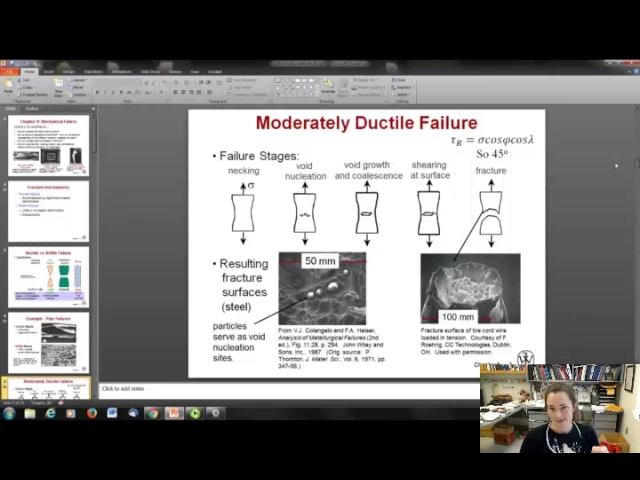
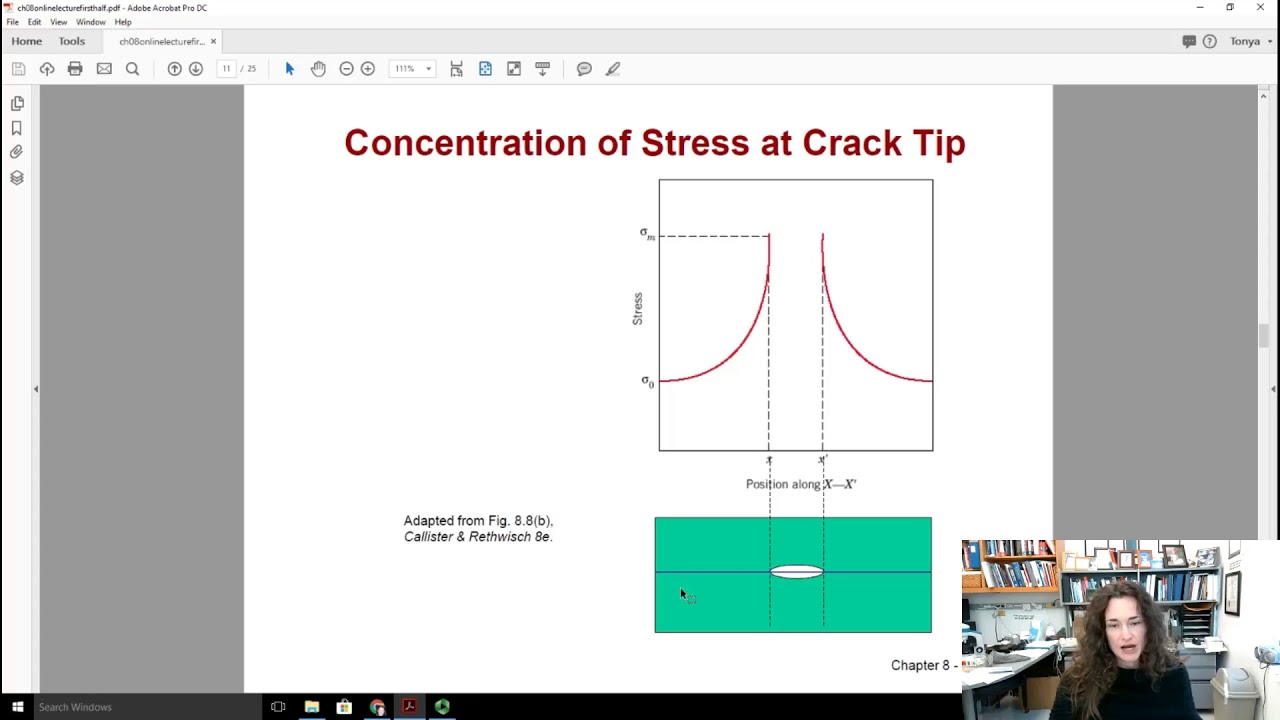
hysteria so you can see why ductile fracture would be preferred as a brittle in moderately ductile fracture and this would occur in tensile testing and the materials that we showed the other day what happens is you see the next start to form and then before the material will fracture what happens is that there's little voids that form within the material they usually begin to form at flaws that are already existing inside the material so those voids form and then eventually they coalesce into sort of an internal crack and then the part starts to share at
the surface and then you have your fracture if you look at a lot of parts that have been put through a tensile stress test you'll see that there's these 45 degree angles at the edge of the stresses are at the edge of the breaks and that of course is comes from an earlier chapter where we talked about the result shear stress and how forty-five degrees is the best angle for that to happen at so that's that's where that's why you see that particular structure if you were to examine the fracture surface which we'll do in
a lab coming up pretty soon then you can often see that there's there's sites that serves as nucleation or growth sites for these voids and they occur at these defects you can see here in this particular part there were particles that started the void and then here you can see what a pretty typical looking cross-section for something a metal that's been put through a tensile stress and it's called that cup and construct us sure here is the cup part two shown in this image so here's the cup and cone fracture surface like I was talking
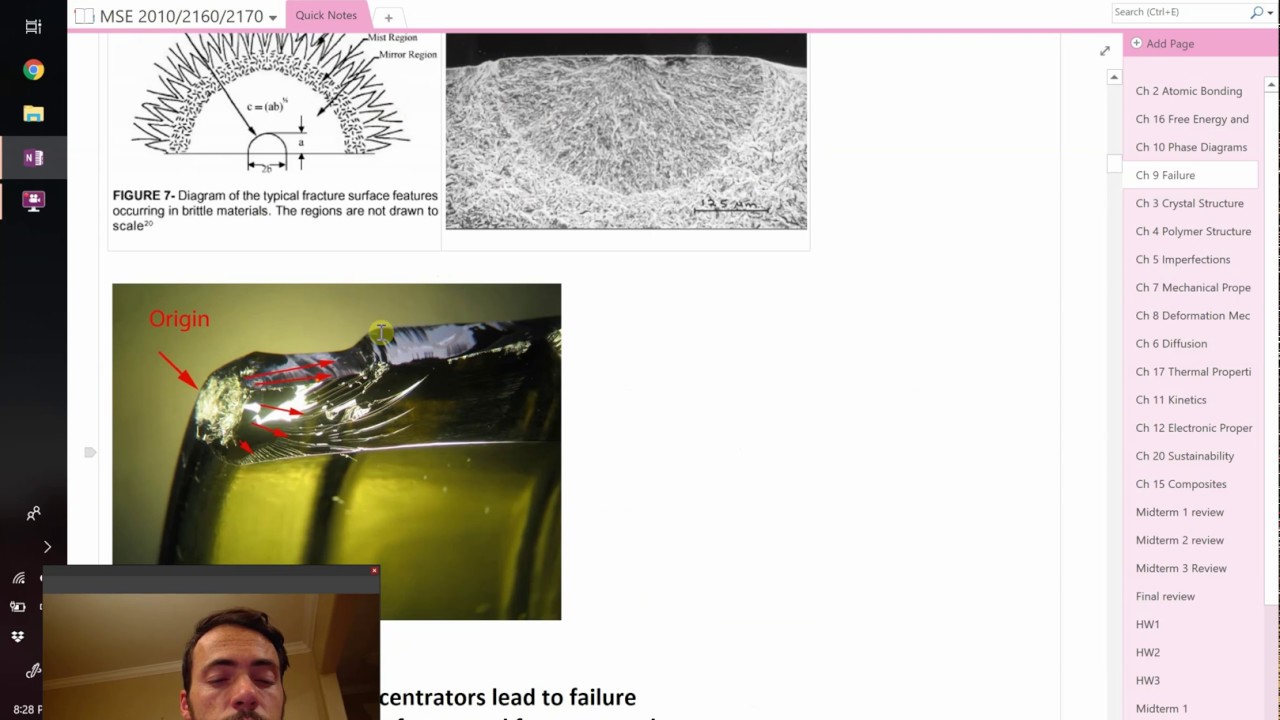
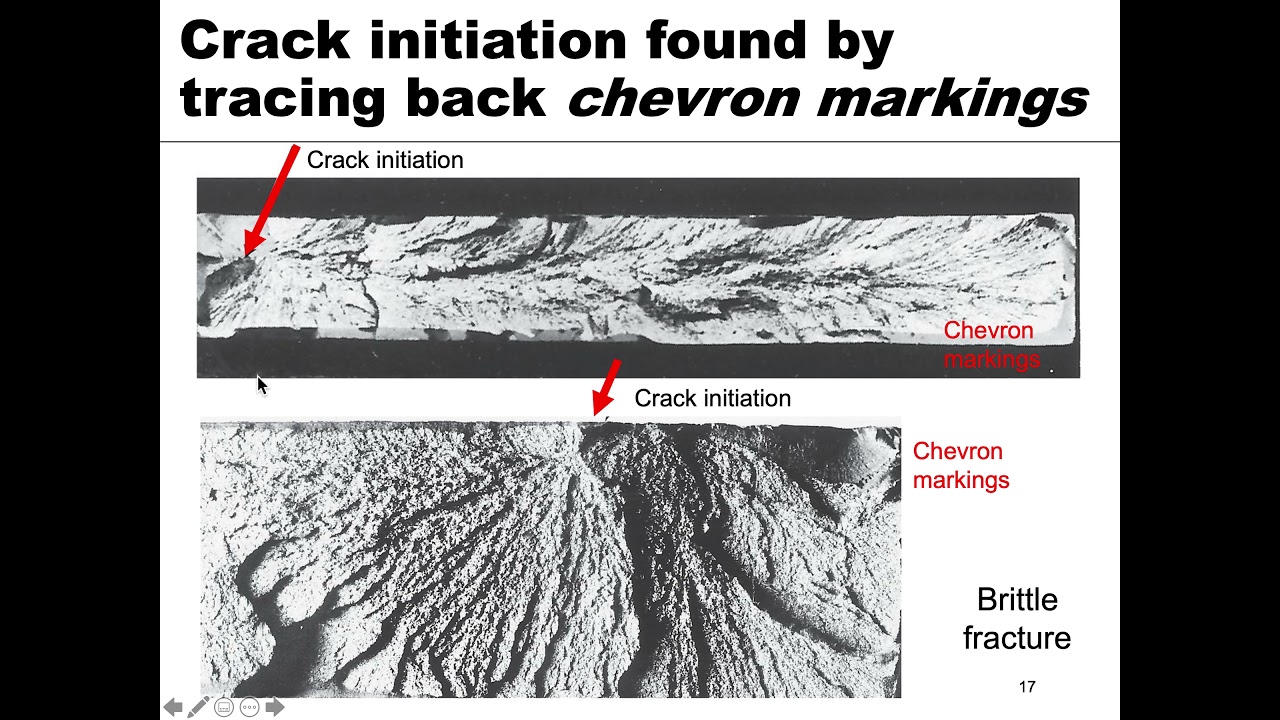
about and this is why it would look like to the naked eye whereas if you put something in there that is more brittle it just looks straight across almost like that and that's of course that sudden catastrophic failure with no necking if you have a part sometimes you can track back looking at the wear patterns to indicate where the failure originated you'll get these wear patterns and the V will form at the site of the flaw that caused the fracture that started the crack propagation and the breakage so you can see that happen in the
right part now sometimes if you have certain materials hang on just a second