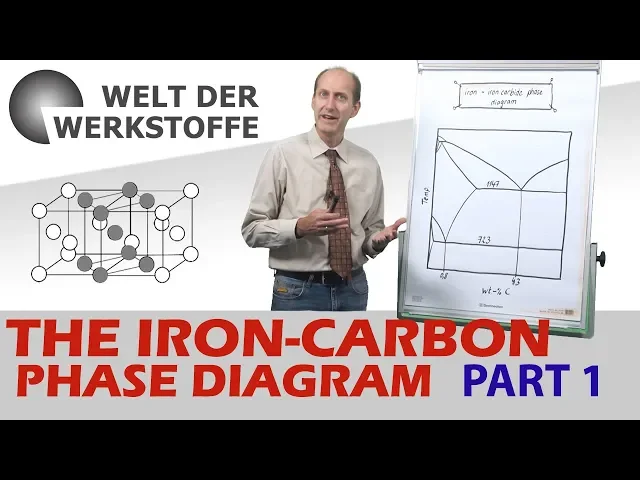
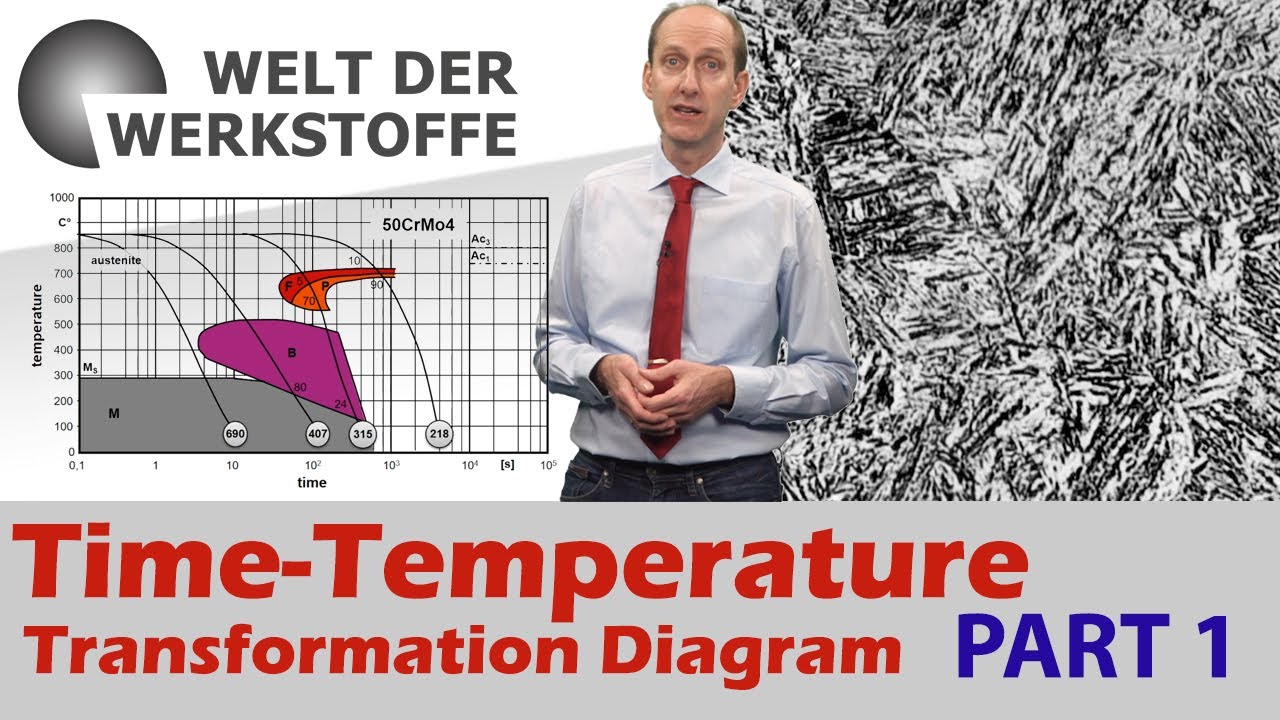
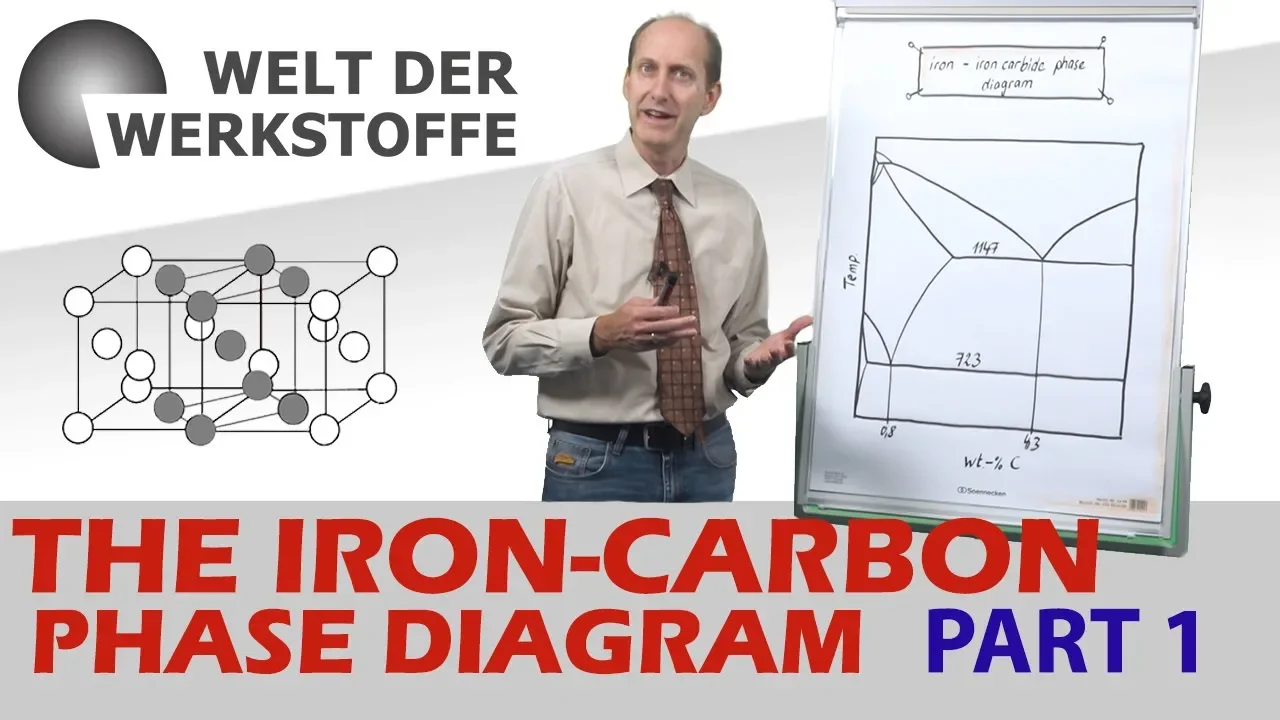
[Music] [Music] welcome to the world of material science my name is Professor Bonilla this video will introduce you to the Mona Lisa of material science meet the iron carbon phase diagram the iron carbon binary system forms the basis for all Steel's and cast iron materials the mechanical properties of steel and cast iron materials can be changed in vast ranges of different degrees of strengths this is closely related to the transformation behavior of the iron lattice and the specific interactions between carbon and the two crystal structures of iron namely body centered cubic and face centered cubic moreover iron and carbon can develop metastable or stable phase depending on the boundary conditions thus permitting the production of good ferrous materials with mechanical properties adapted to the respective application hence knowledge of the iron carbon phase diagram with its phases and their related properties is a basis for understanding the behavior of all steels and cast iron materials with a share of 4. 7% iron is the second most common metal in the Earth's crust after aluminium as we have seen in Chapter two designation of steel part one of the european standard en 10020 defines steel as a material consisting mainly of iron with a maximum carbon content of two percent the mass fraction of iron is greater than that of any other element currently more than 2500 steel grades are available this is due to the fact that there are various possibilities to modify the properties of steel either by heat treatment or with the help of alloying elements iron is one of the few polymorphous metals that is to say it exists in different types of crystals unlike most other metals the cool curve of pure iron obtained by summon analysis does not show one but three arrest points pure iron solidifies at 1536 degree Celsius forming crystals with a body-centered cubic lattice the so-called delta iron here the first arrest point occurs at 1401 degrees Celsius the more densely packed phase centered cubic lattice the gamma iron appears here the second arrest point occurs although it is not as a solidification that takes place but an exothermic solid solid transition after further cooling another lattice transition into a body centered cubic structure the alpha iron takes place at 911 degree sensors however compared to the Delta iron which also has a body centered cubic structure the alpha iron has smaller lattice constants it exists down to the lowest temperatures at a certain temperature the ferromagnetic or Ferro electric properties of a sample will have disappeared completely so that it will only be paramagnetic above that point this temperature is called the Curie temperature for iron this temperature is at 769 degree Celsius so that the sermon ulema this shows a discontinuity at this point however another lattice transition does not occur the transition at the arrest point a r3 at 911 degree surges that is to say the transition from gamma to alpha iron is of particular importance as can be seen as this figure the transition takes place with minimum movement of the atoms at the same time this results in a measurable increase in volume of all the crystal types of iron 2 are of particular importance for steels at room temperature and lower temperatures the properties and the behavior of Steel are determined by the Alpha iron or so-called ferrite it has as we have already seen a body centered cubic lattice at higher temperatures above a rest point ar3 which are reached when the material is hot worked by forging for instance gamma iron the so called austenite occurs due to its face centered cubic structure it has the highest packing density moreover it is characterized by excellent ductility and a slightly higher thermal expansion it is non-magnetic and assaults considerably more carbon in the solid solution although the body centered cubic iron features a lower packing density the existing lattice vacancies are only very small and allow only atoms with a diameter of 15% of iron to be absorbed within without stress so I want to draw the body centered cubic lattice to further illustrate this behavior so here we see the body centered cubic lattice and we see that we only have very very small letters vacancies the more densely packed face centered cubic gamma-iron on the other hand has fewer but larger vacancies which could observe atoms with a diameter of up to 41% of iron without stress this explains why the maximum solubility of carbon in farad is only up to 0. 02 but in our site up to 2.
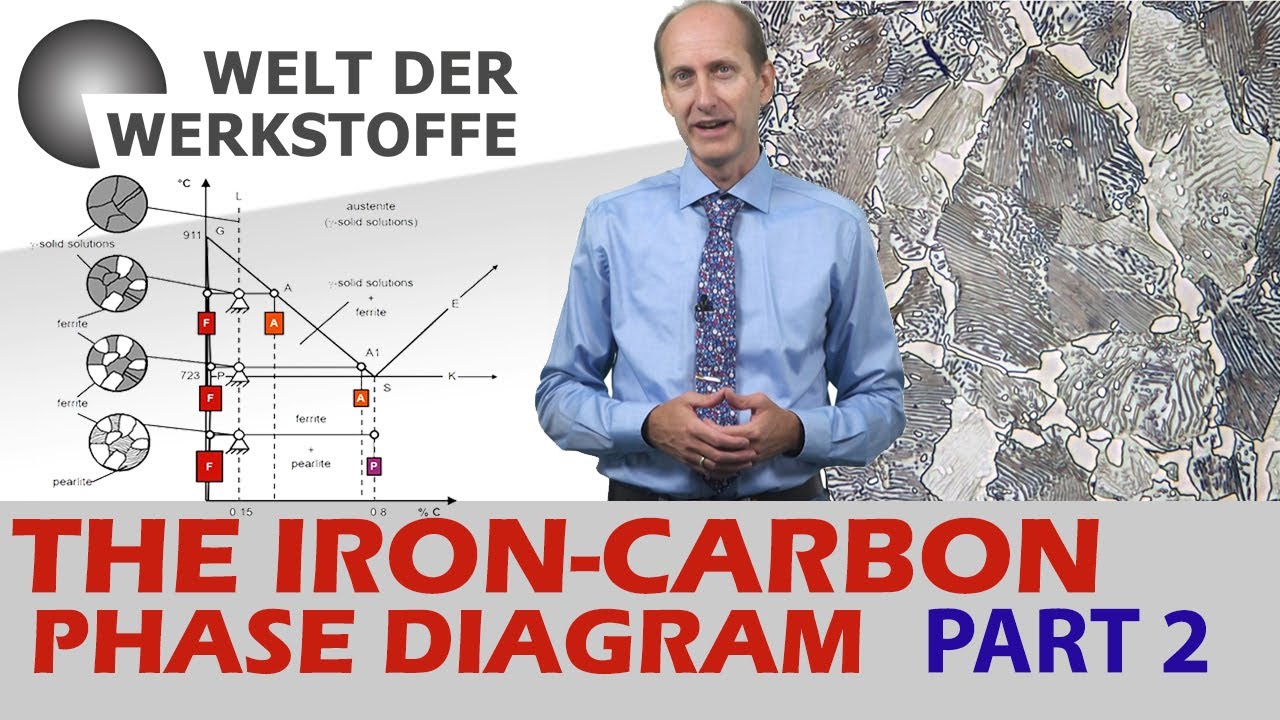
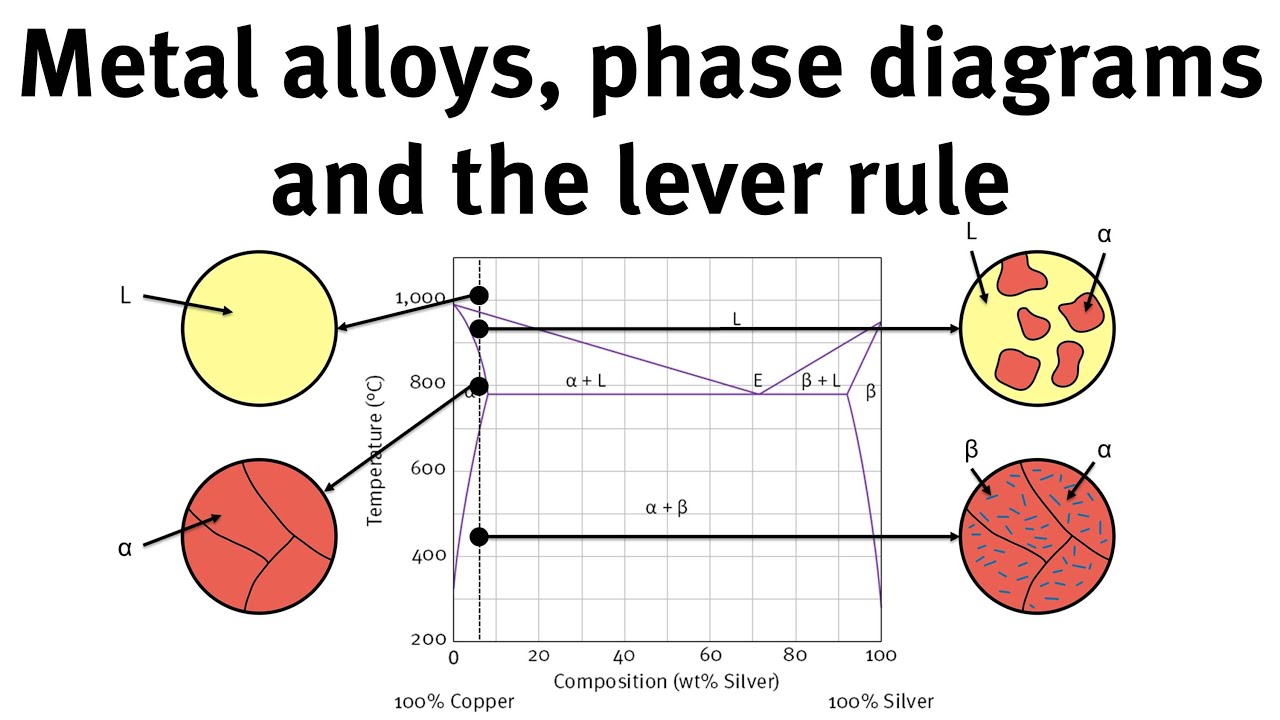
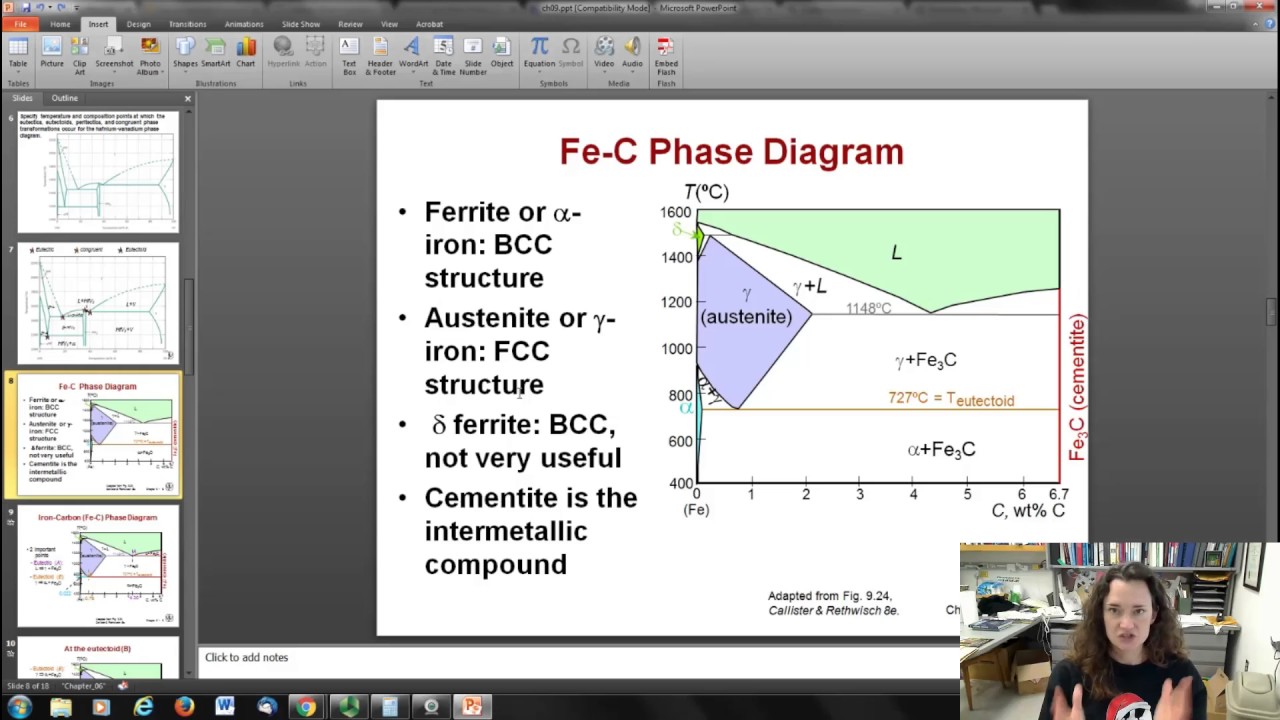
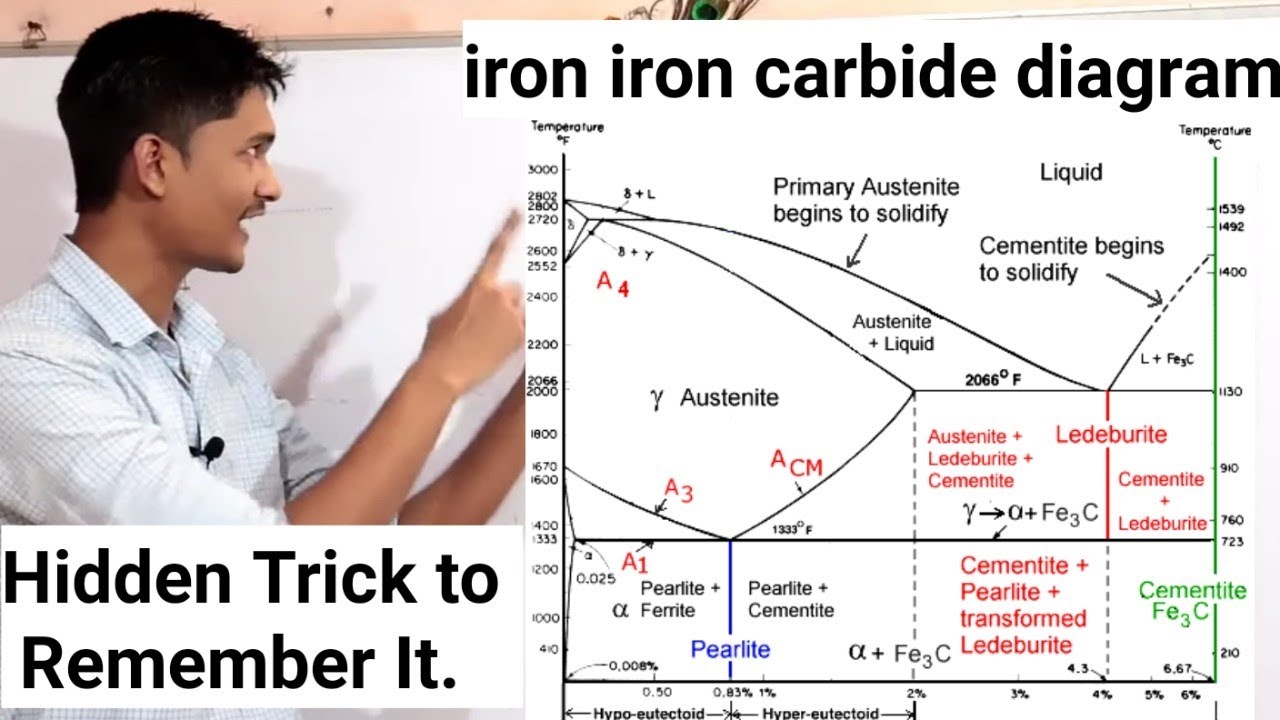
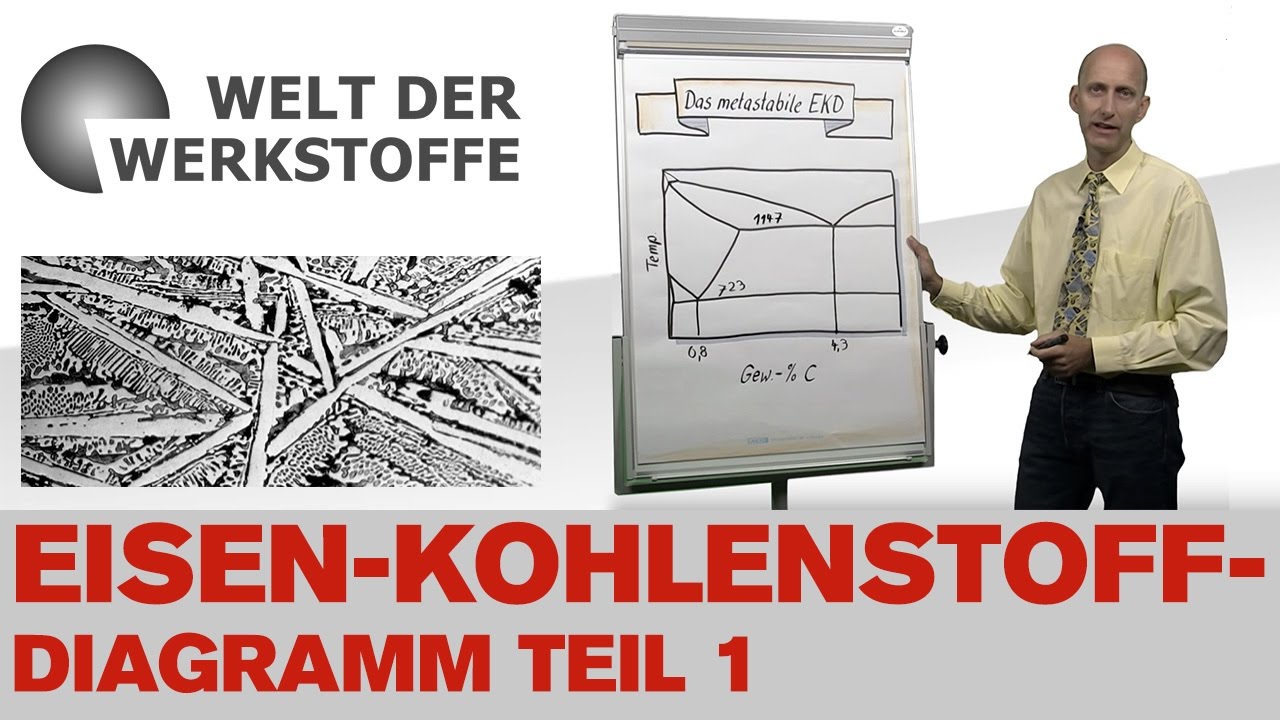
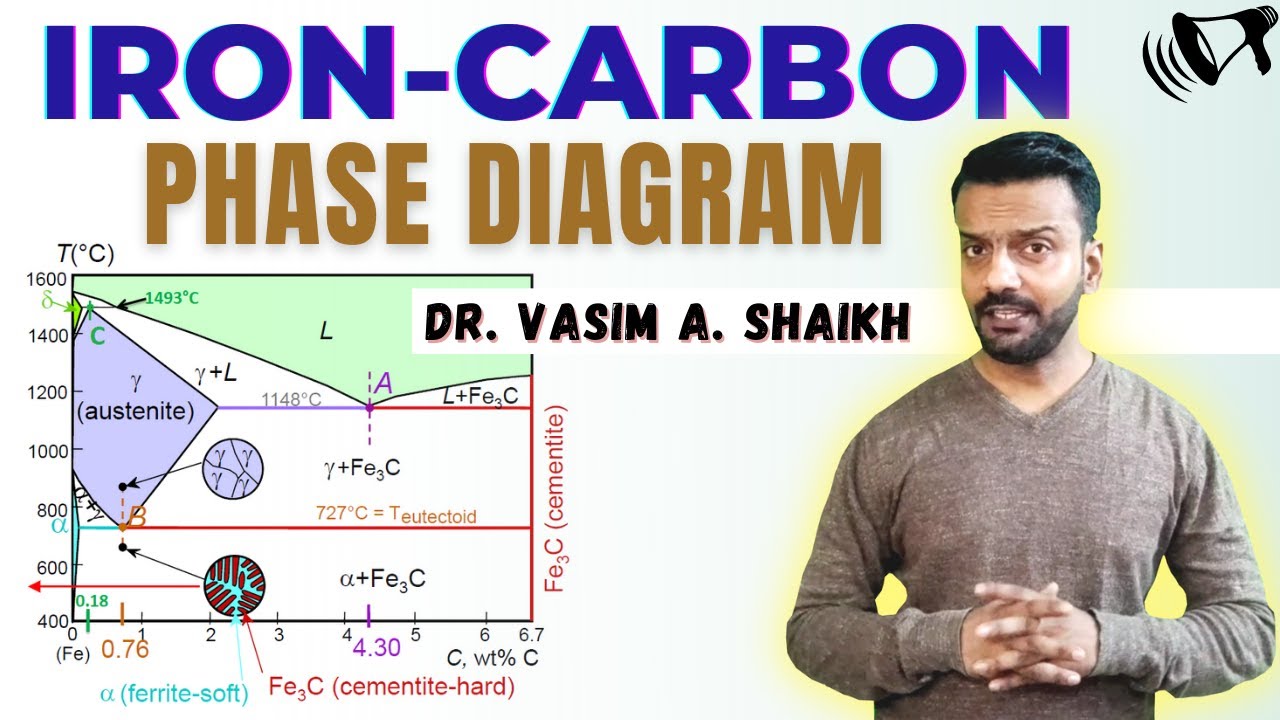
06 percent so therefore i also want to draw the face centered cubic lattice and as we can see here we have much larger vacancies the complete iron carbon phase diagram can be seen here it shows the phase boundaries for all concentrations between zero and 100% carbon content at any given temperature at high carbon concentrations however the material mostly consists of graphite and is unsuitable as a constructional material interesting from a technical point of view our only carbon concentrations of lower 6. 67 percent this is why the area enclosed by the dashed lines is usually shown in detail if we zoom in on this area of up to 7 weight percent carbon we will obtain a portion of the iron carbon phase called the iron iron carbide phase diagram this shows the stable system for an infinitely slow cooling process during which carbon precipitates out as graphite we have already seen the pure iron solidifies to form crystals with a body centered cubic lattice the so-called Delta iron at a temperature of 1536 degree Celsius and 1401 degrees Celsius it transitions to a more densely packed phase centered cubic lattice the gamma iron after further cooling another lattice transition into a body centered cubic structure the alpha iron takes place at 911 degrees edges thus in the two phase area between Delta and gamma iron Delta and gamma iron must be present just as in the two phase area between gamma iron and alpha iron gamma and alpha iron must be present above the liquidus line there is of course melt this means that in the two-phase area between melt and Delta iron there must be both melt and Delta iron present and the two-phase area between melt and gamma-iron must also contain both melt and gamma-iron given that carbon is soluble in iron to a certain extent but iron is insoluble in current carbon participates out as graphite thus the remaining phase fields are meld and graphite gammas solid solution and graphite and finally alpha solid solution and graphite when dealing with cast iron and gray cast iron in particular we have to concentrate on the stable iron carbon phase diagram when dealing with steel however we are only interested in the metastable system of iron and iron carbide as you can see the phase diagram also indicates the proportion of cementite below the carbon scale cementite is an inter metallic compound of iron and carbon with a formula f is free C which is characterized by high strength and hardness but also by a low degree of toughness a carbon content of six point six seven corresponds to a cementite content of 100% this as explains why the iron iron carbide phase diagram ends here we have already heard that the gamma solid solution is also called arsenide and that the Alpha solid solution is referred to as ferrite but also the structural constituents resulting from the three phases arsenide ferrite and cementite have their own names we recognize the region at high temperatures and a high cementite mass content as a system with decreasing limited solubility in the solid state in other words it is an atactic system for the iron carbon system hectic point is at 4. 3% cabin and a temperature of 1000 147 degrees houses if we imagine the lever arm drawn in the interest diagram we can derive that austenite and cementite each make about half of the atactic structure this was named label right after the person who discovered it the metallurgist Carl Heinrich Adolphe Lee Dubois due to its highest cementite content label right is strong and hard but also brittle the area at low temperature and low cementite mass content in the phase diagram also reminds us of a system with decreasing limited solubility in the solid state unlike the eutectic system the transformation does not start from the components dissolved in each other in the melt but from the components dissolved in each other in the solid state the arsenide as this system is very similar to the I tactic it is called Wojtek to eat so a tektite point is at 0.
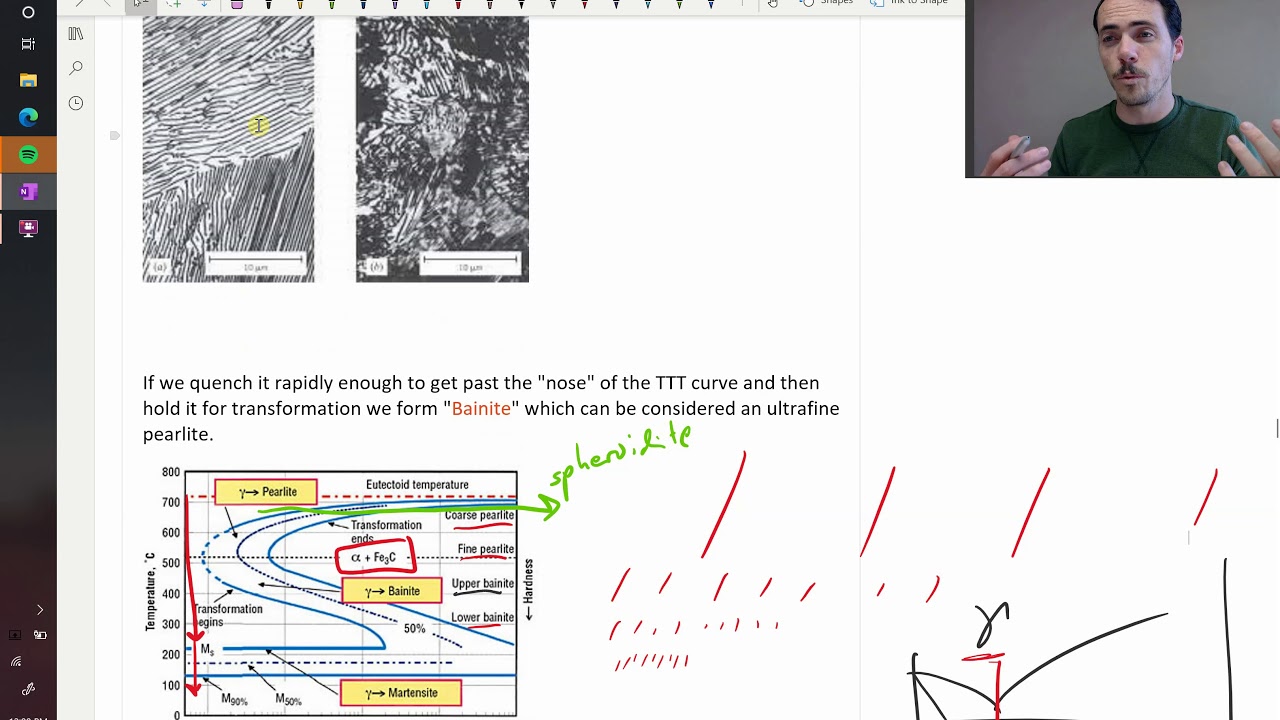
8 percent carbon and a transformation temperature of 723 degrees celsius this high-tech - its structure is called pearlite and consists mostly of soft tough ferrite layered with cementite lamella which considerably increase it hardness and strength at high temperatures and low carbon content we can see an area which looks like our tactic system turned upside down at 0. 16 percent carbon and 1493 degree Celsius Delta ferrite and the remaining melt transformed into austenite this type of system is referred to as peritectic however it is only of minor importance for the technical use of steel this least asked us explains different types of cementite cementite was crystallized from the melt that is to say below the line CD in the iron carbon phase diagram is called primary cementite or c1 secondary cementite c2 develops by precipitation out of the austenite that is to say when the temperature drops below the line s EF tetchy re cementite c3 precipitates out of the ferrite below the line PQ K of course the proportion of tertiary cementite can only be neglible e small which is why it is sometimes left out completely in the literature as it may not be easy to remember all the names and numeric values of the iron iron carbide phase diagram all at once it might be helpful to remember the two value pairs 4. 3% in 1147 degree celsius for the atactic system and 0.