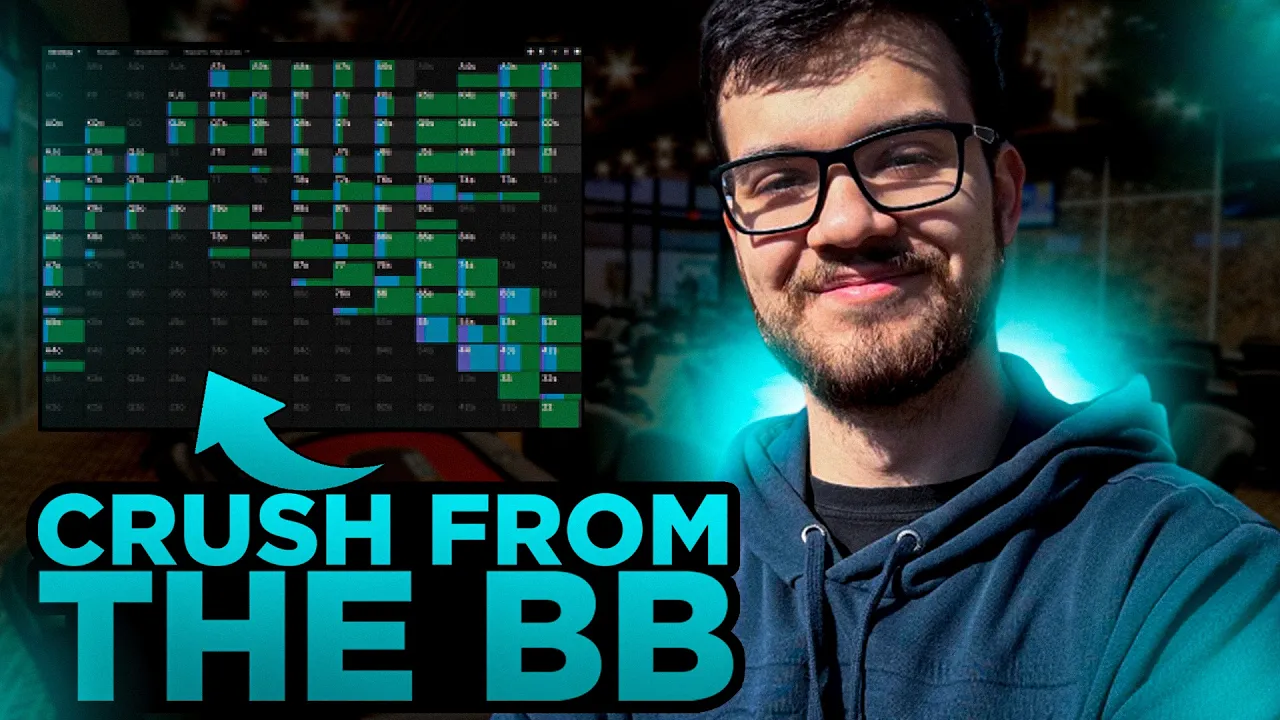
Hey guys it's chai your professional poker coach you guys really like my previous video about flop SE betting and I had two people who followed up asking me for big blinds response so I decided to make this follow-up video again this is going to be packed to the brim with tons of technical content that's going to make you a much much better poker player we're going to take a deep dive into poker theory on a whole bunch of Different boards so you can feel so much more confident playing from the big blind and by the
way so many people struggle here but first I want to challenge you in my previous video only around 10% of viewers actually watched it to the end that video of course was highly Technical and highly valuable as so many of you have pointed out right now I want to challenge you to be one of those 10% of people who are going to watch through this video These 10% of Viewers are going to be the most dedicated poker players who will make the most amount of money and Crush longterm so buckle in cuz we have a
lot to cover today we're going to talk about how to play from the big blind facing seab bets we're mainly going to look at button versus big blind facing smaller bets because that's the most common situation you'll be in but of course we're going to take a look at early position play as well so under the gun Versus big blind and I'll also talk about how to face large seab bets after watching this video you will have a very clear understanding of how to defend by calling and by raising versus seets I've prepared a table
of contents for you guys we're going to start off with the pro poker thought process there's a few adjustments that we have to make to our thought process when we're facing a cab bet versus when we are the pre- Flop Razer and C betting Ourselves so it's important to cover this one it's it's going to be a little bit different from that previous video by the way if you guys haven't seen that previous video definitely check it out super good or just save it for later afterwards I'm going to cover a few brief notes about
how we defend by calling and how we defend by check raising before we take a deeper dive into specific textures because a lot of people struggle on the turn after check Raising I'm also going to spend a little bit of time to cover basic turn play afterwards we're going to take our Deep dive into flop textures these will be the same textures that I talked about in the previous video and finally I'm going to teach you how to defend versus larger sizes so just a few notes on how everything changes when our opponent is using
a larger flop seet whoops sorry guys future me we're actually going to talk about basic turn play after we Discuss the Flop textures it just makes a bit more sense when we are facing a flop C bet we need a crystal clear thought process to maximize our EV we never want to play this hand in just a field-based way we need to know exactly what our options are and how well they perform versus our opponents for me a crystalclear thought process it just answers three questions and I call this the pro poker thought process from
my previous video the pro poker thought Process started with answering what our overall strategy is and then answering how we can exploit our opponents here we have to do it a little bit differently because we're defending instead of facing a CET so when you're defending versus a CET the first question you have to answer is what is the strategy with your range this is the whole strategy so it is the calling strategy and the raising strategy in one question the next question narrows it down to your Hand which is going to be exceptionally important for
theoretical play as well as exploitative play super important that we have the step-by-step order the final question is what is the exploitative way to play this means how do you deviate in order to exploit your opponents maximally in the previous video I talked about how we can exploit our opponents as the pre-f Flop razor but because defending from the big blind is a more complex subject we're not Going to talk about exploits today the video would be too long but comment down below if you want to see that let's now discuss a few points which
will help us answer question one what is the strategy with my range first let's talk about defending by calling facing a small C bet b33 means our opponent is betting 33% of the pot our folding frequency is between 35 and 38% and we will call more from late positions there's a very important note about this bet size so Playing as the pre- Flop razor our opponents will use this bet size too often and they will also see bet too often on the Flop so it's very important that we know how to play effectively versus the
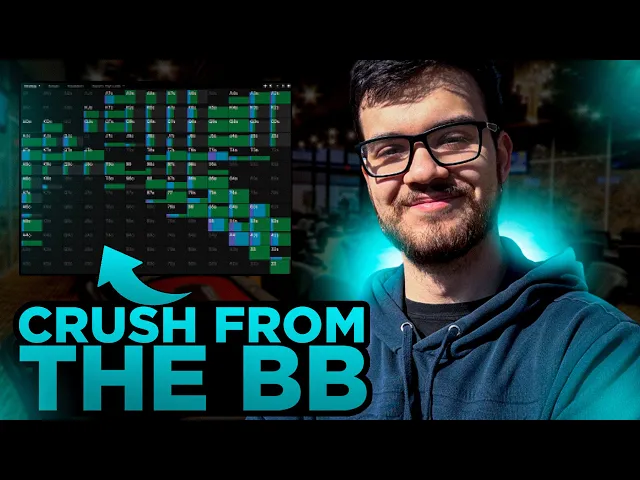
size because this is the size that our opponents are using most often and as I mentioned here we will be calling more from late positions in theory let me explain why very quickly with the demonstration this tab shows big blind's calling strategy on all These different High cards versus a small bat from under the gun you'll see that the overall folding frequency is around 38% here big blind is folding most on ace high King High and queen High flops if I click over here we will see the Flop seab Bel but report for under the
gun so this tab now shows where does Under the Gun bet most often on and you will see that they are betting most often on Ace highboards king highboards and queen highboards Let's take a deeper dive into one of these I think King 93 is actually perfectly fine as an example on this board under the gun is going to bet very often and big blind is going to fold very often this is actually an overfolded frequency are going to be related points the reason why in position is betting very often here is because they have
a massive range advantage in early positions if you just think about both players ranges the inos Player has a lot of cards that are going to to interact very very well with this King and big blind is going to largely miss this board because their range is condensed around all of these lower combos so there's a big range asymmetry from early positions that's why this player is betting so often and that's why big blind is folding so often if I switch the tab over to this exact same spot but played as big blind versus button
you will see that on the exact Same board King 93 big blind is folding far less often when both players ranges are much wider so in button versus big blind you typically will be calling more as we'll see later it's actually quite difficult to call the right amount from late positions on so many different boards so as your professional poker coach my goal is to teach you how to defend here properly the next point I want to make is that we should be calling more on low boards but only if We do not play flop
dunks looking at the high card report in big blind versus button you'll see that the folding frequency actually increases a tiny bit on these lower boards from these middle boards we're calling around 52% of the time on a nine High board but we're only calling 45% of the time and also folding a little bit more often on a six High board looking at it this way it almost seems that we're calling less often on low boards but this is only because the Solver is donking on a lot of lower boards if we take a look
at the donking report you will see that big blind is betting quite often on seven High boards six High boards five high four High three high of course they're donking here because their range naturally interacts better with lower boards so they have a range Advantage here to show you how our folding frequency changes when we do not have a donking range I've set up two tabs in GTO wizard AI in the First tab we are playing as big blind versus Under the Gun and we are able to donk because we have a big range advantage
on 53 dos the solver will donk 54% of the time whenever there is a betting range in poker it will always be a little bit stronger than the overall range so if we look at the overall range you'll see that the distribution looks like this but proportionately we are betting many more strong hands than weak hands we're betting our straights and Sets very often but we're not bluffing very often so when big blind has a donking range that donking range sort of filters away or kind of steals our strong hands away from our check range
essentially it just means that our checking range becomes a little bit weaker when we have dunks as a result if we are facing this small bed from under the gun we will be folding 42% of the time but looking at our other tab in this tab we do not have a donking range We are only folding 31% of the time so going back to our tab right over here as you might imagine if we do not play donks we would just be calling a lot more on Lower boards the next broad point that I want
to mention is that when we are constructing a defending range we want to think about folding the bottom 30% of our range this is a rough heuristic which will help you find a lot of tricky calls in my coaching calls with students I often ask what do you Think is the defending threshold on a lot of boards I think I'm actually going to ask one of those questions to you guys right now but one easy way how we can find it is to actually just think about the bottom portion of our range let me show
you what I mean with a drill I actually think this is a pretty good example here we're playing as big blind and we are facing a small betat from button I'm going to ask you what are some of the weakest calls that we should Have versus the small bet really think about it write down your answer what are some zero EV calls you can pause the video go ahead hopefully you did that if not that's fine instead of answering this one myself I just want to reveal the answer I'm going to click call here and
now let's open this in a separate tab here's the defending threshold we have a number of weak calls like Queen 8 Queen 7 and even Queen 4 in our range you'll notice that Queen four of Hearts Is calling 100% of the time if you're like most people you may have said something like Ace highs should defend but a lot of people are just going to miss these very very weak calls the reason why we have to call these hands is because we're only really allowed to fold 30% of the time remember we're playing late positions
so ranges are quite wide and our opponent has a lot of very weak hands that they bet themselves so these hands are perfectly strong and They have to defend in order to prevent our opponent from exploiting us by just betting far too often in order to find tricky defends like these I really like the thought process of thinking about what is the bottom 30% of your range later on in the video we'll take a much deeper and more specific dive into it but if you just think about what does my overall range look like and
you can kind of Imagine in the weakest oneir of it then that gets you fairly close to an Accurate answer before we move on I want to talk to you guys about some more free value that I have for you on my website I have released a 100% free warm-up Builder that helps you warm up like a winner this is a modular warm-up Builder we take three steps the first step is meditation second one is introspection and the third one is visualization in the 100% free document I discuss why each step is important and I
give you a bunch of options to choose from to fit Your personal needs in my opinion this is some of the highest EV free content that I've put out there in fact to feel more confident and energized I use this warm-up before recording this video definitely check it out the link is going to be in the description and in the comments this is the easiest way to play more confidently and win more money let's talk about defending by raising facing a 33% potsize BET our raising frequency is around 15% on average this Does vary greatly
by texture before we move on to the next point I want to ask you guys a question do you think the solver will raise more often from late positions so for example when we're playing versus button or will it raise more often from early positions so for example when we're playing versus Under the Gun think about it pause the video go ahead hoping you've done that let's look at the answer the solver raises less from late positions but only Because the the average bet size is larger in my previous video about flop C betting we
saw that the solver prefers to use a smaller bet size more often in under the gun versus big blind we will be raising less often versus big bets and we will encounter big bets more from late positions therefore we should be raising less often in late positions but if we're facing a small bet then we should be raising about as often from late positions as we raise from early Positions going back to our flop reports to demonstrate this in big blind versus button we are raising around 15% of the time versus a small betat and
in big blind versus Under the Gun we are still raising around 15% of the time versus that small betat so it doesn't change what does change however is that we should raise a bit more on low boards from late positions we'll talk about this a lot more when we talk about specific textures but here tabbing Between under the gun and big blinds to button versus big blind you will see that the solver is going to raise a little bit more often on low boards from late positions this will however be affected by the donking strategy
which we talked about earlier so those are all the basic points about check raising check raising is very complex and very important and that's why it's important for us to now take a deeper dive into how we defend on all sorts of different Flop textures just like before we're going to group flops into a few different categories we'll first talk about high connected boards then we'll talk talk about high disconnected boards then we'll talk about low boards and paired boards so let's jump into our first category the high connected flops here's an example of a
high connected board we're playing as big Bine versus button and it's Queen Jack 4 high connected boards are just boards where There are at least two high cards so this could be Queen Jack 4 it could be ace 104 king queen 3 king queen 10 that sort of thing now if you remember from the previous video that I made a small bet size is actually not preferred from the pre-f flop ER but a lot of people are going to use a small bet here anyways let's take a look at how to defend versus C bets
on these boards on high connected boards our best strategy is to call our strongest aze and then Raise 8 to 10% of the time using a large size let's talk about that calling strategy first as you might imagine we're not calling a lot of weak hands on these very high boards in big blind versus button even versus a small bat we're hardly ever calling any air the weakest air that we call is going to be ace9 suited and we're even folding a few weaker pocket pairs so our hand has to be quite good in order
for us to call versus a bet as you might imagine we're Folding a lot more from early positions we're not calling Ace KN of Spades anymore and we're also folding so many of our weaker pairs even pocket 10s is not pure calling versus a small betat from under the gun if our opponent uses a larger flop b as some players do our defending threshold will rise consider considerably facing 75% of the pot we're practically never calling any pocket pairs only a Slimmer of pocket T calls and we're actually starting to fold some Second pairs like
King Jack offit and kingj Jack suited our defending threshold is very very high on these boards now our raising strategy both from early and late positions is quite polarized and we're not raising very often if you just want to use one raise size you can use 100% of the pot and raise around 8% % of the time you're raising a very polarized range because your opponent has a strong range overall on a lot of high disconnected boards low Boards and paired boards which are the categories we'll talk about later we'll see that we have a
strong incentive to raise a lot of weaker hands for protection but here our weaker hands aren't even strong enough to raise for a small size so we're far better off just using a polarized raising strategy and only raising our best hands and Bluffs let's take a look into how the hand classes play starting with our strongest hands our two pairs plus are raising 80% Of the time we don't hold over pairs here unfortunately and our stronger top pairs are raising 50% of the time our weaker ones are occasionally raising as well let's break it down
by highlighting sets two pairs and top pairs you'll see that our sets and two pairs are raising quite often so there's not too too much slow playing happening here and then we're also able to raise our Ace Queen but even something like king queen is actually not strong enough to raise for For that big bet on High boards like these you have to be very cautious and very much respect your opponent's range Advantage it is important to note that some of these weaker pairs will also raise just for balance but all of these will have
a flush draw so Queen de of Hearts will raise sometimes Queen three of Hearts Etc but never any diamond combo or Club combo for that large size the reason why these hands are raising is a little bit Technical and it has to Do with our turn range Construction in my opinion it's not exceptionally important to have these combos in the raising range however unless you're playing very high stakes so this might be something that's relevant for like 2kl players 5kl players but nothing below that and I say might cuz I'm not entirely certain that it
is even relevant for those players but at least the theoretical Concepts important to know next let's look at our weaker hands These will be our second Pairs and low pairs our second pairs mostly check and our low pairs will sometimes Bluff race around 50% of the time with a strong priority on connected hands let's select second pairs first you'll see that these hands are almost never raising fairly straightforward so let's move on and our third pairs are usually calling but these weaker third pairs in particular will always raise at some frequency they'll raise a little
bit more often if It's possible for them to have a flush draw if we just change the suits of the board it's now possible to have a third pair with a flush drum and so the raising frequency does increase by a little bit but not by that much overall we're mainly just adding raises like 7 four of Hearts 6 four of Hearts Etc the reason why we are raising these weak hands is because they don't have a lot of Showdown value and they have very nice blockers our opponents will not be Betting that much third
pair themselves so this is a relatively smaller chunk of their overall range which is nice because these are the hands that our opponent would fold versus our raay right so we raising for 100% of the pot you'll see that they will be folding a lot of weak hands like 64 without a flush draw so our third pairs don't have a lot of Showdown value and they kind of miss our opponent's folding range but they have a very nice ability to improve To two pair or three of a kind so definitely consider raising those hands a
lot of people will miss those raises let's look at our Bluffs so our connected hands are raising between 20 to 50% of the time and pure air will rarely raise we're only allowed to raise between 8 to 10% of the time so we can be quite selective with what hands we want to Bluff with in the solver we can see this if we just select our Bluffs so we're only ever really bluffing with our Strongest draws king T of Hearts is nice uh king T of Spades is also nice we have that gut shot we
have that back door flush draw and some of these weaker gut shots are occasionally raising as well there's not too much air that raises at all all of these weaker combos are just going to be our flush draws but if it's a rainbow board then sometimes you will see the occasional raise with a weak hand here's an example King five is Raising sometimes King 3 king deuce you Don't have to worry about these too much you can just raise with your gut shots on this board but these will typically just be the bottom of your
calling range you can see that they're mixing between raising calling and folding and they'll also almost always have a low card because that misses your opponent's folding range exploitatively you probably want to be a little bit more value heavy when you raise on these boards People will typically over defend versus check raises on these textures because their overall range is a little bit too strong by raising 100% of the pot you are asking your opponents to fold a lot of their second Pairs and even some top pairs from late positions which a lot of people
don't do as you might imagine our opponent's defending threshold Rises so so much from early positions so in early positions it's actually very very common for our opponent to have to fold their Top pairs versus this big raise a lot of opponents do not like folding top pairs versus raises therefore you just want to under Bluff when raising here and raise a little bit more of your value and that's another reason why you might not necessarily want to raise with weaker top pairs let's do a fun quiz here we are playing as big blind versus
button our opponent is using a small bet here we're going to follow the prop poker thought process so I want you to ask Yourself two questions the first question is what is your overall strategy here with your entire range and the second question is what is the overall strategy with this specific hand 76 I'll let you pause the video go ahead okay I'm going to try this one out with you guys the first question obviously this is a high connected boards nothing about this board in particular stands out I think we're going to be calling
some of our strongest Ace highs maybe Ace 9 is going to be our threshold and we're going to be folding some of our very weak pocket pairs although at a small frequency because it's still a rainbow board we're playing from late positions versus a small bet as well so I'm going to say that's our overall strategy and then with this specific hand I just want to think back to our hand classes our weak made pairs never really fold from late positions but they will sometimes raise I'm going to guess That this hand is going to
raise around 20% of the time let's just click raise very interesting this hand is not really raising let's see why looking at the solution of the spot you will see that in general 76 offit will raise but this one specific combo doesn't like raising for whatever reason not really important I'm still happy with my answer I just simplify the strategy to raise 20% with these weak pairs I don't really care about combos too much they're usually Not very important I have a whole separate video about blockers that explains this hopefully you guys got this one
right comment below how you did let's move on to our next texture the high disconnected boards these are boards where there is only one high card so an example is King A3 instead instead of King Jack 3 the bottom two cards can be connected so King 76 still Falls in this category we just care about the two highest cards on this board texture our Best strategy is to call a lot of weak air and raise 12 to 15% of the time using a medium size already you can tell that this is very different from how
we play on high connected boards this point is very important the fact that we are now calling a lot of weak air on high connected boards we said that we have to give our opponents a lot of respect and our overall calling threshold was very high on high disconnected boards it lowers dramatically on all of the other Textures discussed in this video it will only get lower and lower let me show you what I mean when I say we should be calling a lot of weak air here we are on a high disconnected board this
is Jack 6 Deuce we are folding around 30% of our range as big blind versus a small cat from button and right away you can see how many weak C we have in our range we are calling hands like Queen Seven of Hearts Queen Seven of diamonds Queen four of Hearts Queen three of Hearts we Are just calling so many hands I already discussed why we're calling so many weak hands earlier in the video but just as a quick reminder both players ranges miss this board quite a lot and our overcards have enough equity we're
also forced to defend a lot of weak hands just to preserve the equilibrium and to prevent our opponents from exploiting us by bluffing all the time on the Flop so it's very very important that we find a lot of these weak combos in order to Find these weak combos I like visualizing My overall range when I'm facing a flop CET and again I'll ask myself that question what is the bottom third of that range and I'll actually just draw it out on my mind so I'll try to Circle pens like 75 74 a lot of
these offit combos as well and I'll really try to gray out that bottom 30% of what the range looks like it's pretty easy to do this doing just 50 drills I think gives you pretty sufficient practice and it Really helps you find calls like Queen Seven of diamonds a lot of people will over fold here the next important point is that we're raising a lot more often now and we primarily use a smaller raise size on high connected boards we were raising infrequently using a very polar big bet size now we're starting to open up
our raising range and have a lot more weak hands that really prefer the smaller Ray size let's break it down by the range composition two pairs plus are Raising 80% of the time unfortunately no over pairs still I don't know it's it just feels so good to have an over pair uh but yeah top pairs are raising a little bit more often now so our Strongest Ones will raise a little bit more than on high connected boards and more weak top pairs will raise as well let's select those hands so our sets and two pairs
are still raising super often nothing's really changed there but there is a change with those top pairs the First thing you'll see is that our value threshold drops a little bit so before we were only really raising with our top pair of top kicker but now it's fine to raise with King Jack or even Queen Jack which is top pair decent kicker in addition these weaker ones are raising a bit more often so Jack 10 Jack n like to raise and it's more than fine to just raise something like Jack 8 without a flush drw
they raise at a small frequency this will be important for Turn play there's a lot of technical stuff there that I'm not going to get into in this video uh but honestly I think it's it's probably fine and it's even a good idea to raise these hands at some frequency regardless of the stakes you're playing so at low stakes I would still do this there's some good reasons why it's really technical I don't think it's going to do super well on YouTube but maybe this is something that I'll put in my Discord because you guys
are a Lot more advanced now let's talk about our weaker pairs so there is a pretty big difference here on high connected boards are second pairs almost never raised but now weak second pairs can sometimes raise so we'll see this in just a minute our low pairs don't change too too much they sometimes Bluff raise especially from early positions and there's still a high priority on connected hands let's start with the second pairs so second pairs are Actually raising now if the board was high and connected we saw that second pairs preferred to call almost
always but if you think about it we're now gaining a little bit of protection by raising hands like 65 and 64 in addition because these pairs are lower right the six is obviously lower than the Jack we also have less Showdown value with these combos so not only are we raising for protection but our hand class actually falls into the bluff hand class a little Bit more so this is almost like a bluff protection raise that's happening on high disconnected boards third pairs will play similarly to high connected boards so we still will be Bluff
raising with some of these weaker pairs now there is one super super important point that I want to talk about here and to do that I just need to set this board up for under the gun versus big blind all right so we're facing this exact same small bet from under the gun now and you Can already see that there are quite a few differences so first of all you will see that the solver uses a larger Ray size and this is because you just have less medium Showdown value hands from those early positions so
your opponent's range is overall stronger and you want to raise polar versus that strong range the next Point worth mentioning is that second Pairs and third pairs are playing quite differently second pairs in particular are raising a lot more often And this is because they have a lot less Showdown value in early positions in late positions calling is still a little bit more appealing because those hands have decent Showdown value but in early positions our opponent has a lot less air and therefore these hands have less Showdown value when they have less Showdown value it's
much easier for us to think of them as Bluffs so these are now Bluff raises a nice visual to demonstrate this is this half Loop uh so I used to snowboard that's why I like this one we're going to draw a little snowboarder there with a hat no helmet so he's probably going to die on the x-axis we're going to write down our hand's Showdown value so how strong our hand is and then on this y AIS it's going to be our hand's tendency to bet so we'll just put B to represent that you can
see that when our hand has more Showdown value it obviously prefers to bet right this is going to be like our Strongest value hand and we just want to bet with our value obviously and as it gets weaker and weaker it sort of falls into this medium Showdown value territory where it just wants to get to Showdown if our hand becomes weaker it's a little bit easier for it to be thought of as a bluff and therefore it's fine to bet it so in button versus big blind something like 86 might have medium strength that
just really makes it want to check but in early positions it Becomes a bit weaker so we might prefer to Bluff it a bit more as I mentioned before pairs with down Showdown value make for very good Bluffs because they have very good blocker qualities and they have the ability to improve to new strong hands so they have five outs to improve to three of a kind or two pair but let's talk about our Bluffs so our connected hands are raising between 20 to 50% of the time pure air raises often and there is again
a priority on Connected weak overcards in essence all this means is that we still prefer to raise with our draws just like we do on high connected boards but because it's a little bit harder for us to have draws when the board is disconnected we start to raise with those hands a bit more this is still big blind versus Under the Gun and although the solver is using a large race size here you'll still see this pattern 54 53 and 43 are raising a lot more often this is a bit higher than 50% but we
have a bit more hands like ace5 ace4 ace3 which are clearly a little bit less connected we also raise a decent number of overcards so King 10 Queen 10 Queen n are very good candidates they have the ability to sometimes improve to a straight but making a top pair is also quite nice so that overcard is quite valuable you guys know what this is Let's Do A Drill to seal the deal two questions what does your range do what does your hand do go Ahead all right so for me this really just boils down to
what is my defending threshold here because I know we're never going to raise with this hand still very important that I do the step-by-step process so I know that my range is only going to fold around 30% of the time here here so I really want to visualize what my range looks like and then figure out what that bottom 30% is there are definitely going to be a lot of offit combos without any Spades That are going to comprise a very large chunk of it and then we have a lot of hands like 10x Jacka
and I guess some of our weaker King X that doesn't have a flush draw or a back door flush draw so I'm going to say that our defending threshold is going to be somewhere around King 7 or King six with the non-bo flush draw Combos and then a lot of the weaker air is just going to Pure fold clearly this does not fall into our threshold so let's just press fold all Right so I got that one right but I'm much more interested in how I got the overall range rate here we are in the
solution for this one uh let's have a look so it looks like I'm over defending with these weaker kingx Combos and our specific threshold is actually around King 10 so I might be over calling a little bit this is fine to overall exploitatively but I definitely got this one wrong because I was more interested in the theoretical play this definitely Demonstrates the difference between flush draw boards and rainbow boards if I change this three of Spades over to three of diamonds you'll see that we are defending a lot more of these kingx combos when there's
a flush draw on the board we strongly prefer to call with the Spades definitely a very tricky one let me know how you guys did in the comments let's move on to our third board category low boards earlier in the video we discussed a few points about Calling and raising on low boards we saw that big blind's donking strategy had big implications and that in general we were calling and raising more on low boards especially when we do not donk in general however our best strategy is to call many overcards and to raise 15 to
25% of the time using a medium size so we are now calling significantly more and we are raising significantly more we're going to take a deep dive in a second but I want to show you guys just How often we are calling and raising on Lower boards here's what I mean by this on low boards we're still only folding around 30% of the time but we are calling so many overcards that look very weak this is 76 Duce and the solver is defending so much jack8 so much Queen 8 so much Queen n and all
these other weak hands most importantly these combos are not just defending by calling they are raising at a very high frequency as we'll talk about later the reason why We're calling and raising so many overcards is because these hands actually have a decent amount of equity on low disconnected boards when our opponent uses a small bet on a low board they're repping a lot of weak pairs that just want to bet for protection these are going to be our opponent's hands like Queen six Jack six Etc very clearly all of these overcards just have a
high chance to improve to a strong top pair and thus beat the bulk of our opponent's Betting range and that explains why there's such a big difference between something like Queen 10 and King 3 King 3 is mostly folding whereas Queen 10 is calling because we have two overcards to the board so having two overcards is very very important definitely don't mix these up and the other point was that we are raising very very often on low boards you'll notice that we're raising 20% of the time which is just absolutely monstrous the reason why we're
raising So often is because we get a lot of protection when we raise especially from late positions so this additional frequency queny comes from the fact that we are more inclined to raise our top pairs as well as the over pairs when we do hold them there's a few more notes here but let's talk about hand classes so our two pairs plus are still raising 80% of the time we now do have over pairs which raise 80% of the time and of course we are raising more with lower Overp pairs so on something like 74
Deuce we get a little bit more protection with our pocket eights than our pocket 9es so we're raising our pocket eights a little bit more often and then as I just discussed there is a big difference in how we play top pairs so our strongest top pairs raise 80% of the time but our weaker top pairs are now raising between 30 and 50% of the time if you remember on High boards we were only raising our weaker top pairs a Little bit but here we are just raising so much King 7 so much Queen 7
and so much Jack 7 our weaker pairs are also playing quite differently for second pairs strong second pairs can sometimes raise and low pairs uh can sometimes Bluff raise with a priority on connected hands going back here you'll see that we are raising a little bit with A6 and King six again this is just a little bit of a value raise a little bit of a protection raise but in general just Like before these hands are mostly calling they're only Bluff raising sometimes this is a pretty important point because we saw that in some cases
our second Pairs and third pairs were raising very very often on High boards despite the fact that on those boards we had a low overall raising frequency so you might think that because our raising frequency has increased to around 20% that we would raise those hands a bit more but this is not the case the reason Why we're not really raising with a lot more of these second pairs or low pairs on low boards is because they actually just fall into that Medium Showdown value category on High boards we like to Bluff raise with weaker
pairs because they didn't have a lot of Showdown value and they had very good bluffing qualities but on Lower board because our opponent has a lot of air these hands just have enough Showdown value to Simply call lower boards also tend to be A little bit more connected so it's easier for us to have draws like gut shots and open and and straight draws on 76 Deuce than it is on King six Duce when we have more draws we're just able to raise our draws a little bit more here you can see that we have
all of this connected stuff we have all those overcards which are are basically strong draws on this board and there's not a real reason for us to raise our weaker pairs you can see this here so overcards Raise very often with a priority on low Showdown value and connected Combos and that's where most of our Bluffs come from a lot of these hands can raise 80 plus% of the time as we saw so as a very quick recap if I select the ace highs the king highs and the nomade hands you'll see that the majority
of our Bluffs will come from all of this connected air as well as these overcards definitely do not miss these raises they can be a little little bit tricky to Spot if you haven't really studied these boards before it's important to note that on low boards facing small bets you should raise very often a lot of opponents will use larger cats on the Flop on Lower boards though and it's pretty important to understand how our raising strategy changes so before I click on it and show you the answer I want to ask you guys how
do you think our calling and raising strategy will change when we're facing a larger cabat Instead as always you can pause the video okay let's look at the answer together as you might expect when we're facing a larger flop C BET our defending threshold and our raising threshold increase dramatically we don't have to call as many weak combos anymore and we're actually starting to fold something like pocket fors here so there's even weak pairs that are folding but still you can see that we are defending quite a number of overcards Queen Jack Queen 10 King
n King 8 are all calling so we're still defending our best overcards which have the opportunity to improve to new strong top pair our raising free frequency decreases but it's still around 10% this is a much more polarized raising strategy however so we don't have any King 7 we don't have any Queen 7 uh and instead we're just playing a raising strategy that resembles our raising strategy on a high connected board for Example it's a lot more polarized but we still definitely have a lot of overcards in our defending range and finally let's move on
to our final category paired boards just like in the previous video our strategy on paired boards is going to vary a lot depending on the board height we'll take a look at that in just a second but in general our overall defending strategy is going to be very similar on paired boards to that of low boards we're still calling many Overcards and still raising 15 to 25% of the time using that Medium rise size the only note I've really added here is that we are raising more on low boards I think a really good way
to teach the strategy is to actually do a quick comparison between High paired boards and low paired boards I have two tabs open they're both both going to be button versus big blind and we will be facing a small C bet on each board first tab is Jack Jack 8 you'll see that we're Raising around 18% of the time we're folding around 40% of the time and this is just what the overall strategy looks like I'm going to flip over to this tab which is our defending strategy on 663 so this is a lower board
visually it looks quite different and there is a major difference in the raising and folding frequency so we're raising a lot more often it goes to 22 % from 18% and we're folding a lot less often it goes down to just 34% there's a pretty big Difference in hand classes that defend as well so starting with the calling threshold on the highboard we're just defending our best air so this is like our A7 A6 um and we're not really calling too much you know Queen ax or King ax but on the lower Board of course
we're calling a lot more overcards like King ax Queen ax and even Jacka very similar to that concept that we talked about about for the low boards we're also raising a lot more aggressively on Low boards in particular with our pocket pairs you'll see that pocket fivs pocket fours and pocket deuces are all raising quite often for protection following the similar logic to why we raise more on Lower boards with our weaker top pairs just to demonstrate this I'm going to tab over to the high board and you'll see that we're not really raising too
many of our weak pocket pairs so when the board is lower we are both defending more cuz we have more Equity with Overcards and we're raising more with our weaker pairs because we benefit so much more from protection specifically for paired boards there's a few important hand class differences starting with our two pairs plus which are just going to be our three of a kinds they are raising a lot less often on paired boards than our strong hands would be raising on the other textures we're only raising our strongest hands around 50% of the time
whereas before we Were raising them 80 to 100% of the time just going back to the low board you can see this in action if I highlight our trips our full houses and our quads those hands are only raising around 60% of the time and just tapping over to the Jack Jack 8 board I'm going to select trips those hands are again only raising around 50% of the time both players simply have a lot of them and we just need to call very many of them in order to protect the rest of our calling range
Our weaker pairs play a little bit differently as well so our top pairs mostly call the strong ones can sometimes raise and then under pairs as we saw raised for protection only on Lower boards last up are our Bluffs we are raising more overcards on low boards and there's a strong priority on low Showdown value combos as well as the connected ones with a back door flush dra we've already dissected all of these so let's just jump to a drill here we Are holding ace3 suited facing a small se but from button what would you
guys do here again try to answer two questions so first of all what does your overall range do and then second of all what should this hand do feel free to pause the video okay so I'm going to try it out uh obviously this is a paired board you know we just saw the solution for this one we saw that a lot of overcards were calling because it's a low board and just going back to our Notes we know that our weaker pairs raise quite often for protection so this is our strongest top pair I
guess if you want to call it that and I'm just going to go out on the limb and say that this hand is Raising around 50% of the time because that definitely seems quite reasonable so let's click it and just like that that is the correct answer hopefully you guys got that one right we talked a lot about raising in this video raising is extremely difficult and it is Extremely important in fact it is so important that I would feel very bad leaving you guys with no clear strategy on how to play on the turn
I know a lot of people are going to be check raising far more often after watching this video so I just want to give you some turn Basics so you don't feel confused there so the next PowerPoints will answer very generally how do you play on the turn after racing on the Flop this is actually fairly straightforward the very Basic turn strategy is to play a polarized betting range with a clear checking range on the turn this seems fairly complicated but after we walk through an example you guys will know exactly what I mean here
for our example let's take a look at a high disconnected board in button versus big blind this is King 74 we are facing a small flopy bet going back to our notes from before we know that our overall range is going to be a little bit polarized right we're Mainly raising with our strong hands like sets two pairs but we also have a lot of strong top Pairs and some weaker top pairs in the mix we will occasionally raise our weaker pairs hands like 87 76 75 and most of our Bluffs will come from draws
but we'll definitely have some trash in the mix because this is a pretty disconnected board so let's say we raise and our opponent calls I'm going to make the turn of very simple eight of clubs if You guys really like before I click on this button you can pause the video again and just try to estimate what the rough strategy looks like but I'm going to go ahead and click on it and here is what you will see the solver will bet only around 40% of the time using an overb this is what I mean
when I say the solver will generally play a polarized strategy on the turn the reason why we're quite polarized here is because raising is generally just a polarized Action to begin with the reason why we're raising on on the Flop on these high disconnected boards is because we just want to build the pot with our strongest hands so when we get to the turn hands like Straits sets and two pairs are a very large chunk of our range and these hands just want to overb to get the money in smoothly by the river we're also
forming a clear checking range around a lot of those weaker Showdown value hands that raced On the Flop these are hands like our weak top pairs their hands like our second Pairs and our third pairs our weaker third pairs can still definitely Bluff but the stronger ones and then everything that's a little bit weaker than our two pairs just prefer to check this is the way the solver plays on pretty much every single turn if I just completely randomize it here you'll see that even on low boards we will still on average be quite polarized
with a clear Checking range this is a bit of a unique board but you can still see that the solver likes over betting very often and that clear checking range just comes from all of those weaker top pairs that raised on the Flop there's two more very broad points that I want to cover the first one is that we can range bet on flush closing turns this is just a very common pattern that I want you guys to remember if we go back to our King 738 example and then we just switch the Suits out
so that it is a flush closing turn you'll see that the solver switches from a polarized strategy to a range bet with a small size so the betting frequency is very high and the BET size is very low and of course we can just simplify this this to bet 100% of the time with that small size the reason why we're using a small bet size with our entire range here is because our strongest hands get devalued but we also have a lot of flushes think about both Players ranges on the Flop we were raising with
a lot of hands like strong top pairs two pairs sets and flush draws whereas our opponent is mainly calling that raise with a lot of weaker top pairs a lot of second Pairs and a lot of third pairs still both players have a lot of flushes in their range now essentially our former strong hands like our sets and two pairs definitely become a lot weaker when there is a possibility of a flush on the turn but they're still Strong enough to bet for a small bet size we're also playing out of position which makes it
a little bit more expensive to check weak hands that's a separate theoretical point but that's essentially What's Happening Here If we were playing in position however we could just continue to play polarized turn strategy and maybe size down from an overb to something like 75% of the pot and the final point that I want to give you guys just pertains to our turn Strategy after we use a larger flop race size earlier in the video on the high connected boards I said that you should use a larger race size exploitatively because our opponents were over
defending versus raises I know a lot of people aren't used to this so I just want to give you a very quick pointer on how to play after using a large race size to do this I'm just going to go back to ouring King 738 example again this is our strategy if we are using a Medium race size on the turn but I'm going to change that race size to a pot sized race I've just done that and as you can see the main difference is that we're instead using b75 on the turn instead of
a small overb this makes a lot of intuitive sense we're putting in more money earlier in the hand so we just want to use a smaller bet size on the turn in order to get the money in smoothly by the river if you actually look over here I'm very sorry if my Webcam covers it we are betting 21 big blinds for about 75% of the pots and this is actually how much we would be betting if we were over betting had we used a smaller raise size on the Flop so the BET size as a
portion of the pot changes but we're putting in the same amount of money on the turn if that makes sense and the very last point that I want to cover is how to defend versus larger flop seab bets so far in the video we've mainly discussed how to play Versus small C bets this is the most common size we'll use in game but still some opponents will use larger flop bets especially at higher Stakes so it's nice to have some general guidelines here when we were looking at low boards we already saw an example of
this first point and that point is that we should raise around half as often versus larger bets on that lower board we saw that we were raising around 20% of the time versus a small bat and that frequency Dropped down to just 10% of the time versus a 75% po siiz bet so we're definitely raising a lot less often and also our calling threshold goes up which makes sense the next point is that we should be raising a more polarized range when our opponent is using a larger flop bet now this makes a lot of
sense if our opponent is using a larger flop bet then they are a little bit more polarized and therefore our raising range should be more polarized we want to attack Polarized ranges with polarized ranges and attack condensed ranges with condensed ranges so if our opponent's using a larger bet raise less weak top Pairs and instead prioritize raising stronger hands and also stronger draws and that's the third point right here so we want to prioritize our stronger draws more when we're bluffing versus larger raises and these could definitely be our flush draws our open-ended straight draws
but also our weaker pairs if you Remember that whole demonstration we did earlier weaker pairs have less Showdown value when they're facing a larger bet and they make for very good raising candidates so they want to raise more often very briefly let's just take a look at one example board here we are on Jack 5 three as big blind versus button we are facing a small flop cat at this point as you guys know we should be raising a lot of these weaker top Pairs and we are raising second Pairs and Third pairs at this
very very tiny frequency what I'm going to do now is just increase buttons seabat size to 75% of the pot and we'll see those differences so we're still using a medium Ray size but we have fewer weaker top pairs in our range our raising frequency with second Pairs and third pairs also go goes up a little bit and we have more hands like 54 65 in the mix because these hands have less Showdown value facing that bet and the last thing That I want to point out is that our overall raising frequency decreased so we're
raising around 9% of the time whereas before if you just simplify this to one single bet size we would be raising about 16% of the time so our raising frequency decreased by around 50% and that's about it you guys are now officially Masters playing from the big blind if you guys like this really technical really in-depth video then definitely leave a comment below asking Me which one you want to see next one thing we haven't talked about yet are exploits so that's definitely a nice topic that I can make in a separate video I hope
you guys enjoyed this one I will see you in the next one