Thanks a lot Bruno and thanks everyone for for being here I just move this chair um so also a great pleasure to to meet you in person Bruno because I also know and admire your work so very nice to to meet you in person um oh Al today I will not talk about about ecological about monetary hierarchies but rather about uh a related but different topic which is the one of central banks uh and the Ecological transition I didn't know exactly who would be here I see a lot of familiar faces some of of you
I teach I taught a little bit to some of you so it's going to be a bit repetitive so it could be either annoying or an opportunity to refresh challenge so take it as you want but there will be some repetition with uh with um some of the say things that I've say to you but I've tried to to update that to present that slightly differently so hopefully it's Going to be uh interesting as well um uh just checking the time so okay yeah I will have I will probably take an hour but let me
know if I'll try you perhaps to to go a bit shortly toward the end um so to I start with the the key messages so basically you have everything in one or two slides but the the key messages of the of this presentation and of of the paper that supports this presentation which is a a paper uh that was published I think one Year and a half ago uh called three Tales of Central Banking for the ecological transition I believe um but the key messages and updated a little bit with for for this presentation or
with Recent research are that basically central banks are really um were were forgotten institutions in the question of the ecological transition until like 8 to 10 years ago people who think about the ecological transition or transformation or vcation I will not uh Talk about the different ways of of of calling it I will say transition whatever this entails but you know like if if you talk about hey what about central banks there are people who say like what are you talking about and and that was problematic because central banks are extremely important uh institutions in
capitalism in general and in the different regime of accumulation that you see under capitalism of course they don't they Don't shape everything but they definitely contribute um to uh to this different regime of accumulation you know like from uh they they they have uh impact on Capital labor relation they can have impact on real exchange rate on global trade they can have like impact on many many different things and therefore it's very welcome that for the past decades we have seen really a big emergence of this question what about the central banks what should they
do in This transition and I think this is a very welcome uh development and I'm saying that trying really to forget everything that is been happening for the past few months because who know what will happen but you like trying to to take a little bit of distance and and yeah Al because because I guess this is what's on the personal level what what I need at least to do to like to keep keep believing in that um and I would say that you know like right now the the Question is that um the problem
is that under this discussion of like what central banks should do we have seen like a bunch of proposal like many many proposals emerging central banks should do this they should do that and so on and and I think it's not easy to understand the debates become a bit fuzzy at time so the purpose of the of the paper that support this presentation of some of my research in this Fields is to to try to say can we better Understand why we have such different proposal how we should understand them how we should analyze them
not to say this one is good this one is bad but rather where do they belong what kind of a change are they're trying to achieve what are they informed by to reach this conclusion so on and and my my appreciation my my understanding that you like the debate becomes a bit fuzzy because we have two big issues happening one is that people have very different Views of what a central bank does or should do and uh and I will try to to to to talk a little bit about that but it's it is quite
normal because central banks you know like they're uh they institution that have evolved throughout time that you know like don't do the same thing from one country to another there are a lot of political economy consideration for instance you like today if you ask someone who would be a bit more in the mainstream I would say And someone who would have a more hetero perspective to put it very briefly you know like the the M mainstream perspective would be to say today we're in the regime of Central Bank Independence and someone with a more critical
perspective would could say today central banks are really supporting a financialized regime of accumulation and you like for instance whenever there's a crisis they will jump in buy Financial assets save the value Of you know like the price of financial assets support it at high level create inequality so you could have super different perspective on what they're doing right now actually you know like are they like helping capital and capital owners you like to to to to get richer through a financialized regime of accumulation or are they like really independent as other people say very
different views and the other problem is that in addition to have different views On what they do people also have different views on what the ecological transition entails so again the goal of the paper is not to say this is the right view this is the wrong view but to say it is really not the same whatever your view of Central Bank is to say the problem of the transition is that we need a carbon price or to say the problem of the transition is that we need to reach a specific investment Gap or to
say it's a complete re economic Transformation a complete structural change that we need or to say we're going to have green grow post growth degrow like your view of the transition is so different that it will a affect the role of Central Bank the work of central banks in different ways so once you put these two things together what central banks do and what is the transition about uh it you you you end up with very very different proposal so with this with this being said the Goal of the of the paper and research is
to do three things the first one is to start trying to understand a bit better how we can connect this different proposal by Say by saying this is where you like if you understand central banks and transition that way then this proposal makes sense within this framework and so on and and I will categorize three main proposal or three main type of proposition about you like central banks and transition and the Second um the second purpose is to to start like discussing a little bit you know like what are the Insight limitation of this proposal
and the third one I I won't have much time to delve into that but also because this is something quite new and this is a little bit my own proposal but you say okay from there from the third perspective that I will present where do we go what do where do we move toward um so that's a little bit the the the story in a in a Nutshell um so the three uh the three views or that that I that I propose is to to to present today are I call you like this risk-based approach
the proactive approach and this for lack of a better term to be honest this coevolutionary and institutional approach um so the in in each case what we do in the paper I will present that a bit differently today but is to look at the rationale what is the understanding of the role of the Central Bank and of The nature of the transition what I was saying then what are the proposals that emerge naturally from this understanding of both what Central Bank do and and and what the the transition is about and then what are the
the limit LI itations or you know like or potential limitations of this of this proposal and of this analytical framework so again in the nutshell so that I can start delving into the paper um the you know like the first the first view is this risk-based Approach is really you like ground it and I'm going to simplify things a little bit here because some proposal they could fall in between one and two in between two and three but at the risk of simplifying a little bit too much I would say that this risk-based approach considers
basically that central banks are in dependent institution that are Market neutral uh with a very clear mandate um and the transition usually is depicted presented as you know like an Externality the question of climate change that can be resolved with like you like with typical price signals and also through risk assessment so it's a question of externalities and risk from there the proposal would be like to measure climate related risk uh see how they can threaten Financial stability price stability without any change to the Mandate what central banks are doing is right they have to
keep doing it but integrating climate related risk and Perhaps this is the beginning you know like how do we include that into regulatory responses into monetary policy into Financial supervision to cap in financial regulation in the future how do we integrate climate related risk uh and this will have like a lot of limitations that I will that I will present in more detail but it lead us to this second approach which is what I call the proactive approach that really says you know like actually central Banks are much more powerful than what this mainstream risk-based
approach says you know like central banks are really they really have the ability not only to redirect Financial Financial flows from one place to another but even to shape to structure the behavior of financial uh markets so they really have a strong power on finance and therefore on the economy they're not you like it's not that they fix something by by analyzing risk that they shape the market they're Like Market shaper and usually when they talk about the transition these people would say uh it's useless to measure risk this is about uncertainty we need a
complete change we need massive investment a lot of things can happen um so the question is how does the Central Bank help us to get there and measuring risk is completely useless I'm again simplifying but that will be in a nutal so the the response of that is okay let's activate all triggers That central Banks have at their hands um and it can go like from very technical issues such as you like we can green the collateral and promote a little bit you like a green firms to like we could have different differentiated interest rate
we could have like when you're a central bank you provide a loan on 1% to a bank that invests in fossil fuels and you you provide the same loan at 0.5% to a bank that invest in Green in CLE technology so this will be you know Like and we it can go as far as you know like direct monetary financing things like this and I would it's it's quite debatable but I would place them in the same category where when whenever the proposal come from like saying like central banks have to help and push uh
the the frontier and the third view it's uh it's uh somehow like a bit more the the territory is a bit more unclear but this is the one I think I I I assimilate or you like feel a bit more affiliated With it would be something where you like it's not about denying the power of Central Bank it is a very powerful important institution but it is the idea is to say it is always important within a specific institutional framework within specific institutional arrangements so basically we cannot we cannot consider central banks like in isolation
saying oh yeah central banks can do this and can do that like it always depend on what other players Would do a typical example just to spoil it a little bit not related to climate change would be to say if we talk about the reset inflation we had for instance you know like central banks have increased interest rates I don't want to get into easy debates whether you like the inflation had to do with stuff that central banks could control or not but at the very minimum to put it in non-controversial way the sources of
inflation were related to shocks that The central banks has little control over so part of the response was for instance related to like the control of energy prices for instance in France in many countries we saw that so this is not something that central banks does right so the Central Bank could increase interest rate whether that was a good thing to do or not it's a separate topic but it's you like whatever they do this question of price stability doesn't depend only on them so they need to work In with with other players and this
question of the transition uh in this coevolutionary approach the question of the transition becomes very different sure there's uncertainty sure we need to close an investment Gap but you can ask the question differently about what are the different scenarios what are the capital labor relation within the transition will there be more or less inflation some of the people here are going to work on that what are the Inflationary uh impact of transition what are you like are we talking about a regime of like GDP growth or degrowth or post growth and all these things will
completely change uh the role and you like the work of central banks so the question would really be to have like something it's it's a proposal you like it leads you to proposal that are perhaps a bit less clear although you can make also concrete proposal but it's more like an interpretative lens to look At you know like how does the Central Bank should uh behave in a transition so it was a long overview but I think uh so it will be easier to to you know like to understand a little bit what what I
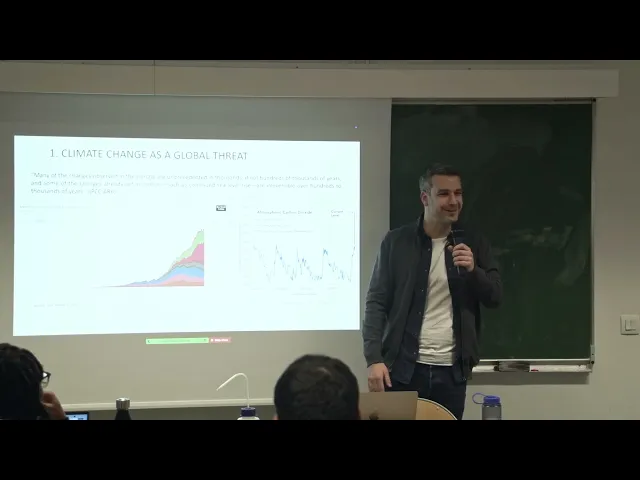
will be discussing and for for backgrounds I I wasn't sure about uh who would be here exactly but you know like knowing that it is as far as I understand only Epoch students I think that I don't need to make the case that you know like we're living through an ecological crisis and So on so I suggest to just skip like it's very very bad I think we'll agree yeah I see people nodding so you probably had a I don't know like 20 professors explaining the same before they start but just saying like this is
bad we need to act very fast very radically and it's not climate change it's planetary boundaries It Go much Beyond climate that's it in a nutshell so from there one could say um one could say uh okay so what what's the role for For Central Bank like in all this you like ecological disaster why would central banks care about that and this is where like this this view one that I was presented is um before we get to the proposal we need to understand this vew one is the one that was put forth by mostly
by Central Bankers themselves over the past decades so what was the analytical framework from which they came to say yeah sure we should care about climate change so how do they see Themselves or how does the mainstream let's say to put it that way simplify how does the mainstream see the role of central bank so there's really this idea that central banks the mandates the practices of Central Bank um you like take place within a strictly defined parameters characterized by independence by market neutrality and usually the core Mandate of Central Bank is price stability uh
you know like there there are some debates about what do price Stability means is it there's an agreement today consensus around 2% but is it like strict is it 2% over time that you let you like periods where it's a bit above periods where is a bit below but usually there is this idea that you like we need to to uh activate monetary policy and that monetary policy would be because that's what these people would believe would be the main contributor to price stability by setting interest rate higher or lower of course but also Through
a bunch of different activities where central banks uh they on a daily basis they have multiple operation with commercial Banks they provide loans uh they they they can provide like targeted loans they have the collateral framework whenever they provide a loan you like they take collateral from the commercial bank so you like they will be also ad hoc operation during times of Crisis and Beyond the crisis such as quantitative easing so a lot of things that that that Are done under this umbrella of monetary policy and that is always with this goal of achieving you
know like 2% % inflation or what is called price stability but central banks tend to to also say uh that Financial stability even though it's not always clearly indicting their mandates that it is part of their DNA with this idea that if you don't have Financial stability if you have you like crisis of liquidity there's no way you will have a price Stability so you need to have Financial stability to have price stability and therefore central banks are also present in supervision credential policy liquidity provision uh for inance s um central banks and financial supervisors
are you know like part of the basil framework of the B the BCBS the basil committee for banking supervision through which you know like Capital uh adequacy ratio and liquidity ratio are established for banks you know like you Say Okay riskier bank I'm going to ask the riskier bank to have more Capital than you like a less risky Bank it also needs to have more liquidity in C of Crisis um central banks conduct the supervision of financial institutions it can be conducted Ed uh for instance at the European level by the SSM which is a
European uh you like it's it's at the Euros system level where they supervise the systemic Banks and when is like when it's not systemic banks in the case of France for instance it would fall under the the author contr in the resolution which is part of the bank the France the French central bank and then of course central banks are also lenders of Last Resort this is there's a lot of literature on that and you like bu by acting in time of Crisis they're also like guaran somehow of financial stability um yeah and and lastly
there is within this mainstream view uh the acknowledgement That central banks you Know like they can also support the government or other goals um but usually it's really seen as a secondary Mission it's really whenever there's a tradeoff it will they will they will go to uh to I guess should I allow or deny that microne you never know um confidential information I would rather deny okay let's see um so for instance in the secondary goal it's very clearly defined in the case of the ECB uh you You have an article uh of the of
the on the Treaty of the functioning of the EU that requires the ECB the European Central Bank to and I quote support the general economic policies in the Union with a view to contributing to the achievement of the objective of the Union as laid in article three on the Treaty of the European Union and in the case of the fed the US Central Bank you like there's a dual mandate a double Mandate of price stability and Employment but in practice and the case of the recent of inflamation was a very casing clear casing Point whenever
do the tradeoff usually price stability takes over uh employment with you know like declaration from for instance Central Banker Jeron Paul saying like yeah we need to increase unemployment so that we can control prices which didn't happen for a whole different reasons but that was you like the initial in their initial acknowledgement They were accepting to raise unemployment so as to achieve price stability so it's really the core so with all all this being said and sorry for this a little bit long introduction but this is how central banks came to the question of climate
change basically first climate I will say a lot of climate change because like this is where most of the work has been taking place even though in the past two three years they have also work a little bit On biodiversity other environmental issues uh Beyond climate change but uh the first very well-known speech was by Mark carne who was at the time governor of the the bank of England uh who basically says you know like once climate change becomes a defining issue for financial stability it may already be too late so there is this in
this in this speech called tragedy of the Horizon there is this idea that you like that basically central banks can and Should work on climate change so as to guarantee uh Financial stability uh and hedge the financial system from the risk posed by climate change and this is also very clearly put in the the language of Christine lagar from the the ECB where she says and I quote even without changing our mandate climate change has an impact it has an impact on how we model the economy going forward how we forecast how we measure risk
how we stress test institution uh How we value the collaterals that we receive so this is really you like this this risk-based approach that you can see shaping up I think in practice central banks have also been influenced by a broader context with the Paris agreement uh which in 2015 for a first time the climate negotiation mentioned explicitly the importance of Finance there was a huge increase interest uh that has been reverted recently a little bit but Private Finance was very interesting in climate related issues so I think that central banks have been influenced by
that but here in the way they presented it it's always about you like this this is us as independent institutions caring about this risk uh I will I will pass that quickly but just to say that central banks have created a network called the ngfs uh a network uh it's I think it had or it has 143 members because you may have seen that just a Few days ago the FED withdrew from from the ngfs so which is also interesting for an independent Central Bank they join just when Trump when Biden won and they're leaving
just when Trump wins so very very brave of them we could say but but yeah they're out of the the SFS which is you like really a network that that focuses almost exclusively on uh on assessing these Financial Risk caused by climate change in practice we distinguish uh two kind of of risk what Are called the physical risk and then the transition risk so the physical risk are the shocks of climate change itself um I won't talk that much because for me I will focus a bit more on transition in this this paper but basically
physical risk are you know like the fact that we're going to see um either chronic or acute uh shock with climate change you know like we we can think of a lot of example of flooding recent Wildfire so on that can create a lot of impact at The micro level you know like on businesses on households we're seeing that now in Los Angeles and also you know like with macro impact that can result from that and then you have transition risk which are you know like all the changes needed in the economy so like the
the most narrow narrower version of that is like you have carbon price that's going to impact businesses in very different ways uh but you could also have like the question of stranded Assets that you may have heard of that you like if there's a transition a rapid transition a lot of existing fossil fuel reserves would have to stay in the ground and you know like this could change like a lot of changes in the price of these uh of these reserves so it could impact Finance years but it could impact also different sovereigns for instance
fossil fuel exporters would no longer be able to export um so like this would have a lot of macro impact And all these micro and macro impact could then translate you like into Financial Risk in the sense that you have Banks insur investors uh exposed to all these uh to all these um these activities so it can translate into credit risk you know like a business impacted by by climate change that is not able anymore to reimburse a loan for instance it can be Market risk for instance you like with a sharp like sudden repricing
of equities in the case Of trained assets uh it can be underwriting risk we're talking quite a lot about that these days with the fires the wildfires in Los Angeles where there are a lot of issues of houses both houses that were insured and basically insurers and reinsurers are very concerned because they hadn't priced that in you know like such wildfires that would destroy property with such a high value so it's quite a concern but we're also talking about the houses that Are not insured which is also another type of fincial risk the risk is
not for the the insurer for the underwriting risk but it becomes a credit risk because many of these of these households were still I can pass it on if many of these hous were also like in depy to their bank so it can translate into a cred risk so this is a little bit the the analytical uh framework basically um so the the way central Banks would proceed then say okay we need to understand this risk um I I will move a bit quickly but there's this idea of like climate you may have heard climate
stress test usually central banks some of them they talk about that the FED I think in the case of the ECB they talk more about scenario analysis but the idea is to okay how do we measure this risk then the three I presented here so just to say that you like you cannot look at um historical Data because it's not going to tell you like about things that have not happened so basically there's really this focus on scenario analysis which is the questions like what is the narrative so basically what kind of Target if you
have a two four degrees Target you would have a lot of physical risk if you have a 1.5 Target you will have lower physical risk but perhaps higher transition risk and so on then is the timeline do you assume that the Transition takes place in a very smooth way that it starts today very abruptly that it starts in 10 years from now quite even more abruptly so you could have like different um different views then you like we need to have a lot of like tools basically models to to analyze the economic impacts of this
of this initial shock you want to model that and then at the third step you would have you know like uh you would measure the the financial exposure and Vulnerability to this impact so it's just repeating a little bit the the previous slide with this of of scenario these are just to show you a little bit you like that quite a few central banks as so the French supervisor which is part of central the French Central Bank you have like the fed you have the ECB you have others that have that have been developing that
um I won't get into that that's one exercise I had contributed to when I was At the the aspr the the French Central the supervisor of the the French Central Bank um but basically what you find and this is the beginning of a connection with with the the the the the next uh the next section although we'll talk about other things here in the first section but um what you find across all these climate stress tests so to say um is that the risk are not really high actually whether it is uh physical risk or
Transition risk like like all central banks find like oh yeah sure a few sectors could be exposed there could be you know like some vulnerability here and there but basically climate change and the transition to mitigate climate change are not basically like a game changer for the financial system according to the studies it's not me saying it just so that I'm not misquoted um and and and we'll get to that actually because this This has been one of the contenting points that will lead the view that I call the proactive approach but uh but for
now just to say that the vast majority of the work by central banks has been on on financial stability you like how does climate change affect financial stability but now there's uh more and more work on the question of price stability to say you know like if the core Mandate of price stability could also be impacted so there are some Studies this one is not produced by central banks but you know like it's it's to show that you like with the increase in temperature you would have like huge impact on agricultural yield and therefore the
price of food could be increasing in the next uh years so for instance you like this is a world map with estimate from these others in a recent quite interesting paper about you know like um what is the annual pressure on food inflation in 2035 under uh Different scenarios that's one of the the scenarios on on with regard to physical risk so what you see is like you like an an overall uh increase in the price of food uh that could be estimated for the next decade basically and you could you like this this doesn't
even account for second round and so on but basically what it means like okay this could become a recurrent problem this question of food inflation so like how should Central Bank work on that you Like the the the historical approach to of Central Bank would be to look through food and energy inflation to say like this is very volatile and so on but if this become persistent consistent like persistent uh and you you have it every year uh you know like that's you need to change the the way you look at it uh same for
energy and this is this table it comes from a a report of the ngfs I won't summarize the whole table but you know like it's just to show that the Ngfs is starting more and more to to think about that about how does the transition impact price stability as well so you like they make some assumptions again this is debatable for instance you like carbon pricing what they consider the impact of inflation they would say that headline inflation so including energy and food it would move up temporarily while core inflation would not be impacted so
like if you have a carbon tax basically or carbon Price or carbon tax that you like it can increase the cost of energy especially in in country countries that that uh that have a lot of fossil fuel based energy uh then if you look at you like for instance green subsidies they would say you like the prices in subsidized sectors are likely to fall for instance you like a very heavy support to renewable energy but then the the overall impact on inflation is quite ambiguous because you know like this Could lead also to like to
to a lot of other macro impacts that that could end up having prices impact on on inflation um for instance also if you look at you like Green Innovation you like there's this idea that you like it could reduce cost and therefore dampen inflationary pressure so you could have also like scenario where you'd have a carbon price that increase energy but then you like also green Innovation that you like creates kind of like downward pressure Or this inflationary uh Trend so there's like you like ongoing work now by Central Bankers so okay we need to
have a clear view on whether climate different scenarios could be inflationary deflationary disinflationary uh you know like what where does it go basically and lastly central banks don't really like to talk about that but that will be the next step of course about uh okay once you have measured all these risk then you Need to integrate them into Financial supervisions so Financial regulation monetary policy so what are you going to do and and here we starting also like progressively to see a little bit of work here and there first in the case of financial regulation
I just put here basil 3 so basil agreement is uh basically this uh the latest uh set of international standard for for banking regulation in particular so the most important part of of Basil 3 the the Third I would say version of this basil agreements um is uh that what the basil 3 was after the financial 27 2007 2008 financial crisis this is when it was started uh and it was sort of finally approved in 2017 um so the first part is that you like this pillar one is the most important one that when you
when you're systemic bank or depending on level of risk that you have as a bank this is measured by like how big you are how complex your products are in how Many jurisdiction you have activities and so on but let's say like that very big banks with activities all over the world are very risky they need to have more Capital aside than they used to had in the past and they also need to save to have more liquidity or liquid assets in case of sudden shock basically so the idea is really to to to ensure
that the banks have enough Capital enough liquidity to respond to a liquidity crisis and to avoid you like the Contagion of the shock to other Banks as we've seen during the financial crisis so you could say in the future you know like this is not done today but you could say okay tomorrow you could say that a new Criterion would be if you're more exposed to you know like if you're more exposed to climate related risk well you're also more systemic so we're going to ask you more Capital so this could become a topic uh
but for now like the few example we have are more like Pillar two and pillar three so pillar two it's more about how um it's a bit more discretionary so you want the banks to have good risk procedures and you could as supervisor you like say okay this bank it's not measuring anything related to climate related risk so you could you could say as such it also needs to have more Capital to put more Capital aside because it's not doing its job um in practice for instance in in in bra the Brazilian central banks require
Commercial Banks to incorporate environmental risk in their in their governance Frameworks you know like so are examples here and there where you can see the supervisor Central Bank you like requiring the commercial Banks to to integrate uh to integrate this risk and then the the pillar three is about it's more about disclosure how do you disclose that and and and then you have a few example especially in the EU with a csrg it's the corporate sustainability Reporting disclosure you may have heard of it because now a lot of people want to dismantle that completely uh
and it's uh yeah very very positive days right and and and basically it's this idea that financial institutions and and non-financial corporate as well they need to disclose on climate and biodiversity related risk so you like they need to send that signal to the market so it's still very much Market Based same with climate related monetary policy uh you know like there's not much today but the idea would be to say once we have measured this climate related risk we could integrate them into everything that the Central Bank does so whenever it provides a loan
to a bank it it would need you like to to adjust uh this loan to whether the bank is more risky or not from a climate related perspective the collateral framework so the collateral framework is every time The bank provides a loan to a Commercial Bank uh it receive in exchange some collateral which is you like just to show like to cover for the risk of default of the bank basically and you like this collateral you could say don't give me collateral that is related to fossil fuels give me like green collateral so you like
that you could do that and then the asset purchases this is not really fashion today but it was super important uh following the Financial crisis where Central Bank have been doing a lot of corporate of quantitative easing corporate purchases and so on so they could integrate climate related risk into all of this and in fact there are a few examples the ECB for instance the ECB collateral framework uh it's been like going up and down the way they've they've implemented it but um they have committed in 2022 to limit the share of assets issued by
entities with a high carbon footprints That you know like so basically this this institution cannot could not pledge too much collateral related to fossil fuels when they want a loan from from the the central bank so this is just to say that you know like that um a lot uh can can take place so one could say perfect this is you know like that's the way to go keep measuring the risk improve your risk assessment and we'll get there but I guess you you guess there was a different way of looking at It and I
will move a bit faster for the the second third view because a lot of context was needed for the first one but the second view is very different you know like what I put in blue sorry it's not super clear but it's just you like just to to emphasize a little bit different views of you know like the the first slide before of view one was to say you like Central Bank was independent and here some perhaps from more hetero perspective you know like People say like it doesn't matter to say the central banks are
independent because in practice they have such a powerful influence on the direction of credit on the behavior financial markets that you like this will have like multiple influence so you can say you're independent you can say you're Market neutral such things don't exist basically and for instance you like there is this idea like we talked about pric uh pric ability when you set Interest rates well when you set interest rate this has a lot of impact on the ability of different players to uh to borrow and one thing we are observing now is that with
the recent rise in interest rates it has made the financing of renewable energy much more complicated because these are typically projects that are considered to be more risky so interest rate tends to be a bit higher they tend to be very longterm and in many cases they don't have like such High rates of return so for them it became very difficult to um to get access to credit so you could say just by increasing increasing interest rate you're no longer neutral you're delaying the transition that will be one perspective same with you know like the
different operation with a with a central bank with um with commercial Banks you like that that when you provide collateral or when you provide like short-term loans to the bank you Know like you you may be reinforcing the T status quo because you're like helping Banks without asking anything for anything in return and and then in case of emergency we saw that during covid you like central banks jumping in buying a lot of assets and you could say that this reinforc inequality because you have like unemployment going up activity stopping but but owner of financial
assets being like saved by central banks basically injecting liquidity again and Again say all these impacts happen same with um with financial stability you like you could say that you like that um that yeah if you if you just provide liquidity in case of in case of Crisis without any environmental requirement you're just you like also pushing for the status quo and then these people say that you know like the support the the ability of Central Bank to support government of or other goals like it could be mobilized much more than it is Now that
it is is possible to to go much further and usually what these people say that's for you like their view of the Central Bank and when they when they they they work on you're like okay what about uh these risk assessment that are being done what they say is that you like all these risk assessments are a bit meaningless because you like you could you could spend a lot of time you like trying to look at yeah okay how does it look you know like if if climate Change occure in the next decades where would
it have an impact and so on but like what do we know really about you like which next wildfires uh the next flooding and so on so what they say it's much more about uncertainty about potential major risk that that the current models are vastly um underestimating and here I used in the interest of time to be honest a little bit of of a strowman argument but there's a lot of attack usually to the Dice model which is the one developed by nous with which he got the So-Cal Nobel prize in economics and you like
that basically say even with cray the levels of global warming the economy is doing just fine and this is for a variety of reasons because of the the activities that are according to the model would be impacted because of the the the discount rate because of the way in which secondary effect are not captured and so on but basically you like it will be Unfair to say that all economists work with that because that's really not the case but there is you know like this idea that um that you like that when you want to
do risk B assessment or cost benefit analysis you're really missing the big point which is that we could have like terrible impact with multiple tipping points that are connected across each other like one ecosystem crossing a Tipping Point not being able to regenerate having an impact on nor Ecosystem like you see how the Amazon rainforest is connected to elino and how you like in the end all these big biomes in the world are connected so the questions are how do we avoid that and you know like and many economists have been saying we should rather
work with a precautionary principle what do we do to avoid that then you're like trying to to look at hey how bad is is it going to be and on the question of of transition risk one could say well actually Transition risk there's less uncertainty Than Physical risk but there's also this idea that you like you still have a lot of uncertainty like do we want to spend our time like measuring risk when in the end you like do we really know what the energy Matrix will be in the future will we have like more
nuclear more solar more more wind you like that would change your entire analysis and you don't know really how many investment are needed you like the the the amounts Can vary a lot and so on I'm I'm going like quite quickly through that just to say that I will not get into all the arguments made there but there's really this idea that that you know like sure we could improve the models we could better measure the risk and so on but fundamentally there are two things first one is that today we're underestimating how bad things
could be and these are just a few example of reports and news uh news articles that came out over the Past few years criticizing the ngfa scenario saying you like they're really completely under underestimating the the risk um and the the second um the second issue is to say even if you are do using better models you use the you measure the risk a bit better if that's possible and so on um where does that lead you really and and you're like what what does it mean to have a good risk assessment if you're a
financial institution or Central Bank and here There's like in in this famous quote by Mark carne who this is not car he mentioned here you like there's this this idea that you like he says like there's an old ad age that says that that which is measure can be managed and in fact there are two issues there that some of the risk can not necessarily be managed really when we talking about huge physical risk about you like a risk that when you have you like a sea level rise okay what are you really going to
Manage but even if you could really mitigate the risk what does it mean if you're if you're for instance an insurer and this is something that we're already observing you are insurer in a Zone where you know that wildfires are coming hurricanes are coming so what do you do as a good risk management procedure you can increase the cost of insurance for instance of the insurance policies or you could just say you like I'm out of here and the problem is that by doing That it's very rational at the at the at the microeconomic level
but in fact it's you're only displacing risk to other agents to the firms that is no longer insured to the households that is no longer insured so basically you know like this is not like a good risk management from a macro perspective so there is this idea that um that you know like that measuring risk is the thing to do is like for what what would you what action would you take that in the end Would be better for everyone so there's there's a discrepancy here it could be some sort of you like in in
um you like uh uh of you have a lot of that in pan economics right things that you like that's an effect of composition between the micro and the macro levels and you could you could see it that way from a climate risk related perspective this literature also cre that that emphasize this question of um of the limitation of the risk-based Approach they also emphasize usually a concept that is called double materiality with which personally I have a few a few issues but basically the idea is to say the financial sector it's not only suffering
from fin from the from climate related impacts from climate transition physical risk it is also contributing to them you know like you could take like Bank a and say oh yeah Bank a PO them they really exposed tomorrow you like if there's a Transition they have invested in a lot of fossil fuels actually they are investing in fossil fuel they're buying this risk for the future so there's really this idea that you know like that um that that by emphasizing so much the risk based perspective it's a way of kind of like not accepting your
own responsibility uh for the whole mess so basically it's another limitation of this risk based approach that is often emphasized and it can be applied to you Know like fin supervision and regulation for instance in France I mentioned this csrd in Europe and in France there's this French law it's a article 129 of the laa energy clima and then a decree of like a specific text decet application for a French speaker like a specific text that explained how to implement the law and you like now it is requiring corporates and financial institution in France Beyond
a certain level of activity employees asset and so On to disclose not only the risk under the pillar three of Basil that I showed before but also what impact they have on climate and biodiversity so basically say sure you can measure the risk but you should also just disclose how you are impacting your climate change how you're impacting biodiversity because this is an information uh on its own you could apply this concept of double double maturity to monetary policy as well to say like as I said before when You increase interest rates and you're delaying
the transition what happens and this is just you know like a funny Exchange from a tweet by Isabella vber a few a few months I believe ago yeah almost one year ago where like there was um a hearing uh and a congresswoman asked um asked Jon Powell the chair of the fed the US Central Bank you like some say higher interest rate hampered investment needed to tackle climate change is that true and chair Powell Says it's not our job to consider the effect of high interest rate in climate change so you could say this is
problematic this is some sort of double monality like you can say Central Bankers I'm I'm looking at the effect of climate change on interest rate but not the the the impact of interest rate on climate change and then I took a picture of this part because when he's doing that he says and by the way it's very very little the impact like you like It's which is a very random response like usually then you you should have like some grounding and references and so on but you like it's kind of like yeah and I'm sure
it's very little and he does like this just to to get out of of this question so once you have like this uh this proactive approach what's you know like what kind of proposal can you can you get to what what do you want to work on what do you propose and here we have Like quite a lot of of different proposals uh I try to to make it like as simple as possible with a little design but the idea is to say you don't need to do crazy risk measurement right now you could activate
a bunch of of channels a bunch of measures that would help shift Financial flows towards a different direction so you like for instance when the Central Bank provides a Lo to the Commercial Bank it could easily say you like I have like diff dual interest rate Basically you know like with higher interest rate for banks that are contributing to fossil fuels through this to to the financing of fossil fuels and lower interest rate for banks that are like that are financing more the green transition so this will be typically grounded double materiality which will be
why would you measure risk when you know that this bank is increasing the future risk just charge them a higher interest rate period um Then there's also proposal you like as to like how do we green the collateral so as I said whenever you provide the loan to the bank in exchange a short-term Loan in exchange you ask for uh the Commercial Bank to give you a collateral in the case of default and here you could sell Central Bank I'm not going to measure risk I just you like I don't want fossil fuels collateral don't
send that to me this is not safe but I will accept green assets so this is Something that they could do uh then you will have like um this question of capital and liquidity ratio for Bank you like how much Capital how much liquidity they should they should keep with themselves same thing like you could say don't need to measure risk here like if you're investing a lot in fossil fuels I want you to have like super high level of capital that you you know like that you need to keep uh with you and I
mean high level of like Capital adequacy Ratio or very high uh levels of of liquidity that you cannot invest uh because you know like you are contributing to to uh systemic risk period um then you have more radical proposals as well where you like the Central Bank could um could also try you like to support like green Sovereign bonds for instance you like it could you know like buy green The Sovereign bonds from the governments or you like from public Banks issuing the bonds you have Some proposal by merant and and tan Yeah by m
senent saying like you could have the eiib the European Investment Bank issuing bonds and then you like the the Central Bank kind of like you like going for this Bond on the secondary market so you like like so basically lowering the price of these bonds or you could even have you know like um some people are talking about um directly monetization of debt so you know like you would even avoid the commercial banks with very Radical proposal cancellation of public debt you like and I would Place uh these people would not necessarily agree to be
like put in the same category but the reason why I suggest here to put them in this same category because like what I have in common is really to say hey right now the central bank can push things forward it can you it can really help uh make the transition happen and the I I will try to spend a little bit of time on that where and and have a Few I think differences with with this View and this is where I think that a third view is quite interesting like a bit more based on
this institutional approach or coevolutionary approach which is to say that sure central banks has all the powers that we just mentioned they could do all these things that that were I just explain like I have nothing against this proposal but what are we talking about really you know like is it how much power does the Central Bank have how much interest is there in doing that what kind of tradeoff could emerge and here you can have like a third view of central bank which which acknowledges the power of central bank that I that I showed
before about you like shifting Financial flows about shaping the the structure financial markets and so on but that also recognize that whatever they do uh they never do it like alone in isolation and in fact there are many things that They cannot do when we talk about price stability I mentioned and I hinted to that a bit earlier on actually you know like the they had like on the recent episode of inflation like central banks increase interest rates but they had like very little power over the sources of this inflation they had very little ability
to solve that so you like unless at some point you like you destroy so much demand that yes you're going to bring down inflation but it was a supply Shock it wasn't at all a question of you like a wage price kind of spiral that was more like I mean it's debatable but you like many people saying it was more like a price uh profit kind of spiral if any so so there's really this idea that you like Central Bank sure they can do certain things but but there are many things they cannot do and
whenever they can do them um they can do them in coordination with others they could say I would increase interest rate if this Price profit spiral for instance at some point generate such increas in wages that could create other type of spir world but then I would act but you like we need to act in coordination with the government so the idea is really to not yeah to nuance and or more than Nuance to re resituate a little bit Rec contextualize how central banks uh work what they can do and why basically they never act
alone to put it differently my one criticism I have to most of the Proposal that I presented before is that they tend and I said that we like I have some friends and good colleagues there but I would say that there's Al perhaps a tendency to emphas to over emphasize how much Central Bank could do and forget a little bit about you like the whole institutional environment in which this has to be done um same with financial stability um you know like of course Financial you like they can do a lot for financial stability but
you like There are many things that that can contribute to financial stability that don't depend directly on Central Bank for instance you like there are very few proposal uh in general in this whole literature on um you know like the the the recycling of savings you know like and this is super important if you talk about sovereign debt for instance debt sustainability how is public saving in one country reinvested or not in sovereign debt so instead of talking About you suddenly say oh yeah the Central Bank could canel the debt of the government and do
this and that sure why not we can have debate on that but aren't there like better way through which public debts could be maintained you know like not even I'm not talking about the level but through which like we could have uh you know like we could achieve like debt sustainability without necessarily resorting to this very extreme or very radical Central Banking Proposition so so there's really basically this idea that we like we need to move Beyond a little bit this Central Bank Independence versus proactive Central Banking kind of debate and there's a risk a
little bit of mobilizing Central Bank in a vacuum basically once in central banks sometimes I think not consciously but wanting central banks to replace uh all other players so the the this you know like basically What I'm saying is that the the this precautionary approach it tends a little bit to to have an implicit assumption that the only problem with the transition was the access to finance as if that was like the one thing that is the problem oh if only we had access to finance it would work and then the central bank can push
that and the fact is that you know like when interest rate were super low uh or even negative in some countries like the transition was Also not happening so of course increasing interest rate damages like disability to to get green credit and so on but that was not the main concern or you know like in one paper I work on here I I won't have time to present it but that was a paper I work on when I was at the B of France and at some point you like we tried to say hey let's
look with the collateral framework how green it could be and then you like we had like ways of classifying the firms and So on and at some point what we find is that there's just no asset available there's no green assets because the economy is not green so what are you going to Green as a central bank when you're like when the assets at some point are not are not there or that they become so rare that you like you would put at risk your ability to conduct your your monetary policy in a normal way
so like these are things that are not discussed and something perhaps even More important that when you focus so much on investment Gap you forget very essential stuff that this whole proactive approach doesn't really discuss so for instance you know like what about the scenario where you know like we talk about the just transition where we want salaries to increase so to say hey you know what we want as part of a transition to have somehow like a price wage potential like Spiral or little bit of inflation created by wages For low wages then what
does the proactive approach say should we increase interest rate or should them keep them low like they have no response on this same with like different scenarios do we have more GDP growth less GDP growth you know like how would you react does it change change anything no response because everything is focusing on Shifting the financial flows and I think that this is a bit uh a bit problematic actually another issue that Is not discussed is like what I call here like the geopolitics of Central Banking but basically I mean I wasn't here when when
Bruno presented but it's probably very much related to this question of like monetary hierarchies like you like aren't all these proposal also very much based in a world of of you know like kind of like core countries countries the top of the periphery make proposal but you know like for instance we know that you like Whatever the the FED does has like a global impact so how do you see how do you think about this Global impact no word on that either so all these things I think are really much uh Missing in this um
in this uh in in this proactive approach so in the I'm almost done but uh yeah and I see I have just a few minutes left but I would say that you know like the good news that I think we're seeing like the very beginning of a new debate now where we have a few Authors here and there say like oh yeah actually it is about coordination it is about you like how the Central Bank could become an important player without within a specific uh framework of fiscal monetary cooperation so we have you like some
papers by Daniel Gabor talking about this idea of you like coordination without subordination so this idea that we need to move from monetary dominance which like central banks are too powerful to a situation where fiscal Policy becomes like predominant again but Central Bank still trying to help this fiscal policy to take place so she has a few proposal on that KY kedward and colleagues you know like they call for like explicitly to revive post toward credit policy regime you know like so and you know like to where basically you have different uh ways for for
central banks and governments and other stakeholders to work together try to steer credits to our certain Priorities so I think like we are sort of getting back to that perhaps the most well-known proposal was made by a French uh great um scholar called Eric where he he talks about in the case of the EU this proposal of like a European credit Council where he in his own word I quote it will be a deliberative body aimed at strengthening strengthening parliamentary power on monetary and credit policy so we're really talking about basically putting monetary policy And
creit policy of the central bank at the service of something broader under the control of the parliament so it's quite strong it's it's a technical term but it's it's really about democratizing Central Banks basically and the this body would be like uh yeah aimed at at strengthening parliamentary power on monetary credit policy the Democratic legitimacy of Central Bank policy in the Euro area as well as its coordination with other EUR policies so there's Really this idea of you know like of of pushing for this um for this for this idea that central banks can do
a lot it's not a way the criticism to the the proactive approach I know Central Bank actually they're not that powerful they could not do that but to say when could they do it in which context how what kind of what kind of challenges it it would bring and I think we are at the very very beginning of that um for instance the proposal that I presented Before by Daniela Gabor KY Edward uh and Eric mon um and you're like I really appreciate them on personal and professional level but I would say it's it's not
a fundamental criticism but to say we're still very very new in this debate so there there's still you know like for instance in Eric monz proposal I think there's a genuine belief basically that you like deliberative democracy that you put Central Bankers Industrial uh uh yeah some you like Industrial owners you put some Finance years uh governments labor un trade unions together and that they would naturally uh you know like somehow give steer the economy toward the right direction I think there's a strong belief in in this idea that you like that's yeah maybe if
you come a bit more from from a perspective of like class conflict things like this you would say that you like why would this credit be in favor of Labor versus capital for Instance you like why would it uh fund like um projects with no return over the long term so you know like it's a I think there's still a lot of of work to be done uh also the the the criticis I made before like if you're in a scenario with like no growth like how do you deal with that you would still have
you like a you may have a reaction from firms like trying to to make profit in different way with more financialization with like increase in prices you like to Compensate for the lack of of of sales and you're like okay what does this credit console do in that case there is a conflict of interest I mean a conflict between different interest Sor so so yeah it's just to say that you like we're still at the beginning of the that but I think that this is a much more interesting way to proceed that uh that can
lead really to uh to more uh enlightening and perhaps more insightful discussion and and policy proposals so Yeah that's that's it in a nutshell so just to summarize I would say like this is a super welcome that we're not now talking about central banks and and low carbon transition where I started my PhD uh 10 years ago like this was you like yeah when I would say that I was working on that people would look at me saying like what is even this topic you like it's a lot has changed and I think this is
really really welcome um but as I said I think the discussion have become A bit fuzzy because like the the central bank is such a complex institution and the question of the transition is so complex that people come with very different views that sometimes you like it's implicit in what they say but you know like it's necessary to kind of like make that more explicit to understand who's saying what and why um and hopefully uh the presentation help you like to disentangle little bit to you like the this different Proposal with This categorization that is
surely debatable but you like between this the three uh the three risk-based precautionary and more coevolutionary approaches and and this the third approach is one that I I believe quite a lot in but you know like that that acknowledg the power of Central Bank while really you know like needing to clarify what scenario you're working on you know like is it more industrial policy which one which Technologies uh What kind of like north south relation what kind of you like what GDP grow rate are we talking about and so on so and you like it
can even lead you to you like to to quite strong criticism of capitalism because you like you could have like transition uh of scenar transition scenarios of transition where you like you could say that you like you you're talking about decommodifying critical needs and so on okay all this would have price impact Financial impact So there is uh there is I think a much more fruitful Avenue to uh to work on on the role of Central Bank uh with uh with this um with this mindset even though I recognize by that doing that it doesn't
lead you to like to kind of like crazy to like super fancy proposal to say here's my proposal to Sol to to to solve all the problems the world but I think it's a it's a more interesting interpretative lens to to understand uh different possibilities and I'll stop Here thank you very much [Applause]