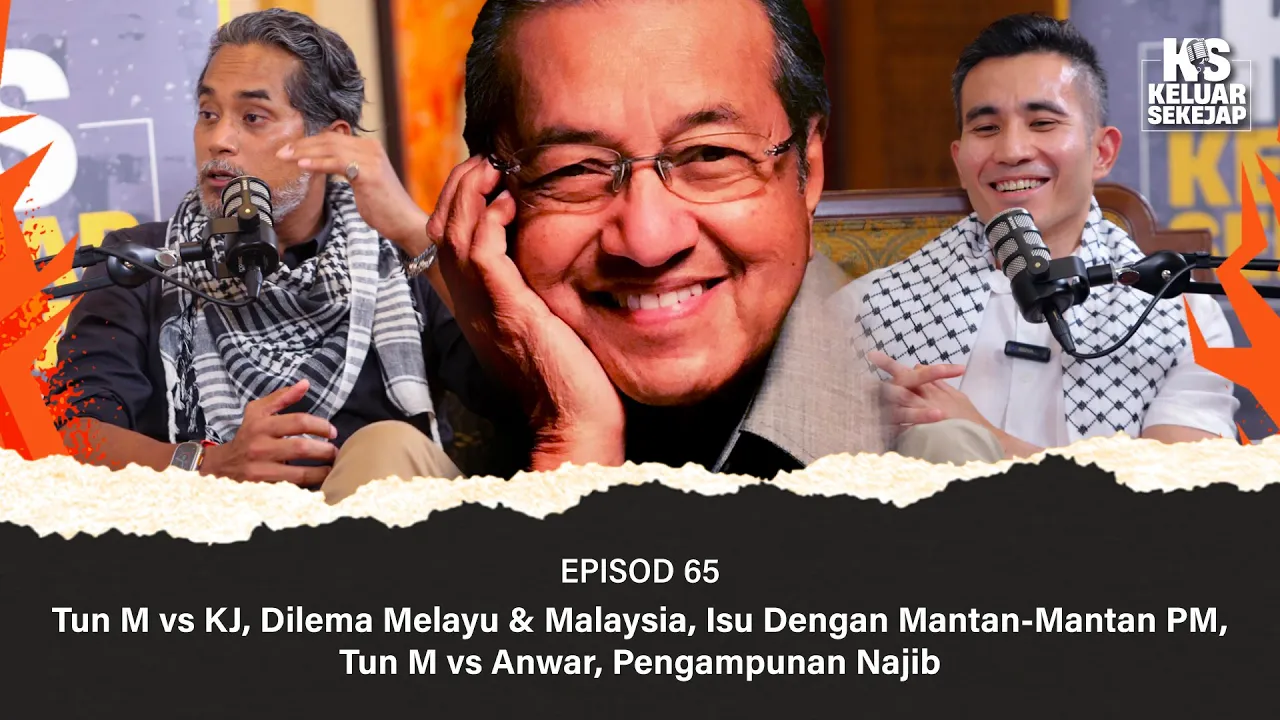
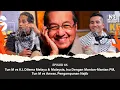
We want to achieve something in the long run. When we fight, the enemy of your enemy is your friend. Welcome to the 65th episode of Keluar Sekejap. A special episode brought to you by Pak Mat Western. Pak Mat Western is in KS? Yes, Pak Mat Western has become my strategic partner. I don't think it's wrong for Pak Mat Western to become a strategic partner of Keluar Sekejap. Do you know about Pak Mat Western? I only know when I see KJ acting in their ads. Kambing Perap. I haven't tasted it yet. Has KJ tasted it? I've
ate before and it's delicious. I checked it first. Kambing Perap is just a protein. I know that you don't like to eat carbohydrates because it's good for your health. So, Pak Mat Western is suitable for you. It has a slogan, "Cita Rasa Hotel Harga Warung". "Cita Rasa Hotel Harga Warung." Up until now, Pak Mat Western has 5 branches all over Malaysia including Penang, Johor, Ipoh, Alor Setar and Pahang. Famous in Penang because it is an affordable meal What is the most surprising thing is that Pak Mat Western able to sell nasi lemak for RM0.90 when
all other food price are on the rise. This is not a Rahmah menu. This is real. Yes, this is real. The end of October is a new beginning for Pak Mat Western where this company has just launched their first coffee under the name Mat Kopi. This one? Mat Coffee. This new product is a premium coffee with all the menus priced at RM5. The launch of this drink has attracted more people to open a franchise. In an era where many people are not interested in buying the drink that we don't need to mention. Oh, that brand.
It's right on time. The price is three times cheaper. Yes. Pak Mat Western's next target is to market in Borneo and Nusantara by 2024 to create more millionaires. I think, Pak Mat Western, as a Malay entrepreneur As a Malay businessman matches our special guest. Yes, there are many things that match our special guest but that's one of the dimensions that makes this episode more special. Yes, because our special guest is not a corporate figure but if we look at his writing and his political career he talks a lot about the economy of Malay people. In
fact, that's what becomes the backbone of our special guest's today. Shahril, do you want to do the unwrap? Wow. It's rare for me to be a bit nervous in KS but today is a special day because we're very fortunate, KJ to be with our special guest in this special episode Tun Dr Mahathir Muhammad. Peace be upon you, Sir. Peace be upon you, too. How are you? Alhamdulillah. I'm fine. Have you ever heard of the term podcast? I've just heard of it. I'm an old man. It's a new term. Do you know Keluar Sekejap Tun? I've
seen it. Thank you. You're now 98 years old. 98. What is it like to be 98? It's normal. But even though I'm 98, I can still move and take action like someone who is considered younger. KJ, do you realize Tun took the stairs? He's not using the lift, he's using the stairs. I can't go up the stairs. You can't go up, but you can go down? I can go down. And can you still ride a horse? I can still ride a horse. But I don't have time to ride a horse. Are you very busy? From
morning to night. Meeting people. Tun, before we start with the history, Are you busy because you still have not hope, but a plan to stay relevant in politics? I've seen things that I have certain ideas. And I feel disappointed because I can't implement my ideas. Okay. I think we'll go back to the theme of disappointment in politics. But maybe KJ, we want to start with the early years in Alor Setar In the 1930s. Tun was born in 1925 in Kampung Seberang Perak, Alor Setar 10th July, right? 10th July. 10th July. Same birthday as my daughter.
People who are born on the 10th of July have a bright future. I was born on the 10th of January. I don't know. Anwar also was born on the 10th of January, too. We'll touch on that later. Tun, at Keluar Sekejap We like to talk about world views. Our guests' world views. When we interviewed Tengku Mahkota Johor, TMJ, We asked him about his world views. And we also asked our previous guests about their world views. Maybe we should start with your world views. You're seen as a Malay nationalist. Someone who wants to see Malaysia proud
on the world map. Standing tall on the world map. If we look back at your political career, you always wanted Malaysia and the Malays to be the best that they could be. You were born in 1925. During the colonial era. During the Japanese era. And also during that time many immigrants came. From non-Malay people at that time. So, what was it during your growing up or what was it when you were young that shaped your world views? And what is your world views? Maybe my world at that time was limited to my area. Seberang Perak,
Alor Setar That's what I could see. That was my world. And I was surprised. Why in my world there were no Malay businessmen? Throughout Alor Setar, all the shops were owned by Chinese or Indians. There were only 1 and a half Malay shops. I was disappointed. I wanted Malay people to be at the same level with other races. But that didn't happen. That's what caused my disappointment. And since then, I felt that I needed to make an effort To overcome this problem. That was my struggle. Until my world view expanded to the country and then
to the whole world. Why did we lag behind? When you were growing up and you saw things that you were not comfortable with or disappointed with the lack of Malay people in the business sector, for example. At that time, what was the factor in your view that causing that problem? What was the problem and why was it like that? I want to continue what Shahril said. In the book, Malay Dilemma if you haven't read it yet, you must read it. You talked a lot about the culture of Malay people. In fact, you deep dive into
the psyche of the Malay. Even until today, you still say Why did Malay people at that time and until today still struggle with this dilemma of not being able to succeed in the business world? Even though some already there. At first, I thought that the reason why Malay people Didn't enter the business sector was because there was no opportunity. No place. So, if we can create an opportunity and create a place and oppurtunity they will succeed. Unfortunately, when I grow up and become powerful when we provide opportunities and make it easier Malay people still don't
succeed. Why? Because of their culture. Their culture doesn't emphasize the importance of their efforts to advance themselves. That's their culture. Because in their opinion, it is enough with what they have. But don't you see we're jumping a bit ahead but there's a new generation like we said before, Pak Mat Western who are trying. A while ago, at Alor Setar when Tun was young There were only 1.5 Malay shops. But now, there are more and more. So, how can you say this is a culture? As though you say that Malay people that are their DNA. It
can't be replaced. They're consigned to being unsuccessful in business forever. Isn't that unfair, Tun? In English, I say the exception proves the rule. That is the exception. There are a few successful Malay people But not as a whole. When we look at other nations almost all of them succeed. Where their community is ahead of the Malay people. So, even though we have a few Malay people who have taken the opportunity and succeeded, but their number is small. Tun, if we can continue the discussion. I think many of our listeners might not agree with the analysis.
Because for many Malay people When you say it's a cultural issue and you're known for your expression of being a lazy Malay. That hurts the hearts of many Malay people because they feel that they can do this and their family is successful. If I may ask, are you still in the 30s where data and statistics give a more complicated picture than what you said? I'm talking about the general situation. Only a few people who succeed Feel angry when I criticize them. They try, they succeed. Why did I say they don't succeed? Yes, they succeed. But
in general, Malay people compared to other people, don't succeed. So, if we criticize the majority the successful minority feel upset. They get angry. But when they get angry at me, it's does not change anything. Because as long as we don't change Our way of life, our values, our culture we won't be able to compete with other people. Going back to your youth you saw the world where Malay people didn't do business and more and more people came from China and India at the time. What impact did it have on Malaysians when there was a demographic
change? I'm talking about the Malay Peninsula. At the time, Sabah-Sarawak wasn't yet With the Malay Peninsula. How did the society change? When we couldn't work, for example that's when other people came. Because they saw opportunities in Malaysia. Their migration was caused by us not being able to do certain jobs. They came here and were willing to work even though it was hard and dangerous. The result is that today they became successful. On the other hand, we find Generally, Malay people are less successful compared to other people. We see in countries like Japan they work hard.
They are willing to do anything. Foreigners didn't come because there was no opportunity. When we created an opportunity because we didn't want to work then foreigners came. In the end, they demanded to be given their rights. And I'm worried that their rights will increase and ours will decrease. And we will lose our country. Tun, after independence in 1957 there was great hope among Malay people at that time. Because for the first time, Malay people were united. Before that, there was no big platform. United Malay National Organizations Established. Now known as UMNO. But in 10-13 years
after independence there was no drastic change in economic management. You can say it was a laissez-faire. In the era of late Tunku. Great man. We owe independence to him, of course. But there was a feeling among Malay people that we were independent. The British were gone. Japan was gone. But we were still doing jobs like as a clerk or a soldier, guard, dresser. Why did you write this book, Malay Dilemma? This is the reflection of the Malay frustration at the end of the 1960s. I want to make Malay people realize About their position we were
independence we have power but with that power we should be more advanced unfortunately we look other people are more advanced we are still at the same place I asked myself Why didn't we move forward? I believe that our world view is we think what we have now is enough already If you want to make an extra effort, to make money, for what? I have enough to eat. I can live. My child can go to school. So, easy satisfaction. So, we looked for the easy way. Because we couldn't get into the field where we faced big
challenges and we had to make an effort to overcome the challenges. That's why I think that this is our culture. This is our culture. Our value of life. If we have a value of life that is able to face the challenges and overcome them God willing, we will succeed. In your original answer you mentioned your concern. The gap between the power of the Malay nation and other nations. We've been talking for 10-15 minutes about your perspective on Malay people. But in your answer, you touched on non-Malay people and other nations. And you mentioned that we
will lose our own country. Do you see that for non-Malay people it's like saying that Malaysia is not their country? After how many years and decades you've been in the leadership position and seen all kinds of things how do you feel about the non-Malay population in Malaysia? The Malay population who explore as the land of Melayu. And the whole world admits that this is the land of Melayu. If there are other immigrants They can become Melayu people. Even many Arabs, Indians, Pakistanis come here and are accepted as Melayu people accepting Melayu culture, Melayu lifestyle. That's
not a problem for us. But when migrants come who want to preserve their identity their connection to their country they even want to change the name of the country's owner so that it's not a country of Melayu but a country belonging to a multiracials. That means that we've lost our country. We know that in any country if they are colonized, attacked to be colonized they defend their country with their lives. We see this in Ukraine. But we are okay with it. It's okay if other people come. They do their job. We don't have to do
it. Let it be. In the end, we become poor. These people become rich. When we are poor, we sell our land. When we sell our land, it's the same as selling our country. In the end, our country might become like Singapore. The land in Singapore is not owned by Melayu people. Even though it is a part of Melayu land. This could happen here. Let's continue this discussion. We've never practised assimilation in Malaysia. Like in Indonesia. In Thailand. That's not true. Since the beginning, we've been doing integration. Allowing them to stay with their language. There's assimilation.
People from Arab countries. People from India. Now, they are registered as Melayu. They have been assimilated. But we've never insisted, for example, the Chinese immigrants. They refused. It's not that we didn't insist. We want want them to become Melayu. But they looked down on us. They didn't want to be known as Malay. But you admit that our model now is better than the model in Indonesia for example. Because everyone has their own name. Their own descendants. There's mother language. There's diversity. that taught us at school. Shahril said, we celebrate diversity. Sir, unity and diversity. You
used that a few times when you were Prime Minister. We know there's a type of people whose identity is Melayu. There's a type of people whose identity is related to their country. Yes, there are multiraces We have to acknowledge that. But on the one hand, there's assimilation. On the other hand, there's integration. This doesn't happen in other countries. That's why we because we want independence we're willing, even if they don't become Melayu we're willing to accept them as Malaya Citizens So, fast forward a bit, sir. In the book, A Doctor in the House. Another book
that's a must read. You talked about the concept of Malaysian nation. So, when you became Prime Minister, it was too late to do assimilation. You came up with the concept of Malaysian nation. And according to your writing your effort was to try to make Malaysians feel that they're Malaysian first. And not Malay, Chinese, Indian. No. That was what you wrote, sir. Malaysian first means Malaysian that I defined is a Malay. Not to say not Malay, but Malaysian first. Malaysian first. But if it's Malaysian first you don't tie yourself to your original country. This is not
a national language. Even schools don't follow Malaysian schools. And the culture is completely foreign. So, they're separated. Now, even where they live their territory belongs to them. There are places where it's theirs. Malays can't enter, can't compete. There are Malay areas where Chinese can't enter, can't compete. So, we don't become one nation. That is what I mean by nation. We have to absorb the local culture. And that culture If someone is Indonesian, they change their name. Their language is Indonesian. They don't speak Chinese. I was surprised. Sometimes I heard a voice like an Indonesian. When
I turned around, I saw a Chinese. Why is Malaysia not like that? But they're Indonesian. That's the point there. Yes, they're Indonesian because they absorb the values, way of life and culture of Indonesia. That's why they're Indonesian. They don't say, this is Indonesian-Chinese. This is Indonesian-Malay. But in Malaysia, we have Malaysian-Chinese, Malaysian-Malay. Malaysian-Malay doesn't exist. Malaysian-Javanese does exist. We don't know about Javanese. But they exist. They've become Muslim and Malay. We know that they're Javanese. They're Mandelic. They're Orang Aceh. But when we meet them, they're really Malay. Why does this person want to separate, retain
their language, culture, all of it? Separated. Difference from the local people. The last thing about this, Tun. We understand this is your worldview. In this podcast, we agree to disagree sometimes. But I think we've gone too far after independence to go back to an assimilation system. I think this is a model that has its assets. Its assets are diverse. In today's world, where language is a tool or an economic weapon, I think it's good. We have people who can speak in Mandarin. We can speak in Tamil. The diversity of culture is our branding for our
tourism. So, I think, Tun, on balance, there are a lot of good things about our model. I accept all of that. I accept their contribution. I accept the situation. I think our country has a multiracial population. But when there's a suggestion that this is not a Malay land, that's where I stand. Clear. To make it short, I think it's important for our listeners. We hear from you that the Malaysian nation that you imagine is more like assimilation. And that's your position. And I think at least that's clear. Tun, before we finish and move on, we've
fast-forwarded a lot. I want to go back to your early years. Even before you joined politics. As a practising physician, you're different from other prime ministers who might have been politicians from the start. You had a very serious and challenging career in the beginning. I remember you shared an incident where a mother and child died. You witnessed it yourself. There was a postpartum bleeding that led to the death. And you said that was the only time you saw it. You couldn't save them. I'm interested in that incident because I read that in Malaysia the postpartum
hemorrhage is still a problem. The mortality rate in Malaysia is still high. But that's one reason. The second reason is the way you wrote it. It left a deep impression on you. I want to ask a more general question. As someone who has been a doctor, how did it shape your leadership In the political world? I didn't intend to be a doctor. I wanted to be a lawyer. But I got a scholarship to become a doctor. I became a doctor. And I got My experience as a doctor shaped ...shaped my mind. I realized that the
job of a doctor is to solve problems, especially diseases. In politics, there are many problems. My approach is the same as when I face a patient. How do I cure him? I need to know his disease. How do I cure him? What do I need to do? Likewise, in our social life, there are many problems. When there is a problem, how do I solve it? I have an approach. The way a doctor solves a problem, I apply it to other problems. So, my experience as a doctor shaped the way I face problems in life. In
1969, there was a riot in Kuala Lumpur. After the riot, a letter was written to the late Tengku. Among other things, the letter was the cause of you getting fired from your beloved party Maybe to this day, UMNO We'll take a short break. I want to know tips on how to deal with that situation. me too We'll be right back. Welcome back to the 65th episode of Keluar Sekejap. This special episode we are with Dr. Mahathir bin Mohamad brought to you by Pak Mat Western. You wrote a letter to the late Tengku. When you wrote
the letter, did you expect him to dismiss you? Yes, I expected him to take action. He wouldn't accept it so easily. I was prepared to be dismissed from the party Or be arrested and put in jail. I was prepared for that. Did you discuss this with Tun Dr. Siti Hasmah? No. I kept all this to myself. I didn't discuss it with anyone else. I'm asking this on behalf of my friend, not myself. When you were dismissed, did you think you'd return to UMNO one day? I'm asking my friend. I didn't know what would happen in
the future. At that time, I was a regular member of UMNO. If I didn't become a member of UMNO, I would have lived a normal life. So, you wrote this book, Malay Dilemma. Yes, I had a lot of time at that time. I wanted to determine so that people would understand our problems. Sir, many of the viewers and listeners are young people. I wasn't born yet when you wrote this book. But I read this book when I was in university in the 90s. Same actually. First time I read it. This is a rite of passage
for those who want to join the politics. You have to read this. But for the benefit of young people who don't know the history, this book was banned. It had to be published in Singapore if I'm not mistaken. This book was banned. Because it was considered a very sensitive polemic at that time. Once again, did you expect it to be banned? The impact of this Melayu Dilemma? I expected it to be banned. That's why I had to publish this book in Singapore. If I wanted to find a publisher here, they wouldn't publish my book. And
I also had the opinion that action wouldn't be taken against me. But I still had the opinion that we need to be aware of the situation. And why did Tunku at that time become the Prime Minister and didn't pay attention to these problems? This is my attempt to explain the facts of life at that time. Now it has changed. But at that time. Sir, after this book was banned in 1970, not long after that, Almarhum Tun Razak became Prime Minister. Did you expect Tun Razak to invite you back to UMNO? I had the opinion that
Tun Razak had a different way of thinking from Tunku. I thought Tun Razak was trying to get some figures to read this book to form a new economic base. So I thought that if Tunku wasn't there, Tun Razak might invite me back to UMNO. Sir, before going back to Shahril, and I'm not saying this lightly, in my opinion Tun Razak, Almarhum Tun Razak, is probably the most consequential Prime Minister in Malaysia. I know you're looking at me like that now. Because Tun Razak laid the groundwork for a new economic policy, Rukun Negara. And it can
be said that Tun Mahathir built on that foundation. Whatever was in the Malay dilemma, for affirmative action, government intervention, to force Malay to succeed in the economy, started in Tun Razak's time. In the scheme of things, Tun Razak's reign was short. Very short. In 1976 he passed away on the 14th of January. Was that the basis of what came after, which is your reign? Yes, I became a Member of Parliament in 1964. Between 1964 and 1969, 69 election I was close to Tun Razak. Because Tun Razak had a few young people who were close to
him. And we had discussions, especially about the Malay people. The ideas in my book, I had discussed with Tun Razak. But I couldn't discuss with Tunku. Tunku didn't see the same thing. But Tun Razak went to the outskirts, Develop the outskirts. He finally laid the foundation for a new economy policy It wasn't just the book, but the results of his discussions with Dollah Haman, Sulaiman, two or three more people, including Musa Hitam. We were a young generation. But Tun Razak was ready to discuss with the younger generation. Tun, in the same discussion, I agree with
what KJ said. There was a big change in that era. The book, Melayu Dilemma, became one of its catalyst. We switched from a laissez-faire system, where Tunku, Almarhum Tunku, let the free market, and switched to a serious government intervention, to form a more balanced economy, with other nations. That model still exists to this day. We've never really departed from that model. But as you said in the first phase of our episode, in your view and reading, the problem of the original Melayu Dilemma is still there. Do you agree, although you like that transition, and the
transition phase was important in the 70s, but it didn't succeed and couldn't solve the original problem? So, do you accept that the model may be flawed and we need to move? The model is alright. But the culture of Malay people is difficult to change. To absorb different values of life. It's true that all nations, when they develop their culture, want to change it to a better culture, its hard That's why, even though we introduce various ways to advance Malay people, but their reception is influenced by their culture. They ask, what do we need to struggle
for? This already enough There's a case. There is this person who sell noodle It was popular. When someone suggested to him, if it's popular like this, go to a big shop. Do it better. He said, it's enough. We already had enough. We can do Hajj. No need to do more. It's enough. When you're no longer interested to move forward, you can't move forward. Sir, I want to take a slightly different view. In 1990, the new economic policy ended. It ended. The actual new economic policy, NEP, stopped in 1990. As you know, you were the Prime
Minister at the time. You introduced the National Development Plan. In NDP, and this is in your writing, you've made a slight deviation in several aspects of the new economic policy. Before that, you gave a lot of priority to Malay people. You gave a quota to Malay people. Not to the extend that you want to take it away from non-Malay people because the concept was a growing cake. bigger cake, and we distribute that bigger cake Into slices according to what people deserved or needed But in 1990, with the NDP, you admitted that you liberalised a bit.
Did you feel at the time, with all the help, Malay people couldn't succeed and had to give more liberal space to non-Malay people? Was that something that resulted in Malay people not succeeding because you liberalised in 1990? Yes, when we introduced the new economic policy, We thought that within 20 years, our target will be achieved. But after 20 years, we realised that we're not going anywhere. We're still at the same place. So, if we want to abolish the new economic policy, we need to replace it with a more liberal policy that still aims to advance
Malay people. So, we open it. But even though we open it, we reduced the pressure contribution to only Malay people, we realised that Malay people's ability Wasn't able to compete with other people. When we introduced the new development policy and the opportunity opened up, we realised that Malay people were more lagging behind. Sir, I'd like to ask a sensitive question. In the 1990s, because you said that Malay people, only a few who could succeed, many couldn't succeed, okay, fine. But many started to succeed because one of the approach of the new economic policy was not
only the existence of Malay businessmen, The Bumiputera commercial class, but also the professional class, accountants, lawyers, engineers. Those succeeded. You can't say that Malay people are lazy. Because I think that's one of the success stories compared to capital ownership. And our generation also succeeded. We are products of that. There are people who say that the new economic policy is a failure. It failed only in the business sector. But in terms of knowledge management, it succeeded. We gave a lot of scholarships to people who couldn't get scholarships. And they succeeded. Even though they only got 3rd,
4th, 5th in school's exam, but when we gave them a chance to study, to go to university, they passed. And they came back. That's why we see from a professional point of view, we are less, Not less, but we succeeded. There is a success even though it wasn't as we expected. I just want to share, a lot of people ask why I chose UMNO. One of the reasons is because I feel that without the foundation made by UMNO under your leadership and your generation, maybe I wouldn't get the opportunity I got. Back to the 90s,
sir. I want to drill down on this Malay economy dilemma. Because sir, you had a realisation after a while, Malay equity ownership is increasing. But this ownership is owned by agencies, such as Amanah and government agencies, that have corporate equity ownership for the Malay people. For example, Amanah Saham and so on. That's when you decided, why not look for people who are capable to be given opportunities in private sector policy, In government procurement policy and so on. Sir, Tan Sri Halim, Tan Sri Tajuddin, Tan Sri Allahyarham Yahya, among the early successes of you, as an
architect of the new Malays, and now Tan Sri Syed Mokhtar and so on. But why some of them, it's not that they didn't succeed, but didn't reach the level of your other successes, YTL, Genting, all the Chinese tycoons. That's why many view that, under Tun Mahathir, the rich are the Chinese leaders. The Malays didn't succeed. Yes. It depends on the individual. Individual capability. I chose people who have shown capability. They were given additional opportunities. And they succeeded. But they weren't as successful as the Chinese. Because they were just starting in this field. The Chinese have
a culture that started 2,000 years ago. They do have a culture to pursue success. To pursue prosperity. The Malays only entered when we had the new policy. We introduced the new policy. We found some young people who showed talent. And we gave them opportunities. With that, there were accusations. There were cronies and so on. If I gave opportunities to people Who never succeeded, most likely they would fail. That's why we chose 2 or 3 people, nearly 10 people. I thought they could succeed. They were given opportunities. And they succeeded. You've mentioned the Malays' culture 5-6
times. But I'm sure you also believe that the culture depends on the individual. It depends on the segment. I want to talk about the elite Malay culture. The establishment. One of which you created. 10 people and so on. Is there anything about the Malay elite culture that could help or not help their own nation? You came from first prime minister who wasn't a nobleman. You didn't play golf. You weren't interested in dancing. He rides horses. That's the only part. There's a bit of Sunnah. But the Malay elite, is there something different about the elite Malays
compared to the non-Malays? We usually copy. Who do we want to copy? We copy the successful people. If there are more people who see the successful people, they can be copy they will also succeed. But unfortunately, they label the rich people. Oh, this is Dr. Mahathir's crony. So, they reject these people. Not many follow. That's why they don't develop. We should develop. When we see someone succeed, we want to know how they succeed. We want to copy them. But in politics, the label of the successful people as cronies, causes the other party not to be
interested in copying them. That's why the development doesn't happen. But that's one aspect. In another aspect, people always say, this is anecdotal, when a Malay succeeds, he doesn't help his people. It's different from the other people. That's what I was getting at. There are people who help. There are people who help. But there's not enough support. There's progress. I'm not saying there's no progress at all. But the progress is too slow. And we can't catch up with the people who are competing with us. But what you said is important. Because in the business world, the
ecosystem is controlled by a certain nation. That's what it means. Malay people enter, not because their culture is lazy and so on. But the barrier to entry is so high. Supplier, one group of people. Supplier ecosystem. Supplier ecosystem, one race. Credit ecosystem, one race. I'm not trying to be racist here. This is me being a product of your thinking. What do you want to say about that? In my opinion, when we face problems, we ask ourselves, where are we wrong? When we determine where we are wrong, we can correct our mistakes. But if we blame
others, and ask them to correct themselves, so that I can win, That's difficult. That's why I'm aware of monopolies, network issues. These exist. But in that situation, we can build our own network. And the government helps. But there's no reception. We have to do PNB. Because we lack people who are competent in business. So if we established PNB, Other people can invest in PNB and succeed. At first, I thought when we build PNB, maybe Malays can invest 300-400 million. But actually, Malays have a lot of money. Billions. They don't know how to invest themselves. They
invest in PNB. So in that aspect, there's success. But we avoid personal improvement. The ability for management. Tun, we want to wrap up the economy segment, before we get into the politics segment. I also want to tell the listeners, and my opinion to you, after observing the development of our country's economy, the Chinese corporate leaders, or non-Malays, Chinese or Indian for that matter, many of them work hard, they have advantage in terms of work efficiency, but many of them also receive government help. Many of them build their businesses from the government. I want to dispel
the myth that non-Malays are self-made. They get power concessions. They get satellite concessions. They get land sold to them. So I want you to give us an insight, that they did not create wealth on their own per se. If we expand the cake economy, to whom do we give it to? If we want to give it all to Malay, we can't. Because it might not succeed at all. That's why, beside us, we have incentives for Malay, Others can't be put aside. Because we want to build the country's economy. If they are not given a chance
at all, if Malay fail, Malaysia will fail. That's why, if they show their ability, and will contribute to the growth of Malaysia's economy, we have to give them a chance. But we have to admit that when they are given a chance, they are able to make it. In your career, Prime Minister, and until now, who is the most outstanding entrepreneur, Malaysian entrepreneur, in your eyes? Malaysian entrepreneur, Not tied to any race Malaysian entrepreneur, there are many. But if I have to choose one, maybe someone like Vincent Tan. He started as a used car seller. Now,
he can buy 14 hotels in Iceland. 14 hotels at once. He can build hotels in Japan. He is successful in most places. But he started in Malaysia with the opportunities given in Malaysia. I want to continue. What about Malay entrepreneur? Malay entrepreneur, Like Syed Mokhtar Business that he have has a lot of success. There are failures. But in general, He doesn't manage himself. He chooses people as managers. He acquires companies. Or he establishes companies. Like Tanjung Pelepas. He suggested me to build Tanjung Pelepas. The cost is 4 billion. I thought, can a Malay man afford
to invest 4 billion? But we wanted to give it a try. He succeeded. He doesn't manage himself. There are people he chooses to manage. So, there are successful Malay people. Not none. I want to close this economic segment. Since the 1920s and 1930s, You've seen Malay people working in one and half shop in Seberang Perak, Alor Setar Today, there are a lot of success. People like Tan Sri Syed Mokhtar, a lot of professionals due to the new economic policy. Is the Malay dilemma solved today? Or is it still far away? It's not solved yet. Because
in general, Malay people are poor. They sell land. Now, half of the land in Peninsular is no longer owned by Malay people. Our hope is, the success you mentioned will be passed on to the next generation. If Allah wills it. If they continue, they will pass it on to their children and grandchildren. I don't know if the children and grandchildren It's not guaranteed that it will continue. We hope so. KJ, are we moving on to politics after this? Yes, we'll take a break and return to the politics segment. Welcome back to a special episode, Episode
65, Keluar Sekejap, with YAB Tun Dr. Mahathir, brought to you by Pak Mat Western. Tun, we've talked a lot about Malay culture, Malay culture, And perhaps we'll get back to that later. But Tun, in our own way, KJ is almost 10 years older than me, one of our significant political growth was in the late 90s, when there was a conflict between two big figures. You, Dr. Mahathir, and Dato' Sri Anwar Ibrahim. In some ways, we're still living in the shadow of what happened in the late 90s. Maybe you can There are a lot of questions
I want to discuss. But one thing I want to start with, is the economic crisis that led to the situation between you and Dato' Sri Anwar. How do you see what happened in 1997, the Asian economic crisis? How did it affect the economy in Malaysia? And how does it reflect your and Dato' Sri Anwar's views on economic management? Maybe let's start there. Before you answer, I'd like to continue with the context of the young people who were either not born yet or were still young. You were on leave. And Anwar was acting Prime Minister. At
the time, Anwar was the Deputy Prime Minister. I still remember because I was a politic nerd when I was young. And you decided that you're going to test Anwar. Three months. He was on leave. Never had such a long leave. To test Anwar. your plan that was written in the book Doctor in the House. You were going to resign after the Commonwealth Games. That was the plan. And to hand over to Anwar who had long awaited to be Prime Minister. And you had to shorten your leave to come back. To take over. To continue with
your question, did you have to come back Because what you saw from Anwar's response at the time to what was happening to our economy was not good? Yes, I realised that when I gave Anwar a chance to be Prime Minister, I realised that he wasn't able to handle the problem. Especially when it came to financial crisis. It was as if he didn't understand the problem. Of course, when we don't understand the problem, we can't design a way to solve the problem. He liked to follow the advice of IMF and World Bank. So, I decided that
I couldn't take a leave. I came back and I took over my duties. I set up a new committee outside the Cabinet. Because I wanted bankers, financiers and lawyers to come together so that their opinions could be heard. The Cabinet, as usual, didn't have experts. So, we took experts from outside. And Anwar was also there. I still allowed him to give his opinion. But his opinion was more towards IMF and World Bank. I told him, Anwar, if you do that, one day we won't have enough money to pay our salaries. That was my opinion. Can
you explain what Dato' Sri Anwar wanted to do at that time? He wanted to increase interest rates, reduce expenses. Because many people didn't know. Let's say a loan was unsuccessful, non-performing. When it already reached 60%. it should reduced to 30%. When it was reduced to 30%, there were more non-performing loans. This caused problems for the bank. Monthly? 2% monthly? So, there were many problems that were caused by falling currency value So, he followed IMF. When we refused, he deliberately lowered our currency When our cuurency dropped, we became poor. In the past, we could buy things
for 100 ringgit. Now, we have to buy things for 120 ringgit. Or more than that. So, we became poor because we didn't have 120 ringgit. So, I told... We discussed this issue We found a way. If the currency were lowered, we could increase salaries. If the currency were lowered, We increase salaries. So, people could buy things like before. But it was rejected by all parties. Because it was impossible to succeed. In the end, we decided to stop selling our currency. We fixed the exchange rates. Many were angry. They said, no one in the world ever
done this. I did research. In China, for example, their currency can't be traded. In Chile, their currency can't be traded either. With that, their economy can grow smoothly. So, if they can do that, why can't we? That's why in the end, we decided to fix the exchange rate. We fixed it at a price that our goods can be compared to other countries. 3.80 ringgit. Originally, it was 2.50 ringgit, 1 US dollar. We fixed it at 3.80 ringgit. When we fixed the exchange rate, problems would arise. Originally, if we fixed it at 3.80 ringgit, we wanted
to exchange it for 1 US dollar, no one would accept it. But we had a lot of savings. We had a lot of US dollars. We fixed it. If people wanted US dollars, we could give it to them. They gave us 3.80 ringgit, we gave them 1 US dollar. If they wanted to buy goods with US dollars, it's easy. So, we had 3 committees that we formed To solve the problems that would arise. That's why we could do it. Other countries couldn't do it. Because they didn't have savings. Malaysia had a lot of savings. Sir,
I want to challenge you about that. Thailand and South Korea, both countries that suffered a loss of their currency, due to the term that you used, ""Penyangak Matawang", Soros, they didn't pegged their currency, they didn't have capital controls, and they took loan from the IMF. They recovered also. They recovered after we recovered. After we fixed the exchange rate, the "Penyangak Matawang" stopped their attack on Korea and Thailand. If we didn't fix it, they would face a lot of problems. Sir, before we go back to politics, I want to talk about the pegging ringgit strategy. We
just talked about pegging the ringgit in today's situation. Because our currency is very weak. And Tun suggested that we should reconsider the pegging of ringgit. We rejected Tun's suggestion for two reasons. First, there's no attack from the "Penyangak Matawang". It's not really a speculative issue right now. It's more of a fundamental issue. And the gap between the interest rates in the US and here is too big. Anyway, the second thing I feel, sir, that currency pegging with capital controls is a nuclear option. If we do it all the time, our credibility will be affected. Tun,
it was a long time for us to recover our credibility after you did the capital controls. It was necessary. But you know the international capital market that is liberal. Yes. But we need to admit that whatever action we take, we will face problems. The question is, are we able to overcome the problems? That's why, even though today, maybe they are not lowering our currency value, but there are other parties that are lowering it. The market, for example, is lowering it. And if we fix the exchange rate, the market can't lower our currency value. And we
have enough savings in American dollars To help with this new valuation. So if we go from 4.70 to 3.80, can we buy American dollars with 3.80? Maybe we can't, but we have a lot of savings in American dollars. We have savings. Bank Negara has US$108 billion equivalent to RM400 billion. We have American dollars. Because when we get money, we invest it. So if we want to supply American dollars, we can. Why don't we do it? But my view is, in a very tight crisis, like in 1997, there was a speculative attack. I don't think that
we are there at the moment. Whether it is speculative or not, the fact is, our currency value is being lowered. And this makes us poor. If we are poor, the cost of living will increase. If we want to go back to a low cost of living, we fix the exchange rate with stronger Malaysian Ringgit. But it also leads to other problems. The capital flow will not enter our country. We will become an international .. again. You know the arguments. Back when we were strong, we fixed that 3.8. There was no question of no investment coming
in. In fact, investment came in when there was a steady flow. There was no value exchange. If there was value exchange, our investment today is like this. When it comes in, we have to pay more. Many people won't invest. But today, the competition for capital is more competitive than before. We can agree on those moments. It's a question of management. If you know how to manage, it can be done. But I want to take this opportunity to move on from the discussion. Because one of the characteristics that people see is, whether people agree or disagree
with you, you are seen as decisive. And what you said earlier, if we do anything, there will be problems. The issue is, what is the best decision to solve the real problem. I respect that even if we don't always agree on the details. But going back to politics, I see in this interview, this interaction, you are very cynical towards the multilateral framework that was founded by the West. To put it simply, World Bank, IMF, etc. I can feel that you are still holding on to that cynicism. Maybe this is different from the image of Dato'
Sri Anwar in the past. And I feel, KJ, maybe what PMX has done today, Dato' Sri Anwar today, is to prove that he is no longer the way he was portrayed before. Pro-IMF, pro-America, etc. That's how he was portrayed. So, going back to the late 90s, the difference of opinion between you and Dato' Sri Anwar, do you think that it is just a difference of opinion, that you think what he did was wrong, or do you feel that at that time, he does not put importance if we use the term governance, like what you feel?
If we look at Dato' Sri Anwar, when he did not become Prime Minister, his position was different. He wanted to revise, he wanted to reform. When he became Prime Minister, he became worse than the people he wanted to reform first. Now, if he opposes, he gives a warning. If accuses him of having anything to do with Israel, he will take action. We don't know what action he will take. But we see, There are people who can dismiss 47 cases, and they are free. There are people with one case, subject to two whippings That's the difference.
In the past, he was very liberal. We must speak freely. Sir, how can you say that? That's a court decision. Court decision or not, the truth is, it happened in Anwar's time. I'm sure it didn't happen in other times. In the past, I found People who got 47 cases. They can be dismissed. That's a court decision. But it's not a court decision. It's an AG decision. So, this happened during the period of Anwar's ruling. So, When someone blamed me for what happened in the country when I became PM, we blamed Anwar for what happened when
he became PM. Because when he said The past and present are different, I'm consistent. When I became PM in the past, I had the same stance. When I didn't become PM, same stance. There's no difference. Sir, Anwar Ibrahim existed as a politician because of Dr Mahathir? At that time, he seemed to be a good person. So, I gave him a chance. In the book of A Doctor in the House, page 409, it talks about Anwar Ibrahim. You wrote, he appeared to be all things to all people. What do you mean? When he talked to the
Arabs, he sounded like an Arab. So, when he talked to the Americans, he agreed with the liberals. When he entered in L.I. He was involved. So, no matter who he talked to, he was consistent with the people. When he became your favorite son in UMNO, you never criticized him? Like, why sometimes you are like this and that. So, I took him into UMNO. At that time, he was seen as a person who strongly held on to religion. We hoped that he could inject his knowledge into UMNO So that UMNO could also strongly hold on to
religion. However, when he entered another field, he became the prime minister. What we hoped he would do, it went against his promise. Tun, with all due respect, you said, Dato' Seri Anwar was inconsistent. But that's also a criticism of you. You once said, DAP was not good. But when you wanted to win and beat Barisan Nasional and Dato Najib in 2018, DAP was okay. And you change. You even petitioned for Dato' Seri Anwar release after you became prime minister in 2018. And you wanted him to be prime minister? And you wanted him to be prime
minister. Although, we can revise that one. I mean, it's a matter of DAP and PKR. With PAS, you said PAS was not a good party for Malaysia. But now, you can be with them. That's G4. Actually, you said you were consistent. But in your relationship with political parties, and political individuals, it seems like it also depends on the situation. So, how do you explain that, sir? We set a goal. We want to achieve a goal. When we fight, the enemy of your enemy is your friend. We want to use DAP, for example, to get a
majority. If I didn't use DAP, we won't get a majority and Najib will continue to be the prime minister. Between DAP and Najib, which one do we need to fight? That's why I wanted to use DAP. And I realized, DAP also wanted to use me because DAP also had the same goal, to get a majority. So, we use it. When we want to do something, we shouldn't say, this is our friend. Even though he steals money, he's our friend. I'm not like that. I look at the goal. To achieve that goal, what's the strategy? Strategy
is important. If we don't know the strategy, we can't succeed. We need to know, in this situation, this needs to be done. In this situation, we need to change. At one time, I needed DAP to defeat Najib. Now, we have a problem And I realized there's no other choice other than working with PAS. I cooporate with them. As their goal is the same as mine. Sir, what you described just now, from a cynical political philosophy perception, can be construed as Machiavellian. the ends justify the means Because you said the goal is, we want to defeat
this person and work with them. the ends justify the means To a certain extent, you need to hold on to that opinion. Indeed, if we want to achieve something, if we are tied up with our old ties, we won't succeed. That's why we think, I want to bring down UMNO, my former party. Why? Because UMNO has run away from UMNO's fight. Led by Najib. That's why I left UMNO. I didn't want to be a member of UMNO. I think we're all spechless for a moment because you told us about the political reality that people always
whisper about but don't want to talk out loud about it. No, Tun admitted this is the realpolitik. This is what it is to be a politician, I suppose. Back to the issue of Dato' Seri Anwar in 2018. Was it your intention from the start to make him the prime minister? That was my promise. I will keep my promise. When I was with DAP, Amanah and Keadilan, they chose me as a candidate to be the prime minister. But they also decided that I should be the prime minister To give a chance to make Anwar the prime
minister. And I accepted it. If I didn't accept it, I wouldn't be able to win the opposition. So, I accepted it. I became the prime minister candidate on the condition that I would be the prime minister for a certain period of time and then it would be descended to Anwar. And I wanted to keep my promise. But what happened was, because of Sheraton's move, the government party which is Pakatan Harapan, lost their seats. Even if I gave it to Anwar, he couldn't be the prime minister because the party had lost. Lost the majority? Lost the
majority. But your plan and intention, you were going to give it to him? I want to keep my promise. And when did you want to give it to Anwar? I wanted to give it to Anwar, but before I could give it my party rejected me. Lost confidence in me. When they lost confidence in me, I had to resign. I resigned. But at that time, I knew Pakatan Harapan would lose Because Azmin, together with Bersatu, would bring down Pakatan Harapan. So, he brought down Pakatan Harapan. Even if I made Anwar the prime minister, he wouldn't be
the prime minister. You've explained it but I have to ask again for the audience to see your response when you were criticized for being opportunistic. You changed your stance depending on the goal set at the respective situation. Did you accept the criticism? No, it's not true. I only had one goal. I wanted to fight for the good of Malay people. Whatever needs to be done, I will do it. Back to the Sheraton incident, why didn't you choose to be the new prime minister? I couldn't work with Najib. At that time, he hadn't gone to jail.
He was still the head of UMNO. Zahid was the president of UMNO at that time. Najib had resigned. But the person behind Zahid was still Najib. He was influential in UMNO. At that time, Zahid has the name only. When Najib went to jail, he became the president. But before that. Couldn't you make a similar approach to Tan Sri Muhyiddin? Which is worked with UMNO but Zahid wasn't in the cabinet. Najib wasn't in the cabinet either. I couldn't work with them because. At that time, UMNO was still influenced by Najib. We've mentioned the name of the
next person I want to ask. Dato' Sri Mohammad Najib Abdul Razak. Your relationship with Abdullah Badawi, Pak Lah went through a difficult event. You used to attack me. You called me a 'budak tingkat 4'. That still stucks to this day. If you don't mind, please wash it. We'll talk about that later. What I want to say is you complained a lot about Pak Lah. We'll touch on that later. But you wanted Najib to replace Pak Lah. I still remember when you left UMNO and came back with Najib. As if Najib was a savior to UMNO.
At least Pak Lah, even though he lost 2 or 3 majority He still won the 140 seats Najib lost it all. What do you think of Datuk Najib now? Bossku. Dato' Najib is the son of Tun Razak. I owed to Tun Razak. Without Tun Razak, I wouldn't be where I am now. So, I want to support Tun Razak's son. I want to repay him. When he was appointed, I was happy. I went to UMNO's meeting to show my support. I was the Prime Minister. I had my opinion. If there was a problem, he could ask
me, I could offer some help. Eventually, I found out that he wasn't like his father. He prioritized himself. After that, I found out that he played with money. 1MDB and so on. I couldn't accept that. It was bribery. I couldn't accept it. Then, he taught the Malays not to be ashamed. Don't be ashamed. Why should I be ashamed? I'm the boss. If the boss steals money, the Malays will support him. I couldn't accept that. Because he ruined UMNO. From a party that fought for the nation, country and religion to a party that fought for cash.
Cash is king. That was UMNO's struggle. What he did wasn't UMNO. I couldn't sit in UMNO like that. Secondly, he taught the Malays to rely on the government. To ask for things. Like a beggar That wasn't the value of the Malays. The Malays should be ashamed of doing something bad. But Najib said, why should I be ashamed? I'm the boss. Najib ruined the Malays' economy. Najib ruined the Malays' culture. I couldn't accept that. Okay, I think we agree on the 1MDB issue. But the issue of managing the economy. I was a member of the cabinet
at the time. I know you referred to giving cash like BRIM. You didn't like that approach. But I have a different view. I've mentioned this to you before. The world has changed. We're looking at how to give cash transfer. This idea came from Bank Negara. We can give subsidies to everyone. But sometimes there's a leakage. The rich get more subsidies. So the way that Najib did it was to give direct assistance to those who need it. I don't think that approach is wrong. For me, if we get something, it's because we contribute something. Like working.
If we get free money, it's like we begging People who depend on free money will become weak. They'll be indebted to those who give money. They no longer value those who give money to them whether the person was good or not. What he saw was that... I got money. It's okay if he stole money. I didn't steal it. He stole it. The money I received, he gave it to me. I didn't steal it. This kind of attitude was created by Najib. He stole money. A lot of money. You have to distinguish between 1MDB and BRIM.
It's the same. That's tax dollars. The BRIM came from the government. The government didn't have money. That's why he borrowed 42 billion ringgit. Where did the 42 billion ringgit go? That's why he ended up as guilty. Tun, I think KJ has given his opinion on BRIM and cash transfer. But I want to go back to your original answer Regarding the political situation of money and corruption in the context of UMNO. Because some might say that it might have existed in the era of Dato' Najib. But it started in your era. So, the culture in UMNO
today even UMNO leaders will say that it all started during your time, Sir. It wasn't me who gave it. When I became PM, Anwar became the Deputy PM. At that time, For example, Zahid became the UMNO Youth Leader. He made a report to me. He had 240 million ringgit. I asked Zahid, how did you get so much money? He said, he was a businessman. I didn't have any other proof. I just accepted it. - I just accepted it. But what happened was But did you at least take the responsibility that the rot started in the
90s? Yes, I asked him to take the responsibility. To the extent that Ghafar Baba who was famous in Sabah only two parties named Ghafar Baba as a candidate for the deputy. Why didn't you do anything at that time? You knew about the deputy presidential election. After that, the "team wawasan". We heard a lot of stories. Envelopes went through hotel doors. Why? Nothing was done. That was the job of an officer. Not mine. When they saw something was wrong they didn't have to wait for the prime minister to tell them to charge that person. That wasn't
my job. That was the job of the police. The job of anti-corruption. They should have taken action. I'd like to go back to Najib. Someone said, today Malays has split up. DAP, PH, 95% if not more of Chinese voters are in favour of DAP. The votes will be given to DAP and their allies. Malays are in favour of PN. Some are in favour of UMNO. Some are in favour of PH. They split up to three or four Some say, the Malay leader who can unite Malay people now apart from Tun is Bossku. What do you
think, Tun? It's Najib. Najib, bossku. He can't. He's the one who split up Malay people. The split up started when Dato' Onn tried to open UMNO To other races. That was the first split up. Dato' Onn created IMP. The second split up happened when people with religious education didn't get a place in the government. For that, they established PAS. That was the split up. Even though there was a split up UMNO was so strong. In the election, with UMNO's leadership we got 2 out of 3. During my time as Prime Minister we never lost. We
never got less than 2 out of 3. At that time, UMNO was still solid and because UMNO was solid MCA, MIC, SUPP were all supportive. So, we became a strong government. When I resigned, I hoped that the foundations that united Malay people that made the country prosper would be continued. But when I resigned, the policies were dropped. Other things were prioritized. They didn't want to be seen as the legacy descended from me. But when Najib became Prime Minister he openly said that cash is king. That wasn't UMNO's fight. UMNO's fight wasn't because of cash UMNO
fight is for nation or religion That was UMNO's fight. When you said cash is king it meant that bribery is okay. I couldn't accept that. At that time, I quit. I didn't want to sit with UMNO. That's why I couldn't support Najib because he caused the split up that pushed UMNO down from getting 80-90 to 50, to 26. There's an interesting passage in Doctor in the House book where Almarhum Tun Hussein raised his voice to you for the first time. He talked about the fate of Dato' Harun Idris former Ketua Pemuda who was imprisoned because
of a boxing event between Muhammad Ali and Joe Bugner. Muhammad Ali came to Malaysia to fight Joe Bugner and there was an embezzlement in the Bank Rakyat. If I'm not mistaken Dato' Harun was the head of the Bank Rakyat. At that time there was no charge yet You told Tun Hussein he didn't have to. Tun Hussein was angry at you. I'd like to know did you admit that these court cases Could be discussed at the executive level? I saw what happened was Tun Razak didn't like Harun because Harun had the ambition to become a Prime
minister. So, he became popular. Tun Razak didn't like Dato' Harun. Then, there was a case. It wasn't a solid case. It was weak. But it was pressured to take action against Dato' Harun. After that, Tun Razak died. Tun Hussein took over. Tun Hussein was even tougher. He wanted Harun to go to jail. But I thought I should give Dato' Harun a chance to explain what had happened. Did he really steal the money? I didn't see any proof that he stole the money. That's why I wanted to meet Hussein. At that time, I became the Deputy
Prime Minister. I thought I was strong. I met Hussein and said we don't have to take action against Harun. He got angry. He smashed the file on the table. He said, look at this file. I thought I shouldn't say that. I gave up. The reason I brought up this story is because when you became the prime minister Yang di-Pertuan Agong was favoured to pardon Dato' Harun. But he had to go through a pardon board I'm not sure if you were in the board at the time. You said it was a weak case. But you also
remember Allahyarham Mokhtar Hashim. Convicted of murder, sir. But also pardon. Was there a chance for Dato' Sri Najib to receive pardon? The Najib case was very clear. The money he stole was very clear. There is enough evidence. It was tried by nine judges. High court judges, appeal court judges, federal court judges. Same with Mokhtar Hashim? Same with Mokhtar Hashim. But the case of Mokhtar Hashim is As if there was a blind man who saw him shooting. How could we accept such a thing? What is the evidence? Is it very foolproof evidence? No. It's just that
they took action to convince the court that he was guilty. I don't believe that Mokhtar killed someone. It's not for us to decide. It's for the judicial system. I know it is not, but I have my opinion. I saw the discussion that was held. Whether we were holding on to the evidence. I found that the evidence was very weak. It was said that this man saw Mokhtar shooting. How he could shoot in front of others. That didn't happen. That's why I have my opinion that The case against Mokhtar is not strong. The case against Harun
is doesn't have enough evidence. That's why I have my opinion. Mokhtar was convicted of murder. People lives Think that we want to put an end to it. So, pardon for Dato' Najib? Najib, the clear evidence is that he was found guilty in the High Court. He went to the Appeal Court. He went to the Federal Court. In all three courts, nine judges three courts, nine judges agreed that he was guilty. Tun, if we put an end to that statement which businessman are you most proud of? Not yet. Not yet? There's more? Save it for later.
Why don't you like me? Because you're competing with my son. And your mother-in-law was campaigning for you. That's what I was told. Mother-in-law? Someone told me How can you trust a storyteller? Let's not discuss that. That is my belief. You can't trust people easily. But anyway, I just want to inform you. I know you have differences with Pak Lah. One of them is related to In the book? In the book, it's related to the bridge with Singapore. It's related to the sale of MV Agusta. It's related to the double track rail. Those are the three
main ones. Did I get it right? More or less. But in defence of Pak Lah, As you know, Pak Lah has dementia. He doesn't remember anything. I think the difference is the policy. Policy. Of course, you wrote that it's not firm in terms of sovereignty. On the bridge. This is an advice from the Attorney General. We can agree to disagree on that. On MV Agusta, it's the management of Proton that does everything. But I want to inform Tun M that there has never been a criminal element. Even for myself. I lost power in 2018. You
were the Prime Minister. I was investigated but nothing charge until today. Even though I've been through a lot with you. But I think the difference between Pak Lah and me is more on policy. More on the approach to the policies of the government. But until today, there has never been a criminal embezzlement. Can I say something? Firstly, when Tengku Razaleigh challenged me, Pak Lah supported Tengku Razaleigh. He was in my cabinet but he supported Tengku Razaleigh. In my opinion, he wasn't the one who supported me. That's why I didn't want him to be appointed as
a minister again. But when he competed for the position of Majlis Tertinggi, High Council, suddenly he won. He won and I had to respect the opinion of the members. The members wanted him. I let him in. Then he competed for the position of Deputy President. He won too. I had to admit that this person was favoured by the members of UMNO. I didn't have the right to expel him. That's why when the position of Deputy Prime Minister was vacant, and he became the UMNO Deputy President, I made him the Deputy Prime Minister. Even though he
wasn't the one who supported me, but he was the one who opposed me, I gave him a chance to be the Deputy Prime Minister. With the awareness that when I resigned, He would be the Prime Minister. Even though he supported Tengku Razaleigh, I gave him a spot. When he became the Prime Minister, the first thing he did after he promised me, he would continue double-tracking and electrification, of the Crooked Bridge, and the issue motorcycle sale, MV Agusta. He promised to continue. Within two weeks after I resigned, he became the Prime Minister. He cancelled double-tracking, He
cancelled the bridge. I was disappointed because he promised. That's why I thought, Abdullah still hates me. But he promised. He didn't keep his promise. That's what made me disappointed with him. Well, Tun, we agree to disagree. He had the vision as the Prime Minister at the time to make a decision. I think that's all we want to talk about. At least we touched on that. But, Tun, two more questions from me before Shahril wrap up this segment. Why did you end up fighting with all the UMNO presidents? Because they did something contrary to the principles
of UMNO. I'm talking about the resistance of Tunku. Because after we were liberated, they didn't do anything to help the Malay people. That's why I criticized. Even though at the time, I wasn't a leader. I was just a leader in Kedah. When a leader did something that I thought didn't meet the party's promises, I had to critic. I had to take action. It was about Dato' Abdullah. He promised. But he didn't do it. After that, Najib. I supported Najib 100%. Suddenly he came up with the idea, cash is king. The bribe could be accepted. I
couldn't accept it. So, if they didn't do it, I supported them. I didn't support them because they did the wrong thing. Tun, what's your view on the current leadership in UMNO? I think what's important for Zahid is that he avoided his sentence hearings As the Deputy Prime Minister, AG suddenly withdrew the charges. If AG wants to withdraw the charges, he should go to the court and tell the judge why he withdrew the accusation. He didn't even tell. He just took action. Two more quick questions from me, Tun. First, do you still love UMNO? Not this
UMNO. I love the UMNO that was formed in 1946 that fought for the nation, for the country, for the religion. That's UMNO. What we have now is not UMNO. Second, in 2022, you lost the election in Langkawi. Was it difficult to accept, sir? Yes, I was disappointed. Disappointed because I did everything for the people of Langkawi. I made it as duty free island. When there was COVID, I provided food. When there was a tsunami, we helped. We built homes. We did everything for Langkawi. But when it came to the election, they didn't vote for me.
In 2014, they voted. In 2015, they didn't vote for me. I asked why they didn't vote for me. Tun didn't give me money. That was their answer. How much money did you get? I got RM100. How long did it last for getting RM100? Two days. After that? It's okay. But he gave me money. Tun didn't give me money. That's why I was disappointed. Because the Malay people now, they prioritize getting RM100 over all the services we provided to them. Tun, One of my questions was asked by KJ earlier. But, to reveal everything, You are 98
years old. and you have a lot of views about the leaders you're disappointed with. But, like KJ said, You don't like UMNO presidents and so on. But it seems like everyone else is wrong. And it seems like everyone who followed Tun before or after you, there's a weakness that you think you needed to fix. Is this something that you feel is your responsibility? You're called even though you're old. You still feel that you need to fix the situation? And why? Usually, when someone becomes a Prime Minister, I give them a month, two months, three months
to see what happens. But when I see the things that are done, it's not good for the country. It's certainly not good for the Malays. If I remain silent, it means I'm not responsible. My struggle is to make sure my nation, are on the same level as other nations. That's my struggle. When I see these people prioritizing money, prioritizing positions, I can't support that. If you want to hold a ministerial position, you must contribute to the country's success, contribute to the restoration of the Malays' status. That's my struggle. So, if people do things that damage
the country, I can't. I can still speak. I can't remain silent and say, it's okay, it's not my problem. If I can speak, I'll speak. If I'm sick and sleep, I won't speak. Before we go to the last segment, you've seen everything. For the future, what are you most optimistic about Malaysia? And what are you most pessimistic about Malaysia? I think, if the current situation continues, in 10 years, Malays will be excluded and our country will be sold to others. Not Malays' Land anymore. Like Singapore, like Penang. We live in our country, we can't enter
that area, we can't enter this area because we've become weak. We split up. And every party is a small party other people unite, we split up. And in the future, in 10 years, Malaysia will no longer be a Malay land. But what's the solution, if there's no leader you can support, to unite because everyone is wrong? If there's a leader I can support, if they do things to fix the country, so that what I expected won't happen. Sometimes I feel disappointed when I say that in 20 years, UMNO will go down, it happened In a
short time, something will happen, it will happen. And now I see, in 10 years, our country will change It's no longer a Malay land. Okay, we'll take a short break. We'll be back in the last segment with Tun Dr Mahathir bin Mohamad. Welcome back to the 65th episode of Keluar Sekejap. A special episode with Dr Mahathir Bin Mohamad. The Prime Minister of Malaysia twice. And this special episode is brought to you by Pak Mat Western. Tun, we've finished discussing the economy, we've finished discussing politics. Tun and I have healed. I'm not sure. You're not sure?
Okay, but maybe. Finally. Tun, let's talk about the world. And maybe in this segment, we can talk about anything, whether you like it or not, the world still wants to hear what you have to say about Palestine. But before we go to Palestine, I would like to go back to one of the last speeches you gave as Prime Minister for the first time. It was during the OIC hearing. I'm not sure if you remember. I remember. In 2003, I was in the PICC hall. I was shocked when I heard your speech. Of course, I grew
up with your speeches. But your speech was different. Because you spoke frankly about the Jews. I know you tried to reverse psychology. How clever the Jews are. But you used the term, "they rule by proxy". The Jews rule the world by proxy. And that became the headline all over the world. It made the U.S. and its allies angry with you. George Bush criticized you for that speech. Why do you think you needed to say that? Is it right when white people say you're anti-Semitic, anti-Jewish? I'm speaking the truth. Today, we see the truth of what
I said. We see the Jews of Israel Killing 10,000 Palestinians. The whole world can't do anything. They see these people killing people. But what does the world do? Nothing. Why nothing? Because the Jews rule the U.S. When the U.S. supports Israel's actions, it means that the U.S. obeys Israel's wants. That's why I said, the Jews of Israel rule the U.S. I can't imagine that the U.S. could see the mass killings and ignore about it yet still support of Israel. That shows that Israel rules the world in a proxy way. What's obvious is that it's the
U.S. Sir, I think a part of what you said, a lot of people will agree. For us, the real heroes are the Palestinians. We don't want to romanticize it. But don't you agree that this is an issue of Israel? There are only Jewish people who don't support what Israel is doing. Do you understand when you use certain languages, it will distract people's attention from what you said to see this issue as anti-Semitic? We know that there are also Jews who do not support Israel. But if we want to be critic, the reality is that most
Jews, especially those in America, support Israel and support the actions of the US. So if we want to save this small group, we don't blame the big ones who commit crimes. It means that we allow the crime to be committed by the majority Because there are a few people who reject this crime. We can't do that. Sir, in the story about the political strategy earlier, in the half an hour earlier, you said you used the right strategy. I brought back the same concept. When you gave that kind of image, it might be difficult for the
international community to see what you said in terms of merit. Israel's actions are extraordinary. There has never been a situation where one nation, openly, declared that they want to wipe out another nation. And the world does nothing. That's right, Sir. I understand. Maybe our point is about Israel and the Jews themselves. And the distinctiveness or distinction between the two. But, Sir, the point of history. You mentioned about wiping out another nation. Ethnic cleansing has happened before. In Bosnia. The Jewish people themselves faced this during the Second World War. But, what's extraordinary this time, I don't
think anyone did anything. Just look at it. At least in Bosnia, Kosovo and so on, There's peacekeeping. Which we went to. Which you sent to, Sir. We recorded this episode on the 11th of November. It will be released tomorrow. The 12th of November. Today, in Riyadh, there's an extraordinary OIC summit. So, we don't know what will happen. By the time this comes out, there might be a resolution and so on. But, without the benefit of hindsight, because we recorded this before the conference, if you were the Prime Minister of Malaysia, Heading to Riyadh, what would
you say? I would tell them to support Hamas, to support the Palestinians and to take action to stop Israel from killing people. Mass murder. Massacre. This is not something that can be halal. It's a huge crime. And there's no other decision that can be made other than this OIC, other than condemning Israel and finding a way to stop the genocide process. But you're an expert in geopolitics. When you say, take action, what action are you expecting the OIC to take? Do you expect the OIC to send a military force? Do you expect the OIC to
create an economic barrier, an economic barrier to oil supplies? For example, what is the action that you want to see? In Bosnia, we asked the UN, we have peacekeepers. But in Palestine, there are no peacekeepers. There are no people who want to protect the Palestinians. They are exposed to murder. They are waiting to be killed. Even a small child can be killed. What kind of people are they? Can the world see this? I have lost faith in humanity. There is no more. Humanity says we must be civilized. Civilized? What do you mean by civilized? When
people are killed, we see it. Because Israel has security. If they lost 1,400 people, they killed 10,000 people. People were shot to death. Houses were destroyed. Children were trapped under rubble. What kind of people are they? Who are willing to do such a thing? What kind of civilized world can see this happening but do nothing because they are afraid of America? Are you happy with the leadership of the Islamic world, sir? I will not say yes or no. That's the first time you've stood on the fence today. Yes, I hope they will act. They can't
do anything. In the past, when there was a problem, they cut off the oil supply. Made OPEC. There were actions. They could stop the oil supply. What happened to them? But they continued to sell oil, trade, everything. It's just their internal safety. Other Palestinians were killed. It's okay. They are Palestinians. They were killed. Tun did you ever imagine in your lifetime you would see so many Islamic countries normalize relationship with Israel? I didn't expect this to happen We all know it has happened Sir, it's still about international relations and relate to your worldview. I sense
that you never explicitly said this or wrote about this. I sense that apart from being a nationalist, you are, and this part of it is quite well documented, you were anti-colonialist. You didn't like subjugation. And this has become a consistent theme. When you became Prime Minister, you called for the reform of the United Nations, the Bretton Woods Institution. Do you think we are still following the white people steps? I am sad. Because we are still Eurocentric. In terms of fulfilling the white people's needs. They do a lot of unfair and unjust things. But we want
to be good to them. Why? On the contrary, we need to hold on to justice. To justice, to what is right. Humanitarian beliefs. We hold on to that. And if someone is either white, black, or blue, if they break our moral values, we must correct them. Even though we are small, we can't do anything. But we must speak up. That is what we do. So that the world will realize the wrong that has been done, even though they are done by the powerful people. I have another question regarding geopolitics before we go back to Palestine.
I want to end this segment with Palestine, if possible. In 1981, you launched the Look East Policy. Malik's father was posted in Tokyo at that point in time. I grew up in Tokyo. Mukhriz was at Sofia University at that time. But Look East now, compared to the 80s, is not Japan. It's China. Do you think China will be a power that can compete at the same level as the US? When we launched the Look East Policy, China was still lagging behind. It was a third world country. There was no power. But when we say Look
East, we don't say Look at Japan. We don't say Look at Korea. We say Look East. What's in the East that we can copy, we copy. At that time, what we should copy was Japan, Korea and Taiwan. But now, we can clearly see that China's potential is so high. If we can learn from China, that's also part of Look East. We don't care about the nation. We want knowledge, work ethics and moral quality. Does the anti-colonial in you make you more favor if Malaysia can not only copy, but in terms of geopolitics, be closer to
China as a balancer to the power of West? I don't like to see a nation oppressing another nation. I lived in the past when we were colonized by the British. After that, colonized by Japan. After that, colonized by Thailand. In Kedah, Kelantan, Terengganu and Perlis, we were colonized by Thailand. We felt insulted. We were looked down upon. Why? Because our rights and abilities are the same as theirs. That's why I reject the concept of colonialism. It doesn't matter who it is. But don't have colonialism. We have to get people's perspective. If they want, like Sabah-Sarawak.
We have the Cobbold Commission. We have to determine their stance. Only then can we join. That's their right. We respect that. On the other hand, when Israel was established, without asking the Palestinians whether they agree or not, there was no consideration. We want to end with Palestine. But I want to say, whatever people say about Tun Mahathir, he is singularly the most important individual, I think, to have put Malaysia on the map and given us the self-confidence and self-belief. For that, I thank you. Sir, you were friends with Arafat. He passed away a year after
you resigned. In 2004, Arafat passed away. For those who don't know, people thought Tun Mahathir was respected in the Islamic world only because of he is outspoken. But I'm aware, sir, and I'm not sure if we're supposed to mention this, but we did a lot of covert assistance to the PLO during your time. Including aid for them to fight Israel at the time. Do you think it was difficult for Arafat to accept the Oslo two-state? I'm not sure if Tun can discuss with Arafat about this or not. But it was a great concession on his
part. As the great PLO fighter to say, I accept Israel. When we fight, we have to assess the outcome. If we find that this is impossible to happen, we have to accept it. That's why Arafat, even though he didn't like the two-state, but that's all he could get. That's the outcome of the struggle. That's why he agreed to the two-state solution. Unfortunately, Israel didn't fulfil their promise. They didn't want the two-state, even though at the time, Yitzhak Rabin and Shimon Peres agreed. But Netanyahu didn't agree. For Netanyahu, it would be better if they can kill
all the Palestinians So that there are no Palestinians in this world. That's the final solution. He took this from Nazi Germany. During Nazi Germany, the final solution is to kill all the Jews. He took that from them. Now, the final solution is to kill all Palestinians. Is Hamas a militant group? Or are they fighters for independence for Palestine? Before Israel, was there Hamas? No. Hamas existed because Israel was formed. Israel was Hamas' land. As a Palestinian, they wanted to reclaim it. They did it in a good way, but they couldn't negotiate. That's why used violence.
Because they wanted to reclaim their land, which was confiscated from Israel. Their actions were seen as violent. But Israel's violence is much worse than Hamas' violence. My last question on Palestine. How will this event end? Where is the endgame here now? Is the endgame Let's go back to the two-state solution which is not satisfying. Is the endgame the world seeing Netanyahu kill all the people in Gaza and most of them become refugees once again? What is the endgame here? If we are civilized people, don't kill people. Negotiate. Go to a court of law. We go
to a court of law. When we have a dispute with Indonesia, We have a dispute with Singapore, we go to a court of law. But the way of Israel is to kill. Kill people. That's their way. You can't go to a place to eat or live. Even children are killed. Sir, that's the ideal endgame or solution. But what KJ is asking is, what do you think will happen? Because I don't think that scenario is going to happen. Israel is not a normal country. It's an evil Zionist regime. I think that what Israel wants to do
is to get rid of Palestine as soon as possible. That's Netanyahu's goal. He said that the political pattern in the Middle East will change. Meaning that there is no Palestine in the Middle East. Tun, you have been extremely generous with your time. With us today. Extremely generous with your time and ideas. More than two hours. There are many things that you didn't touch, Tun. If there's a chance, we'll do a second round one day. For example, the amendment of the constitution. There are also people who want us to ask. Are you frustrated with the amendment
of the constitution and so on. Tun's relationship with Singapore, Lee Kuan Yew and so on. Let there be a part two. But, Tun, is there a volume two? You're writing a volume two? I've written already. The update is until today? I tried to write it but Until today? I haven't been able to turn it into a book yet. Okay. Tun, Shahril, maybe last question? I guess, what is your hope for the Malays and for Malaysia? I know you said you're worried in the next 10 years. But maybe end on an optimistic note, Tun. What do
you want the Malays and Malaysia to do so that you won't feel worried about today? Change. Change their culture. That's my hope. If we don't change in the next 10 years, it will no longer be Tanah Melayu If there was one word that I would use to describe you, Dr. Mahathir. After I met you when I was 10 years old until today. And then I wrote an article in Berita Harian. I gave it to Dolah Kok Lanas. He was an editor at the time. He asked me to write an article a day after you were
about to resign. Cried at PWTC and all that. And I called you an iconoclast. Iconoclast is a word that challenges all conventional thinking. All sacred cows. You will always be an iconoclast to me, Tun. Because you not satisfied with what you see. All the established norms. All the sacred cows. All the cherished sacred institutions. If it's not right, you will challenge it. And for that, you will always be my iconoclast. Thank you very much. Thank you so much. Thank you to YAB Tun Dr. Mahathir bin Mohamad. The fourth Prime Minister of Malaysia. And the seventh
Prime Minister of Malaysia. And an iconoclast. And a global spokesperson for the Muslim world. And a global spokesperson for justice. For the oppressed and for justice. Thank you, sir. Thank you.
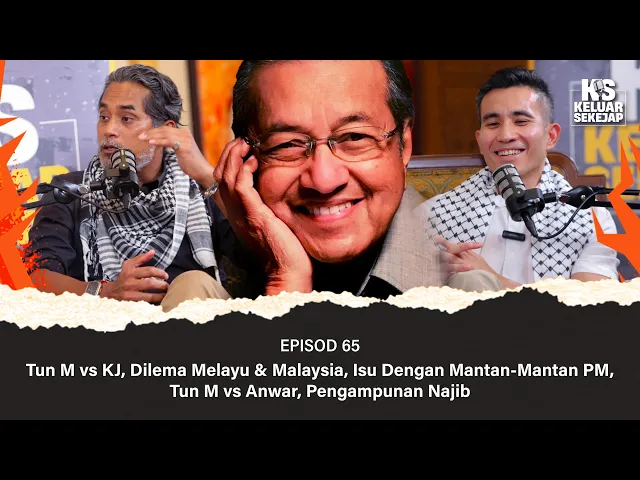
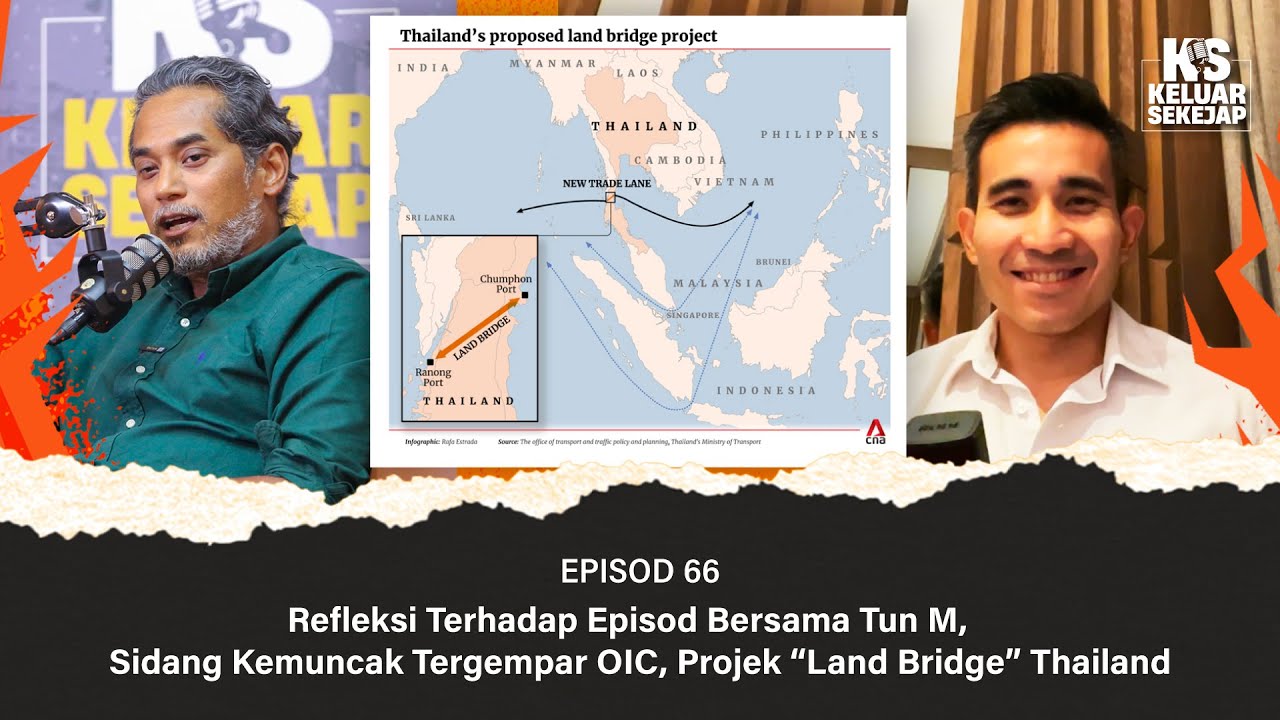

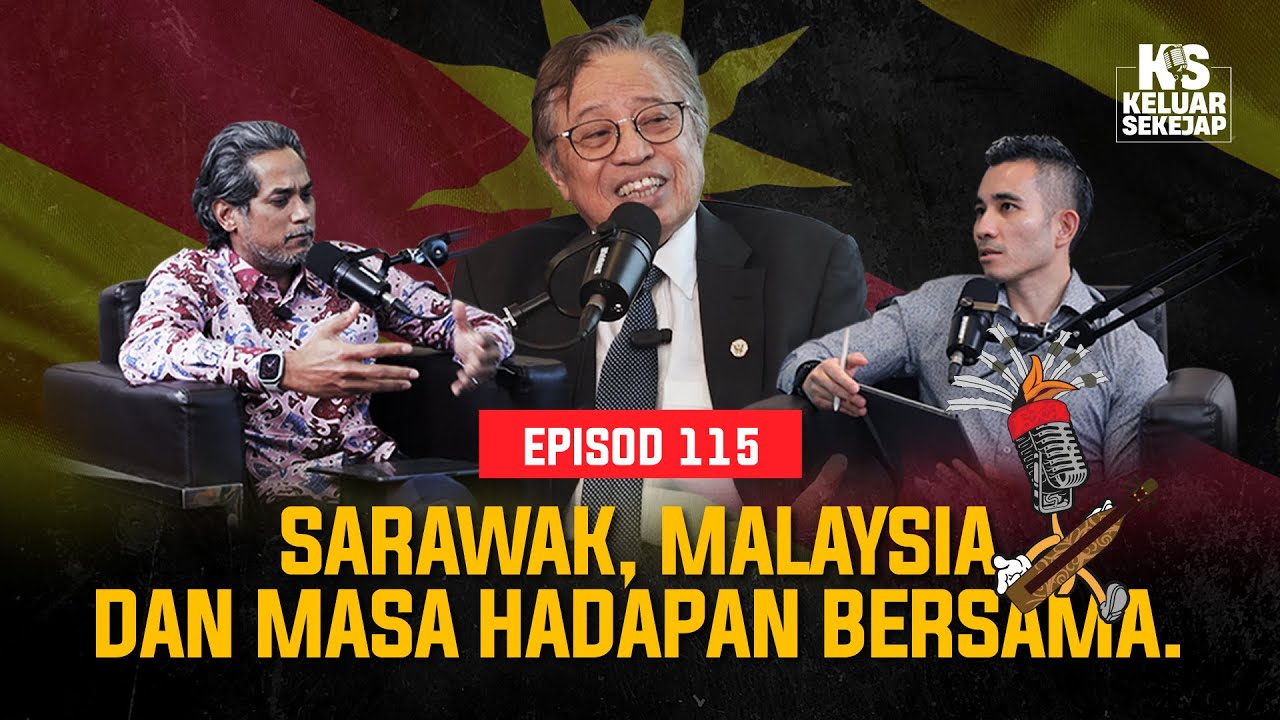

![[EPISOD PENUH] Maharaja Lawak Mega Terbaik 2012- JOZAN](https://img.youtube.com/vi/riT_L-PAQcU/maxresdefault.jpg)