Today I'm going to explain why I have such a heavy bias against mobility work. This is just my opinion. You can take this for whatever it's worth to you.
I'm not stating that my opinions or beliefs are better than anyone else's. Um, but I wanted to make this video almost um to anyone who is kind of like a younger version of me who is in the shoes that I was in a number of years ago because it's quite the it's quite the story. It's quite the painful story and I want to just kind of start with that first before I get into maybe more principle-based takeaways from this.
So when I got like seriously into lifting, which now is probably about seven, eight years ago, um you know, I always lifted before that, but that was mainly for sport. Didn't really count. Uh I I was into powerlifting.
So like powerlifting was kind of my thing for the first like half of my lifting career. I've only done hypertrophy related training for the last maybe four years or so, like full-on hypertrophy stuff for the last four years. So about half and half.
And when I was uh a power lifter, I never competed, but it was like a serious hobby. I took it very seriously. I was really into it.
Kind of like many people are sort of informally into bodybuilding, kind of like I am now almost. Um I was hurt all the time. I was one week tweaking my chest, the next week tweaking my adductor, the next week tweaking my low back.
And looking back on it, there are a lot of confounding reasons why that was the case. But along the way, and I think this is true for many people when they get injured or when they're experiencing pain or discomfort, I was sold a story. I was promised that if I could just improve my mobility that all my issues would disappear.
And and I think that even people outside the fitness space have this idea. It's more so expressed as like stretching. Like stretching is, you know, basically the panacea of all panaceas for physical health.
And and so when you're sold that story and you're in that painful position and people whether intentionally or not all around you are basically saying look Ben in order to reduce your pain in order to eliminate these injuries from happening in the future you just need to become more mobile. What you do is you spend inordinate amounts of time doing mobility work to the point and I will this is um an honest brutal confession. There was a period of time specifically when I had that adductor injury where I stretched my college roommate will remember this vividly where I would stretch for 60 minutes 60 every night.
I had four positions. I would sit in four positions for 15 minutes at a time and I would just sit there. I would work when I was doing it.
I would do my homework. I would maybe just go to someone else's room and like be socializing as I was stretching. It was it was the most ridiculous thing in retrospect.
But at the time I was like, if only my hips could be more mobile, if only my low back could be more mobile, then I wouldn't be hurt. And for some people like there are indirect reasons why mobility work can work can improve whatever your issue is right. So just a simple example if you are doing squats and squats are giving you all different kinds of pains and you remove say doing squats from your program in favor of like 15 minutes of mobility work right instead uh and all of a sudden your pain goes away.
Well, it might not be because of the fact that you are now more mobile or started doing mobility work. It might be because you just remove the thing that was hurting, right? And this is so frequently what happens is people just drain themselves or remove the thing that was hurting and then assume that whatever fell in its place was the panacea and will be forever.
So anyway, um when you operate under the assumption that mobility is this panacea, that mobility is this fix all solution to your pains, your discomforts, your injuries now and later, there's something really um really terrible that happens. Okay? And this is like really the key what I want to be the key focus of this video which is there's this under there's this underlying idea there's this undercurrent to the idea that mobility is our is the fix all uh uh solution to our problems that basically says hey the way that your body is right now not good dysfunctional um immobile limited, constricted, tight, weak.
All these terms fall into a very similar bucket for me. These are terms that people use consciously or unconsciously to make people feel. Maybe make is the wrong word, but these are terms that typically get a reaction out of people that is fearbased.
And when I what I mean really when I say that is that these are terms the limited mobility the constriction the tightness even a focus on mobility in general what it tends to do is it tends to make people feel like they are lacking something. And so this is why whenever you talk to very good, competent, evidence-based physical therapists, they do not use this kind of language with their patients. They do not say, "You have weak this, type that.
" They do not say, "You are immobile here, and so what we need to do is get you to point B where you are more mobile. " What they do is they focus on empowering language, right? Hey, you're you're pretty strong right now, but like let's keep practicing this and you're just going to keep getting stronger and you're just going to keep getting better, right?
Hey, there's nothing wrong with the way you are right now. We just have to maybe take some stress away from this area, redistribute it to other areas, you know, for the time being, and we'll come back bigger and stronger and better for it. Maybe we just have to learn new skills, right?
Those are the kinds of things that you hear competent physical therapists saying. You do not hear competent physical therapists telling their clients that they're immobile and that they are lacking because what you come to believe about your body has a profound influence on your body. I mean pain is a really tricky complex conversation but as far as we know from an empirical standpoint like there are so many inputs that contribute to pain that to just say oh your pain is because of this limitation in mobility or that tightness over there or that weakness over there.
It's nonsense. It's a non-statement. It's a non-argument.
And so what happened to me back in the day was I was sold this story that if I could only arrive at this point in the future where I was more mobile, where I was more functional as a consequence, where I was in some way just better as a human as a consequence, then I wouldn't have problems, then I wouldn't have pain. And again, you could attack this and argue this uh against this from so many different angles, but what I really want to focus on in in this video here in my communication here and the point that I want to drive home is that to view yourself in that way, to view yourself as lacking something is the problem. Okay, let me give you an example.
So when I was operating under this framework, um I'll just pick one of the myriad injuries that I had. This upper chest issue, I remember it so vividly because I almost like feel it any time that I like get a um you know any sort of discomfort in my shoulders. This right upper peck, I tweaked this right upper peck like god knows how many times doing barbell bench press.
And I was doing barbell bench press at the time because again, like I said, I was powerlifting. And I also at the time just thought that like that's what you should do. you should just barbell bench press.
And so all the people, all the powerlifting coaches specifically would say, "Oh, well, the reason you have pain is not because of load management. It's not because of the specific technique that you're using. It's not because of a myriad amount of factors, right, that are contributing to this output, which may even have nothing directly to do with the gym.
Maybe you're really stressed out in life, right? Although it's much more likely that the factors are mechanically related when you're training a ton. I digress.
But what they would always say to me is if we can just get your shoulder to be able to externally rotate to this degree, then in the future down the line, you won't have pain. And so what so what this does again is it is it perpetuates this fear-based cycle, this sense that like you your body is broken, you are not enough, you're dysfunctional, right? So you're constantly scared of doing things.
Number one. And then number two, and this is the second big thing and and point that I want to drive home is it actually prevents you from focusing on the things that actually matter. So as a for instance in this case, the only provocative exercise that bothered my upper chest was the barbell bench press.
Every other exercise that I did, dumbbell bench press, cable press, cable fly, push-ups, any of those other exercises, they felt totally fine. And I could also do delt work, triceps work, totally fine on that shoulder. But I was attached.
I was sold a story, a separate story that I needed to do the barbell bench press. So I was trapped. I was terrified because I was told that I was immobile and dysfunctional and that I was also um broken in a different way because I couldn't do the barbell bench press without some kind of pain.
So then I had these two layers again which are sort of there's like basically this circle, this loop which kept me trapped, right? because I I felt like I needed to do the barbell bench press number one and I felt like I could do the barbell bench press without pain if only I could just become more mobile. And so when we believe these stories which have no which have no objective basis, right, we can say many things about mobility in so far as uh specific instances are are concerned, but those require tons of sort of contextual tidbits to actually make any sense.
To just say that you need to be more mobile or that you need to do barbell bench press. Those are two things that are um not really uh beliefs in the sense that they're like these specific conclusions that people come to. They're actually just these dogmatic cultural tropes that get repeated over and over and over and over again for many different reasons.
the primary of which seems to just be the fact that people have said it in the past and so people are just repeating what they hear and they're repeating what they hear without the understanding that the experience that I used to have is a potential outcome of those narratives. So what are the takeaways from like my experiences and how did I sort of make my way out of that rabbit hole? Well, the first thing I did, not that I I'm remembering the particular order, but this is really what got me to dive into all of the biomechanics stuff, and this is what really motivated me to learn more about the body.
Like, oh, is it actually true that I need to barbell bench press to grow my chest? Huh? Sounds like a stupid question, right?
to me to to any of you who are experienced lifters um or at least it likely sounds stupid to you, but to me I mean just think about it in my shoes. I had only been lifting a couple of years. I didn't I didn't know I didn't know what I was doing to some degree.
I still don't know what I'm doing. But I definitely have a much better understanding of all these things enough to the point where I can understand that so many of the stories that were sold are are completely baseless. And so when you learn more about a topic, say biomechanics, exercise, program design, load management, pain, all these different but sort of overlapping topics come together in this really awesome bundle.
And out the other end of all those inputs, you are left with this thing called uncertainty. Just total uncertainty. Doesn't mean that you can't make objective statements about the physics of a scenario.
But basically what you're left to say is or what you're left to ask really is, oh, if I improve my mobility, does that actually mean that I won't have pain? Oh no, that that actually makes no sense whatsoever because of A, B, and C. You could address it from a research perspective.
You could just address it from a practical, logical perspective. And again, there are so many other parts of this conversation, but I really just wanted to focus on this sort of narrative driven part of the conversation because I think that it is something that many people are deeply controlled by that they do not even recognize. It's almost like it's like trying to like see your face.
It's like trying to see your head without looking at a mirror. It's like it's too close for you to see because it's just it's just the way that you think things are. And it's almost like you are stepping through a portal and not realizing that you're stepping through a portal into this other world.
And when eventually or hopefully when you step out of the portal onto the other side or back through the same way you came in, you come out of that portal, that rabbit hole, whatever metaphor we want to use, with the understanding that like, oh, this whole thing was was just a lie. this whole story that I had just unquestioningly bought into was something that was maybe helpful to someone in some instance. Again, I gave the example of when mobility work may appear to be something that is a panacea like for someone.
But in a vast majority of the cases, these sort of overeneneralized concepts, stories, ideas are not things that you should subscribe to. They are not things and when I say things, I really mean any absolute statement. Mobility work is this.
you are limited in this. Right? Anytime that you catch yourself thinking that, believing that, buying into that, or anytime you hear someone espousing such beliefs or ideas, a little bell should should ring in your head.
A little alarm should go, "Oh, this is what Ben was talking about. " And once you start to see this idea in yourself in even one instance, you start to see it everywhere in the language people use to just speak to one another about exercise. Really about any other topic, but just we'll stick to exercise.
you start to see it play out in so many different ways and in ways again I will repeat that are genuinely harmful or at least that can be genuinely harmful. So if you're a coach or a physical therapist specifically or a content creator try to notice the narratives that you are bought into and that you are blindly subscribed to because you never know. None of us are perfect.
Obviously, you never know what sort of problems that you are creating for yourself and other people because this stuff is consequential and people do become miserable when they get trapped in these thought loops and these concepts and these narratives that don't make any sense. So, one other thing that I wanted to say just to give one other example of this, maybe I'll just address this in a different video, but it's a very similar concept is this concept of like asymmetry and posture. That whole conversation follows a very similar fear-based narrative around our physical bodies as the mobility narrative.
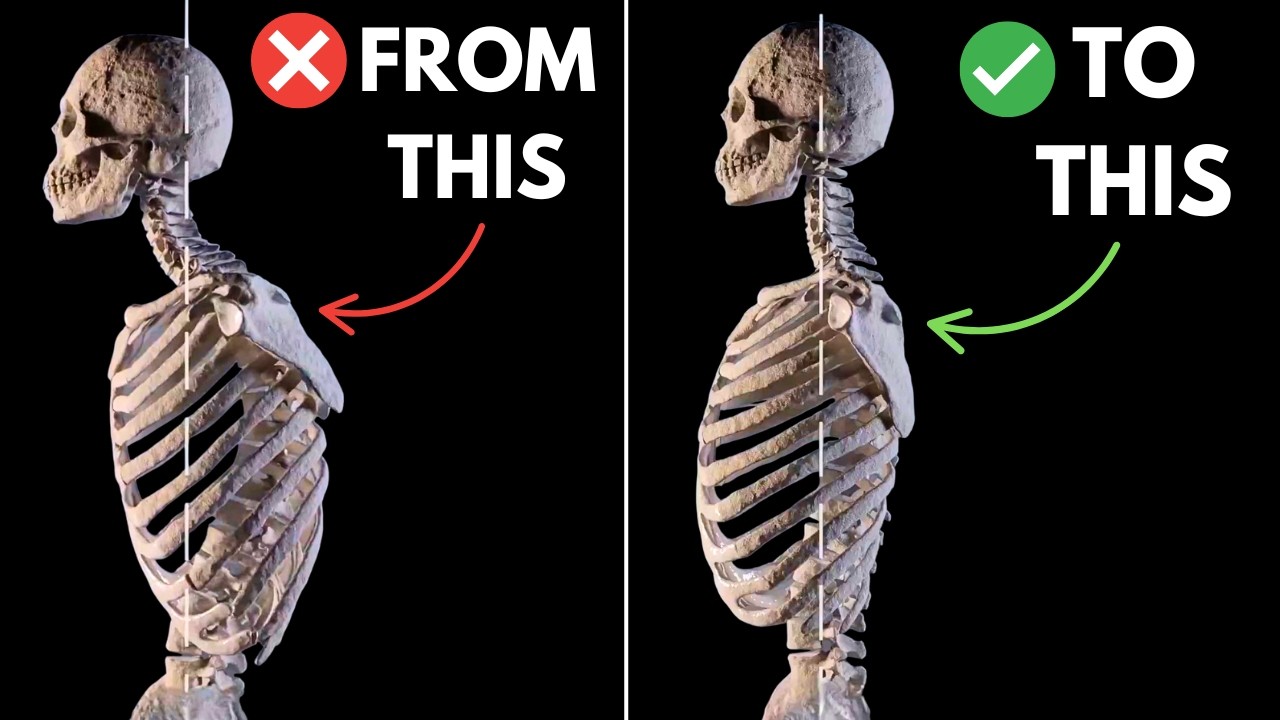
So, it goes something like this. Oh, you have shoulder pain because your shoulders are forward or you have neck pain because your you have forward neck or you have pain in your knee because your heels are pronated or you have back pain because you have anterior tilt or you have shoulder pain because one shoulder is higher than the other. And if we could just correct those things then you wouldn't have pain.
same narrative, same fear-based messaging of you are lacking this and you need to get this thing to solve this problem. And again, it's not that specific interventions don't help. It's not that unilateral exercises can't make a difference from side to side.
It's not that exercises can't be in some way sort of inherently corrective of something, right? For example, is it better to do an exercise than to not do an exercise? Probably, right?
Like in most cases, probably. So, anytime that you hear any one of these narratives related to the fear-based messaging, be very careful about what you allow into your head. For those of you who are curious and maybe another takeaway from just me as as the the concepts are coming up um I don't assume that really any emotions or exercises are bad now.
I don't assume that when I have pain that something is wrong with me. In fact, when I do have pain, I actually say thank you body. Thank you for letting me know that something might be a threat that I might be able to maybe move a body part a little bit more.
next time I train it or a little bit less next time I train it depending on maybe what I'm experiencing now. Thank you body for uh informing me that something might be wrong but also all the while letting me know that like hey you got this pain you got the discomfort but like look at you now you're you're here. You're surviving.
You're living you can still do all these other exercises that don't hurt. So like go do those. So I don't assume that exercises are bad.
I don't assume that particular postural presentations are bad. I don't assume that I'm limited in any way, shape, or form with mobility. Uh I reject mobility training uh wholeheartedly as a concept in the way that we're talking about it right now.
Not as something that like if you enjoy it and you feel like it's it's just something that gets you motivated to move, right? That's a totally separate conversation. Um, I I honestly view mobility work as lifting.
I think lifting is mobility work. It's just with a lot more force and typically a lot more effort. Um, but overall, I hope this helps you or informs you about something that you hadn't thought about or realized.
And I hope that it can prevent some of you from maybe falling into those traps and those rabbit holes that I did. So, I'm I'm really interested um in hearing about all of your experiences or thoughts on this. So, u if you're interested, please leave a comment below and just let me know what you think of this sort of uh off-the-cuff more authentic uh speaking video.