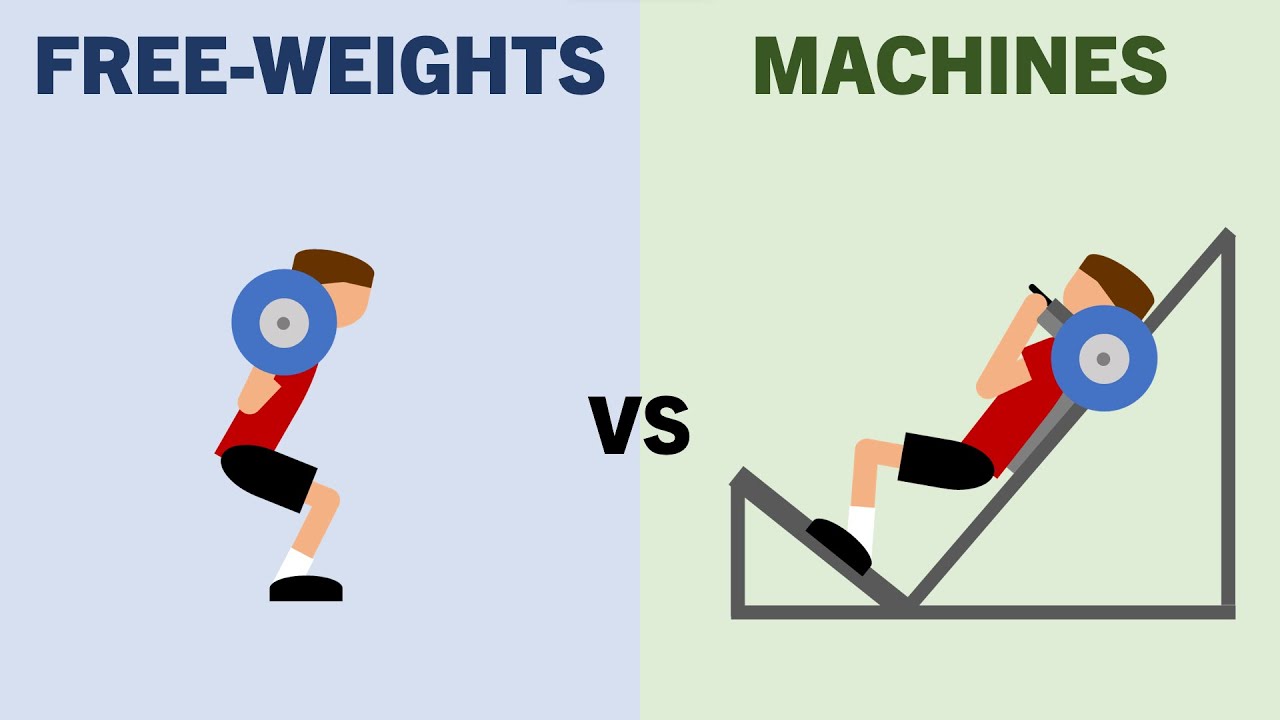
Hello everyone. Welcome back to another talking video. Today I want to tell you all why I think free weights versus machines as a whole conversation is dumb.
And in doing so, I want to talk about what's unique about free weights, what's unique about machines, and I want to try to make something useful out of this inherently dumb conversation. So, why is it dumb? Well, whenever we're going into the gym to exercise, lift, work out, get stronger, get bigger, what we're ultimately doing is we're finding specific ways to load our bodies.
And the way that we load our bodies is through this thing that we call force and our interaction with force. Now, what is a force? A force, many people define as just a push or a pull, right?
We can be more technical and say, "Oh, it's the product of mass and acceleration. " But I think for our intents and purposes in lifting, describing a force as simply like something that has um a magnitude that can push or pull us in a direction, good enough. Okay?
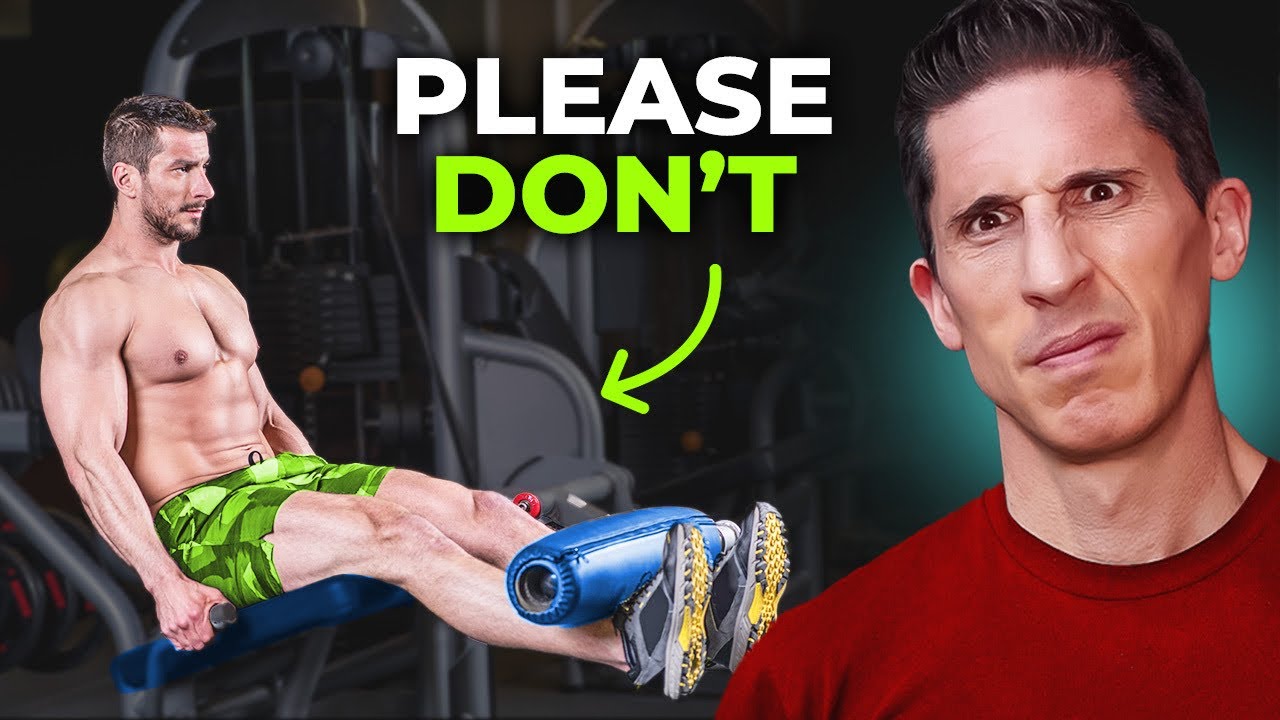
And when we understand that everything in the gym, free weights, machines, cable machines, whatever, whatever it is, whatever you point to, even the floor, okay, these are all just tools, options that we have to impose force on our bodies. Okay, so let's like take two examples. Um, dumbbell curl, biceps, versus preacher curl, machine.
Both of these curls are different in some important ways, but in most ways they're fundamentally the same. Right? You are holding some kind of apparatus, dumbbell or the handle on the preacher curl machine that is trying to straighten your elbow.
That's all that the dumbbell that's all that the machine preacher curl on some level wants to do. It wants to straighten your elbow. And so what do you do to train your biceps?
Well, you bend your elbow against that force, against that resistance. And what happens? Well, your bicep says, "Hey, you know, we we got to do something about this thing that's trying to straighten our elbow.
Let's bend the elbow. Let's see what happens. " And lo and behold, you do that enough times over enough of a long period of time, your biceps get stronger and typically they get bigger the stronger that you get.
And weirdly, people see these two things as like diametrically opposed. like the dumbbell is doing something fundamentally that is like totally distinct from the machine and I and I can't really understand this unless I step out of the lens of physics and into the world of emotions and dogmatism where people seem to have this feeling this just like deep to the core feeling that there's something about free weights that just makes them different right you hear this in the language that people use when they talk about free weights where it's like rather than describing what the dumbbell is doing to you and sort of how it's interacting with you, there's this weird like energy to the conversation where it's like something about free weights that it just like can't be accounted for. Like it's just superior.
I just have this inkling feeling, tingling feeling down to my gonads, which tells me that the dumbbell is just like touching my soul in a way that the machine isn't. Okay? And I can't really tell anyone that they're wrong for feeling that.
If you just like the dumbbell, you know, hands off. All right, you dumbbell, you can get a room. You can go do your thing and I'll do my thing with a machine over here.
But joking aside, um I think this has largely come from just the simplest explanation of it, which is that people have used free weights forever. They've had this dogmatic attachment to free weights forever. And there's nothing that any machine can really do to just compete with that.
And this is really unfortunate because when you don't understand things through the lens of physics and force, you're left to rely on your sort of emotional whims and nonsensical explanations about why one tool is better than another. And just to step outside the realm of like lifting for a second, imagine if someone came to you and they were like, "Hey, what do you think is better? Do you think apples or bananas are better?
Well, you would be like, okay, both of these things, they're primarily just forms of energy that I'm putting into my body. They have a specific calorie count. They have a specific macronutrient and micronutrient distribution and magnitude, right?
Which may be slightly different, but fundamentally, right, an apple and a banana are similar in in many, many ways. And both of them are excellent tools to be able to accomplish the goal of consuming a carbohydrate um and consuming a carbohydrate that has a little bit of fiber and some energy that'll help you out through the rest of the day. Right?
If someone came up to you and dogmatically just said, "Bananas, they're the bees knees. They're just the better fruit. " You'd be like, "Well, you know, I see your point.
I I could easily understand why you like the bananas. Um, but like I like apples as well as bananas. I think they're I think they're both great, right?
Whereas the apple dogmatists may say the opposite. They may be like bra. Nothing can compare to the apple.
The apple is just I mean, look at the apple. Look how spherical and perfect the apple is. The banana is like this phallic structure that just you have to peel it and you get the point, right?
On some level, the banana and the apple, they're different things, right? the dumbbell and the machine, they're different things. They have different qualities.
They have different upsides. They have different downsides. One person may intuitively like one more than the other.
But to assume that because something has been done, because something has been used, because people have liked something for a while, that that thing is better is a non argument to me. Right? Because ultimately, whether we're lifting the dumbbell or we're lifting against the handle of the machine, both of these things are implements that are under the effects of gravity.
I. e. , both of these things are ultimately falling toward the center of the earth.
Whether it be the dumbbell dropping straight down in front of you or the actual stack on the preacher curl machine moving downward, both of these things are just basically imposing some resistance on the hand against which we curl. Right? Both of these implements, they are straightening the elbow.
As I do the curl, the dumbbell tries to straighten my elbow and I curl against it. As I lift the handle on the machine, the handle on the machine tries to straighten my elbow and I bend my elbow against it. And so for me, it's like, okay, both of these things I can bend my elbow against.
It's just more now a conversation to me of like which of these things do I and the person potentially that I'm working with prefer and which might make more sense given the context of the individual person because both of these things are are great in my estimation and both of these things have advantages that the other doesn't. So, for example, if I pick up the dumbbell and I tell my client, hey, I want you to do some dumbbell curls, right? That client, they can adjust their hand wherever they want, right?
The dumbbell is not constraining them that way, which is something that the machine can't offer, right? The machine has a fixed handle. But on the flip side, the machine actually provides more specific loading to the elbow, right?
I won't get too deep into this, but machine preacher curls, they function on an arc. And an arc of motion basically matches the path of the elbow. So, for a lot of people, they get down on the preacher machine and they're like, "Whoa, I feel just like way more sort of constant tension on my biceps and I don't really feel limited by my shoulder.
It doesn't feel like my shoulders are taxed at all um for for those specific reasons. Whereas with a dumbbell, say, it's actually easier to adjust the shoulder position naturally. It's easier to do dumbbell curls anywhere in the gym, whereas maybe there's only one preacher curl machine.
" So you you see that these are just a few examples, a few situations where the dumbbell might have certain positive effects that the machine doesn't and and vice versa. And I think in most cases with most people, both of these options are are are awesome. And so to create this dichconomy, this like line, this firm line that says everything on the freeway side of the spectrum is awesome and everything on the not free weight side of the spectrum is just it will make you dysfunctional and lack function and lack stability and lack motor coordination.
None of that has any sort of like scientific empirical foundation, right? At least none that we've yet to discover. So when you're thinking about like free weights verse machines, don't think about it as like a versus thing.
Just think about these, you know, two variations that we're comparing in this context as variations that botho impose fundamentally the same kind of force on our bodies against which we react. Biceps curl, biceps curl. Um, which have slightly different upsides and and downsides.
And when you navigate the gym that way, you are are open to this whole new world of options and opportunities. You no longer see things as these fixed, rigid um titles of exercises, dumbbell curl versus cable curl versus machine curl. You now just start to look for the forces.
What are the forces that I want to impose on my body and how can I act against them to accomplish whatever goal I'm trying to accomplish. Now there are some instances in which this becomes kind of a hilarious irony I guess I guess you could say where it's like okay let's just assume let's just take the free weight dogmatism seriously for a second if you are using a machine that is plate loaded what do we do then right because um I'm loading plates a free weight onto a machine which yes is guided but ultimately this is a point of conversion of these two things that makes the whole conversation look a little bit silly because you're like, "Oh, wait, wait, wait, wait a second. There's a free weight and the free weight is imposing a torque on the axis of the machine and then I'm on the other side of the machine acting against the torque that the free weight is ultimately creating.
Is this a freee exercise? Is this not a freee exercise? Now, I'm kind of like confused about this, right?
" when in reality you could just simply see that variation, the dumbbell variation, the cable variation, whatever other variation you can come up with as simply an exercise where I'm bending my elbow against a resistance that is straightening my elbow. And guess what? You know what the best part about this whole thing is?
the muscle that you're targeting and the collection of muscles that need to say stabilize the rest of your body to perform that motion. Your muscles, as far as I'm aware, don't actually care about what you're lifting. At least no muscle yet has told me that.
At least personally, if any muscle has talked to you all and said, "Hey, hey, hey, I really prefer this dumbbell. " Right? That's maybe a different story.
and sort of pulling back from my faciciousness in the approach to this conversation. Both are obviously obviously obviously useful options. The one other thing that I did want to touch on that I will say maybe as more of an overall practical takeaway is that in my experience as a coach and trainer and in my experience working with coaches who work with real people um what I have discovered is the following in general about free weights versus machines to have some kind of concrete practical less philosophical takeaway with free weights generally speaking less work needs to be ded dedicated to the setup of the exercise.
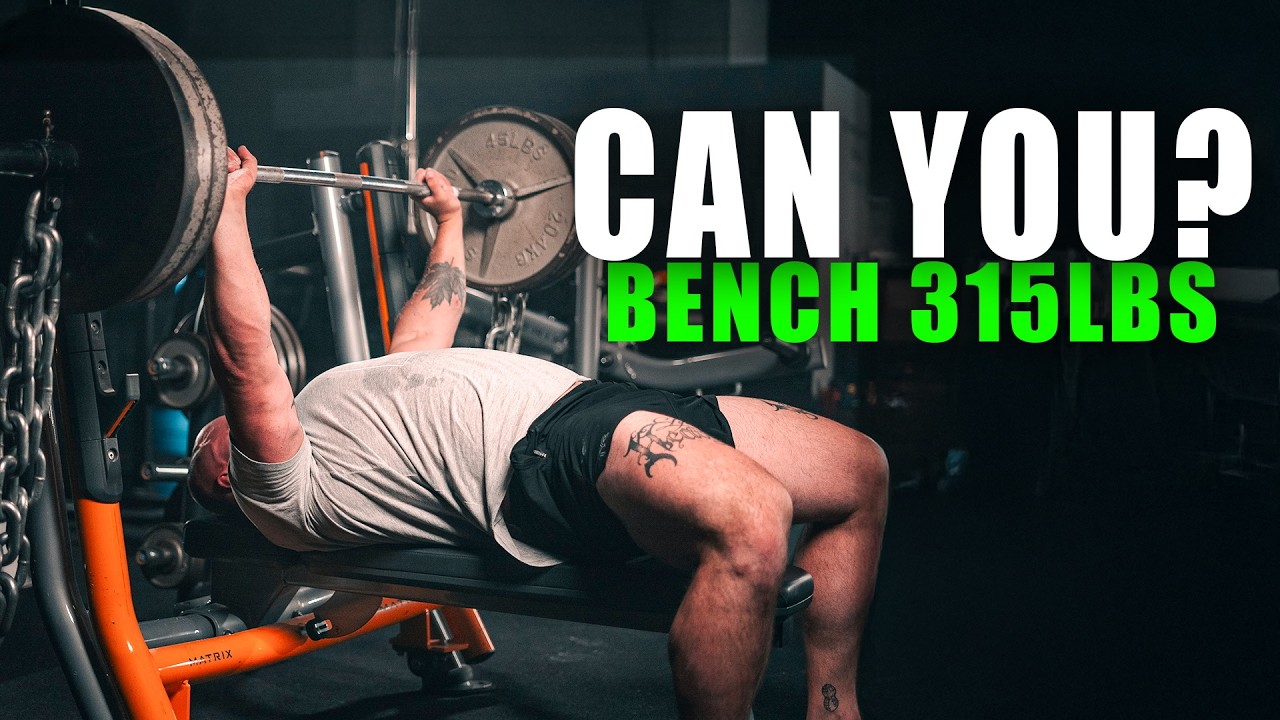
So let's take two uh examples just to be clear about it. Um let's say we are comparing now a dumbbell chest press to a machine chest press. Right?
With the dumbbell chest press, in some sense, all you really need to do is set the angle. Be like, "Hey, client, you know, or person. Maybe you're just referring to you're talking to yourself, which I often do, which I'm doing right now technically, although I would like to think I'm talking to, you know, even though it's a camera, I'm talk.
I'm visualizing you all as people because you are you are people. Um, you just have to lay down on the bench, put your arms where they're comfy, press against the dumbbells, right? Because the dumbbell it just conforms to where your arms are going to move, right?
And if it doesn't conform, the dumbbell's going to fall or you're going to end up doing some really weird with your arms, flopping and flailing about. Any of you coaches will know what I'm talking about if you've tried to teach someone a dumbbell press and it looks floppy and like they're a baby giraffe or a fish out of water. So with dumbbell based freebased movements, there tends to be less restriction, less guidance, less constraint to the motion.
And what that leads to is less work in the setup, but more in the execution. Right? So, what that means is I lie down.
My client on the bench, they pick up a pair of dumbbells, they start to press, the dumbbells conform to where their arms are. Maybe I've selected an inappropriate load, maybe I need to use more or less, but ultimately the dumbbells just like along for the ride in some sense. With a machine though, all you got to do is sit down and press against some handles, right?
So the actual execution, yes sir, sure it may require some queuing, some um some extra work in relation to like okay what do I do I think more about my elbow my hand etc. But ultimately a vast majority of the work with machine-based movements needs to occur needs to take place in the setup portion of the exercise. So what that means is when I set this person down, I have to be a lot more calculated about, okay, here's where I want this person's arm to move, here's where this person's arm is moving more naturally.
How do I set them up so that the path of the machine and the plane of loading of the machine is more in line with what I want this person to do and what they're actually capable of? And during the actual execution, once you've gotten all those setup things down, the execution is so much easier, right? Well, what do you have to do?
You just kind of press, right? It's really simple and it doesn't really need to be more complicated than that, right? Another example, just to give one more, might be like different versions of a squat.
How much more do you have to think about your setup and execution or really your execution primarily of a squat? It's like sure, maybe shimmy your stance around, but like people largely have a tough time just controlling the actual motion of a squat. Whereas you go to a leg press or you go to a hack squat, let's say, all you really got to figure out is like where do I put my feet, right?
It's like, okay, comfy foot position, shoulder position, how much arch, how much rounding, how much bracing. But that's all like a part of the setup. The execution is, hey, lower slowly and then push up out at the bottom.
So in general, what I would say again to make a more practical point of this is that if you're using free weights, more of your attention and more of your mental resources will probably need to go to the execution. Of course, some amount needs to be dedicated to the setup and all that. Absolutely.
As all exercises, as is true for all exercises, but on a relative basis compared to machines, I think a lot of people throw machines out because they sit down on a machine and none of the settings are set up well for their bodies. And so instead of actually working or educating themselves to actually figure out like, hey, how do I make this machine comfy for me? They just assume that like the machine is a fixed thing and it is therefore bad because they sat down once and had a bad experience on it.
when in reality it's like no no no no no you just need to figure out how it is that your body can interact with this machine comfortably at what load and what rep range and so on. So overall the setup tends to be more complicated with machines. The execution tends to be more complicated with free weights.
And guess what? Both of those are just trade-offs. And again I'll make it clear.
I'm not saying that there's no setup that needs to occur in a free weight or there's no execution that needs to occur in a machine. That's obviously not true. Hopefully you all get the point that I'm making.
But I do think that understanding that um at least many of you who are maybe uh free weight dogmatists, people who lean in the direction of like there's something mystical and magical about free weights, I actually think that that is is what they're trying to describe. What they're trying to describe is this idea that the free weights often conform naturally to the structure of the person because the person is just moving and the free weight is along for the ride whereas the machines don't. But that's a humongous upside if you understand, hey, how do I need to set myself up?
How do I need to move my arms or legs? How do I need to place my hands? How do I need to maybe just think about this for half of a second so that the machine can do what I'm trying to get it to do, right?
rather than assuming that it will just conform to you like a free weight. So is the discussion dumb? Maybe not because maybe you've extracted something useful from this.
But fun fundamentally the major points are that regardless of what implement you're using, these are all just little tools to push or pull against. And how effective the tool is is entirely dependent on how you interact with the tool, on your understanding of how to use the tool. If you tried to hammer a nail into a wall with a wrench, you wouldn't assume that the wrench sucks.
You would just assume that you probably needed a different tool. And if you tried to hammer a nail into the wall with a wrench, maybe we need to be having a different discussion about wrenches and hammers rather than saying this wrench sucks and the hammer is the only thing that could ever be appropriate because guess what? You may need to screw in a bolt one day and the hammer sure as hell is not going to be good for that.
So, I hope this discussion was helpful in some way um and that you enjoy this off the cuff thing. One one thing just before you all click off and go to the next video or maybe you're maybe you're pooping or as you're watching this. Um I have a live biomechanics mentorship that is currently um like spots are currently open for it.
Um it's on early bird pricing right now 60% off. So if any of you are interested in that I'll leave a link in the description. Um the live course is basically exactly what it sounds like.
It's a live biomechanics mentorship with me. We do two live calls a week. So, you'll be interacting with me directly, learning from me directly, and I'm basically going to build the foundation of biomechanics from the ground from zero to hero um all the way up regardless of what experience level you're at.
So, if you're interested in that, check the link in the description um below. And as always, leave your comments, leave your thoughts, tell me your opinions, tell me where I'm stupid, tell me where you think you're more correct, and um the world will go around and we will all be less dumb for it. So again, if you're interested in the mentorship, in learning from me directly, talking to me directly, click that link below and I'll see you all as always in the next video.