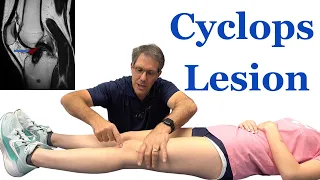
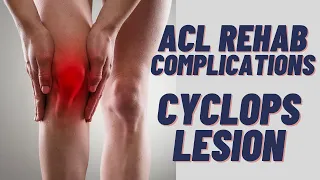
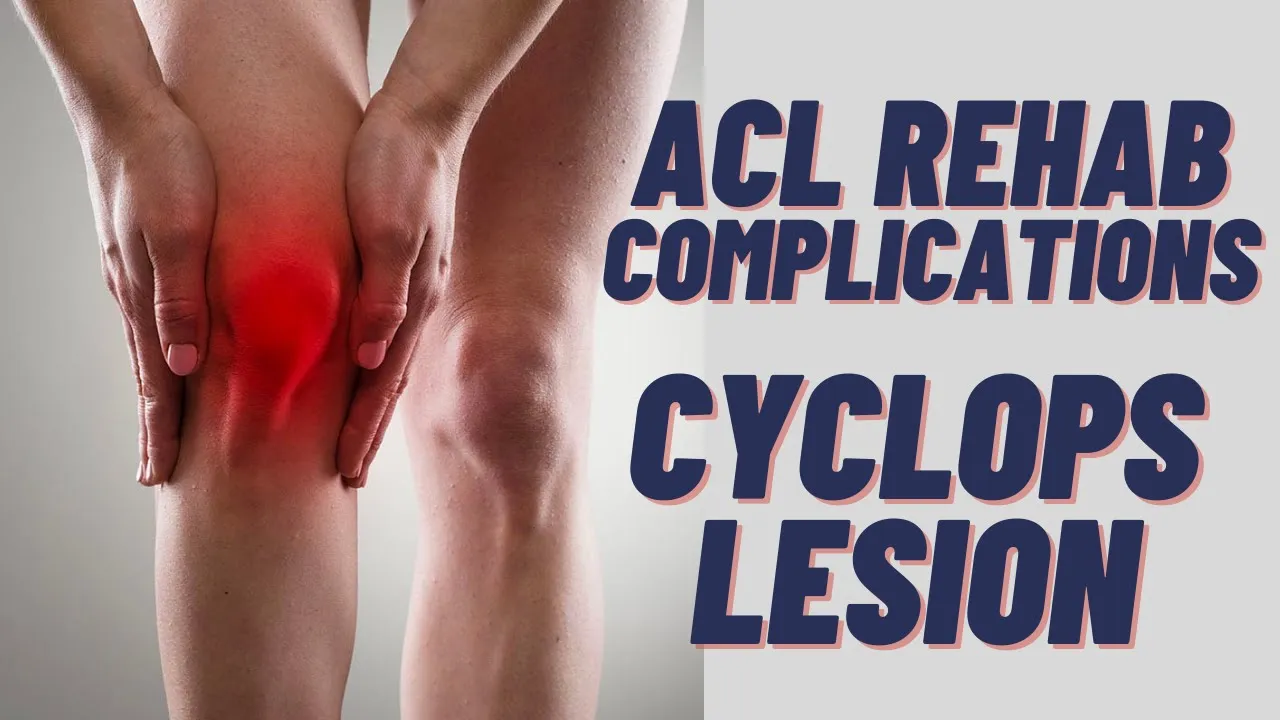
[Music] oh [Music] talking about some of the complications that could happen uh after acl surgery we know that you know sometimes not everything goes according to plan so in this particular video we're going to be talking about cyclops lesions and kind of what it is uh signs that we should be looking for and how we can potentially help to not only resolve it quickly but also potentially help them help prevent it in the first place um so a cyclops lesion is uh defined as a fibrous nodule that kind of develops in the interconduct interchondral notch
in the front of the knee um and there's a study done by uh which i'll link below uh by noelle's at all and look at kind of the the risk factors and things like that and what they found is that there is a wide a fairly wide range of uh percentage of people that may experience a cyclops lesion they found i think 1.9 percent to about 10 of people um i know some other studies i found between three and five percent of people may develop a cyclops lesion excuse me and what they found that in
the uh the preoperative case uh preoperatively some some things that may have potential risk factors is decreased range of motion and also swelling and post-operative they actually found that hamstring kind of muscle spasms can potentially put them at risk for a cyclops lesion as well and what you want to look for is a sudden loss of extension usually about the two to four month mark as you'll start to see the extension start to decline and when you bring them into extension a patient might report of like a clunking type of feeling um those are usually
the big signs and you know you you always want to be thinking about like are you making a difference in rehab you know are so let's say that their extension is is back to full or near full and all of a sudden it has to go backwards you know you spend a couple weeks kind of working on it you tell them to do the the uh the low low long duration holds at home and none of that seems to be really working those are the times you really need to be thinking about whether or not
it's a site compilation because time is of the essence right if you keep just trying the same thing over and over and over again and nothing changes you're you're essentially kind of wasting time because if they don't have full extension or they're missing you know four five six degrees of extension that's gonna make rehab really really hard especially when you're talking about quad loading um so if you see you know again loss of extension around the two to four month time frame and you know there might be a little bit of like pressure or pain
in the front of the knee that they report and and that clunking feeling that that the at that the patient might report to you those are times you want to start thinking about referring out to the ortho maybe getting some extra imaging done because if it is a cyclops lesion the only way to really fix it is to actually get scar tissue removal so when that happens when they remove the nodule um you'll find that they'll come to you after rehab and their extension is going to get better right away but that's when aggressive rehab
is really important i've only seen probably two or three of my in my lifetime as a pt but when you catch it you want to get it make sure you you catch it early make sure you get it resolved quickly so if it is surgery they're coming to see you uh probably right away probably the day after surgery and that they understand they should be continuously working on range of motion four five six times a day throughout the day to make sure that the scar tissue you don't give the scars gives you a chance to
come back um so so hopefully you guys found this helpful and it can can help you guys potentially um catch scar catch cyclops lesions a little bit earlier thank you for watching today's video please feel free to like and subscribe and share it on your social media platforms if you're interested i have started an acl mastering group which is a growing library of content centered around acr rehab it has exercises ranging from immediate post-op to late stage sports specific movements and everything in between is a growing library and currently holds over 250 videos there's content
centered around assessments movement breakdowns exercise breakdowns case studies and a whole lot more you also gain access to a private forum where you can engage with like-minded people ask questions share research articles and share resources if you're interested please feel free to click the link below thank you for watching [Applause] [Music] you