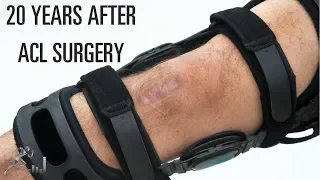
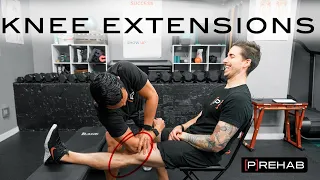
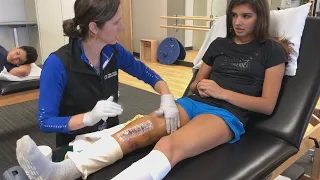
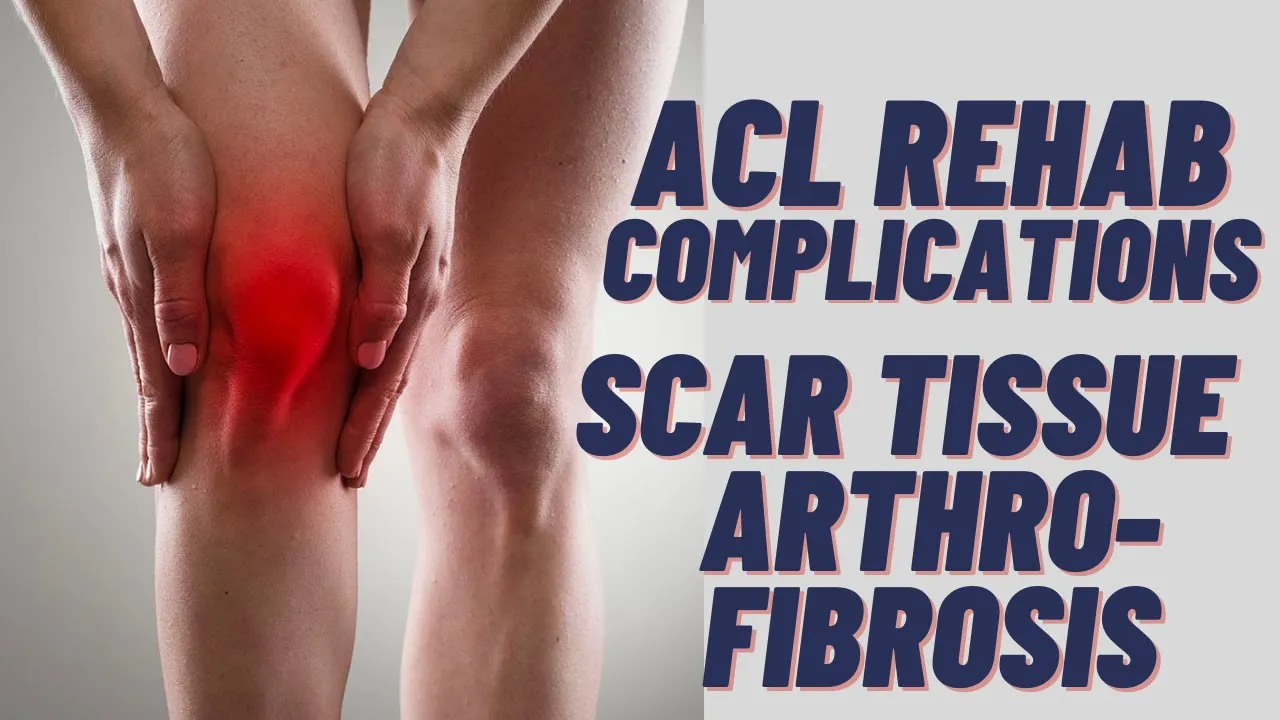
uh so in this video i'm going to talk about specific arthrofibrosis which is essentially scar tissue that is limiting range of motion and potentially both flexion and extension can be affected [Music] wow in this video i'm gonna be talking about a complication that potentially can happen after acl surgery um and it's good for us to be aware of these things just so we can identify them early and get them addressed quickly to not waste any time in rehab so in this video i'm going to talk about specific arthrofibrosis which is essentially scar tissue that is
limiting range of motion and potentially both flexion and extension can be affected as opposed to a cyclops lesion which is only for extension deficits um so when you're looking at there's a couple of studies by uh sanders and i'm gonna look at the name um ekitiari they found ranges from between two percent to 38 percent and what they found that the reason why there's such a wide range in their in their studies which they included a bunch of different studies in it is because of there is no clear-cut definition or at least not a consistent
definition of arthrofibrosis um and even with that wide range they actually only found that between three and five percent of people actually need some sort of surgery to resolve the scar tissue we know that you know after surgery there's going to be scar tissue that's involved and for us on the rehab side it's a matter of whether or not it's actually impeding the progress of the patient um so for the three to five percent of people that actually it does affect that end up needing surgery i think it's really important to address this early and
often um the reason why and i'm going to give you a a specific example is because a two of mine in particular is because i had one girl um who is a high level lacrosse player in college i was seeing her over the summertime when she was back for break she was about three months post-op when she came to see me she kind of had this you know this constant knee pain in the front in the front of her knee um we're trying to do some some some flexion and extension and extension kind of came
back a little bit you know lacking a few degrees here and there um flexion she was missing about 15 degrees or so and she kept telling me you know it feels like my range of motion just hits a wall like i just can't i just can't move it anymore um she went back to school over the summer time um for like a a weekend break or something like that saw her ortho ortho was very dismissive of it you know she was kind of the the ortho was kind of like oh just just it'll it'll work
itself out work itself out and on the rehab side i kept thinking in the back of my head like it seems like chicago is seems like scar tissue and i kind of like explained to her what it should feel like and she's like that's spot on what it feels like um and then you know the the the summer went on we did our best in rehab um but it's still in the back of my mind i feel like there was something that was slowing down in progress or not allowing us to really take it to
the next level okay um she went back to school in august um again told them what what she was feeling in the front of her knee and they they were still kind of dismissive of it october she was kind of like you know i think i need to get this checked out i think something is wrong they did an mri you know and they found sure enough it was scar tissue um and a week later she ended up getting scar tissue removal which which sure enough it was a decent amount of scar tissue that ended
up getting removed so the reason why i was so pressed about sharing this in particular was because you think back to when i found it in june or july uh they could have done it back in june of july but we ended up wasting four or five months of rehab um when this could have been resolved way earlier fast forward to the next year i actually got a friend of hers who came to see me her flexion stopped at 125 regardless of how much time we spent and she this is a you know pretty pretty
skinny girl who had about 145 to 150 degrees of knee flexion um but at 125 it just stopped and she kept telling me it hit a wall it hits a wall i i physically cannot go anymore it hurts um so again we sent her back to her school the ortho again was pretty dismissive of it um and then i actually told the parents about the other girl from the previous year and sure enough they they actually pressed the the surgeon was like you are giving my my daughter an mri saw the mri they actually thought
initially it was a meniscus tear and i was like doesn't make any sense we haven't done any pounding we've done anything like that that's too aggressive um so they're like okay we're gonna they went into surgery thinking that it's gonna be a either meniscectomy or a meniscus repair came out of surgery the surgeon said that he removed the biggest scar tissue he's ever removed in his you know whatever 15 20 years of working so that one was obviously so much better because we were able to resolve it right away so at 125 i actually saw
her two days after her surgery she went from 125 to 140 right away and then within the next week she was back to her full range at 150. so these are kind of two case studies in my experience that that really made a difference as far as getting scar tissue removal um so for us as far as recognition goes you're looking at limited range of motion right that obviously makes sense because scar tissue is impeding it um additionally they might report of anterior knee pain in the front um and in my experience patients will tell
you that i i hit a wall you know i feel like my knee motion just can't go anymore um those are kind of the big three things that that you want to look for um that can potentially uh i guess set up some alarms in your head about like hey we need potentially mainly get this checked out um usually i i'll wait a little bit you know i'll make sure that they're doing their homework or make sure that we're making sure we're being are doing diligent rehab um trying to uh kind of push them through
range of motion manually if nothing is working you know two threes go by and nothing is changing for range of motion you really want to be thinking about reaching out to the ortho and and think about getting some imaging done um and potentially getting scar tissue removal um so hopefully you guys found this helpful i'm gonna link those two articles below um and also as far as like pre-operatively um you know if we can again they found some some things that can can potentially cause scar tissue which is limited range of motion swelling things that
again we've talked about pre-operatively that make make a big difference and they could potentially prevent some of these complications like arthrofibrosis so hopefully you guys found this video helpful in regards to things that uh symptoms that we can look for um that we should be aware of because again we can save a lot of time in rehab and making the athlete feel better um so hope you guys found this video helpful thank you for watching today's video please feel free to like and subscribe and share it on your social media platforms if you're interested i
have started an acl mastering group which is a growing library of content centered around acr rehab it has exercises ranging from immediate post-op to late stage sport specific movements and everything in between is a growing library and currently holds over 250 videos there's content centered around assessments movement breakdowns exercise breakdowns case studies and a whole lot more you also gain access to a private forum where you can engage with like-minded people ask questions share research articles and share resources if you're interested please feel free to click the link below thank you for watching [Applause] [Music]
you