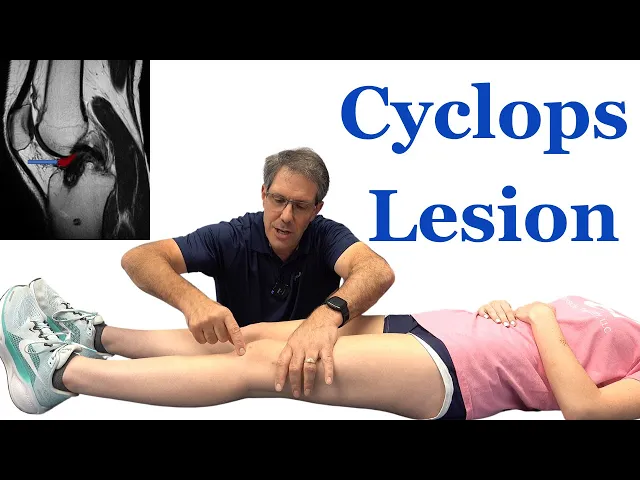
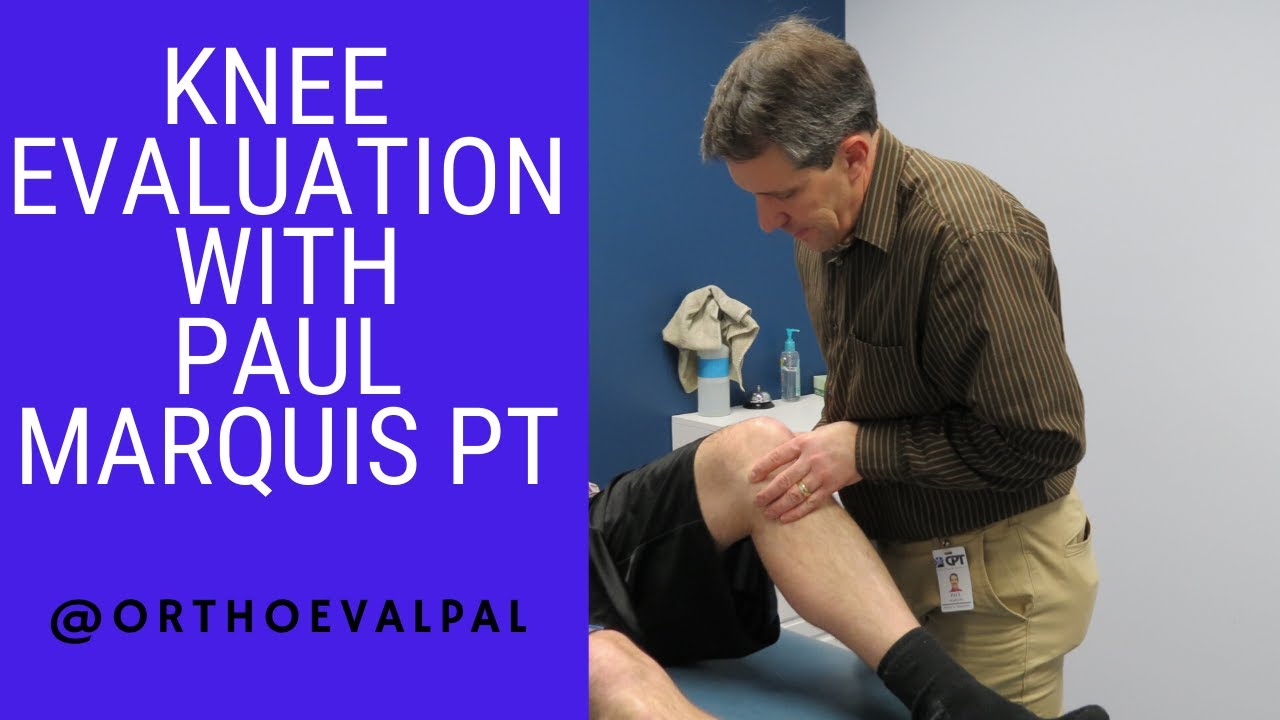
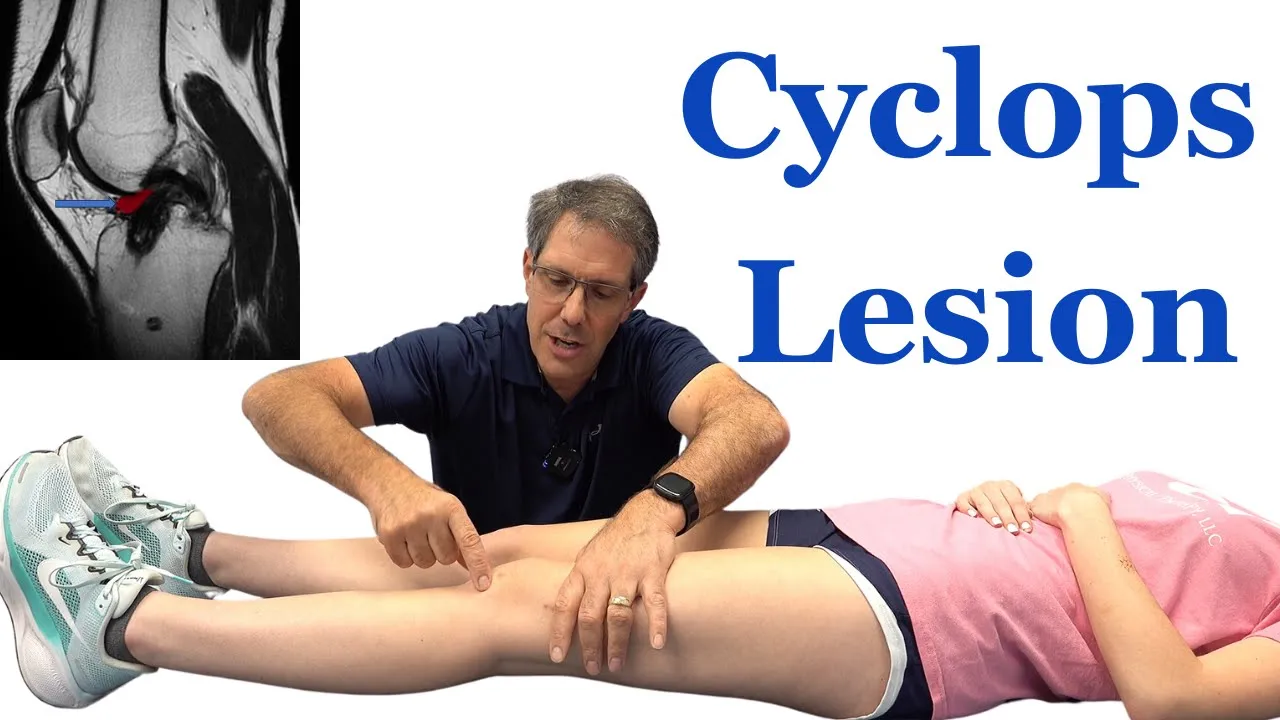
hey everyone this is Paul from Ortho valpal today I want to talk to you about what a cyclops lesion in the knee is um and I think it's important that you kind of understand what the Cyclops is and how it affects patients you know after they've had an ACL reconstruction this happens most often with people who have had ACL reconstructions um and what happens is we notice this lack of ability to extend the knee so you can see there's some space underneath the knee it doesn't extend quite as well as this one does okay you
can also see that there's still some kind of chronic swelling inside the knee so you know intraarticular diffusion inside so we're 5 months out now after having had an ACL reconstruction still having difficulty to extend the knee there is pain with extension of the knee and that pain sits kind of right here in the antal lateral part of the knee it feels like it's deep in that area um and it's more restricted by this than by any anything else um and as a result of this lesion it causes continued swelling inside the knee when you
have swelling here it shuts the quad down doesn't function as well so not only do we have this lack of ability to straighten out the leg but we lose a little bit of performance and strength because of this chronic swelling and that inability to straighten it out so what is a um a cyclops lesion well if we take this tibia we'll imagine that is kind of like this right here and we pull it up a little bit here is that ACL okay and that ACL needs to be able to move like this as we straighten
the leg out it becomes tight and it needs to be able to hold really snug there okay it's called a screw home mechanism but imagine if this ACL was shorter or if something restricted it from straightening out so kind of like this will simulate what a cyclops lesion would look like okay so it's this build up of fibrous tissue that is on the front of the ACL most often times on the front and on the outside a little bit and therefore when we try to straighten out the leg that hits that fibrous tissue and it
be Can it can become painful it can cause some crackling and some snapping in there and that's a you know that's happened with us right and so we're not able to fully straighten it out and therefore that's painful so no matter how much we work on straightening which we did right from day one work on straightening straightening straightening work on the quad set try to get it to go straight it keeps wanting to bounce back okay so one of the tests for a cyclops lesion is just the bounce test by taking the knee you push
down and as you'll notice here it pops right back up okay so this knee we push it down it stays down here we bounce up and she's stretched out because I've been pushing down her a little bit but generally when she comes back in this knee is back up here and we walk with a slightly flexed knee okay so as much as we've worked on trying to extend her it keeps coming back so she's lined up um to have surgery tomorrow and have that debr did and taken you know take that Cyclops lesion out of
there it's going to let this swelling settle down and therefore we're going to have a better quad contraction we're going to have better extension no more bounce back and we should really be able to progress her a lot faster and get her back into her running jumping uh and cutting activities so functionally doing fairly well now but this is really going to push her head a lot faster so I hope that you have a better understanding of what a cyclops lesion in the knee is and um I hope you enjoyed and and like our video
today please be sure to subscribe thanks