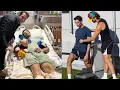
Long game episode four. We have Justin here from Ways of Austin, Texas. He has a beautiful healing story. He actually came to a workshop of ours and told me just a bit that made me so convinced immediately. I told him we had to line them up to fly out to LA, have this chat with us. He's a special guy. Has truly been through it and has shared a lot of wisdom with me. We hung out the past two, three days with me and my team and This podcast podcast series. We've been flying people out to
come train with us, shoot some content, tell their story. And in Justin's lucky case, he got to lose two basketball games with me and my friends cuz he was on my team. And that's just how it goes. You're on my team in basketball. So, thank you for coming. >> Yes, sir. Appreciate you having me. >> Um, I'm excited for people to get to know a little bit about you and the Resilience you've carried and the wisdom you've gained. you've really been in it deep enough to know the huge gaps that are there within the industry
and then also personally what you probably were never prepared for of how to deal with existential level of pain. And we spoke about that earlier in breakfast today. And >> really the point of this podcast is to just give what a former you needed and to try to prevent some of the Unnecessary suffering and the isolation that people feel. So, first I do want to show >> exactly where we met in the podcast because I just came across this and the full circle is really cool. >> Yeah. >> You don't know how much you [
__ ] help me. >> Really, bro? Like, >> oh, it means the world. >> It's crazy how much you leveled me up, Bro. Like, I was >> Yeah, you were down bad. >> So down bad, bro. >> How are you today? >> Super down bad. >> So much better, bro. >> I love it. Good, bro. >> Yes, sir. >> So cool. You got support's awesome. >> Yeah, my sport's awesome. Like, >> I still live here. I'll tell the story about it in a little bit. was nagging me To come to Austin in the DM. >>
It's ironic coming a bunch of times. >> But yeah, I love it here. It's >> I've been bugging you on Instagram like really >> actually on my birthday. You were like, "Yo, I'm in Austin trying to set up a class." I was like, "Look at that. The alignment bigger than me, man. That's That's beautiful. >> I know, bro. >> Sick. Let's make sure we get to chat More. We're going to get going. >> Make sure we get to chat more." And here we are. We made sure we got to chat more. And so, Jay, it's
really, really special. Um, we got to talk on the phone a few days ago and I'm I'm just excited for the story to get out. So, let's start from your introduction to your low back of when you even started having back pain and what age you were um and how you felt when you first had it. What time Did you notice you had a low back and you felt a tweak or any little thing? What's the pre-tory? >> Yeah, so before I even had any of these major issues come up, it was I mean I
was a kid. I would tweak it. Playing sports, mostly basketball. I remember, you know, trying to go for steals and stuff. You make a little quick little movement, you pull up and, you know, it was kind of unusual because I was the only kid on the team where that would Happen to. Um, >> so it wouldn't happen a lot, but looking back on it now, I could see the the dominoes starting to fall. And, uh, yeah, I mean, it started when I was 12, 13 maybe. Okay. but it didn't really pick up until I really
had the the major injury where I really realized >> how much worse it could get. >> Yeah. So, when you start having occasional back tweaks even at age 12, 13, Um I don't know if you ever got any help with that or you remember what you were told. I do know what you were told later as you started to have real back issues, but youth and back pain is a great recipe for gaslighting. That is where you're just going to be tossed out to don't even worry about it. >> That's what it was. >> And
at the time it was true. However, you came to learn um I'm all about spoilers in the podcast. We don't have To make sure that it lines up perfect and don't spill the beans. Like you found out later that you had genetic stenosis essentially narrowing of your spinal canal and you were always predisposed to having more sensitivity within the spine. Maybe that wasn't what was going on at 12 and 13 years old, but just the fact that you could have had hints of issues and predispositions that not that you're doomed, but you should be more
concerned with building up your Back and preventative measure than most people. Correct. >> But you wouldn't think that way when it's just always immediately like >> don't even worry about it. So now let's move to how we actually got here in the podcast. You told me that this really changed your life and that you understood everything I spoken about in the videos and how much it affected me. >> Um, let's jump to when things got real for you. So, you felt on and off back Pain for some years as a child. >> At what point
did you start becoming the bad back guy to where it was the biggest thing in your life? >> So, it was after I remember playing basketball 101 with one of my buddies. Had a real good game. I ended up hurting my hamstring. Had to take some time off from the gym with the hamstring thing. >> Yeah. >> Got back into the gym like a month or two later. Didn't go to the doctor for That. I just let it heal. And I remember I was getting back into the gym. Of course, I was doing the same
amount of weight I was doing prior, even taking two months off. So, it's probably a little bit too much. >> Yeah. >> I remember doing some uh I was doing RDL's >> and I went up for a rep. Felt a little something, but it just felt like what I was used to feeling. It was just a Little tweak in the back. So I was like, "Okay, nothing. >> Yeah, >> nothing to think of. Don't worry about it." So finished the workout. Obviously went through the pain because, you know, everybody always says just keep pushing through
it. It's not that big of a deal. >> And I want to talk about that in a little bit of how you were lifting before, but keep going. >> And so, um, yeah, that happened. Didn't Think anything of it. Over the course of the few days, I had back tightness, but it wasn't anything crazy. And then the back tightness kind of dissipated and then I started having a little bit of pain down the leg. >> Yeah. That was the whole start of my sciatica journey that I didn't even know was sciatica at the time because
I had hurt my hamstring a couple months prior. So I thought it was a reagravation of that. >> Yeah. >> So I had the same I remember the first time I felt it going on a jog after herniation. >> I still didn't put it together. I thought it was like blood flow, this whooing weird feeling in my hamstring until it started to sting and TV static. >> Right. The TV static is exactly how it >> give away. Y >> and then what happened after that? So, it just progressed over the next few Months. I mean,
I was still going to the gym. I was just pushing through the pain. I would be leg pressing, you know, a bunch of weight and it like it would hurt, but I would be like, "It's fine." Like, you know, you got to do >> Yeah. Like, it'll just go away if I just keep at it. >> Yeah. >> Um, and then it got to the point where I had to stop going to the gym. I was trying to just take walks. I remember Like trying to walk downhill and like I had to do like how
me and Eddie and you were walking. We went up the uh >> we went on a hike. Yeah, the hiking you were like kind of messing around with how we used to have to do it like side to side. And that's what I >> downhill on a serene little mountain way. And Eddie and I were talking about you used to have to side step those hills. Yeah. >> Cuz the on your SI joint going downhill >> is going to be a great great flare up in the middle of the night. So >> So then that
started happening. It progressively kept getting worse. So then I was like, "Okay, I probably need to go see a doctor." went and saw a hamstring specialist because I thought the issue was in my hamstring because I was having pain in my hamstring. >> He takes X-ray of the hamstring. He's like, "You're structurally you're fine. There's nothing wrong with you." I told Him that I had maybe an idea that it was back related. >> Um and he kind of dismissed it. Just said, you know, you're young. You're in good shape. You're skinny. You know, nothing nothing
to be worried about. Everybody has back herniations, disc herniations, and they don't even know it. >> Gave me that whole spiel and basically told me that like I was overreacting >> and you feel insulted. Did you just call Me skinny? Like you know. >> Yeah. >> Um but yeah, so I >> went to that doctor. Didn't really get any help with that, but he did recommend me to go to physical therapy. So I did that for three, four months. I would go once or twice a week, >> you know, spent a bunch of money on
that. Wasted a lot of money on that because it didn't help with anything. They told me I had like fascia tissue That was tight and that was my issue. >> Um >> good observation. It would scrape my hamstring, have me do certain exercises, but it never really progressed past like getting 10 15% better. And it was like not lasting. It would last for like an hour or two after the session. I would feel just a little bit better. Okay. >> Um, >> but yeah, it just didn't progress. So, I Stopped going to physical therapy and
I was like, "Okay, I'm going to take this into my own hands." So, I started researching YouTube. You know how everybody does. They go down the Reddit rabbit hole of what it could possibly be. I'm on, you know, the internet searching for stuff all day because it it progressed to the point where I couldn't do anything. I couldn't even go outside and take a 10-minute walk. I couldn't take my dog for a walk. I Couldn't do none of that. >> That's your new hobby. >> Yeah, it was waking up and then just back pain. >>
Yeah. How to fix back pain. I kind of had an idea of what it was, the worse that it got because the symptoms were like verbatim what you would read on the internet for sciatica. So dealt with that for another three or four months trying to fix it by myself. I would go to the gym for Honestly like three hours a day and just stretch and do these like mobility stuff that I'd found on YouTube. >> I swear this is a hallmark checkpoint of people's back journey where they send the Hail Mary stretch it out
sessions where you go, "Okay, stretching should help, but it hasn't been. Maybe I'm just not cracking it hard enough. like maybe I'm just scratching the surface. And you go in for an hour this way and an hour this way and you flex forward and I did The same. I remember literally trying to touch my toes in every angle >> and I gave it two hours and it felt at least for me >> something was moved around, opened up >> and I couldn't walked for a week after and it was a huge flare up after that.
But >> it's a good good attempt. You got to try these things to find out. Follow your intuition and sometimes, okay, you were tight, but the solution wasn't to Stretch it. Now you start to think, why was I tight? Because it clearly wasn't just knotted. There was probably some guarding going on. >> Oh, 100%. >> Okay. And so you tried that Hail Mary attempt >> and it helped a little bit. I would be in there for 3 hours and then maybe have like 1 hour relief afterwards. So for me, it was like, >> okay, >>
it wasn't worth it, >> but in the moment it is worth it to get that 1 hour of relief where like I don't have to think about it constantly 24/7. Yeah, >> for that one hour. So progressed with that. Um I remember finding uh Ben Patrick stuff. >> Knees over toes guy. >> Yep. Doing the split squats and the back extension were two of the things that I Had found on YouTube. Right. >> So I remember one day I was having a good day. >> Yeah. >> I was like, I'm going to go a little
bit harder today because I'm going to push it. I feel good today. >> Yeah. >> Did some split squats. It's fine. And then I went to the back extension. Did four reps from day one. Obviously not what you want to do now that I know what I know now. >> Yeah. >> And I I mean I like spammed it. I did like four or five sets of like 20 reps. Like way too much. >> Next day was in like a severe amount of pain. Like it was worse than it had ever been. >> Yeah. >>
So take like another week, see if it got better. It was still getting worse. So Then I was like, "Okay, I'm starting to get to the point where like I'm getting depressed about this. Like I wake up in pain. I can't I can't even like get out of my bed without being in pain. And it's like immediate right when I wake up. Boom. Like 10 out of 10 pain. >> Alarm clock. >> Yeah. Like all I can think about was that I can't focus on literally anything else. It was, you know, it like ruins relationships.
It ruins, you know, time With your friends. You're just not the same person with your family. And like my family could tell I wasn't in a good spot. >> Yeah. >> And so I knew I needed to change something else. So I was like, I don't really have another choice. Let's go see a different doctor. So, I went and saw a spine specialist because I was pretty sure that I had an issue with my spine. I go and see the doctor. He doesn't even Have to do an X-ray. He's like, "Yeah, your back is messed
up." Like, >> yeah. >> Without even He was just had me bend over a few times. >> A little test, B. >> Yeah. And he was like, "How are you even dealing with this for this long?" I I don't know. So, I get an X-ray. He's like, "Yeah, your back is messed up. You need to come get an MRI." >> Get the MRI. I get it back. He tells me I have like a huge herniation. Like, they're almost like laughing about it when they're telling me >> Yeah. Yeah. How bad it was. And I was
>> impressive. They call that. >> Exactly. Yeah. It was like, "Oh, this is one of the biggest ones we've ever seen." And so, I mean, I was already freaking out, but then they told me that and I'm like, "Okay, that's why I'm in so much pain." Like, >> they're wheeling the Guinness World Record book guy to come take a photo. >> Yeah. They're like, I forget how many centimeters it was, but it it was one of the biggest ones that they had seen. >> So, I get the MRI and they're like, "All right, we have
two courses of action. You can do steroid injection or you can do surgery." Obviously, I didn't want to do surgery because you when you're reading all that stuff on Reddit and the internet, you read anything about back Surgery and people tell you it's the worst thing that you can do. You'll never be the same. >> We spoke about this the the false dichotomy like it you go to your first line of defense for some of these pains and you get framed of our options or these two things realistically. Now, with such a severe herniation, that
really may seem like the only viable option, but it's too it's a it's it's a dead end what you were given, right? >> Um, you ended up doing the injections, correct? >> Yep. So, I did the injection first. Um, >> I got relief for literally one week, >> but it felt great, you said. >> Oh, that one week I was >> I felt like I was back. I was happy again. Wasn't thinking about my back 24/7. >> And I want to I want us to like think out loud about what's going on there. So when
we make decisions, I'm completely Illqualified. I cannot discuss whether or not you should do certain treatments or not. However, I can think out loud with logic with you. Relief is a really great thing. It's remarkable how you can have that much relief from just an injectable steroid that's going to go and wipe out inflammation. However, do you think your herniation went away? >> No. And I knew that going into it because I had read up on what these Stero injections actually are. So, it's crazy how you can have such a reduction of pain with zero
change in your structure. >> So, sometimes people will ask, well, what's the point of training your spine if it's not going to fix the herniation? Well, clearly you can have a huge improvement on function and symptoms without even changing the structure, right? >> One way is just artificially through Trying to put in some kind of compound to wipe out inflammation. >> The other is trying to rebuild your body up so it doesn't keep producing inflammation as a response of overwhelm. So, one lesson to learn there is I can feel a lot better and not have
physically improved structure all that much to the actual herniation or bone issue. So, that means you could probably do a similar effect through a longer game of training. >> And but the second thing is what are you really after? Trying to feel better or trying to be better and actually get better? >> At that point, it was just feeling better cuz I would I would do anything to get even a day. You can't worry about being dehydrated if you can't breathe. That's the first step. Let me get some oxygen. Then you worry about thirst. Then
you're like, I'm hungry. Then you're like, I need friends to play Rocket League. You know, the the the hierarchy, Maslo's law, or whatever. So, okay. So, you did that life changing for a week. >> Yep. I thought I was back to 100%. I thought it was going to be the end all beall for me. No surgery. I was all excited. >> Um, but the >> Wow. He thought he didn't need surgery anymore because you felt so much better. >> Oh, it was like >> the problem. >> It was almost instant. I got the thing and
like within two hours it was like 90 95% better and then that night I felt 100% better. >> And were you training that week? >> Yeah. So then the doctor basically told me I could do what I was doing before. Um >> did he know you were a dumbass before? >> No, he didn't ask anything. >> His words, not mine. He tells me. >> No, no, that's it's it's true. >> Yeah. >> Uh he didn't know how I was training, the intensity of the training, like >> Yeah. >> You know, the the idea of like
always trying to do more every time you go in the gym. >> Progressive overload. >> Yep. And so, you know, he told me I could keep doing that. So I was like, "Okay, I'm just going to go right back Into it." Was fine lifting for that two or three sessions that I had during that week. And then I remember taking a walk cuz I was also trying to walk a lot at this time, too, just cuz I had read that it's real good. >> Yeah. >> Help with inflammation and stuff. So I'm taking a walk
around my neighborhood and I'm going on this thing that's just like a little bit downhill. It's nothing crazy. And I remember just taking a step And I just felt it and I and I was like, I got that like Yeah. like radiating all the way up. All the way down, all the way up. the tingle, the uh the TV static as you put it. It was burning. It was everything. >> How was your mind in the moment? >> Oh, I got scared immediately. Yeah. >> Like 10 out of 10 scared. I was like I literally
just turned around and started walking back to my house kind of like half limping and I was like, "Okay, I Think I know what just happened." >> The defeat. >> Yeah. Like I knew what was coming because you can you can kind of feel it coming when it's happened so many times. >> And that's just the start cuz the next two hours is when the chain reaction, right, >> your glute tightens up and >> so then I felt it coming. I'm like, "Okay, I'm going to just go lay down in my bed for a sec
because I needed a Second to just like process what had happened." I'm in my bed for like 10 or 15 minutes. I try to like briefly even try to get up a little bit and I literally can't move. Like I was like locked to the bed. Like I felt like I literally couldn't get out of my bed. >> Yeah. >> I had to like call my parents from downstairs and be like, "Yo, can you come up here for a second? Like tell me if I'm freaking out or not." Um, and so Yeah, I got stuck
to the point like it was worse than it was before I had the injection. So I had that relief for like a week and then I actually was in more pain afterwards. So for me it was not worth it at all. It was a complete waste of money. I did get that week of relief but it didn't do anything for me. So now I'm like really down bad. Like I feel terrible. Like I'm really at a point where like I almost like don't want to be here kind of thing. >> Yeah. Um, >> and it's
not just the pain, it's the hope, >> right? It really going down to here. >> It was that I was losing hope because I had just gotten I was defeated for the longest time. I finally started building up the hope of like, oh, it I remember what it feels like to not be in pain all the time. And it was I got hopeful because I was like, maybe I can do this >> this much and then >> and then it was worse after that. So for me it was like, oh, this really didn't work at
all. This was facade. This whole thing didn't work at all. Yeah. >> So, I call the doctor up again. He gives me some uh steroid like >> predinazone pills. >> Yeah. Steroid and oral steroids. Gives me those. Those really didn't do anything. I was taking them for he gave me them for like a week. I was on like day two or three. I wake up one day and I started having numbness that I wasn't sure if it was actually numbness cuz I was so psyched out about everything that I was like maybe I'm just thinking
overthinking things. >> Yeah. Um, but over the course of the day it got worse. Um, so I let a day go by and I was like, maybe I'll wake up tomorrow and I won't have it. Like trying to just be hopeful about it. I wake up the next morning and it's like I'm like really numb like down there. Like I can't feel using the restroom. I could not feel the act. Like I could feel that I was doing it but I couldn't feel it like coming out if that makes sense. >> Lost feeling of his
bladder. >> Yeah. And so I start freaking out. I >> completely numb pubic area, bone, groin, glute. >> Extremely scary. >> Your glute was numb too, right? >> Yeah, the right the right glute where I've had the the sciatica pain on the right side completely numb. But the genital area was really scared me. Yeah, cuz I mean that's >> lost him. He just >> Yeah, that's exactly what I was thinking. >> Ambiguously sexed. He uh he was >> So you start thinking like about the future of like my whole life. like what am I going
to do if I can't use that area? Um so you go in that spiral And I remember then the next morning I woke up it was like pretty intense. I was like okay I'm think I'm I think I'm numb and my parents had some fam some family friends over at the time. So I'm trying to keep it kind of low-key because I don't want to just ruin the whole >> don't want to ruin Christmas for everybody. >> Yeah. Like they were all having a good time. They they uh drove in from Colorado and like it
was like a it was just it was supposed to be a fun time for everybody. They planned the trip for a long time and so I didn't want to make a big deal out of my stuff. So I remember I came back down to make some breakfast and I remember trying to cook some eggs. I put the butter in the pan and I'm about to start cracking the eggs and I get this like insane rush of pain where I got like so nauseous that I had to I mean eggs take like five minutes to Make.
I couldn't I put the butter in the pan. I couldn't even crack the eggs open because I felt like I had to go lay down or I was going to just puke everywhere. It was such a like and it was weird because I had never experienced something like where I was kind of like not okay but then it just like ramped up within like a minute or two. >> So I couldn't even make it up to my room. I had to go lay in my parents room and I just laid there for like two or
Three hours. Struggled the rest of that day and uh it was rough cuz I ended up going back up to my room and I literally just did nothing all day. I was just reading about back stuff. I was just trying to figure out. I was like I'm at my wit's end. Um, >> at this point, did you know what quad Aquino was and >> Yes. So, I had kind of read up about it a little bit and the doctors had also told me like if it gets to that point, You need to call us. So,
I was >> You knew you were in emergency level at this point. >> Yeah. So, then I started reading more into it. I started reading up on Kodakina that day because I was like, I'm pretty sure I have it, but let me just double check like praying that like I could read a symptom that like I didn't have, but I would read it and I had all the symptoms. I was like, "Oh, >> this is the lumbar herniation grand red Flag where it things can be permanent." Like to where you need a catheter for the
rest of your life. You can't urinate on your own, bow function, complete groin numbness, adductor, everything could be gone for life. >> Yeah. And so I start reading that while I'm in my bed just melting away. And I just lost it. Like I I remember just reading something. I'm like, "No, I definitely am having this." I just like started crying like crazy. I called my dad. I was like, "Yo, can you come up here?" Because I couldn't go downstairs because I was in so much pain. And I was like, "I think we need to go
to the emergency room." Like, from what the doctors told me, I think I have coden or like early signs of it. So, we called the doctor uh the doctor's office and I talked to nurse practitioner or something. They're like, "Yeah, you need to go to the hospital like now. Like, this is not Something to mess around with. Like, you do have early signs of cardiac." And it was like Saturday night at like 11:00 p.m. like the worst possible time to be going to the hospital. >> Yeah. >> Um while I have family friends in town
and like ruin that whole thing. So my dad had to take me to the hospital. Um get an MRI at the hospital. They're like, "Oh my god, your herniation is huge. Like how long have you been Dealing with this?" All that type of stuff. And uh yeah, then I had an emergency surgery uh the next day. And yeah, that was a blessing. For everything that had happened, having the surgery did help me a lot. So for some people, maybe back surgery may be a good option for you if you continue working on it afterwards. You
can't just have the surgery and just think it's going to fix everything. It's not an end all Beall. But for me, in my case, I didn't have any other choices. It was back surgery or you lose feeling in your bladder forever. So as I went, I had the surgery. I woke up without the pain rating down my leg. I just had the the pain where they actually did the dasectomy, the microasectomy and uh yeah, so I had that surgery and I that was a it was life-changing for me. I woke up and I wasn't in
the 10 out of 10 pain that I had been used to being In. So it was it was awesome. >> How much did they remove of the area? >> Yeah. So the doctor cuz I was curious because I mean he told me it was a huge herniation. He said that he removed half of my disc. >> Yeah. And I was like, "Wow, that's explains why I was in so much pain if he had to take that much out of it." >> Right? And so this is why there's such a fear around even the more minimal
Operations of microisctomies because if you remove a whole lot of disc and perhaps parts of the facet or depends on the case, but the more you remove from the entire segment of the spine, the more lo load distribution is going to be unevenly put throughout the rest of your life. And that's why it can form a pipeline of just dissectctomy to fusion because what was supposed to shock absorb and stabilize is now gone and then it forces extra load elsewhere. And Now this is if you just take that grand relief and progress of the surgery
and live with it and never build up anything else. So from that day on, you had a huge responsibility to make sure you have extra strength, extra endurance of all the small parispinal muscles of the larger muscles, even just healthy joints within the spine that they can move and feel okay. Because if you do go weak in those areas and things shut down, your absorption and Shock tissue is lessened. And so the odds of it going to a DDD level um your disc height is lost. It's closer to bone to bone. That's where people form
the idea ah no don't get the surgery because it always leads to another surgery. >> Exactly. >> The nuance lost in that is one it depends what they really do the first time the surgery and two depends what you do afterwards. >> Right. >> Many people my grandmother's had four heart surgeries. You could say one heart surgery leads to the next. She also never stopped eating three roast beef sandwiches a day and candy. So, it's just like it it depends on the factors going into it. And so, you had a pretty intense removal of the
disc tissue and it changed your life. So, then where where do we go from here? You're in the hospital, you're feeling good. Yep. You're recovering. >> What's next? >> So, then you know for the two months after they tell you to take it real easy, do nothing basically for two months. Don't bend. Don't pick up anything that's more than like five pounds. >> And at this point too, like you were working before all of this, >> correct? >> You had a job. You're 20. How old were you when it really got bad? >> 24 or
25, something like that. >> 24 year old. 25. You went to Texas State. >> Yep. >> And now you're not working. >> I had to take some time off because I couldn't sit at a desk for more than 30 minutes. >> Okay. So, your life is now healing from the surgery. >> Correct. >> Okay. So, and that was my goal was after I had the surgery, I was like, "Okay, I'm going to get back to work. I'm going to start my life over again. It's going to be great." Um, so for two months, took it
really easy. Parents help me with everything. God bless them. Um, literally did everything for me for those two months. It was amazing. After the two months, my I go see the surgeon again. He says, "You should probably start doing physical therapy." So, I started seeing a different physical therapist that was a back specialist. He was supposedly the best one that they had at the hospital. I go see him and he kind of starts telling me the same thing as the PT that I saw prior that it was basically you can do whatever you were doing
before just if something ends up hurting or you threw something flare up just don't do it. >> And so for me That wasn't good enough for me. >> I felt like you know I could have told myself that like you know I was looking for more insight than just you it's okay to do what you're doing unless it hurts. This is where you get really frustrated going into these offices because it's over generic uh advice 101. The same thing as surgery or no surgery and people just speak in blanket terms without any context about it.
It's like saying is exercise good For a bad back or not? What is exercise? And when you leave the O and you're recovering sometimes your surgeon will just say it's really good to exercise. Make sure you do that >> right? That could mean gymnastics, doing flips. That could mean walking 10 miles, 10,000 steps a day. That could mean light yoga in their eyes. It could be very direct spine building with hip mobility and upper back mobility, lba.com. It could be a Lot of different things. But if you don't get any direction on that, it's it's
so vague, you know, they don't actually know, right? >> So it's like, >> oh, I'm still on my own. Okay. And >> and that's how it felt. So he had me basically just start from start over. I was doing the same movements that I was doing before, but it was just super lightweight. So I wasn't really testing anything >> like what like a bench squat deadlift. >> Yeah, the same just the bodybuilder >> big bro. >> Yeah, the bro split. Exactly. >> And uh so yeah, I was getting back into that slowly and it was
fine because I wasn't really straining my body so much. >> It's always fine when you're on the empty barbell and building up small weights, >> right? I was I mean I'm doing bench with like 70 80 lbs. Yeah. >> Is almost like disrespectful to myself I felt like but at the time like I needed to do that. >> And so I did that for a few months. I was progressing. I was progressing. I was like, "Okay, I think this is going fine." And then I remember he basically told me I could do any of the
exercises that I was doing before, not to take out anything. So I remember I was doing sit-ups one day and doing a situp. I go up for the rep and I Got that boom, burning, static, the whole thing that I had before. I felt that whole sensation all over again >> postsurgery. >> Post surgery. And I was after I was meticulous about my recovery, meticulous about getting back into lifting. I thought I did everything perfect to the tea. And I was getting the same exact symptoms with the same intensity as I had prior to the
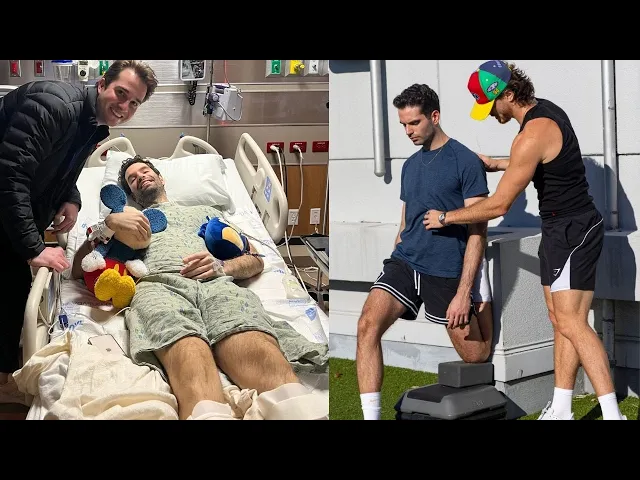
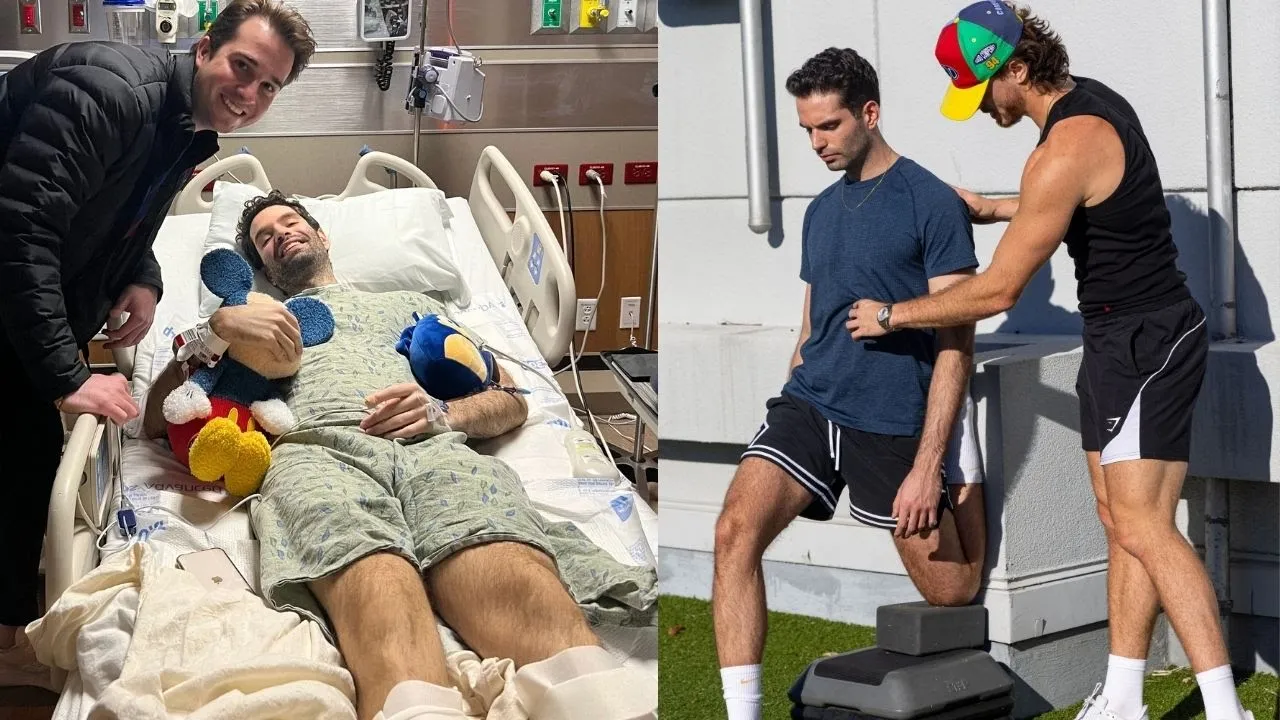
surgery. So that day I Freaked out. I was like, I think I did it again. Like I start thinking, you start thinking the craziest things. I'm going have to have another surgery. Am I going to >> He's going to have to He's going to have to look like this again. Can we get the camera zoomed out a little bit? He's going to have to uh go back to being the table. What's going on here? You know how Apple Hold up. 10 second difficulty. Forgot to show this earlier. See that handsome guy? And that's one of
my good buddies, Luke. >> He's off the quails at the moment as you can see. >> I was off like everything that >> doesn't know where he's at. >> No. >> Post surgery. Real stories. Insane, bro. So, bang. You had the the pain come back. You're fearing that's your destiny again. >> Yep. So, I'm thinking, okay, I'm going to be stuck in this loop of what I read about having a bunch of back surgeries young. Then you go to the fusion. I was already thinking like this was >> you've already read this prophecy. You've heard
this. >> I was thinking, "Yeah, it's going to happen. How I've read it to hundred other people." And yeah, the Where was I going with this? >> It's all going to take your time. This is really your life. >> It It really was crazy. >> So, you can call back and just >> So, I emailed the physical therapist. I sent him a long email explaining what happened. >> Yeah. >> I was like, I think I did it again. Like I was doing sit-ups. I got the burning station that I had before. Like I don't know
what's going on. Uh like what Should I do? What's the best plan of action? Should I be taking certain stuff? And he just emails me back and he just goes just don't do sit-ups. And just put a little winky face. And I got that back. >> Winky face. >> Yes. >> Yep. Yep. You going to feel the jab. >> Yeah. I was like, really, dude? Like you don't understand the mental like trauma that I had been through. And it was kind Of just like a joke. I was like, "Well, if it hurts, don't do it."
>> I'm like, "No [ __ ] but like I need a little bit little bit more than that." >> Yeah, bro. The crap. >> So, I go back and see him. He tests me out again. He's like, you know, doing the straight leg test, all that stuff. He's like, "Yeah, you're probably fine." But I'm like, "It's literally flaring up with you just lifting my leg up." >> Yeah. >> A foot. >> Yeah. >> And he's like, "Yeah, it's probably nothing to worry about." And I was like, "Do you think I herniated it again?" And he
was like, "Yeah, you probably did, but you'll be okay. And I'm like, I've already heard this two years prior from another physical therapist. I started thinking, I'm like having dja vu. Like everybody's telling Me the same thing. >> And I like not catastrophizing things, right? >> I'm not always assuming the worst. But it it is there's a bedside manner to it. And there's a delivery and awareness of by the time I'm treating this person who I heard a little bit of their history, there is a sensitivity and real spiral that can be easily triggered. Like
even if his end message was maybe you did, probably didn't regardless, that doesn't Mean you're going to be doomed. He needs to walk you through the I understand that. Okay, we can change some things. Just care, >> right? >> If you don't care, then who's going to care for them? Because the internet is a [ __ ] cesspool of info and crazy people are recommending crazy things, you know, not to really trust it. And you go and you see practitioners that have the info, but if they don't care, Then it's like maybe they're not even
awake today. Maybe he had a fight with his wife this morning. He doesn't give a [ __ ] about his fourth patient today. And that's not dissing all medical practitioners. It's just the reality of humans. If you don't feel cared for in the state you're already at in the confusion, >> why do we expect it to? How is it crazy when people want to do a flip off a bridge? Like they don't want to be here. >> And I had already told him prior that like I had had these crazy thoughts and like I had
been down that spiral. So for him to just tell me that it was kind of like >> sounds so crazy. It sounds like you're making it up. >> Yeah. >> But I've seen firsthand. I've been told ridiculous things too. So I know it's not. And it's just like sometimes there's a a real anti-d doctor Um mantra that forms from LBA members and just people out there in comment sections like yeah doctors only want your money and yeah they're all evil and like that is the furthest furthest thing from the truth. But it's situations like these
that sting so bad that some people go through once and for the rest of their life they just generalize the whole field and it sucks. Well, for me, my whole journey through this, that's all I kind of felt because I didn't I Didn't get help really from anybody >> multiple times. So, it's like, >> and it was like I was having deja vu over and over and I was like, does everybody just think the same way? Does nobody really know what they're doing or talking about when they're when they're dealing with this. And then I
come to find out, yes, nobody has no idea what they're doing. >> 90 95% >> true. They're obviously you. >> Shout out to the five. No, not even me. Some some good doctors, too. But I know. >> So, yeah. So, then I had that whole deal with him. I saw him a couple more times after that and I realized this is not working for me. I don't think I'm going to get much progress out of this if that's his best advice. Um, one of the things that kind of struck me the wrong way was him
telling me that I could treat Advil like a vitamin and that it's okay if I have to take Advil for the Rest of my life. And I know Advil is not the worst thing to be taking, but >> I'm like somebody that wants to just be, you know, clean, you know, minimal supplements, minimal, you know, trash foods. I eat real healthy, drink a lot of water, all that all that good stuff. And so for me, like that just wasn't good enough. I just >> I don't want the answer to my problems to be like, well,
if you need to pop some pills, like it's okay. >> Yeah. Just live with stomach ulcers, you know? Like it's >> right. Like it's not the end of the world. Like there's people with worse things happening. And I'm just like, "No, this is this is not this is not going to suffice after all that I've been through." So, >> I stopped seeing him. I get back on the internet again for like the 30th time over the course of more than that. The thousandth time out of the course of Three years. >> You're going through Google
and stuff and just purple links, purple links, purple links, purple links. You got to go to page seven. >> Oh, I was down the rabbit hole. Page 20. >> Yeah. And I remember going on Instagram one night and I found your stuff and I start watching some of the the clips some some of the videos on the Instagram. I'm like, "Huh, that's kind of an interesting way of looking at it. It's different than the other stuff that I had seen." >> Yeah. >> As far as like the ideology of it, even the exercises too, but
more so what caught me was the ideology. And so I do a little bit more research on you. At this time, you didn't really have that many followers. So that was awesome. Do you think that was last year? >> Oh, that was No, that was last year. Remember, cuz this Monday is going to be the one year one year anniversary. >> Here's here's something full circle. In 10 hours, he became an LBA member exactly one year ago today, >> which is crazy. >> We didn't know that. >> Yeah. >> Literally one exact year ago today,
this story that he's explaining is about to unfold. And then today, you are here Sitting in my living room. So just >> life is crazy. >> How did Now a year ago today, what was going on? >> Yeah. So then I found your page. I was enticed by the fact that you could pay what you can afford because at the time I wasn't working. I'd spent a lot of money on doctors, on physical therapy, like thousands of dollars on the injection, on the surgery, all that. I spent a lot of money on all that. So,
I didn't have, you know, 500 bucks, 600 bucks to just drop on these other back people that had, you know, PDF programs, this type of thing. So, I see your stuff that's pay what you can afford. I'm thinking, what do I have to lose? Like, worst comes to worse, the stuff doesn't work. And I didn't lose anything. So, I joined the program. I'm seeing the exercises. You know, you look at the exercise first time and it's like stuff that nobody's doing at the gym. So You're thinking like, do I really want to go do this
in front of like a bunch of other people that are doing these bodybuilder, you know, bro split kind of things? >> But at a point, you don't care because you're in pain. And again, when I had the flare up, I had the same sensations that I had prior to surgery. And it was an everyday thing. It didn't go away after that one time that I did the sit-ups. It was the radiating pain down The leg every single day. Some days it would come right when I wake up, other days it would be like late at
night, but it was like I for sure knew it was coming every day. It was really annoying. I knew I had to do something different. So, I found your stuff. I get in the program. I watch the videos before I go hit the gym. I'm like, I don't care that other people can see me doing these weird exercises or weird because they're not really weird. They They work. >> Um, and so I just gave it a chance. So, I did the first mobility day that's inside the program. >> And day one, I finished up the
workout and I felt safe doing the these exercises because most of them are body weight. You can just do them on a mat. You don't need any weights. You can start real light. There's regressions to all the stuff, >> right? >> You can tailor it to to yourself. >> Yeah. >> And I did the first mobility day and I get up from the floor cuz I finished up the workout and I felt it I just felt different. Like I I felt pumped up and like strong in places that I hadn't really engaged, I guess, in
my whole life. >> Like where >> it was really the hips. The hips like the outer hips I felt like unlocked for Me. Yeah. >> On day one, I was like, "This is crazy. This stuff, this stuff works." I felt >> I would say 70 to 80% better on day one. >> And then that night when I got the sensation, it was much less potent. As opposed to it being like an eight or nine out of 10, it was like a two or a three out of 10, something much more manageable. >> So, I started
thinking, >> I think I figured it out. >> I just need to keep at it. Just be consistent with it, which I don't have a problem doing because I've spent years trying to fix the issue. Yeah. >> So, I keep up with the program. Uh, I did most of the things inside the program besides the back extension because I had PTSD from doing the back extension and then having to have surgery right after. This is a really huge point. There's a lot of misconception Understandably if you go on my Instagram 80% of the videos will
involve that machine. The point of that largely is to take the fear people feel and reframe it to see as an opportunity. And that philosophy can be approached everywhere in the body. >> But someone who has had major surgery and real injury, they may just flare up walking to the back extension. Thinking about it, there's such a aversion to stimulating Their spine. And so the thought can be, well, I can't even do the easiest level you show. How can I fix my back? Fortunately, chronic back issues become a full body problem. That's why the symptoms
spread everywhere, which means secondarily the opportunity to improve things that can help the back become a full body opportunity. Right. >> So, you spent an entire year on the LBA program. You never trained back extension. >> Correct. >> How much pain are you in right now? >> None. >> Painfree. Never trained the back extension. Now, yesterday basketball, I was like, "Guys, take it easy on him. His his spine's is painfree, but I don't know if it can handle a real check. Eddie's weighs 210. He could really do something to a vertebrae. You're going to build
protection, but it's just so insane that It's Yeah, I love hearing that because sometimes I do worry even myself coaching people through and I get stumped. Someone's asking like, "I'm so afraid to even start the easiest level of the ISO holds or just sitting for 30 seconds assisted." And I'm kind of like, "Yeah, what is the way they start? just do anything. Work the feet. Work the glutes. Like, what was some of the stuff you were excited about, the exercises Specifically that made you feel, "Oh, wow. That makes my back feel better, even though I
didn't train my back?" >> The outer hip stuff, the tip raises, the calves, cal the the cow stretch. Those really those three were like the biggest ones uh just in tandem because I could feel like how tight I was and muscles that like I never felt before. I could feel starting to wake up the more that I did it. And I realized like, okay, if I'm looser in these areas that Are close to the back, it's gonna relieve pressure off the back. >> Yeah. >> That was just like intuitively that's what I thought would happen.
>> Yeah. >> And I had the evidence of that happening because on day one that was happening. Um so I just kept at it. I did the program besides the back extension and I did it religiously. I was doing it like five or six times a week. Um, Yeah, keeping the same good nutrition, drink a lot of water, supplements, all that all that type of good stuff. And yeah, I just kept at it for the for the past year. >> 364 days, man. >> Yeah. To to the tea. And uh >> had his 364th workout
with me >> for real. >> That's a That's a good one. >> Life is beautiful. >> Yeah. >> Um but yeah, so I just kept at it. Got stronger in the movements. They got easier as the time went on. I didn't have to do the regressions. You start progressing in the stuff, you're like, "Oh, wow. I really was really weak in some of these areas that I neglected." Because like traditional bodybuilder split, you're not working a lot of these muscles that we're focusing on. >> Yeah. >> In the end ranges of motion and just >>
Yep. >> and just in different ranges. You're bodybuilding is a lot of just like stagnant. You're just doing up and down, up and down, up and down. You're not side to side doing the whole thing. >> Yeah. So, it was also a mind shift shift for me on how I wanted to train going forward after I realized what was possible with the LBA. >> Yeah. >> Um, so yeah, I just progressed at it was 70% better. Next month was 75% better. 3 months down the line I'm 80% better. Still get the occasional flare up and
you can't really avoid those sometimes. Um, but it is what it is. They were coming to me less and less. So, I knew that I was on the right path. Six months down the line, 85% better. nine months down the line, I'm like 90% better. I'm not really getting flare- ups at all. Um, wow. >> Back to living life normally. Um, Especially the last like three months. I don't even think about my back anymore. I don't have to go in the in the morning and stretch. How I used to like wake up every morning, do
cat cows and bird dogs and >> Miguel Big three and take walks, you know, five, six times a day. All this different stuff that you read. I didn't have to do any of that. >> Yeah. I was le I leveled up to a point where my body was I would wake up and I Was loose. >> Yeah. >> No pain, no nerve pain. Um >> and yeah, I just progressed at it and I got to a point where I don't even think about it now, which is so crazy to me thinking like three years ago,
I never even thought that I could get back to the position that I'm at now. >> Yeah. >> So, it's just such a blessing, bro. >> Can we get a back breakthrough clap in here? Can we get a little back breakthrough clap in the whole room? >> Yeah. That's what we live for. Bro, it's there's a lot of wisdom that you actually packed in that story that now may seem like common sense, but it wasn't in the beginning. >> Like you said it at month four, five, six, you still had flare-ups, but it was far
less >> occurring and it lasted not as long and You could realize that's a measure of progress. >> Correct. >> That's not so easy to see in the moment when it's happening. >> Oh, for sure. I mean, I would have a thorough once in a while. I'd be like, "Oh man, am I reverting back to my old ways?" And that's not delusional cuz that's what happened in the past, >> right? I was just doing it off my past experience. >> But you look at it from a like bird's eye point of view and you're like,
"Okay, 3 months ago I was having four flare ups a month. Now I'm getting one or two. I am making tangible progress." Whether in the moment it feels like you are or not. You look back at it from a from a further step back and you're like, "No, I am making progress." >> Yeah. Yeah. >> And it just kept progressing. So I knew that I was doing the right stuff. >> Yeah. And that's part of the issue with pain avoidance rehab. When you go through physical therapy and it's trying to avoid any sense of fear
and pain and you work within a really conservative range is that using perfection as the measure of your progress means you've never actually gotten in the game, right? >> You're living in the false world. And that's why you go hurt yourself in the real world. Because in the false world World of robotic movement and trying to be perfect with your spine and sit perfectly upright and avoid whatever, you may avoid 90% of the flare-ups until your kid tries to run in the road and you grab him and then now you're the dad on a, you
know, ring camera falling down and rolling on the driveway. And it's like cuz >> and I was like that. I was the person that like cuz you read you got to stand up straight in the chair to get up from The chair. You have to do a perfect squat. You know, I was doing all those things. But the more I did the program, the more I felt safe in these movements. I got I felt safer getting up from the chair. >> And then I remember a day where >> I just stopped thinking about it. I
got up from the chair and I was like, >> I didn't even think about how I did it or I'm not thinking about how I'm sitting in this chair. >> Yeah. >> Passively when I'm having conversations with somebody, I'm not like, "Oh, it's been 5 minutes like this. I need to readjust." >> And it just got to a point where I just stopped thinking about it. >> And that was the most liberating thing that's >> imaginable. the thought loops and just like the time that you spend thinking about these Issues and I'm sure other people
can relate. It becomes almost overwhelming because it's just all day 24/7. And once you have that breakthrough and you're not thinking about it anymore, you you get your life back because you can think about the other stuff in life that you want to achieve, the goals that you have, the relationships that you want to >> further restore your humanity. >> Exactly. >> You're you're a real human being with an Identity, right? that isn't just formed around escaping pain. And that's where, man, there's stories I got of me with my friends, with my girlfriend at the
time, and just stories of like, yeah, I was a dick, you know, and I can recall so many times where my decision- making was off, my patience was non-existent, >> and there was usually a real strong correlation to the chronic pain I was in. Um, nihilism is is a light word to use for it. You become You just can't even think towards achieving anything. Uh, and it's like if you don't have things I I I truly believe on just a larger scale thing of life, if you don't have a meaningful purpose to chase that really
scares you and excites you at the same time, your body is going to feel like it's just waiting to die. And when you're hurt so bad physically through life or injury to where those sorts of purpose- driven goals are out the window, well, now you Are sitting there feeling like what's the [ __ ] point, >> right? >> And okay, make your life the healing. Make your make your goal to heal. So you do you obsess. You live in Reddit threads and you go through multiple rounds of PT and you find every piece of information
you can and then you're still stumped. So now, like, you know, they say if you aim for the stars, you fall on the aim for the moon, you you'll Land the stars or whatever. That's true. You try to make the NBA and you end up in the G-League. But when your moonshot is becoming painfree and you're getting nowhere close to that, like no, that's not good enough. Like, at least I tried to get out of pain. >> No, that doesn't really work either. Mhm. >> You really don't feel free until at least you get the
breakthrough, the aha moment of there's something new I Haven't tried. You don't even need to be 100% painfree to feel different. You need to find the right kind of evidence that proves I just there's so much more to figure out. Wow, there's a chance. >> It gives you the hope back. >> Yeah, man. It's like this is stuff you have to feel and go through. And no matter how much time separates for me and my big loops of injuries a couple years ago, when I have these convos, it revs right back up and I remember
and that's my reassurance of like that's why I'm in this position and this is why people have listened to me and and it's not just the exercises are lined up perfect in the program. There's a lot of intention to that. There's a lot of clues and studying of exercise. I love it. I studied exercise science in school. I thought it was cool. However, the reason I believe most people have truly healed through LBA is because they've been forced to think Different and form a different approach from the mental frame, from your relationship with pain and
how you collect feedback and use that as a good tool to self-tailor through the program. And then yes, your goal in the training session, it's not just to feel the largest muscles burn out to a crazy pain. >> That's fun for some people. I enjoy it. However, there's a a different intention you form of like, let me go into some Position that feels a little iffy and let me find confidence in it. >> And then let me go to some exercise that makes me shaky and feel really and shows instability and I'm weak. Let me
get a pump right in that spot. Not the biggest, just all my legs and everything burning crazy. That one spot that I know in the position it's weakest. Let me get that strong. >> And the smallest weird obscure seeming things. You stand up and all of a sudden It feels like you just got >> the NASCAR pit stop. You're like, "Oh, shoot. >> Day one, how do I feel 80% better?" like the corticosteroid injection. You weren't 80% fixed, but you felt 80% better. Right? One was androgynously put in. The other was actually earned through the
mechanisms of what your body can do. It can contract. It can circulate. It can rewire firing patterns. It can teach Everything to work more cohesive. Calms down the neural pathways and all the hyperactive you know just psychosmatic issues you form. It becomes emotional body, mind, all that. An injection fixes none of that. It just fixes the effect of inflammation, right? And you feel better. That's great. But it's just um for me, I I appreciate hearing these stories so much. I know I went on a rant about it, but it's just like to hear different journeys
through the same Path. It makes you wonder how could these exercises work for so many different people. And sometimes I get critique from professionals or straight up haters because they're like there's no oneizefits-all of exercise. Exactly. That's not what we're saying. You adopted a new mentality, >> right? >> And that's really what mattered because you can't heal from the same mentality that you injured yourself with. And if Your grind set push till there's nothing left approach is what got you so imbalanced and sensitive, >> right? >> You can't use that now in your back rehab
approach to try to fix yourself. So before you even worry about the perfect exercise, you have to make sure you change before your body changes. And if you don't get that, you're going to try this stuff and find a way to hurt yourself. You did back extensions >> early on before you found me five sets of 20. >> Emergency surgery a month later. >> Yeah. And so it's like, thank God you didn't write off all spine training. You're really strong, resilient, and wise to not falsely associate that one experience as a blanket, you know, statement
of this is all bad. [ __ ] that, right? >> You know, and so, yeah, man, we're proud of you and we're glad that we got to Meet you firsthand. And I could feel when we met at the workshop in Austin, I was like, "This guy means it." You know, we were talking about who do we accept for these things or what's our process? And we have like an online process with different people in the group chat. But I was like, "God, no." I met him and like he just it was so adamant and pure.
He was like, "No, you don't get it. Like you changed my life." And I was like, "Oh, yeah. I'm so happy." He's like, "No, you don't get it." And I'm like, "I I hear you, bro. I get I was through it." He was like, "No, you don't [ __ ] get it. Look at me." And I was like, "Guys, write his name down. Write his name. He's flying out. >> He's the one." >> And it it was true. I didn't know much about your story yet. And then when you came here, we got to talk
and I was hearing just crazy [ __ ] and crazy [ __ ] and things I relate to so deep and I'm Like, "This is why we do this, right? >> I love it." So, >> bro, insane. So, you're >> you're now living painfree. >> Yep. >> You have room to grow. You're now playing basketball again. You played basketball his whole life. And >> if you play too much, you get tight and achy. And you can see how you aren't athletically ready to go as hard as you can, which is fine, but >> man, that's
a different life you're living now. As someone who lived >> with on and off back pain for a decade, had an emergency surgery two years ago, and now your life is free of pain. What does that feel like in your in your head? >> Oh, it's liberating. >> Yeah. >> It's I feel like I got my life back. >> Yeah. >> Um it's amazing. I don't know how else To put it. It's just I never thought I could get to this point. And the fact that I've made so much progress in the last year is
incredible. So I know that other people can do the same thing that I did. >> Amen. >> You just put your mind your mind to it and you're just consistent with it and you're intuitive with it. You don't have to do >> intuitive with it. Huge. >> If you're scared of a certain exercise because you don't feel comfortable doing it, don't do it. Don't freak your body out for no reason. Start with >> the lowest regression of an exercise that's in the program and just see what it does for you. >> Yeah. If you feel
better right after you do it or you feel better the next day, just build up upon that. >> It's not, like you said, it's not a onesize fits all. That's why I didn't do The back extension for the longest time. I was scared to do it, but I built up enough >> um courage, I guess, or trust in my body again. >> Yeah. >> That in the last last month after we had the uh the seminar that I was like, "Okay, I'm going to get back into this." And so I've been doing that for the
last couple months or last like month and a half. And I made huge strides in that as Well. >> Yeah. So, I'm excited for the future because I know like I hit 90%. Yeah, I still get a little bit of tightness when I play basketball for three or four hours with my friends, but I know if I just keep working at it that I'll get to that point that I want to get to. And so, I got the hope back again just in life in just in life. Like, I'm hopeful for everything, my future, my
relationships with friends, Family, all that. >> And uh >> yeah, I'm blessed. I can't I can't complain, bro. >> Yeah, bro. spoke about it over breakfast about his plan for the next year and go back and just transform life now that you have this box checked so firmly and confidently and uh that's just the the real goal. I want everyone to heal so far that they forget this controlled their whole life and I know that sounds Delusional. It's possible though >> for majority of people genuinely with enough time horizon expanded there's a possibility of that
truly and it's uh it wouldn't be special if it seemed so plausible day one you know and it's I not saying like the fact it was so hard makes it so meaningful I mean it was for me and it probably means a lot to you as well but >> absolutely >> it's not something I'm happy I went Through it's not something I'm happy you went through. Um, but like we talked about earlier, if you go through one of these lifealtering journeys with anything deeply severing of yourself, some physical pain, some huge loss, something in your
body health-wise, injury, other chronic issues to where stability really falls apart enough and reality is swiped clean and you have to build yourself from hell. One, the type of person you become is just rare. You Form compassion, patience, empathy, awareness. You can't pretend to lose. And if you do, I don't know what's ever going to make you an understanding person in life. But most people genuinely at those back pain workshops we go, so many people have lived in pain for 10 years, and it's the kindest group because humility has no limits when it comes to
pain. You will get pushed down to a pulp. And when you go through that and truly find the process of step by Step learning from your problem and working with the feedback, I call them clues, pain, symptoms, sensitivity, learning the the nuance of observing and looking for clues, but not obsessing and hyper analyzing. That's a very hard thing to form, but you form that discernment. And then as well as working on areas that are frightful and tense and guarded, but not just ignoring your body and blasting through pain and screw it. These are all false
dichotoies That normally people are light switches with or fully on or fully off. And when you learn that touchy nuance and discretion through something so deeply painful in your life, you learn that skill set in business, in treating people, in the imperfection of relationships with people that you can have rules of I don't ever let someone disrespect me like this. and you realize things aren't always so that's a lack of skill, >> you know, and all you got to do is go through something that changes you one time like this and you have a whole
new toolbox, a life toolbox. Agreed. 100%. >> Just makes you more equipped, you know, and uh >> I feel like I can handle anything now that I dealt with this whole thing and I was able to come back from it. >> I feel like sky's is the limit for all of us, >> right? And anyone that knew me before All the injuries, like Eddie, what is an adjective you would use for me when I was 16 on a soccer field playing with people bigger than me and were just strangers and stuff? What was an adjective?
>> Fragile. >> Fragile. Okay. But outside of that, my attitude, >> um, >> you can just be honest. >> You're probably the hardest working Person on the field. >> Hardest working person on the field. Okay. >> But more so like my personality. Was I nice and understanding? >> No, >> I was an [ __ ] is what I was trying to get at. I think he's trying to be nice for me, but like I was really hardworking, really fragile. So, chip on shoulder underdog, but I was also an [ __ ] and like really >>
irritated person. >> Irritated for sure. >> Really irritated and really not with the [ __ ] And I didn't want to hear anyone's [ __ ] about anything. And I was just like to be regarded and revered for compassion doesn't make sense for the person I was 10 years ago. But it wasn't by choice. I had to get straight humbled to where either I think everything's pointless in life or I now believe in God and I Believe I'm called through it and I'm like, "Wow, I have a purpose and this is all for a reason."
because I was either going to go off the deep end one way or I was going to become a phenomenal person in life. And it was only through this stuff, you know, and I'm gonna I'm going super philosophical with it, but um man, so cool. This this is the stuff that makes me remember my journey and so it's kind of selfish that I like go on these Segways, but so cool, man. Um you met my team, you hear Eddie, his story with the back pain. I mean, he heard a lot of our life [ __
] We were took him to dinner. We're hanging out and just like story after story after story. I hope he doesn't leak, you know, >> some of our funny stories. Nothing secrets are safe. >> Yeah. Nothing too bad. It's like ridiculously funny. >> Um, Enoch and his healing journey and You see like the team that has built around >> and you understand why it's pay what you want. You understand like why we have the big group chat and just the whole thing. I think um hopefully it makes sense to you how it happens and you
can relate this probably how you would want to do it if you built a back program after what you went through. >> Absolutely. and just take take that and Like help one another and keep it going and keep a community growing where people care about each other and they they feel seen and empowered and you sharing your story so well and detailed and eloquently it just helps people know like it's not just Brendan self-promoting a program. It's like there is actually just a different energy to trying to trying to hit a real hard pause on
this state you've been in and find a new hope And a new potential idea of I just haven't come across the right info. I just haven't tried the right stuff. I wasn't in the right state yet. Like it can feel like the end, but you just don't know what change may be coming. And so beautiful story. Um, how you feeling about this trip coming down and coming for the podcast after the workshop? It's been a month since we met. >> Yep. Like a little over a month. I mean, dude, this has been super inspiring just
getting to hang with you guys, see like the dayto-day. Um, and yeah, I mean, y'all are all just super down to earth, just genuine dudes, and that's the vibe I got when I met you. That's the vibe I got when I joined the program was it was all genuine. There's >> you do this for a reason. You don't do this just for money. You love what you do and >> you realize that you are helping a lot of people and just seeing that >> in real life is just dope. >> And yeah, we've been eating
good food, hanging out with the whole team. It's been super fun with you guys and uh just can't say thank you enough to everybody. >> Thank you for coming. Well, I want to do uh a little segment before we go. some rapid fire so I can really >> squeeze every bit of wisdom you formed from this out of you before we leave Because you're so potently fresh in it. >> Um I'm going to ask you a few reflective questions on what you've learned, what you tried in the past that didn't work, what did work, emotional
stuff, training stuff, lifestyle stuff, pain stuff. >> Sure. and um give a a one minute answer or so for each and just think just gut instinct what you remember about everything. Okay. >> Okay. >> All right. So, what would you say Was the biggest training shift you made before the injury and after to actually heal it? >> Just my approach to training and just fitness in general. I used to just want to get, you know, as big and strong as possible. You know, always go harder than last time. and that type of thing. But once
you have a injury that hinders your whole life and puts your whole life on on a stop button, you kind of just approach things differently. I had the Realization that for me, I care more about longevity. I want to be able to play with my kids when I'm in my 70s or 80s or like be able to go hike with my future wife when I'm, you know, in my 50s or 60s. Like I started thinking started thinking more longterm and not so much just like oh I want to do the bodybuilder bro split like let's
just lift bicep curls 10 times a week and just get huge arms like >> maybe five sets a week five times a week Not >> um but yeah it was it was really the the mindset shift of why am I doing this and why was I doing it that way before? What was the goal? What was the end goal? And once you really think about like why am I exercising so much? Why am I doing this? It's so that you can be painfree, flexible, and just have a better life. >> Yeah. >> And the LBA
program once I realized I was so weak in some of these things and I neglected for years made me realize that like I've been doing this wrong my whole life. >> Yeah. >> So that whole mindset shift changed everything for me. >> Yeah, bro. >> Because I wasn't so focused on upping the weights on these exercises. I'm just making sure I get it down correctly and then the next day I feel better. >> Yeah. >> And if that those two boxes were checked, that's a great workout for me. And so I just kept at it
and >> now I'm at where I'm at. I don't have any pain. >> I love it. Were you uh on the skinnier side growing up? >> So I actually was a fat kid. >> Oh, really? >> Yeah. >> I would have never Yeah, I lost a lot of weight when I was like 13. I lost like 30 pounds in like a month >> on like some summer camp, but >> I was always a little bit pudgier. >> Yeah. I weighed probably more when I was 13 than I do now. >> Wow. Insane. Let me show
you something because I want to talk on this point of why are you doing what you're doing? Why do you work out? We're going to zoom in or zoom out in a second. So, I started on the other side and I think it's Really interesting. When someone trains with insane intensity, it's very important to try to understand why am I working out? This is when Eddie met me. Yeah, that's that's a high schooler. That's a that's an extra small jersey slipping off the shoulder. That looks like a middle-aged mom running a 5K, you know. Um
Yeah, it was bad. Like this was me as a junior. I weighed I I looked more sick Than you could see. I weighed 125 graduating high school at 5'11. And I was eating as much as I could at home, which was like hot pockets and ramen, whatever. And the reason I share this is because when I found the gym, I lived in the gym and I would train with such an intensity and energy. And so for you came from the other side of the spectrum, but it was the same emotion behind it. What's up? Technical
difficulties. There we go. Most people who are extremists in the gym, they train so hard because they hate themselves. And that's the energy it's coming from. And then you get hurt from training that way. And there's no way you can hate yourself to healing. There's a big difference of training because you hate yourself and then training because you need to heal yourself. and the approach and the Feeling towards it and the goal is all different. >> And so >> you can feel that when you go into something and it feels like a little bit too
much on your knee or something's feeling a little off today. You go, that's totally fine. Let me change the variation, make it tweaked in an easier way and do more reps and still get the burn. And it's not the sort of like I'm angry cuz I needed to go heavier because I needed to catch up because I'm always inadequate because I'm always too slow, too skinny, too fat, too this, too that. And um that's gonna keep you in a loop of injury. So, >> right, >> that was made it about me. >> Well, then you
hurt yourself doing that and then you hate yourself even more because you're like >> now you're an injured who's you're a loser who's injured, >> right? And then you can't do the thing that was you thought was helping you be get out of that. >> You get more fat, more skin, >> right? It's like a domino effect. >> You should check up on that guy, you know? So, okay, that was the biggest training. Now, next question. What's changed the most on your measure of progress? How do you know you're making progress to improve your back
Pain now versus before? >> I would still say the amount of flare- ups or the intensity of the flare-ups. So, I mean, like I said, if I go play boss with my buddies for three or four hours, like I still get a flare up to a degree, but before it was it would last a week, it would be more frequent. But now it's as I've gotten stronger in the movements, I get a flare up for a day or two. >> Yeah. And Sometimes like for me it's like it's it's okay to have flare-ups. People think
like, "Oh, I have a flare up like it's the end of the world. I'm back to where I was before." Flare-ups are like going to be part of the game. >> Yeah. >> It when you're at that point and you've had back issues, it it's going to happen and it's okay that they happen. >> Be ready for it. >> Be ready for it. Right. If it happens, It's okay. You don't have to. And I'm speaking from experience. I used to overthink every single time I would have one. >> Yeah. But the more you have them,
you kind of get an appreciation for them, I guess, because you know that it's like a it's helping you navigate, am I doing the right things? Am I not? >> Yeah. >> And so for me, yeah, it's that the fact that I don't have to take Advil how I Was po even postsurgery where I would get the radiating pain, I have to take Advil every single day. I don't have to do that. So, I knew I was making progress there. I can go and play basketball now with my buddies. Before I would feel it, you
know, an hour or two and I would start to feel it as we were playing a little bit. Now I can go play. I don't feel anything. But maybe the next day I'm just a little bit sore in the back, but it doesn't get the Burning. None of the burning. It's just straight centralized. So I know that since I'm not getting that radiating pain down the leg, >> I've made progress. It's centralized. >> So it's really just the intensity and then how long they last. And that's not to say that like I'm not going to
have more flare ups in the future. I'm sure I will, but >> yeah, >> mentally I'm more equipped to handle Them. >> Yeah. Yeah. >> And so I'm not worried about it. If it happens, >> it's part of the game. Like like we say, play the long game. Like it will happen. But if you're making progress over a long enough period of time, you will get better. >> Yep. Beautiful. Okay. Next one. As someone who lived with chronic back pain, what is the biggest misconception You realize you used to carry >> about being in chronic
pain or what? >> The nature of back pain. What causes it? What was going on with you? you had chronic back pain multiple years and you thought it was going to solve a certain way or the problem was this. What was your biggest misconception in any way? I think there's just so much online that you read that can take you a thousand different ways and you can get stuck in like these Thought loops of like you can get predis predisposed to like think certain things and you got to stay open-minded with the stuff. You can't
be like for me I was really scared to get the surgery. Once I had the surgery I was like I'm so glad that I did get the surgery. It changed my life. >> And so I think it's hard to stay open-minded when you you think that you've tried everything but you haven't tried everything. There are a million Things that we even us still haven't figured out yet with the stuff and we're going to just keep progressing. So I think it's just keeping an open mind >> and obviously it's hard it's easier said than done but
staying positive through through it all. It's easy to get down on yourself, but that doesn't help anything. Um, and if you have negative thoughts about the whole situation, like that's a feedback loop that you will experience more pain, more tightness if You're feeling down on yourself. So, the best thing is just try to stay as positive as you can and just stay open-minded. >> Yeah, man. Well said. Um, what was the most frustrating thing you were told as someone living in back pain? that it wasn't that big of a deal, that what I was experiencing
basically wasn't as intense or as traumatizing as it actually was. Um, I think people Don't get it unless you've actually been through it yourself. You can explain it to somebody, but >> if they haven't lived the day-to-day life of like, I can't bend my neck more than five degrees without my whole back radiating, like >> then you're conscious of how you even move your neck. just like if it was a year ago today, I'd have to think about how I'm looking at you right now. And >> so it's like just little stuff like That. >>
Yeah. And our thing isn't um it's me personally and kind of how we lead it in the community. >> Our thing isn't to be enabling to the sake of no you don't understand what it's like. It's so terrible. And have people just yeah feel seen but stuck in seen. You know some people want to have a problem. They can be like no you don't understand what it's like and they don't think they can get better. That's not Empowering. But it is very important when you're trying to help someone get somewhere. You do have to know
where they're at and you have to meet them there. And a lot of times it's hard if you haven't been there, right? >> And so it's this balance of uh of sensitivity and and empathy, but then also like push them out of that slowly. If you don't get that first part, oh, you're fine. You're going to get better. You don't have something really that Bad. You had the worst thing. You actually had the red flag. And then it's like >> another thing that we both were told is you're too young to have back pain. Well,
great. I'm already a surgery in. I might need another. >> It makes you feel worse about yourself cuz you're like really? So, I'm in my 20s and I'm experienced this. So, I'm actually worse off than somebody that's much older than me. It makes you feel Even worse about yourself. >> Sounds like I'm super cooked. So, >> for life, >> should I keep living or what do you think I should do, Doc? And it's like, yeah, dude. That's um >> then it's just like, oh, just deal with it. You're going to have to just deal with
it your whole life. It's like, so I have to deal with this for another 50 or 60 years being in this. We'll >> make it, >> right? Like, I'm not gonna get there. >> Yeah. I'm not gonna get there. >> I may not see another springtime. Like, it's just >> right. >> It's tough. But okay, let me think now emotionally. What was the the worst emotion that back pain gave you? Oh, easily that I was becoming suicidal. >> Yeah. >> Um I had a couple days where just like I would come downstairs, hadn't eaten anything
all day cuz I was just so upset about everything. Talk to my parents. They knew that I wasn't doing well. And like I would tell them like if I can't fix this, like I genuinely don't want to be here. And like I could tell how much it hurt them because they couldn't do anything to help me. >> Wow. >> And I couldn't do anything to help myself. So, I was at a point where I like just didn't want to be here. And so, looking back on it now, it's crazy because I can't even like fathom
having those thoughts now that I'm better. But when you're in that loop, that chronic loop that you're stuck in, it's so easy to get to that point. And I know there's a lot of people that deal with that because you've talked about it on your Instagram, >> some of your videos. Austin event, the event I met you at, >> I had now four, it was three people who came up and told me exactly a version of that. And they told me like I I told my wife this and I had conversations about this and she
said, "I understand. You have to do what you have to do at that point. Like you're suffering to a level that on the outside people won't understand, >> right?" And I can't imagine that conversation of I've seen you suffer for years and if you're saying you have to leave me in the world, I'm not sure what to do, but I understand. Like that was a workshop of 40 people and four of them said that out loud and I don't know how many others didn't. >> I'm sure there are more than just that. >> There was
another woman in the room that Had quad queen lost her bladder function for many months. >> Had a great conversation with her. I was using a catheter and was fully like struggling and she's coming to the events and speaking to people and she's like, man, >> it's much more common than one would assume that hasn't delved in this space. >> It's it's pretty common. >> And we got to ask why. It's not just Physical pain. >> It's >> it's more so the mental part. >> Yeah. And then people hear young people say stuff like this
and then they go, "Well, wait till you're older or you don't know about pain or you're young. Physical pain shouldn't bother you." And it's like, "Right, this out of touch. You're not understanding the whirlwind of what the full journey is as a human being to go through the medical care. And if you do get failed and gaslit and disregarded and then you try again and then you go through that again. Then if you're isolated within family or you're work and you drop out of school and then you're poor and broke and struggling, then you feel
like a loser. Now you can't sleep. Now your brain's inflamed. Now you're literally in this whole state. >> What are you holding on to at that point? Like what is going well Biologically, psychologically, >> literally nothing. >> It's just like that little bit in your in your body that's meant to survive is trying to tell you, hey, keep going. And it's like people think this is some Yeah. I don't know how I should handle this. Like sometimes with talking about in content sometimes if I like talk about it on reals or I feel like do
people think I'm I'm I'm clip farming like do they think I'm Trying to uh uh really use this this subtopic of back pain? But then so many people thank me for sharing it because they just didn't know it was so prevalent in >> and that was me cuz when I found your page and you were talking about this type of stuff I was like huh somebody actually does get like to the level that I was at. There's other people >> get better, >> right? >> And so >> so that was eye opening too for me.
>> Yeah. I um I don't try to make every convo about the morbidity of this, but like I've heard some crazy stuff and people who didn't just think about it, people who did. And then I get a message from their sibling and it's just like damn. And you know, if nothing else but to make people feel seen and understood where They're starting from and where they're at, we got to do it. And um you're a good testament of the journey may not be linear. It may not be smooth. It may not be immediate. It actually
probably won't be any of those things. >> It won't be. >> Um, time's going to continue to pass. And one thing you should be aiming for is to stay hungry for the chance of a turn in the corner where things could get better, new information could come. And just don't let yourself say out loud. Don't catch yourself saying it's over for life. Like, I can never get better. Because if you affirm that every day, you're gonna come across a page like me and get pissed and you're gonna just not listen to it or anyone else's
stuff. >> And so when I get messages from people, I bet you can't fix my back pain. You don't even know. I'm like, yeah, I can't like I won't even try. Like I don't. >> It's your body's listening to you as well and your thoughts, not just me. So it's hard to out, you know? >> And the power of thought is insane. Like you have to put the thought in your mind that you can get better or like you're saying you won't even if you do the physical parts of it. >> Yeah. >> There's that
neural part where you have to build trust back up and trust yourself again. >> Yeah. You know about placebo effect, right? >> There's a placebo effect. There's a noibo effect. And so placebo is if I gave you a sugar pill to try to treat some ailment in your body and through the full conviction and belief and understanding in your body that you took a medicine for that ailment even though it was false your body still heals. That's plus SIBO. >> Then there's no SIBO where you take a Real treatment for a real problem and you're
like this is not going to work and then the effectiveness goes way down or you experience side effects. >> Now there's something I think I might have coined. I don't know. It's not scientific. This is a Bren theory plus SIBO effect. Whereas you take an effective treatment and you super believe it's going to work. >> Is that not going to be more effective than taking a treatment and being Neutral or taking a treatment and not believing? You might as well try. I know it takes the thing is >> it you got to go in the
reserves to get that hope again. You can't afford to hope again, but you need to. Even if this isn't the time, you need to believe this is the time. And if it's not this time, you're going to do it again next time. Because when you find something that will work for you, the right treatment plus the full conviction and Gratitude, it's not woo woo [ __ ] Look it up. It's it's literally science. Like there's so many people that are talking about it from different backgrounds. It all lines up. Put all of it in your
favor. >> Right. >> And there was a guy at this workshop. >> I think I it's in the full video of us meeting. The guy before I met you, >> thanked me He was a really interesting one. Here's Eddie, too. Look at this guy. I didn't know he was going on the pod. >> Oh, no. No. Where's the sound? I got to >> use But I love the wool respect. I'm the guy who, you know, >> I think you you prop me give me some prop like recovery. >> Oh, yeah. >> And shout you out
a bit. I appreciate it. I'm the guy who does all that who did all that [ __ ] like meditating my ass Off. >> Oh, a few days ago. >> Yeah. Yeah. Yeah. That was >> It's good for people to hear from someone that's not me because I I know how all of it ties in. You don't know where people are at on their journey for different things, but it it speaks volume. I mean, that's what it takes. >> I 100% man like visualize, pray, med going to the meditation center just and sitting on my
ass, which is not healthy. This is just when it was raw, you know. >> Yeah. All right. Yes, sir. It's good to meet you, man. Thank you so much for chatting. >> We talk more. All right, sir. >> Who's this jackass getting in the shot? >> So, >> give me some time, man. >> Yeah, >> that guy was crazy. He came in and told his story in the Discord at first and then he came to the event. So, he Trained LBA. He did the training physically. He would meditate an hour a day. He would pray
to God and he would visualize not having back pain. He would do breath work. Now it's like I don't got time for that. I got a job. Right. Wait till your back pain gets bad enough you won't have a job. So that's where he was at. That's where we were at. Dropped out of school. Couldn't go to work. All of it. So when your life is a blank slate, he was just like, >> I don't care what's going to do it, but I'm throwing the kitchen sink, the fridge, the microwave at it. So he did
all of that. And within like three weeks from severe I don't remember his case but there was some diagnosed [ __ ] in there for within three weeks his symptoms went way down and his ability to train the exercise went way up and I he shared the story at the little lunchtime and it was just so helpful for people to hear. Um, and so I I like I Said to him, I know people don't want to hear it or maybe for me or like it sounds out there and sometimes um you associate the culture of
a thing with the thing. You're like, "Oh, breath works for hippies and this is for this and this is whatever." And like there might be a correlation, but it doesn't have to be. There's benefits to these things. And if you can find it in yourself, if you're at rock bottom, you got nothing to lose. You might as well Just give it a shot, >> you know? And so, plus SIBO, the strength of effective treatment, plus firm conviction that it will work. You're better off believing it will even if it doesn't. And yep, >> the opposite's
not going to help. So, beautiful, man. All right. Well, I got one final question. If you could speak to your younger self, he's actually right there in the camera. If you could go back and speak to your Younger self who was at rock bottom of back pain, didn't want to keep living, felt completely hopeless, already emergency surgery, was no no hope for you. What would you tell that version of yourself? >> You got to just keep going. You just as down bad as you may think you are, how bad your situation is, there's always somebody
that has it worse. And you got to stay grateful even in the down moments because like we were talking About if you don't you get stuck in the negative thought loops and you got to just keep going whether how bad you think you have it. Just put stuff into perspective. There's somebody worse that I mean even at the at the session I thought I had it bad and then I hear some of these other people's stories and I'm like what I had was a piece of cake. I thought I went through a lot. There are
some people that went through five times what I did. >> So you got to just keep it pushing. uh never give up and uh stay optimistic about life because I'm somebody that was super optimistic before all the injuries and I when I had this stuff it kind of took that away from me but now that I'm on the opposite side of it you just got to stay optimistic. >> You heard him little Jay. >> Beautiful. Thank you man. >> Yes sir brother. Thank you for having me. >> Legendary podcast. Um best one yet perhaps. I'll
let the people say. >> Let's see. You know the slogan, play the long game. >> Yes, sir. >> Thank you. >> Cool. >> That was good.