When recalling when I was little,. . .
. . .
immediately. . .
. . .
two incredibly important moments come to my memory;. . .
. . .
just remembering them makes my heart beat faster. I grew up on the streets;. .
. . .
. I used to be outside a lot. When I'd get home from school,.
. . .
. . I would grab my afternoon snack, eat it, and go to the street.
I used to live in front of. . .
. . .
the first Barcelona football club stadium,. . .
. . .
it was ruined and abandoned for a long time. That was the playground. .
. . .
. for all the children from the neighbourhood. .
. . .
. who'd go here to play; it was our land for adventure. The next game was the pharmacy, where we'd get an injection.
. . .
. . after having fallen off something and smashed our knees.
I used to like playing on the beach the most. . .
. . .
at my grandad’s house. In summer,. .
. . .
. playing hide and seek. I remember going.
. . .
. . to a huge fig tree with my grandpa,.
. . .
. . which I saw as a castle;.
. . .
. . and every branch a side of this castle.
I was a princess and I climbed along the branches of that castle. I remember the intense pleasure. .
. . .
. of playing pirates;. .
. . .
. it was so intense that, despite the fact I knew it was a game,. .
. . .
. that we were playing. .
. . .
. and when we finished playing we’d go back to our normal identities,. .
. . .
. we believed for that instant we were pirates. .
. . .
. who went ashore, fought and sailed. It was such a big pleasure.
When I used to spend hours. . .
. . .
watching rain drops running down the window pane. . .
. . .
in order to see which one would reach the bottom first. Or staring at a cat. .
. . .
. going up or down the opposite house’s roof. Or perhaps the cat wasn’t doing anything,.
. . .
. . but it could start going up or down at any time.
We had a TV but we hardly used to watch it. It doesn’t mean that there is something wrong with a screen,. .
. . .
. but we had so many more appealing alternatives. .
. . .
. that we didn’t have time for TV. Above all else there wasn't.
. . .
. . time.
It was dark, you had to go back. . .
. . .
and you didn't known whether two hours. . .
. . .
or three days had passed by. That great vacuum! Nowadays the pressures of life.
. . .
. . make you live frenziedly;.
. . .
. . not giving you a minute for anything.
I miss all. . .
. . .
those things. Well, life goes by. <i>-Do you play?
</i> -A bit. "An experience about play and childhood" In the convention for the rights of children,. .
. . .
. signed just 25 years before in New York. The 31st article states.
. . .
. . that children have the right to play.
It’s stated in this. . .
. . .
important document,. . .
. . .
born in the highest place. . .
. . .
of global politics. It's really important. .
. . .
. that children have rights. In the same way they’ve got the right to education, in the 28th article.
There are two articles. There aren't 25 articles for education and one for play,. .
. . .
. making the former undervalued. No!
There are 2. They have the right to play and the right to education. Some of us are working for the improvement of children's rights,.
. . .
. . but it has started to make little sense.
. . .
. . as childhood has lost its dignity.
We have caused this situation,. . .
. . .
yet when people lose their dignity,. . .
. . .
it makes no sense to fight for their rights anymore. No matter how much NGOs,. .
. . .
. associations, even UNICEF,. .
. . .
. promote. .
. . .
. play as a child's right,. .
. . .
. politicians are not making the correct decisions. .
. . .
. because they undervalue childhood. Sometimes this happens because they don't vote in the elections, .
. . sometimes because children are a minority,.
. . .
. . or at times because children aren't profitable.
Decisions aren't made for all these reasons. It happens a lot because children are invisible,. .
. . .
. and because they're invisible. .
. . .
. taking them into account isn't seen as being worthy. Some adults simply.
. . .
. . regard childhood as a waiting stage,.
. . .
. . in which children often aren't regarded as people,,.
. . .
. . prior to growing up.
‘Infant’ means voiceless. The word ‘infant’ comes from that,. .
. the ones without speech,. .
. . .
. the ones who aren't taken into account. If they are voiceless, they aren't taken into account.
When we talk about the picture of play in Spain,. . .
. . .
there is no doubt that. . .
. . .
we face a better situation than in other latitudes,. . .
. . .
countries or environments. However, we cannot overlook these concerns;. .
. . .
. the lack of spaces. .
. . .
. and time in which children can play. .
. . .
. and the lack of materials. .
. . .
. or players that they can play with. One of the current issues with play.
. . .
. . is that it is mistaken for fun.
. . Play is done from the inside to the outside,.
. . .
. . it starts up from inside.
Whereas fun is something. . .
. . .
which comes from the outside to the inside. Through. .
. . .
. through play we are the protagonist. .
. . .
. of our life,. .
. . .
. meanwhile with fun we are spectators. .
. . .
. of either someone or something entertaining. For me to distinguish.
. . .
. . whether it's play or not,.
. . .
. . whether that person is playing or not,.
. . .
. . I use some identifiors.
To begin with,. . .
. . .
one can play with anything at any time. Everything can be a game,. .
. . .
. but the same thing can also. .
. . .
. be a torture. If a teacher makes a child,.
. . .
. . either in order to punish them.
. . .
. . or teach them,.
. . .
. . write out the numbers from 1 to 1000,.
. . .
. . this would become a.
. . .
. . tremendously weary.
. . .
. . and endless task,.
. . .
. . a torture.
. . .
. . which at times is finished off by parents.
But, one day when my daughter Julia. . .
. . .
was a child, she came to me. . .
. . .
and said "Daddy, I want to write from 1 to infinite,". . .
. . .
and she grabbed some notepads and began that task. For her the task was a pleasure. In other words,.
. . .
. . we need to know first if something.
. . .
. . is a game or not by considering the conditions, the first condition being.
. . .
. . if the activity is a need.
. . .
. . or an imposition.
If it comes from inside or outside. However, sometimes a child wants to play something. .
. . .
. which seemingly comes from an inner desire. .
. . .
. but in fact has been conditioned into them. This is quite complicated.
Determining if an activity is play,. . .
. . .
when it could also be torture,. . .
. . .
can only be done by considering the conditions. For instance,. .
. . .
. if the emotional connection is profound or not. That is, if the activity starts up from outside of oneself,.
. . .
. . although it may seem as though it has come from inside,.
. . .
. . a deep emotional link will hardly exist,.
. . .
. . and we’ll abandon the task.
Whereas, when that deep emotional bond exists,. . .
. . .
the task is not abandoned. . .
. . .
even though it demands great effort,. . .
. . .
energy and exhaustion. The example of the hole springs to mind. Digging a one-metre by one-metre cubic hole.
. . .
. . during the Spanish Civil War was torture.
Either side would take a prisoner. . .
. . .
out at midnight,. . .
. . .
guide him to a field and give him. . .
. . .
a spade to dig a hole;. . .
. . .
the one digging would know perfectly well that it was his grave. Can that be a pleasure,. .
. . .
. a passion or a game? I can see it at the beach:.
. . .
. . a child starts playing.
. . .
. . with a small green spade,.
. . .
. . he digs a small hole.
Then, the father,. . .
. . .
who’s really touched by this,. . .
. . .
comes to his son and says “C’mon, let’s keep digging”. . .
. . .
and he starts playing with him. The child is bored. .
. . .
. after 20 seconds,. .
. . .
. but the dad carries on,. .
. . .
. and on, and on; and he ends up digging an enormous. .
. . .
. and absurd hole, which doesn’t have any clear purpose. Despite going home with tremendous back ache,.
. . .
. . dad will be very happy.
There has been that deep emotional bond;. . .
. . .
not even he was thinking about. . .
. . .
whether he was going to dig a one or a two cubic-metre hole,. . .
. . .
or if he was going to keep going all afternoon. And so, if there is play there isn’t a project. .
. . .
. because it stops you from playing. A project can make you think.
. . .
. . you won’t manage to accomplish it;.
. . .
. . that you won’t have enough time, strength or energy.
When a child, or group of children, plans on. . .
. . .
stopping the tide at the beach,. . .
. . .
he doesn’t think about. . .
. . .
if he’ll have time for it. He doesn’t care,. .
. . .
. there’s only present;. .
. . .
. he builds a wall. .
. . .
. which is demolished by the tide,. .
. . .
. but he makes it again and again. He gets tired.
. . .
. . but never frustrated;.
. . .
. . when a child tries to stand a stick up.
. . .
. . and it falls over, he gets angry,.
. . .
. . meaning that there’s no play.
. . .
. . because there’s frustration.
If he insists. . .
. . .
repeats processes. . .
. . .
and looks for strategies, there is play. To be more accurate;. .
. . .
. I see play when I see these connotations. Nobody here knows.
. . .
. . how much a child learns whilst they play.
Not even the child. But we know. .
. . .
. that the most important knowledge. .
. . .
. comes from an early age. For children the world.
. . .
. . is in order when they play.
Children's play is a way to live and take part in the world. When we interrupt a child, telling them. .
. . .
. to "stop playing and. .
. . .
. start learning,". .
. . .
. we create a serious problem in their mind. .
. . .
. because they think that. .
. . .
. play is the most serious and free activity. We come to him, interrupting his activity,.
. . .
. . on behalf of another activity which for him is also play.
It is important for people not to know how important play is. Because. .
. . .
. when people don't know how important it is,. .
. . .
. when they haven't known for centuries,. .
. . .
. children are left alone to play peacefully. As soon as we start to understand the importance of play.
. . .
. . we begin to take control of it,.
. . .
. . we begin setting rules,.
. . .
. . having experts,.
. . .
. . monitors and trainers.
. . .
. . who teach children how to play;.
. . .
. . making a correct and incorrect way of playing.
The importance of play has always been discussed. . .
. . .
but. . .
. . .
in practice,. . .
. . .
although. . .
. . .
there is a great awareness. . .
. . .
at some level,. . .
. . .
what's happening is that children. . .
. . .
play less and less and less. And adults,. .
. . .
. teachers, parents, environments,. .
. . .
. spaces,. .
. . .
. etc. .
. . .
. allow children less and less free play. Children have got less time.
. . .
. . to play than.
. . .
. . 30 years ago.
. . .
. . because they are far more conditioned.
. . .
. . by other pressing needs.
. . .
. . and purposes.
Competitive life. . .
. . .
starts too early,. . .
. . .
and children, from a very early age,. . .
. . .
have to be ready for the kind of life. . .
. . .
that is awaiting them. I am not sure if an adult. .
. . .
. would cope with a child’s timetable;. .
. . .
. school, extracurricular activities,. .
. . .
. always having an adult tell them what to do. They’ve got a timetable;.
. . .
. . they get up early, go to activities before school,.
. . .
. . then they go to school,.
. . .
. . from school to lunch,.
. . .
. and from lunch to extracurricular activities. Extracurricular activities are not playing.
Extracurricular activities. . .
. . .
are lessons, not playing. Nowadays it is really easy for a kid. .
. . .
. to study football,. .
. . .
. but almost impossible for them to play with a ball. I think we are going too far.
We are preparing them for many things. . .
. . .
and are giving them a very interesting curriculum,. . .
. . .
but then they're going to lack identity. Who am I? Where do I come from?
Where do I want to go? We haven’t given them that. .
. . .
. because we haven’t given them the opportunity to develop play;. .
. . .
. to discover what they’re really interested in,. .
. . .
. what their motivation is, what direction they want to take in life. There’ll always be time to learn Chinese.
. . .
. . or macramé,.
. . .
. . if that's what they want to do.
I think that. . .
. . .
in filling their agenda with activities,. . .
. . .
we only manage to raise children. . .
. . .
with skills useful,. . .
. . .
very useful,. . .
. . .
for a professional career. But they also have unspecific,. .
. . .
. or very minimal, identities. Schools should not.
. . .
. . use time which doesn't belong to them.
We should consider that. . .
. . .
the working day, the daytime,. . .
. . .
should be divided. . .
. . .
into two; time belonging to the school, and time belonging to the children. The children's time is run by the children. .
. . .
. and the school can't use this time too. Just like a manager can't take up their workers' time, .
. . their employees' time.
It would make no sense if a boss said. . .
. . .
"now that you've finished work,. . .
. . .
make this for me at home. Please. " It would be.
. . But this happens every day at school.
The school has to make the most out of their time,. . .
. . .
and homework needs to be done during this time too. If it was up to me,. .
. . .
. I'd change the system. I'd assign.
. . .
. . 6 hours a day to play,.
. . .
. . and 1 to lessons,.
. . .
. . as opposoed to the current system.
Because play covers all subjects,. . .
. . .
all of them. There are many education systems using play;. .
. . .
. children's spontaneous and fun activities,. .
. . .
. in order to teach them. There are 6 year olds who say.
. . .
. . they get bored at school.
That’s really sad. Having to stay 8 hours a day. .
. . .
. in a dull place. .
. . .
. during the best years of your life. The same years in which you should come home saying.
. . .
. . “what a great time I had, I’m looking forward to going back to school,”.
. . .
. . you come home saying that you were bored.
And you'd return,. . .
. . .
I recall this from my own experience,. . .
. . .
knowing that you had been staring out of the window,. . .
. . .
waiting for the lessons to finish,. . .
. . .
in order to go home to play. Little children. .
. . .
. are not very good at communicating how they feel. They have not mastered their language,.
. . .
. . and.
. . .
. . the best way to understand them.
. . .
. . is to recall our own childhood.
And I, without a doubt,. . .
. . .
preferred to be at home than at school. There are schools. .
. . .
. in different parts of Spain. .
. . .
. which respect family time. .
. . .
. and try to keep the majority of the so-called academic. .
. . .
. workload at school. This way, families can decide.
. . .
. . what activities take place at home.
With this way of doing things,. . .
. . .
children get more time. . .
. . .
to explore within. . .
. . .
less artificial environments. . .
. . .
than in other schooling systems. The exploration begins from the child's own life. I think nowadays.
. . .
. . we've got a big problem because.
. . .
. . many young people.
. . .
. . don't find time for themselves.
They don't get time to listen to themselves. . .
. . .
or to be with friends and family. Having such a huge amount of homework. .
. . .
. means they can't manage at all. .
. . .
. to see the whole of life. .
. . .
. as a space of welfare,. .
. . .
. instead they see happiness as only possible in breaks and free time. Play is theoretically recognised.
. . .
. . as an important element of education,.
. . .
. . but its introduction into schools is.
. . .
. . still very complicated; although legally it exists.
The curriculum. . .
. . .
for pre-school and elementary school. . .
. . .
includes play, and the introduction of play,. . .
. . .
as a teaching methodology. Play in conventional education is. .
. . .
. always considered. .
. . .
. for the early stages,. .
. . .
. for pre-school education. In primary school.
. . .
. . it is reduced,.
. . .
. . and it occurs even less in secondary school.
And don't even mention university. All educators agree. .
. . .
. on the value of play as an educative instrument,. .
. . .
. but we only consider it valid for the early years. Only for the preschool age.
Then, little by little,. . .
. . .
children are cured of the habit of play;. . .
. . .
those not very serious, not very productive activities. . .
And they should strictly devote themselves to learning. . .
. . .
only the contents of the curriculum;. . .
. . .
English, maths, language, etc. That’s why we can see,. .
. . .
. and it has been proved, that as we go higher. .
. . .
. in the education system,. .
. . .
. and not only just in the Spanish system,. .
. . .
. but even in the Finnish one too,. .
. . .
. which is usually taken as a good example,. .
. . .
. as we reach higher educative levels, there is less play. Maybe.
. . .
. . .
we are only now realising. . .
. . .
that the PISA report doesn’t measure what it should. We had to be a bit cautious here. Concerning the pedagogic debate,.
. . .
. . if we regulate play too much,.
. . .
. . and it has to be regulated in school,.
. . .
. . it won't be play anymore.
When we go to schools. . .
. . .
and talk with teachers for this investigation,. . .
. . they tell us that this idea of didactic play is really good,.
. . .
. . that we have to include it.
But above all they say that. . .
. . .
what needs to be promoted, mainly during playtimes,. . .
. . .
is spontaneous play;. . .
. . .
children playing what they want, when they want, and how they want. It’s like the silence riddle,. .
. . .
. what’s the thing that disappears when you name it? Silence.
And something similar happens with play. The education policies concerning childhood. .
. . .
. should propose the reality that children learn. .
. . .
. freely through play. They learn respect, values, discover rules,.
. . .
. . test things, get things wrong, and they try again.
But. . .
. . .
they can't learn all these things. . .
. . .
whilst sitting on a chair, gracefully scrawling. . .
. . .
a letter again and again. We always talk,. .
. . .
. and go over the top, about how important mistakes are,. .
. . .
. and how play allows you to get something wrong a thousand times. But at the first error in a project,.
. . .
. . you’re punished.
Or in an exam, or whatever it is. I think we should regard mistakes. .
. . .
. as no less than beautiful opportunities. .
. . .
. to reconsider situations and find new paths. The other day I heard.
. . .
. . .
about the PISA report for the zillionth time; we are the last at everything. And on some news channel. .
. . .
. something like this was said;. .
. . .
. “the problem is that Spanish schools still use rote learning. ” And my wife and I instantly cried out;.
. . .
. . “Rote learning?
They're not learning anything! " That's an argument that I hear a lot;. .
. . .
. "it's because families put pressure on. .
. " . .
. "that there's always increasing pressure, new technologies, English. " Families are especially demanding of the latter two.
One of the biggest difficulties for state schools,. . .
. . .
working towards the creation. . .
. . .
of prepared environments,. . .
. . .
is the fear parents have when they ask their children. . .
. . .
what they've done at school. . .
. . .
and they respond with "play! " Parents are invaded by some kind of terror,. .
. . .
. thinking; "what a terrible school this is,. .
. . .
. all they do is play! " From a parent’s standpoint,.
. . .
. . play is something which just wastes kids’ time.
We believe that they have to learn English, and lots of other things. And when you’ve finished everything you need to do, only then can you can start playing. And we.
. . .
. . can play with our children,.
. . .
. . of course we can.
Of course! The important thing is that it is fun,. .
. . .
. not an obligation. "The pediatrician has told us we have to play,.
. . .
. . and now that an hour has passed by, it's done",.
. . "I played with them yesterday,.
. . .
. . today it's your turn.
" This means we are not playing,. . .
. . .
we're doing tasks. Play is an emotion. It has to be an emotion,.
. . .
. . if it doesn’t move you there’s no play.
There is routine, habit, but there’s no play. Playing is not entertaining. Children do not need to be entertained,.
. . .
. . they need us to give them freedom in order to prove themselves,.
. . .
. . test themselves and play themselves.
The verb 'play'. . .
. . .
cannot be conjugated with the verb 'accompany'. It can only be conjugated with the verb 'allow'. It’s complicated, we’re scared, whatever you want.
. . But if you want them to play,.
. . .
. . you have to let them play.
It seems that. . .
. . .
cities and public spaces are not designed for children. Society has trivialised childhood. And that is a mistake.
We have got parks. . .
. . .
where children can not play with a ball and areas full of rules. . .
. . .
which need reconsidering as to if they are necessary or not. It is not about building cities designed for children,. .
. . .
. it is about reconsidering situations to let children live in a more democratic space. We need to take part.
. . .
. . in the zoning plan of villages and cities.
. . .
. . in order to design how they want those spaces to be.
It surprises me. Recently I went to a city,. .
. . .
. I won’t say the name because I don't want to offend anyone,. .
. . .
. but in this neighbourhood I saw signs forbidding playing with a ball. .
. . .
. in the square. Jeez!
You know what I mean? I want children to play ball,. .
. . .
. playing a professional match. .
. . .
. or hurling the ball at elderly people is something different. But playing with the ball is fine,.
. . .
. . nothing wrong is happening.
It’s good if they play. That gives life to a city,. .
. . .
. makes it more attractive to live in. In rural areas, or in villages,.
. . .
. . there are many more spaces; more squares, more gardens.
Not conditioned spaces,. . .
. . .
with sand, open areas, swings. In the cities, sometimes, cars,. .
. . .
. vehicles or society have conquered those spaces. .
. . .
. which used to be free, which used to be for citizens and for play. The outside is not easily accessible for children who live in cities.
A child cannot run inside a house. And in order to go outside, they need the presence of an adult. Because of this they have to go to specific places to run around,.
. . .
. . where there are many children,.
. . .
. . and playgrounds are often overcrowded and noisy because of nearby traffic.
We find that. . .
. . .
places for free play,. . .
. . .
without the intervention of an adult,. . .
. . .
have disappeared. When parents take their children to the park. .
. . .
. they intervene in the children’s play. They even intervene when children are playing with friends,.
. . .
. . this is not necessary.
This is exactly when children are meant to learn, when adults don’t intervene. At home, they’ve got their room;. .
. . .
. in the city, they’ve got their playground or play centre. We work hard to move them out of our way,.
. . .
. . not to have them in sight, to avoid any bother.
But being a nuisance is a fundamental element of development. Spaces are not thought through. .
. . .
. with the needs of a child in mind,. .
. The sinks are too high, the jars of water too big,. .
. . .
. the kitchen too tall. We eat at high tables at which children can't touch the floor,.
. . .
. . they can hardly move.
All this makes no sense. Playgrounds are like. .
. . .
. weapons used by politicians. .
. . .
. because children are a sensitive topic of society. They create and dismantle.
. . .
. . urban areas just to create playgrounds,.
. . .
. . whether the area is right for them or not.
The mayor says. . .
. . .
“I think about your children a lot,. . .
. . .
how many playgrounds have I made? You should vote for me,”. .
. . .
. and so the parents say; “Our mayor is great;. .
. . .
. he thinks about our children. ” Nobody thinks about the children,.
. . .
. . because playgrounds don’t have anything to do with children’s play.
If you make a city safe,. . .
. . .
reducing speed limits to a minimum, limiting the number of cars,. . .
. . .
having squares and streets for pedestrians only,. . .
. . .
with priority for pedestrians or at least coexistence between cars and pedestrians;. . .
. . .
automatically these spaces for children aren’t necessary. Probably the best squares in Pontevedra for children. .
. . .
. to spend their afternoons, their Sundays or their time after school,. .
. . .
. are those without a playground. Plus, there’s quite.
. . .
. . a curious circumstance.
If there’s an accident in a public square the person to blame is the mayor. Due to this, investment in play areas in public spaces has been restrained,. .
. . .
. and only the more standard setups remain. The ones which don’t bring with them any risk.
Play has to involve risk,. . .
. . .
risk allows for the achievement of boys’ and girls’ own good judgment and caution. The transition from moral heteronomy. .
. . .
. to autonomy requires children to conquer spaces and gain their own freedom. Therefore, the spaces for play are not commercial spaces,.
. . .
. . nor are they controlled, or monitored.
They are spaces where you can hide,. . .
. . .
where you can have your first kiss,. . .
. . .
where you can get muddy,. . .
. . .
where you can go beyond what is a bit forbidden. Where you can grow up. Toys also.
. . .
. . respond to market interest.
. . .
. . and unfortunately we sometimes find beautiful toys.
. . .
. . which are not sold,.
. . .
. . and toys which are successful, but which make you wonder why they are so successful.
At least, momentarily successful. Despite the fact. .
. . .
. that there are many good toys,. .
. . .
. the collection of toys at home is not always the most beneficial. I think that when toys become goods,.
. . .
. . and get involved in consumer dynamics.
. . .
. . and advertising dynamics, they try to tell you that you cannot be happy.
. . .
. . without the doll or the ball.
Which isn’t true in the case of the doll, or the perfume, or the clothes. But it’s part of commercial activity. And toys end up becoming part of commercial activity.
But it’s obvious that toys. . .
. . .
are good as long as they enhance play. When a toy is made suitable. .
. . .
. for the skills that a child needs to develop at every particular stage,. .
. . .
. it becomes a unique instrument for developing a child’s imagination;. .
. . .
because often imagination. . .
. . .
is enhanced by the object. Why do I say that educative ‘play’ isn’t, and educative ‘toys’ aren’t,. .
. . .
. always play or toys? For the same reason as before;.
. . .
. . because a toy that needs to teach maths.
. . .
. . in a specific moment and place.
. . .
. . may not achieve its aims as it doesn’t consider.
. . .
. . the preferences of the players.
It’s normally a request from parents. . .
. . .
who think that it’s a way of making the toy useful. We forget that play doesn’t have a clear, useful, purpose. .
. . .
. because people play for the pleasure of playing. The magic of play and toys, in this case,.
. . .
. . is that through play.
. . .
. . the toy brings collateral benefits.
. . .
. . which aren’t the intended final objectives.
Because this idea of a child is wrong… …a toy teaching things to a child. That’s not how play works;. .
. . .
. children learn through their own activity. They set their own learning processes.
It’s not whether a toy is good or bad,. . .
. . .
each family should reconsider and think about what the toy is for. What features should these objects have? Children, from an early age,.
. . .
. . don’t like playing with the plastic keys that pharmacies sell.
They like to play with their parents’ keys. . .
. . .
because they’ve seen those keys open their front door,. . .
. . .
yet the keys from the pharmacy don’t open anything. That’s why they are not culturally interested,. .
. . .
. because the keys are empty of significance. This happens with all materials.
Children are interested in material which has, and which carries, a meaning. If there is no significance they are not interested. .
. . .
. because what can they do with it? For a little child this is attractive,.
. . .
. . initially he gets to understand things through his main sense.
We all know how this taste. . .
. . .
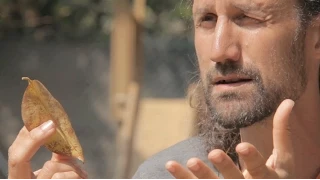
even if we’re not experiencing it in that moment. If I tell you how this leaf tastes, you can imagine it. What is this like?
Hard to convey in words. But if I asked you how a tree trunk or a metal bar tasted, you’d know too. At some point we’ve explored it,.
. . .
. . we know it and remember it.
The next type of exploration with the material is to press and touch it. Yes? These stages are parallel,.
. . .
. . they occur in different moments but are joined.
Another type of knowledge of the object is symbolic. With an excess of sensory information grasping my attention,. .
. . .
. I won’t be able to apply this symbolic tension. “Why is it a plane?
” I don’t know, why does my brain first tell me it is a plane,. . .
. . .
then a child, then a mum telling off her child? This is something which is constantly updating, the brain updates a tension,. .
. . .
. and when this tension is expressed it finds a haven of rest and is remembered. Afterwards it is possible to find a cognitive use;.
. . .
. . it has several lines, spindle shapes, this can go like this.
Therefore,. . .
. . .
we cannot forget that. . .
. . .
the more open a material is, the more ways there are to use it. The toy I consider to be the best is clay. .
. . .
. because it is nothing, but can turn into anything. It’s really cheap.
. . .
. . and a child can play and have fun with it on his own or with friends,.
. . .
. . for years.
I still play with it and I’m old,. . .
. . .
and children begin playing with it when they’re 2. It doesn’t have any side effects. .
. . .
. and it offers infinite possibilities. I think the best type of play for children.
. . .
. . is that in nature;.
. . .
. . maybe with a magnifying glass, for getting closer.
. . .
. . to those little bugs on the floor,.
. . .
. . seeing what.
. . .
. . they normally can’t see or learn in front of a screen.
Technology has been at the centre of major debates. It has reduced the age at which children take part in traditional play. Nowadays children replace traditional play.
. . .
. . with technological games very early on.
The Paediatric Academy recommends. . .
. . .
that children shouldn’t be in front of screens before they are 3 years old. And by screens I mean TVs, tablets, PCs, video consoles,. .
. . .
. smartphones, half-silly phones… . .
. any kind of screen. The ground for all this is that they can interfere.
. . .
. . with the development of children’s visual abilities.
Above all, children don’t need to play with things that steal their attention,. . .
. . .
things that because of their strong audio and imagery content. . .
. . .
create a dependency, and make them tense. I’m talking about video consoles and TV. .
. . .
. which generate an external stimulation. There are people who say “but documentaries are information,”.
. . .
. . but information, on its own, doesn’t generally create an understanding.
A child doesn’t just learn from information;. . .
. . .
here he’d learn something which has been taken out of context,. . .
. . .
which isn’t solid. It’s one thing to look at something, another to know what it is. This is a rectangle.
. . .
. . and this seems like a rhombus,.
. . .
. . nevertheless they’re the same object which I’ve moved a bit.
In order to know that this and this are the same object. . .
I need months of practice. That’s why children check, and double check,. .
. . .
. that an object in their hands is the same object when viewed from different angles. And if you see this thing is moving, and you want to know where it’s moving to,.
. . .
. . that will also require some practice.
Children practice this by throwing a ball to one another. Grabbing a moving object demands a very complicated calculation. .
. . .
. involving speed and direction. Children pick up all these things whilst observing the natural world.
In a scene from the natural world. . .
. . .
almost everything is quiet most of the time. Some little things move a bit. Even when you watch a football match,.
. . .
. . something you think is dynamic, no!
It’s a space in which little shapes move at human pace. Nevertheless, everything changes frantically. .
. . .
. when watching TV. Suddenly you can see a landscape, suddenly a close up of a face,.
. . .
. . suddenly a couple of commercials,.
. . .
. . suddenly you hear an explosion.
. . .
. . and then the former face appears again.
You can see one person’s face whilst another person speaks. When children see these kinds of things. .
. . .
. they don’t receive the information. .
. . .
. they need in order to interpret what they see;. .
. . .
. they can not get used to the real world. If it’s given to you when it’s finished,.
. . .
. . you can not use your imagination.
If children are always exposed. . .
. . .
to what is already completed,. . .
. . .
how will they develop their imaginations? And the imagination is the base for all types of thought. The worst thing about videogames is that parents.
. . .
. . think of them as a place where they can get rid of their children for a while.
Previous to video games, was the absorbing technological space of the TV. Both can be dangerous; they constantly bombard people with ideas,. .
. . .
. with worlds which you assimilate as yours. So, you shouldn’t leave a child on his own in front of a TV, in front of a videogame,.
. . .
. . and you don’t give him the possibility or the tools to understand all the content.
. . The child can even watch or play a lot on his own,.
. . .
. . but you have to give him the skills to analyse in a critical way.
If you don’t give him these,. . .
. . .
you’ll raise neglected children whom you’re not helping. I´d try not to give. .
. . .
. video consoles or video games to children until they ask for them. You should not think that you have to take the initiative,.
. . .
. . or that videogames are good because they stimulate children,.
. . This isn’t the case.
Videogames aren’t educative. One doesn’t learn computing, shapes or colors. Nor do you learn anything you wouldn’t learn much better from doing something different.
We shouldn’t say “no” to videogames for children. . .
. . .
because, if you say “no videogames”,. . .
. . .
they’ll regard you as a person who is saying no to things,. . .
. . .
even though you’re their mum or friend. There is a whole industry,. .
. . .
. a society, telling you to “want” this or that. You won’t achieve anything by saying “NO,” you’ll only make them want it more.
If you say “OK, you want this, OK. Let’s sit and play it together, let’s see what happens here. .
. . .
. and why the character is doing this. What are her motivations?
” If you analyse everything;. . .
. . .
“and what do you think they want to express by doing this? ”. .
. . .
. children will manage to understand the game. But you can’t tell them to stay at home and not play videogames.
If you forbid it you won’t achieve anything. In fact, the only thing you’ll achieve is making them more vulnerable to publicity. But if you sit with them and give them the tools for analyzing all of this,.
. . .
. . you’ll make them more autonomous.
. . .
. . and help them to make a decision.
. . .
. . when they see big advertisements.
Videogames can be used in a learning process. . .
. . .
but we have to bear in mind that we need to know these videogames;. . .
. . .
many people within the education field tend to think. . .
. . .
they should use videogames in the same way that they use books,. . .
. . .
and that is a mistake. They think; “children are really interested in videogames. I’ll use a videogame for language learning,.
. . .
. . but, because I don’t want to play videogames.
. . .
. . because that isn’t something I do,.
. . .
. . I will use one in which everything is completed.
” We call these games <i>serious games</i>;. . .
. . .
games which are created with an educative purpose, not just for fun,. . .
. . .
and they’re usually similar to books. They generate straight rejection from children,. .
. . .
. but this isn’t always totally obvious. .
. . .
. as children would still rather use a videogame than a book. Balance is the key.
The ability to balance tangible and intangible realms,. . .
. . .
and now the virtual one too, which is in between the two. Videogames have achieved something which we had lost;. .
. . .
. they have made adults play again. Thanks to videogames,.
. . .
. . there is a generation between 35 and 40 year olds.
. . .
. . who have never stopped playing.
This hasn’t happened for a long time. Videogames have at least brought. .
. . .
. this new kind of play, technological games,. .
. . .
. which adults aren’t shamed of playing. Why do we have to stop playing.
. . .
. . to be regarded as serious and respectable people?
We owe a lot to play,. . .
. . .
and we should maintain our link with the activity. . .
. . .
that allowed us to discover the world. The thing is that we already know that play is children’s favourite activity,. .
. . .
. as we are sure that every child plays if we give them the chance. Why don’t we ask ourselves.
. . .
. . what would happen if we let a child play all his life?
For instance for 43 years. I’m 43 years old and I don’t know the difference. .
. . .
. between living, learning and playing;. .
. . .
. as I remain in that early stage. .
. . .
. where there isn’t anything better than play to learn something. I think we don’t lose our innate ability to play.
But, when we grow up we become more serious. If we see play as being just for children,. .
. . .
. we repress our innate ability to play. Play, in all species which play,.
. . .
. . is the first activity in a being’s repertoire of behaviours which disappears.
This happens when there’s stress because of danger,. . .
because of hunger. . .
. . .
or because any of the other systems controlling behaviour are active. Play is the first kind of behaviour which is sacrificed. .
. . .
. when the environment is against us. At the end of the day, most adults.
. . .
. . don’t want to think about their jobs anymore,.
. . .
. . about their problems.
How much does play teach you to resolve your problems,. . .
. . .
to enjoy something, to pay attention,. . .
. . .
to be tolerant, to be persistent? Everyday it is more important. .
. . .
. that adults connect. .
. . .
. with play and with the spontaneity. .
. . .
. that playful activities bring us. It seems that when we grow up.
. . .
. . we get a busier work day, and less time to play.
We play less but we don’t stop playing,. . .
. . .
we just play different things. Fortunately, we play. We have spaces in which to play.
As well as playing in our daily lives,. . .
. . .
we’ve got some specific times in which we play;. . .
. . .
on holidays & in relaxing moments. So, fortunately yes, we play. Otherwise all that built up energy would be too much.
But we let it go sometimes and in some places. At times we call some things play which aren’t exactly play. People say that they play the lottery, or play in the casino.
For me, playing the lottery is not playing,. . .
. . .
even though colloquially we use the word play. It can be a job, a habit, but I wouldn’t call it playing;. .
. . .
. it doesn’t bring the feeling of being alive,. .
. . .
. of playing, like proper play does. Playing, researching and working are synonyms, for me.
It is something vital that grows within a person. If we let it grow, of course. For me play is when a child, or a grown up for that matter,.
. . .
. . finds some challenges that suit his abilities.
Play is having a passion for life. . .
. . .
and, thus, it’s an ability of humankind, not just childhood. The need to play. .
. . .
. is common to all human kind. It’s an anthropological need.
Play is not something independent of culture. Play is culture. If we stop to think about it,.
. . .
. . almost everything we know we learnt through play.
What can an adult remember. . .
. . .
about what they learnt at school? Everything that makes humans passive subjects is a mistake,. .
. . .
. and a misconception about how to learn. On the other hand,.
. . .
. . we all insist on guiding children through what they have to do;.
. . .
. . “Now you have to learn this.
” “No. now I’m enjoying this so much, watching the ants go from here, to here. ” This is the perfect moment in which to explain.
. . .
. . how ants live, how they eat, how they organise.
. . .
. . and then you can re-apply this knowledge to other species.
And in this moment your job as an adult, parent or educator, is to pull these strings. The day our imagination disappears,. .
. . .
. we will not be able to move forward. .
. . .
. because our imagination is what allows us to find new paths. .
. . .
. which haven’t yet been walked. For me, play.
. . .
. . is inseparable from life,.
. . .
. . in the deepest sense of the term.
I invite them, people who are concerned about children’s learning,. . .
. . .
to spend time seeing children when they are spontaneously playing;. . .
. . .
because they’ll relax. From my standpoint, in play children learn everything. .
. . .
. they are supposed to learn at any content level,. .
. . .
. and they also learn to be with themselves and get along with others. Nowadays it is the opposite;.
. . .
. . a good dad never lets his child go out on his own.
He’ll probably hold his hand, or take him out in the car. A car, in some ways, has become an extension of the house. Giving him a lift in the car is a bit like him never having been out.
And if this is true,. . .
. . .
it’s almost impossible to experience play as an autonomous experience. We are developing. .
. . .
. a series of substitutes. .
. . .
. which we call play, but which aren’t play at all. Adults’ comprehension of play is very.
. . .
. . .
. . poor,.
. . .
. . they do not see what it really means.
If we understood what playing is all about,. . .
. . .
we’d create an environment in which children. . .
. . .
would be cared for whilst they play. In play a child creates new worlds. .
. . .
. and needs to discover new things. Adults have to accommodate that.
I’ve got a couple of really interesting quotes by Montessori,. . .
. . .
and I think that they summarise perfectly what we’ve spoken about today. “It’s the job that is demanded by force which makes us tired,. .
. . .
a job that is demanded by force is what makes us tired. ,. .
. . .
but if you can absorb a job spiritually,. . .
. . .
a job which in other words fulfils your spirit;. . .
. . .
a job can become play. And one will feel strong, happy and restful. When you play you feel strong, happy and restful.