so doctor if I could only get an image a picture taken of my joint it would tell me what's going wrong with my joint many people present in pain and they want to understand where that pain is coming from and they're hoping that Imaging is going to be the answer to their question and specifically more often than not what I would call higher order Imaging such as magnetic resonance imaging or MRI today's conversation is really targeting that particular abuse and overuse of Imaging and looking specifically at the clinical utility of what we do so why
do we do imaging and how frequently it's occurring the inappropriate use and overuse and the consequences and harms of doing too much Imaging and the costs associated with that it's a really complex conversation it's one that has massive implications for our health care System particularly cost and unnecessary interventions and what we might consider the overuse of medicine or abuse of medicine and something that I don't necessarily have a complete Crystal Clear answer for but I think it's incredibly important for you as a community of people that has osteoarthritis or who help people with ostearthritis to
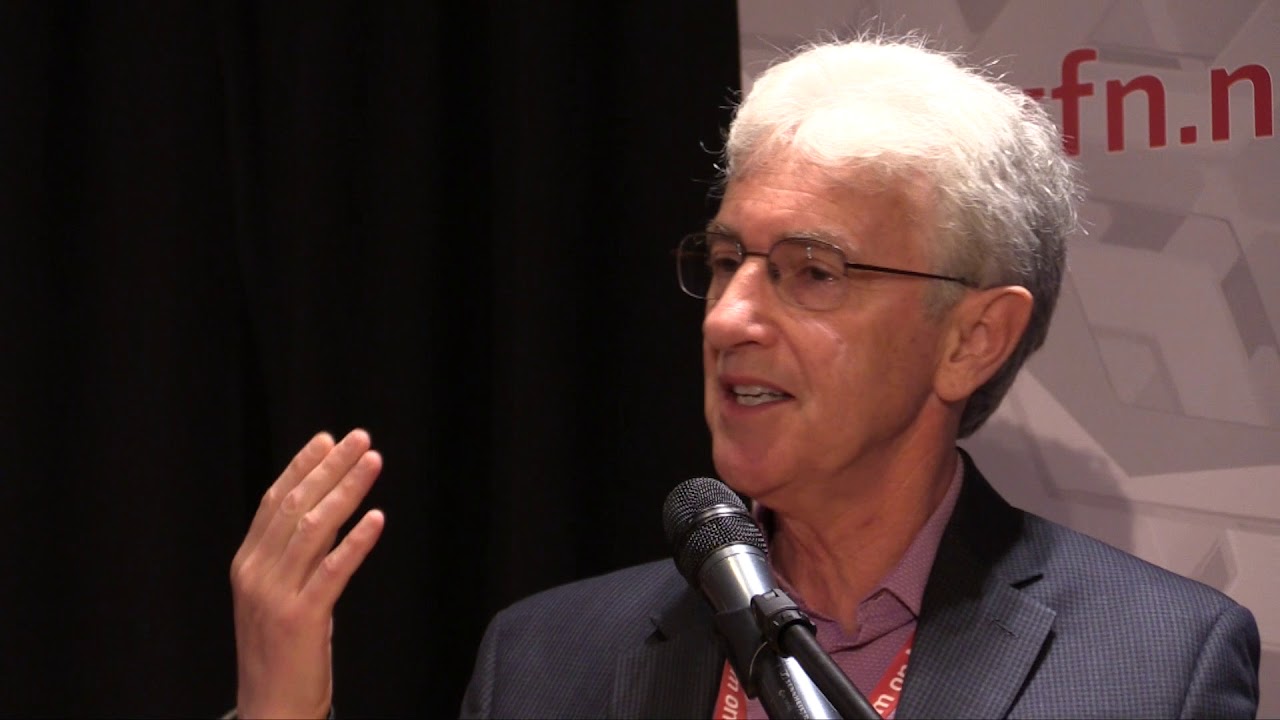
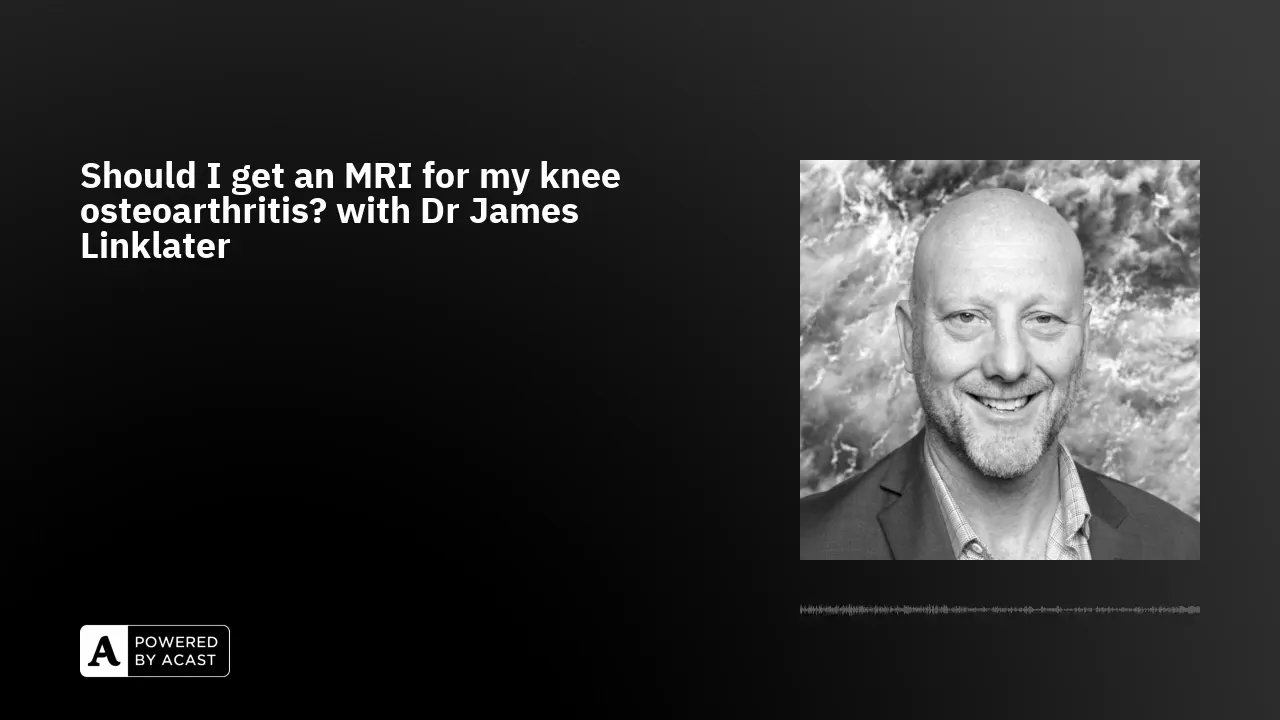
appreciate the challenges that are faced here and at least consider some of the solutions to these complex problems and we're really fortunate to have a close colleague really eloquent musos kid radiologist James linklater come along and talk to us on today's episode of join action James is a radiologist and he's the Chief Executive Officer of C Imaging and he's got particular skills in all aspects of muskal Imaging and intervention and has ongoing research interests in imaging of ostri and also Imaging of ACL crucial ligament reconstructions hello James welcome to the show afternoon David it's uh
good to see you at least remotely online and I think I I probably see you online despite the fact that our workplaces are probably 50 met apart more frequently than I do in person but anyway um the 21st century for you isn't it can you share with the listeners a little bit more about your background and what a typical day looks like yeah and what is referred to as a mus little radiologist and I S Subs specialized in that area and so my training was in medicine and then I went on to do specialize in
Diagnostic Radiology and subsequently did a fellowship in my Radiology in a facility in New York and returned to Australia and work in a private practice environment and Australia is interesting and so far as most MC Radiology occurs in a private practice setting and so the opportunity to have an interesting career in that space really is created by working in private practice which is what I've been doing for the last 25 years or so and um my day is spent seeing patients Consulting with them making DEC helping make decisions with them about what in Interventional treatments
might be helpful for their current problems reviewing patients Imaging and uh reporting on them discussing cases with referring doctors and also I'm involved in the running of our practice um here in St Leonards and I have two fellows in mus skill of radiology who I'm training this year so I've spent a reasonable amount of my day going through cases with them and discussing the the nuances that are involved in interpreting musco skill Imaging discussing a little bit about the the pitfalls of of low value Imaging and then I'm also the CEO of business C Imaging
so there's a a bit of background commercial aspect to my day as well uh I'm fortunate that we have a very highly competent Chief Operating Officer for our business so the day-to-day operations are well taken care of and and I'm able to focus most of the time on on the clinical aspects of my practice fantastic and obviously the perspectives that you're giving today I guess I'm seeking your input as a musos SK radiologist because I would appreciate as the CEO of an Imaging company there might be some incentives or motivations to potentially increase income not
necessarily always at the best benefit of patient care but again I'm I'm probably pushing you too far already yeah I think what's interesting to open that door of perverse incentive and I think you know that's um it's possibly not confined to Radiology you know it's something which is part and parcel of the medical system that we work with and and it's interesting you raise that because the company I work for is very much align with the concept of medical leadership and that that's front and center makes makes it almost unique and it's it's a it's
quite an amazing story of a a company which started in 1993 as a $10 million company uh and is now a $16 billion company and the amazing thing about it is that it's really built on the concept of medical leadership and an understanding that if you pursue an approach which is designed to deliver quality care to patients that the that will result in a successful business and it's been remarkably successful um and our Global CEO Colin GID is really you know it's it's amazing testimony to his vision and we're lucky to be part of that
and I'm very comfortable with with that environment and we're committed to that approach that um you provide care for your patient and in the long run you'll have a successful business so I guess what that can look like is um having a conversation with the patient about a procedure they've come for where you say well this may not not be the best thing for you to have done yeah know it's F fantastic to hear and as you say potentially a little bit unique in Madison where I think a lot of the business clouds what's optimal
as far as care and particularly the reimbursement incentives are structured very much around volume not necessarily quality but before before we get too much into the content of hopefully where we'll go can you just describe a little bit about when you're not at work what do you enjoy doing well it's um as you can see from my large forehead David I'm I'm not in the full bloom of Youth and um what I enjoy doing when I'm not working has changed over time I used to love surfing I spent a lot of time out in the
water and um found that really enjoyable and connecting with nature and in the last few years I've I've kind of morphed into uh really loving gardening and Bush regeneration that was my co Journey really is working on my property and clearing out the weeds and visioning what Bush regeneration looks like and learning a lot and coming from a place where I knew nothing um and it gives me a lot of joy you know it's a very different perspective to think about gardening and creating things that will be there long after I'm dead and there's connection
with nature connection with land and so that gives me a lot of Joy um I I've taken up singing which I never I was always told I wouldn't be a singer but done been the last few years doing some gospel singing workshops which uh has been a lot of fun I wouldn't say good singer but I enjoy it again it's good for the S well that's the important thing is that you enjoy it not necessarily the people's ears around it may feel the same way that you do but as long as as long as you're
having a good time that's the most important thing yeah and I think I'm fir beli everyone can sing it's just a matter of being able to listen to the tune yeah yeah now James if you had to describe yourself in five words what would they be well if I'm meeting someone who I haven't met before I usually say OB the tall Bal guy um and I was described I did a fellowship in I did it's been a year doing medical research in Burma and my nickname there was young smiling one and um uh perhaps I
can morph into the old smiling one now so there there are a few um descriptors maybe that might suffice do Wonder wonderful um and um I guess back just back to that first question where you were just telling us about your what a typical day looks like and what your background is just for the listeners I do try to get James to cross to the dark side from time to time of medical research and Academia and he's kind enough to oblig us on a pretty regular basis and I guess the reason for bring that up
now is we we were fortunate enough um to co-supervise a wonderful young chat from Myanmar who's uh Focus was on musos SK ultrasound but he's now gone back to that country um and we've now got a a similarly uh talented young man from now Bangladesh that we're co-supervising um but again before I digress too much the I mean the main focus of today's conversation really is about um the challenges of both I guess appropriate ordering and investigation of Imaging in the context of ostearthritis now we've had other episodes in the past where we've spoken about
the fact that the diagnosis for ostearthritis is a clinical one and so that is if you want to go back and listen to it a conversation we had with too neoi but essentially by a clinical one it means based upon a constellation of historical features so questions that you ask a patient and some Salient features on a clinical examination and imaging typically gets restricted to those indications where it's unclear what the diagnosis may be James I wonder if we could start just by talking a little bit about what different types of Imaging are available in
the context of ostearthritis Investigation if we were to require some form of Investigation uh well the oldest and probably most prevalent or most widely available investigation is an x-ray and that provides a means of demonstrating some features of osteoarthritis and usually on the basis of a jointace face getting narrowed and the body's response to damage to the Joint of forming Spurs or osteop phyes and the bone getting harder to cope with the fact that the um normal shock absorbers in the joint aren't working so well and sometimes picking up some calcification in the joint that
might be Associated or incidentally present and that's that's been the most widely used imaging test for the investigation of osteoarthritis and with the last 30 30 40 years is uh we've seen the proliferation of a number of other Imaging tests which will elegantly demonstrate structural changes um in joints that have osteoarthritis so you can demonstrate on MRI which which doesn't use ionizing radiation it uses a strong magnetic field and uh looks at the behavior of protons in those tissues you can demonstrate the loss of the articular cartilage which is the layer which lines the joints
and ensures their normal smooth Glide uh you can demonstrate changes in the adjacent bone which might reflect overload of the bone or um some sclerosis in the bone and you can demonstrate the joint fluid the inflammation in the fluid uh inflammation in thejason soft tissues and it's been interesting from the point of view of trying to work out what the pain generator is in in osteoarthritis and um that's a broader conversation I guess and and it certainly has been a frustrating one for us as images the lack of connection between what we see on Imaging
and patient symptom so we could see a patient who has quite Advanced osteoarthritis on on the basis of structural assessment who has no symptoms it's been well documented that's the case and you can also have patients who have relatively mild changes of osteoarthritis who have a lot of symptoms and those symptoms often time the pattern of ostearthritis is as I'm sure you've covered David many times the will wax and Wan and if you repeat that imaging test down the track when the symptoms have waned and they the Imaging May well look the same um I
I I'm particularly interested in identifying or the idea of whether Imaging can identify the causes of pain and whether it's a soft tissue related inflammatory type change that might be aable to some form of local treatment or it's a bone related bone pain related sort of scenario but the the fact is that if one's nihilistic about it that a lot of this Imaging is not going to make a difference to the management of the patient and um that's probably the the gerain point here yeah yeah and so I guess just to really recap some some
really valuable and important insights you provided there so one is about the lack of correlation between what Imaging demonstrates um and the symptoms that a person experiences and as James said that's been known and shown by a number of different studies over over a lot of years and potentially as a consequence of that the clinical utility of obtaining Imaging and influencing management is diminished both as a consequence of its lack of relation to what a patient feels but also because of our the lack of available therapies that are actually going to modify the course of
disease which we potentially could monitor or measure uh using Imaging as a modality um and so it's in that context that you know where and James please feel free to disagree with this in general we still Advocate that the diagnosis be a clinical one so based upon a good history and and a good examination um and that plane Imaging may be required as the first modality and by plain Imaging I'm just talking about an x-ray and for the knee that might be ideally a weightbearing x-ray as the first modality that we would acquire if there
was some uncertainty about diagnosis and some question about it and potentially there's a a likelihood that this could be a different type of arthritis or or gout or a pout another type of inflammatory arthritis that might increase the likelihood that that's there and by by so doing raise the possibility that that imaging has some utility but James in your and so by all means please disagree with anything that I just said there but if in your clinical practice do you um see people coming along that are having an image requested by a referring physici that
you think is inappropriate and how frequently might you see that and what do you typically do in that instance yeah so this afternoon I I reviewed a case with my fellows that was a patient in their 60s who had medial knee pain and had been referred by their GP for MRI uh wasn't that wasn't uncovered under Medicare and they had widespread ostearthritis and um uh decent sized medial joint line ostop fights and decent affusion citis and chronically torn miniscus and the discussion I had with my fellows was well this is an example of low value
Imaging and the scan had been done um the patient paid for it and we've got a we've confirmed the extent of pathology and a patient on a structural B I've seen patients who had had NE replacement who had less Advanced osteoarthritis than I saw in that scan what did I do about it well I discussed it with my fellows I didn't ring the GP and say to them there may not have been a lot of point of doing this and if you'd examined the patient thoroughly you probably could have confidently made that diagnosis and that's
that's partly a function of the the amount of time I have in my day to spend with those sorts of interactions and most of the interactions I have with clinicians are when there's a problem they want to work out what sort of Imaging uh modality is appropriate or they just work work out whether an intervention is appropriate we do um provide some educational events for GPS to discuss the investigation and management of various muscular skill Lev problems and we try and provide information on that I think it you know a lot of this is Community
Driven that there's an there's a transposition from watching the footy on a Friday night and hearing that the footballer is going off to get their MRI scan uh to think well I need to go and get an MRI scan and I think the other thing which is increasingly prevalent is a sense that if I'm not completely normal then I'm broken I need to be fixed and there's not an understanding that it's common to have structural changes which are which are not causing a problem and the the natural cycle of ostearthritis is that it will wax
and Wayne and that with appropriate measures you can get to that period that situation where it's not not symptomatic not not troubling the patient but the scan or the images will still look abnormal and um and I think that I think that's the big gap is is the sense in our community that things need to be fixed and what by fixing means you know some kind of operation or a procedure or something yeah yeah and often it's the hard work of weight loss and exercise that is the path to actually addressing the underlying problem yeah
yeah I mean so as you say it's a very complex complex situation but really just Echo what James is saying is that the um frequency with which Imaging gets requested in the context of primary care and this comes from data from the beach and other other large general practice databases uh out rates um and is more frequent than any other intervention that a GP actually does and so it's more common than a referral to um a physical therapist or an orthopedic surgeon for an injection whatever it might be so the Imaging is the thing that
is requested most frequently in the context of managing a person that has ostearthritis what's what's the concern what why you know why are we having this conversation what's the harm of just rampantly doing as much Imaging as we can and what are the downsides as far as patient care is concerned in quality well I guess you know history is always instructive isn't it David and this sort of concept of being fixed and structural U addressing structural abnormality um it's been I think quite conclusively shown now that in patients with osteoarthritis the arthoscopy is not effective
in um the long-term progress of patient with osteoarthritis and in fact I think there's some data to suggest that there can be an acceleration in that osteitic process um with those sorts of interventions potentially doing more imaging can feed into that process uh and I think that over the last 10 years there's been a significant change in awareness of these issues and I think probably a significant change in practice uh which is probably still in evolution but I I think that's so that's one level is is the outcome for the individual patient that it can
lead to interventions which are not in the long-term benefit of the patient yeah and so just I guess just to put a number on that so we did a small study and this has been replicated by others internationally that suggested that in a population of people with NE ostearthritis um some of whom had knee x-ray but you know a comparative group had an MRI all of whom had knee osteitis all of them had symptomatic disease those people that had the MRI were 10 times more likely to receive a surgical intervention and you know there were
many limitations with the way we did the analysis but the surgical intervention we're talking about here is the one that you just described specifically in NE arthoscopy which we categorically know is of no benefit to Patient Care longterm or the health of of the knee uh longer term similar so that's that's the potential harms just while we're touching upon that there's a couple of acronyms that you like to throw around um I was just wondering if you could share those with us uh in this context yeah yeah and the uh full disclosure I've had a
NE arthoscopy when I and I'm I'm 59 and I think I had the arthoscopy 10 53 for a display flap to of my medal miniscus and I so I lost 10° of extension uh and I was I got I started getting HP pain and back pain and I've got some very some early degener changes in that KN not bad but from and I had a very good outcome from that arthoscopy and that was probably about five years ago now so there is a nothing is black and white and there and this is the concept of
individual individualized medicine I just say that for full disclosure just before you go on to the acronyms then what's the Frequency with which someone has a a locked knee so to speak or an inability to fully extend the knee because that is that is the indication we're really talking yeah yeah yeah look it's it's not it's not common what's more what's more it is not common yeah yeah yeah yeah and good man good to make that that point and this this there kind of feeds into the um concepts of vomit and bath now Radiology is
unfortunately full full with um full of acronyms and vomit is um this is a a um sort of a patient Focus podcast David I believe and um it's probably Germain to to bring it up which is vomit stands for victim of medical imaging technology vomit and then barf is um the brainless application of radiologic findings and so and the the two kind of uh work together not necessarily what would call the synergistic way but um they can sort of collide in an unfortunate fashion and and it feeds back into the concept that as we age
there are a number of structural abnomalities which will develop in our muscular skel ofal system and a lot of them are incidental and not relevant to whatever a patient may have um in the way of symptoms and and part of the art of muscular skill or Radiology is trying to discern what's relevant and what's background noise the so-called red hearing versus the the important clue and I was actually amusing on the fact that I think AI is going to take quite a long time to actually kind of sort through all that and I would say
to you that a good mus gelal radiologist will attempt to um integrate the clinical information the Imaging findings and provide some kind of interpretation on on what's relevant and what's not but we can also give a laundry list of abnormalities without a lot of context and then the patient who will get to read that report will say my goodness I've got this 15 things wrong with my knee this is terrible i've got to do something about it can someone please fix me um and it may be that someone might offer some kind of intervention to
fix that problem or believe that they are all causing the patient symptoms and that's that's where you can get the bath um on top of the vomit um and we do see it it's it's um it does occur unfortunately and you know we laugh about it but you know beneath the someone said humor is is tragedy plus time and um you know yeah I mean as as you laughing about the the long laundry laundry list which sometimes I've heard described as the the war zone of the knee on an MRI report uh once a person's
seen that it's really hard to unsee that report um if you're a person who has that knee that's being reported on and as you've just mentioned um the inclination from those people is to want to get that fixed so to speak to have something done about it which typically ends up in a surgical intervention so outside of the potential consequences of harms what are what are the costs that we're typically talking about here and I know it's going to vary dramatically by different types of practice and and imaging modality but I just wonder if you
could give a ballpark cost for what um typically would be charged or by Medicare Andor typical practice cost for x-ray ultrasound CT and MRI well you know that M I expect to you before would have cost the patient $250 an x-ray would because that MRI was not covered by Medicare uh an x-ray would generally be covered by Medicare and will be of the order of $40 cost to Medicare and thus us as a community a CT scan uh is going to be of the order of a couple hundred an MRI scan is about $340 and
there are some the government has taken some steps to try and reduce the spend on MRI of the knee and by limiting access uh in various ways but you can still get a specialist referral for a m the and someone who might have advanced osteoarthritis and there may well be a good clinical reason for doing that often times there will so if say a surgeon is trying to work out whether a patient is a candidate for joint replacement of the whole knee or just half the knee uh that can help their decision- making process but
the the net effect I can't give you a number of and the the global spend in the community but I would say that it's not insubstantial we we see ultrasound examinations being performed which are almost universally inappropriate in this context and then that's of the order of $100 um and they're not to spent not to mention then time spent from a patient away from their workplace to go and get these tests done uh and then review them with their referring doctor and so on the cost of the consult with them yeah Etc so it's um
and they know it's not not insignificant yeah and you know as as James said before when we were talking about the role of arthoscopy nothing is ever black and white and so obviously um when we're talking about Imaging in this context it's important to recognize that in some instances particularly where the diagnosis is unclear or you strongly suspect another differential that it is appropriate to go off and get Imaging but where it's a what we otherwise call um barnor diagnosis uh that's obvious from when the person walks in the room the rationale for that is
often markedly diminished so we know that Imaging gets overused we know that there are consequences associated with that and substantial costs so what can be done to enhance the appropriate use of Imaging and potentially also to reduce overuse a moment ago you mentioned restriction to certain medical groups but I wonder if he could expand on opportunities like that and what what actually happened there and what what it led to um So within Australia we have a system where there is some restriction of access to funding for Mr examinations and uh initially the government brought in
a system of funding which required that refills had to be from a specialist to be funded under Medicare and then uh some subsequent to that they brought in a regime where General Practitioners could refer patients for MRIs of the brain of the Saka spine and the knee and there was a significant increase in volume of Imaging of the knee subsequent to that uh with MRI and the government sort of noticed that and reached a decision that they would strict access for that reason for patients referred by a GP to patients under 50 who had a
history of trauma and we're suspected of either having a torn uate ligament or a torn meniscus and the rationale being that they're worthwhile diagnosis to make in the after acute trauma and that the obverse of someone who has a history of pain knee pain and stiffness with no specific injury that there there's no point in uh funding that sort of examination but that's and that's I think that was a sensible decision from the government I think it has had some impact on the degree of inappropriate Imaging I think it's not easy though to have that
sort of Gate Keeper type approach uh and to police that um in an effective fashion and um I I think the the bigger the bigger picture is one of community awareness and education for the healthare professionals who are involved in the care of patients uh with these muscular skill conditions and so to to that end what can be done about I guess improving Health Professional Knowledge and education here and all the community understanding of perceptions of the the role and importance of Imaging outside of medical education so I mean we had the musk skitt block
recently I told the medical students about all of what we're talking about today um and I think they got the message um but obviously that's going to take generations for for that to come into practice so what can we do to educate health professionals well um I mean here we are David uh it may be that there are some health professionals listening I suspect they'll there they'll have their own confirmation bias already so I don't think that they'll be their opinions will be changed I I don't I don't think it's an easy process I really
don't I think it's a gradual process of building awareness you know in so many other aspects of the community as well they things don't change overnight and it's hard to touch base with all uh areas of the community um there are some aspects of the community who are more interested in these issues and will be better informed and take a more considerate approach and I you know I we we're invested in education through throughout our company um and there is there's a musco skeletal Imaging Association within Australia and New Zealand which is committed to providing
education in this sarter space as well there's committees which you and I have been involved in that have been um helping formulate guidelines for GPS for the um diagnosis and and management of osteoarthritis I think these all they all add layers to something which um hopefully will change direction but none of these things are going to will change overnight yeah what what role if any does the radiologist have here and here I'm particularly thinking about um what they say in their reports and how they structure their reports what what role is there there well you
know as I said that I think it's we our role is to contextualize um and to try and sort the we weat from the cha so to speak there are technical aspects as you alluded to like um obtaining weightbearing x-rays they're more meaningful because they'll show joint space lines so if you're going to do an x-ray at least do a good one and then there's something which I'm sure you've seen in uh David which I kind of refer to as being would you like fries with that kind of um Radiology where um there's a sort
of a throwaway line at the end that um perhaps the cortisone would injection would be helpful if clinically indicated or something along those lines um which occasionally that's appropriate but I think often times those statements come in the in the context of a lack of thorough knowledge of the clinical situation and and they're probably not totally appropriate what I mean just coming back to the war zone description I I mentioned a moment ago and the hierarchical structuring of a conclusion um there's at least some suggestions that you know we basically have a bolded sentence at
the beginning of that conclusion statement that this person has um NE ostearthritis and particularly for higher order Imaging so MRI in particular take taking this high road so to speak uh that this could have been adequately diagnosed based upon a plane x-ray so just to I guess Council within the context of the report and then have the laundry list of other um war zone features underneath that is there any rationale motivation for that look there's a few things that are interesting I mean I I always teach my fellows you know osteoarthritis Trump's meniscal tear and
um you know in the body in the conclusion you you put the ostearthritis and then you probably don't even need it to put in the degenerative miniscule tear in the conclusion uh so there's that level of contextualizing as opposed to Leading with the um torn miniscus with a little unstable flap at the edge which might draw Focus to the things that are not relevant to the patient's problem I think it's interesting as to whether there's a role for describing what is the prevalence of asymptomatic findings in various areas so this particularly um is probably more
relevant to spine uh where there's a high incidence of asymptomatic disc protrusions we haven't done it but I think there's there is potentially a role for just explaining that to contextualizing that sort of prevalence of asymptomatic abnormalities making it saying something which is self-evident I'd be reluctant to to go down the road of saying this could have been diagnosed with an x-ray because it it like was was the question was there arthritis or were they looking for a Minal ET so I don't know that there's a huge role for that yeah I mean just just
I mean obviously so everybody out there is aware when we're talking about the context of neotis and imaging uh we know that a minuscal teror is a universal part of the neotis process so at least in the epidemiologic studies in excess of 90% of people that have NE have manesco and James as you were saying before there are similar community- based studies that have done M and people without symptoms without disease uh that have shown that a lot of the structural features that we're talking about meniscal tears Extrusion or sublation of the meniscus bions tears
of the cruciate ligament are all incredibly frequent amongst an older community um and as indicated not related to um symptom presentation so you know I think there's a lot that we need to work out there's a lot for professional society's um hopefully to play a role here but James just wondering is there any other comments that you wanted to make about the topic um in closing before I get on to a couple of interrogative closing questions it's such a hugely common problem and I know you've invested a huge amount of energy in your in your
professional life David into trying to move forward in terms of finding treatments that are make a difference I you know and I've been involved in in research projects with you where imaging has been really very interesting um and I think has has made some interesting findings and as always there's a patient at the at the end of all these sort of problems and I think that's that's probably the key point is that we we need our Health Care Systems to look at the individual patient look at their context and work out what's what's best for
them um and I think if we can if we can move in that direction that's that's that's going to move the but um impact outcomes for patients yeah I mean I I think as you said before optimal patient care trumps everything yeah so James just in closing why do you do what you do what's your primary motivation I became a doctor because I'm I am very altruistic and um I enjoy I really enjoy what I do I enjoy interactions with patients I I'm kind of nerdy I like the technology and Radiology and I like in
particular I like musco SK Radiology because it's um it's kind of stewed towards the healthy segment of the community I see a lot of sports injuries and uh I see myself as helping people get back to a healthy lifestyle and that's there're some of the reasons yeah well um all I can say is that you're a wonderful person to have had the privilege of working with both professionally but at least from a personal level as well we've had I've I've at least had Imaging done in your practice at least once and I think at least
large numbers of my family have been through the same same practice and S sort your input and insight so it's highly valued and highly sought after James is there any one piece of advice knowledge or wisdom that you'd like to give for people that have ostearthritis yeah that's an interesting question so much I think is related to there's this vicious cycle of being able to exercise and be able to tolerate the pain to exercise and to lose weight and um that I I I've often have those conversations with patients who I see and it's um
it's not an easy conversation to have to highlight that but I I honestly think it's so important um that the two most important things is is just trying to get some of the weight off and to find a way of of strengthening muscle around the these joints it's I think it's the biggest thing yeah yeah great it's a great way to close and James again thank you so much for your your honesty your insights um all you bring in in terms of uh The credibility to your field it's it's highly valued and I really really
do appreciate it both um at a personal and a professional level so thank you thanks very much dve it's been a pleasure so this is obviously a complex and controversial area the current data would suggest that Imaging is getting vastly overused and despite Osteo Rus being a clinical diagnosis the frequency with which Imaging gets done vastly outranks the frequency with which any other intervention or guidance for management occurs for people that have ostearthritis as alluded to in today's conversation that has real harms because obviously when you see the war zone of your MRI report it's
very hard to un see that description and more often than not I completely understand why you might want something done about that but often times that leads to surgical intervention such as an arthroscopy which we know is not going to provide you a benefit in most instances and potentially cause your disease to progress more rapidly It's associated with substantial cost not only potentially to you but to society as a whole and so we know that that's happening there challenges in reducing that because you know blanket rules appli to healthcare professionals often times limit appropriate use
and so what we're not saying here is you know there are instances where Imaging would be appropriate but in most instances where it's being used here it's being overused and abused frequently I see people come along and see me in my clinical practice with a CD or an MRI disc in their hand and they say doctor please look at my images and I say as much as I would like to it's not going to change the way I manage you and until we have disease modifying therapy available I don't see how that's necessarily going to
change the way I currently manage people so it doesn't change management meaningfully and favorably but it can lead to real harms hence my concern about its overuse and abuse and the costs associated with that so again a really complex py issue one that I hope we gave appropriate coverage to and you've learned a little bit about some of the challenges in that particular topic but irrespective really appreciate your ongoing support of the join action podcast I'm between now and when we next have a chance to interact please do take good care of yourself thanks for
listening to Joint action with David Hunter if you like our show and want to know more visit www . joint action.in info if you have any questions you can email us at hello joint action.in and follow us on Twitter at joint action org this podcast was hosted by David Hunter edited by Vicki dang music produced by Jordan Hunter the information posted on this podcast is not intended to diagnose treat cure or prevent disease anyone seeking medical advice should consult the health professional [Music]