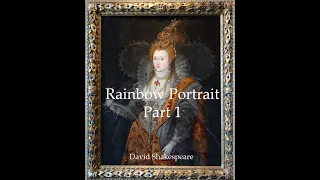
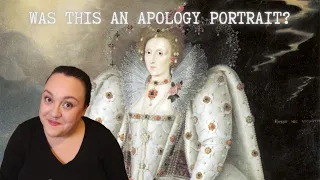
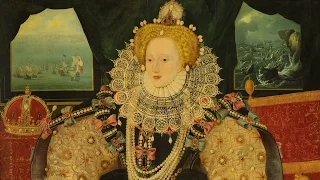
In my view this is one of the most important portraits of Elizabeth I and that's because we're fairly sure it must be painted directly from the life. I think there is something incredibly exciting to think that Elizabeth herself is standing in front of this very piece of wood. It's one of the very few portraits of Elizabeth that you get a real sense of the person, the physical presence of the person.
It shows Elizabeth I in her early forties and I think the likeness is just incredibly carefully observed and very beautifully painted. We know very little about who painted this portrait, or indeed who commissioned it, but what we do know from looking very carefully at the surface of this painting, is that it was painted by a really talented artist and probably a Netherlandish émigré, someone that is here for quite a short amount of time for a specific commission. What we know when we look really closely at the surface of this picture is that the artist is working in a very energetic way, right from the outset.
You have a sense that the artist is developing the composition as they're going along, they're not transferring a very direct, already worked-out pattern; they're looking at how the composition might evolve, you've got some very energetic marks in the underdrawing, particularly around the fan and the hands which change position over time. The way that the artist is managing the paint is quite different from the way in which English painters work as well, because they're working directly wet in wet, and that means that all of the paint is wet when they're manipulating it. English artists didn't usually work in that way, they put one layer on and they let that dry and they put another layer on.
This is a very talented, energetic artist who is really up for the challenge of painting an important portrait of the Queen. // We know that this painting has changed over time and that really early on in this painting's life there was an early addition, and you can see behind me that there is a crown in the background on the table; well that's not painted by the same artist that painted the figure, and I think that one theory about that is that a patron is requesting that a crown gets put into this portrait and that it's painted by another artist right at the end of the painting process. We know that this painting has faded quite dramatically over time as well, because Elizabeth would have had a really remarkable dress on, and she has, what we can see today, quite a pale white and gold dress.
Well this originally would have been gold and crimson and white, and I think it's an interesting choice for a woman that has very red hair, it's a very bold choice in a way, but the pigment has faded very dramatically over time and what we see today is a shadow of its former glory. Another area of the painting that has changed quite dramatically over time is her face, because we know that the pigment that's in her cheeks was once actually much rosier and she would have had quite a natural complexion at this period. She's in her forties at this date, and it really is interesting that the myth of Elizabeth, that she always wears white make-up or is incredibly pale, is certainly not true at this time of her life.
Certainly later on she does wear make-up, but here you can see, that while she appears very pale, she would have once had a quite natural and rosy complexion.