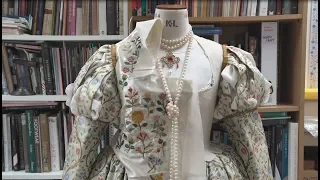
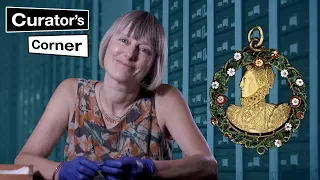
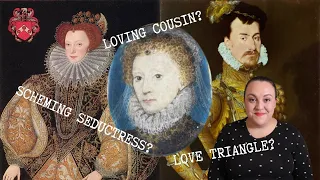
There were quite a lot of places in the Elizabethan period where you could have come across a portrait of Elizabeth I. One of the first places you might find a portrait: if you were lucky enough to have coins in your purse, you would likely have a portrait of Elizabeth in your pocket, because there were lots of new coins that were circulated from the early 1560s with a profile portrait of the Queen and some of those were taken directly from the life. So people would have seen Elizabeth in many different places, she'd probably be the most familiar monarch of the Tudors, partly because portraiture was really so popular, or becoming very popular in this period.
There were also quite large numbers of painted and printed portraits that circulated, far more than at present with us today. What survived is really a very small percentage of the portraits of Elizabeth I and they've just deteriorated and been destroyed over time. The number that exist show us that there were portraits of Elizabeth that would be not just in houses of the nobility and the gentry, but also among the citizenry as well.
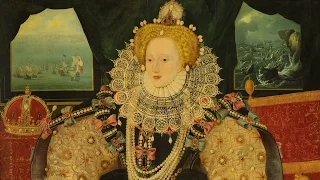
You could certainly buy a portrait of Elizabeth I ready-made, and in this exhibition we have both printed portraits, portraits on coinage and painted portraits of the sort that would probably be in more ordinary people's houses. The kind of places that portraits would have been hung are really quite varied in the sixteenth-century. There was a big demand for portraits of Elizabeth I and they would have hung in places like guildhalls, livery halls and universities, but also in houses of the rich, the nobility and the gentry.
We know from sixteenth-century inventories that they were also owned by the citizenry; there were clergymen who owned portraits of Elizabeth and merchants of all different sorts that would be keen to display a portrait of the Queen. We know that Elizabeth I only really sat for artists on a handful of occasions. How we reconcile the really large numbers of portraits that existed in the Elizabethan period is a complicated question, because we know that artists must have taken templates or patterns that then circulated between different studios.
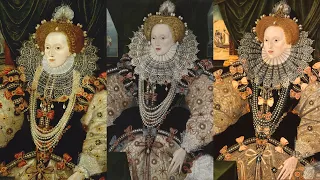
Large numbers of artists' studios could create portraits of Elizabeth to fill quite a lively demand I think. The way that they would have done that is by taking a likeness directly of the Queen, and we have one example behind of a 1575 portrait of Elizabeth I which is known as 'The Darnley portrait'. What they would have done is have created a face pattern and this would have been reversed and used again and again on different portraits of the Queen.
Probably, we're looking at ten to fifteen years and I think there's something quite interesting about that, because here she is shown aged forty, or so, she manages to keep the same facial features for a good period of fifteen to twenty years, which is I think is something we'd all like to do.