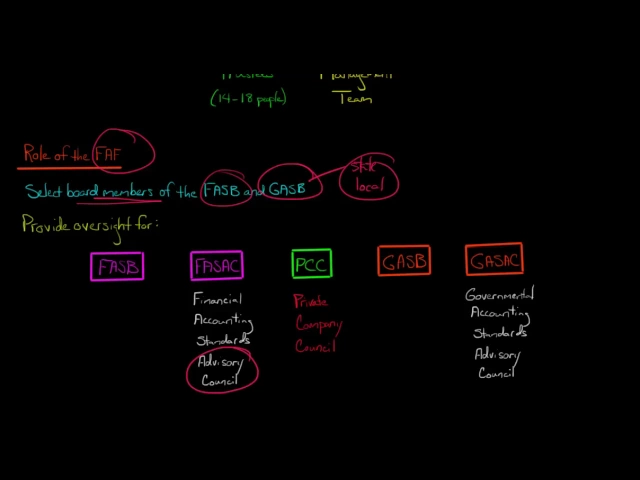
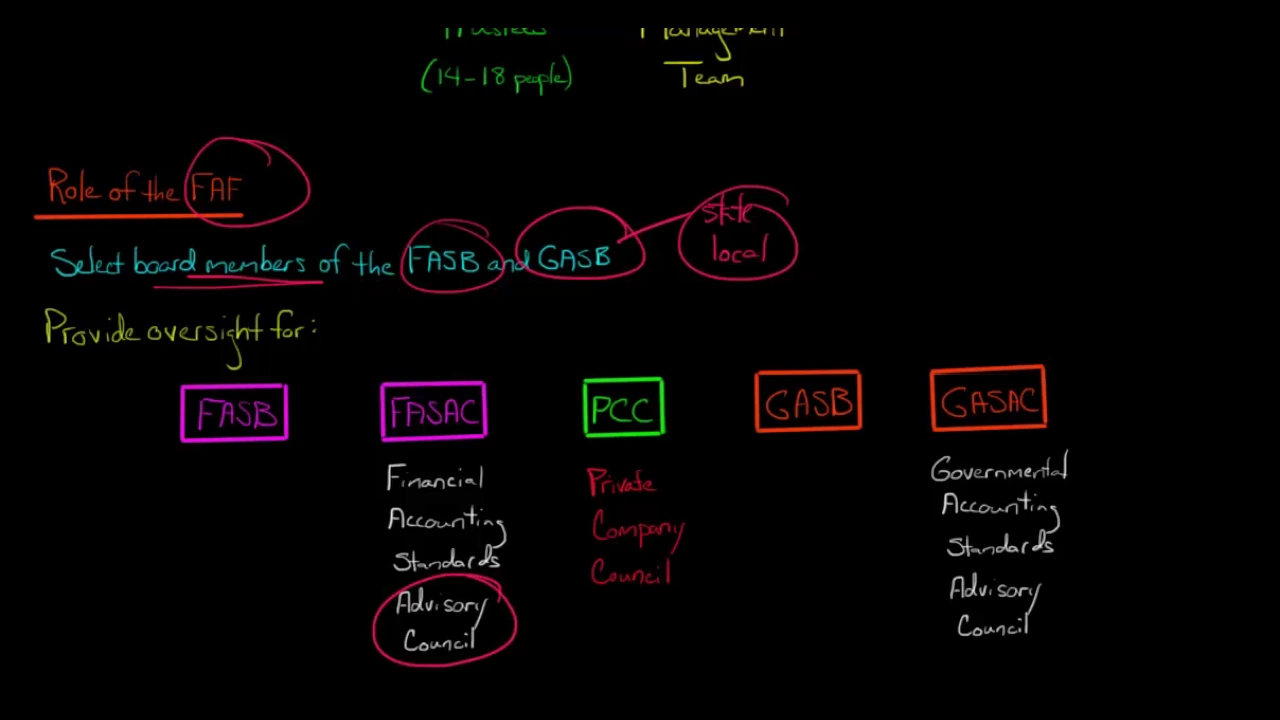
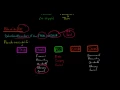
in this video we're going to discuss the Financial Accounting foundation which is also known as the FA F so the FA F is a nonprofit that has two components so there's a Board of Trustees which is about 14 to 18 trustees at any given point in time and then there's also a management team that runs the FA F on a day to day basis and in terms of what they do what their role is the most important thing they're probably known for is that there's a group that selects the board members of the FASB if
you remember that's the Financial Accounting Standards Board and they're in charge of making gap in the US for companies right but we also there's another organization we haven't talked a lot about it's called the Gatsby the GaSb the governmental Accounting Standards Board and they actually create gap for state and local governments in the United States so well I think about companies we think about the FASB everything about state and local governments I think about the GaSb and the financial accounting foundation the saf they select the board numbers of each of those groups that's a pretty
important role but not only do they pick the board members they also provide oversight and they provide oversight for a number of agencies some of which you might never have heard of and so we've got the FASB we've got the GaSb but there's also for each group there's a corresponding Advisory Council so for example for the FASB they have a Financial Accounting Standards of advisory council the FAS AC I know we're going heavy with the acronyms here but the FAS AC they basically provide advice to the FASB and similarly the GaSb they have an advisory
council as well to gasa C and they provide advice to the Gatsby right so but then there's there's also a fifth company that the FA F oversees is called a private company Council and basically what they do is they basically make suggestions the FASB about exceptions or modifications to the accounting standards that are created by the FASB for private companies companies that aren't listed or aren't publicly traded on a US Stock Exchange so the FA F they have a pretty broad role here because they're providing oversight for all of these different agencies so it's a
pretty important role and one thing that's worth noting is that the fa f and also the FASB the GaSb all these organizations they're private agencies that means that they're not government agencies right so something like the SEC the Securities Exchange Commission in the US that's a government agency however all these other groups that we're talking about like the FA F the FASB these are private agencies that means they're not part of the US government so you might be wondering what well how do they even get money where does their funding come from and basically they
have three streams of income what one int accounting support fees and so that for the FASB those support fees come from publicly traded companies and then for the GaSb they come from like miscible bond brokers and dealers they pay these support fees and that that's a biggest source of revenue but they also get revenue from subscription and publications so that the FASB for example can sell access to the codification and stuff like that right so they can get money from that so they get they get revenue and then also from the money that they have
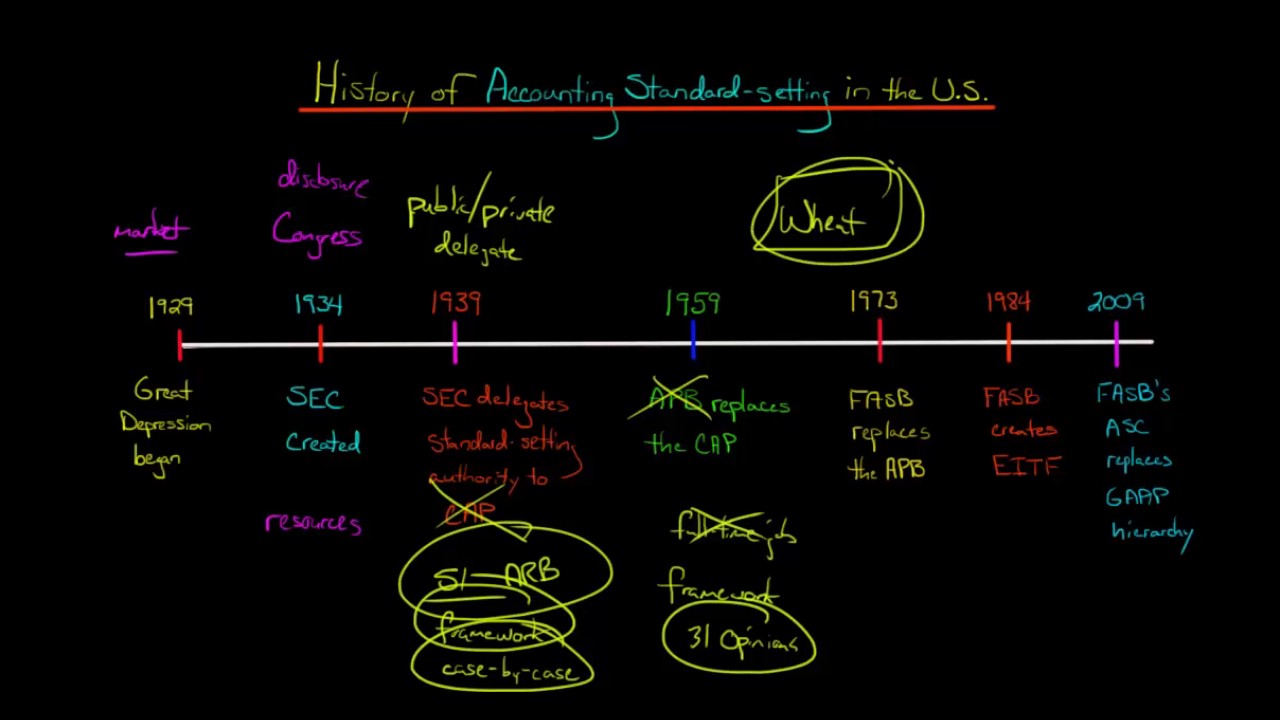
that they invested they can get investment income so the important thing to note is that these are all private agencies that they're coming up with their own streams of funding which is really unique because we have in the United States for US GAAP we have this public-private partnership where we have the government agency the SEC that is delegated responsibility of accounting standard setting to the private to do these private agencies right we've got the FASB and the GaSb and then we've got the FA F providing the oversight and so forth and selecting the members of
these other groups