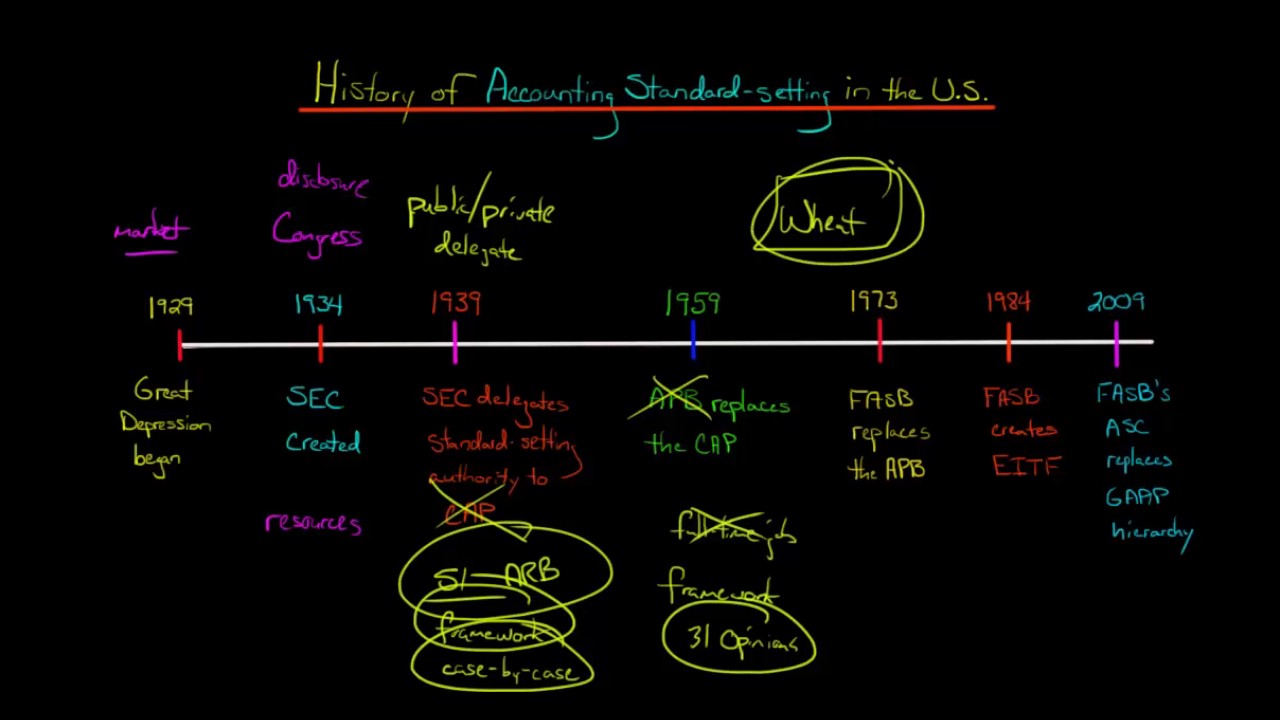
in this video we're going to discuss the accounting standards codification otherwise known as the ASC so the ASC is the source of all the authoritative accounting principles and rules that us companies have to follow when they issue their financial statements so it's the central repository of all the information related to us Gap and it was created in 2009 to establish one level of Gap one single level of all the generally accepted accounting principles that ptain to us companies and before we had the ASC we basically had this thing where we had a hierarchy we had
a hierarchy of Gap we had these different types of things that some were more authoritative than others and so we had this hierarchy and we say okay well what's the most authoritative source of Gap and so forth and we actually had an accounting standard that was issued by the AF fasb uh statement on financial accounting standard number 162 that explained the entire Hier hierarchy so it could be very confusing and with the ASC now we just say look we just have one level of Gap if something is in the ASC then it's Gap it's just
that simple right so now the ASC can be amended from time to time and it is every year when we have these Accounting Standards updates that they're issued by the fasb so the fasb will go and they will analyze an issue for example lease accounting and so you know what we need to make some changes and so then we'll say oh now we have ASU 842 and so so we have an accounting standard update and they will go and amend the codification but again all the Gap is in one place it's in this codification I'm
going to talk to you a little bit too about how kind of the codification is is laid out but another important point that I really want to make is that the ASC it's it's nice that it not only established one level of Gap but also another thing it did was prior to the codification the US Gap was standards based so basically if you were looking how do I count for example for for pensions or for financial instruments let's say you say well financial instruments oh well statement on financial accy standards 159 talks about the fair
value option for financial instruments but that that isn't everything there is to know about financial instruments there are other things too so you have to look up at oh okay I look at this other Financial standard I look at this other uh standard that was so the fasb would issue all these different standards that had to do with financial instruments or pension or whatever and so for any topic that you're interested in you had to go look up multiple standards you had to figure out what standards applied then you had to go and read those
standards and so forth so it actually was a very difficult process and now with a codification everything is organized by topic so you could look up pensions receivables and and so forth so I just want to sketch out for you the the basics of how it works uh so first of all there there are nine areas right so we've got these these nine areas and so just an example examples of one of these areas is assets so we've got assets and then when they in assets so here's an actual to give you an idea of
assets so we've got uh cash and cash equivalents receivables investments in inventory right so we've got all these different types of assets and so these are topics so we see the topic number uh so let me change it a different color it be a little easier so you see like 330 that's inventory okay so this is inventory so we say Okay area would be assets but then we'd have a topic within that area topic 330 which happens to be inventory okay we're looking at topic 310 that would be receivables so we got the area then
below that we have the topic and then we can expand once we're in that topic once we're in for example inventory we can expand into subtopics and so subtopic 10 for inventory uh number 10 is overall so then we click on overall and we say okay now we've got different sections that we can look at and section 35 of that would be subsequent measurement pertaining to inventory and then you you can even have it it is even organized by paragraph so we could say like paragraph one for example um I I want to show you
a little bit how that works and again every topic is different so you got to have a topic for for pensions and so forth and and and so so look here we got we got uh receivables okay topic 310 and then now we've got the subtopic 10 and overall and and so we see you can expand if we go on subsequent measurement or D recognition and so forth you see the little plus that that means you click on that and you can expand this this is all online at the fasb's website now some of this
information uh to get like the pre premium version of access to the codification to the ASC they actually have to pay for that subscribe so so like accounting firms and so forth they will they will subscribe however there is a free option to get more limited information from the fasb you have to register and set up an account