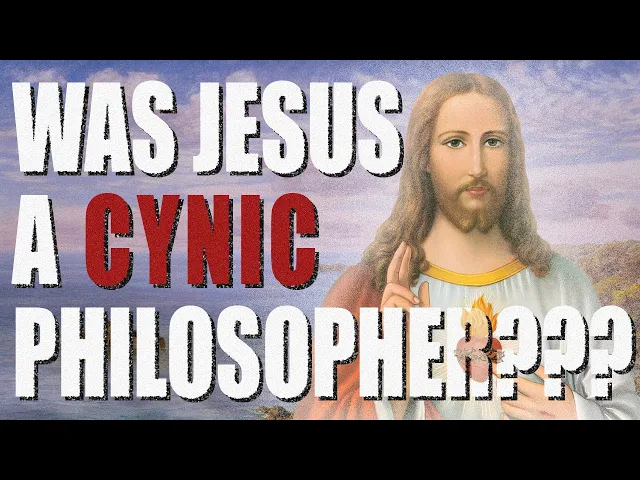
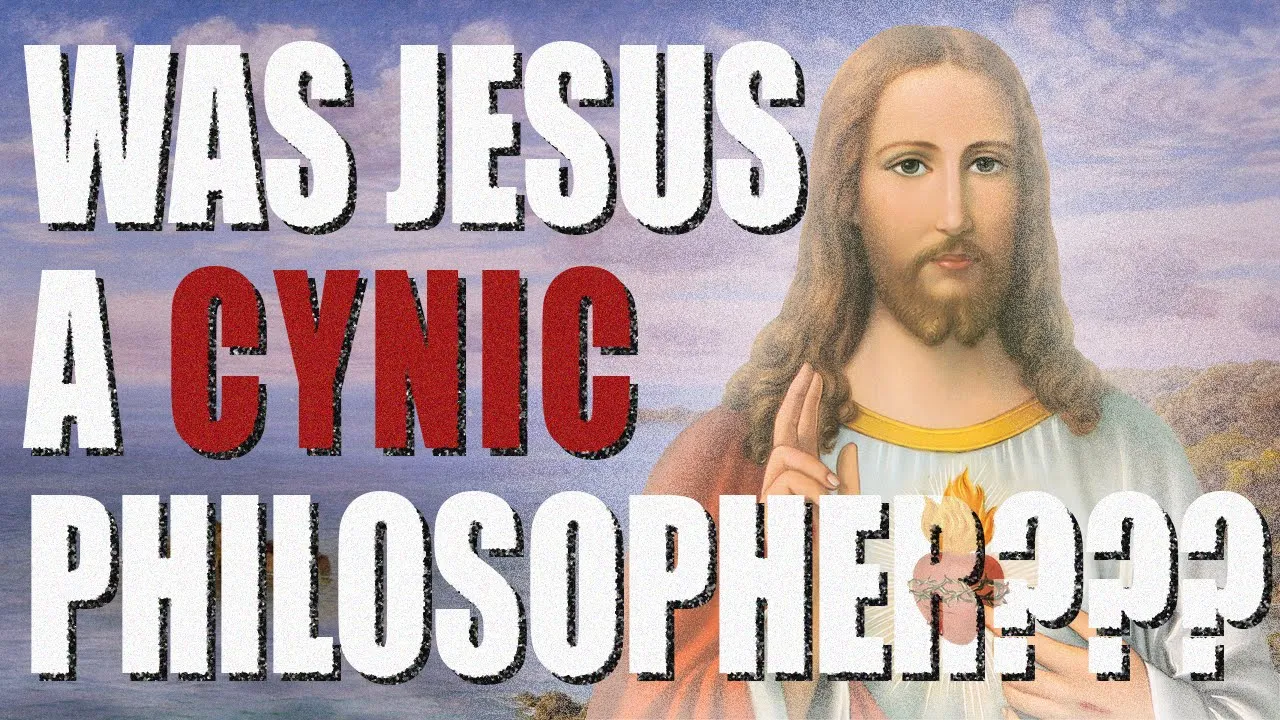
no one can serve two masters for either he will hate the one and love the other or else he will be loyal to the one and despise the other you cannot serve God and Mamon in case you've been skipping Sunday school Mammon is Hebrew for money or more specifically the greedy pursuit of wealth which has long been recognized as the root of all evil Jesus famously preached that it was easier for a camel to fit through the eye of a needle than for a rich person to get into heaven and said that if people wanted
to be perfect then they should sell their possessions and give to the poor but centuries before Jesus there was another group of itinerant preachers with a strikingly similar message the cynics unless you've been living in a jar you've probably heard about diynes and all the colorful stories around his Ecentric lifestyle and if you haven't heard of him oh man are you in for a treat today let's just say that his style is not exactly what most people expect when they think about philosophy but nevertheless his controversial example has become the embodiment of cynic philosophy and
as we'll see today he was not the first to pursue this strange lifestyle which rejected social norms and material possessions and definitely not the last hey I'm Matt you're watching nothing new and today we're exploring the history of cynic philosophy like most helenistic philosophies the roots go back to Socrates and his ethical philosophy which held that virtue not pleasure was necessary for a good life the story of cynicism begins with one of Socrates followers antisthenes who was the first Greek philosopher in the historical record to preach a life of poverty and a major influence on
diogenes after these two we have ctis who became famous for teaching Xeno of [ __ ] the founder of stoicism along with his wife hipparchia both of whom gave up their wealth and status to pursue the philosophical Life by the time of the Roman period cynic philosophers could be found throughout the Empire begging on street corners and preaching about virtue and as we hinted earlier the influence of cynicism can be found in some unexpected places was Jesus influenced by cynic philosophy some Modern historians certainly think that even if Jesus wasn't directly influenced by cynic philosophy
it's likely that the aesthetic practices of early Christians like the desert fathers were inspired at least in part by the example of the cynics as you can see we have a lot of interesting topics to cover today so we're just going to jump right in but first if you want more content on Ancient philosophy and culture make sure to subscribe and hit the Bell anyways let's get into it the philosophical schools of the helenistic period are similar in a few different ways While most people think of philosophy as an ivory Tower which is more concerned
with academic care splitting than day-to-day problems that wasn't the case in classical Antiquity the pursuit of philosophy was an all-encompassing way of life and was primarily concerned with ar and udonia or virtue and happiness as epicurus once said empty are the words of that philosopher who offers therapy for no human suffering for just as there is no use in medical expertise if it does not give therapy for bodily diseases so too there is no use in philosophy if it does not expel the suffering of the soul the concern for inner peace above all was partially
in response to the political insecurity of the helenistic and Roman periods and the various schools of philosophy during this period all had their own solutions to the suffer uing of the world most famously there was stoicism which championed the idea that virtue was the only good and taught people to live in accordance with the rational order of nature known as the logos the epicurian disagreed they held that pleasure was the only good and advocated a simple life of leisure and philosophy instead of getting involved with political life for the cynics the solution was to stop
worrying about wealth status or fitting into the Norms of society and to live according to Nature like animals who do what they want when they want another similarity between these schools is the fact that all of these terms have changed quite a bit in meaning over time as we discussed in the video on epicurus epicureanism was largely misunderstood and eventually the word became synonymous with Hedonism likewise the goal of stoicism was not about getting rid of all emotions and becoming some insensitive Rock like the Modern English word stoic implies and we find a similar issue
with the term cynicism which originally had a much different meaning than its modern connotation of being distrustful of human sincerity or Integrity like stoicism which derives its name from The Painted stoa where Zena would meet with and teach his followers the origin of the word cynic is a far cry away from what it would come to mean while antes was the originator of cynic philosophy diogenes was the first to be called a cynic well technically they called him diogenes the dog and it was his doglike behavior that inspired the name of cynicism you see in
Greek dog is Keon and doglike is kinos and diogenes definitely earned the name he was said to have doggedly followed antis wherever he went like a faithful hound and wouldn't leave him alone until he accepted diynes as a student despite the fact that at first antis wanted nothing to do with him according to one story antis got so frustrated with him he had to beat him back with a stick but diogenes took it in stride and told him to strike for you will find no would hard enough to keep me away from you so long
as I think you've something to teach of course Scholars have questioned whether antis and diogenes ever actually met but it certainly seems like diogenes was inspired by antis interpretation of Socratic philosophy so before we start talking about diogenes let's learn about antis and see what he has to teach us antis grew up in Athens but he was not a citizen and as we'll see it's very likely that his philosophy was informed by his Outsider status he fought during the pelian war in his Youth and was a disciple of gorgius at first but when he encountered
Socrates he quickly became one of his many followers anti was so eager to hear him speak that he would walk from the port of pyus into Athens every day and even persuaded his friends to come along he was there the day Socrates drank the hemlock and he never forgave the people who persecuted Socrates inspired by his example antis went on to lecture about Socratic virtue at a public gymnasium where he gained a following among the poor who admired the Simplicity of his life and teachings his life was largely aesthetic and he was known for his
simple outfit of just a cloak a staff and the ancient equivalent of a wallet which became a kind of uniform for the cynics unlike diogenes who was said to have written a play or two but not much else antis was reported to have written quite a lot although like many ancient writers only fragments remain but his main influence on philosophy came from the example of his lifestyle theist list of anti books is long though very little remains of what he wrote his influence on those who both followed and furthered his example diogenes the cynic CES
of Thieves and Zeno of citium who founded stoicism is what justifies his nomination as founder of the school diogenes leera said that he gave the impulse to the indifference of diogenes the continence of ctis and the Hardy hood of Zeno indifference to Convention and conventional Ambitions continents and Hardy hood are the essentials of the cynical Outlook the stoics shared the two latter characteristics but what made them markedly different was that they cared about their duties to society I want you to keep in mind throughout this video that stoicism was directly inspired by the cynics so
while they had their differences we'll see how they share many values so what did antis actually teach AC gring tells us that antis believed that virtue can be taught and requires nothing but the strength of a so that is courage and self-command virtue is en nobling he said it expresses itself in deeds and requires few words anyone good deserves to be loved and how one acts should be dictated by the laws of virtue whether or not they conform to the laws of the polus these two latter views are such as an outsider would be well
placed to form anti was a noos or bastard born because his parents were not married and his mother was moreover a thian so he did not have a citizenship his follower diynes undoubtedly acquired from antis a dislike for the aristocratic Plato antis accused Plato of Pride and conceit once remarking to him on seeing a spirited horse capering in a procession if you were a steed you would be just such a proud showy one antis embraced poverty and the aesthetic life and it was claimed that the symbols of adherence to cynicism a ragged cloak a staff
and a wallet or small bag originated with him but some say with with diogenes the idea that the only thing you need by way of a bed is a folded cloak is certainly attributed to him it is interesting to note that Socrates famously believed that virtue couldn't be taught after all he couldn't find any teachers of virtue despite questioning everyone in town but as we just heard antis disagreed he believed that virtue could be taught because he had found that in fact there was at least one teacher of virtue in Athens Socrates and if we
look at the other schools of philosophy which were inspired by Socrates example we'll see that they all developed his ideas in different ways with each providing a unique interpretation of his philosophy as the world history encyclopedia points out Socrates students all founded philosophical schools of one kind or another and all of them were so diverse that it is a testimony to the expansive quality of Socrates philosophy that so many men could interpret his teachings in such different ways the heathenistic philosopher aristois for example claimed to be following Socrates example by living a life in pursuit
of pleasure while Plato claimed he was carrying on socrates's Vision through an aesthetic discipline of Mind antis also asserted that his philosophy was grounded in Socrates original Vision it seems almost impossible that aristois Plato and antes could have had the same teacher so different are their philosophies at first glance underlying all three however is that very same virtue which Socrates held so dear The Importance of Being free to be true to oneself and 's own convictions in life the cynic school that antis founded stressed the importance of prevailing over adversity by acceptance of it that
a is the same for women as it is for men and that this personal Excellence is displayed in deed more so than in word these same values expressed differently were taught by both Plato and aristois diogenes took the teachings of antis and by extension Socrates to the absolute extreme Plato called him a Socrates gone mad and if you've heard any of the many stories about him you know why another reason why he was called the cynic or the dog was because he thought dogs were a great example of how to live well dogs are Shameless
they don't care about where they sleep or what they eat they do what they want whenever they want always living in the present moment likewise diogenes was completely indifferent to social norms he ate in the marketplace which was against Athenian customs and when rebuked he simply replied that it was during the time he was in the marketplace that he felt hungry but that's small peanuts compared to the fact that he also went to the bathroom whenever and wherever he felt like it including in the theater and would even pee on people who insulted him and
of course he also masturbated in public saying if only it were as easy to banish hunger by rubbing my belly diogene Chief tenant was that one should live simply and naturally indeed like a dog and he accordingly urinated and vated anywhere in public ate whenever he happened to feel hungry and observed no taboos about what could be eaten including food taken from Temple sacrifices he advocated living in complete independence of convention and described himself as a citizen of the world a Cosmopolitan he charged his contemporaries with living artificially their minds befogged or Smoky because of
the Folly of Desiring wealth Fame and honor the goal of life should be happiness and Clarity of Mind achieved through ticism which gives self-sufficiency strength and peace of mind this meant living and acting without shame shamelessly and spurning the laws of society and state wherever they conflict with a simple natural truly virtuous life so how did diogenes get into the philosophical life in the first place he was originally from copee an ionian Colony on the coast of the Black Sea in Northern Anatolia where he worked in the banking business under his father at some point
they created a scandal by debasing the currency and diogenes and his father were exiled from the city losing both their citizenship and possessions this story is one of the rare cases in the history of early philosophy that has been confirmed by archaeological evidence since a large number of defaced coins from the 4th Century BC were found at copee along with other coins bearing the name of diogenes Father after this diogenes moved to Athens and quickly adapted to living with no possessions his only Shelter From The Elements was a large wine jar and his only possession
was a wooden Bowl to drink from until one day he saw a young boy drinking from a stream by just cupping his hands he immediately threw away his bll exclaiming fool that I am to have been carrying Superfluous baggage all this time at some point he was said to have been captured by Pirates and sold into slavery where he became a cherished member of his master's household the stories vary whether he was freed by his master or grew old in his master's household but the moral of these stories is usually the same diogenes as a
slave is more free than any Master but while the stories are many they all reflect the consistent character of diogenes and cynic philosophy in general overall diogenes was highly critical of society and established norms and the main way he criticized the hypocrisy of the average person was through his lifestyle and actions he would walk around during the day with a lantern and when asked what the hell he was doing he would say that he was looking for a man and that he had once seen some boys in Sparta one of the most famous stories is
when he snubbed Alexander the Great And as always Plutarch provides a vivid telling of the tale after Alexander arrived in Corinth thereupon many Statesmen and philosophers came to Alexander with their congratulations and he expected that diogenes of copee also who was tering in Corinth would do likewise which shows how much diogenes reputation proceeded him but since that philosopher took not the slightest notice of Alexander and continued to enjoy his leisure in the suburb cranon Alexander went in person to see him and he found him lying in the sun diogenes raised himself up a little when
he saw so many people coming towards him and fixed his eyes upon Alexander and when that Monarch addressed him with greetings and asked if he wanted anything yes said diogenes stand a little out of my son it is said that Alexander was so struck by this and admired so much the Hess and Grandeur of the man who had nothing but scorn for him that he said to his followers who were laughing and jesting about the philosopher as they went away but truly if I were not Alexander I wish I were diynes as mentioned earlier he
shared an's disdain for Plato and there are many stories about their contentious relationship according to diogene laertius diogenes had a Sparky adversarial relationship with Plato whom he criticized for having carpets in his house and attending Banquets treading on Plato's carpets one day he said I trample on the pride of Plato to which Plato replied yes diynes with pride of another kind and of course most philosophy nerds know the story of how when Plato defined man as a featherless biped diogenes plucked a chicken and brought it to the academy saying Behold a man Plato then refined
his definition to include that man has broad flat nails when asked where he came from diogenes was said to reply that he was a cosmop polyas or a citizen of the world this would become known as the earliest expression of cosmopolitanism or the idea that all of humanity is part of a single Community which influenc both the stoics and later Enlightenment thinkers like Emanuel Khan and is such an important concept that I plan on doing a whole video on this idea at some point but for now it's just important to note that the roots of
this idea go back to classical Athens like many other Big Ideas in Western philosophy it's also important to note how radical this idea was in the world of ancient Greece where a person's citizenship ship was one of the most important aspects of their identity and of course this wasn't the only radical opinion diogenes held according to one story when asked how he wished to be buried he said that they should just throw his body outside the city walls for the animals to eat horrified at this idea his friends asked him wouldn't you be bothered by
that and he told them not at all as long as you provide me with a stick to chase the creatures away when they asked him how he could use a stick if he was dead diogenes replied if I lack awareness then why should I care what happens to me when I am dead after diogenes we meet my favorite of the cynic philosophers ctis of Thieves and his wife hipparchia one of the things that makes him so interesting to learn about is that he was almost the exact opposite of diogenes even though he was inspired by
diogenes example to give up his possessions and to take up the life of a syic he did not adopt his rude behaviors and seems to have been quite a pleasant person to be around AES might be thought to have had nothing to lose as a criminal Exile and perhaps later as a slave in choosing and extoling a dog's existence the opposite is true of the next in the succession of leading cynics CES of Thieves who was born to great wealth but gave it away after he had heard and witnessed diogenes he said he was a
fellow citizen of diogenes thus a citizen of the world and with him repudiated conventionality ctis and his wife hipparchia of maronia also from a wealthy family accordingly chose to live as Beggars on the streets of Athens they came to be well known and respected for their good humor and principled stance and were welcomed everywhere not least in their role as conciliators soothing family quarrels and settling arguments with kindness their version of the simple life was less confrontational than that of diynes and their focus appears to have been more on the ataraxia achievable by freedom from
the desires and aims of convention than on attacking people for their adherence to Convention diogenes leera said that C's philosophical letters were as beautifully written as Plato's dialogues but none survive there are 36 extant letters attributed to him but they have been shown to be later forgeries he enjoyed the philosophical life because it liberates one from dissatisfactions and trouble when you have money he said you can share it liberally and when you have none you will not be unhappy about it but will be pleased with whatever you have he encouraged people to live on a
simple diet of lentils saying that luxurious living of eventually leads to Strife because the reason that people compete for position and wealth is that these are necessary for making a luxurious life possible and for maintaining it thereafter ktis and hipparchia are attractive proponents of the claim that Simplicity and naturalness are the root to happiness it is not implausible to suppose that they succeeded in following this route because they had each other's company on the way hipparchia was one of the few women philosophers of ancient Greece and she loved kti so much she gave up her
wealth and life of status to marry him and pursue the life of the cynics their marriage was based on equality mutual respect and of course true love and they went everywhere together which was not normal for respectable women in that culture and of course not caring it all about social convention they even had sex in public they had two children a son and a daughter and their attitudes towards parenting were equally liberal when his son came of age CIS took him to a brothel and their daughter was allowed A month's trial marriage to any potential
suitors talk about cool parents my favorite story about ctis is that he was called the door opener because he would just walk into people's houses and start lecturing them about virtue or even mediating family disputes but since he was so nice about it he was gladly received and welcomed With Honor he used to enter the houses of his friends without being invited or otherwise called in order to reconcile members of a family even it was apparent that they were deeply at odds he would not reprove them harshly but in a soothing way in a manner
which was non- accusatory towards Those whom he was correcting because he wished to be of service to them as well as to those who were just listening we can see that while both diogenes and ctis adopted a rigorously aesthetic lifestyle they both had a much different approach to how they preached their practice with ctis using honey to catch flies and diogenes using vinegar the most famous of katees students as mentioned earlier was Zeno of citium the founder of stoicism who also emphasized that happiness and peace of mind came from living a life of virtue in
accordance with nature but the main difference was that stoicism did not neglect political life or responsibilities and did not reject wealth and status but the influence of cynicism would extend far wider than just stoicism according to the Internet Encyclopedia philosophy within political philosophy the cynics can be seen as Originators of anarchism since humans are both rational and able to be guided by Nature it follows that humans have little need for legal legal codes or political affiliations indeed political associations at times requires one to be vicious for the sake of the polus diyes cosmopolitanism represents then
a first suggestion that human affiliation ought to be to humanity rather than a single state the impact of cynicism is also felt in Christian medieval and Renaissance thought though not without a good deal of ambivalence Christian authors for example praise the cynics for their self-discipline Independence and mendicant lifestyle but rebuke the body aspects of cynic shamelessness the parallels between cynic philosophy and the teachings of Jesus have led some Modern Scholars to question whether or not Jesus was influenced by their lifestyle and even if Jesus wasn't influenced by Greek philosophy there's no doubt that Greek philosophy
had an influence on early Christianity the only question is to what extent well there was at least one ancient Jewish sect the aines which embraced poverty and aestheticism overall aestheticism was not nearly as common in Judaism as it was in Christianity according to the Hebrew Bible God created the world and everything in it for humans to enjoy and L it over as Isaiah 45:18 says the Lord did not create the world for desolation he formed it for human habitation likewise Genesis tells us that God saw all that he had made and it was very good
so essentially Judaism rejected the manikan kind of dualism between a good spiritual world of light and an evil material world which should sound familiar if you watch my video on orphism Christianity would also reject the idea that the material world is somehow evil but as I'm sure you're aware it's been very common throughout history to hear Christian preachers encouraging people to resist the Temptations of the Flesh and so we see movements like the desert fathers and later monastic orders which Embrace aestheticism and withdraw from society like the cynics we can also draw parallels between the
stories of the cynic and the stories about Jesus for instance instance Scholars point to the simple outfit Jesus told his followers to wear and the characteristic uniform of the cynics he charges them to take nothing for their Journey except a staff no bread no bag no money in their belts but to wear sandals and not to put on two tunics there is also similar animal imagery in the rhetoric for instance the first century cynic philosopher di chriso stum encourage others to consider the Beast Yonder and the birds how much more freely from trouble they live
than man and how much more happily also how much healthier and stronger they are and how each of them lives the longest life possible although they have neither hands nor human intelligence and yet to counterbalance these and their own limitations they have one very great blessing they own no property Jesus too comments on the happiness of the animals this has its roots in their freedom from cares and in their exemplary sense of Liberty do not be anxious about your life what you will eat or what you will drink nor about your body what you will
put on is not life more than food and the body more than clothing look at the birds of the air they neither sew nor reap nor gather into Barns and yet your heavenly father feeds them are you not of more value than they and which of you by being anxious can add a single hour to his span of Life the close parallelism between the sayings of Jesus and that of Deo christum both speaking about the Carefree birds in the same context that of the expectations of human life is worthy of note conversion stories were also
just as important in the cynic Cannon as they would become in Christianity and there were many popular stories where someone like ktis and AP parchia would essentially convert to the philosophical Life by giving up all their worldly possessions similarly Jesus told his followers if you want to be perfect off you go and sell all you have and give the proceeds to the poor and you will have treasure in heaven then come and follow me as we saw earlier s philosophy is dominated by short useful stories known as Caya one definition of Caya is a saying
or act that is well aimed or apt expressed concisely attributed to a person and regarded as useful for living the structure of these stories is very simple the subject is either asked a simple question or comes upon some ordinary scenario and gives a thoughtful or witty reply for example diogenes on being asked why people give to Beggars but not to philosophers said because they supposed they might become lame and blind but they never supposed they might take up philosophy this was a literary genre of its own in ancient Greece and was commonly used in ancient
rhetoric the stories were often collected together and published as a kind of ancient anthology of aphorisms and a scholar like Plutarch or senica would surely have had their own private collection of these stories but they were primarily used in education and students were introduced to these simple stories as as soon as they could read these kinds of stories are also common throughout the gospels and especially in the gospel of Mark and it's not just the structure of smaller stories like these which have parallels in Greek literature modern Scholars widely agree that the gospels as a
whole were written in the genre of Greco Roman biography also known as a bios one of my first videos is all about this genre but in case you didn't watch it the main point was that ancient biographies were less interested in mundane facts and were more about painting a portrait of the moral character of their subjects the focus of this genre was often on great words and deeds and often included Legends and apocryphal stories if they harmonize with the moral of the story and as I said in that video most gospel Scholars today view the
gospels as belonging to the genre of ancient biography both supporters and detractors now recognize this General consensus arguments concerning the biographical character of the gospels have thus come full circle the gospels long viewed as biographies of some sort until the early 20th century now are widely viewed as biographies again in the same way that the Greco Roman bios laid the foundation for the gospels some Scholars see the cynic di tribe as being the Prototype of the Christian sermon the same rhetoric of the diet tribe is characteristic of the manner in which Jesus taught this is
particularly evident in his use of Parables stories he made up ad hoc and the usage of quotations from the Bible and Illusions to scriptural passag Mes in the ancient world the similarity of the manner in which Jesus and the cynic di tribe communicated was well known and commented on the Church Father origin for instance States what Jesus has in common with epicus both use Simple language that can be understood by Everyone by contrast the esoteric idiom used by the platonic philosophers is only of use to a very few people many have received Advantage from those
who wrote and taught in a simple and practical Manner and with a view to the wants of the multitude such teachers says origin are Jesus and epeus the stoic cynic philosopher and of course there are many parallels in the ethics and lifestyle of Jesus and the cynics those who adopt the philosophical way of life are often ridiculed and made fun of in fact they may even be insulted and driven away this happens all the more to those who are begging or seek to instruct others through their public speeches those who meddle with other people's Affairs
are rarely welcome how shall the philosopher react the answer belongs to the very core of cynic teaching Mal treatment is to be born with patience the cynic philosopher must under all circumstances avoid pointless debates and must never Strike back or let himself provoke fights and brawls the philosopher steadfast in character must be utterly immune to insults the endurance of Mal treatment ranks as a kind of initiation trial for those who take up the cynic life according to epitus everyone who prepares for the cynic profession has to expect many beatings a very pretty thread woven into
the cynic way of life is this he must be thrashed like a donkey and while being thrashed he must love those who beat him as though he were the father or brother of them all despite such maltreatment the cynic has to stay true to the role that he has adopted that of the father or brother who is bound always to show forbearance and even love as Julian the apostate says but the genuine cynic has no enemy even though men strike his feeble body or drag his name in the M or slander and speak ill of
him because enmity is felt only for an opponent but that which is above personal rivalry is usually loved and respected this kind of attitude is very harmonious with the teachings of Jesus who told people to love their enemies and to turn the other cheek Jesus did not discriminate and he clearly believed in the Cosmopolitan ideal pioneered by the cynics which sees all of humanity as a common Brotherhood since we are all the children of God and so I think Jesus would probably agree with what senaka the stoic said that if you wish to imitate the
gods then bestow benefits upon the ungrateful as well as the grateful for the sun rises upon the wicked as well as the good the seas are open even to Pirates like all cynic philosophers Jesus had a critical attitude towards the religious customs of his people he infringes the Sabbath legislation and defends himself the Sabbath was made for man not man for the Sabbath the human person therefore for is the measure not custom or law bold as they are the Jewish cynics are far from accepting the irritating and cumbersome complexities of traditional religious practice instead they
simplify or abandon them one particularly prominent case is the abolition of the rules of Purity that prohibit the eating of certain foods hear me all of you and understand there is nothing outside a person that by going into him can defile him but the things that come out of person are what defile him thus he declared all foods clean so as we can see there's plenty of parallels which Scholars have drawn between the teachings of Jesus and cynic philosophy but all this raises one important question how could Jesus have been exposed to Greek philosophy well
if you know your history you'll know that Jesus didn't have to go far to encounter Greek culture after the conquests of Alexander the Great in the late 4th Century Greek culture had spread from Egypt to India and their influence was so widespread in the Mediterranean that this period between the death of Alexander and the rise of the Roman Empire has been called the helenistic period while the Jews resisted Greek Rule and influence at times most notably during the maban Revolt this period saw the rise of helenistic Judaism which combined Judaism with elements of Greek culture
famous thinkers like pho of Alexandria attempted to harmonize Greek philosophy with the Jewish scripture known as religious syncretism and this would have a major impact on Christianity one of the most important ideas in both platonism and stoicism was the idea of the logos or essentially the Divine reason of the universe and this is one of the big ideas that Pho adopted and adapted to Jewish theology about half a century later this idea found its way into the Gospel of John where Jesus is declared to be the word or logos of God along with adapting many
aspects of platonic and stoic philosophy not to mention his Pythagorean inspired numerology there are many references to the cynics in the works of Pho although pho in his own writing seems to avoid cynic radicalism he does appreciate and even celebrate the cynic ideal of voluntary poverty in his Treatise that every good person is free he relates anecdotes about diogenes with relish portraying him and other cynic philosophers as exemplars of individuals who've acquired true freedom freedom from the burden of possessions and freedom of speech even before the high and mighty this work includes only a few
biblical references the dominant note is cynic and it would be wrong to exclude it from the Corpus of original cynic literature Pho who lived in the early 1st Century CE was not the first Jewish thinker to be impressed with the cynic way of life and thinking a first trace of Jewish cynicism can be found in the biblical Book of Ecclesiastes or coth coth is the name of this Jewish author but it is also a title apparently translating the Greek cagus leader of a philosophical Club into Hebrew absolutely essential for coth is the abandonment of wealth
because riches cannot lead to happiness a common subject of cynic preaching echoing his Greek models he famously states that a living dog is better than a dead lion another aspect of kth's philosophy can be traced to its cynic Origins his admonition to enjoy life and possessions as long as fate permits it was a kind of opportunistic attitude to life taking with both hands when there were things to take yet not complaining when times were lean enjoying life when it could be enjoyed but accepting the whims of Fortune with a shrug of the shoulder it is
with these words that berin Russell characterizes the attitude of the cynic philosophers but in fact the best example of such a view is the biblical Book of Ecclesiastes coth so we can see that even if Jesus wasn't hanging out with Greek philosophers that wasn't necessary for him to be influenced by them because the influence of Greek culture on the near East could be felt almost everywhere during this period where did Jesus Come into contact with the philosophy of diogenes in the strongly heniz Milo of Galilee where he grew up his activity as a skilled manual
woodworker the trade he abandoned required a certain familiarity with the Greek language sephus then the most important city of Galilee boasted a mixed population of Jews and Gentiles its Roman Theater apparently built bu in the early 1 Century existed until late Antiquity why should Jesus who grew up in the vicinity of sephus not have heard some of the sayings told by itinerant cynic preachers the assumption that Jesus understood some Greek makes this even more likely argues Martin hangle in a study of the extent of the hellenization of first century Palestine without his having had some
knowledge of Greek and contact with cynic thought and without the Greek culture of Galilee neither Jesus nor his followers can be understood although we have no means of measuring the competence Jesus had in speaking and understanding Greek it is hardly likely that he only understood Aramaic too much points to his being bilingual in Greek and Aramaic the main two languages spoken in 1 Century Galilee Tom Wright to quote one more specialist is convinced that Jesus knew more than one language in an article he supports this idea with reference to the matter OFA knowledge of several
languages among many even simple people in the Middle East today without difficulty they get along in Arabic Greek and English for many people today and in ancient times multilingualism was the rule rather than the exception we may therefore think of Jesus and John the Baptist as young men who after having come into contact with cynic ideas enthusiastically adopted them and even infected others with their enthusiasm we may consider Jesus a diogenes likee figure he merits a Place among the philosophers at the end of the day the question of whether or not Jesus was directly influenced
by the cynics is unanswerable but this might not be that important of a question to answer while Christianity was obviously formed around the figure of Jesus the shape of Christianity as we know it today was largely formed by figures like St Paul and the early church fathers so even if Jesus was unaware of Greek philosophy St Paul certainly wasn't and when he traveled to Athens he held debates with epicurian and stoic philosophers the sermon against idolatry in the Acts of the Apostles shows a clear awareness of the matters at issue between the philosophical sects at
that time and Christian theologians like origin Clement of Alexandria and Ambrose of Milan were all influenced by pho's blend of Judaism platonism and stoicism while there are no references to cynicism in the New Testament it's very unlikely that the early Christians were unaware of cynicism since critics of Christianity often compared the two we should also remember that stoicism was seen as a more moderate version of cynicism and for good reason since as we saw earlier these two schools of thought were directly related so maybe we don't see as many references to cynicism because it was
lumped in with stoicism now I have to say I really doubt that Jesus was directly influenced by the cynic it's not unlikely that he encountered people pursuing the cynic lifestyle but we need to remember that cynicism was not like the other schools of philosophy there was no Academy to go to learn about cynicism and there was no lineage of teachers which passed on some core Doctrine cynicism was mainly defined by shared practices not Theory which is why Jesus is considered by some to be a cynic philosopher it's not because they seriously think he was a
student of the cynics but it's just that as we saw his style of teaching and the stories of his life match up quite well with the model of cynicism it seems that both diogenes and Jesus were in part simply reacting to the hypocrisy of the wealthy ruling class so it's natural that their solution to the problems of their age were similar it seems that both of these figures are just products of the changing ethical Norms of that time seen mainly in the transition from classical morality to Christian morality or as n called it Master morality
which values wealth Fame and power and slave morality which values kindness poverty and humility but while we can point to many similarities there are still some important differences between the cynics and Christian athetics it is noteworthy that whereas others who have rejected society and its artificialities as barriers to Virtue for a later and more familiar example the Christian desert fathers and Hermits the cynics did not take themselves into the Wilderness in search of their simple life but lived it in the midst of the city the Christian Hermits went to the desert to escape Temptation diogenes
challenged Temptation right in its midst the point was to encourage people to embrace Simplicity and a natural way of living by confronting them with an example of it and the confrontation was not just by example but by criticizing poking fun embarrassing and even horrifying people to get them to think and while the cynics advocated for giving up the pursuit of wealth they don't seem to have preached as much about charity for the poor as the Christians did we should also note that while ticism was not a popular Trend in Judaism it was obviously not a
uniquely Greek idea and all of the major world religions Advocate some form of renunciation and of course there was at least one Jewish sect which advocated a life of poverty at that time the aines which may have influenced John the Baptist and in turn Jesus so not every scholar agrees with this idea and some argue that the Jewish prophetic tradition was a much bigger influence on Jesus than cynicism but again even if Jesus didn't interact with Greek philosophers the early Christians certainly did cynic philosophers could be found throughout the Roman Empire and the cynical way
of life seems to have thrived well into the 4th Century CE but they weren't nearly as interested in speculative philosophy as platonism and stoicism was which might explain why early Christians spent so much time debating with platonists and stoics instead of the cynics anyways as always I wasn't able to talk about everything I wanted to today but I think this is a good spot to wrap things up if you want to see more videos all about ancient philosophy and if you want to support the channel make sure to like comment and subscribe thanks for watching
and I'll see you next [Music] time