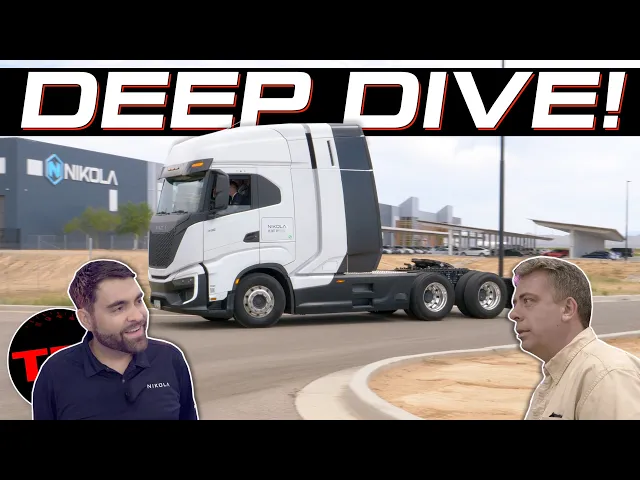
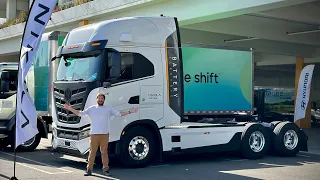
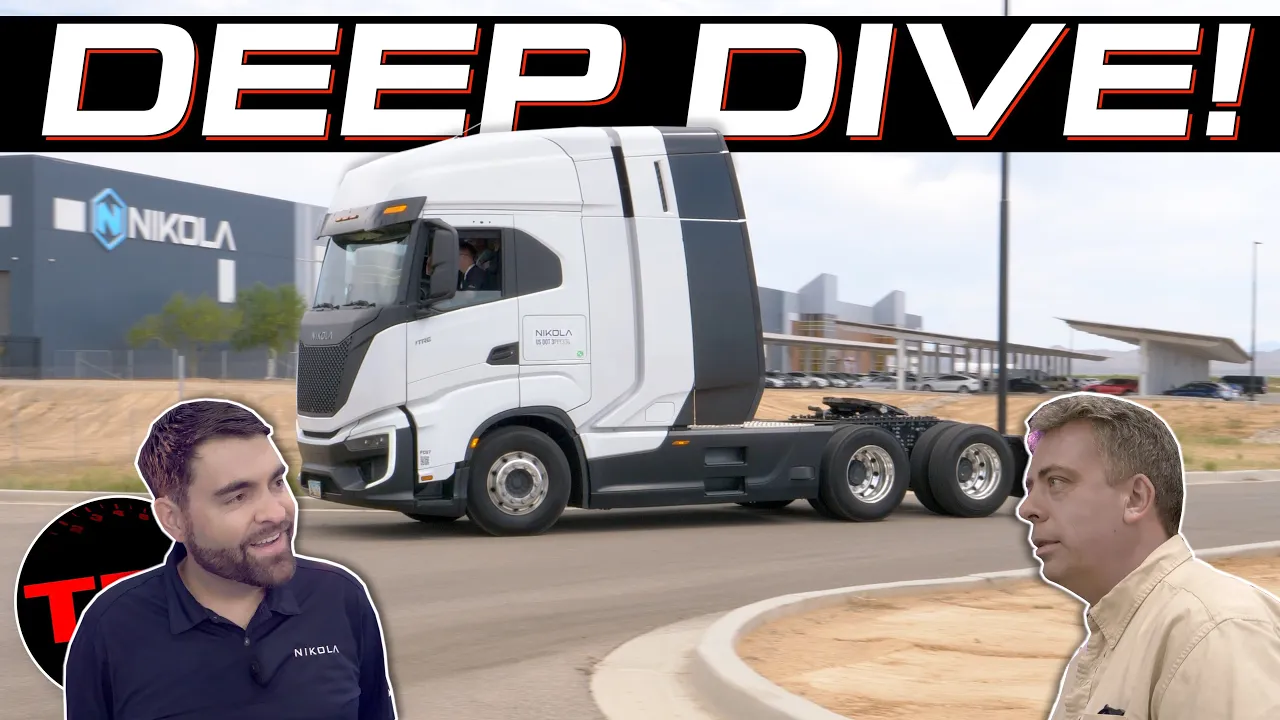
on this episode of tfl talking trucks podcast I have something very special for you because I'm once again on location I'm in kulage Arizona at the Nicola Factory Nicola produces battery electric semi trucks and also now fuel cell electric semi trucks like you see behind me and I have two very special guests on on this episode I have Christian who's the chief engineer of this truck and also have Mike who can tell me more about the hydrogen fuel infrastructure because you cannot really have a hydrogen truck without the way to fuel it so let's hit
it right off and go to Christian learn everything possible about this truck he's really the guy who knows all the systems and then also talk to Mike can you please introduce yourself briefly absolutely my name is Christian Appel and I'm the uh head of vehicle platform at Nicola so basically the chief engineer is that fair to say behind your all electric semi that's correct okay so let's just set the stage right because people may not be aware you know what Nicola is so you've been working for many many years yes and you've been with the
company for how long I've been working with Nicola since uh 2020 uh I took the role as the chief engineer uh kicked off this program um to this day now when we launch this product and this is the factory I mean you could see how big this place is and you're producing these trucks right now we're producing these trucks right and delivering to customers and we are delivering still this quarter the first trucks to the customers all right and you have two versions you have a b so battery electric truck so it's a semi- TR
with battery capacity and electric motor yeah and you have this as well which we're standing next to which is a hydrogen fuel cell electric truck that is correct okay let's focus on the hydrogen absolutely cuz it's here it's here it's here that's what today is about we launched our battery electric truck last year already um this year is about the fuel cell electric truck we obviously had a lot of learnings from our battery electric truck and the development of that as well as the you know roll out to the market and all of the experience
that's coming back from the customers and the feedback and all of that went into the development of the fuel cell electric truck so why why do it why use hydrogen fuel cell it Trucking is a little bit different than Passenger cars um or even you know pickup trucks because you need a lot of energy You Haul a lot of heavy loads you know £80,000 Federal limit there's weight exempts that go up to 100 110,000 lb um and you go long distance and these things are tools ultimately they're tools for transport and they need to go
the distance and they need to be reliable so where our battery electric truck is very good for certain appc applications when we're talking like Metro distribution short Hall applications there are limits when it comes to the range and there's also an impact on payload as you put more and more batteries into this truck MH for the fuel cell electric truck this truck with its range of 500 miles is able to essentially cover almost all dayap missions that you see in class 8 applications and with the range of 400 500 Miles also comes less of a
pay Lo impact as compared to a battery electric truck and also refueling and refueling exactly very glad you brought that up because this really is the third piece of it it's it's the payload it's the range but then it's refueling time there's many applications where you see multiple shifts two shifts applications and the ports are often two shifts and you need to rely on very quick range replenishment or fueling or charging and with this truck as it comes out now off our production facility this truck is capable of fueling in 20 minutes or less it
always depends on the dispenser on the other side obviously um but the truck itself is capable and think about it that's 20 minutes that's a typical time you have in between shifts to refuel and get go another 500 miles we frequently go 900 mil on on these single trucks during a day just because we can refuel so quickly that's incredible so I I want to demystify demystify look inside of it so this is a cabover truck so typically that's the style of it right so it's not a traditional you know American style where you have
a big hood here in the front why is was that done uh yeah so cap overs were very popular for a time in the US but they they pretty much went away Europe cou of years ago but they're all over Europe and the reason is that Europe has very tight limitations regulations when it comes to overall length and turning radius as well so that's why Europe you see essentially only these cap over flatnose trucks um in a 4x2 configuration and we had our partner Eco that we started working with we essentially took their platform of
the sway which they just brought to Market in Europe and we utilized this platform to develop our zero emission trucks and we thought that this cap over architecture is actually a great a great approach for these zero Mission trucks and just because it went the way for reasons of you know engine noise and vibration and discomfort does not mean that these trucks are not viable in the US and that's what we see now people that are getting in here there is no engine rattling or noise or anything for the driver because all we package under
the cap is the fuel cell so all of these disadvantages that people think of when they think of cap overs you really don't have here look can we jump inside because I think visibility is also another Point absolutely and that's and that's coming to the advantage vantages of a cap over um architecture now one of the you know maybe challenges or drawbacks is the steep climb but once you're up there you sit fairly high and if you you know if you want to go up there and you see the view so please TR well I
have a CDL so three points of contact three points of contact that's absolutely right 1 2 three there 2 and it's not really a heavy effort but once you're in there um you tell me what you think your view is awesome well I don't have a big Hood in front of me so I can see my my Corners you know I can see around I have big mirrors right so I think that's another positive absolutely we have a front-facing camera as well and a rear facing camera so if there's any assistance that's required to check
for obstacles we have that too but the maneuverability that you get with this truck is another advantage of this architecture and something that all of our drivers and all of our customers very much appreciate as soon as they get into the truck and they're up there they they feel like a king you know it's very comfortable very good V vision and very good maneuverability why is that is that because of the uh wheelbase as well or is that how you cut the wheel is it a combination we have It's a combination absolutely right we have
a wheelbase that's fairly common I would say um for for dayc caps um but with the cap over again first of all you have the advantage of the visibility but then also the way we designed our steering system um and the cut in is really class leader all right um I kind of want to show the screens but I did another video which is a separate video where I actually drove the truck around your facility here and I showed the gauges so you have digital displays that's correct and uh so maybe let's leave that off
for another time but can we open this up absolutely can we transform it absolutely I'm happy to C look underneath right yes and look into the heart of the vehicle so what's the process here we're going to just uh get the grill open we have a centerpiece here and the little lower piece that we're going to take out what before before you tilt the cab further this is a pretty giant radiator to to begin with mhm uh why why what what first of all what is this radiator doing yes so this radiator is for the
fuel cell power modu so fuel cell system um is more efficient than a diesel engine so you know from that point of view less heat rejection but the difference is that in the fuel cell system um there's no combustion happening right it's a it's a reaction and all of the heat rejection goes into the cooling system or most of it as a as you know opposed to going into the exhaust system for the diesel trucker okay so that means the cooling system actually has to deal with a higher heat rejection than in the diesel truck
and that's why we have pretty massive radiators um to to cool the system that was one of the changes we had to do um coming from the battery electric model to the fuel cell electric model we elongated the chassis and we did a whole new design of the grill and the bumper okay to make space for this radiator and we came up with this mechanism to actually have a tilting radiator that tilts together with the cap and we have the fan behind here as well um to to support the cooling system is that fan cannot
be found in a current like a diesel power truck or is that some some other design for the fan yeah so the the fan itself it's actually an electrical fan it's a high voltage fan fairly high power high voltage fan it's not driven off the or anything typically driven by the by the engine so that's a very different architecture it's all electrified in our model of course yeah it it makes total sense and the other Advantage is there was really two per two um reasons we did um the new design and the elongation one I
just mentioned to make space create space for the radiator but the other one was we could make make a more aerodynamic design M and vehicle losses are important right everyone tries to um optimize for vehicle losses so aerodynamics rolling resistance um so with this new design we were able to improve fuel economy as well all right that that's that's really great and I see like an air curtain I see there's a passage here on the side like like an air curtain would be very good very good observation so we have many of these little features
um to optimize the aerodynamics of the truck so you will see some of those features you see one on the cap here as well the reflector um and here on the side the pillar so those are all features uh to optimize the aerodynamics of the truck sweet all right now let's let's tilt it cuz we want to see underneath that's tilt it absolutely so we have a feature in our HMI um a button that you need to press to be able to uh tilt the capab you obviously don't want to have someone uh come up
to the truck and being able to tilt it so it always needs to be um switched on enabled the truck has to be alive so to speak it has to be alive and it has to be enabled the need we have the user lock in to the truck to the HMI system and then enable the cabin tilt yeah and of course the brakes are engaged all that stuff absolutely absolutely kind of a holistic view of it correct the parking brakes will always be engaged um and the truck is stationary and safe but when I was
driving it what I also like um it was easy to understand you know there's a climate control system there's a map there's a diagnostic there's a setting I was I felt at home I've never driven it before you know what I'm saying but but I felt like I felt like if you drive another modern vehicle you can understand that absolutely and that's and that was really one of the main targets we had for our HMI system was make it intuitive and and I'm glad you're bringing that up because it's really about the driver right and
this is a tool and we need to be aware that the driver is in this truck all day long and what we try to do is what we always Inspire to do is make this truck as comfortable as possible for the driver so making the driving job as easy as possible because as a driver you know I think you're a CDL holder you you you're very well aware of that there's so many things you need to do and you need to pay attention to so let's make it as easy as possible on the driving part
if comfortable as possible if your day is easier then you know you would want to work again ex right next day the next day next day and that becomes something actually for in in in these you know area of driver shortage that we're experiencing this becomes important because drivers can choose for what Fleet they're working for and you know they might choose a fleet that has our truck our comfortable and easy to drive truck over another Fleet right and and I think that's a big um you know plus as well when it comes to driver
retention all right so so what's underneath so the cab is now open the cab is open and in place of where you would see a diesel engine in European cap over trucks we have the fuel cell power module okay so this consists of two fuel cell systems two fuel cell Stacks with the dedicated balance of plant um so all of the auxilary components that are required um to operate the fuel cell system such as the electric air compressor each of those units has an output of 100 KW or 135 horsepower for a total of 200
Kow 270 horsepower and that is the net power so that's already subtracting all of the auxiliary power that's that's needed to to but it doesn't drive the wheels that's just the fuel cell correct right so the fuel cell what it does is it takes hydrogen on the one side and air compressed air on the other and then through the chemical reaction to water or water vapor you have the electrons that then create the electrical potential and ultimately the electrical power that we then um take off this power distribution unit here okay um on the side
on each stack and then go through a dcdc converter into the vehicle because the fuel cell has a different voltage level when it's running than the battery pack we use a dcdc converter to get the output of the fuel cell adjusted to the battery voltage level and you have is that lithium ion batteries there in in the frame that's correct we have two battery packs 82 KW hours each 164 kwatt hours total and that's really required to support the regenerative braking and also the more Dynamic operation of the truck so the fuel sawell system the
battery packs the electric drive axle and all of these other auxiliary components they essentially sit on a common high voltage system you can say a high voltage Rail and so in any given moment in time with a given driver request the fuel cell could power the ex exle and charge the battery or the battery could help and assist the fuel system to provide power to the drive axle okay and we'll talk about drive axle in a second yes but you said air compressor can you show me that is it on the other side so there's
um we can probably see it better from the other side so it I was looking at this earlier and I thought it was a Turbocharger and that's essentially what it is so you have a Turbocharger yes that's that's more or less what it is right and so you have the air compressor here um and then for the other system so this is very high power air compressor um very high RPM to compress the air that we take in from here from the top very top here it's actually this one here yeah yeah yeah on the
side this on the side and then we go down and we have an air filter box that then provides the air um through those hoses over there and into the air compressor compress the air and then push it into the fuel cell stack okay wow uh okay so there's a lot going on here but this is still a semi right so it has to have let's talk about a little bit about steering suspension and brakes because it has to have a lot of redundant systems right it has to have the steering it has to have
the brakes yeah tell tell me a little bit about those components yeah so we we use um you know we work with very common suppliers in this field on the steering and brake system for the brake system we work with a set of vapco and we use an electronic braking system EBS 3 um that's more common in Europe um but has um a little bit more features than you would see typically in US systems um and we together with them developed the interface for this electric powertrain battery electric or fuel cell electric to have the
brake system actively work with the electric powertrain um in terms of regenerative braking torque reduction and so on um for the steering system we also work with um a Electro hydraulic system so we have electric assist here um you we're working with Bosch Automotive steering on the uh electric um steering system um but again very common components that you would typically have in any other class a diesel truck okay um and it's really easy to steer I mean there was no I mean this is a big how much does the tractor weigh approximately uh for
the fuel cell the fuel cell tractor approximately weighs uh 26 ,200 lb so we're still a little heavy compared to a um a uh uh diesel dayap truck tractor um but this is something we we continue to work on and there's a lot of optimizations that we' have already identified to get that weight down um so that will be one of the next steps that we will take in try to reduce weight along obviously with cost and so so like I was just talking to my friend Dan who drives a diesel truck for a living
and he said you know his Long Haul truck weighs around 20,000 lb so obviously weight is very important for uh because it's your it's your job right correct and it cuts into your payload yes and but for electric vehicles it's about 82,000 lb regulation currently right so the regulations are changing slightly to allow a little bit more weight so you can offset kind of the weight of this truck is that fair to say that's correct yeah we have a federal um exemption for battery electric trucks actually not yet for fuel cell trucks for 82,000 lb
and but then there's State um exemptions that also apply to fuel cell trucks for example in California or Arizona that we can use the same 82,000 lb and there are efforts to also increase that to make up for um the the extra weight in the tractor but again it will be it will be coming from two sides right one is give extra weight allowance to The Fleets but the other side is to just continue the development and get this weight of these zero emission tractors down and this really is our first generation of a fuel
cell electric truck the second generation will be much lighter yeah makes sense all right let's keep moving back oh uh the backpack back yeah you called it the backpack we call it the backpack and the backpack has these three hydrogen tanks type four um hydrogen uh storage vessels we have three here two on the saddle locations on each side each hold 14 kg usable that's 70 kg on the vehicle level they're connected to um a common man fold um that then connects on one hand side to the filling nozle um and then on the other
side uh is uh providing the hydrogen supply to the fuel cell system um that you you would see that on the other side we can walk around if we need to um I want to so like you said five total tanks tell talk to me about first of all the vehicle safety and also the system safety a little bit more cuz I think a lot of people have questions about that abely so safety was front and center Center in our development of this truck and the testing so um let's start with hydrogen safety um these
tanks first of all on the component level are designed to be safe there's a lot of testing that goes into that including ballistic testing drop testing over pressure testing pressure cycle testing combined with extreme temperatures engulfing fire testing and there's many then systems around that that we develop to make it even more safe on the system level we develop um together with the supplier A Fire protective coating um to withstand fire engulfing fire even longer we have thermally activated um uh pressure relief valves to allow venting as soon as we detect oh you know there's
there's actually engulfing fire of the vessel then we trigger those and we vent and some of them vent to the top and hydrogen is lighter than air so it all goes away and you create a safe environment fairly quickly and then we have some vents going down here but always away from where it can be any danger for example to people around it um we also have a crash detection system as part of this truck and that uses the same technology as an airbag so it will detect a crash in a split second and then
also make the vehicle safe as possible meaning we close the valves um or if if it requires it we vent and we also activate uh pyrro fuses on the high voltage system to get high voltage out of the truck um as as soon as possible um we we developed the holded structure as well for crash so that we can you know absorb uh the the energy from the crash um and there's many more systems in terms of safety um a lot of that is industry practice when it comes to high voltage safety for example isolation
monitoring um high voltage interlock systems um and and many many more on a software level uh that that we monitor the system at all times um and have Diagnostics and and reactions appropriate to to ensure the safety of not only the the driver but also everyone around yeah and I I was looking I was walking through your production facility here building facility and I saw people putting like a front bumper section on the front of the vehicle because you want to be you know mindful of the other vehicles around you right absolutely yeah yeah let's
oh what about like jack knife safety or potential of a trailer coming around yeah great great to bring that up I mean first of all we are preventing Jack knifing as good as possible by the control system we have okay um so a brake and the powertrain um we we try and control that this would never happen if it happens this was one of our crash um tests that we developed actually in our standard where we said okay in a jack knifing situation you can actually have an impact on the backpack here at an angle
and that that became one of our test cases we looked at and we ensured to design the backpack in a way that you wouldn't impact any of the valves Or the critical lines uh to create a hydrogen leak okay and here we're looking at the air glad hands as well and you have a primary and secondary airor systems like a like a normal sem truck would just like a normal truck okay yeah redundancy there as well yeah yeah now the batteries are living here in the center component right correct in this one correct there's hydrogen
tanks here on the sides and then the battery which is really in some extent maybe the most fragile part of this truck um that lives in the in the central okay and then let's talk about the E axle so uh what is the power output of this B this unit so um the power output of the axle itself is 480 KW continuous or 645 horsepower um and that's what we use it uh with this rating in our battery electric truck for the fuel cell electric truck we downgraded that power a little bit just because it
was almost too much power and and it hurts spinning the tire right correct and you have you know tire wear so we wanted to control that more we also wanted to make sure we have better efficiency right so in this truck we operate the axle at 400 Kow which is 536 horsepower which is still plenty of power for this application and then that's only the continuous power the peak power still goes above 700 horsepower if you ever require that for a passing maneuver or on an unram situation but but it's I mean I saw some
videos I haven't pulled a trailer up a mountain but you can maintain speed limit speeds for example to Flag Staff is that is that fair to say yeah from Phoenix to Flag Staff we were able to with with our battery electric truck but that always comes with a hit and disadvantage on the fuel economy and the range right um You can hold speeds actually PR pretty steadily up there okay um for for the fuel sell electric truck um we're we're a bit more limited but again that comes also with with ensuring the range and the
fuel economy um so so the truck is a little bit more managing the energy flows um but when you referring to flex St I just did that drive myself last week up to flex sta turned around back down stop for lunch and my my mandatory break all in one go all in one fueling and that was with £82,000 um you know and I was comfortable uh to to keep up with the speeds that it trip it's like 300 M or more no it's uh 420 430 mil oh facility here yes to our facility here in
in in coolage so that was a 4 430 m round trip roughly um and it was I think I started the day with like 90% fuel 92% fuel um and that was enough to get me back here so gotcha so this middle axle is powered this a tag axle that is a tag axle so it's a 6x2 um uh drivetrain architecture um which is more common in the US is 6x4 but the the one advantage we have towards maybe other 6X tws that you that you're used to is we have an electrically controlled air suspension
um and that is actively controlled to always load the drive axle first so as you have load on your fifth wheel what the system does is it adjust the air pressure to load the drive axle first and ensure that you have all of the traction you want on the drive axle before it starts loading the T AIT and so in most situations The Only Exception is very extreme very low you know friction um traction scenarios where you maybe want to have all eight Tire patches versus four but any other normal situation um this will perform
you know as good or better than than a 6x4 diesel truck out there I see all right and of course I mean you could move the fifth wheel location you know all that stuff to readjust your length ship trucks with sliding fif Wheels as well which is pretty common again not as necessary for us because we have the ACT ly controlled suspension but still something that some of the customers want and when I was driving it I saw on the screens inside you estimate the weight yes of each axle right is that with height sensors
um that's that's with uh that's with uh some of the pressure sensing that's going on so how much pressure is in the bag you can kind of estimate that well that's really good because you have an idea about your load before you get to the scale for example right yeah that's that's that's beautiful um yeah that's probably uh wrapping up the most important aspect of this truck I I want to finish on this point um serviceability right because I think it's very important because it's a cost of ownership right it's not just a vehicle absolutely
by the way you're not currently publishing the price of this truck I was asking because it depends Fleet by Fleet right corre it all goes through our dealer Network so ultimately the dealer um makes the contract and the price with our Fleet customers and then it always depends on the you know the order size and and many other aspects of it also also depends on um uh the states there's lots of incentives that are being offered in in various States so it it is always very individual what the pricing will be as you have it
today in the industry are very common yeah but it's fair to say I mean this is the first generation of the truck whenever you have a first generation of the brand new technology it's going to be a bit more expensive yeah but what about maint maintenance can you hit that point quickly so most important and and it's not going to be a lot compared to the diesel truck I mentioned the air filters right um for the air Inlet system they they're here behind these panels it will take you probably 15 seconds to get those off
and then have access to the air filter boxes to be able to change them you have access full access here to the fuel cell system um and the only other item uh for maintenance would be the iron exchangers and the fuel are cooling you um and then you have other items in the cab like cabin air filters obviously tire wear breake wear and so on but but that's really you know most most of it yeah I really appreciate it Christian I much appreciate it it was a pleasure meeting you taking the time here today no
I'm I'm very happy to to spend the time with you I appreciate it well I cannot wait to actually get it on the highway maybe eventually maybe eventually I'll do it yeah I hope you will I appreciate thank you so much and now I'm here with Mike thanks Mike for your time thank you pleasure to meet you and you know hila can can you first introduce the hila brand because it's about energy right you have the vehicles you got the beautiful nuca trucks but then they also you know you have a battery electric one using
electricity now you have a Hy fuel cell one but you need the fueling infrastructure that's right so this is why this is here yes yeah so as a truck manufacturer if you're going to come out with a with a new energy source like hydrogen you're going to have to bring the energy infrastructure with it and Nika realized that early in the process that we were going to have to also develop the hydrogen infrastructure in order to support our customers otherwise it's could to be pretty hard to sell somebody a truck right and so that's part
of what we do here at nand that's what the hila brand represents hila is the energy component within the N organization that sources the hydrogen will transport the hydrogen to the various locations and will prepare all fueling solutions for our customers at the end of the day all right so and and you with many partners as well so you're working on you know hard locations you know truck stops and locations for charging and filling up with hydrogen but we're looking at some mobile units as well correct so can you explain to me let's step back
a little bit and take a look like what just explain this to me y so this is part of our interterm solution really and so when you're developing as as a truck manufacturer we're going to go develop we're going to have a lot of trucks being sold into different areas in the early days you're probably going to see a lot of customers that are going to buy 5 6 10 12 50 trucks but you're probably going to have situations where they're all going to be in kind of different groupings different areas and so we needed
a flexible solution to provide you know hydrogen solutions to our customers it takes time to build truck stops right and other Solutions that's exactly it if we build a permanent station it's upwards of two years to fully develop that station out and get that station operational where with these units these have been a couple years in development but now at this point we've got a lot of these coming off the line with a lot of our partners and we're able to now to go deploy these very quickly so when we have a situation where we
have a new customer and that new customer wants to take 5 20 30 trucks in a specific geographic location what we're able to do is provide them an interterm solution until we build out that permanent station so it allows our customers to move very quickly and we can have one of these permitted in a location close to where they need to be and in most cases we look to you know to synergize between multiple customers and put it in kind of a central location so that we can we can get more density to the mobile
feler but as we do that what we want to be able to do is is get it there very quickly very rapidly and so we can usually get one of these in place get it fully permitted get it operating in place in about 3 months you can't do that with a permanent station so that's that's one of the biggest advantages of this this as our as our intern solution in the early days makes huge sense so these big trucks uh they have about 70 kg capacity so I'm still new to hydrogen fuel cells and hydrogen
fuels so 70 kg is just kind of the capacity of this truck that provides you guys are stating about 500 Mi of driving know with a truck and load so how many trucks can you support with this with this particular unit here this has about 1,000 kg of hydrogen on board it's liquid hydrogen and so we can basically support anywhere from you know 10 to upwards of getting close to 20 trucks in a day with with this particular unit before you have to refill it again okay yeah so that makes sense and what what about
the time let's walk around a little bit because you have an actual dispenser here we do yeah let's show that cuz I'm wondering about also the refueling time right and how long it takes yeah so the dispenser looks very much like what you're used to seeing today yeah it looks like a diesel or a gasoline pump it's very much the same you're going to see the same kind of information sale price kilograms and everything else very simplistic system and so it's the same it's the same sort of thing that you have today so so most
customers are pretty comfortable with this type of a situation so they can hook it up with the nozzle and then they can turn the system on and it'll then operate usually what we see in in this style of truck is about most of our customers today are using about 40 kg per day on average okay and a fill like that is about 20 to 25 minutes with this with this particular unit yeah yeah to to to get that 40 kgs in about 20 to 25 minutes oh that's that's reasonable time you know that's like a
rest break restroom break what whatever you whatever it's very close to diesel times for for this this CL you know style of Class A truck today okay and let's you have something El else can we walk over here yep so this is this was developed internally by us at NCA this is this is our first hilum mobile fueler okay and so we what we did is we developed four of these units okay this one's a little different than this one you can see that this has quite a bit larger footprint all right so let's let's
on we also have a gashes Trailer Supply trailer that'll be parked beside it when it's in operation okay so what it does is it takes the gashes ply it will bring it through the chilling system that's up at the front here okay it's this large Chiller that's here yeah it'll take it through this chilling system okay and then what it'll do is it'll compress the hydrogen up to over 700 bar so that it can be dispensed into the truck and fill the truck at 700 bar okay so it's another solution very similar to the liquid
solution we just saw correct but just a slightly different process yeah okay now uh I understand the hydrogen is the most common element in the universe yes you you would agree I agree it also most abundant element on Earth most abundant element but it also combines with everything it likes to be combined is you know look like water it's not on its own naturally yeah yeah so what you have to do is you have to extract the hydrogen from those different elements in order to to to separate it and then utilize that hydrogen okay so
can you give me an impression how difficult it is because it takes energy to create energy right so just like with anything if you're drilling you know for oil and converting it to fuel you're you're doing a process to get hydrogen also can you give me an impression what is that like yeah that that process yeah it it is it is a um it's a power intensive process so if we talk about electrolysis for example that's that's a lot of people will say green hydrogen green hydrogen it uses electrolysis to produce it so what basically
what you're doing is you're taking water with a large amount of electricity running it through that electrolyzer and what you're doing is you're actually cracking that water into its elements of oxygen and hydrogen and then you're separating those two elements and then what you're doing is you're going to store that hydrogen yes okay and so then from there you can take that hydrogen and you can either put it into Supply trailers and run a unit like this or what you can do is take it then and and further liquefy it which adds a whole bunch
of compression and a whole bunch of cooling gets the hydrogen down to M minus 400 fahit so very very chilled and then like that other unit across that can then be stored as as liquid hydrogen and then dispensed and then dispense in both cases we dispense gaseous hydrogen so in this case it's gaseous through the whole process in the other case it starts as a liquid it goes through a heat exchanger and then it'll come out of gas into the truck yeah and what the fuel cell on board that the semi- TRU does kind of
reverses the process right yeah that's exactly right it it's kind of like a reverse electrolyzer and so what it does is it reintroduces the oxygen to the hydrogen you put it those two back things those two things back together and it creates that energy yeah and so then you use that energy you you capture that in the batteries and you use that then to you drive the truck as a propuls and then a little bit of water comes out and as exhaust and that's your tail pipe pipe emission is is water droplets yep well very
cool I I think it's a pretty good overview I mean we we were flying at a pretty high level which is kind of what I wanted right but it's it's showing what's possible with Mobile Solutions right and you know like like you said interim Solutions interm Solutions uh and so we can get you know some of this technology rolled out yes appreciate it so great to meet you as always thanks for joining me on this episode of tfl talking trucks I hope you learned as much as I have in this episode and there's only one
thing left to do actually take these trucks on the highway with really heavy trailers and really put them to the test thank you very [Music] much