this is so cool we're in to get own truck yeah brother can you two foot launch it does that help to hold it on the brakes under the power don't need that I mean you have instant torque right you only need that [Laughter] if hell yeah dude that's fast oh my God it's one of those things where of course around Nicola there's a lot of skepticism hydrogen brings a lot of questions I think it was great to learn more about what you're doing experience the truck firsthand I want to do one of the Flagstaff routes
with you guys put 80,000 lb on this thing or whatever you can and then go up to Flagstaff this video is brought to you by Nokian tires a leader in safety and sustainability maximize performance and efficiency with their ma in USA allseason tires and their dedicated Haka palita EV winter line from the inventor of the winter tire learn more at Nokian tire.com slev this video is also brought to you by Magna forward for [Applause] all hello and welcome to another out of speec reviews video you join me back in front of a Nicola hydrogen truck
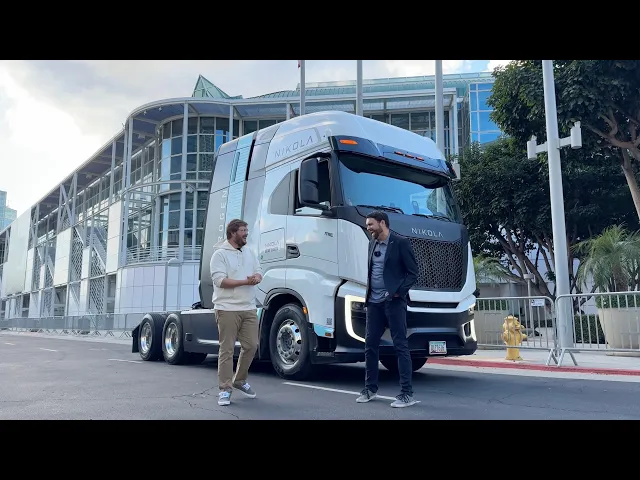
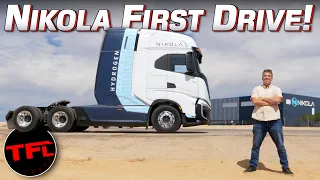
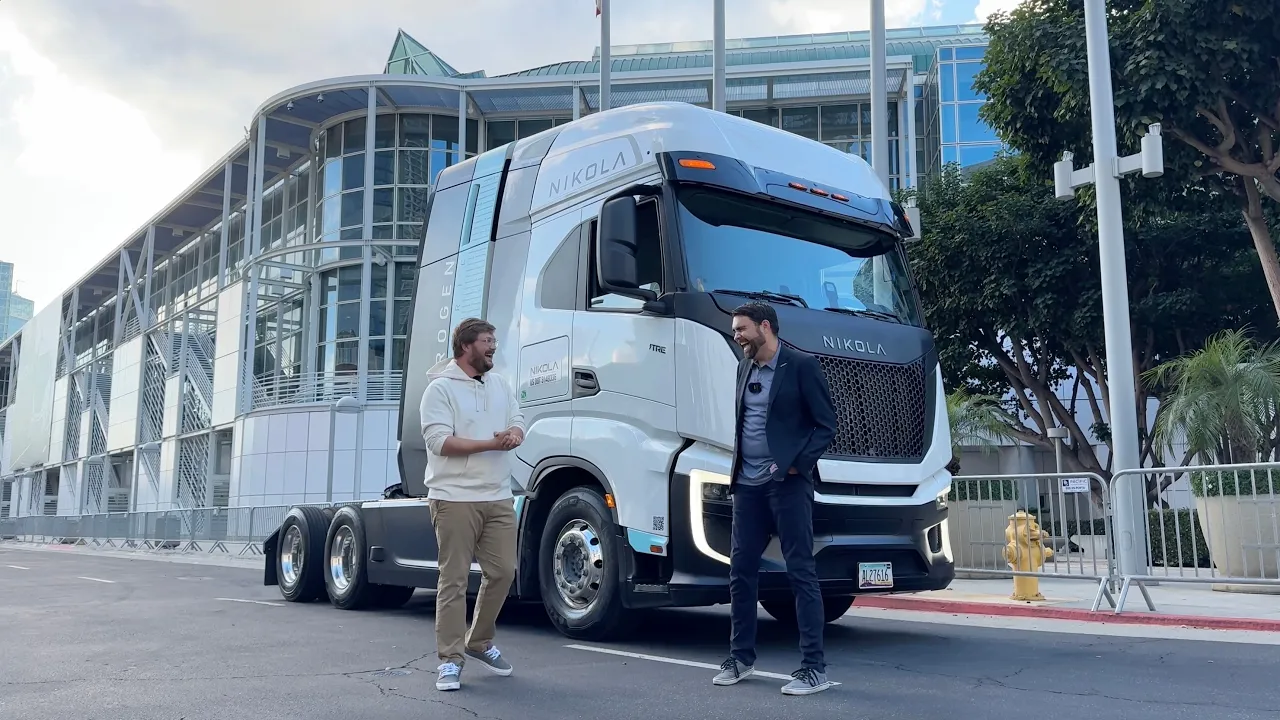
this time actually we did the battery electric truck already I'm joined by Christian you're one of the engineers of this project so I know there's a lot of questions whenever we bring up of course Nicola whenever we bring up hydrogen and uh Vehicles so there's a lot to dig into a lot of your experience with the truck what you guys are working on um we're going to go for a drive and uh so I'm really looking forward to this we actually had a great time riding with some of your colleagues in the battery truck that's
right and so want to ask you a lot of questions on that how this is different I don't know so much to learn about hydrogen trucks we'll get into the conversation first about hydrogen as a fuel source versus battery electric then we'll go on a full tour of this and then we're going to drive it so we got a lot to do join us on this video Christian this thing is freaking huge got a class eight cabover is it the first homologated cabover in the US since like the 70s or ' 80s well I think
there's been uh some cap overs that stuck along yeah like Freight ler had the one longer um you also have actually some some other companies ever since we brought the cap over back to the market have been kind of following suit and and are bringing some of the cap overs back into the us as well um Hyundai for example is running some demos with a cover so I think it's about time to to bring the cap over back to the US hell yeah I've always been a cabover fan I love it I mean the real
main concern was safety originally that's why we went to like the American Truck style I think Europe these things are all everywhere that's right that's right so I think it was safety but it was also kind of the noise the rattling the vibration because you had all of these you know old big diesel because you're sitting on top of it sitting on top of it and so it wasn't necessarily a nice experience in these old trucks um that's obviously completely different today even with modern diesel trucks in Europe you don't have that same issue um
and then specifically for a ser truck I mean that is obviously gone right in Europe yes they're running only cabovers and the reason is you have such a limitation from a regulatory point of view in the overall length that you really can't afford those long noosed big American bricks you have to keep it tight so this is actually what what we're using here the dimensions of that cap is what in Europe is a sleeper cap so that's all it is is the little bunk behind to seeds well let's take a look down the side so
the the body in white is sent from Eco is it yeah that's right that's right we're still working together with Ico we used to have a JV um for the European market with them um that got recently uh essentially dissolved Orco took it over um to then focus on the European Mark Market we wanted to really focus on the North American Market the US and also Canada is very important and so we decided to to essentially change our partnership but we're still working together as it relates to supply of a lot of the components and
and the cap the body and white um is is one part that we're actually getting supplied from our partners and the hydrogen truck and the battery truck if you guys come around to the backside just so we can show you are the same bare chassis um it's a very similar chassis what's different what's different so I mean you you can see that there's a lot of different components that we're using on the hydrogen truck versus the battery electric truck and so a lot of the attachment points right the brackets and so on are different um
so if you talk about the frame rails um you know the whole p patterns and so on especially once you go into the forward area here are different so it's not the same frame we're using the cross members are a little different too based on the structural analysis um and durability design um but they're very similar and the cab is the same the cab is the same okay um when you look into the rear areas though um that's where we obviously have a a lot of shared components we have the same drivetrain basically we're using
um the E axle and also the tag axle assem suspension so all of that is everything back here battery electric or hydrogen you get the same feeling as a driver there's no you get regen very similar feeling yeah okay there's a few differences in regenerative braking capability because of the battery size obviously what is the battery size on this the battery size we have two battery packs in here they're packaged in the center line um and each of those battery packs hold 82 KW hours for a total of 164 is that usable that is total
energy so usable is a little less running a usable around 80% of that okay sure and you always want some buffers of course in this situation because maybe our audience isn't totally aware um you have the hydrogen fuel cell that's producing a you know in essentially it can just sit flat out and then the batteries are taking this hit of regen and then big acceleration so you have a battery buffer and then that is run over so how big are the batteries in the battery electric truck in a battery electric truck we're running 733 KW
hours total energy Y and then you us like 680 or something something like that um and uh so the regenerative braking capability on the battery electric truck is a little higher from a power point of view right okay um we're also running for the fuel cell truck we're running a brake resistor um together with the batteries so if you're in Long downhill scenarios um we have to utilize that brake resistor okay and so how does that work that means the electric motor still goes into regenerative mode or in generation mode it just burns it off
as heat yeah we still use the battery first but when the batter is at its limit for example from a power point of view then we're utilizing a brake resistor on top of that okay but for efficiency reasons we always want to store and use the energy obviously so we only utilize the brake resistor and it's absolutely necessary when you're at like 80 or 90% and it can't accept that much energy and when the fuel cell is running at a very high power and you have to essentially do a load shift and and RAM down
quickly that's where we can also utilize the resistors for um these stran events that's kind of cool and so where is that located in the truck um the brake resistors are actually located as part of our backpack assembly okay um so if you tilt the cap um we can actually see them attach so we'll be able to look into that okay so um 70 kg of hydrogen that's correct how far can you go 500 miles with a trailer with a trailer and that's how heavy is the trailer that can be fully loaded 82,000 lb okay
it always depends on on the route it depends on the speed the drivers so it's really hard to just talk about a one range it really comes down to how you operate the truck um if you're for example if you're driving up and down Hills all day every day with a full load you're probably going to have a little less range yeah if we're having light loads and especially in California with the you know the speed limit to 55 mes per hour that obviously helps us or everyone and when it comes to efficiency and so
if if we're running for example Port application we can see a higher range than that too 500 miles is is a range that we see um as a kind of a solid average it's like a good communication range because unlike maybe our viewers don't necessarily know this there's no like I forget the exact J Code but there's no like five cycle test that you can run the trucks through or anything that's comparable it's Each truck manufacturer must say in some way here's how we expect the trucks to be used and in this scenario here's our
efficiency and here's how much energy we have and then here's your range but it's up to you guys to spec all of that I would like to do some independent range testing oh absolutely I'm all for that I mean again what what we publish we we stay behind we've done a lot of internal testing we've done a lot of demo operation with fleets and these are the numbers that we see confirmed but again it always comes back to what are you hauling what are your routes what is your driver Behavior yeah you can Bank on
400 no matter what more or less yeah yeah and the driver behavior is an interesting one because what we learn is and that goes both for a battery electric and a fuel cell electric truck when a driver first goes into the truck um it's it's different and they all enjoy it they like it but there's a little bit of a training aspect to to get to the best efficiency right sure and what we've seen with some of the fleets and drivers is I mean they see it as as a challenge okay so they actually take
it as a challenge to do essentially hypermiling and say okay how far can I go with that much percent of hydrogen or battery or whatnot so it's it's actually interesting to see how much of a um you know a game for the drivers as well this can be um or or for the challenge to say okay how do I get the most out of my fuel or battery state of charge so love it so um to the numbers on this truck yeah we have less power output or the same power output than the battery yes
we use the same e axle so fundamentally the E axle can have the same power output in the battery electric truck um that power output is 480 Kow yes or 645 horse um for the fuel cell truck we actually downgraded it a little bit for two reasons so we run 400 kilowatt continuous um 400 continuous isn't bad yes it's 536 horse um and the reason we downgraded it is um twofold one is we did have some complaints about tire wear yeah so with with the torque and the power on the be um we we needed
to make sure we we retune that slightly um and for some of the fleets quite frankly uh just just the the sheer power that that the truck has have is is too much too so we're working on some individ visualization settings as well rating setting correct these are good problems to have yeah absolutely to tune that in to whatever The Fleets one the second point is we have as you mentioned earlier fuel cell power module and batteries work together the fuel cell power module is speced with 200 kwatt 270 horse continuous that's a flat out
that's a system level output Y and and that's actually rated end of life so that's accounting for the degradation we'll see over life which that's an important one high elevation what's your impression of that because you'll lose efficiency at high altitude if we go at very high elevation we will have a d rate uh due to the um air um opposite density and then with the compressor we will see a d rate so there will be a D- rate at at very high altit maybe 10,000 ft or something like that cuz I know you guys
were just with our friends actually in Colorado doing some testing and our friends were filming that so shout out to T and um yeah they said it was awesome actually they were like it was and actually the results were a bit better than we you know we hope for as well when it comes to altitude um but roughly 200 Kow 200 Kow and so the rest comes from the battery so now we're using the battery for dynamic load scenarios as you already said so obviously the fuel cell cannot power the full continuous power so to
have a very to have a better and consistent performance of the overall truck was another reason to say okay we'll run it at 400 Kow continuous is there ever a scenario I mean I imagine there must be in in theory but in real application of our highways is there worst case sale like a Davis Dam test or something are you ever running the battery out to zero is that possible we're we're utilizing the battery heavily when we're talking about Mountain Roads right um so one of um uh the most challenging ones because of a combination
of things is actually right uh and and you know right by our office so to say when we drive up to flex sta Flex sta is interesting because of the combination of um the the uh the Teran the the grades up and down and and kind of the mix in it and then also the temperatures we can see at uh during the summer time it gets extremely hot so the combination of that you know the grates and the hot environment um is is a pretty um challenging combination but we also run Davis Dam for example
and all of the known kind of extreme scenarios as part of our validation testing um we do winter testing as well we went up to Smithers uh Upper Peninsula and Michigan uh Smith's testing center um to run a lot of tests there and also do mileage accumulation there same in Colorado high altitude you mentioned it and so when we run those extreme kind of scenarios um then we for sure are utilizing most of the usable energy um in in the batteries that's where it comes back to to software and controls right yeah that's the fun
stuff it's like how much buffer do you allow when do you start derating and so like let's say I mean our viewers are really familiar with I70 because we live in Colorado we're always doing it our friends tfl have the know their Hill Climb challenge basically uh you know the world's toughest Towing test I'd love to see this do CFL we should we should get you guys to do that because that would make we've done some content with them yeah great they're great I love those guys and that would be cool to watch this do
it um but if you're doing a test like that where you know it's 6 or 8 miles of just constant 10 plus% grade I don't know what the exact numbers are um at what point do you start derating the motor output so that you don't bottom brick the battery yeah very good question so that's all part of our pretty sophisticated Energy Management what we call it um and it's all about managing the state of charge um and that's not only once you're in that situation but in preparation of it sure so typically we keep the
state of charge at around 50 60% so that's like normal cruising so you allow for reg so we allow correct so we have a little buffer up and down and what it also does is um if you uh look at electric vehicles right um and depending obviously on the chemistry you have recommendations to not charge Beyond 90% or even 80% or something because the degradation mechanisms that you see at that high state of charge or very low state of charge are accelerated compared to sitting for example at 50% s so so the energy management is
not only to improve performance um or efficiency but also to extend the life of the battery and the life of the fuel set so durability is one of our optimization targets as well and and sorry to interrupt but you use nmc in this yes why not lfp is it just CU it's hard because you'll never top calibrate it so um there's there's a lot of like opposite decision factors going into that um and when we initially designed the product um we we went with the nmc um uh technology or chemistry for the future we're definitely
looking at all of the different options we have and lfp is a strong consideration for for both products um that's for sure um so you lfp could even work in this type of scenario where it never really completes a charge cycle because the voltage discharge curve of lfp is like so minimal so your BMS has to be like so well tuned to know what's in the battery absolutely but but we really in this architecture we Face a challenge that we have relatively high power but also relatively high energy demand so we need to essentially have
a design that that is somewhat balanced between energy and power which is not typically what you have either in a hybrid you're usually more on the power you know side of the battery and and if you're having you know with an EV you're more on the energy side so here we kind of need the right combination of both so that makes it interesting what about thermals like we were talking about all these Hill Climb tests you know hottest day going up to flag your you know wide open hits on the uphill full regen on the
downhill does does it ever thermal limit or is it battery limited before it gets too hot there's lots of limiting factors that can come in and there's definitely scenarios where you have thermal limitations and that's actually for the fuel cell um also one because if you um if you go on a hot day and you have to climb those steep grates um you're at lower speeds because of that so now your Ram Air obviously is is is not as much and you have to start your fan which costs a little bit of power too um
and so that's about for the fuel cell the worst case right cold climats are actually not that bad well you get more air density in the cold anyway yeah right and um and we have the fuel set dust generate a substantial amount of heat so um cold climates um are are in general more favorable than very hot climates which is a little different than than battery electric yeah that is pretty interesting so my understanding is you have some trucks in service in Colorado with Roy I think he was in our previous video and so I
guess he's running some trucks we're running trucks in up in Colorado yeah so when you park them and it's you know sub I don't know really cold temperatures outside um do you have to purge out the fuel cell so the water doesn't basically freeze inside of it um very good question so there are a lot of functions to handle the water inside of the fuel cell so um there's also fun to handle the water in the exhaust that you have going through there right um at the end we have a very again it's part of
sort of the thermal and the energy management to work with um the the warm-up scenario as well for example if you have uh the truck sitting um could be MBD off so completely turned off and you have it sitting at minus 30C or whatever it's pretty at that point anyways um and you you you essentially have a frozen truck right yes uh and so now you have to go through the warm-up procedure to heat up the system yeah um same with a battery electric truck too it wouldn't accept any energy or anything if it was
that cold so what do you do yeah we I mean that's that's a lot of the development we did and when we were out in in Michigan um to to test exactly that and so we have a pretty sophisticated thermal system where we combine a couple of Loops as well okay and I mentioned something like the brake resistor before well that that part has a dual function let me say that um and we do utilize that to essentially being able to heat up the system quicker and once we have the fuel set going we can
also use that generated heat to heat up some other parts of the system it starts with the resistor because that doesn't care about temperature you get that thing starting to warm once the fuel cell comes a little bit up to temperature you can use that and we're still utilizing the battery but we we don't need to pull that much power out of the battery which were very limited at these kind of C temperatur yeah of course of course this is I'm learning so I really can't than you like this is great content we could go
for like 6 hours oh we could could sorry if I get started talking it's it's hard to stop me but you know also like kind of sidetracked it's like so important that Nicola has you as a representative especially because our audience really appreciates this type of stuff and so I'm just staking it in as much as possible so okay high level overview you have 700 bar pressure why not 350 because we want to be able to store enough hydrogen um to make this application work and we said from the yes from the beginning Regional dayap
applications we said 500 Miles yes that needs to be a range we can achieve you know um and and achieve in the real world so we said okay we need at least 70 kgs of hydrogen okay um and it was very difficult to package that at 350 bar sure that would require even another tank perhaps more tanks yes correct so and that's what we see in the industry I mean there was certain projects that started out for heavy trucks as well for 300 at 350 bar storage pressure but most uh oems go now towards 700
bar and we're in fact we're working in Industry Consortium to develop even higher flow fueling hardware for 700 bar and as well as in the standardization groups and ISO and SAE yeah yeah how long does it take to fill it from dead to full we can do that in 20 minutes okay that's good dispenser permitting meaning we need to have the right dispensing capability as well the right flow but if we have that the truck is capable to do a 20 minute fill and the battery electric truck can charge at 300 k50 Kow what we
do today and what's the zero to full on that uh I mean you hardly go zero full but just to for a comparison maybe two hours CU you really slow down up hours plus yeah 2 hours plus do a complete filter that's a big difference yeah it is a big difference is that the main reason why hydrogen is taking over in the class 8 semi space so I would say I really don't want to talk about takeover or something you you support both Technologies it's not either or it's and and what we always say is
zero Mission One platform and two powertrain options right because there's applications for both of them there's really advantages that battery electric technology and Battery electric trucks have there's also for example uh advantages right now when you talk about the total cost of ownership and there's many many applications where a battery electric truck works well can you give me one example where someone would choose a battery electric over a hydrogen well if you especially if you start with smaller scale deployments and not that many trucks where you may already have the electric infrastructure um to to
support the charging let's just say you buy two trucks you have enough electrical feed to install one or two Chargers um and your operation is one shift it's only 150 mil a day or 200 um inner city um kind of distribution for example Urban environment um great application for be but think about you want to scale that up to hundreds of trucks now you have to have a new electrical feed you probably need bation to that yeah exactly so that's something to worry about but then also you have many applications that are Slip seat um
multiple shifts where do you typically have half an hour between shifts sure we can report that today now we're obviously working on megawatt charging Technologies in the industry um you know uh better batteries improvements there um and and it will improve but so will hydrogen and to me there's always going to be different applications where one or the other product is better here we have 500 miles we can already support a two shift right um less than half an hour for fueling um and uh you have more payload as well so we have a a
the tractor weight is less so we have more payload capability too and that's important what is the increase in payload on this that compared to our battery electric truck is is a little over 3,000 lbs Improvement that is not insignificant no it's substantial and we obviously weight still is something we're working on we haven't fully solved that you know full transparency um we're not perfect right with this truck and there's areas we need to work on um weight reduction is one of them cost reduction is one of them um where we put a lot of
effort in um but a battery electric truck more money than the hydrogen truck uh cost to build it yeah you mean um it it it depends um obviously we've already launched a battery electric truck last year so we've already taken cost down measures we've already produced some um for the hydrogen electric truck um we just started production we're ramping up so we need to scale up come down scale goes up exactly but in the future you think that this could be cheaper to build or par I I think it I think it can be cheaper
in the future yes um as we scale up and uh also as we do technology improvements right today the hydrogen storage tanks type four tanks you said we have five right um each holds 14 kilog that's usable so that's already accounting for the residual pressure we leave in the tanks when you defuel and is that something that you guys control the residual pressure yeah is that through software yeah yeah correct so um first advancements um just talking about for example the safety factor in those tanks were um in the future as we can go down
with the safety Factor because we have the process better under control um we can increase the amount of hydrogen we store but we'll also decrease the weight of the tanks and the cost of the tank at the same time right so this is a good example of there's lots to come in the near future where we can improve on that and these are all BOS tanks or are they your tanks no we're working with um hexagon for the vessels itself but then we own the design of the um hydrogen storage system overall the fuel set
power module is uh was developed together with with specifically made for this application cor he started collaborating um about five uh five six years ago yeah wow and uh that's where I actually come from I used to work for BOS so yeah so this is your baby from the beginning uh it it is that's amazing I want to do a whole episode on what even I don't even understand how fuel stack works is it called a fuel cell fuel stack what do you even refer to it as well we we refer to the overall system
as the fuel cell power module which consists of two fuel cell systems yeah um each with um one fuel cell stack so that's what we call the stack of individual fuel cells and then we have all of the components around it to run the whole system so the term is power module that's how we call it but iOS call it fuel cell engine right um so yeah okay this this fuel cell system can we lift this up to see what's behind here we absolutely can yes so Jordan come around this way let's take a look
at how this works this has got to be the coolest thing like it's just great to learn about for me how all this works so I'm absolutely loving it now my impression of tipping It Forward was to get a lot of speed on and slam on the brakes and then the truck would flip but I guess it's done electronically there's some process so he's got in there clicking buttons so the software by the way is all Nicola we showed that with the battery truck they designed spec their entire software stacked interface HMI as well as
control modules for everything I thought that was really nicely done so there's that come on over Jordan Cool you probably wondered what I inside um so since the Tilt is actuated here from the outside um with the remote um we don't want obviously anyone to just come up to the truck and being able to tilt it so there is an enable button inside that you have to um actuate and that's after you put your driver pin in to access the truck um to to put it essentially into an enable I can't just walk up to
can't just walk up you obviously don't want that to happen right yeah so and how often would a driver need to do this um depends on the inspection or if you do need to do cool and fills sorry that's all good there some heavy equipment you got you're working with here it's uh so that's the main fan that's the main fan and fuel cell so fuel cell fan and radiator right okay um this is actually one of our last prototypes we built so you'll see that there's some components um like like the coolant tanks um
that are still prototype most of it is production uh spec parts and Designs but there's uh some changes we did um for the production truck still okay very cool this is wild so so it lifts the whole thing up hydraulically yes it lifts it up and then it lifts It Forward oh cool so it will all come up forward so just clear the front area stand in front of it then this is cool that's the part my kids enjoy yeah this is great it's like it lost something and it LO and it's looking for it
so eventually gravity takes over it's a pivot Pond yeah yeah Dam you can see the hydrogen uh storage back over here so three tanks right there in view from hexagon okay that is so cool don't you don't want to be sleeping in in there and then again get woken up so so yes this is awesome the the heart of the truck you could say uh the fuel supp power module so it fits into where a normal like V8 Diesel would it where yeah a diesel engine would fit in in the engine bay um you can
also see very nicely here the the three hydrogen tanks as part of we call the backpack assembly and then we have one on each side so the total of five um that then goes into a a common uh manifold and uh ultimately supplies the fuel cell uh as well as this is that and and why is it user accessible here just in case you need to tighten anything or what's the idea for having this right here um it I mean it was a package consideration based on where all of the hydrogen tanks are and lines
run right because we run right here from the tanks um and then the side we also have the fill Port here can we open that um yeah need a similar uh um aspect of we don't want anyone to just being able to access it but um that fi Port essentially goes right in here as well so that goes into this bus bar if you will I don't know that's the electrical term of it I guess the electrical term would be most and then you will see the hydrogen feed actually goes on the other side um
into the fuel set power module um along with the air intake um and then ultimately uh the the exha that goes um on the bottom here along into the rear so where's the exhaust sorry um you might um be able to see it if you look right through here okay um those two um yeah is it on the camera there y okay that's the exhaust lines great so they route um towards the rear and come out ultimately around here and do you have a storage for the water and then you purge or does it just
flow out it flows out okay we we as I mentioned before there's a lot of controls in place regarding the the Water Management overall yeah um but we don't have any like compartment or something where we'd store the water okay so you have your hydrogen turned into electricity here correct and then the high voltage lines go to a because it comes out as AC or DC it comes out as as DC we can actually if you want to go around I can show you the uh and then do you have to step up or down
the voltage with the DC todc booster that's that's exactly what we're doing so we have um the battery pack and the fuel set power module so obviously we need to get the voltage levels um together yes so the master voltage is essentially the battery is defined by the battery yes and then we have the stacks itself are are these boxes here okay um and this one is the power uh distribution unit per stack that's right attached onto the stack and that's where the high voltage DC lines run out and then go into a dcdc converter
okay and that's where we um boost the voltage up to the battery level so we're running a little lower on the stack typically was there a reason for that um it comes just from the architecture we have each of the individual fuel cells has a potential of about 65.7 volts 4505 cells in a stack um so means we're running the uh fuel cell itself around 400 volts and then the battery typically runs around uh 680 690 volts and that's at like you know 50 60% nominal or so yeah okay what is it when the battery's
at 100% almost seven something yeah a little a little over 700 okay very cool this is fascinating so um each power module or fuel stack is that how how would you describe each one of these things so we as mentioned we called the whole assembly it's one assembly the the fusa power module and then each of these systems so you can see very distinctively it's two systems um it's what we call a fuel cell system and each of those can run independently so if one dies or has an issue correct one can continue to run
ah great okay that was my then uh yeah and then the stack itself is kind of this larger box behind that's the fuel cell stack and then you can see all of the other components um coolant lines electrical lines and so on and so all of the braking system the air suspension system the trailer brakes that's all the same battery electric or hydrogen the same electric compressor if you will Powers the air systems on the truck that's correct yeah that's correct most of these parts are are shared um the same goes for the steering system
for example okay um have an electric steering rack I guess all of these things what about uh this here what is this one for um that's that's the same as well as in our um battery electric truck um it's a master battery uh disconnect switch um where you essentially can switch off the whole low voltage supply to the truck um to for example if you do long storage or something and then we have the um you know attachment or or connection points for a low voltage charger here as well okay you know that that's which
is is pretty common for uh trucks to amazing yeah well this is that was like the most information filled tour I could have imagined so we should close it back up and then maybe we can go for a ride absolutely that's the most fun part yeah that was really well I actually think this was the most fun part because just learning so much about all of this this was really great so does it just fall down no it's it's controlled I mean there's the there's a pivot point where gravity takes over so you'll see in
a second you will see the little swing though yeah yeah but it is so now you have and this is just normal for Euro trucks anyway we're just excited cuz it's an America yeah yeah but it's kind of cool right kids love it it's like it's like a Transformer kind of deal right I I love how you not love that yeah and you were mentioning while this is going down that you're running a different tire on the drive axle yes single motor at the moment it's a dual motor single e exle okay so they're are
they mechanically connected left and right yes okay they go into a a differential okay so there's no possibility for torque Vector no it's not an individual um you know wheel motor set up so and then it just locks into place how cool is that yeah that is neat it is very very neat and you're running uh obviously a drive Tire on the uh everything's Michelin tires on this particular one but on your tag axle on the rear is more like a mileage Tire not like to be a a drive Tire not not not as much
profile so to say as the drive uh type tire so okay well now you can guys can see how it goes back together we'll get in and go for a ride this is epic and then what what we do is we kind of change the visual here in V mode and then it also gives you the range actually on battery only so we can do 21 miles estimated at 86% before we have to turn on the hydrogen that's that's on battery but good for storage right because you would want to drain it down to 30
or 40% before you do a cut off yeah you you could do that exactly you could do that um now I'm going to go into essentially normal mode so to say and you'll see that the rain the visual switches um you can see the range went to 204 miles in this case right and we're pretty low charged yeah with 36% here um is a little more detail um and some of this is very similar to to the be so I know you've been uh going through that um before uh it's all your own software and
it's gorgeous it like it's Snappy it's like and we met the dude who does a lot of the software it was cool I think lamech was yeah lch yeah that sounds about right yeah it was amazing I mean I just thought it was so well done and no one knows that's the thing it's like you built your own software stack to run this truck we we actually designed all of the hardware for the controllers too oh wow no way and then we're working with um you know contract manufacturers essentially yeah so the visuals are updated
obviously we're in a fuel cell truck you have some new buttons about fueling and so on and then uh you also have the hydrogen storage capacity instead of the battery so so um let's go for a right so you you he the fuel set coming on yeah so that s is the fuel set coming on oh it's got one pedal driving almost yeah actually let me put the region so that's full regen same as the battery truck this is so cool we're in a Euro Truck hell yeah [Laughter] brother just roast the tires oh it's
freaking epic that's how I drive this thing thank you this guy in the Q8 etron is like let me get out of everyone's way right now he's got it in off-road mode I don't know why Jordan show the how high the suspension is on that thing what are they doing this is Los Angeles drop it down hell yeah oh my gosh just roast the tires so is it oh that was like 20 % [Laughter] p% this is cool so I'm surprised how quiet the fuel cell yeah I mean normally like with the ram air it
takes a lot of noise so when you're under load does it make more noise um when the fan comes on right I mentioned we have so you can see the region coming in yeah your B tail that's that's almost too much already yeah does it have regen drag control um that if you start to lock up under regen it'll release some oh yeah yeah yeah yeah it will it will yes like uh traction uh traction control and reverse or lock control yeah yeah lock absolutely so that that system is uh the brake system controls is
fully tied in with the the propulsion controls so to say um and it goes for regen and as well as tion stuff this is the freaking am Colton what's your what's your impression of this this is insane well I've never been in a semi before anyway and now we're at a Euro semi a so cool as the first sem I experience this is great well I think now you can understand why one of the favorite parts of my job is to just drive those trucks so will it Regen to zero when you lift off all
the way um not quite okay um that's also something we're still optimizing um do truckers even they want that um potentially it depends I mean the more they get used to region in general um the more they you know want to essentially use it to the most extent possible so I'm just amazed that you don't hear the fuel cell at all yeah it's it really becomes what becomes louder is if the fan goes on so it has blind spot indication it does that's cool Lane departure warning and depth of cruise control so should we launch
it settings traction control off hell yeah can you two foot launch it does that help to hold it on the brakes under the power don't need that I mean you have instant torque right you only need that [Laughter] if hell yeah dude that's fast oh my God that is [Laughter] [Music] [Laughter] [Music] crazy thank you for getting in trouble for us I appreciate that was freaking great oh so much fun thanks for the ride that was epic well this thing rips that was awesome we left some nice marks down there allegedly we can clean them
up I don't think it was us we can clean that's right there's other trucks here that are around thank you so much for the tour the information uh you know it's something where we should probably come to Arizona to The Proving Grounds I want to do a tug-of war of my rivan and one of these things oh we should do that yeah could be could be pretty fun no you're you're welcome anytime thank you so much you know it's it's one of those things where of course around Nicola there's a lot of skepticism hydrogen brings
a lot of questions I think it was great to learn more about what you're doing experience the truck firsthand I want to do one of the Flagstaff routes with you guys put £80,000 on this this thing or whatever you can and then go up to Flag Staff and down should be pretty epic so let me know what you guys want to see class eights or really any heavyduty electrified vehicles are necessary and even more necessary than passenger vehicles cuz these are running constantly INF Fleet applications and to reduce carbon these Solutions are needed so thank
you so much for the tour that was amazing and love that we ended it with a burnout