Okay, so you should be coming from part six of the series. These videos are a part of a topical series and should be watched from the beginning in order if you're going to understand what is being presented. So please, if you have not watched part one, stop this video and start back from the beginning to really understand this topic.
In part six, I gave a lot of history about what happened in the first century when the true faith given by the apostles began to grow. That information was important so that you can understand what happened to the Yahudim and what happened to the apostles. Now, you see what happened after that.
What most people did was jump from that history of the apostles being killed directly to Constantine and the Council of Nicaea, where Christianity became the religion of Rome. However, in my years of doing this, I have realized that this does not provide enough understanding for anyone truly trying to comprehend where things went wrong. People will still argue that Christianity is still true; it's just that they mixed it up to create Catholicism or whatever they want to say.
They still argue about the validity of Christianity because of the early church fathers, but if you truly understand what happened from the time when the apostles died, then the rationalizations people make are found to have no weight. So, we will deal with the actual beginning when Christianity started. In order to do this, let's understand some things and deal with the Gentiles.
Now, there were a sect of Yahudim that obviously believed in Yahusha, and they were labeled as Christians too. They were labeled as such by the crowd who didn't accept them, but this is just a case of labeling. This is the major problem with labeling; even if you don't believe in the exact same things, it's easier for people to just label you as believing the same thing, even if you're drastically different.
Just like I don't believe in much of the doctrine from the camps of the Hebrew Israelites, but because I know our heritage, people, no matter what, will tie me to these groups. It's the same thing—it's all labels. However, I will not deal with the Yahudim believers in Yahusha at this time, because at some point, as Christianity was built, their influence waned.
That’s the first part, and the main church of Christianity is built on the backs of Gentiles, so that is what I am going to focus on. Let’s understand how Christianity started. There were obviously Gentiles in Rome who were beginning to believe in the Messiah of the Yahudim.
They heard about this man coming back from the dead and promising a reward to all who believed in him. They heard of his miracles, and they began to believe in him. Okay, yeah, we got that, but there is something very much overlooked in this.
The first thing I’m going to bring up that I think must be understood is that the label of Christians did not just start because of belief in Yahusha, who they called Jesus. There were people called Christians before belief in Jesus was known in Rome. There was already a cult of people in Rome known as "Cristianos.
" Now, as I talk about this, I want to make it clear that I will be using the name Jesus because what you will see is that when Rome took on this faith, they made a whole new Messiah. They embraced what the Yahudim were speaking of, but then they took on a whole new identity of this Messiah, and so this is who I’m going to be speaking of, because it does not match with the Yahusha of the Scriptures. But that's another topic.
I just want you to understand that when you start hearing me say "Jesus," before the faith in Jesus was in Rome, there was already a pagan cult that worshipped and believed in the Greco-Egyptian pagan god Sarapis. Let me read some history about this pagan god from the World History Encyclopedia. This is what they say about Sarapis: Sarapis is a Greco-Egyptian god of the Ptolemaic period (323 to 30 BCE) of Egypt, developed by the monarch Ptolemy I Soter as a part of his vision to unite his Egyptian and Greek subjects.
Sarapis’s culture later spread throughout the Roman Empire until it was banned by the decree of Theodosius I. Just so you understand the timing, this is about half a century after Rome made Christianity the religion. Let’s keep reading.
Sarapis is referenced as the god that Alexander the Great invoked at his death in 323 BCE, but whether that god Sarapis is the same as this Sarapis has been challenged, as it is thought that more likely, Sarapis was a Babylonian deity. Sarapis was a blend of the Egyptian gods Osiris and Apis with the Greek god Zeus and others to create a composite deity who would resonate with the multicultural society that Ptolemy I envisioned for Egypt. Sarapis embodied the transformative powers of Osiris and Apis, already established through the cult of Osiris, which had joined the two and the heavenly authority of Zeus.
He was therefore understood as Lord of all, from the underworld to the ethereal realm of the gods in the sky. The cult of Sarapis spread from Egypt to Greece and was among the most popular in Rome by the first century CE. This is the same time Christianity was being spread; this was the most popular cult during the time of Yahusha.
The cult remained a powerful religious force until the 4th century CE, when Christianity gained the upper hand. The Roman Emperor Theodosius I prescribed the cult in his decrees of 389 to 391, and the Serapeum, the Sarapis cult center in Alexandria, was destroyed by Christians in 391 or 392 CE. Effectively ending the worship of the god, let's keep going.
From Rome, the cult spread throughout the Roman Empire as far north as Britain, where evidence of the god's worship had been found at London and York, and across North Africa to Sabratha and surrounding cities, as well as to Asia Minor, notably at Ephesus. As he was linked with the afterlife and transformation, Sarapes became known as a redeemer god and savior who granted believers eternal life. Correspondence during the reign of Hadrian (117 to 138 CE) seems to conflate references to SES with those of the new Messiah, Jesus Christ.
So let's be clear that there was a cult that was known and that was actually the most popular in Rome at the time when Christianity was starting to spread. We're going to go to this letter from Emperor Hadrian, and he's going to give us some more context here. This is a letter from the second century from Emperor Hadrian to Senuus, written in 134 AD.
This letter can be found in the book *Theoria Augustus*, Volume 3, pages 399 to 406. Here’s an excerpt from Hadrian: "Augustus to Senuus the consul, greeting. The land of Egypt, the praises of which you have been recounting to me, my dear Senuus, I have found to be wholly light-minded, unstable, and blown about by every breath of rumor.
They, those who worship Sarapes, are in fact Christians, and those who call themselves bishops of Christ are in fact devotees of SES. There is no chief of the Jewish synagogue, no Samaritan, no Christian presser who is not an astrologer, a souser, or an anointer. Even the patriarch himself, when he comes to Egypt, is forced by some to worship Serapis and by others to worship Christ.
They are a folk most seditious, most deceitful, most given to injury; but their city is prosperous, rich, and fruitful, and in it no one is idle. Some are blowers of glass, others makers of paper; all are at least weavers of linen or seem to belong to one craft or another. The lame have their occupations, the eunuchs have theirs, the blind have theirs, and not even those whose hands are crippled are idle.
Their only god is money, and this the Christians, the Jews, and in fact all nations adore. And would that this city had a better character; for indeed it is worthy, by reason of its richness and by reason of its size, to hold the chief place in the whole of Egypt. I granted it every favor, I restored to it all its ancient rights, and bestowed on it new ones besides, so that the people gave thanks to me while I was present among them.
Then, no sooner had I departed than they said many things against my son Verus, and what they said about Antinous I believe you have learned. I can only wish for them that they may live on their own chickens, which they breed in a fashion I am ashamed to describe. I am sending you over some cups, changing color and variated, presented to me by the priest of a temple and now dedicated particularly to you and my sister.
I should like you to use them at banquets on feast days. Take good care, however, that our dear Africanus does not use them too freely. " Okay, this is a well-documented known letter.
What I want you to know is that there is a great deal of information about this god, Serapis, and it should be noted that when spoken about today, this letter, just as a source from the *World History and Cyclopedia* notes, says that he conflates or confuses this with Jesus Christ. I am not going to go too deep with this; the point that I'm making is that most people know very little about the pagan worship of Rome and the gods that they worshipped. But they did worship false gods, and this god, Sarapes, which is a blend of Egyptian and Greek pagan worship, was a major cult during this period of time when the gospel was being received in Rome.
There were others already considered to be "Christianos" by the Romans because they believed in this anointed one, like SES, which is exactly why the culture of the Hebrews was always set apart. Because when you attach to the Hebrew culture, there is no confusion. But these Gentiles were not brought in with that respect for Yah that Yasharel had or that they should have had.
But listen, the fact that there is very little spoken about the worship of Serapes and the confusion with "Christianos" at the time should be noted in your understanding, like people are hiding something. But that's not my main point; there's a lot more to share because this is not even the major influence that brought about belief in the anointed one that they called Jesus. I'm just bringing that up because there were people already called Christians before the true gospel was being spread in Rome.
So calling yourself a Christian, that's not an actual name or title that our Father has given His people, just to put that out there. The next thing that must be considered about that time is whether the Romans at that time were also waiting for a messiah to come, and the simple answer is no, not in the same sense that the Hebrews were. But it cannot be forgotten that these pagans were influenced by Greek philosophy, and this Greek philosophy is a major part that brought about the acceptance and belief in Jesus in Rome.
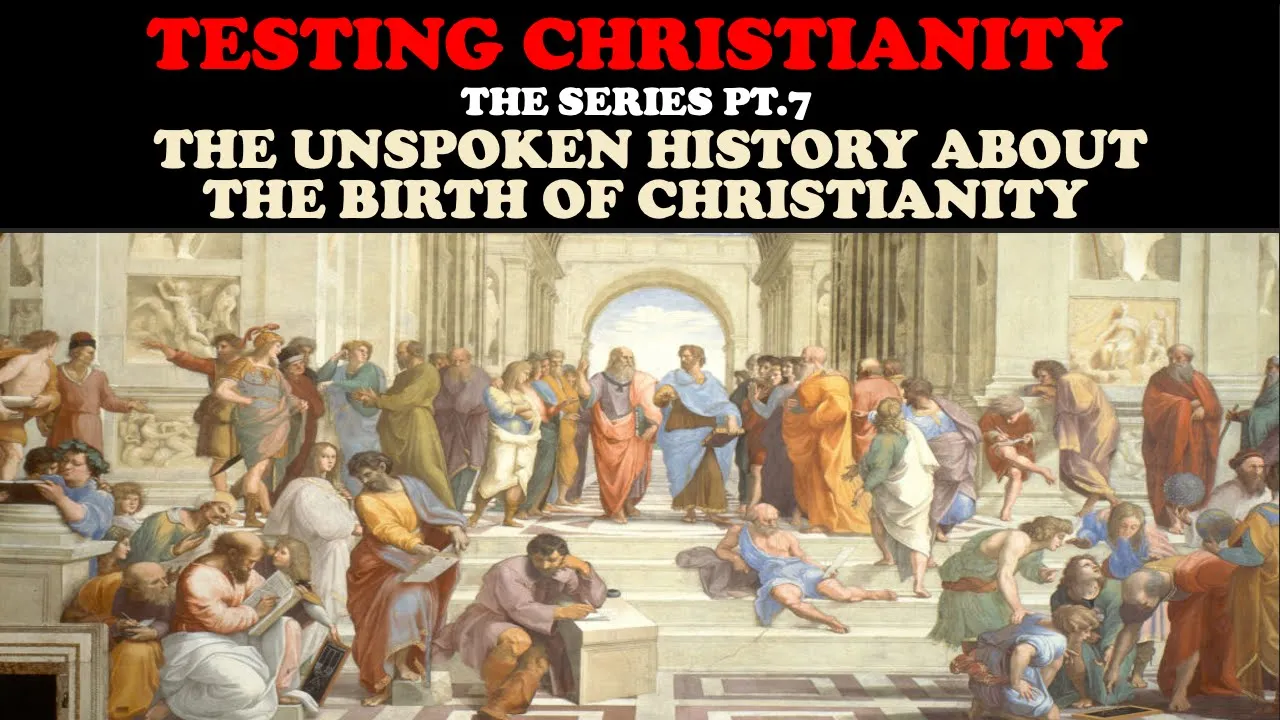
This point, just like the point about Sarapes, this major point right here is completely ignored among the minds of those who follow Christianity, and it cannot be so. The first thing to understand about this culture is that though, yes, this was the Romans, it must be understood. That Greek philosophy was the foundation for Roman philosophy; there is no Roman philosophy without the Greeks.
So here it is: here's the major statement: you will find that the foundation of Christianity is not built upon the foundation of the Hebrews, but the foundation of Greek philosophy. So please take note that the set-apart holy way that Yahweh led Yash through was not the culture of Christianity that was taken. It's why those who advocate for Christianity advocate for the acceptance of changing His name in pagan festivals and all the other cultural habits that come from the Greeks; it's because Christianity is founded upon the culture and philosophy of the Greeks and not the Hebrews.
Get that? Now hold up, I'm going to prove it. So understand this, because it's important.
Do you understand how we believe in Yahusha as the fulfillment of the Messianic prophecies from the prophets like Jeremiah, Isaiah, and Ezekiel? Well, when Christianity was accepted by the Gentiles, do you think that in the beginning they all cared about the Hebrew prophets? No!
I really want you to consider this. Do you honestly think that the people who believed in the greatness of Rome believed in what happened with this small nation of the Yahudim? Let's look at it from a modern perspective.
Let's use America, being that this is considered to be like Rome. Americans believe that they are the biggest and strongest country in the world. Do you think that if it was told that a prophet did miracles in this small nation of, let's say, Namibia in Africa, that the people in America are going to drop their belief in Jesus and follow the belief of the Namibians just because of the miracles that they heard?
Absolutely not! The only way they would do that is if they were able to correlate it with what they already believed in. And do you think that they would now adapt to the culture of these Namibians?
Absolutely not! They would take that belief and tie it to themselves; they would take the culture. This is called cultural appropriation.
If I have to explain this, this is what these colonizers have done for centuries. Then you really need to research some more history of this world. But America, in this modern world, these people who believe they are in the greatest nation in this world are actually the same as Rome 2,000 years ago.
So get this: as belief in this Hebrew Messiah began to be believed in, how did they treat it? Did they now automatically have respect for the God of the Hebrews? I mean, really think about it.
There were, of course, ones that did believe, of course, people like Cornelius, who Peter brought into the faith. Absolutely! But the majority of Gentiles did not accept Yahusha because of the writings of the Hebrew prophets—absolutely not!
They accepted Him because of their already known Greek philosophy. So understand the flow in the hierarchy: the true faith, when it was presented and spread, came to the masses as a faith of the Yahudim, as Paul states in Acts. "But this I confess to you, that according to the way which they call a sect, so I worship the Elohim of my fathers, believing all things which are written in the law and in the prophets.
" (Acts 24:14) He said "according to the way which they call a sect. " He didn't say "according to Christianity"; he said "according to the way," and this was a sect of the Yahudim when it was brought to the world. But here's the flow: now, when it became that the Gentiles accepted it—the Roman Gentiles, who later became the early Christian Church fathers—this faith was no longer a faith of the Hebrews.
Again, as this faith was being spread, the Yahudim themselves began to persecute those who were following this way. Paul himself said that he was going to bring the Gospel to the Gentiles, and this was one of the main reasons why he was hated by the Yahudim and was rejected by many. Now, there are many who reject Paul as an apostle, saying he created Christianity.
They reject him, and because I don't reject him, they reject me. You know, this is a very difficult subject, and I’m not going to delve into it. My stance is very much that I just rely on the word as it has been given to us, and I don't believe Paul was an enemy but more so that he was used by the Gentiles in a very false way.
People reject me for this stance, and they speak against me, but I think rejecting Paul is just going a little too far. But that's another subject—maybe too deep for this discussion. So let me just get back on track.
What I'm trying to say is that the faith of the Messiah was being spread to the Gentiles, and one reason why the Roman Gentiles began to accept it was not because they accepted the Hebrews, but because of their already known Greek philosophy. Let's go into the account of Paul so I can prove this to you. We'll go to Acts chapter 17: "Now while Paul waited for them at Athens, his spirit was provoked within him when he saw that the city was given over to idols.
Therefore he reasoned in the synagogue with the Yahudim and with the Gentile worshippers and in the marketplace daily with those who happened to be there. Then certain Epicurean and Stoic philosophers encountered him, and some said, 'What does this babbler want to say? ' Others said, 'He seems to be a proclaimer of foreign gods,' because he preached to them Yahusha and the resurrection.
And they took him and brought him to the Areopagus, saying. . .
" May we know what this new doctrine is of what you speak? For you are bringing some strange things to our ears; therefore, we want to know what these things mean. For all the Athenians and the foreigners who were there spent their time in nothing else but either to tell or to hear some new thing.
Then Paul stood in the midst of the Areopagus and said, “Men of Athens, I perceive that in all things you are very religious; for as I was passing through and considering the objects of your worship, I even found an altar with this inscription: 'To the Unknown God. ' Therefore, the One whom you worship without knowing, Him I proclaim to you: Yahweh, who made the world and everything in it, since He is Lord of Heaven and Earth, does not dwell in temples made with hands, nor is He worshiped with men’s hands as though He needed anything, since He gives to all life, breath, and all things. And He has made from one blood every nation of men to dwell on all the face of the earth and has determined their pre-appointed times and the boundaries of their dwellings, so that they should seek the Lord and the hope that they might reach out for Him and find Him, though He is not far from each one of us; for in Him we live and move and have our being, as also some of your own poets have said, ‘For we are also His offspring.
’ Therefore, since we are the offspring of Elohim, we ought not to think that the divine nature is like gold or silver or stone, something shaped by art and man’s devising. Truly, these times of ignorance Elohim overlooked, but now commands all men everywhere to repent, because He has appointed a day on which He will judge the world in righteousness by the Man whom He has ordained. He has given assurance of this to all by raising Him from the dead.
” And when they heard of the resurrection of the dead, some mocked, while others said, “We will hear you again on this matter. ” So Paul departed from among them. However, some men joined and believed among them, Dionysius the Areopagite, a woman named Damaris, and others with them.
That's found in Acts 17:16-34. Now listen: if you have ever been to Athens, you can understand how Paul was provoked by all that paganism there. Today, I know it's much milder than what it was like in his day.
The point I'm displaying is that Paul tried to get their attention by calling attention to something they already knew of, which was about an altar to the Unknown God. He basically tried to tie Yahweh to this, telling them that even though they didn't know Him, they were still trying to know Him. Now, we can internally debate about this tactic with Paul.
Knowing what we know now, I think he was playing with a little fire, but he was trying to make a point. These are reasons why people speak against him. I don't want to make this about Paul, though; it's very much deeper than Paul.
The point I want to focus on is that if you understand his audience and who he was speaking to, you would understand what happened next. Let's look at a few of those verses. Verse 18 says, “Then certain Epicurean and Stoic philosophers encountered him, and some said, ‘What does this babbler want to say?
’ Others said, ‘He seems to be a proclaimer of foreign gods,’ because he preached to them Yahusha and the resurrection. ” Again, that's verse 18. Then verse 21 says, “For all the Athenians and the foreigners who were there spent their time in nothing else but either to tell or to hear some new things.
” At the end, verses 32-34 say, “And when they heard of the resurrection of the dead, some mocked, while others said, ‘We will hear you again on this matter. ’ So Paul departed from among them. However, some men joined him and believed, among them Dionysius the Areopagite, a woman named Damaris, and others with them.
” This right here is the foundation that you need to understand. Right now, I want you to follow this: just because many of these Gentiles believed in Yahusha, it did not mean that they believed in Him according to the truth of the Hebrew Scriptures, and I will prove this to you. But I just want you to please follow what I'm explaining.
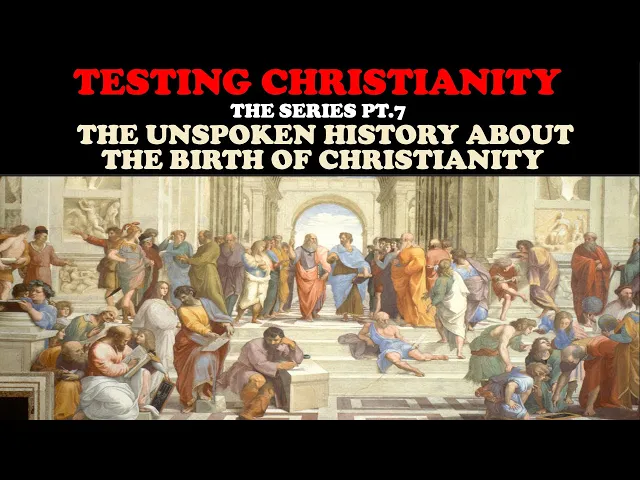
You see, we know of the Bible and we are taught about it through Christianity, but what we do not know much about is Greek philosophy. I'm going to show you. Did you know that Greek philosophy has had a lasting impact on the United States, from the principles of democracy to the design of important buildings and symbols?
Yes, this country, which is said to be a Christian country, is also attached to Greek philosophy. For instance, like I said with democracy: the ancient Greek system of democratic self-government was a primary inspiration for the United States founding fathers. Okay, and mentioning the founding fathers, how about how Greek philosophy influenced these founding fathers?
The founding fathers studied the works of Greek philosophers like Aristotle, Plato, and Epicurus. Hold on, hold on one sec. In that verse where Paul was preaching to the philosophers, what did it say?
Verse 18 says, “Then certain Epicurean and Stoic philosophers encountered him. ” You see, Epicureans were disciples or students of the Greek philosopher Epicurus. The same people that Paul was preaching to were followers of the same Greek philosophers that these Masonic founding fathers of the United States, of this Christian country, were guided by.
Listen, on your own, you should research how Greek philosophy influenced the creation of the United States. States, I mean, ask yourself: Why do our fraternal societies come from the influence of the Greeks? There is a theme not really recognized that must be seen.
But what am I getting at? I'm getting at Christianity. Christianity, from its foundation, was heavily influenced by Greek philosophy.
This point is completely ignored amongst theologians, scholars, pastors, and just Christians in general. When these Roman Gentiles began accepting the gospel, the way they were receiving this truth was being defined as both the correction and the fulfillment of Greek and Roman philosophy. This definition was the assignment of the early Christian apologists of the first three centuries to clarify for the people of Rome.
They were explaining how Jesus, the Christ, fulfilled their Greek philosophies. Now, I will speak to the early Church Fathers soon in more depth, but let me read you some quotes from this early Church Father, Clement of Alexandria. He says, "Before the Advent of the Lord, philosophy was necessary to the Greeks for righteousness, and now it becomes conducive to piety.
It is a kind of preparatory training to those who attain to the faith through demonstration. Perhaps, too, philosophy was given to the Greeks directly and primarily until the Lord will call the Greeks, for this was a pedagogue to bring the Hellenic mind to Christ as the law did the Hebrews. " That's Clement of Alexandria.
You see, pedagogue means teacher. What he's saying is that Greek philosophy was a teacher to bring the Greek mind to Christ. But our Father said, "Thus says Yahweh: Do not learn the way of the Gentiles; do not be dismayed at the signs of Heaven, for the Gentiles are dismayed at them.
" That's Jeremiah 10:2. He also said, "Earlier, when Yahweh your Elohim cuts off from before you the nations which you go to dispossess, and you displace them and dwell in their land, take heed to yourself that you are not ensnared to follow them after they are destroyed from before you, and that you do not inquire after their gods, saying, 'How do these nations serve their gods? I also will do likewise.
' You shall not worship Yahweh your Elohim in that way, for every abomination to Yahweh, which He hates, they have done to their gods, for they burn even their sons and daughters in the fire to their gods. Whatever I command you, be careful to observe it; you shall not add to it nor take away from it. " Deuteronomy 12:29-32.
You know, and that's clear. This is clearly how He directed His people. This is why He made them holy and set apart from everyone else.
So, this is the way He commanded His people. But the new Christians believed that their Greek philosophy was something that was a teacher to bring them to the obedience of our Father and His desires. Absolutely not.
They are absolutely wrong. But let's keep reading. He also said, "Hellenic philosophy does not comprehend the whole extent of the truth.
Besides, it is destined of strength to perform the commandments of the Lord, yet it prepares the way for the truly royal teaching. " They believe that Greek pagan philosophy paved the way for royal teaching. He also said, "Philosophy is not then the product of vice, since it makes men virtuous.
It follows then that it is the work of God. " Absolutely not. Listen, I have a lot more to share, but I'm just setting the stage here.
Just so you know, Clement of Alexandria was an early Church Father of the 2nd century. He was the head of the catechetical school in the Church of Alexandria—the catechetical school that was all about preparing the religious instruction given to a person in preparation for Christian baptism or confirmation. He was a founder of that doctrine.
He is most important not just for who he is, but for who he taught. His most famous pupil was Origen, who was a major contributor to Christian theology. He is widely regarded as one of the most influential Christian theologians.
He is known for his contributions to the development of the Trinity and the ransom theory of atonement. He was also a pioneer of philosophical theology in the Church. Again, we will speak more about all these men soon in the upcoming videos, but I want you to understand their foundation as they developed Christian theology that the Christian Church still holds on to today.
They were not grounded in the faith of the Hebrews but were grounded in Greek philosophy. And Paul warned against philosophy of men, but they embraced it, and they rationalized it. And that leads me to the title of "Christian.
" Now, listen; this really gets deep, so I want to explain some fundamental understandings. Let's deal with Plato first. Now, I'm not going to go deep into him, but I must explain this.
First off, who was Plato? Plato was an ancient Greek philosopher in Athens from the fifth century BCE, a student of Socrates, a teacher of Aristotle, and the founder of the Platonic Academy. He is best known as the author of philosophical works of unparalleled influence and is one of the major figures of classical antiquity.
His family was aristocratic and distinguished; his father's side claimed descent from the god Poseidon. He is considered a foundational thinker in Western philosophy. That's who Plato is.
I'm going to use him as an example here because he is probably the biggest influence when Christianity was forming. The Roman philosophers went back to the thoughts of men like Plato and tied his thinking into their understanding of the Hebrew Messiah. Some believe that Plato's philosophy prepared the Greco-Roman world for the revelation of the Christ.
For example, if you review some of Plato's work, like "The Republic," written in 375 BC, it is one of the best-known works and one of the. . .
World's most influential works of philosophy. It describes the murder of the just man, which was a man who is the embodiment of the good, true, and beautiful, which early Christians believed was preparing them for the acceptance of their anointed one. This is the philosophy that he created.
You see, Plato was the favorite philosopher of the man I referenced earlier, Clement of Alexandria. Clement of Alexandria is one of many Church Fathers who brought together a relationship between Greek philosophy and the Messiah of the Hebrews. What I'm trying to explain here is that based on the philosophy of men like Plato, the philosophers held an expectation of an anointed one to come.
When the belief of the Messiah was being spread, many of the pagan Greeks believed that this Messiah of the Hebrews was the same one that they were being prepared for by Greek philosophers like Plato, and they took over the control of this label. This is why our Messiah is known from a Greek perspective before we ever recognize him as a Hebrew man. Let me break it down further.
As I explained in part two, Christos means anointed one. When the belief in this Messiah of the Hebrews began to spread, the Romans, influenced by Greek philosophy, did not attach to the Hebrew culture of the Yahudim; absolutely not. They said, "Oh, this was the same figure that men like Plato were preparing them for.
" This is similar to the worship we already have of Sarapis. They felt that just like the Hebrew prophets were preparing the people of Yasharel, men like Plato were preparing them as well. They started believing in this Messiah but completely rejected the Hebrew set-apart culture of the Yahudim and attached their already existing Greek philosophy to him.
As a result, he was not the Messiah of the Hebrews; he was the Christos of the Greeks. His name was made in Greek and was tied to their already pagan culture, where they attached Zeus in their names. His true Hebrew name was removed, and they knew of him in this Hellenized way.
That is still what people fight for today. They knew his name was Hebrew; they knew of what he was actually called. This was how Peter spread the truth of him.
The Gospel of Matthew was written to the Hebrews in the Hebrew language, as the Church Fathers explained. They knew his name, but they rejected the culture of the Hebrews and made Greek culture the priority. This is why "our" now Jesus in English is the priority of the world, rather than the Hebrew identity of the Hebrew Messiah.
Many people fight for this culture because they ignore the set-apart culture that our Father demanded for Yasharel to live through. We worship the God of Abraham, Isaac, and Jacob, not the gods of the Greeks. What I'm saying is that the Romans took the authority of the faith of the Hebrew Messiah, and those believing in this new Greek anointed one were being labeled as Christians by the Gentiles.
Everything attached under that label, including the true Yahudim, was swallowed into this one definition of Christian. The Christians who are now in major influence, the ones we call the early Church Fathers, are the ones who created the foundation of the faith of Christianity. Christianity is a faith of the Greeks, not the Hebrews.
This is why everything about it is a reference to the Greek first, with nothing in reference to Hebrews. Going back to Clement of Alexandria in reference to the Greeks, he writes, "He made a New Covenant with us, for what belonged to the Greeks and Jews is old; but we who worship him in a new way, in the third form, are Christians. For I think he clearly showed that the one and only God was known by the Greeks in a Gentile way, by the Jews in a Jewish way, and by us in a new and spiritual way.
" Clement of Alexandria, my goodness, listen! As I have said, this is a completely unbiblical faith, and you will see the apostles, like Paul; they wrote and spoke about this confusion. Like Paul said, “Beware lest anyone cheat you through philosophy and empty deceit, according to the tradition of men, according to the basic principles of the world, and not according to Messiah” (Colossians 2:8).
And there it is. This is the foundation to understand it from. Now let me say this because it's important to understand.
If these Gentiles actually took this faith and recognized the error of the Yahudim and said, "Oh, we're going to take this faith and actually serve our Father the way He truly desired," then I would not be speaking in such great detail against this religion. But this is very far from what happened. When these Greek philosophers began to debate and discuss the Hebrew Messiah, Satan planted in his pagan philosophy that has come through his followers of the mystery religions, and it was at this time where he planted his seed of tears.
In part three, I explained that Christianity is a religion of tears. What I am showing you right now is when that seed was planted. They took the true faith from the Hebrews and made it adapt to their Greek philosophy, and they built a religion.
They surrounded it around Greek culture, and it was this religion that began to change the world. What happened after these Christians began to clash with the Greco-Roman pagan world? They began to reject many of the religious practices, such as the worship of Caesar.
These early Christians rejected worshiping Caesar and other Roman gods because they believed in one God and refused to worship other gods. Satan revealed himself to them in a. .
. Different way, and he attached himself to our Messiah just as Clement of Alexandria said. But we who worship him in a new way, in the third form, are Christians.
For I think he clearly showed that the one and only God was known by the Greeks in a gentile way, but by the Jews in a Jewish way, and by us in a new and spiritual way. Satan reintroduced himself to the world and made himself the one true God in the religion of Christianity. And so, yeah, they refused to worship the emperor, and this refusal to worship the emperor led to the persecution of Christians by the Roman Empire.
This persecution of Christians led to the spreading of Christianity, which made Christianity grow within the Roman Empire. If you just see it from the point of persecution and then the label of Christians, it's easy to attach it to a valid faith, but it was not valid. They were validated because of the persecution, but it was not based in truth.
The faith that was growing was not in pure obedience and submission to our Father. This is what those who love him should be seeking after: those who truly love our Father and desire to serve him the way he wants us to. And that was not what this foundation of Christianity started from.
And listen, let me say this again: that is not to say that all the Gentiles did not truly believe, because that's not accurate. I believe men like Polycarp were true believers, but over time, it was not their influence that became the heart of Christianity. In the next part of the series, I'm going to explain this even further.
We're going to discuss the early church fathers from the 2nd to the 4th century and understand the beliefs that were the underlying foundation of Christianity. You see, many people call themselves Christians, but the majority know very little about the early church fathers and the beliefs that their faith was built off of. You want to believe it stems from the Bible, but this assumption is wrong.
We'll discuss it next. In the meantime, please remember that Christianity is a religion that, on the surface, seems biblical. When you dig deep into the doctrines, it is not a doctrine of service to our Father, but a doctrine of abusing grace, editing covenants, rejecting the way our Father actually chose to reach humanity, and making it only be about the way Christians want to receive him.
It lacks the love, obedience, and reverence for our Father that he deserves, and in the end, it does not prepare those who follow it to be ready for what our Father plans to do in the last days. If you desire to be ready for our Father and his plan for us, you must come out of this religion of tears and come to our Father in truth. Please move to part eight in this playlist and understand the early church fathers who built the Christian Church.
Click the link to the next video, and let's talk some more about it. Blessed, hallelujah, praise Yah! Okay, thanks again for watching.
If this has blessed you, please like this and share this video with your family and your friends. This video series is highly important for those trying to be ready for our Father. This is part seven of the series.
Click this link or just move on to the next video in the playlist. As always, I want to thank all who donate and contribute to this ministry. This series would not be possible without your support.
I thank you sincerely. Be blessed! Okay, thanks again, everyone, for watching.
See you in part eight. I love you all!