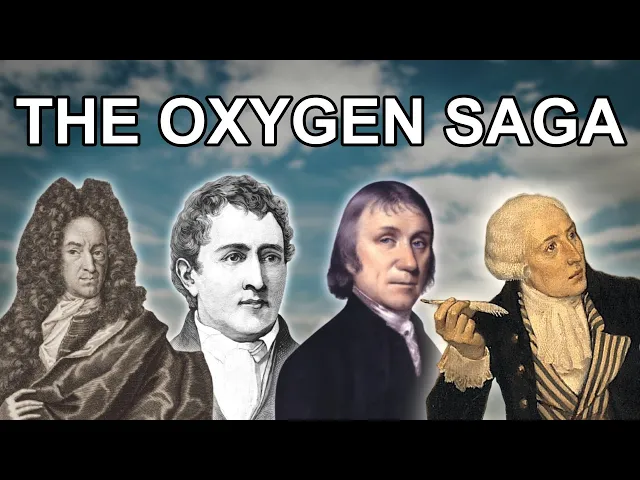
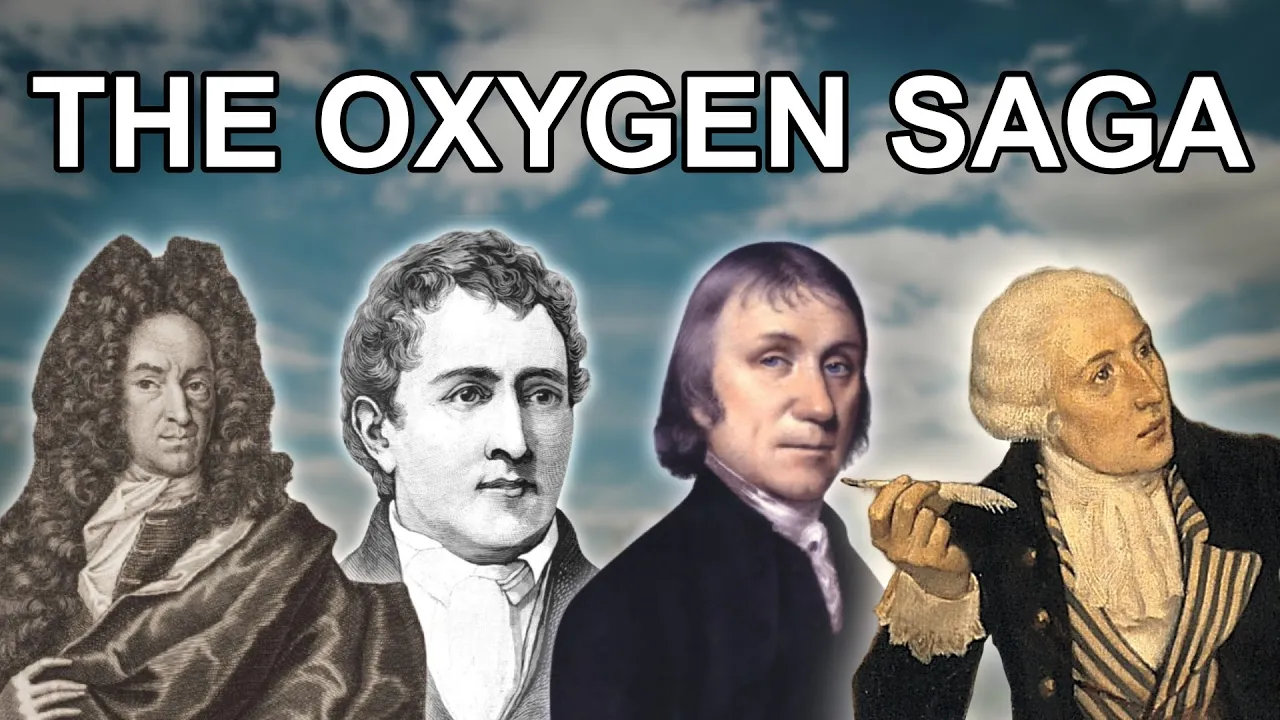
while watching this video I want you to pretend that you've never heard of oxygen for most of human history we had no idea of its existence let's put ourselves in the minds of those who Tred to understand the oldest chemical reaction known to humankind combustion for Millennia people have been pondering the question why does this happen why is some things combustible and other things non-combustible in ancient times fire was thought to be one of the four elements that made up all of matter the others being air water and Earth the Greek philosopher and pedicles first
proposed this notion in the fifth century BC and it was developed further by Aristotle in the 4th Century BC let's look at Burning logs as an example where we can observe a substance decomposing into the four aristotlean elements that make it up according to the Ancients we can see the fire being released from the wood in the form of of a flame the air is the smoke that rises and vanishes into the atmosphere the water can be heard crackling and hissing inside the logs the remaining Ash is the Earth according to this Theory all different
forms of matter contain different proportions of the four elements giving them different properties this concept was widely accepted and pretty much remained unchallenged for the next 2,000 years in 1667 a German chemist called Johan Basher published a book called physica subterrania where he described the nature of minerals and other substances in it he suggested that rather than the four aristotlean elements all solid substances were composed of varying quantities of three Earths teral lipidia meaning Stony Earth Terra fluida meaning fluid Earth and terap pinguis meaning fatty Earth according to basher teral lipidia was associated with fusibility
or how easily the substance melts and fuses with other substances Tera fluida was associated with fluidity and volatility Terra pinguis was associated with combustibility baser believed that all combustible substances were compounds that contained terap pinguis and that when you burn something the terap pinguis escaped into the air he believed that this is what a flame was that the terap pinguis seeping out of a burning substance one of B's students was a German chemist called gor Ernst stal and stal was inspired by B's theory on combustion over the next few years stal developed this Theory further
and eventually proposed a variant of the theory in which he renamed terap pinguis to flist from the ancient Greek word flux meaning flame so according to stal combustible substances contain a high quantity of flist which is released when the substance Burns but if combustion is caused by flist leaving a substance why is air also necessary for combustion it was well known that if you perform combustion in a closed container the flame doesn't last long and is quickly extinguished stal explained this by saying that air is necessary for combustion because it absorbs the escaping flist in
a closed container the air inside quickly becomes saturated with flist so no more can escape from the burning substance and the flame goes out stal called this saturated air fisticated air so if flist is a component of combustible substances this must mean that many substances that we think of as simple elements are actually compounds of this fire element flist and something else let's think about how this would work by going back to our burning wood example according to festin Theory wood is composed of flist and Ash when you burn wood the fiston escapes which leaves
the ash component of the wood behind similarly if we caline or strongly heat a metal like magnesium the fiston escapes slowly we can tell it's escaping slowly because there's not always a flame however after the fiston escapes we're left with a solid that in those days was referred to as a Cals so metals were thought to consist of fisten and a Cals remember we haven't heard of oxygen so this Theory does fit with our observations okay so what did chemists think pure fiston looks like well in the Third Edition of an Von Meyer's history of
chemistry published in 1906 he described st's belief that the more violently the combustion of any substance went on so he thought the Richer it was in fiston coal which can be almost entirely consumed was therefore to be regarded as nearly pure flist so stal thought that substances like coal and charcoal were almost pure festin he believed that he could use them to restore flist to a substance after burning it away and he was right Von meire said when a metallic Cal was heated along with coal the flist so abundantly contained in the latter combined with
it the metal being thus reproduced the success of this reaction was seen as further proof of star's Theory you could remove fisten from a metal by heating it to leave a Cals then by heating the Cals with something rich in flist like coal or charcoal the Cals absorbs the fiston and you're left with the metal once again the internal logic of this Theory all holds together however over time a major problem with all of this arose which many chemists chose to ignore mass in 1630 several decades before the introduction of the fisten theory a French
chemist called Jean re published a description of an unexpected result of a colleague's experiment re said having put 2 6 oz of fine English tin into an iron vessel and heated it strongly on an open fire for 6 hours stirring it continually without having added anything he obtained 213 oz of a white Cals which at first occasioned him great surprise so upon caling the tin its weight increased this was confirmed in 1673 by Robert Bole who published descriptions of several calcination experiments where he demonstrated multiple times that the Cales were heavier than the metals he'd
started with but if listen is supposed to be escaping from a burning substance how could the substance get get heavier je re's preist explanation for this strange observation was as follows this increase of weight comes from the air thickened and made heavy and in some measure rendered adhesive in the vessel by the violent and long continued Heat Of The Furnace the adherence of festin theory disagreed they had a more imaginative explanation for why the mass of a substance increased as fiston escaped ESC aped you know when researching this video I was looking through some very
old sources which were printed in an era when publishing was a long process today information is released so fast that it often leads to things being published before they're even verified that's why I'm very happy to be partnering with ground news for this video ground news is a news aggregation app and website that gathers related articles from a variety of sources all in one place what's really cool about it is that it gives you context about each publication's political leaning reliability and ownership so that you can think critically about the news you consume let's look
at this story for example about the recent discovery of dark oxygen produced by metals on the deep ocean floor ground news has gathered over 40 different articles published on this story and if we take a look at the bias distribution we can see that 40% of the sources lean left meaning it's a big blind spot for the right we can also compare headlines very easily as a scientist and historian I believe that there's nothing more important than the truth and ground news gives you the tools to avoid falling into the political biases of the media
check them out at ground. news/ cm and use my link to save 40% on the same Vantage plan I use for unlimited access to all their features okay back to the video now if you've watched my video on the discovery of the noble gases you'll have seen me refer to the second edition of Sir William Ramsay's brilliant book the gases of the at atmosphere which was published in 1902 however what I didn't talk about in that video was how in this book Ramsey discussed the history of fiston theory and he gives a scathing summary of
how the Believers in fiston explained away this Mass problem when this difficulty was stated which was not until a much later date a lame explanation of a metaphysical nature and in itself contradictory was all that could be offered it was that fiston is endowed with the contrary of gravity or weight I.E levity or absolute lightness in other words chemists tried to explain the fact that the loss of fiston resulted in an increase in Mass by saying that fiston had anti-gravity properties it had negative weight so with fisten still inside a metal the metal would be
lighter upon caling the metal to release the fisten the Cals would become heavier Ramsey continued his disapproving description of this Theory by saying this means of course that it is repelled by the Earth but if repelled by matter how comes it that it enters into combination with matter for it could not remain United if its property were to repel and not to attract he went on to say it is indeed astonishing that men of such great ability and Acumen as black and Cavendish should have so long Lain under the Yoke of this absurd Theory so
yeah it's seems like the discoverer of the noble gases was not a fan of flist theory similarly Von meire described how the chemists who believed in fiston theory never even felt the need to prove its existence he said since as was then held every phenomenon bearing upon this could be readily explained by the aid of such an assumption it was considered unnecessary to prove the actual existence of flist in itself directly it's easy to look back with the knowledge we have today but the FL interest in theory of combustion held its ground for a long
time although there were always cracks in the theory which eventually led to its downfall we've seen Ramsay's opinions and fiston but since we're going so much further back in time with this story I'm going to show you the oldest book in my collection Elementary lectures on chemistry and natural history which was written by a French chemist called antoan faqua who worked with the famous antoan leazier to standardize naming conventions in chemistry now this English translation was published in 1785 with the original French book being published in 1782 which is a really cool period for this
story but it'll make sense as to why that's such a cool period later in the video for now let's take a look at lecture three of the principles of chemists specifically section five which is called of Liston here for qua describes star's theory of fiston which only came about 80 years before before this book was published fora stated how the presence of fisten in a substance gives it smell opacity or a deep color volatility fusibility meaning meltability and above all combustibility thus the inodorous fixed meaning nonvolatile refractory meaning heat resistant and incombustible bodies all acquire
smell volatility fusibility and inflammability when they were bined with fiston in other words according to st's Theory it's the flist within these substances that gives them these properties however he also listed some inconsistencies in st's theory he stated that the properties attributed by stal to fiston do not appear in many bodies in which he admits this principle charcoal and particularly that of the resins which he looks upon as flist and almost pure possess neither smell volatility nor fusibility it even possesses but a small degree of combustibility the diamond which is very infusible very fixed transparent
and free of odor is perhaps the most combustible body known since it consumes entirely and without residuum he also said it often happens that bodies in losing flist acquire the properties which we generally ascribe to its presence and which were even scarce perceptible before it was dissipated so charcoal is not not as fistan like as it should be and on top of that some substances become more fistan like when they supposedly lose fiston st's theory was full of contradictions here's where it gets really cool fora goes on to describe a brand new theory of combustion
which as he describes it is absolutely the inverse of that of stall he describes this pneumatic Theory as follows one according to this Doctrine the fisticated bodies of stal are substances which have a very great tendency to unite with the air a tendency which in general constitutes combustibility two all the instances in which stal thoughts the fiston disengaged display only combinations with pure air such are combustion and calcination three all those instances on the contrary in which the doctrine of stal supposes the flow to form a combination show the disengagement of the air according to
the pneumatic Theory such are the reduction of metals the decomposition of the acids by combustible bodies four all the bodies which sty supposes to be compounds containing flist are looked upon according to this Doctrine as simple substances which have a great Affinity with pure air so from the sounds of it this brand new pneumatic theory of combustion really was the complete opposite of flist theory instead of fiston leaving a burning substance the substance was actually gaining something from the air but where did this new Theory come from to answer that we only need to go
back a single decade before this book was published in the mid 1770s two chemists were independently doing very similar experiments on air and they both discovered the exact same thing they were the Swedish German chemist Carl vilhelm Sheila and the English chemist Joseph Priestley now even though Sheila technically made the discovery first he didn't publish his work for a couple of years so Priestley was originally credited with this discovery let's start with Sheila he heated a sample of mercury in air until it formed a Cals the Cals of mercury has the appearance of red crystals
and was in those days commonly referred to as red precipitate Sheila then placed it inside a glass retort and attached an empty bladder to the end he heated the retort and according to Sheila himself as soon as the retort became red hot the bladder became expanded and at the same time the reduced Mercury Rose into the neck so regular Mercury formed in the neck of the rort and a gas was released Sheila investigated this gas and found that it allowed things to burn much better than atmospheric air did he said said since this air is
necessarily required for the origination of fire and makes up about the third part of our common air I shall call it after this for the sake of shortness fire air Sheila described this discovery as a remarkable circumstance let's think about it from a fiston point of view he caled Mercury to remove its flist and leave a Cals then after simply heating the Cals without any coal or charcoal to provide additional fisten the fisten that had previously been released from the Mercury seemed to return to it for some reason and reduced it back to metallic Mercury
but not only that the restoring of the flist clearly produced a gas on the 1st of August 1774 Priestly sealed the exact same red precipitate into a glass container then used a large Glass lens to focus a beam of sunlight onto the red precipitate heating it intensely in Ramsay's book He said that the resulting air was insoluble in water and supported combustion better than common air for a candle burned more brightly and a piece of red hot wood sparkled in it since this gas allowed substances to burn even better than they did in regular air
Priestly concluded that this gas contained even less fisten than regular air did as a result this gas could absorb more fisten from burning substances which is why things burned better in it consequently Priestley called this gas deistic air Ramsey also stated how Priestley was curious enough about his deistic air to try inhaling it himself Priestley described the sensation by saying the feeling of it into my lungs was not sensibly different from that of common a but I fancied that my breast felt particularly light and easy for some time afterwards who can tell but that in
time this pure air may become a fashionable article in luxury hither to only two mice and myself have had the privilege of breathing it both Sheila and Priestley found that they could also obtain this gas from other substances such as red lead also known as minium interestingly although these experiments resulted in the widespread acknowledgement of this gas in air lesser known but similar experiments were made well over a century earlier by a Polish Alchemist called mik sjo he hypothesized that air contains a food for Life a substance that gives life to everything and during his
experiments he observed that by heating salt Pizza this food for Life gas was released regardless of who was the first to discover this gas that was necessary for life and for combustion it was the French chemist antoan Lavoisier mentioned earlier in the video who really put the nail in the coffin of fisten theory in the spring of 1774 liser performed an experiment that would change the course of history first he hermetically sealed some tin in a glass retort he then heated The Vessel to caline the tin he made sure to measure the weight of the
apparatus twice during the calcination and noted that the total weight was unchanged throughout here's where the experiment really Shone though when he broke the beak of the retort he heard air rushing in with a hissing noise he weighed the rort once more and found that it had now increased in weight by 10 grains which was just an old unit for mass this meant that during the calcination 10 grains of mass must have been lost from the air since that much air had just rushed in to fill the space next he weighed the tin and as
Ramsey summarized it was found that the gain in weight of the tin was always equal to the loss of weight of the air in the retort so liser had conclusively proven that the increase in Mass during a calcination was not due to the loss of anti-gravity flist but instead it was due to the fact that the metal combines with a measurable quantity of air the same was shown to be true of all calcinations and combustions this new pneumatic theory of combustion turned the world of chemistry upside down suddenly fiston Theory had a serious Challenger however
for Lavoisier the question remained about whether burning substances were combining with common atmospheric air or a particular gas within the air in the Autumn of 1774 Priestly traveled to Paris and had dinner with many eminent scientists of the time including Lavoisier and his wife where he told them all about his discovery of Def Logistic Air in Ramsey's book he includes priestley's own account of this historic meeting having made the discovery sometime before I was in Paris in the year 1774 I mentioned it at the table of Mr laier when most of the philosophical people of
the city were present saying that it was a kind of air in which a candle burned much better than in common air but I had not then given it any name at this all the company and Mr and Mrs Lavoisier as much as any expressed great surprise I told them I had gotten it from precipitate per se and also from Red lead speaking French very imperfectly and being little acquainted with the terms of chemistry I said plum r which was not understood till Mr M said I must mean minium liser was very interested in this
discovery and shortly afterwards repeated priestley's experiments to confirm what he had found he repeated his earlier experiments using priestley's deistic air and found that when calcining metals in this gas the gas was completely used up with almost no residue thus he had proven that this gas was the component of atmospheric air that supported combustion the rest of air was a gas or mixture of gases that did not support combustion in 1777 leier described his new theory of combustion by saying the existence of the matter of fire of fisten in metals in Sulfur Etc is therefore
really only a hypothesis a supposition which once admitted explains it is true some of the phenomena of calcination and combustion but if I show that these same phenomena can be explained in an equally natural way in the opposite hypothesis that is to say without suppose that there is fire matter nor fiston in the matters called fuels the stall system will be shaken to its core foundations different chemists gave this gas different names in for's book he said on account of the exclusive power to assist the respiration of animals mulier calls it eminently respirable air on
account of its ability to support the combustion of inflammable bodies mon Sheila affixes the name of Imperial or fire air Dr Priestley from theoretical principles chooses the term deistic air laier continued his work and produced more Publications where he described how the combustion of sulfur led to the formation of sulfuric acid and how the combustion of phosphorus led to the formation of phosphoric acid he determined from this that priestley's deep Logistic Air was a component in all acids and in 1778 he published a paper called on the nature of acids and the principles of which
they are composed where he renamed deistic air to princip acidify meaning acidifying principle which he also gave the Greek name princip oxygen from the Greek word oxis meaning sharp or acid and yenis meaning born or produced which is the same root as the words Gene and genetic and so the name oxygen soon became the common name for this gas it was later found that oxygen was not present in all acids but by then the name had stuck the age of fisten was gone and the age of oxygen had Arisen at this point I can explain
why the original publication year of this book 1782 is so interesting this book that I'm holding in my hands was published in a time when the oxygen theory of combustion was still so new that although the flist theory was being being challenged it hadn't been fully discarded yet the book includes descriptions of logist and Theory as well as arguments against it and essentially leaves it up to the reader to make up their own mind I'm literally holding a book that was published before the widespread adoption of oxygen as a concept in fact the name oxygen
isn't even mentioned how cool is that leier had a brilliant scientific career which was tragically cut short in late 1793 3 during the French Revolution laier was arrested due to his work with the FM General a company that collected tax on behalf of the government he faced multiple accusations of defrauding the state of money and of adulterating tobacco before selling it liser was convicted and sentenced to death by guillotine on the 8th of May 1794 there's a famous urban legend that liser ever the dedicated scientist arranged one final experiment to coinci side with his execution
as the guillotine came down he would try to Blink continuously for as long as he could to see how long the head could survive after being cut off according to the story his severed head managed to Blink multiple times before finally succumbing to death now this is almost certainly apocryphal as there were no contemporary mentions of this happening either way just a year and a half after lavoisier's execution he was exonerated by the French government the case against him had been flimsy and impulsively driven by the Mania of Revolution the mathematician Joseph Lou Lon said
it took them only an instant to cut off this head and 100 years might not suffice to reproduce its like it's a tragedy that this rash execution cost the world such a brilliant mind leazier achieved many things during his 50 years of life and today he is often regarded as one of the founders of modern chemistry his work put an end to fiston Theory which had persisted for over a century the story of fiston is a great example of how we can become dogmatic in our own beliefs despite clear evidence to the contrary maybe we
can use this as a chance to reflect on what we've been ignoring in our own lives what's our own personal flist if we all learn to open our minds how far could we move forward individually and as a society let me know in the comments below about any other interesting dispro proven theories from The History of Science and if you made it this far I'd really appreciate you subscribing thanks for watching and I'll see you in the next one