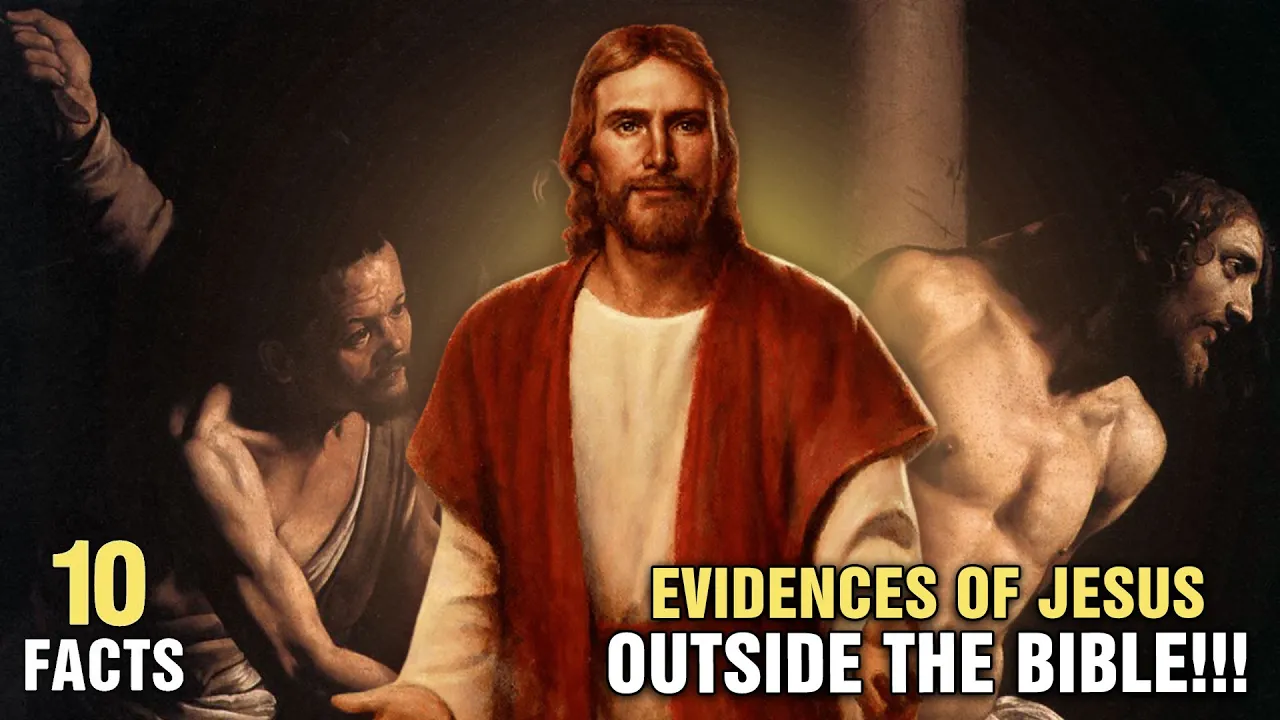
the gospels aren't the only ones that are reliable accounts of the life of jesus there are many other non-christian descriptions of jesus from the late first to fifth century welcome back to another ftd facts episode my name is leroy kenton and today we're going to be looking at 10 of the biggest evidences of jesus outside of the bible now we're going to be looking at some non-christian pagan accounts as well as some non-christian jewish accounts so let's get started with this episode and look into the existence of jesus outside of the bible at number 10 we have phallus 52 a. d phallus is one of the oldest secular writers who mentioned jesus in his writings he is so ancient that his work doesn't exist anymore but you see julius afrikanes quoted his writing where he tried to explain away the darkness occurring at jesus's crucifixion in his quote he described that phallus explained how the world was surrounded by a fearful darkness as well as a massive earthquake happened during jesus crucifixion from phallus's available work we can conclude that jesus lived he was crucified and that there was an earthquake and darkness at the point of his crucifixion number nine is tacitus 56 to 120 a. d cornelius tacitus was a well-known ancient historian known for his analysis and examination of historical documents and he explained the existence of jesus in his annals of 116 a.
d tacitus described emperor nero's response to the great fire in rome and nero's claim that the christians were to blame for it according to him jesus lived in judea he was crucified under pontius pilate and he had followers who were persecuted for their faith in him moving on to number eight we have mara barcerapion 70ad after 70ad a syrian philosopher named mara barcerapion wrote for his son where he compared the life and persecution of jesus with that of other philosophers who were persecuted for their ideas mara bar seraphian called him the wise king and he described how jews murdered their wise king and after which their kingdom was abolished he's also said that god avenged those men and according to mara barcerapian's work jesus was a wise and influential man who died for his beliefs the jewish leadership was also somehow responsible for jesus's death and jesus followers adopted his beliefs and lived their lives accordingly the next evidence comes from flagon 80 240 a. d like phallus julius africanus also mentioned a historian named flagon who wrote a chronicle of history around 140 a. d flagon also focused on the darkness surrounding jesus's crucifixion and according to flagon jesus had the ability to predict the future pretty accurately and he was crucified under the reign of tiberius caesar he also says that jesus showed his wounds after he was resurrected to people that he came in contact with next up at number six we have pliny the younger 61 to 113ad the early christians were also described in the early non-christian history plany the younger in a letter to the roman emperor trajan he described the lifestyles of early christians pliny explained how the christians sang a hymn to jesus christ as a god in alternate verses and took an oath to refrain from all sorts of evil deeds the early description of the first christians documents several things like the first christians believed jesus was god and they have held a high moral code as well as early followers met regularly to worship jesus number five leads us to lucian of samosata 115 to 200 a.
d lucian was a greek satirist who spoke sarcastically of jesus and christians but in the process he actually affirmed that they were real people and never referred to them as fictional characters or anything like that lucian he explained how the christians worshiped a man who introduced their novel rights and was crucified on this account according to his work we can conclude that jesus taught about repentance and the family of god those teachings were then quickly adopted by jesus's followers moving on now to number four we have celsius 175 a. d celsius was also quite antagonistic to the claims of the gospels in the bible but in his criticism he unknowingly affirmed and reinforced the biblical authors and their content so celsius he confirmed that jesus was able to perform miracles according to celsius's writings jesus had an earthly father who was a carpenter and he possessed unusual magical powers and also he says that jesus claimed to be god celsius's writings is extensive and he alluded to 80 different biblical quotes and this would of course confirm their early appearance in history josephus comes up next at number three 337-101 a. d coming to the ancient hostile jewish sources josephus is a jewish source right and josephus wrote in detail about jesus in his antiquities of the jews in 93 a.
d under the rule of roman emperor vespasian josephus was allowed to write a history of the jews where he wrote about jesus as a wise man and the messiah there are many ancient versions of josephus's writings but we can conclude that from them that jesus lived in palestine the area known as palestine and he was a wise man and he was also a teacher he did amazing things and he was accused by the jews and crucified under pilate and had followers who were then called christians in the number two spot we have jewish talmud 400 to 700 a. d in the talmudic writing jesus was referred to as balaam benstada or a certain one and according to the talmudic passages jesus practiced magic and he led israel astray jesus was stoned and hanged because he practiced sorcery and he enticed israel to go astray and no one came in his favor to plead so he was hanged now jewish talmud states that jesus had magical powers he led the jews away from their beliefs he had disciples who were martyred for their faith and was executed on the day before passover yeah sounds very much like the accounts that were recorded in the bible just from a little bit of a different perspective though and finally in at the number one spot we have the toll dot yeshu 1000 a. d the total yeshu is a medieval jewish retelling of the life of jesus that is completely anti-christian the told out yeshua attempts to explain away the miracles of jesus and to deny the virgin birth so the text of the told.