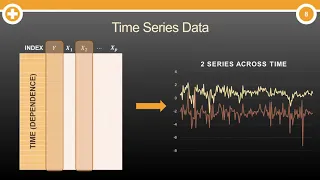
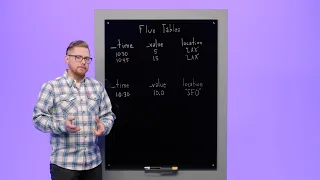
[Music] [Music] hi everyone i'm paul dix the founder and cto of influx data the company behind influx db and open source time series database today i wanted to talk quickly about time series data and what we mean when we talk about time series data and why we think it's a different use case within the data space so really when we talk about time series data we're talking about metrics and events i'll draw something on the board here to kind of illustrate what i'm talking about so imagine that we have time here on this horizontal line
going this way and on this timeline we have specific things happening now these things are at fixed intervals happening evenly in time so these would be metrics they're collected at regular intervals summarizing some data in this case let's say it's once every 10 seconds each of these lines is 10 seconds apart on the timeline as i mentioned that's metrics the other kind are just raw events so here we'll draw another timeline then we'll just draw some events on this timeline a few here one here three here one over here so these are just raw events
happening on a timeline now the interesting thing about an irregular timeline and a regular timeline is that you can induce a regular timeline from an irregular one so say for example that we wanted to count how many events happened in each 10 second window we could do that here so here we have two we have one we have three we have zero we have one here so what we've done here is we've actually induced a regular time series where we have once every 10 seconds from this irregular one now what makes time series different than
dealing with other kinds of data the big thing is you're capturing history so you have data that's an append only workload of things coming in all the time the other big thing is that you frequently want to do historical backfill so these are bulk uploads of large sets of data and the other thing is when you want to do deletes you're frequently deleting large ranges of data of old time this is something that normal databases find difficult to deal with and then lastly you want to manage your data lifecycle because you're ingesting so much data
over this time it gets expensive to store it all so you'd like to summarize that data and evict the high precision data to save space in an ideal system you would have all of this stuff automated for you now i came up with the idea for influx db after working at a fintech startup in 2010 where i had to create a time series solution using just web services and cassandra and redis i realized then how much application level code i had to write to handle all of these problems so we created in fluxdb and we
rolled all of these things into the database to make it easier to use to build time series applications on top of so have a look give it a try thank you [Music]