In their world, the rules aren't written in ink. They're etched in blind obedience. To rise, you must kneel.
To wear the crown, you have to be born into it. Outcasts are exiled. Those who preach virtue rot with corruption.
Power isn't earned. It's inherited. Or bought with devotion to false gods.
But what is a god to a non-believer? He walked into their kingdom with his heart on his sleeve and rebellion running through his veins. In a land full of Goliaths, he showed up as David.
Surrounded by hollow idols, he chose to be real. In a world built on lies, he told the truth on the microphone. Loud, raw, unfiltered.
A kingdom ruled by tyrants, finally met a man who didn't bow. He didn't just defy the system. He spit in its face.
He tore off the mask, hiding their facade, and stole the crown from their demigods. He ruled a throne that was never meant for him. He sparked a revolution, one that cracked the very foundations of their empire.
He stole fire from the system and gave it to the fans. For that, he was banished. But the fire he lit, it kept burning long after his shadow vanished.
And then, after a decade in the dark, he returned to reclaim what was stolen. The revolution wanted blood. And he was never one to flinch.
He fought. He fell. He rose.
He was cheated, betrayed, beaten, but never broken. He kept fighting until he finally seized what had always been his. This is the story of 20 years of struggle.
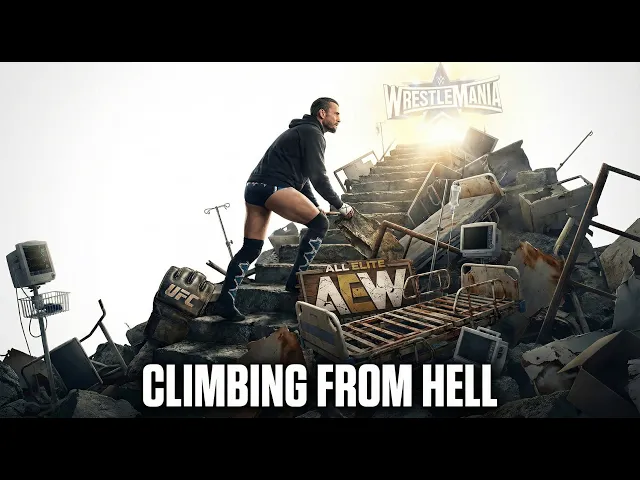
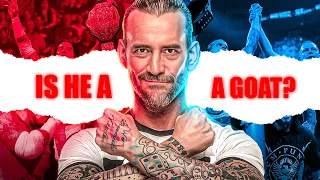
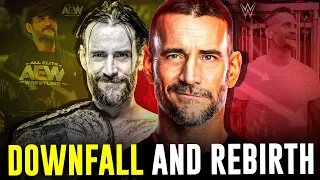
Of a man who lit the first spark of rebellion, the man who became the voice of the voiceless. This is the story of CM Punk. Your arms are just too short to box with God.
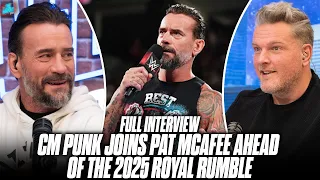
CM Punk's t-shirt reads, "Best in the world. Whether he lives up to that depends on who you ask, but love him or hate him. You can't deny how good he is on the mic, in the ring, and especially in making people talk.
No one buys into the CM Punk hype more than CM Punk. He wasn't always the best, but in his mind, he always was. He's not a hero.
I won't pretend he is. Punk is one of wrestling's most polarizing figures. selfish, arrogant, ego-driven.
Plenty of people say he's impossible to work with. Over the years, he's made enough enemies to fill an entire roster. In his own words, he's not here to make friends.
He's here for the money. He's a lone wolf. Doesn't drink, doesn't smoke, doesn't do drugs, but he's absolutely addicted to being the center of the wrong kind of attention.
CM Punk only cares about CM Punk. But behind all that bitterness, there's a story. A long one built on trauma.
The man behind the myth, Phil Brooks, was born in Chicago, Illinois. Not into wrestling royalty. No silver spoon, just the second son of a housewife and an electrician.
His father battled alcoholism. His mother had bipolar disorder. Punk once said, "I never had a home, just a roof.
" His older brother got the support, the college fund, the car. Punk got nothing. That disconnect cut deep and it never really healed.
His father's drinking pushed him toward a straightedge life. No booze, no drugs, no poison. He said he always loved his mother, but she saw him more as an asset than a son.
Later in life, she tried to blackmail him for money. Punk filed a restraining order. By his teens, he'd left home and moved in with his best friend.
He never looked back. Even then he was clashing with authority, teachers, adults, anyone who tried to control him. He wore strange clothes, got into fights, never fit in.
And that rebellious streak, it never faded. He idolized Rody Piper, started backyard wrestling with friends in something called the Lunatic Wrestling Federation. That's where CM Punk was born.
He became the star, turned pocket change into crowds. The Fed was thriving until it all came crashing down. His brother, who managed the finances, stole all the money and disappeared.
Punk was gutted. His trust shattered. His bond with his brother gone forever.
Even though his brother later tried to make amends and paid everyone back, Punk never forgave him. Never spoke to him again. Just another scar that never healed.
Wrestling became his escape. He threw himself into the indie scene, found a brother in cult cabana, gave up everything, his love life, his stability, even his safety for the grind. Soon he became a cult hero, bouncing across promotions until he landed in a young company called TNA.
That's where the crack started to show. A backstage fight with Teddy Hart, one he started and lost, got him kicked out. But his talent kept him booked.
His matches with Colt Cabana opened the door to Ring of Honor, the heart of the indies. That's where he made his name. He had classics with Brian Danielson, Raven, and Samoa Joe.
The skinny kid from Chicago became the second city saint. But controversy, it was never far behind. He had real life heat with multiple wrestlers, including Kevin Owens, then known as Kevin Steam.
Still, his work always spoke louder than his words. He became Ro Champion and he kept delivering. The buzz around him was deafening so WWE came calling.
Before he left, Punk turned heel and signed his WWE contract on the Ro title. But in his final Ro match against his longtime friend, Colt Cabana, something changed. Punk didn't come out that night.
Phil Brooks did. And for once, he couldn't hold back the tears. Ring of Honor was the only place that had ever felt like home.
Leaving it broke him in ways the bright lights of WWE would never fix. But the path was already set. His road to greatness had already begun.
CM Punk arrived in WWE with the weight of his reputation, and the scars of the road behind him. Years spent clawing his way through dingy bingo halls and sweaty gymnasiums had earned him cult status. But when he finally landed in the big leagues, there was no hero's welcome.
He was sent to developmental Ohio Valley wrestling, parked among rookies, stripped of the stature he carried from Ring of Honor. He wasn't just overlooked. He was shelved deliberately.
And that didn't sit well with him. Punk responded the only way he knew how, by outworking everyone. First one in, last one out, training like a man possessed.
But effort alone wasn't enough to shield him from the politics. He clashed with trainers, but heads with anyone who tried to mold him into something he wasn't. Eventually, the whispers turned into a demand.
Fire him. They brought it to Vince McMahon himself, and Vince was ready to pull the trigger. But someone stepped in.
Paul Heyaymon. He put his own reputation on the line. Told Vince that Punk wasn't just worth keeping, he was worth pushing.
When the call came to let him go, Heymon refused. He fought to get Punk on TV. Gave him a microphone, a spotlight, and a challenge.
Prove them wrong and Punk delivered. Heymon saw something in Punk the rest of WWE refused to acknowledge. He didn't have Batista's frame.
Orton's family name or Cena's crowested charisma. What he had was an edge, a sharpness behind the eyes, a heat that couldn't be extinguished. And Heymon didn't just protect that fire, he gave it oxygen.
He got Punk on ECW television and Punk ran with it. Earned his way to the top, became ECW champion. In a recent episode of Smackdown, Punk brought up a conversation that haunted him.
It wasn't a promo. It was a scar. He reminded Heymon of the day he left WWE.
How he told him quietly but honestly, "I won't survive here without you. " At the time, he meant it. Heymon wasn't just a mentor.
He was the only one who stood by him when the whole machine tried to grind him out. Punk was slated to face Chris Benois for the ECW title. But that match never happened.
The Benois tragedy hit like a wrecking ball in 2007. The company scrambled. Sponsors fled.
Parents turned off the TV. WWE went into survival mode. They sanitized everything.
Kid-friendly content. Safe. Hollow.
Then came punk. Straightedge. Sharp tonged.
unfiltered. His arrival on Raw felt like a rupture. His matches were stiff.
His promos cut deep. There was no line between character and man. When handed scripts, he tore them up in front of the writers.
Not for show as a statement. This is my voice. He didn't walk into the ring with memorized lines.
He walked in with venom, with heartache, with conviction. And the fans listened. Hardcore audiences had always seen him, but now the casual crowd was catching on.
In a world built on artificial icons, Punk felt real. His straightedge lifestyle wasn't a gimmick. It was a philosophy.
One that clashed violently with everything around him. Vince McMahon didn't see a world champion. Too skinny, too strange, too unpredictable.
Still, Punk forced their hand. He won the Money in the Bank briefcase. His first shot.
Fans thought he'd fail the cash in, but he didn't. He won. And yet, even as champion, he wasn't the real champion in their eyes.
It was still Cena. Triple H even mocked his reign publicly. Said Punk wasn't a believable champion.
That perception stuck. So, he did it again. Won the briefcase a second time, cashed it in on Jeff Hardy.
That feud got uncomfortable. Punk in character preached sobriety. But in reality, he weaponized Hardy's real life struggles.
addiction, arrests, relapses. There was no fourth wall, just punk hammering away until the line cracked. Backstage enemies multiplied.
He wasn't winning any popularity contests. Some accused him of trying to be a leader. That drew the attention of the real locker room leader, the Undertaker.
Taker confronted him about his attitude. Told him to dress like a champ. Carry himself the right way.
Punk didn't flinch. Said he'd do whatever he wanted. That didn't sit well with the dead man.
No respect. But everything changed at Wrestlemania. In the ring, Punk was a different beast.
Athletic, innovative, a master storyteller. He didn't win that night, but he walked away with something even more valuable than gold. Takers respect.
A nod from the dead man is rare. Punk earned it with grit, timing, and precision. That momentum led to the straightedge society.
Punk became a cult leader, shaving heads, preaching discipline, calling out hypocrisy. He didn't just play the heel, he lived it. Because in real life, he was an egoomaniac.
And he channeled that into something unforgettable. That's why watching Rey Mysterio, a beloved crowd favorite, get his head shaved felt right. After the society fell apart, most thought he'd hit his ceiling.
Too small, too much baggage, too controversial. But they had no idea what was coming next. It's hard to paint CM Punk as a hero.
There's always been something bitter in his blood, a darkness that kept resurfacing. He clashed with half the roster, didn't hide his contempt for management, and even the fans weren't spared. Ask anyone who's tried to get an autograph from him at an airport.
Punk wasn't polite. He wasn't warm, but he was always clear. He had one mission, revolution.
He wanted to crush the system. Not for fame, not for money, but to leave behind something better. A version of the industry where talent like him, guys without the right body, last name, or PR smile, could have a shot.
He wanted to break the machine before it broke anyone else. But eventually, even he broke down. He sat cross-legged in the ring, chest heaving, and told the world his contract was expiring.
He was done. It was framed as a storyline, but there was real exhaustion under every word. He didn't want to fight anymore.
He wanted to lay his boots down and chase another dream, MMA. Vince McMahon caught wind of it and made a call. Let Punk speak his truth.
Let him blow off steam. Maybe it would keep him around. But not even Vince was ready for what came next.
The shift didn't come with fireworks. It started with a sitdown, a live microphone, and a man who didn't flinch. June 27th, 2011, Punk sat at the top of the ramp in a stone cold shirt and gutted WWE with surgical precision.
He torched Vince McMahon, The Rock, Hogan, even the fans. And then he dropped the line. Then maybe this company will be better after Vince McMahon's dead.
But the fact is it's it's going to get taken over by his idiotic daughter and his dofest son-in-law. He named Paul Heyaymon Brock Lesnar when they weren't in WWE. Talked about defending the WWE Championship in New Japan.
In Ring of Honor, about Colt Cabana, when he veered toward a personal story about Vince, they cut his mic. Even the ambient cameras went silent. Then the screen went black.
No logo, no outro. It didn't matter if you believed it was a work. Those who believed it was real thought they saw history.
Those who knew it was a work recognized they witnessed history because no one in WWE had ever said anything like that on live TV. Unfiltered, untouchable. Punk didn't play Rebel.
He became a symbol, a lightning rod for every disillusioned fan, a ray of hope for every frustrated locker room member. A week later, WWE suspended him, pulled him from Money in the Bank, called it discipline. But the truth was they were losing grip.
Punk's contract really was expiring. There were no extensions, no secret deals. He was out and then they caved.
Punk returned a week before the show, got reinstated, given his title shot, but he didn't return to play nice. He returned to take the whole damn house down. Money in the Bank 2011, All State Arena, Chicago.
That night, Punk wasn't the hometown favorite. He was a deity. The crowd didn't cheer for him.
They worshiped him. Cena walked into Booze so venomous they rattled the walls. Every time he landed a punch, the crowd turned rabid.
Every strike from Punk brought screams. The match was perfect. 33 minutes of storytelling through sweat and fury.
Cena brought everything. Punk brought everything else. Defiance, desperation, destiny, and then GTS 1 2 3 pandemonium.
Punk rolled out of the ring, blew Vince a kiss, and disappeared through the crowd with the WWE Championship. No contract, no champion, no control. For the first time in years, WWE felt real again.
Then came chaos. Punk posted a photo of the WWE Championship sitting in his fridge. He crashed ComicCon, taunted Triple H.
He teased indie appearances. The line between fiction and reality gone. WWE didn't know whether to play along or panic, so they improvised.
They held a tournament. Rey Mysterio won. Then Cena beat him the same night.
Even as a kid, that felt wrong. An exhausted Ray laid out just so Cena could reclaim the spotlight. It was tonedeaf.
Then cult of personality hit. Punk returned. Two belts, one company, one ring.
Summerslam, the rematch. Punk won again, but the system wasn't done with him. Kevin Nash returned.
Out of nowhere, a text message, a cheap attack. Then Del Rio cashed in, walked out as champion. Just like that, the revolution was smothered.
Triple H took over the story line. Punk fought him at Night of Champions. Over booked, awkward, dead on arrival.
The rebellion that once set the world on fire was now buried under layers of executive ego. But Punk wasn't finished. Survivor Series 2011.
Madison Square Garden. Punk beat Del Rio reclaimed the title. This time he didn't let go.
434 days. He carried that title through every obstacle they threw at him. He turned heel mid-r Heymon and still delivered every night.
But in the main event slots, it was Cena or Brock. Punk wasn't the face. He was the fallback, the real champion, but not the chosen one.
And it ate at him. He asked to headline WrestleMania over and over. They said no.
Instead, Wrestlemania 29 went to Cena versus Rock 2. Again, Punk got Undertaker and he stole the damn show. After that, something broke.
The fire was still there, but dimmer. The feud with Lesnar was brilliant, but it felt like a closing act. Punk's body was giving out.
His voice backstage, once loud and defiant, grew quieter. Royal Rumble 2014. Punk entered at number one.
Stayed in for almost an hour, eliminated by Kane in a throwaway moment. The next night, he was gone. No farewell, no ceremony, just silence.
His ribs were cracked, his knees shot. He had a staff infection the doctors ignored. He'd been vomiting before matches.
They told him to push through. He asked to headline Mania, denied. He asked to face Triple H.
They said he wasn't needed, so he left. He walked out of the company, the fans, the business. And for the first time in years, CM Punk wasn't a wrestler.
What the summer of Punk revealed wasn't just that he could carry the company. It revealed that WWE would never let him. No matter how many belts he held, no matter how many arenas he filled, no matter how much truth he spoke, because he didn't play their game.
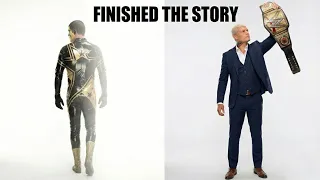
But the spark he lit, it didn't die. Daniel Bryan, Cody Rhodess, men who once had no chance in Vince's system, found daylight through the crack Punk made. That fire didn't raise him to glory.
But it carved the path for the ones who came after. After WWE, Punk tried UFC. It failed.
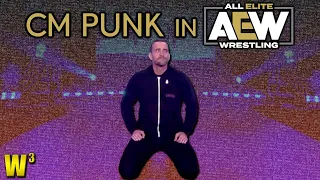
He returned to WWE for a brief stint working behind the scenes as a backstage analyst. But his real comeback, that didn't happen in WWE. That happened in AEW.
He walked into Chicago again and the world stopped. He tore it up with Darby Allen, Moxley, Kingston, MJF. The fire was still there, but so were the Demons.
He clashed with the Elite, with management, with Jack Perry. Another backstage brawl, another implosion, AEW cut ties, and again, it looked like Punk was done. But then, hell froze over.
After walking away from WWE in 2014, CM Punk made sure the door slammed shut behind him. From shoot interviews to lawsuits, he torched any chance of reconciliation. He didn't just express his disgust for Vince McMahon.
His real war was with Triple H. Triple H never respected Punk's attitude, took shots at him in interviews, undercut his rise during the summer of Punk, and dismissed his momentum when it mattered most. Punk didn't let it slide.
He fired back in promos, in interviews, airing out their issues for the world to hear. So when Triple H took over creative, it felt like the final nail. There was no way back.
Then came AEW. It was supposed to be his proving ground. Instead, it became another battleground.
Fights backstage, chaos leaking to the press every month. Even loyal fans began to wonder, was Punk the systems victim or just the storm? Still, at Survivor Series 2023, CM Punk returned to WWE.
No buildup, no announcement. He just walked back into the company that had pushed him out a decade earlier. He signed with Raw, entered the 2024 Royal Rumble, his first match back.
This was supposed to be the final run, the one where he finally headlines WrestleMania, but mid-match, Drw McIntyre injured him. Cody Rhodess eliminated him. The dream collapsed before it could even start.
But WWE didn't drop the story. They folded the injury into a feud. Punk and Drw fought a brutal three match series, ending inside hell in a cell at Bad Blood.
A war that left both men changed. After a short break, Punk returned and crossed paths with Roman Reigns. Beside Roman stood Paul Heymon, Punk's old friend, the man who helped build him.
Paul asked Punk to join Roman's side for war games against the new bloodline. Punk agreed. Roman stood tall.
In return, Punk asked for something, a favor owed. But before it could be revealed, his path led him to Seth Rollins. The grudge ran deep.
Back to 2002. Punk had refused to train Seth. That tension never faded, and finally it exploded.
On the very first Netflix Raw, Punk beat Seth clean. Punk re-entered the Rumble. Determined to finish what he started, he eliminated Seth, then Roman.
Two men whose careers he helped launch. Then Logan Paul tossed him out. Another setback.
At Elimination Chamber, Punk pinned Seth, but Rollins attacked him after the bell. They met again on Raw. The match never finished.
Roman Reigns stormed the cage, left both men down. It was over, or so it seemed, because Paul Heymon finally repaid the debt. At the Wrestlemania contract signing, Heymon made it official.
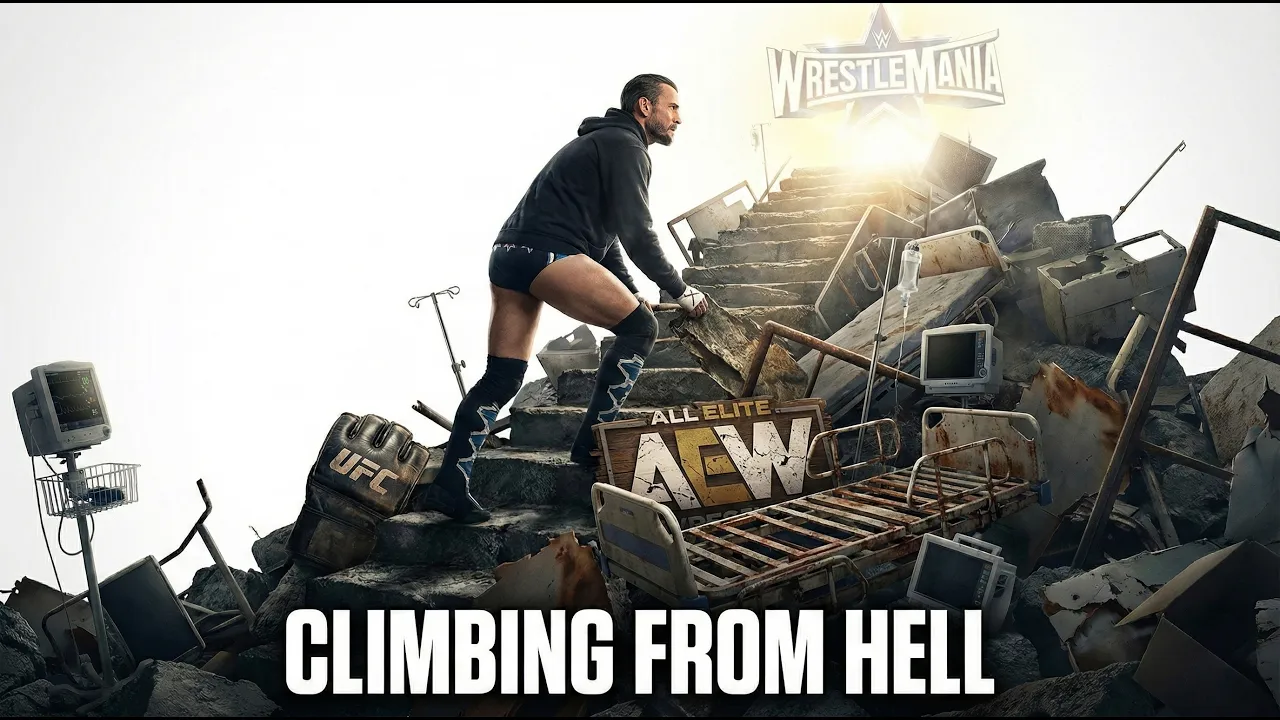
CM Punk was main eventing Wrestlemania. For the first time in over 20 years, he stood where he always believed he belong. CM Punk was never perfect.
He saw cracks in everything, whether it was WWE, AEW, or the entire damn industry. And he made it his mission to tear down the walls. But beneath all that fire, he carried a dream.
A dream two decades in the making. And while chasing it, he didn't just reach the mountaintop. He changed the path for everyone climbing after him.
The spark he lit over 10 years ago is finally ready to catch fire at Wrestlemania 41. When that cult of personality hits, and Punk walks out with Paul Heymon by his side, the revolution will be televised. It's the right time, but the wrong man.
If you liked the video, don't forget to subscribe. See you in the next one.