Wrestling was never meant to be safe. It was chaos wrapped in ritual. A sacred theater where pain had purpose.
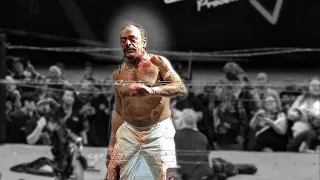
Where grown men bled, screamed, and shattered themselves just to make us feel something real for 5 minutes on a Monday night. It wasn't a business. It was carnage with meaning carried and shaped by people who loved wrestling.
And for all of Vince McMahon's countless sins, every burial, every ego-driven decision, every scandal, there was one truth he never betrayed. The ring was sacred. He believed in it.
He protected it. Even as he poisoned everything around it. No matter how corporate WWE became, the ring stayed holy.
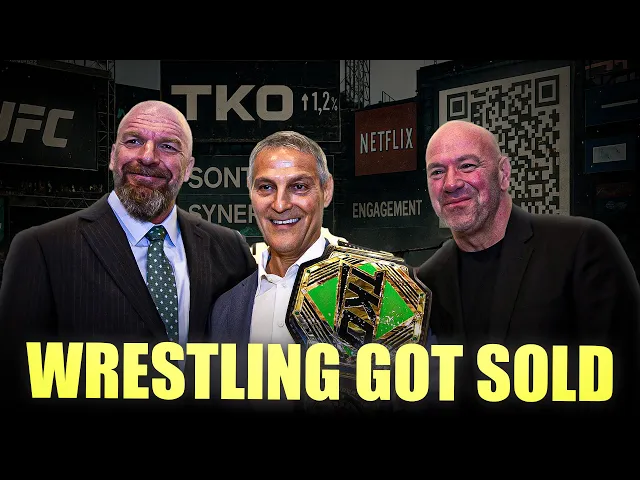
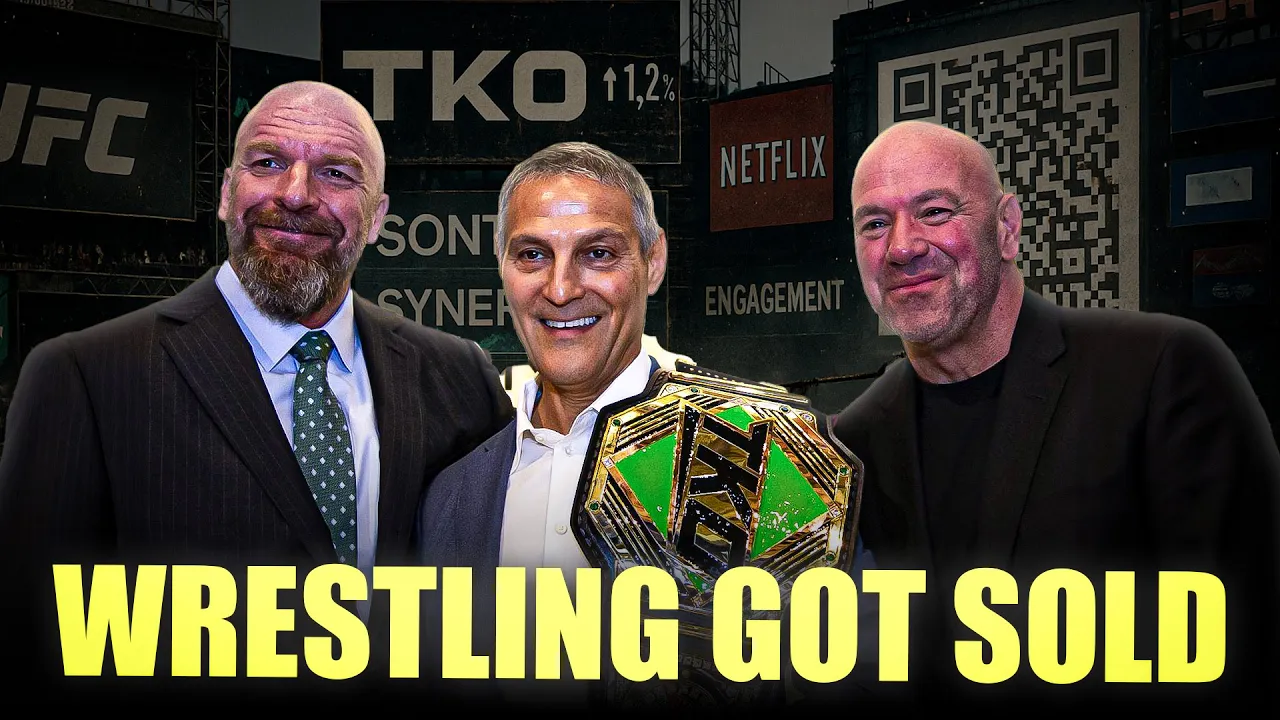
A place where gods were made, where myths were shattered, where one perfect moment could live forever. And now now the ring is a billboard covered in logos wrapped in hashtags just another bullet point in a quarterly earnings call. When WWE merged with UFC under the TKO banner, they called it evolution.
A new era, a billion dollar handshake to secure the future. But what they secured wasn't wrestling. They secured content.
You feel it, don't you? The shows look better than ever, but they don't sting like they used to. The stories still happen, but they don't burn.
Everything's louder, cleaner, faster, but also emptier. Matches are now ads. Champions are props.
And Wrestlemania, it's a red carpet for rappers. This This is what happens when you hand wrestling over to people who don't love it. This is the story of how the soul of wrestling was traded for revenue.
How the passion of every wrestling fan was replaced with brand logos. how every scar, every promo, every broken bone became just another piece of content. This is the story of how TKO ruined wrestling.
Before the stock tickers, before the branded mats and synergy decks, there was a ring. And inside that ring, every lie in the world could be told, except the lie that this didn't matter. Wrestling has always been a strange religion.
Half sport, half spectacle, built on violence, carried by myth, held together by a stubborn kind of belief. But it didn't become global by accident. It was carved into the world by a man who believed he could rewrite reality itself.
Vince McMahon, the son of a promoter, the architect of an empire. He didn't invent wrestling. He dragged it screaming into the modern age.
And whether you worshiped him or spent decades cursing his name, one truth stood tall. Vince McMahon gave his soul to this business and demanded everyone else do the same. In the early 80s, he bought the WWF from his father and tore up the map.
He raided the territories, signed their stars, took a regional tradition and turned it into national television. When the old guard said he was killing wrestling, he said, "Good, let the old gods die. " And in their place, he built new ones.
Hogan, Andre, Warrior, Savage, colliding in a spectacle the world had never seen. Wrestlemania, Pyro, music, merch, movie deals. Vince didn't want a wrestling company.
He wanted a pantheon. And for a time, it worked. He printed legends.
He printed money. And when WCW came for his throat, Vince didn't flinch. He doubled down.
The Attitude Era wasn't nostalgia. It was a war. And Vince won it with blood on his hands and ratings in the stratosphere.
But every empire rots from the inside. Rome didn't fall in a night. Vince was a visionary.
He was also a tyrant, addicted to control, obsessed with dominance, willing to bury anyone who threatened his throne. He held people down, sabotaged careers, rewrote history nightly. And as the years wore on, the stories got safer.
The magic thinned, the edges dulled, then disappeared. By the 2000s, the machine was sputtering. Characters felt manufactured.
Matches changed. Midshow scripts were micromanaged, momentum crushed, stars buried simply because he didn't understand them. The show became a reflection of its creator.
Powerful, broken, unrelenting. And yet, even then, Vince protected something. Something most fans never noticed.
The ring. Not just what happened inside it, but what it meant. Because for all the lies he sold, the ring was still his altar.
Whatever else Vince poisoned, he believed the ring should stay pure. And that's the part nobody wants to say out loud. Yes, he was a monster, but he was our monster.
And somewhere buried deep beneath the ego and empire, he still believed in the business until the day he couldn't. In 2022, the whispers turned to thunder, hush money, sexual misconduct. $12 million in payouts across 16 years.
The empire turned on him. The machine he built began to devour him. He fought it.
Of course, he did. But on July 22nd, 2022, Vince McMahon, the man who mocked the idea of retirement, tweeted a single line at 77, "Time for me to retire. Thank you, WWE Universe.
" And just like that, it was over. Or so it seemed because Vince McMahon never fades quietly. In his final act, he returned briefly in shadow to broker one last monstrous deal, a merger.
WWE and UFC, sports entertainment and combat sports, two empires, one banner, TKO, and then he vanished. All those years, Vince played with fire. He hurt people.
He warped the culture. But he never let the business burn. That part of him, the part that protected the ring, that died with the merger.
And someone else was supposed to carry the fire. Not a savior from the outside. Not a fresh face with a billion dollar pitch.
The one meant to protect it was already here, watching, waiting, learning, absorbing every rule, every war, every betrayal. He wasn't the future. He was forged in the past, born in the ashes of betrayals, raised in the politics of the locker room, heir to the throne.
Some call him the dirtiest player of the game. But in truth, he is. Before he ran the show, before he held the pen that shaped legends, before fans chanted his name, not for what he did inside the ring, but for what he restored outside of it.
Triple H was a fallen prince. It started with four men hugging in the middle of the ring. Madison Square Garden, 1996, The Curtain Call, Shawn Michaels, Scott Hall, Kevin Nash, Triple H.
They broke the sacred rule right there in front of a live crowd. Back then, Kayfabe was law and only one of them paid the price. Triple H took the fall.
Hall and Nash were leaving for WCW. Shawn was untouchable as champion. So, the punishment landed on the one man who couldn't protect himself.
His push gone. His credibility shattered. What you you want me to shoot with this interview?
I'm going to And buried in that humiliation. Something inside Paul Leesque shifted. He started playing the long game.
That night taught him two truths. First, loyalty means nothing in this business unless it turns a profit. Second, if you want to survive the machine, you've got to rebuild it from the inside.
So, he stayed close to power, stayed clean, didn't drink, didn't touch drugs, but he embedded himself in the wildest faction of the '9s. The click backstage manipulators, rule breakers, chaos merchants. He didn't quite belong, but he didn't have to.
He just had to watch, learn, wait. Then came China, the powerhouse by his side. Together, they looked untouchable.
But when opportunity knocked, Triple H answered. Their relationship fell apart publicly, painfully, because Hunter cheated. The other woman, Stephanie McMahon.
Not just anyone, the boss's daughter. And when Vince found out, he didn't explode. He adapted.
He married them on screen, then offscreen, and from there the transformation began from the game to the prince of the throne. He watched Vince, studied him, learned how the gears turned, how Illusion kept the business alive. And by the early 2000s, Triple H was no longer just a top guy in the ring.
He was something more backstage, not beloved, not trusted, but undeniable. He wasn't perfect. He played politics.
There are whispers. He pitched the Montreal screw job. No proof, but the smoke still lingers.
He tried to get John Cena fired, made himself look invincible during the reign of terror. He clashed with CM Punk. Refused to see him as the guy until it was too late.
Triple H saw the business through a narrow lens. And if you didn't fit the frame, he pushed back. But here's what separates him from the men who came later.
He believed in wrestling's soul, that it was more than content. And he proved it with NXT. He wanted to shape the future with his own hands to give opportunity to the talents he never got.
While Raw chased spectacle, Triple H built something honest. NXT wasn't just a farm system. It was a rebellion, a black and gold uprising.
Then came the scandal. Vince McMahon under investigation. Hush money, sexual misconduct, $12 million in payouts.
The empire cracked. For the first time in four decades, Vince was vulnerable. He stepped down and into the vacuum stepped a new king.
Triple H became chief content officer. The pen was his. The legacy was his to protect.
And he did quietly, deliberately with intent. Matches got time. Promos had breath.
Characters got freedom. He brought back those cast aside. Bray Wyatt, Dakota Kai, Braun Strowman.
The locker room stood taller. The fans leaned in. People stopped doom scrolling raw.
They watched. Not everything worked, but it mattered because for the first time in years, WWE had a heartbeat again. Triple H wasn't chasing moments.
He was building payoffs. That was his signature. Long-term storytelling.
Stories that remembered their past. Stories that earned their future. And nothing proved that more than the Bloodline Saga.
Three years of family, power, control. Roman Reigns the tyrant. Jay the heart.
Jimmy torn. Rkkeshana Diet, the silent enforcer. And then Sami Zayn, the outsider who made us laugh, made us cry, and made us believe.
Then came the Wrestlemania 40. Two nights that reminded the world why we love this ridicule sport. The Bloodline Saga, the greatest long-term story WWE has told in decades, paid off.
It was absolute cinema. And behind it all, Triple H's fingerprints. But behind the curtain, the machine was still moving.
Because while Triple H was fighting to rebuild the soul of WWE, someone else was preparing to sell it. After WrestleMania 40, WWE was poised for a golden age. The Bloodline saga had paid off.
Cody Rhodess finished the story. Triple H had the product running hot. Fans were invested.
The industry was alive again. And yet, behind the curtain, a familiar face waited in the shadows. Enter the final fraud.
It wasn't a return. He never left. During the build to Wrestlemania 40, he tried to hijack Cody's moment.
The fans revolted. WWE pivoted. The final boss was born by accident, not design.
And it worked. It saved the build. But Dwayne couldn't resist overstaying his welcome.
He showed up the next night, challenged Cody, and from that moment on, Cody's reign was poisoned. Because no matter who Cody faced, everyone knew the truth. It was all filler until he reached the man who tattooed the story line on his bald head.
The Rock's involvement wasn't creative. It was corporate. Engineered by TKO, pitched in boardrooms, green lit by Suits who couldn't tell a wrist lock from a wristwatch.
TKO's first real decision post Wrestlemania 40 was simple. Buzz is worth more than belief. Nostalgia sells better than Craft.
So, they went over Triple H's head. At Elimination Chamber, they summoned The Rock to save a show that never needed saving. And what they got was the biggest heel turn in modern wrestling history.
Our childhood hero sold his soul. Why did he do it? We'll never know.
Because 6 weeks before Wrestlemania 41, our bald overlord vanished from TV. No explanation, no followup, just silence. The most important story line in wrestling gone midact.
And what replaced it? noise, logos, brands, and a random autotune junkie. Wrestlemania 41's main event, Cody versus Cena, wasn't a climax.
It was a billboard. It didn't end with catharsis. It ended with interference.
Not because the story demanded it, but because it would hit the right demo on TikTok. Travis Scott, a mid-tier rapper at best, ran in and ruined the historic moment of Cena's 17th World Title. All while The Rock stayed gone, mocking fans from afar, logging into Twitter to tell critics to join a creative meeting.
This wasn't Triple H's company anymore. While Hunter was drawing up arcs for Wrestlemania 41, TKO was drawing contracts. And in doing so, they fractured the only thing that made WWE feel alive, continuity.
The split wasn't a rumor. It was visible. The corporate eyebrow stayed off TV.
But backstage, the scalpel came out. Budget cuts, efficiency, they called it despite record gates. And who did they cut?
Triple H people. Braun Strowman gone. Dakota Kai gone.
Cora Jade gone. Producers, coaches. Because TKO didn't want builders.
They wanted brands. Triple H saw wrestling as craft. TKO sees it as IP.
And when those two visions collide, it's not the spreadsheet that bleeds. It's the product. In 2024, WWE signed a billion-dollar deal with Netflix, a partnership that promised freedom, innovation, global reach.
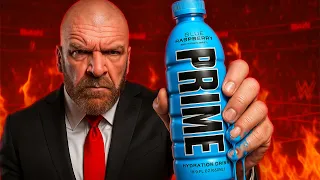
What did it deliver? Advertisements, sponsors, matches co-produced by energy drinks. Moments measured in engagement spikes, not emotion.
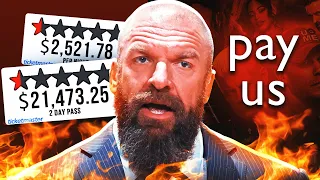
And in that shift, the rot set in. Ticket prices soared. VIP packages hit six figures.
Even Randy Orton called them out. Regular fans, the soul of this business, were priced out of the building. And inside the arena, you could feel it.
The chance were gone. The dieards replaced by influencers holding phones, waiting for the next viral clip. And the crack is getting louder.
Because at the end of it all, John Cena didn't ruin wrestling like he promised. But TKO's greed did. They say all men are created equal.
But if you watch this video about Drw, you know that's not true. So, subscribe to the channel and prove that the numbers don't lie.