b-dag you may have heard of b-dag which is a greek english lexicon its longer name is a greek english lexicon of the new testament and other early christian literature and you can see from the length of that name why it gets shortened down to bdag well this is the best lexicon you can buy today to read what to learn the vocabulary or the the look up greek words in the new testament or pretty much any other ancient greek text around the christian circles anyway but it's kind of a little hard to use and so i've
had a number of requests over a period of time with people saying hey could you review could you talk about bdag and how to use it now i have compared bdag in the past with say the brill lexicon of early greek text i think it's something like that anyway you'll find a link to that up here but this i mean in this video i'm just going to focus on how to use bdag from a just from a point of view of somebody who is in the new testament and particularly wanting to study the new testament
and look up words and use a really good lexicon for doing that so that's what we're going to do in this video before i get into that i just want to tell you just a very brief history of the of b-day because what we're looking at b-dag is actually the third edition of the greek english lexicon for the new testament and early other other early christian literature that's the long name bdag is the third edition of this english work before that this it goes all the way back to 1522 the very first kind of lexicon
if you like modern lexicon anyway goes back to 1522 with the first ever printed uh greek new testament or critical greek new testament and this was printed in 1517 but it was published after erasmus greek new testament and this was a complutensian polyglot which is a collection of four writings that were all published together in multiple volumes now i mentioned this again in a previous video just recently when i was talking about the history of the greek critical edition and how we kind of work out how to decide what is the greek new testament and
what is not and if you're interested in that we'll click the link up here and you'll find a card there referring to that as well now this was the first time we ever had a list and i had 75 pages of greek and latin words in it that then was the beginning point but then they're really the first major works were published in german uh the the the best of these in the late 1800s early 1900s was published in 1910 by walter bower that then became the foundation for the english version so there was an
english translation of that made which became the first version of what we now refer to as bdac that first version was translated by two men bower obviously wrote the bulk of it and then ant and gingrich they work together to revise it and translate it into english and this first english edition was known as bag b-a-g standing for bauer aunt and gingrich the three editors or authors and editors of this greek word work now danka friedrich william dunker joined the team after aunt passed away aunt was his teacher and he passed away and danke joined
gingrich to revise this and create a second edition this theme was known as bag d bauer aunt gingrich and then danka was added on to the end of that bag d was the way this was referred to and this was the second edition of the greek english lexicon that we're talking about today the third edition really was a work primarily of danka who continued the work of gingrich who passed away in 1970 something or rather danke then continued to do all of this work publishing the third edition which is what we're talking about today which
is referred to as bdag because of the amount of work that dunker did to actually update that work so that we have the addition we have today and the addition we have today is very very good so this is the third edition of the greek english lexicon but it's really called bdag because dunker has done a lot of the work to update the previous works take into account more modern discoveries and lexicography and linguistics and put all of that into this behemoth of ad volume now i don't even have a physical copy of bdag you
don't need one either sometimes you'll find a secondhand copy available for cheap or sometimes you'll get a special deal maybe on amazon or something like that and if so great go buy a copy it's well worth it there it is worth getting the third edition i think because there are some significant updates for the from the second edition and i think it's worthwhile however it is quite expensive my what i use is i tend to use the logos bible software edition which is so much more portable i can use it on any device and i
can take it with me on my phone if i want to and there's some other features which i'm going to talk about as i go through this as well so there's a little bit about the history and how to get a copy if you do want to copy this on logos go to mntg dot me slash bdag and you can get a copy for from there uh it doesn't cost anything extra but if you do that it does support this channel a little bit when you do that now there is a physical edition of a
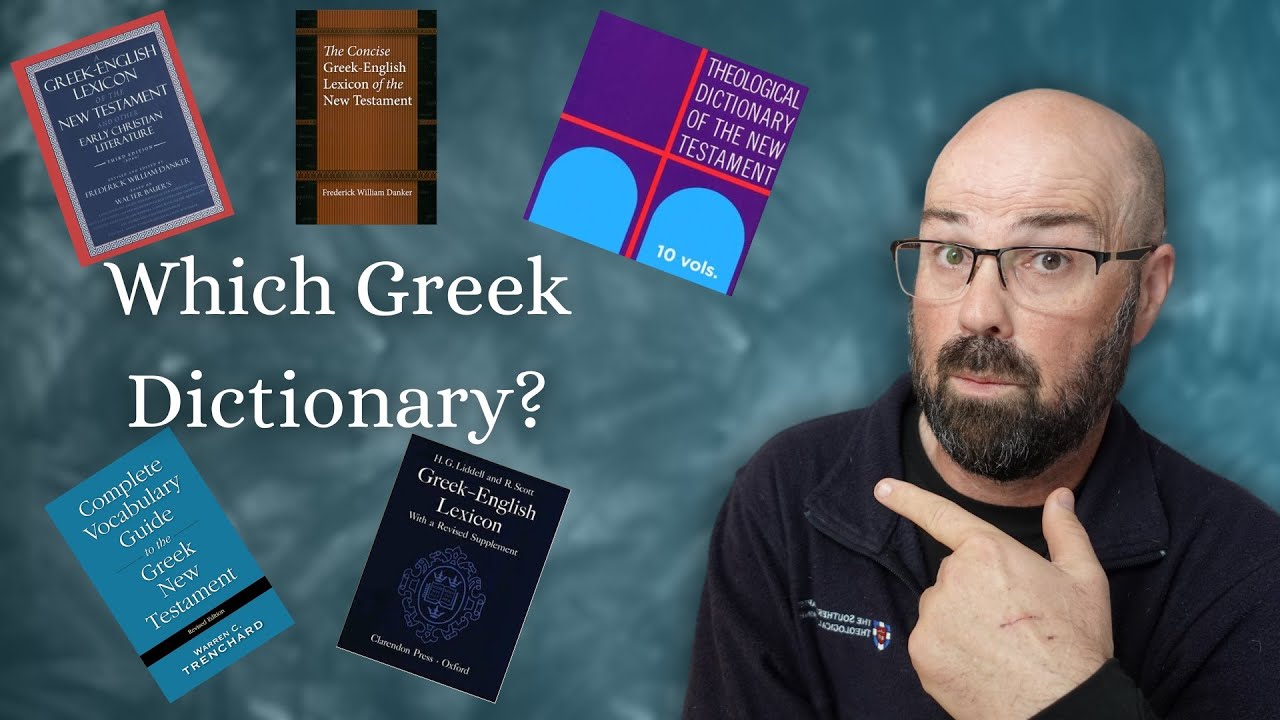
shortened edition of this there's a concise greek english lexicon and i'll leave a link in the description below and you can get a copy of that from there on amazon get it on kindle and you can get it physical copy as well that's probably the second best but it's still two-thirds the price of the full edition and so i would still recommend considering getting the 99 logos edition if you can afford it okay anyway let's get into some text in bdag and you can see here what i've done is i've split my screen essentially between
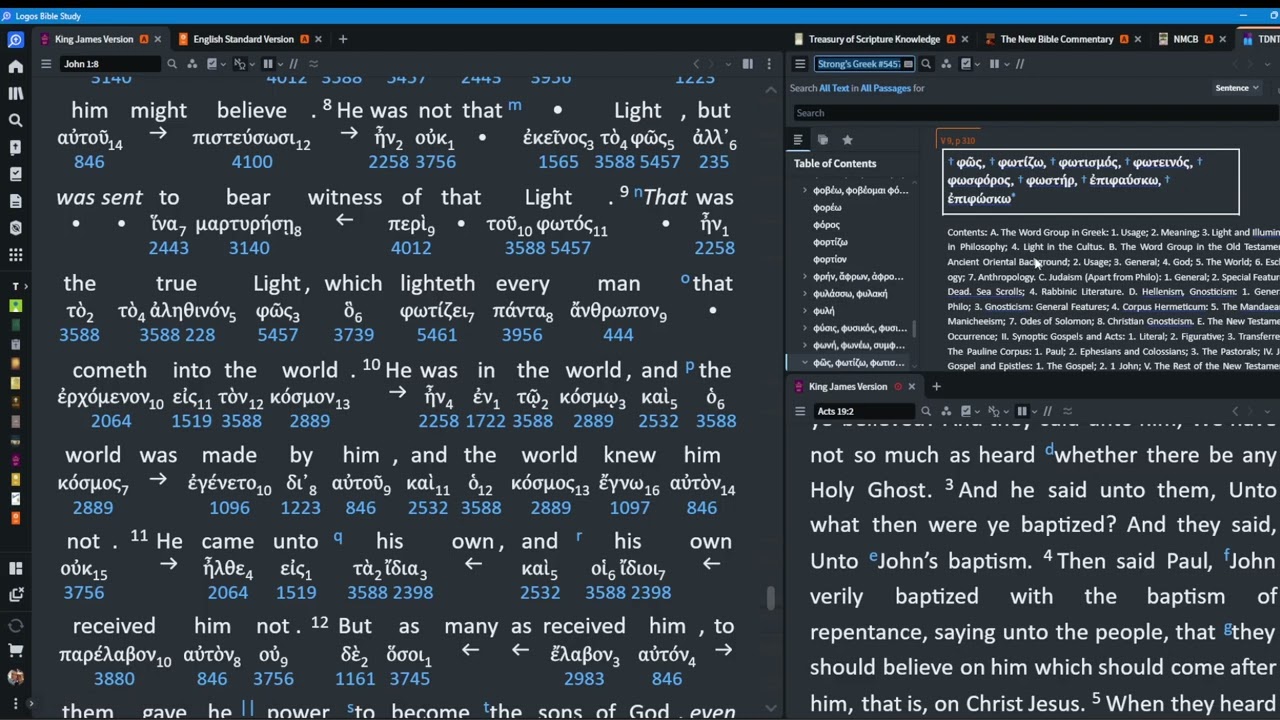
on the left hand side i have a tyndale house greek new testament and on the right hand side here i have a number of lexicons and other works that i've got here i've actually got two copies of b dag open probably don't need both of those so i'll close one so here's the forward and i encourage you to have a quick look through this it gives you a bit of a history of the lexicon itself and how it came together over the years which is where i got the information i told you just a few
moments ago it also goes into some details about some of the distinctions here as well that you'll find as you look at this edition compared to previous editions as well so nonetheless let me just start by giving you a quick tip on how to really use bdag well with logos bible software itself you can see here i'm in the gospel of mark chapter 1 verse 27 and i'm going to look up this word here which is fembeau which is to be amazed or astonished you can click that word and we can double click it and
we can see it turn up here now it could be and it's very likely that for you this didn't turn up quite the way you wanted it to turn up so let me show you how to do this it may be that you double click that word and it didn't work with bdag so essentially what's going on is that logos honors what's called your prioritation and so you can click on the little three stars or the three dots here and choose prioritize resources and then what you want to do is you want to bring in
let's say i want the greek english lexicon here which is little and scott you can see i've got bdag here here's bdag and here's little and scott so now that i've put little scott the lexicon ahead of bdag when i double click on this word it's going to open it in little and scott so what you want to do is click on your log your library click on the three dots up here choose prioritize resources and you want to make sure that bdag is the first lexicon in the list and as long as you do
that when you double click a word in your greek new testament wherever it happens to be it will open a link to that in logos in bdag in logos bible software so we'll make that the primary option for you to look at hey if you're finding this helpful hit the like button on this video it really helps this video get found by more people and don't forget while you're at it to hit the subscribe button the notify bell let's get back to it now when you're in here you'll see that the layout is actually quite
a nice layer let me walk you through a few things first of all obviously you've got the word itself the word we're looking at in this case with its lexical form okay the lexical form is uh the present active indicative first person singular and so you can see here following that we get a number of other forms that we see this in as well so for instance we see with this one we have a first arris form ethan basa we have the imperfect passive form that they re they put in here as well and then
we have a first future passive form as well so he shows you number of the forms that you'll see i don't think this is exhaustive but it's a good guide to just how this word will look in different tense forms as you find it in the greek new testament you can also see underneath that then we have a number of other entries here and you can see in the blue these this means that these are links if you like they normally indicate a footnote of sorts so these are all you can see by the dot
afterwards this is actually a an abbreviation and so if you mouse over it you'll see the whole you know you'll see the whole thing a little bit more so hom is short for homer and if you want a full list of this and this is one of the reasons why i had bdag open previously over here there is actually if you click on the side here and you go to abbreviations you can do a search for all of the previous writers that you might happen to find so you can actually look up some of these
people and here you go here's home homeric hymns and so on so you can look up some of those abbreviations and whatnot in that early section there as well so you can see here editors addition to the new testament there's other writings and so on as you go through here so it's very easy to find what those refer to but you'll need to sort of find your way through some of those and really it's just easier just to put your mouse over these and just sort of see what it says there now with this one
it's actually got a list so what you find is that uh we've got this five volume set of uh homer and you've got here a number of words that are cited in these lists here and so he's just making a reference to that back in that word all right so that's it for that piece so you've got some other citations of this and where to go look at these you can see it turns up and the septuagint as well and so on then we have a number of these arabic numerals here and these refer to
different lexical ranges or lexical sensors that are found within the different literature now what we find is that when you look at any given word the meaning of a word makes sense based on its context so it's dependent on the context so here we have one form of this and notice here we've got intra intr here this is short for intransitive and so we find a small number of instances of this word in fact we only find one really in acts chapter 9 verse 6 where this word is used in an intransitive sense now this
is actually really interesting look at what he's saying here this is astounded in acts 96 the tr following that refers to the textus receptus edition but if we click over here to look at the byzantine version of the textus so this is the texas receptus this is a current edition i think this is the this is the robinson pier point uh septuag form of the byzantine text and you can see here that we don't actually have this word here in the in this particular edition so what we're looking at here is in noise so in
this case we've got a variation here inoy inouye to with a double nu so that's not really a significant variation but there is an indication here that this word is actually not the same word in this edition as in previous editions and if we go back to william tyndale's 1522 english translation which used this erasmian text as its base you can see here the men which journeyed with him stood amazed so they didn't stand speechless like the robinson peer point text gives us they stood amazed and so this is the use of this form that
we're seeing here reflected in this text now i don't have a greek text of this in my library unfortunately so we just have to work with this english edition for the moment but you can see here that what he's indicating here with these footnotes is that there is a texas receptus edition which holds this intransitive form of this word uh and but it's only in the erasmian form or the erasmian critical greek text and so this would be one of those ones that perhaps the complutensian polyglot did not include this particular reading and so it's
eliminated for whatever reason okay anyway so going back here you can see we've got our word here now you can see we've got a couple of different glosses here so one is to be a standard and the idea here is that this word trembling is similar to this word being astounded trembling and astounded in fact is what the text of acts 9 6 is in this texas receptus edition that they're referring to here but elsewhere in our literature and by our literature he's really referring to the new testament and early christian writings and our literature
is only ever found in a transitive sense and that means it has its object and then it's only in the passive uh with the active sense of to be astounded or amazed or more specifically passive with a state of sense of to be astounded or amazed so we can see here a number of occurrences of this and you can see here in this particular instance we have a reference to the verse we're looking at here in mark chapter 1 verse 27. and you can see here just like he says it's in the passive right this
is a passive tense form that we have here so an aris passive indicative third person plural they were amazed they were all amazed and so on and so forth so he carries on then with a result clause that follows from that and so you can see this is a standard use of this particular word now if you were flicking through here and you wanted to more quickly find this reference to mark chapter one well logos has a great way of doing that if you click on the three dots up here these three little round filter
thingies i don't know what you call this but it's visual filters you can actually click on this check box here to emphasize active references and that will then highlight in pink the the references that are open right now in whatever bibles you happen to have open so for instance if i was to open my robinson peer point text here and move to acts chapter 3 verse 11 you can see that it lights up this third reference here as well so to indicate that this reference is one of those ones that actually has this word in
it and we can see it here as well all right so very easy to then find texts that actually have the the the reference that are referred to in the in bdag itself now the benefits of this is when you get to a much longer entry so let's take for instance logos right and let's say for instance we are looking at john john one just for the fun of it and it helps if you're not typing in um greek in the location box anyway so here in john 1 we're looking at holologos right and we're
looking for what sense does he think that logos has been used here now we've got one here talking about just a word talking about a form of communication whereby the mind finds expression chiefly oral right so somebody and you've got a number of examples here and notice here just for what it's worth too just when you lay out you've got a number of references here so here's justin justin justin mata yes the second century ad and you can actually click on the reference here to see the reference lined up over there but you can actually
look at the references and even the greek text if you've got those as well but here you can see he's or a word or a work right so he's referring to something spoken in this context and so you can see the fact that that's not a bold text like you can see for instance acts 7 is here indicates that this is not a biblical text so biblical texts are always in bold non-biblical texts are always just regular weight texts but you can look at here you can see how he's using this word and it lines
up with what dunca is saying here that it has been useful but we don't see here anywhere john 1 1 being used to refer to a particular word or a message or anything like that you get some variations of these as you go through still with that same basic idea and then we go through until we find some other ones so here's a second one computation or reckoning so there's another use of logos that we find and this is often found with compound forms of this root as well in verbs as well so we see
some examples here romans 14 for instance give an account make an accounting each of your account even shadows will give of himself an accounting to god is what he's getting at there and you can see this word uh being used in this sense here but we don't see again john 1 1 being referred to so we get a third sentence here and this is where it gets kind of interesting so what duncan does a lot of the time and what the word mean he's been working with here have been doing as well is thinking through
how the word is being used and you can see here with logos in this case he's referring to this is an independent personified expression of god and he's saying here our log our literature christian literature shows traces of a way of thinking that was widespread in contemporary syncretism syncretism is a word that just means religions that are being merged essentially when a religion is merged with another religion it's syncretism and so also with jewish wisdom wisdom literature and with philo as well and the most prominent feature he says here is the concept of the logos
the independent personified word of god and he goes through here and talks about justin's apology and a number of other texts that you can go through as well and you can look at how this is being used not only in christian literature but also other literature as you work through the text here as well this is a third sense in which this word is used and you can see that is the third there are three senses in which the word logos is used and you've got all three of those are accounted for in the text
that we have in bdag now again the benefit of having this highlighting turned on as you can see very quickly which one dunker believes is the correct one for the text you're looking at now it's worth noting as you're looking through this that not every instance of the word logos is going to be in this article that would be exhaustive this word occurs lots and lots in the new testament and so you'll find a representative usage perhaps with the most important references in most cases but for words like we saw before such as thambetto this
word here this word you do see often with words that don't occur very often you'll see pretty much all the usages of this word in the new testament will be accounted for in the text unlike some other dictionaries there's no there's no indicator to indicate whether he has included all of the the text in the new testament in this article or not now just going back here to mark chapter one again a new teaching with authority according to authority let's take a look at this word kaine here which is this word for new and you
can see that just like logos there's a number of different lexical ways in which this word is being used and he breaks this also into sub items as well which is also kind of helpful so here's something that is new with contrast to something that's old and there's one one version of this where there's no criticism of the old that's implied in the use of it and then there's another sense in which the olders become obsolete so you can see the different usage usages of these now let's just say we can see here very clearly
my reference mark 127 appears here but if i want to another feature that we have in the logos edition of this is to actually make this a little bit more readable by turning on outline view and you'll find that by clicking on the visual filters and clicking the box next to outline formatting here as well and what this does is it breaks out different uses of it so for instance you'll see here we have a new or unused reference a new or unused monument something like that and so on and so you can see the
different things that is used to refer to another one here the connotation of something unknown or strange something introduced so we have new commandments new name a new song a new tongue and so on and so again very similar obviously it's the same word being used and it's the same fundamental idea but you can see there's a slight distinction between the two uses of the word and having that outline view allows you just to sort of split those out so you can see the different instances where such ideas are referred to so we have for
instance a new commandment referred to by john in three different occurrences in his reference to it with a here as well now the other thing that i wanted just to show you about bdag is if you click on if we go into say an alternate text like here's the septuagint for instance we can look up words in the septuagint so just like we've got cardia here we can double click on cardia and it goes to b-dag as well b-dag is used has words in it that refer that come from both the septuagint and in addition
to the septuagint we also find that if we go into the apostolic fathers and we look up words in here we can also find words here that don't occur in the greek new testament but if we double click let's say this word here which is a putting together of atos and pineto to praise if we double click on this word we don't find this word in the greek new testament but certainly when we look it up in b-dagger we see it there very easily and the reason for this is again this is the greek english
lexicon of the new testament and other early christian literature so it's intentionally designed to help us not just with the reading of greek new testament like some lexicons are but also with the reading of other texts related to that such as the septuagint and the episodic fathers as well and these become primary texts for the for b dag itself and the same goes for even some of these later ones like philo and josephus and other ones like that as well if we look up these words this is automatically prioritized obviously my english version of josephus
but you can easily look up the greek text of these as well uh by just you know putting it side by side or opening another text if you want to so bdag is a really good tool for looking up words in whatever early greek text you're looking at whether it's a septuagint whether it's the new testament or whether it's the apostolic fathers so i recommend that you get a copy this is my go-to lexicon i use it for pretty much everything i do have a number of other lexicons that i that i sort of look
at occasionally but most of the time i find what i'm looking for here in bdag and i often will use those other lookups of other passages be it in the episodic fathers or somewhere else to actually see how other uses of the word are working so that i can see is that an appropriate use of the word here as well this is actually really helpful for discovering things like metaphors and things like that because there are some words where it is merely a metaphor and you just we only have the metaphorical use in our literature
and that's referred to by duncan as well which makes it really easy to understand the actual original meaning of the word and how the metaphor is actually working so let me know i'd love to hear from you do you use bdag or do you use another lexicon leave a comment in the comment section below and let me just say here please don't say strong's strong starts with english and then goes to greek we're really looking for if you're using a lexicon that's greek to english that's what i'm interested in hearing here and what do you
think of it tell me all about it and what you think in the comment section below i look forward to hearing from you there if you're interested in learning greek so that you can make full use of bdag and tools like that then can i encourage you to download our starter pack to learning the to read the greek new testament it's just going to give you some tools and tips and some how it actually works to help you to learn the what it's going to look like to learn greek okay so go get that at
bma dot to starter pack thanks so much for watching keep taking small consistent steps toward mastery so that you can use bdag to its fullest extent possible and look forward to seeing you in the next video i'll see you then