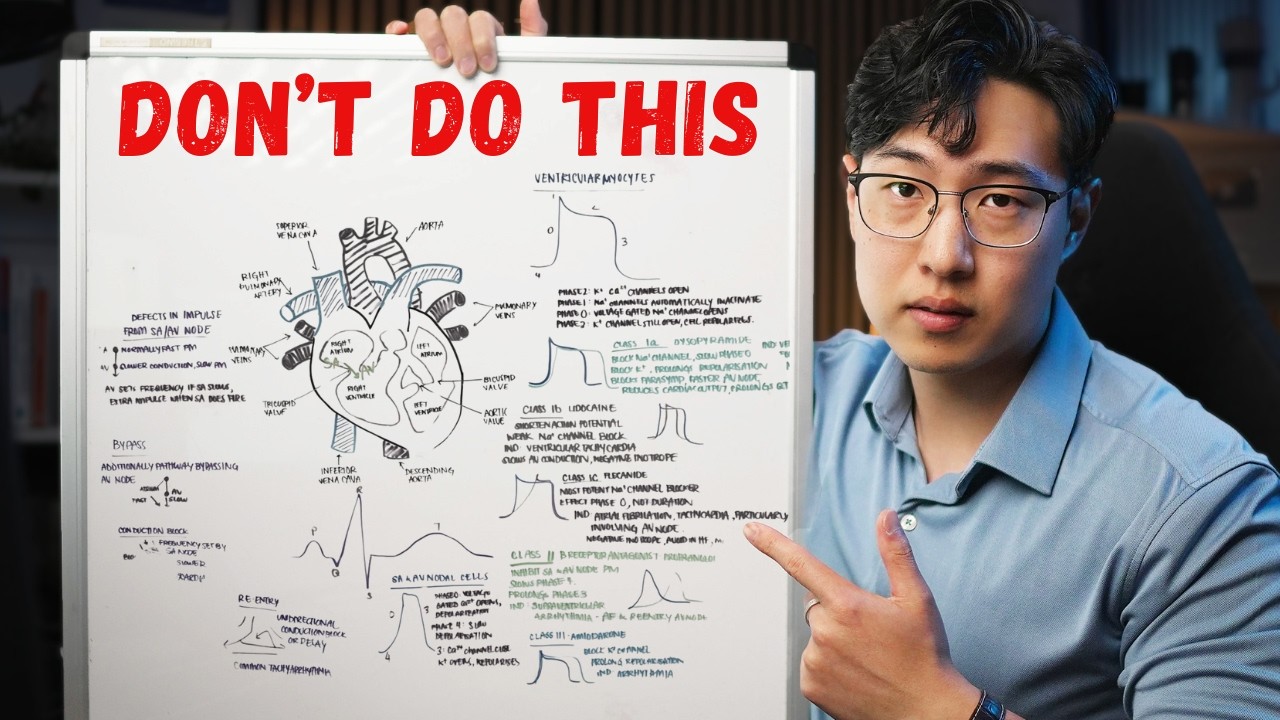
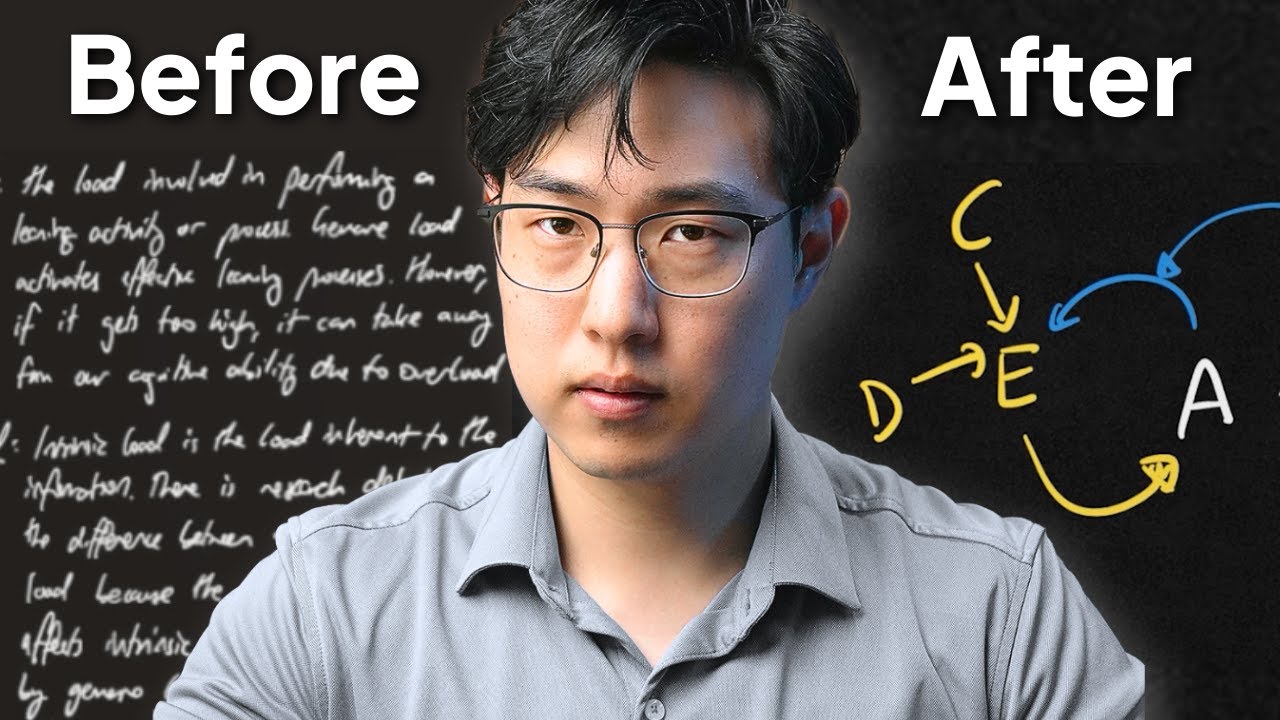
I'm Dr Justin Sun I'm a learning coach and have been for the past 13 years and today I'll be answering your study questions on the internet let's get started hey yz8 V asks how to study for 12 hours every day without distractions it's really hard to solve a problem that you can't see and this is the problem when we talk about just distractions as a single word each distraction is unique and so while you could do a lot of techniques like pomodora or Fodor timers or wearing noise cancelling headphones and playing some white noise and
these things will help you to focus and concentrate it's not going to work all the time and for every type of distraction the way you solve a phone notification distracting you versus someone knocking on your door are going to be different and so if you really want to get to a point where you can consistently focus and concentrate for long periods and know that you won't get distracted you have to start becoming aware of the specific distractions that enter into your focus zone and that helps us be specific and targeted as opposed to just removing
distractions which is just too abstract questioned by a 5hw many students online claim to only use active recall and space repetition to get top grades so why do I say this isn't enough thanks for your question just because a successful person does something doesn't mean that's the reason they were successful when you look at the research around active recall and space repetition what we find is that in a university setting something along the lines of 80% of students tend to use that as a technique now are 80% of the students achieving top results definitely not
statistically that's not possible it's not how many people at the top do something it's how many people that do this thing end up at the top there are millions of people that use active recall and based repetition and it is a significant and beneficial thing to do you should be doing it in your learning but for most of those people it is just not enough that is a fact the reason some people can get top results while doing nothing else is almost always because they have something that's called high deep processing which is their ability
to extract Knowledge from information whenever you hear or read something your brain is processing that information and depending on how your brain processes that information it affects how good your memory and your ability to use that knowledge is going to be people with high deep processing are able to think about that information in such a way that they don't need a lot of other techniques to make it click and to see those connections now if you or most people have a lower level of deep processing then you can use the exact same strategy and not
get the same result because because the issue is in the processing of information we would now need to supplement that with another technique or to train the Deep processing question by Navid nawab 9955 why do we postpone hard work every day and how can I end procrastination procrastination is a combination of a biological and a emotional response the human brain is not very good at picking a long-term goal and staying motivated towards it it favors shortterm good feelings hard work is energy consuming and difficult and usually doesn't give you that same dopamine Rush as playing
games or scrolling on social media which is effortless and is designed to give us these dopamine spikes so biologically our brain tends to go down the easier energy conserving route because it doesn't care about you achieving your goals it cares about keeping you alive but the other part about procras ation is that it's often an emotional coping mechanism it is when we are faced with all of this effort and difficulty and uncertainty and it makes us feel apprehensive anxious uncertain or overwhelmed and so to deal with that emotion instead of solving the root problem which
is to solve and do the work we cope by procrastinating which allows us to avoid that problem and avoid that feeling to properly end procrastination we need to have a number of things in place plan in advance break bigger tasks into smaller tasks learn to acknowledge and sit with that discomfort and train yourself to work through and just sit with these difficult emotions instead of trying to avoid and Escape them the Hallmark of an effective person is that they can do things when they don't feel like doing them Zen zq5 asks what are the best
study techniques in general this is a bit like asking what are the best techniques for being alive in general all studying is is US deliberately deciding to learn something and that is an extremely Broad and complicated neurological process but if I had to answer it in just a few seconds the study techniques that will give you the best return are the ones that will help test your understanding find your gaps and force you to think about material in an interconnected way that involves comparing contrasting and making value judgments about what you're learning that's called higher
order learning someone who engages in comparative higher order learning and tests themselves will probably have 70 to 80% of their bases covered the hard part is actually getting good at that orc 2013 asks how do some people Ace their exams without studying is this a myth or a lie I used to ask myself this question all the time going through medical school cuz when you're in medical school you're surrounded by a lot of really smart people and I would be studying all day in the library and then I'd look outside the window and I'd see
these guys just like chatting and doing whatever and like playing sports and I'd be thinking when do they ever actually study and those same people would do better than me in the exams so here's the truth let's think about four different variables that affect your ability to pass an exam the first one is your deep processing that's what I explained before basically it's like your natural intelligence which you can actually train the second thing is your study strategies and your techniques and how effective they are at activating effective learning processes in the brain third is
how much time and effort you spend on actually studying to use these first two and the final one is the difficulty of the exam when an exam is easy enough all you need is just one of these first three factors to be decent enough to get you over the line and as exams become more and more difficult you need one of these three things to be higher and higher until a certain point where all three of these things need to be very high this is why at the top levels for the most competitive situations you're
are not getting anyone who's not putting a decent amount of time and effort into studying that doesn't have pretty good techniques and doesn't have high deep processing and if someone is passing a difficult exam without studying at all and their techniques don't seem special then you can be guaranteed that their deep processing is Sky High and if that's you lucky you by the way if you are interested in actually measuring your your deep processing ability then I've got this free learner type quiz that you can take it asks you a few questions about three of
the evidence-based dimensions of learning I've identified of which one of them is deep processing and so then give you a quantitative score out of a 100 for your deep processing ability at the end it also gives you some steps on how to improve that deep processing ability so if you want to give that quiz a try it's totally free I'll put a link to it in the description now on to the next question BAS H me asks everything gets boring whenever I am reading or learning something is there a solution I vividly remember being in
high school sitting in the library spending time studying and then almost every single day falling asleep studying during that time was the most boring tedious drowsy inducing activity I could do I could have had a perfect night's rest energetic as soon as I start studying 30 minutes in I just want to take a nap this is actually a sign of passive learning it's when you're sitting down doing some kind of studying or learning activity that's very ineffective what that means is that it's not engaging your brain and activating the right Pathways for learning to take
place if you do 2 hours of passive learning you'll feel like it's very boring and at the end of it your memory and your ability to use the knowledge will not be very good learning itself is something that your brain really enjoys most people who hate studying still love learning something and if you look at studies that measure the actual electrical activity of the brain doing effective Active Learning which is more engaging and requires more effort then it's spiking a lot there's a lot of activity and when you look at the brain of someone who's
engaging in passive learning just like reading rereading mindlessly just writing down notes then it's almost the same as someone that's entering into the first stage of sleep SOI the solution is to engage your brain by thinking more actively about what you are consuming feeling that learning is boring is almost always a sign that the way you are learning is not effective PV sures 9342 asks what is the best way to learn procedural parts of a subject such as solving math problems what processes should we engage in besides over practicing procedural learning is about taking what
you have learned and then applying and executing on that over practicing is a technique where you're not just practicing like solving a problem until you're able to solve it correctly you then continue to solve many more of those types of problems beyond the point where you reach competency and the idea is that over practicing can increase your fluency and speed of recall it's also called overlearning there are two things that I think commonly hold people back from developing procedural expertise for something like solving a math problem the first part is that they don't do enough
inter Le and the second part is that they think they have a procedural issue when it's not interleaving your practice means that instead of just practicing like the same question again and again and again well like variations of the same style of question you're actually mixing them with other types of questions and sometimes even just other topics or other Concepts inter leing has been shown in the research repeatedly to be an incredibly effective way of developing expertise and procedural skill the simple way that I like to think about interleaving is that you're hitting a topic
from multiple different angles and multiple different levels so don't just solve this type of problem in exactly the same way mix it up merge it with another concept create a problem that involves two different concepts together or put it in a different type of context that's a little bit different to how you initially learned it think about the more complex types of problems you might have to solve and then test your ability to solve the more complicated ones now the second issue was that you can be mistaken in thinking of a procedural issue because you
tried to solve a complicated problem and then you got it wrong most of the time when you can't solve complicated problems is because you actually didn't know the approach and strategy for solving it as opposed to not being able to do the procedural actual working it out part and that is actually not procedural knowledge that is declarative or otherwise conceptual knowledge so if you keep getting complicated high level questions wrong it indicates that when you first learned it you didn't pay enough attention to how the different concepts relate to and influence and work with each
other having that conceptual knowledge is what helps you to figure figure out the strategy and approach to solve a problem Risa mine 4816 how do you study systematically when navigating many different resources such as lecture slides videos short books summary notes YouTube videos multiple textbooks let's say that I asked you what are the ingredients that I need to make a beef lasagna you would probably search it up on Google find a recipe that seems okay and then tell me what the ingredients are or maybe if you just happened to have a cookbook next to you
then you could tell me or if you already know it you'll just tell me off the top of your head now technically there are tens of thousands of places that you could have gotten that information from and yet it's not overwhelming to think about where can I get that information from because it doesn't really matter it's the same thing with learning learning from multiple resources is very overwhelming if you are just a passenger of The Learning Journey and information is being thrown at you and you're just trying to do something with it if that's a
situation you're already going to be on a back foot with everything to do with learning moving forward the trick to becoming an effective learner is to start driving it yourself you have to actively be thinking about what you're about to learn what information you will need and you are seeking the information to get it some types of information it's better to get it from a lecture sometimes it's better to search it up on Google get it from a YouTube video and so when you first start learning something spend a little bit of time getting a
general sense for what type of information you can get from these different sources and then develop the skill to be active when you're learning to think about what information that you need why you need that and how that's going to help you to understand the bigger picture of what you're learning once you start doing that not only does it become easier to work with multiple resources but you will find that your memory your ability to understand information your ability to apply information and just to learn it deeply increases by folds in fact I actually believe
that until you start thinking about learning this way there is a hard ceiling to how efficient your learning can ever be because you are always reactive to the information given to you question from just one h1m if you had to give just one piece of advice on how to study what would it be that's a good question don't try to make studying faster or easier until you figured out how to make it effective and effective studying usually means it feels harder being fast at studying is when you can do something habitually learn to do the
hard thing until it becomes a habit then it becomes fast and effective the biggest gain of efficiency you can make is not in how you time your repetitions and your reviews it's in just forgetting less the first time you learn it it's about learning it properly the first time to give yourself less baggage to deal with and less of a gap to chase later the future version of you has enough problems to deal with when you learn to learn effectively and engage the effort in the right ways speed and efficiency comes automatically it's impossible not
to have the speed and efficiency if the effectiveness is there so koku suuki asks any advice on how to review old materials while also learning new material simultaneously on a consistent basis if you're on a boat and water is coming through cuz there's a hole on the side of the boat your number one objective becomes to plug that leak there's no point spending time on bucketing water out of the boat Because unless you can bucket really fast and you're prepared to bucket for the rest of your life you're eventually just going to sink the problem
is the leak same thing with learning if you have material that you are either falling behind on or you're forgetting it so quickly and at such high volumes that you're having to spend a lot of time on just reviewing the same thing you learned before that's the leak it means that the way you learned it initially was of a low quality that's reflected in a low memory things you learn to a high quality stick in your memory more easily if you find out one day that your sibling is just got married you're not going to
forget that you're not going to wake up the next day someone tells you and be like oh yeah like that was there you're not going to create a flash card like my sibling got married and just do it every single day it sticks because the information is relevant it's connected and exists within a schema of knowledge that influences other pieces of knowledge inside that schema that's what it means for knowledge to be relevant now you might be thinking when I'm studying that knowledge is not that relevant but you can make it relevant think about an
expert in a field they can learn the strangest tiniest little fact and detail that they read from some research article that for you you might think this is like a random irrelevant detail for them it will stick because when they read it they think oh if this is the case and this and this and this the network is there so if you don't have a network then you're going to lose things very quickly from your memory the key there is to plug the leak by start building knowledge in Networks rather than an isolation this is
higher order learning now the other part is that you want to make sure that your backlog of things that you need to review doesn't just keep growing so if there's new material coming up prioritize learning that stuff really well and get ahead if you need to to give yourself that extra room and buffer spend time away from reviewing the old stuff and spend more time on making sure that the new stuff you're about to learn doesn't need to be reviewed so frequently once you do that you can slowly start propor portioning a little bit of
time here and there to review your catalog of old material that you just need to keep chipping away at enemy stand user 6799 asks I need to study more per day but I can't since my brain shuts off how do I deal with exhaustion and mental fatigue you can do 2 hours of focused high quality work that is legitimately better than 20 hours that is at a lower quality and less Focus what used to take me let's say a 100 hours in high school for me to learn now I could learn the exact same thing
probably even better in 5 hours and I'm absolutely not exaggerating when I say that so when we think about why you are exhausted and fatigued is it because you are basically burning out from doing something that's ineffective and tiring for a long period of time or is it because you are doing the right thing and you're doing it in a really focused good way but you're just doing it so much that it's just draining if it's the ladder and you are really doing high quality work then you can probably afford to just take it easy
a little bit you're probably miles ahead if it's the former which is definitely more common and you're doing more passive work that takes a long time and it just makes you feel tired then counterintuitively the way that you'd combat that is to spend more effort during the session to try to make it at a higher quality which actually activates your brain more engages it makes you feel more energized and it means that you don't have to spend so much time to cover the same amount of content Alice carollyn 7254 asks how do I consistently study
every day like I said before with distractions it's very hard to solve a problem you can't see the first thing is to start reflecting and observing why you're not able to study consistently every day what is the thing that's actually holding you back is it a certain way that it makes you feel is it because it's not effective uh and therefore it's demotivating do you feel daunted are you procrastinating there are many reasons that can stop you and each reason has a different root cause that can be addressed in a different way Clara Hall 16
how do I maximize my learning for audio/video lectures since I can't Prime beforehand I love this question because clar Hall is obviously thinking about priming which is like one of the best things that you can do for your learning it helps it build basic connections and preps it so that the information it receives later is easier to process and in the case of like live lectures it makes those lectures so much less overwhelming cuz your brain is ready for what it's about to hear clar H is asking about sort of pre-recorded videos and audio resources
what you can actually do is just download it and then just run it through Ai and just tell it to give you a summary of what it's talking about and you can use that to Prime yourself before you listen to it if you can't download download it then another strategy is to familiarize yourself with the learning objectives first and then listen to it very very quickly just picking out for anything that you think is unique or new that you wouldn't be able to get from other resources which it usually provided to you so for example
when I was doing my masters of education there was this enormous textbook for me to read through and I knew the learning objectives for every single lecture cuz it was it was written it's almost always available so I would look through the learning objectives scan through the lecture to see if there's anything I think I wouldn't learn from just a textbook make a note of that and then I'd go and do most of my learning through the textbook using the learning objectives as a gopost and then I would come back to the parts that I
marked on the lecture to just fill in the gaps question by F Ben Parkins 361 do you have any advice for multiple choice exams I have a lot of advice for multiple choice exams my best piece of advice is just know the material really well it's just a test of your knowledge so depending on how you perform in this test you're either going to see that there are things to work on in your knowledge or the way that you apply your knowledge and depending on where the issue is the solution is very different Blaster shies
TM asks what are some habits that can improve one's memory memory is the product of thought when you think in a certain way memory is the byproduct habits to improve your memory are the habits that allow more effective thinking any technique or tip that makes you think more about what you're learning that makes you evaluate the importance of what you're learning and connect compare see how different concepts and different parts of what you're learning influence each other anything that makes you focus on the big picture of what you're learning will likely improve your memory Mel
Marcelo Ru 6513 I'm so sorry about how I pronounced your name asks how would you advise me to take notes during class if I don't have an iPad and only have a pencil and paper they don't allow us to record the class that's unfortunate but don't worry when I was first starting with nonline not taking and mindmapping not only did I not have an iPad because iPads were and still are very expensive uh I actually started off using leftover A3 rice paper that I just happened to have lying around at home and I that's like
the most Asian thing I can say but I don't know why I guess I also thought buying just A3 or A2 paper was too expensive and so I actually found I think it's like wrapping paper that we just had lying around at home and I would do my mind maps on that one strategy that my uh students actually started thinking of is they would buy art books which usually have A3 or A2 size paper and they would either carry that around with them or they would cut it so they have a piece that they can
do all their mind mapping on and they'd fold it up and put it into a clear file and carry that around with them I think that's perfectly fine just make sure you don't run into the surprisingly common mistake of just because your paper is bigger doesn't mean you should write bigger or start using like permanent markers instead the point of the paper being bigger is so that you have more space to write there's no point anymore if you right larger as well motivator asks what are the characteristics of a good study system a good study
system should always have some form of priming or pre-study to prep your brain to receive the information and to form basic structures it should have some method of processing the information during your main intensive learning event it should allow you to process the information in a way that helps you categorize it make sense of it compare ideas contrast ideas see the big picture if you've done this correctly at the point you should have gaps in your ability to recall details and have memorized things you should not be trying to do that in the early stages
of learning you should also have a review of that material where you can elaborate on it flesh out the relationships and add additional material from other resources within probably 24 hours preferably on the same day before you go to sleep and there should also be some form of varied challenging testing from memory testing it at the levels that you will need eventually within the first week and then again sometime two to 4 weeks later if you need to memorize things you should also have a usually flash cards is a great technique to use for this
something that's running in parallel for those little details that you need to memorize but importantly those flash cards need to be a last resort only the things that you can't integrate and connect together should go into your flash cards the more flash cards you have the more burden you give your future self and eventually you have no time to do anything because you have so many flash cards to do but that is a very generic answer and at the end of the day a good study system is just what works for you and your circumstance
but generally speaking you want to try to hit as many of those boxes as possible SAR Shala asks how to learn multiple subjects at the same time EG two subjects spread out across two weeks whether you choose to focus on just one subject and then try to do as much as you can on that one and then swap to another one versus if you just decide to just split your time 50/50 every single day on on both subjects it doesn't really matter there's not going to be a significant difference between the two of those in
in fact some would argue that just splitting your time uh between two different subjects would be better because it activates more inter leaving but what matters the most is how you can use your study system if you split your time evenly across two subjects but then it makes it really hard to use that study system that I just explained before then that's going to be the thing that is holding you back the most so whether you study one thing at a time or two or three or four or five things at a time just the
most important thing is to keep your study system functional AI sf1 hour asks how do you make mind maps for maths and physics I think a lot of math and physics is taught in a way that's overly procedural in that there's a lot of focus on just solving problems and there's less focus on understanding the concepts behind what you're actually learning and as a result you get people who can solve problems when they're given to them in like a very specific format but when it's complicated problems that require you to actually figure out the approach
and piece things together or it's a contextualized problem that it's not like it's you know not just numbers and it's actual words and scenarios that you have to decipher people struggle a lot and so the strategy for making mind maps for a subject like math or physics is actually exactly the same as you would for economics or history or biology or chemistry like it's exactly the same the hardest part is actually just seeing the topic in that way and realizing you can just think about it in the same conceptual way it just doesn't feel natural
sometimes because it's presented to us in a way that's very procedural heavy Silver Mist Bell asked what are your thoughts on Parkinson's law Parkinson's law is the idea that a task will fill whatever space you give it so if you have an assignment during 3 weeks but you give yourself 3 hours you will get it done but if you give yourself 3 weeks it will take 3 weeks it expands or contracts to fill the space that you give it I love Parkinson's law because it just illustrates perfectly that time passing is a terrible way to
measure things how long you spend studying really doesn't matter I try to use Parkinson's law all the time uh the only thing that I recommend is that you don't use Parkinson's law by just cramming everything in last minute there's nothing wrong with trying to do 3 weeks of work in 3 days if you can do it but just avoid the risk that you might get to the end of day three and realize you don't have enough time or you don't have enough time to like check your gaps or test yourself and give yourself the best
chance at success if it's something that actually matters to you yes crab use Parkinson's law but just do it up front when I did my masters of education I decided to finish the entire Year's curriculum within that first month part of that was to just see if I could which I was able to do quite successfully and the other part is because I was also working like double full-time hours as well but because I did it all up front it meant that I did have time here and there throughout the year just to keep on
top of things to test myself and just get those tiny little incremental gains that made me go from a 95% to a 100% if it matters the one who must not be named asks how do you catch up and get back on track after weeks of poor commitment from a student who's currently facing a highly competitive University entrance exam this really depends on how far back you are and how close your exam is let's look at a statement of reality at a certain point it's too little too late if you're behind on an entire semester
of work and your exam is tomorrow and you're trying to get like an A+ unless your deep processing is just astronomically high now that's obviously a spectrum even if you have two weeks left it might not be enough even if you have a month left depending on the content and how far behind in the exam it might not be enough and the reason that I'm mentioning this is because it's really important to recognize if you've made a mistake in your preparation for an exam that's about to come up and you think there's a real risk
that you might not get the result that you want you have to think about how you're going to avoid that mistake next time I worked for years in the premedical space helping students enter into medical school and it was a really interesting experience because I also worked it was a charity and I worked with a lot of students from like academically disadvantaged backgrounds um often from poorer schools and they didn't have a lot of these study habits and prior experience with these subjects so when they entered into uni it was like a shock to them
they really really struggled to adapt that's actually the reason why I started learning coaching is because I wanted to see can I teach these students what I've learned after years of University but when they're still in high school and one of the most heart-sinking things that I would see all the time is people get to the end of the year they don't enter into medical school because they made a bunch of mistakes sure but then they don't actually do anything to fix those so they enter into their second year of University trying to in through
a graduate pathway but they make like they haven't changed anything they've just gone from one year to another year like time has passed and nothing has changed so they make the exact same mistakes and they miss their second shot as well so for starters use this as a wakeup call to be like okay I got to like get myself together what is stopping me from being a successful student figure it out and actually invest time effort like part of yourself into fixing that if that is important to you and if you are really close to
the exam and you feel like you're screwed and if there's only one thing that you can do then the first and only strategy that I'd recommend that you just heavily invest in is just testing just test yourself even if you don't even know the topic even if you don't know the knowledge just learn it while you're testing just test test test if we think about a single technique that's probably going to fill that Gap as effectively as possible in the shortest period of time testing is probably where it's at Barnabas 4608 asks after failing an
exam how should I analyze my past preparation to better learn from my mistakes I did not plan the order I'm reading these questions for the first time such a timely and good question how do you actually learn from the mistake so again it's very difficult to solve something when you can't see the problem figure out what the mistakes are first if you don't get an outcome that you want failing to get the outcome was not the mistake that's the symptom of the mistake the mistake was somewhere before the outcome and there may be multiple different
mistakes be very specific about understanding what are the things that you think held you back and there are two ways that I want you to think about this the first is process what are the things you did that you shouldn't have done what are the things you didn't do that you should have done but the second often more important more powerful change that you can make is how did you make decisions and react often when people are learning to learn the new techniques feel uncomfortable very common mistake akake as a behavior and decisionmaking method is
that when they try this new technique and it feels uncomfortable and it feels a little difficult they actually revert back to what they're comfortable with and they say oh this new technique doesn't work this is actually a well studied phenomenon in learning science and it's considered one of the biggest reasons why students fail to become successful so write down everything that you did as part of your preparation and then write down next to it why did you do that and then go through how did it go when something went wrong or not too plann how
did I respond to that how did I feel about it how did I react and what decisions did I make from that and look there if there are problems problems in your decision making or the way that you react to things are likely transferable solving that solves 20 other things AI boy Muhammad 6079 I think I screwed up the name again but uh what is the difference between Bloom's taxonomy and solo taxonomy what a technical question I love it both blooms and solo taxonomy are ways that people have tried to categorize knowledge in the past
and there is a lot of overlap between them but first of all blooms divides it into six different categories actually the original Bloom which was published in the 70s uh is not really used anymore and the one that most people talk about now is Bloom's revised taxonomy which was revised in the early 2000s for those of you who care which is probably none of you uh but solo tonomy divides it into five levels instead of six but the big difference is actually that solo taxonomy divides the knowledge into what the knowledge schema looks like once
you have learned it whereas blooms taxonomy focuses on how you go about arriving at those schemas it's about what are the thought processes that are engaged for example like memorize is a verb like when you try to memorize you reach this level when you try to understand you reach this level whereas solo taxonomy just says what what is the level that's reached arom Mano Nick asks how do you best approach learning for work compared to learning for school the way you learn for work or school when you learn effectively is very very similar almost exactly
the same in reality most professionals as soon as they start learning for work realize that many of the methods they used in school no longer work for them and then they kind of develop a whole new method of learning just for work here's the interesting thing often when we talk to professionals and then I ask them if you went imagine going back to UNI with what You' have learned about how to learn now with your experience with work how would you do and they often say man I would have found it so much easier because
now I know how my brain works they know how to like piece things together they can make things more relevant all that happened is that the professional learned how to learn a little bit more effectively a little bit more in tune with how their brain actually wants to learn whereas in academics you can just get away with not really needing those strategies as much you can kind of scrape by or you can actually sometimes just game the system so the principles that I teach in all my videos and in my program they are almost exactly
the same for Learning and for work I use it every day anytime I need to learn anything for work I teach it to CEOs managers new graduates Associates because it's based on how biologically your brain likes to take in information and process it having said that there are some Nuance details like for example a lot of professionals like they don't need flash cards that's memorization is not a technique that they need in in some instances so there are some small differences between the two Hari Jerry asks how do you memorize and retain lots of facts
years formulas names places I keep forgetting them after a week well Harry Jerry uh based on the research you are just like every other student um it's very normal to forget them after a week generally people think that they will retain information at about 70% after a week but when you actually test them it's only like 30 to 50% so forgetting most of what you learn after a week is actually the norm just because you feel like you have tried to memorize it and that you have understood it at the time doesn't mean you will
retain that knowledge or that you can use it the thing that determines whether that knowledge will stay encoded into your memory or not is how connected that information is and how integrated it is with other pieces of information this is the Crux of learning information in isolation is death that information will not survive inside your memory it will be purged out and the only way you can take information that is actively being purged out because it's irrelevant doesn't connect with anything there's no reason for you brain to keep this it's not connected to anything is
if you just repeatedly slam it into your brain through repetition uh some people call this deepening the neural Groove and it does actually work but it's limited in its effect because it's number one requiring a lot of repetition which means lots of time and it's not scalable if most of what you learn you have to do through brute force and repetition then you're not going to have time to repeat all of that stuff so the trick is figure out the things that you can connect make sense of information more connect it together and the stuff
that you can't Chuck it through flash card use brute force thanks for watching and if you want me to answer more questions then let me know in the comments Below in the meantime watch this other video that dives deeper into becoming a better learner