Cellphones have become so pervasive now that being able to use your cell phone to make a call is maybe something you take for granted. But when you wanna call a friend, what needs to happen for phone calls to go through? Two people both need to have working phones with charged batteries You need to have paid credit with a network service provider.
And you need to be within a range of a working cell tower. An entire service chain needs to be in place and functioning for it to work. This is similar to faecal sludge management which also relies on a complex service chain to function properly.
This module provides an introduction to faecal sludge management and the current global situation. Following this module you will be able to describe what faecal sludge and faecal sludge management are. Discuss weak links of the faecal sludge management service chain.
List the components of a complete faecal sludge management service chain. So, first of all, what is faecal sludge? Faecal sludge is any combination of waste water and excreta that comes from onsite sanitation technologies.
Specifically meaning it has not been transported through a sewer. Examples include pit latrines, unsewered public ablution blocks, septic tanks and dry toilets. So, faecal sludge is highly variable in consistency, quantity, and concentration.
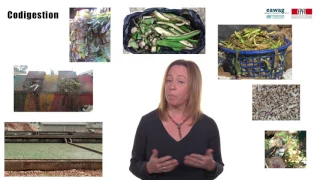
Here are some examples of what faecal sludge looks like. This is sludge from septic tanks. You see where samples were taken and what they look like in the lab.
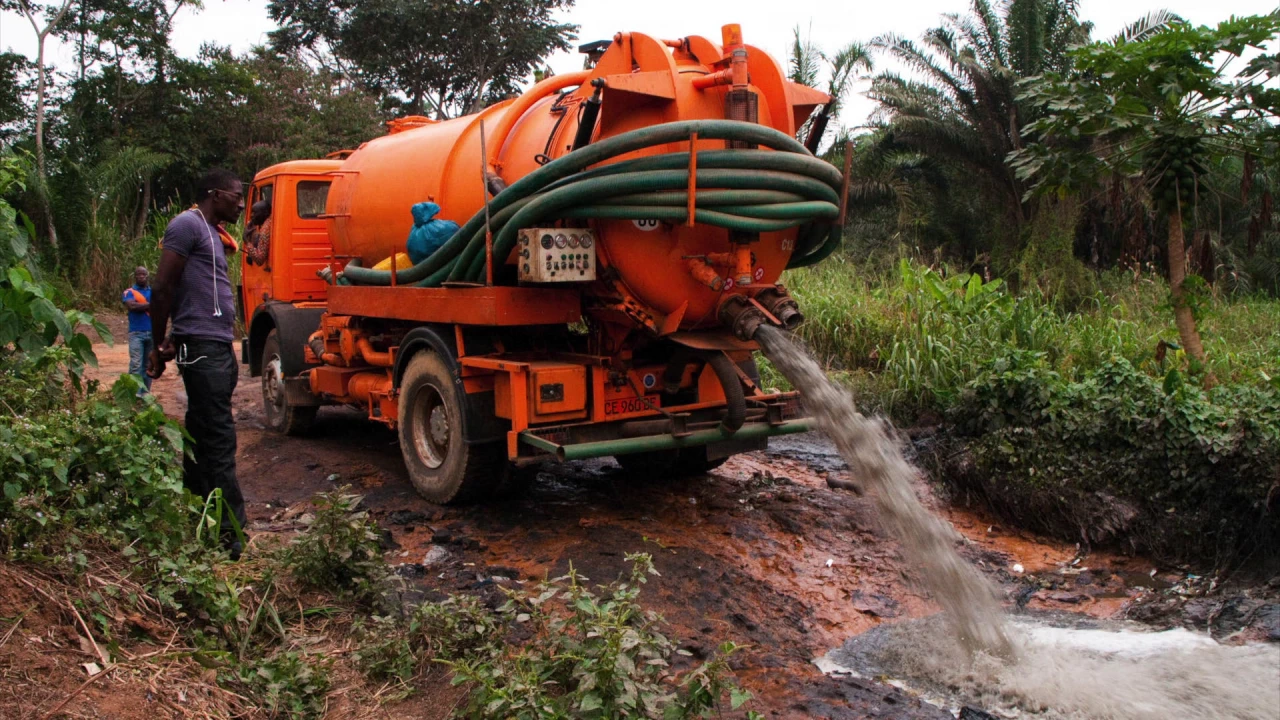
How a septic tank is emptied that is located on an internal courtyard. Bringing the hose pipe for the vacuum truck inside. And faecal sludge from different types of pit latrines.
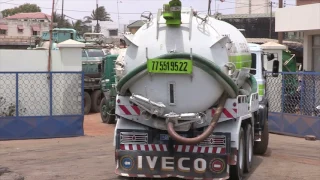
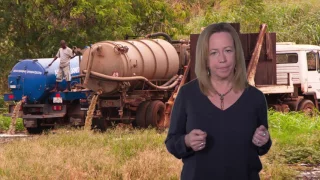
Emptying of pit latrines with the vacuum truck. And also, manually with shovels and forks. And barrels transported with the motorized tricycle.
Faecal sludge from public toilets does not mean a specific type of technology, but tends to have different usage and storage times. The faecal sludge management or FSM service chains starts with the onsite storage or containment of faecal sludge shown here in septic tanks and pit latrines, which then needs to be collected and transported to treatment facilities. Where it's adequately treated for the intended end use and then ends with resource recovery or safe disposal.
Faecal sludge management represents a very significant global need. This figure made by the Boston Consulting Group illustrates the global population served by onsite sanitation. All of which are in need of faecal sludge management.
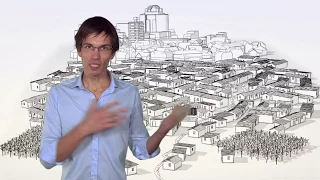
So, globally, 2. 7 billion people or 40% of the entire world's population are served by onsite sanitation technologies. In urban areas of Africa, Asia and Latin America this accounts for around 1 billion people.
That number is expected to grow to 5 billion by 2030. In most of these cities the majority of sanitation is provided through onsite technologies. Not sewers providing even up to 100% of sanitation coverage in urban areas.
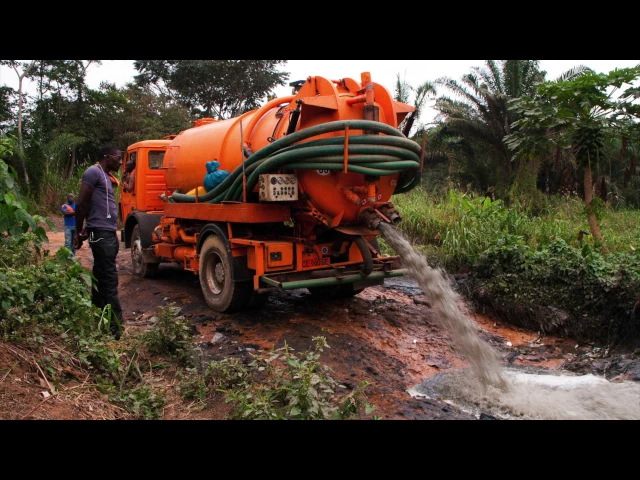
However, the reality is that in low and middle income countries there's typically no management system in place for the resulting faecal sludge. The result is that it frequently ends up dumped directly into the urban environment. Problems in the service chain are households that cannot afford to pay someone to empty their system they're forced to find alternative solutions, like just digging it out themselves.
Manual emptiers who, once they empty the systems, it's physically impossible for them to transport at long distances. Mechanical emptiers that have trucks that once they empty the sludge the distances are too far for them to transport it to treatment facilities or traffic is simply too bad for them to get to the treatment facility. The general lack of treatment facilities in most cities.
And faecal sludge that is used or disposed of in unhygienic ways. Examples of how this looks are poorly constructed and maintained facilities. Digging a hole in the street right outside of a house so that the contents of a septic tank that is illegally emptied manually with buckets can be illegally dumped into it right in the street.
Breaking a hole in the base of the containment, so the faecal sludge will just drain directly out. Emptiers who have to get inside the septic tanks or other containment technologies to remove the sludge with shovels. A discharge channel for sludge trucks that drains directly onto the beach and into the ocean.
Illegal emptying of sludge trucks directly into the environment and scavenging faecal sludge for unsafe use in urban agriculture. So, clearly, providing adequate access to sanitation facilities does not end when onsite technologies are built. That is just the start.
What happens after they become full? It's imperative to also take a longer term focus which moves beyond the household level. The sustainable development goals or SDGs will hopefully have a positive impact as they now include faecal sludge management.
The target to achieve access to adequate and equitable sanitation has been upgraded to include the safe disposal or offsite treatment of excreta. It is important to keep in mind that onsite or decentralized technologies can provide sustainable solutions in all areas of the world. Sewer based solutions are effective.
But are also very resource intensive and expensive. In a side by side comparison in Dakar, Senegal the sewer service chain was found to be 5 times more expensive than the existing faecal sludge management service chain. So, faecal sludge management can be considered a long term viable option.
And, possibly, more sustainable compared to sewer based systems if the entire service chain is adequately managed. We need to simultaneously address how to immediately start getting excreta safely out of the urban environment. While simultaneously developing sustainable and globally relevant solutions for managing faecal sludge into the future.
In the following modules, we will present examples of solutions that are being implemented. One of the most important things to realize is that faecal sludge management is not only about technology. It's about a complex service chain that depends on the interactions among people at every step.
The way forward to finding sustainable future solutions for faecal sludge management includes overcoming bottlenecks at the crossroads of planning, management, and technology. All of which you will hear about in future modules. This is the same integrate approach presented in the book Faecal Sludge Management, Systems Based Approach to Implementation and Operation.
In this module, you had an introduction to what faecal sludge and faecal sludge management are. The current status of weak links in the service chain in low income countries. And components of a fully functioning service chain from the household level to the final end use or safe disposal.
Thanks for joining! See you next time.