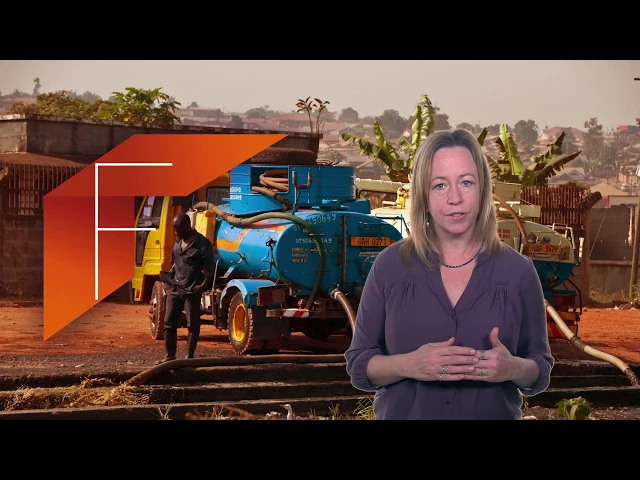
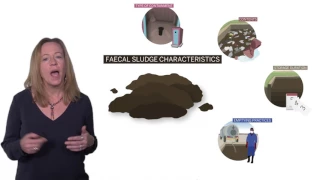
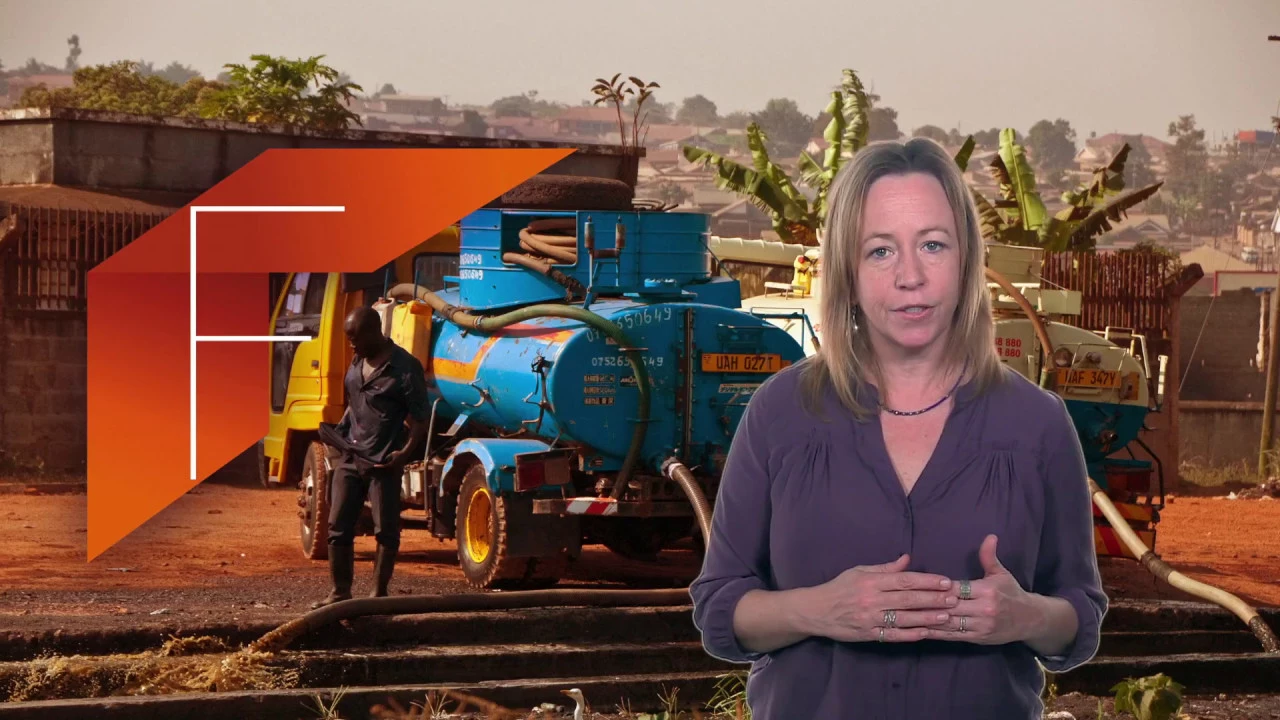
Welcome. I'm Linda Strande. I'll be your host for this introduction to Fecal Sludge Management.
I am an environmental engineering scientist at Sandec at Eawag. My focus is on the management of excreta, waste water and sludge in low and middle income countries. This course is part of a 4 part series by Sandec: Sanitation, Water and Solid Waste for Development.
In this course we will teach you about how to apply concepts of sustainable fecal sludge managment as a component of achieving city-wide sanitation. The target audience for this course is you because by being here you've already shown interest in the subject and by doing so I'm going to assume that you're already aware of the global relevance and need for sustainable sanitation solutions. A general background in environmental engineering urban planning or natural science might help to fully benefit from this course but to accomodate a wide audience including anyone having enthusiasm for the topic, we have provided additional resources throughout the course.
If you would like to learn more, learn more indepth or get more up to speed on a topic, the possibilities are endless. Our mutual goal is achieving global access to sanitation. As one part of achieving city-wide sanitation this course focuses specifically on fecal sludge management in urban areas of low and middle income countries.
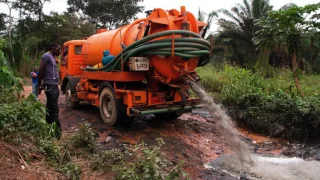
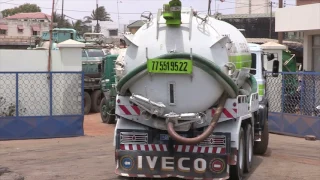
Specifically what happens from the time that onsite systems like pit latrines or septic tanks become full. How are they emptied? How is that sludge transported away from the community?
How is it treated and then safely used for resource recovery or disposal? We will address immediate solutions for getting excreta safely out of communities but with a long-term vision of developing new and innovative solutions that have global relevance. Before telling you more about this course, let me tell you a bit more about myself.
My profession was previously called Sanitary Engineering or Public Health Engineering. The goal of Sanitary Engineering is the safe removal of human waste from communities while Public Health is by definition a mulit-disciplinary science with the goal of disease prevention achieved through engagement and education of society; both communities and individuals and organizations; both public and private. Hence in my profession we need to engage technology but as Sanitary and Public Health Engineers we have to think beyond technology in a multi-faceted approach to develop long-term sustainable solutions that include community health, environmental health, behavior change, economics and public policy.
This is my motivation for the approach in this course which stresses that technology on it's own is not a solution and acknowledges the importance of an integrated approach which also builds on the approach of the book Fecal Sludge Managment; Systems Approach for Implementation and Operation of which I am an editor and author. The need for Fecal Sludge Management is not new. The focus on developing solutions that work is what is new and this is an exciting time in the field.
It is rapidly growing hence we engaged with practitioners and scientists around the world to provide updated information examples and case studies in addition to the basis provided by the book. There is still a lot of work to be done but research and implementation are filling knowledge gaps. This course provides an introduction to the topic with the goal of providing you with the framework so you can dive in further on your own.
Although it's an introduction at the same time it is quite dense. To keep your learning as active as possible we will provide weekly wrap up to summarize important points and introduce the coming topics in video questions and opportunities for feedback, a discussion forum, additional resources for self-guided learning, 3 quizzes and a final exam. This course is taught by me together with Moritz Gold an engineer who has worked with me on the research and development of solutions for fecal sludge management.
We will also have guest lectures from 2 of our colleagues. Charles Niwagaba from Makerere University in Kampala, Uganda and Philippe Reymond from the Strategic Environmental Sanitation Planning Group at Sandec. To assist in your learning, learning objectives are provided for each module together with these overall learning objectives for the course.
Following this course, you will have an understanding of the importance of fecal sludge managment and what is currently lacking; know fundamentals of an integrated approach to fecal sludge management that includes technology, management and planning; be able to identify required information for the design and selection of technologies; understand managment and planning approaches that help ensure sustainable solutions; be able to explain current research and innovations in fecal sludge management; and discuss how to approach the implementation of solutions. This is how the 5 week course is structured: Before you can do problem solving you have to do problem finding so we will start out the course in week 1 by showing you the problem and then in subsequent weeks buildup knowledge to be able to work on it and make sound decisions in deriving solutions. We will start out with an introduction to fecal sludge and fecal sludge management including the importance of an integrated approach, what is currently lacking, what weak links in the service chain are and some examples of what are and are not working.
How do you build something when you don't know what to build? In week 2 we will introduce fundamental knowledge for understanding the treatment of fecal sludge and that is necessary for the design and selection of treatment technologies based on an engineering design approach including treatment objectives, mechanisms, resource recovery and quantification and characterization. In week 3 we will introduce examples of established technologies for the treatment of fecal sludge including the treatment processes operation and maintenance requirements and engineering design parameters.
Sanitation solutions in low income countries do not rely on technology alone and are prone to failure if an integrated approach that includes technology, management and planning in parallel is not implemented. So in week 4 we present the full picture; in addition to technology, aspects that need to be considered to help ensure sustainable solutions. Week 5 will then provide examples of current research and innovations in technology to provide you with a solid understanding of the most up to date options and what needs to be considered for further development and implementation; including with a case study of how all of these principles have been applied in one city.
Maybe you will find it frustrating that we're not here to tell you the answers but there is not a right answer other than public health. You need to be an innovator. We want to challenge you in this course to have a curious mindset and be open to the unknown.
Our goal is to inspire you to understand the problem and then think about ways to address it. Up to this point there's been a relatively small group of people working on the topic and now we want to engage all of you collectively. What solutions can you come up with?
We will ask you to think about what can you do in your city and contribute to an ongoing discussion in the forum. So please commit to participating in the entire series Each week presents a different theme all of which is equally important in understanding the topic and the way forward. So thanks for joining and looking forward to seeing you in class.