hi everyone Peter here from flow high performance and in this video we'll be covering how acceleration and maximum velocity running differ during sprinting [Music] first and foremost we need to understand what exactly we mean by both acceleration and maximum velocity running during a maximal effort sprint the athlete starts in either a stationary position or from a slowly moving position for example a sprinter starts stationary in the blocks before they take off whereas a rugby player may be jogging slowly before initiating a maximal effort sprint in either scenario the athlete starts out with very little or
completely zero momentum so for the athlete to reach maximal speed they must accelerate this acceleration period usually takes around 15 to 40 meters depending on the athlete and if they are initially traveling in the same direction if an athlete is already walking or jogging they will need less distance and time to accelerate to maximum speed while if they start out stationary they will need longer distance in time to accelerate this 15 to 40 meters is what we're going to term the acceleration phase of sprinting once the athlete has accelerated maximally and has reached the fastest
speed they can travel they are now in the maximal velocity phase of sprinting athletes can usually only hold this maximal velocity for around 20 to 40 meters before slowing down although it has been made out that there are distinct acceleration and maximal velocity phases of sprinting the reality is that is more of a gradual spectrum of acceleration to maximal velocity so an athlete gradually shifts from one form of running into the other there is no distinct time point that sprinting mechanics suddenly change now that we have established what we mean by acceleration and maximal velocity
sprinting let's have a look at how the mechanics differ between these two phases first let's explore the differences in an athlete's ground contact the main difference between these phases is the ground contact time ground contact time refers to the duration of time that the foot is in contact with the ground during the acceleration phase the ground contacts are clearly longer this study showed that ground contact times were around 0.2 to seconds during the first step after a block start and around 0.15 seconds during a step at around 8 meters into the sprint so during acceleration
the ground contact times are roughly 0.2 seconds on average during the first few steps a different study analyzed the sprinting characteristics of some of the fastest men of all time during maximal velocity sprinting they showed that Usain Bolt Tyson Gay and a sufferer Powell had an average ground contact time of around 0.08 seconds so what we can see here is that as sprint speed increases the ground contact times of each stride decreases this says implications for training methods used to enhance Sprint performance when trying to improve acceleration performance it is best to use exercises which
replicate the ground contact times seen during the first 10 meters of sprinting this would mean using slightly slower movements with more resistance for example lightly weighted jumps would replicate these contact times fairly well on the other hand when training to improve maximal velocity performance it is best to use exercises with very short ground contact times for example unloaded plyometrics would be a good exercise to implement this follows on to our next factor to discuss force production since ground contact times are different between phases the forces produced are also different there are two aspects of force
production that differ between acceleration and max velocity sprinting these are the amount of force produced and the direction of force production first of all the amount of force produced will be different between each phase since ground contact times are longer during the acceleration phase the amount of force produced will be higher this is because more time in contact with the ground means that the athlete has more time to apply force into the ground during maximal velocity running the force produced won't be as high because there is much less time to apply force this means that
when training for acceleration performance strength training and loaded power training will likely have higher transfer whereas unloaded training will probably have more transfer to max velocity performance next the direction of force orientation will be discussed this study explored the ground reaction forces over the course of a maximum 50 meter spring what we can see here is that during the first initial few steps there was a slightly greater horizontal force production and less vertical force orientation as the sprinters transition to maximum velocity running the vertical force orientation increased while the horizontal force orientation decreased slightly this
information of force Direction has implications for training when training for acceleration performance more horizontally oriented exercises may be more beneficial exercises like broad jumps and horizontal throws may be good options when training for maximal velocity performance it may be best to implement vertically oriented exercises exercises like repeated hurdle jumps will achieve this the use of the stretch shortening cycle also differs between the two phases if we look at the same study there is more information we can gather we can see here that the horizontal braking forces increased more and more as the sprinters around faster
and faster this means that during the acceleration phase there is almost pure concentric muscle actions and during the max velocity phase there are much higher eccentric force demands this means that acceleration running involves more of a concentric only pushing action while max velocity running involves both an eccentric and concentric phase since there is a concentric and eccentric phase over a very short duration there is high involvement of the stretch shortening cycle so when training for acceleration performance more concentrically focused exercises are likely to be more beneficial exercises like seated jumps where the eccentric phase is
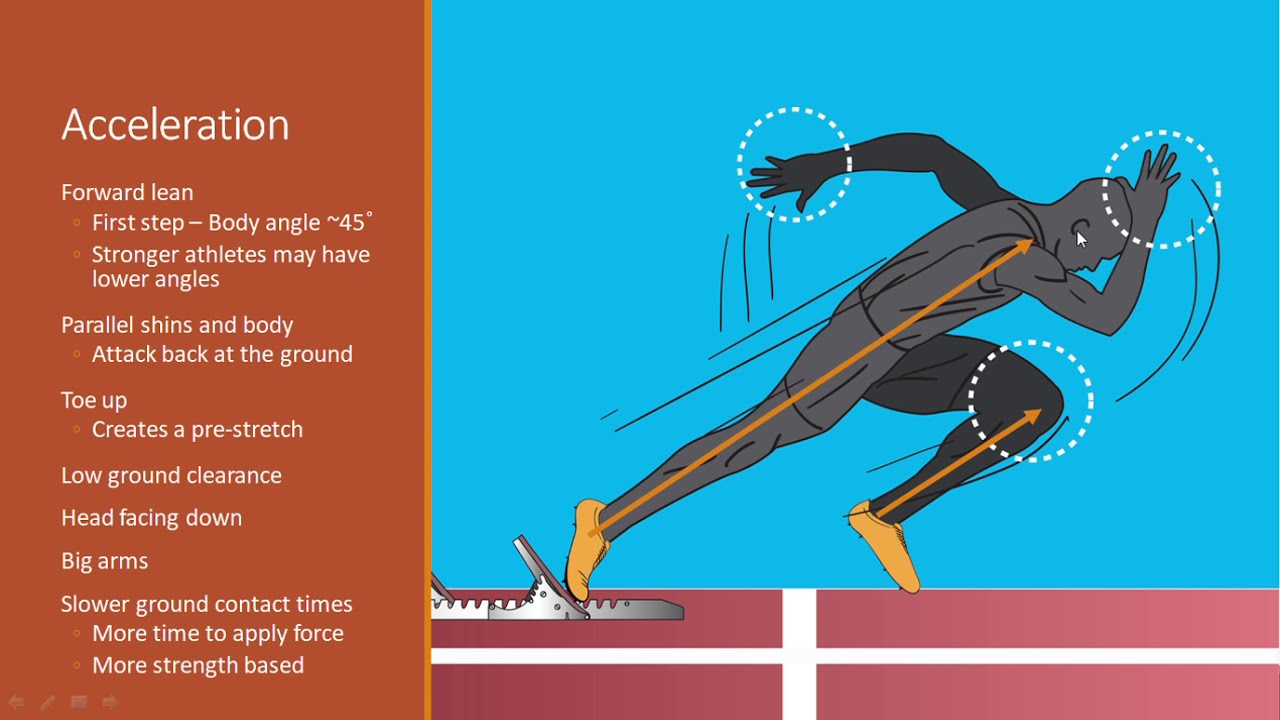
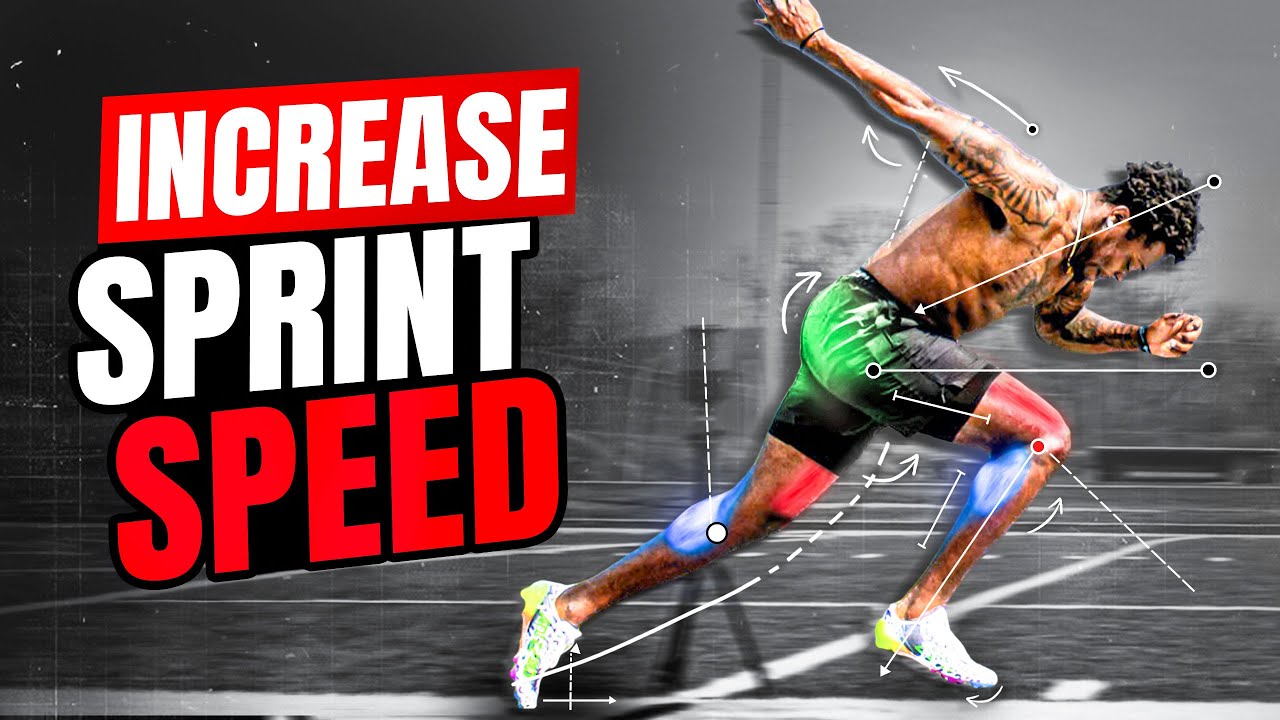
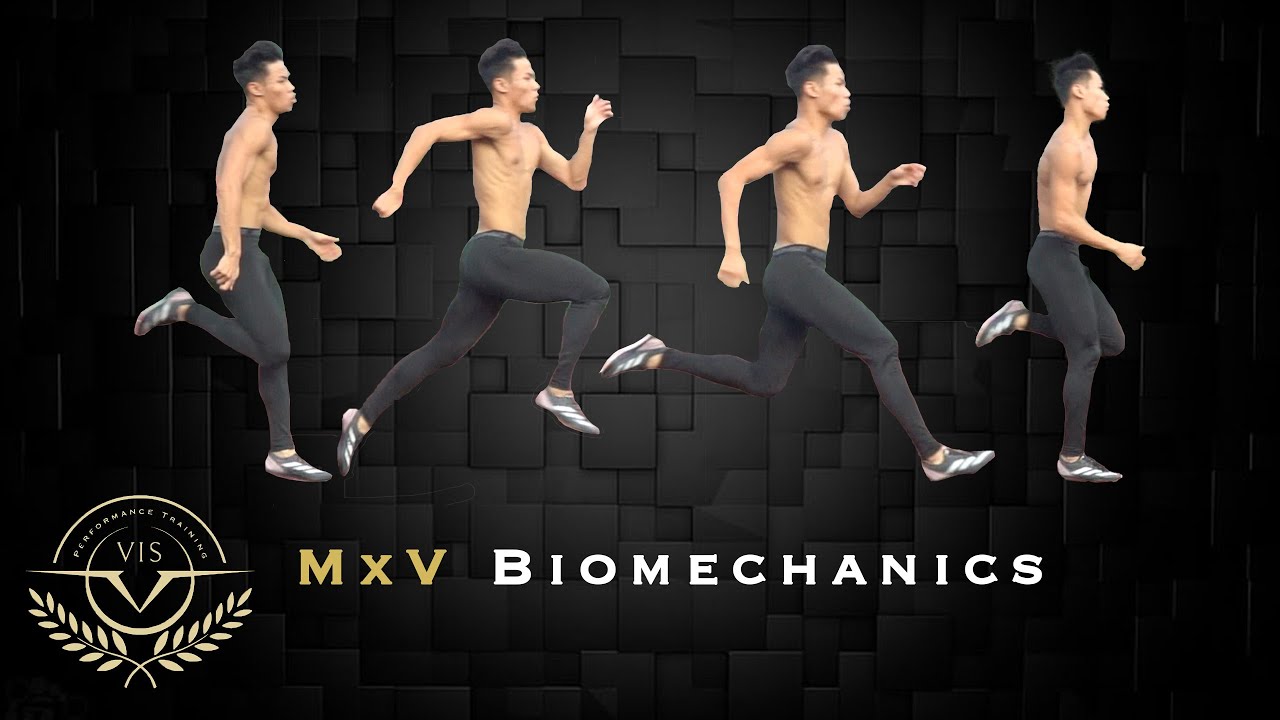
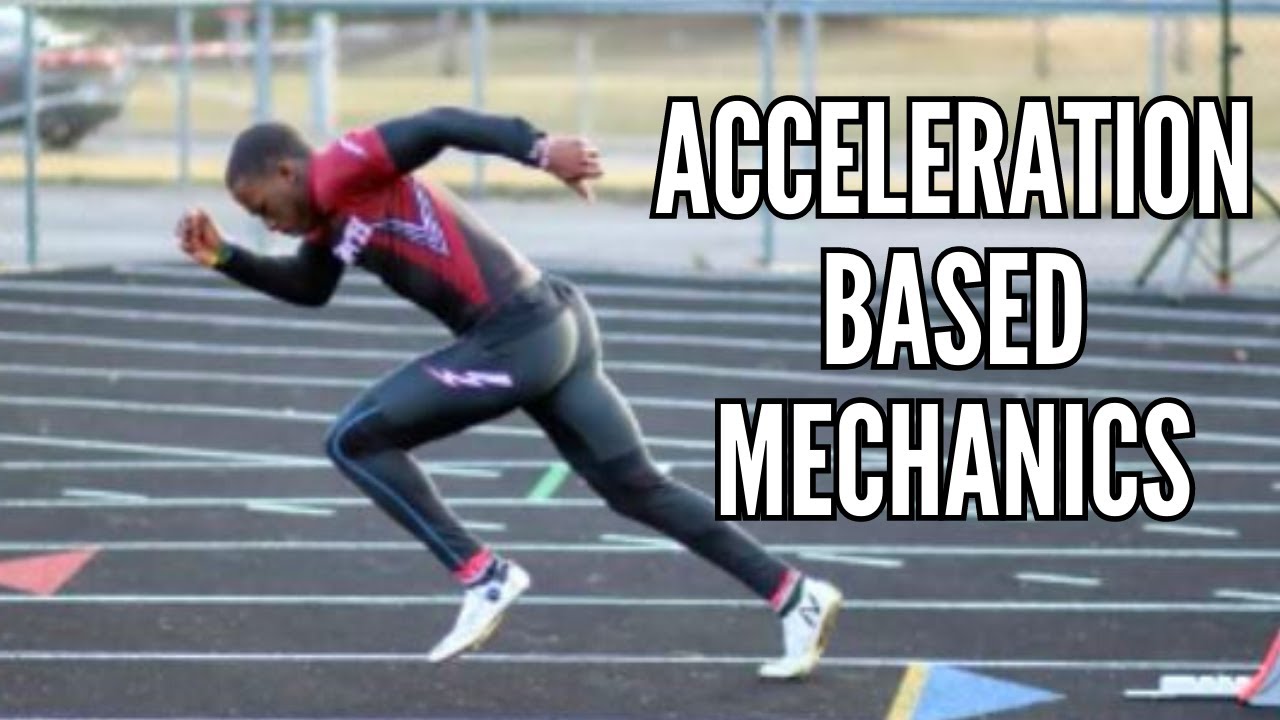
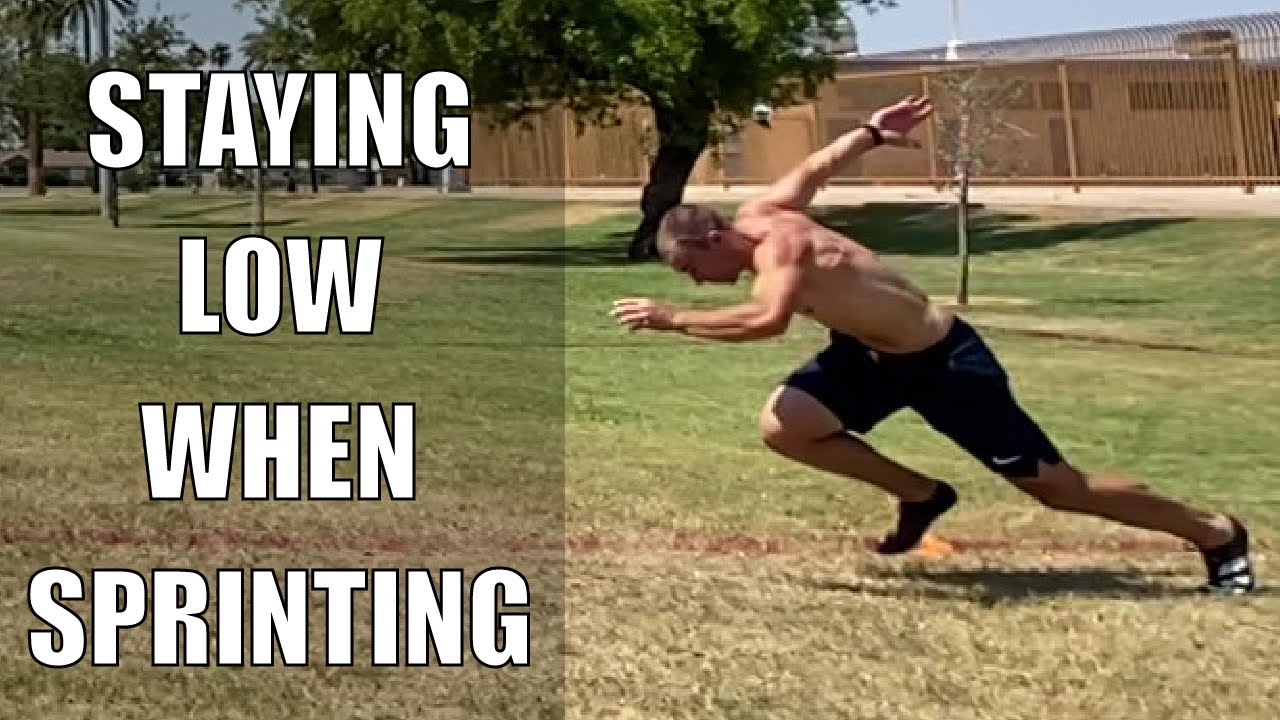
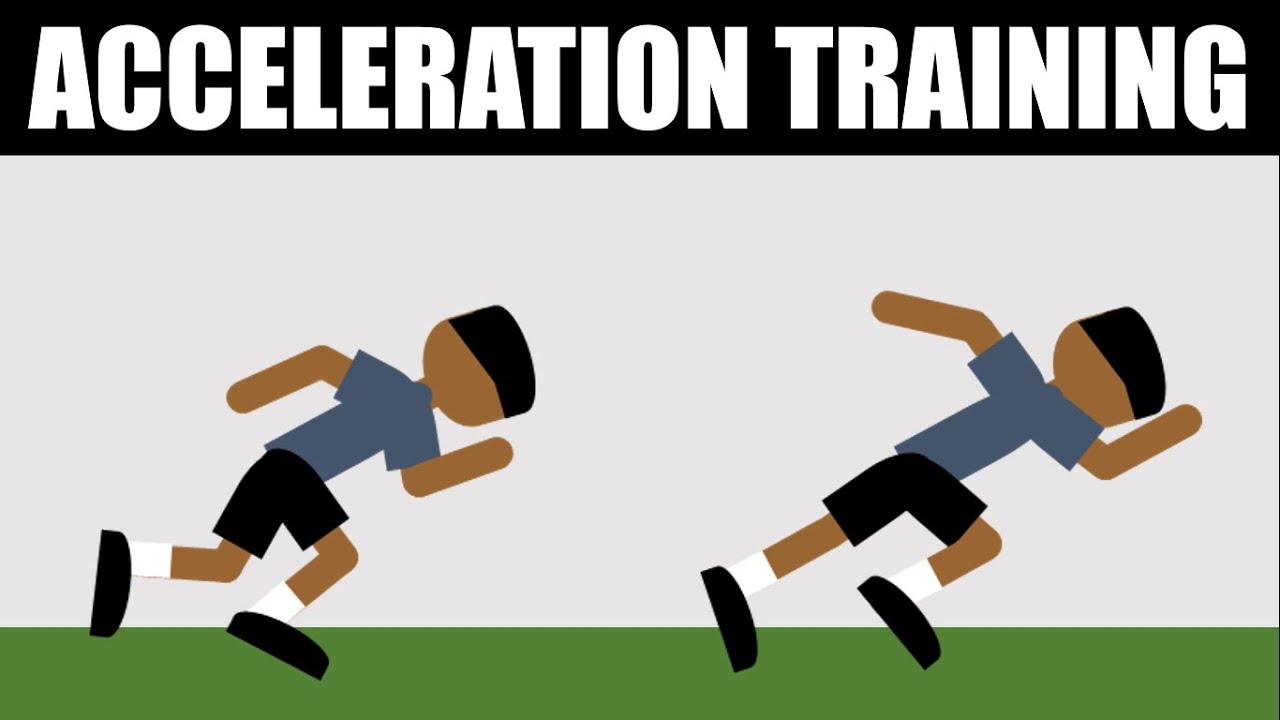
eliminated are likely to have greater transfer to performance when training for maximal velocity performance exercises which rely heavily on the stretch shortening cycle are going to be more beneficial to exercises like plyometrics once again I'm going to be a good option and the last factor which differs between acceleration and max velocity sprinting is biomechanics the first and most obvious difference is the torso angle during each phase it is quite clear that during acceleration there is a significant forward lean of the torso and during maximum velocity sprinting there is clearly a much more upright sprinting posture
the other biomechanical factor which differs is the joint angles during ground contact if we take a look at when the foot strikes the ground during both acceleration and max velocity sprinting we can see that the joint angles of the lower body are different this is to screen captures of a suffer powell just as he contacts the ground at two different times during a hundred meter sprint the first is his first step after the block clearance and the second is while he's running at top speed as we can see here the hips and knees are in
deeper flexion during the acceleration contact while they are nearly fully extended at max velocity the ankles are dorsiflex during both phases this means that when training for acceleration exercises which require force to be produced from deeper hip and knee flexion angles may have greater transfer so exercises like squats or box jumps may be beneficial when training for max velocity sprinting it may be best to use exercises which require force to be produced only a near full extension plyometrics or isometric training may be a good option thanks for watching and hopefully you got something out of
this video remember to subscribe if you haven't already [Music] [Applause] [Music]