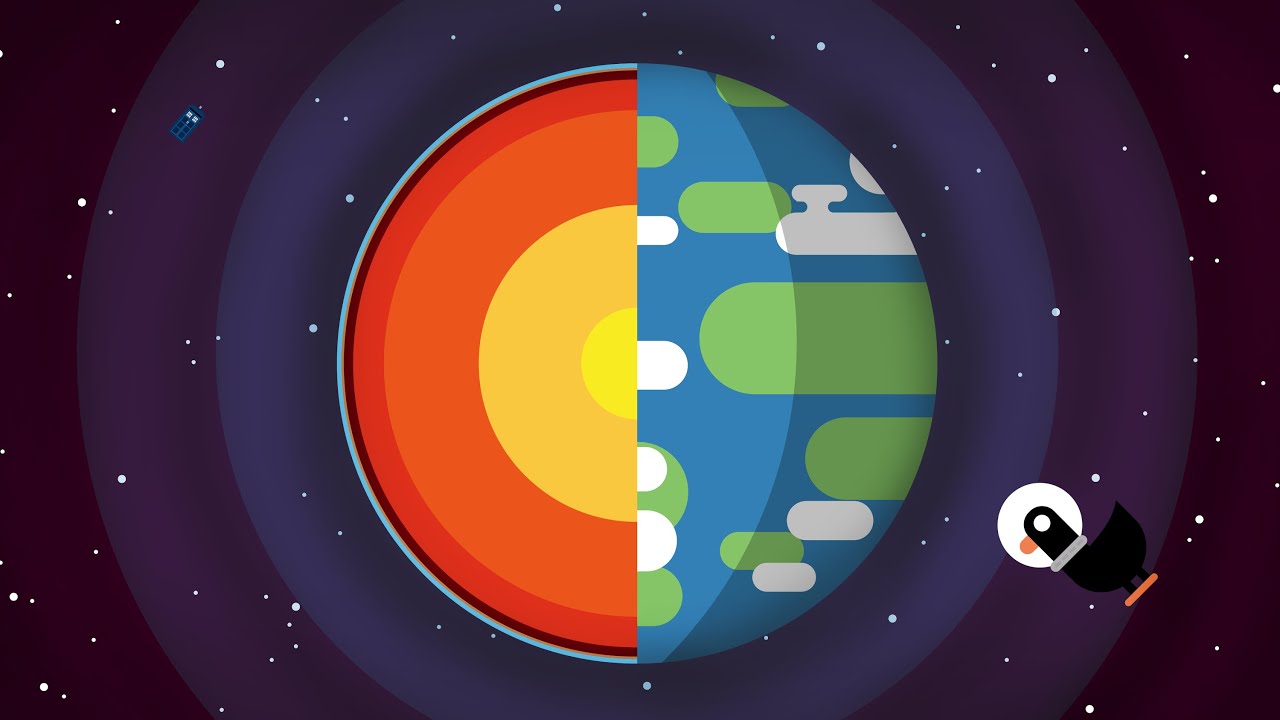
This is Earth, a rocky planet, covered with liquid water, orbiting within the habitable zone of a very typical star. From afar it may not look like much, but if you get close enough, it becomes quite clear that there is a lot to study on this little blue world. Some choose to study botany, to learn about the wide variety of plant life.
Some study zoology and learn about all the animals walking on the land, flying in the air, and swimming in the ocean. But some choose to study the Earth itself. What is the precise composition of the Earth?
What is its history? The people who answer these questions are geologists. Now when most people think of a geologist, they tend to imagine someone examining a bunch of rocks, and of course, geologists do indeed study rocks; but geology is also much more than this.
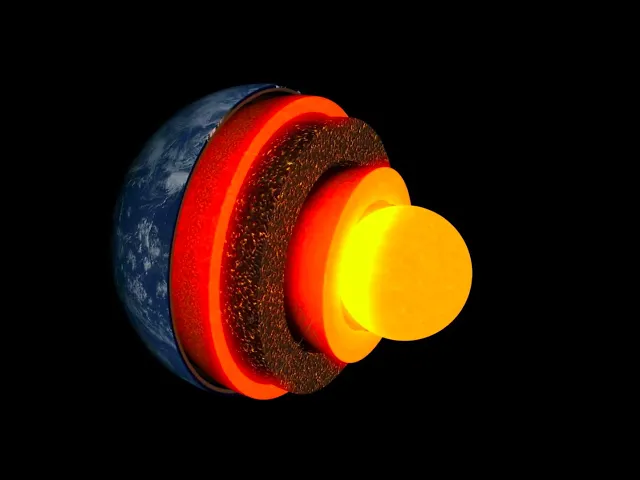
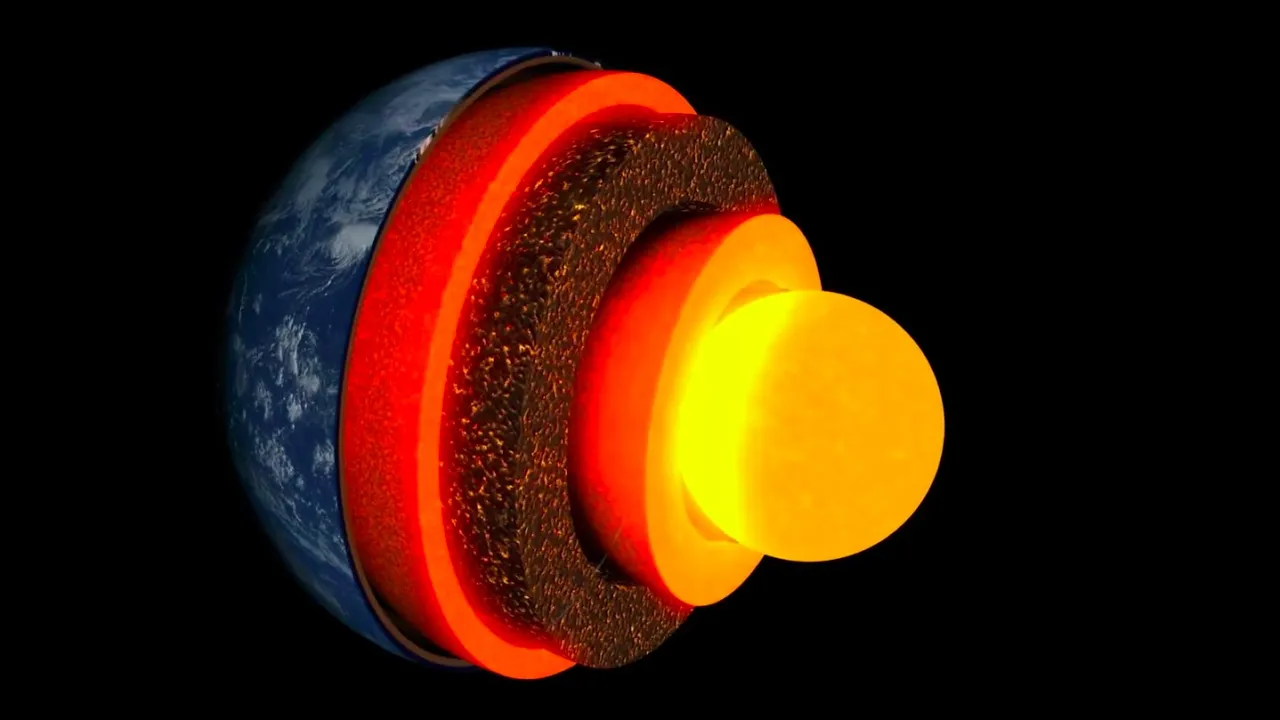
To understand why earthquakes occur or how volcanoes form, one must do more than simply look at rocks. At its core, geology is a multidisciplinary science that combines chemistry, physics, and mathematics to investigate an enormous variety of processes that occur on and in the Earth. As we will come to understand in this series, geology encompasses every aspect of Earth’s structure, from the molten iron core to the beautiful minerals we find on its surface.
Much of what geologists study transpired over incredibly long timescales, originating anywhere from thousands to billions of years in the past. Geologic processes have shaped the entirety of Earth’s surface. For example, the Appalachian Mountains of Eastern North America contain limestones, which are composed of the shells of marine animals that lived there, in a shallow ocean more than 400 million years ago.
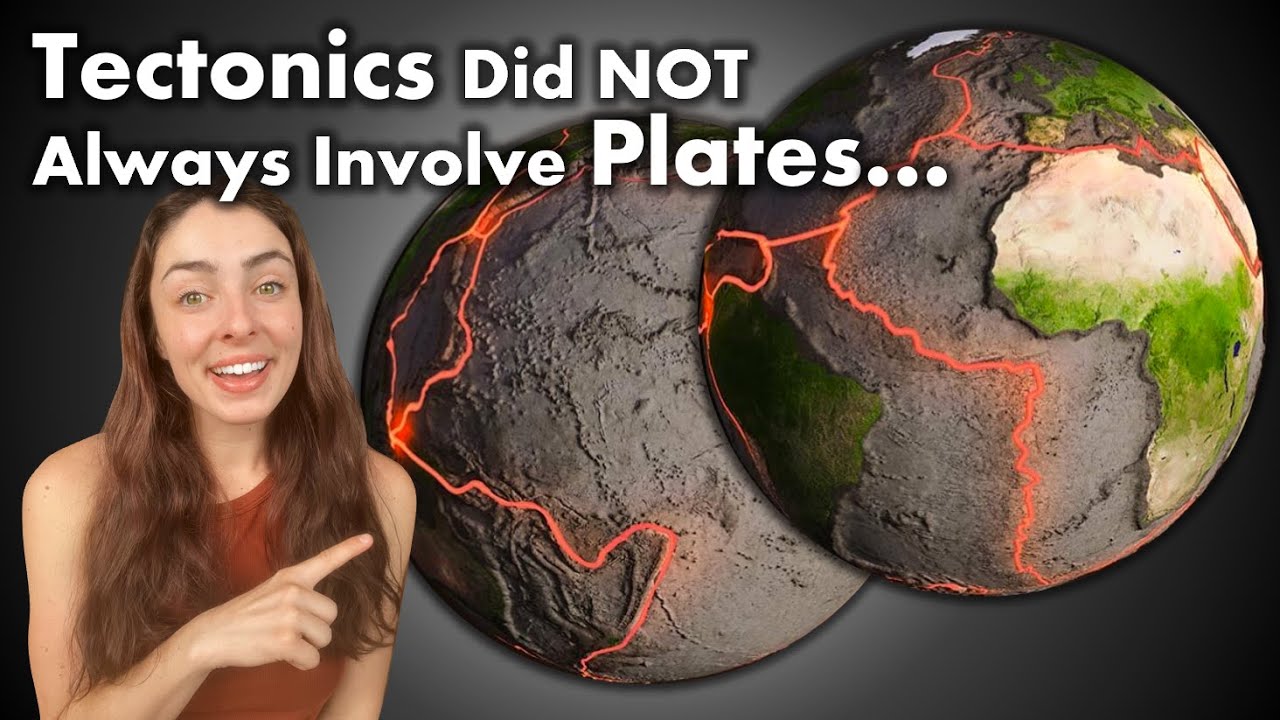
Then, 300 million years ago, those rock beds were thrust upwards as Earth’s tectonic plates began to converge along the eastern US coast. Later, during glacial periods between 2 million and 12,000 years ago, mile-thick ice sheets scraped off the tops of these mountains, like huge bulldozers, as they moved southward, then deposited hundreds of feet of sand and gravel in stream valleys as they retreated northward and melted. How is it that we can know these things, exactly?
And furthermore, why even bother studying geology if all these phenomena occur on a much longer time scale than humans can observe during their lifetimes? The simple answer is that the processes that shaped our planet billions of years ago, still occur today and can be easily observed and measured. Next time you visit the beach, pay close attention to the patterns of the sand, and observe them as they form from wind and water currents.
These patterns are exactly what we find in many ancient sandstones, therefore it is reasonable to assume they were created by the same processes, just at different points in time. This is the essence of geology. Observing beach sand form ripples and dunes may not be the most exciting activity to most, so you might be wondering, who would be interested in geology?
The first recorded dabbling in geology was by Aristotle and the ancient Greeks. These ancient philosophers wanted to understand natural phenomena, especially those impactful to human life, like earthquakes, volcanoes, and tidal waves. Aristotle thought earthquakes were caused by opposing winds within the cavernous Earth, while Democritus thought the cause was water forcing its way into the Earth as it rains.
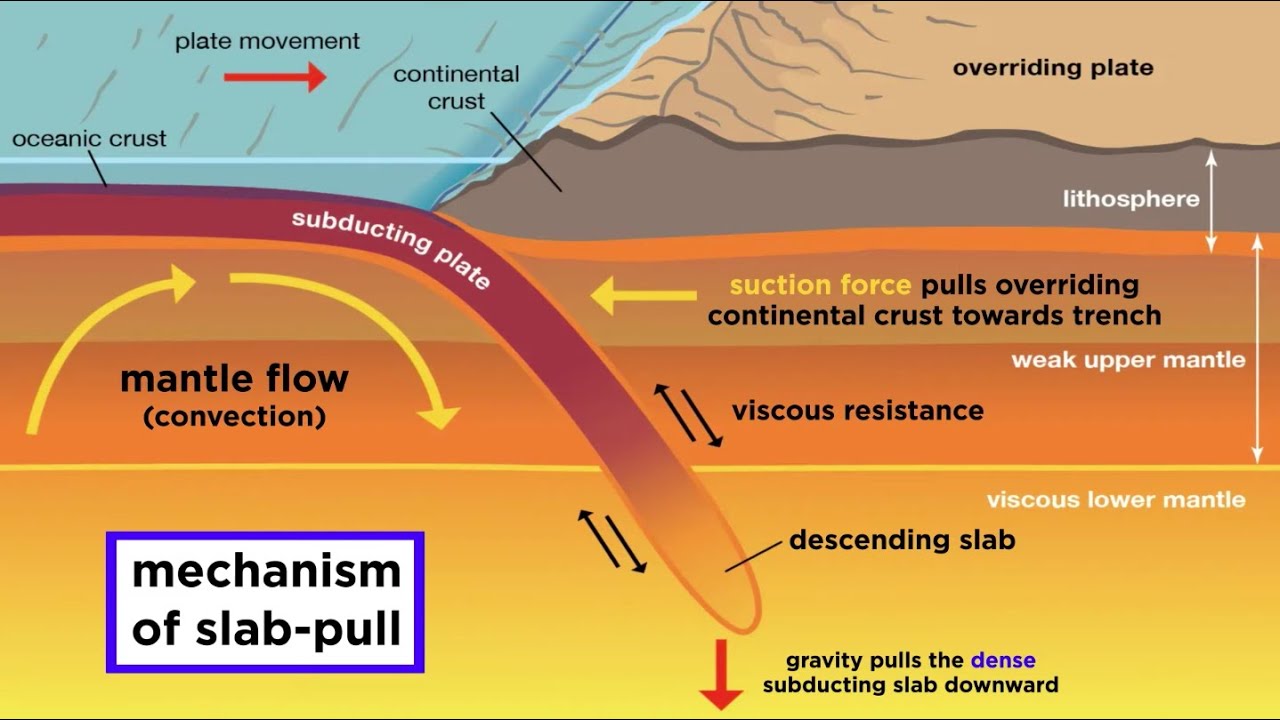
Obviously, these are both incorrect, and we now know earthquakes to be caused by rocks cracking under the enormous stress created by plate tectonics, but the desire to understand is ancient. Geology has come a long way since the time of Aristotle and has many applications toward improving and protecting human life. For example, volcanologists, or geologists who study volcanoes, closely monitor active ones, and create early warning systems to evacuate towns before any volcanic eruptions.
Furthermore, Earth contains minerals, metals, and sources of energy that we have used to build and power the technology and infrastructure responsible for raising our collective standard of living over the past few hundred years. In fact, many geologists work in the resource industry, finding new places or developing new ways to extract minerals and energy. Others assess hazards to human life, like the volcanic eruptions we mentioned, but also slope failures, massive floods, and structural damage from earthquakes.
Biologists interested in the evolution of life on Earth work closely with geologists in looking at the rock record to find the fossils and footprints of organisms that are now long extinct. Climate scientists interested in understanding our impact on the environment measure, among other things, greenhouse gases trapped inside tiny bubbles from 800,000-year-old ice cores. The impact doesn’t even stop at our own planet.
The understanding of Earth provided by geologists acts as the framework that planetary scientists use to study outflow channels on Mars, crater topography on the Moon, and unique features of exoplanets that are continually being discovered. So, as you can see, geology is not just about looking at rocks. It is as rich and multi-faceted as any other scientific discipline.
As we mentioned, geology utilizes concepts in chemistry, physics, and mathematics, and an understanding of basic concepts from these fields will be assumed as we move through this geology series. When we talk about the structure of various minerals, we won’t be reviewing chemistry concepts regarding atomic and molecular structure, and when we talk about large-scale geological events, we won’t be reviewing physics terminology regarding forces and energy, nor the basic algebra that is sometimes required to discuss these phenomena quantitatively. So, if you need to brush up on any of these subjects, my playlists in general chemistry, classical physics, and mathematics will be of great use.
But otherwise, when we encounter a topic that assumes such prior knowledge, I will always link to the relevant tutorial using cards that appear in the upper right corner of the screen, in case you need a brief refresher. But whatever your current level of knowledge, if you’re invigorated by the thought of learning all about this beautiful planet we all live on, let’s start learning geology.