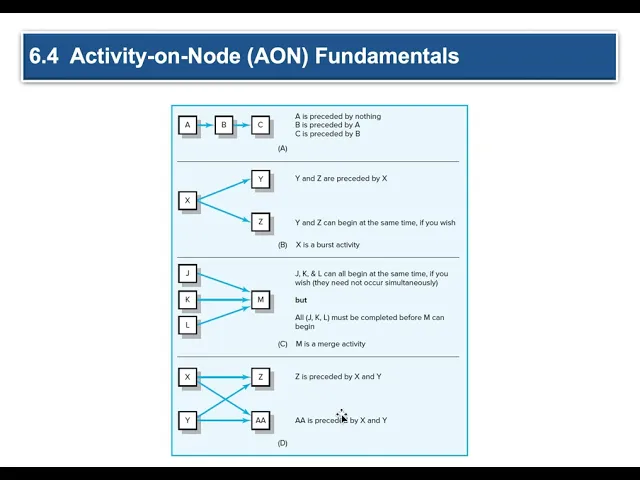
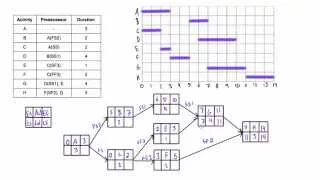
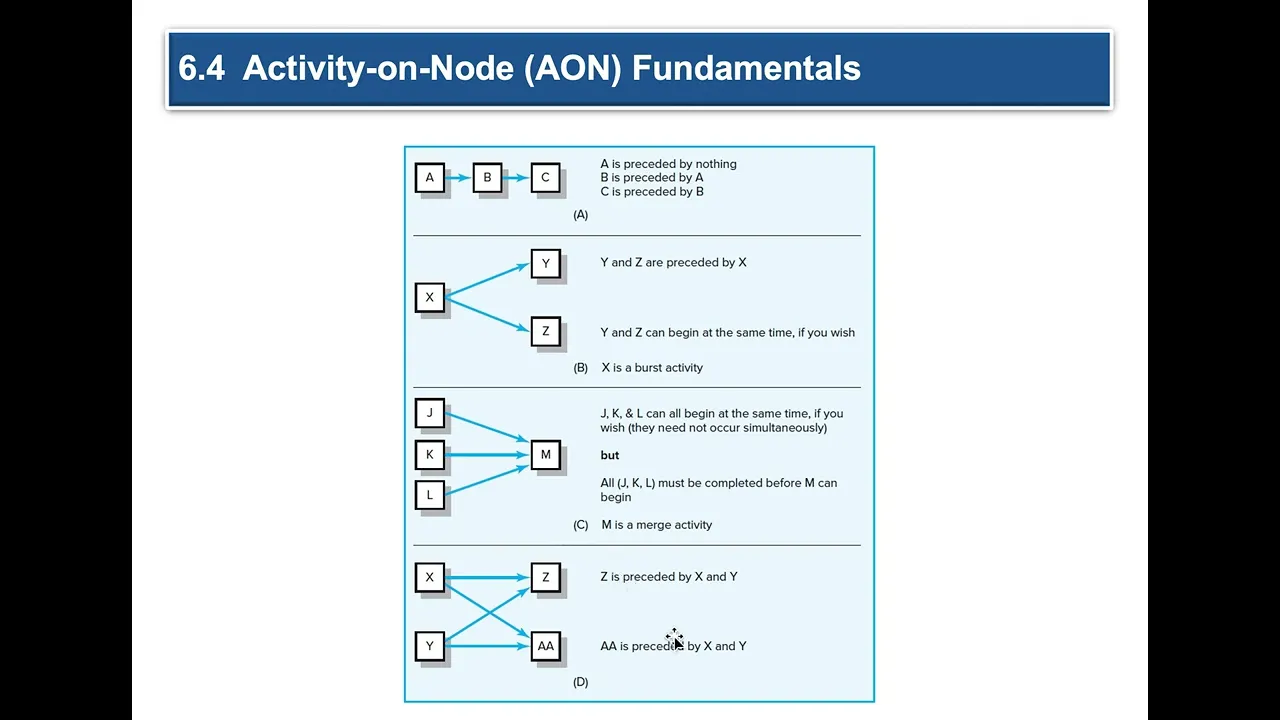
management chapter 6 developing a project schedule well help a project schedule you have to do a few things develop a network and that network is going to start with a graphical flow chart think per chart Gantt chart that the initial part is defining your project yes but also defining all the different aspects of the project so a lot of different pieces that go into whatever it is your chosen project is then you start to break those down as we've done so far and begin to build out your network from there you guys will be sick of Graphics after this this lecture and then I'm going to add a couple extra things in here as well so what is a project Network it's a graphical flow chart depicting the project activities that must be completed the logical sequences and the interdependencies of activities to be completed and the times the activities start and finish along with the longest pass through the network which is called the critical path this provides a basis for scheduling your labor and equipment and allocating your resources I'll add if you'll allow me it enhances communication among the project stakeholders it basically provides a road map it provides an estimate of the project duration and provides a basis for budgeting the cash flow in and out of the project it identifies which activities are quote unquote critical and should not be delayed so what must you do next that opens up a door for you to do something else it highlights which activities to um to consider when compressing the project duration if you're doing a project in a project semester there is a limited duration in it it also helps managers get and stay on the project plan so it helps you create a project plan and then stay there all right um again I promised you a bunch of Graphics in this uh lecture and believe it or not I've taken quite a few out so make sure you're doing the reading again 20 000 foot view of a huge landscape when it comes to developing a project schedule here again you have your lowest elements your basic pieces and in this uh scenario we're using a couple examples um one of them is going to be a warehouse automation system and so this kind of ties in here where we're building like a circuit board or a network literally a computer network so you have these lowest elements of like a circuit board you have design costs to account for production costs uh your prototyping stage your testing and then um software cost account development so you have all these phases you have design you have production you have tested systems and then you develop a software that's going to help you build something so basically you have to break down everything that you need in a design stage and then you look at production the Prototype and the software stage are all in one basically take whatever project you're doing and break it down into smaller parts and then categorize it so what's a part of your initial design so if you're starting um you know some kind of event business um what events are you going to actually try to advertise to and what facilities do you need and what labor do you need break them all down and get into what's called an arrow and node situation so not to steal my thunder from a couple slides here in a second so what's some key terminology on constructing a project um Network well here's an activity uh and an element of a project that requires time but may not require resources so planning requires time but maybe not a lot of resources you have parallel activities things that are going on at the same time so when you divide up responsibilities say in a group project you have people working on different parts at the same time that's called parallel activities which are activities that can take place at the same time if desired you have bursts of activity an activity that has more than one activity immediately following it so like if one team member does one part of the project it opens them then up for other parts to happen so for example um whatever this process is here in building this circuit board it allows D to be possible so a has to happen B and C can happen at the same time and parallel activities but a b and c have to happen for D to happen D has to happen for f to happen so on and so forth um you have this burst of uh of activity when one thing happens it allows something else to happen so um there's kind of a dependency error flowing from it so again these parts are con are dependent upon these and B and C are burst once a is done B and C can happen and then D and then F then K all right um don't get drowned down too much in the technicalities of of the actual uh hey I'm trying to understand the network I could care less this this is when you're building your project okay this is Step One One Step One is done steps two and three can happen concurrently then step four five six you know um merge activity or activities that has more than one activity immediately preceding it um merge C2 activities merge together into D B and C they're parallel activities and then they merge into the next activity which is D okay uh path a sequence of connected independent activities that's just this whole path right here basically I want to look for you to come up with a path for your project what are you going to do on day one how does that help day two day three are you doing two different things day 47 you know what is my path forward with your your um project um critical path the path of the longest duration through the network so something that takes a while to get through we'll have a good example of that here in a bit um something that necessarily has to happen the critical path everything depends upon it there are two approaches to mapping this if I can use that word I'm going to use mapping activity on node Aon is what we're going to use largely in this um chapter it uses a node to depict an activity in an activity on Arrow AOA uses an arrow to depict activity these are these are nodes so each one of these boxes are nodes there's your arrow and then through the through the path here so boxes are coloring nodes arrows are arrows now just imagine if you just had a arrow to be Arrow to C Arrow to D that would be Arrow to Arrow on Arrow basic rules of developing a how to develop a project Network basically this path networks flow typically from left to right an activity cannot begin until all the preceding connecting activities have been completed arrows on a network indicate precedent or flow and flow I should say and cross over each other okay each activity should have a unique identification number so that's where these are coming in so see how they said okay this first step is we're going to call you know this first box is node a and then we're going to develop excuse me design see the design here design part one of one part one of two and then we're going to move to node B and C which are going to happen on Parallel nodes here um and the arrows are just showing the flow is always this way left or right and then you'll see here p is production uh s is software then we have more production software and then we're going to test it and then once we've tested we're on a whole another critical path so hopefully I'm starting to make some of these graphs make a little bit of sense for you do your graphs have to look like this no we're going to talk about that you can use a Gantt chart or a pert which we'll talk about here in a second um so again Arrow on Arrow Arrow node arrows indicate the flow left to right each activity has a unique identification number we're talking about that the activity identification number must be greater than any activities that precede it you'll see that here as we move we have numbers that progress uh looping is not allowed so you have no no complete looping you just have a process that is from left to right conditional statements are not allowed if then um if we stay open then we'll do this no we're just assuming that the Project's going to flow forward if the project is picked up we're going to do this we need to can take away conditional statements we're going to say Hey you get a and you get B and you get a c and you get a d and we're just planning it like it's going to happen no matter what there are where there are multiple starts so you have like two different paths a common start node can be used to indicate a clear project beginning on the network uh similarly a single project in node can be used to indicate a clear ending so you kind of have a start node here and an end node here all right and then you see the flow here parallel activities merging activities but you see everything flowing from left to right it has a beginning and it has an end um here's here's activity note on Note again arrows to boxes uh a precedes is preceded by nothing that's the start C is preceded by b e b is preceded by a so it's an older um these are uh Divergent um so you have a start node at X and then you have parallel activities but it's kind of a burst because two things get done at once um J K and L and this can begin at the same time so you have three start points but then they eventually come together in m m is a merge activity as these things come to come together and then you have X and Y so these are two different starts but imagine there's two different departments they're working on one product that have two different outcomes you can go X to Z but some of x's project will help a a you can go y to Z but also some of y's output will go straight to AAA don't get hung up on this too much um this is that automated Warehouse here's the biggest thing we need to define the requirements there's no preceding activity you need to say if you're going to have a an event venue uh you need to find what events you're going to do you need to find everything you're going to offer you're going to offer um you know wedding venue catering and DJ Services or are you going to farm those two things out so your first box would be event venue and then you would define all the requirements that constitute what events you're going to do and then you would go about setting out how you would go about doing that you know we have to identify a catering option we have to identify a DJ option we have to identify you know let's go with a we have a class right now that is using a a planning a wedding event management business as a project and they would have to answer all those things okay uh who's gonna officiate the wedding do the bride and groom bring their own officiant um I have uh have in the past have had people who work on restaurants and do this what type of restaurant what's your menu when a person sits down what happens next you can lay that out um very much pardon me like this okay person walks into a restaurant these two things happen after that happens they go here after that happens waiter takes their order then brings food what happens after that okay you can construct a network a timeline using this as long as you define all the requirements don't miss anything then you assign a team in his class situation you're already on a team you design whatever it is you need to design in this case we're looking at automated Warehouse so they need to design the hardware code the software build and test the hardware develop a patent that's something that's happened on Parallel we'll show here in a second test the software and then integrate the system into the warehouse um now keep in mind this is much more representative of what it would look like in a corporate environment where you have this business that's already a manufacturer or already a distributor and they have a warehouse and they're trying to automate it better so they've peeled out a team let's say a matrix uh scenario where they peel people out of different departments to develop this automation obviously they have some people in technology here and then they develop that software and they find a way to incorporate it into an existing business that's that's generally how these projects worked okay um pardon me I lost my spot here so again we've signed the team design and integrated all the way through integrating it preceding activities none before defining and then you have a a b c c d e f g okay so you can start to see that left to right structure that we talked about previously again here are the steps here Define the requirements and then we're gonna have B and C happen at the same time we're going to sign a team and design the hardware so perhaps we I got a tech team that's working on the hardware while we put together the team that's going to carry out you know Parts C through G or excuse me Parts D through G um again don't get hung up on what these boxes say just know you're moving left right um you know yours might not be software this might be finding a caterer uh this might be how do we prepare our product um you know in this scenario it's code of software so we Define everything that's the first thing you've got to do that's the reason why that was Milestone you know part of Milestone one um you assign your team you say now you're put in teams but who's going to be your Finance person who's going to be a marketing person who's gonna be you know your team manager um or your project manager rather you have a parallel activity where someone is actually designing how this business will work that will then have you know I'd almost like this better see had an arrow going to d as well because then everything would be um going across the so look here this is where this is the initial thing there's nothing before it right then we split off we have parallel activities and then we have three parallel activities then we have a separate testing of the process like a soft opening of a restaurant then boom we open and we launch this whole system so really while this is an obtuse example in the reading it certainly isn't my favorite you can see how this could be applied um to your situation okay um so we look at the forward pass the network computational process this is just a you know the example again the the of of building a network literally building a network and some software here but we always have a Ford pass like earliest times how soon can this activity start now you're starting to talk about scheduling right early starts es how soon can this activity finish early finish EF how soon can this project finish expected time te by the way they reverse that anyway Tom expected I guess um if you think about it it's kind of like building a building which um recording this in early 2023 so we're working on the new Kobe Donna project for the new business school trust me these are questions that we're asking not not only as a business school because we have to plan for future semesters how soon can we start this activity man we did that we were all in them like let's get on it how soon can this activity finish that's what we're thinking about right now okay how how soon can the project itself be wrapped up okay so how soon can we get in the building and then how soon is everything done now backward pass so the latest times how late can the activity start now a lot of students think this way when you're working on a project how long can I procrastinate and still get a good grade on this project management project so how late can I start how late can the activity finish LF um the night before hello um which activities represent the critical path that's the CP and how long can the activity be delayed what kind of slack or float do we have there slack SL that is kind of built in time in case something happens so when a contractor is building a building um they give us kind of a they can't give us like the worst case scenario estimate of when the building will be done we're thinking January 2024 might eat these words if you're listening this semester listening to this lecture and we're still not in there at that point um but they also want to build in some slack so they know that they could probably finish a touch earlier than that but they have to build and slack in case say the supply chain throws them a curveball and they can't get the right window um that's happening a lot right now post covered okay Network information again this is just a reminder of what we've been doing no preceding activity first thing you want to do is Define the requirements then assemble your team and their workloads design what you need to design put it together run a soft test in this case a technology thing you're going to want to get a patent you might want to get a trademark on your name or something that you do with your business you want to have a have a way to test it and then you're going to gonna launch um and what's key here is you say hey I think defining is going to take 10 work days assigning a team is going to take five work days design the hardware 25 days work days so I'm assuming these are business days 20 more days for coding the software 50 days to build and test 15 days to get the patent 35 days to test the software and 15 days to integrate it when everything's done so I mean that's what let's see I don't think they do the math for me 15 40 60 110 125 I have 160 175 days this is how long that whole project is going to last 175 days so that gives you an idea of how big the project is now they're building some slack in there as in it probably doesn't take a full 10 work days to define the requirements but they take their time so they don't miss something certainly doesn't take you five days to assign the team but they've built in some slack so let's move on activity on the Node Define the requirements you see the boxes are expanding here this is part A B C D E F G so on now we've we've gone to H and um you know we've added in um slack and uh duration so here's our duration 10 days five days 15 days 20 days 50 days 15 35 15 I think we came up if I did the math right like 175 days now let's add in more let's take e s let's go back here es early start early finish let's go back here so es uh the ID of the step the EF early finish so um uh we feel like um with slack let me go back here how soon can the it can start in let's say 10 days all right so we start this process in 10 days and then EF we can maybe finish it in 15 days so let me show you how that works so we can start hey we can start right now zero it's going to take 10 days there's your 10. okay B we can start in 10 days from here it's going to take five days there's your 15. then after that five so five ten we can start D in 15 days it's going to last 20 days and day 35 so day 35 we could start this it's going to take 35 days we're done in day 70.
um day 85. I see I didn't add up I didn't add that up right so what I did oh I'm silly I added all these up well this is day five we don't say five plus five you say day six it starts I'm an idiot that's okay but I'm your professor and you're stuck with me now um so it's actually a hundred days so I I didn't calculate that right you can't just add these up see I'm learning together with you um so uh this is day 15. okay and then that's going to take 25 days so this is gonna be day 40 then we're gonna add 20 so so on and so forth okay um move on Jonathan uh here we go so again our early finish is gonna be 100 days our early finish should give me 100 days hmm maybe not wrong yet maybe this will turn out to be 175 down here like our late finish okay um so forward pass computation ad activity times along the path uh of the network es early start plus duration equals EF that's when they're finished that's what we just finished doing here okay day Zero we start takes 10 days day 10 we're done with this part day 10 we start takes five days we're done with this part okay this is fun I'm getting it now carry the early finish to the next activity where it becomes the early start unless the next succeeding activity is a merge activity in which the case the largest early finish number is an immediate predecessor so you have two things starting on day 10 here okay then C which is going to go to E and F it's going to take 25 days so it's day 35 when E and F start whereas it only takes five days here to sign the team part D starts on day 15.
does that make sense hopefully uh if you're still with me if you're not not asleep should I just cough loudly into the mic we go all right so what you're seeing here is we're filling these things in whereas it looked really confusing before now we're starting to flesh out what they're going to be all right now subtract the activities so backward pass so this is forward pass all right backward pass so track the activity times along each starting path with the project in um late finish is in that late finish let's go back here for a second late yep yep yep late finish okay late start late finish critical path and Slack and we're going to start building those in all right subtract activity times along with each pass starting with the project in activity late finish minus duration equals late start carry the late start LS to the next preceding activity where it becomes the late finish LF unless the next succeeding activity is a burst of activity either there's a bunch of stuff going on at once uh like this okay burst um in which case the smallest light start and then it's immediate it's so basically uh sequential so all right now we're going to put numbers in everything who's tired I'm tired uh everything starts on day zero right here uh it's gonna take 10 days so it's 10 days later um we feel there's there's a total start uh late finish there's there's no issues there um let's go up here and let's set let's build in 15 day slack let's give us a little bit of leeway that takes our 10 day to 25 day okay so that could take us from 15 to 30. and so you're given a range by the end and it builds in so let's say the range here is 15 to 30 that means we're somewhere between 35 and 50 days in coding the software testing software were somewhere between 70 and 85 again that's that 15 slack in there okay it could be as short as Day 70 we're done with this part or it could be as long as day 85 we're done with this part um here there's no slack so it's going to be done on 85 either way here there's 35 day slack so it could be day 50 it could be day 85 that we're done either way by day 85 if you see here either way by day 85 we can integrate the system and it's going to take 15 days so that means on day 100 we're done whoo that took a little bit of work to go through hopefully my explanations helped you there now how do we determine slack well total slack tells us the amount of time and an activity can be delayed or not delayed in the project is how long an activity can exceed its early finish date without affecting the project end date or the imposed completion date is simply the difference between the late start and early start LS minus es equals the slack all right or between the late finish and the early finish free slack is the amount of time an activity can be delayed without delaying any immediate following success or activity So eventually you've got to have like I can only have so much slack I've got a deadline I've got to get this in hey you guys are students you should know about this this is all about procrastination and early starts late starts how late can I do it how early can I get it done uh oh I got to go out of town for this away game I better get it done here my deadline's actually earlier than that so you're planning things out right you're doing this you're managing projects you're actually already there you just didn't know it um how long an activity can exceed its early finish date without affecting the early start dates of any successor it follows or excuse me allows the flexibility in scheduling and scarce resource it occurs all only in the activity at the end of a chain of activities where you merge the activities critical path this is a network path that that has to or halves to have had that has or have I guess if it's singular approval the least slack in common it's the longest path through the activity Network um is the shortest expected time in which the entire project can be completed and supported because it impacts completion time it's where you put the best people on it it's where you pay extra attention when doing a risk assessment next chapter and it's where you don't look when other managers are asking to borrow people or equipment you've got to keep certain people on a critical path certain people working on a critical project you can't peel them off uh it's where you look when you don't have time to monitor all the activities you look at a schedule schedules are so important we've learned that in this class sensitivity Network sensitivity is the likelihood of the original critical pass will change once the project is initiated a network schedule that has only one critical path or non-critical activities that enjoys significant slack would be labeled insensitive so um it's kind of you kind of build in some slack basically uh practical considerations uh you got to consider if there's you know some logic errors if there's uh a problem in your activity numbering use of computers develop networks I. E a Gantt chart um which we'll talk a little bit more about calendar dates multiple starts and multiple projects you've got to build all these things in so again Define the Rex sign the team design the hardware at the same time once the hardware is designed you build and test the hardware and develop a patent once you've assigned the team you're coding the software you're going to test the software and then we all come together when we integrate this system just like building a new building or a peanut butter and jelly sandwich again this is your Gantt chart I know we talked a little bit previously about perk charts and Gantt charts um these are your steps your days that it's going to take okay and then your start and you finish Target see now they're putting dates to it right okay your late start your late finish your slack you total slack so in January you're doing defining Rex and for that amount of time on this bar chart here uh then you're assigning to teams it's not much then you're designing the hardware concurrently you're coding the software uh looks like you spend the most days and time so the money that you spend the most on is building and testing the hardware developing a patent here uh testing the software is probably your it's like your second biggest investment on this project and then you take time to integrate the system actually just being a love charts like this just looking into this you know your biggest expense likely unless there's some great startup costs or I mean you've got labor cost here but you're going to have your people spending the most time on building and testing the hardware so doing a Gantt chart actually really simplifies this nice uh something called laddering its activities are broken into segments so the following activity can be done can begin sooner and not delay work you basically logically think through stuff that isn't dependent on something before it so you can break the project down and get it done across the team use of lags to reduce the scheduled tail and project duration a lag is the minimum amount of time okay that an activity must be delayed uh to beginning or end lengthy activities are broken down to reduce the delay and start of successor activities lags can be used to constrain finish start start to finish finish to finish start to finish in combination relationships basically if you think about building your schedule out as a student okay working on all these different projects you have four or five maybe six different classes you have to allocate time there uh the craziest thing I get is I get from students who complain I don't have time to do everything I need to do oh I've never sat down with a calendar an allocated budgeted my time and made a plan if you think you're just going to be able to get a lecture and get enough of a class uh to do well in it you are sorely mistaken there's so much more than lecture there's reading there's time dissecting and then there's a matter of whether or not you get it and you know some people will more naturally gifted at this and other people are not more naturally gifted at this and you'll spend more time on the things that you need to develop and that's the whole point you're learning how to learn get a ladder it example of laddering using finish to start uh you're you're digging a trench right well it's going to take you a while to dig like say a 30 foot trench okay you're gonna deal dig 10 feet here 10 feet here and 10 feet there but once you've gotten the first 10 feet you can keep you can have a team that keeps digging the second 10 feet so 20 feet but you can start laying pipe in the in the first 10 feet right then once you get to the last 10 feet the 20 to 30 you can lay pipe and the second 10 feet then you've dug your 30 foot trench you can lay pipe in all of it then let's say you're going to give it 20 feet so you can connect these two pipes right you can start refilling the fruit or refilling the hole putting the dirt back in the hole in the first 10 feet then the second 10 feet then the last 10 feet at the end all you're doing is covering up so if you've ever worked you know digging a water line or something like that I grew up on a farm I did a lot of this um you start by trenching but if you have let's say three people the first person who's got the rough job can continue trenching the whole time until they're done for the 30 feet while the second person starts laying pipe and then connecting it's the second part of pipe the second 10 feet then you can have another person who's back behind there refilling the first 10 feet second 10 feet and then the final off the you know third set of 10 feet so the 30 feet hope that helps um you can build in lags you can trench one mile they're changing for one mile it takes some time then you can lay pipe then you take some time and you start refilling it but it can be laddered like this okay uh doing this in project development this is tradition traditional like hey left to right project product planning engineering it designing it getting the materials building it making sure they're high quality and then sending it onto the market whereas when you have concurrent engineering approach you can plan it you can overlap it you see this overlap so it's not like sequential you're overlap with systems engineering and design and procurement so before these guys are done you're already starting to get some supplies in and while you get some of those supplies in you've got some you got the trench you got some pipe you can put in the hole and then you start covering it up and making sure it's quality and then you send it out so really laddering overlaps with each of these okay uh hammock activity expands over a segment of the project has a duration that is determined after the network plan is drawn so you can literally take out a piece of paper and draw this out for your your project it's very useful in assigning and controlling indirect project costs so you start to build things in and you start to you know you're breaking things down and you build things in you can get the cost better if you use to aggregate sections of a project to facilitate getting the right level of detail on the specific sections of the project looks a little bit like this man all right so we hey we no we got our Legend down here okay A B C D so these are you know parallel activities kind of a burst EF H they come back together and merge right and then wait a minute where'd g go G's down here is the hammock okay it came out of B so it's really like a third thing here that you had to tack on so this is like an additional team comes back into F and then everything merges back to H man I feel like we're speaking a different language from the start of this lecture I also feel like this lecture is way too long but that's my story and I'm sticking to it for chapter six developing a project schedule um one thing here I would like to have you look at go to that pmgame.
com that is that projectmanagementgame. com that pmgame. com and you can play around with a Gantt chart you can actually um uh play a game here uh you can you can you can actually change these a little bit and use this to kind of you know make your own little uh Gantt chart and these can be your tasks that you need to achieve and these are the weeks that you need to achieve them and then you can assign this to different people okay and you can see how much you've spent over here um but again that pmgame.