I was working at a financial firm in New York City with a bunch of very smart people and I had a brilliant boss I much admired I went to my boss and told him I was going to start a company selling books on the internet he took me on a long walk in Central Park listened carefully to me and finally said that sounds like a really good idea but it would be an even better idea for someone who didn't already have a good job that logic made some sense to me and he convinced me to
think about it for 48 hours before making a final decision seen in that light it really was a difficult choice but ultimately I decided I had to give it a shot I didn't think I'd regret trying and failing and I suspected I would always be haunted by a decision to not try at all after much consideration I took the less safe path to follow my passion and I'm proud of that choice I would say to a young person you can choose a life of ease and comfort or you can choose a life of service and
Adventure which one of those when you're 90 years old are you going to be more proud of I spent an unusual amount of time with my uh grandparents and especially with my grandfather on the ranch so he had a ranch in South Texas and I would spend my Summers there from Age 4 to 16 and they when I was four they were taking me for the summer to kind of give my parents a break and uh he created the Illusion for me when I was four years old that I was helping him on the ranch
which of course could not have been true but I believed it and um and then as by the the time I was 16 of course I was actually helping on the ranch I you know I could I can fix prolapsed cattle I can you know we did all of our own Veterinary work some of the cattle even survived um and uh we fixed windmills and laid you know water pipelines and built fences and barns and fix that fixed the bulldozer that you guys talked about and so one of the things it's so interesting about that
lifestyle and about my grandfather is he did everything him himself you know he didn't call that if one of the animals was sick he figured out what to do himself and uh so what does it mean no delegation being resourceful I think is the you know that you can always you can't if there's a problem there's a solution and of course as you as you mature and and get into the business world and anything you do on a team you very quickly realize that it's not about just your own resourcefulness it's about team resourcefulness and
how does that work when I sit down to work work on a problem I know I don't know where I'm going so to to go in a straight line to be efficient efficiency and invention are sort of at odds because invention real invention not incremental Improvement incremental Improvement is so important in in every Endeavor and everything you do you have to work hard on also just making things a little bit better but I'm talking about real invention real lateral thinking that requires wandering you have to give yourself permission to wander I think a lot of
people um they feel like wandering is inefficient and should you know like when when I sit down at a meeting I don't know how long the meeting is going to take if we're trying to solve a problem because if I did then I'd already I I know there's some kind of straight line that we're drawing to the solution the reality is we may have to wander for a long time and when you wander I think one key thing is to notice a good idea and to to to maybe to notice the kernel of a good
idea maybe pull at that string cuz I I don't think uh good ideas come fully formed 100% right in fact when I come up with what I think is a good idea and it survives kind of the first level of scrutiny you know that I do in my own head and I'm ready to tell somebody else about the idea mhm I will often say look it is going to be really easy for you to find objections to this idea but work with me there's something there there's something there and that is intuition yeah you because
it's really easy to kill new ideas in the beginning because they do have so many so many easy objections to them so you need to uh you need to kind of forewarn people and say look I know it's going to take a lot of work to get this to a fully formed idea let's get started on that it'll be fun there are a thousand ways to be smart by the way and that is a really like when I go around you know and I meet people I'm always looking for the way that they're smart and
you find it is that's one of the things that makes the world so interesting and fun is that it is not it's not like IQ is a single y Dimension there are people who are smart and so such unique ways and you know there are these people when they walk in the room they bring energy that person walks in the meeting and everybody gets a little lift those people are worth their weight and gold and by the way there is another kind of person who when they walk in the meeting and you all know this
you feel it as soon as they walk in the room it's very deflating everybody is like oh and don't be that guy figure out how to be the first guy um the person who when you enter the room everybody is kind of excited it's not that hard every meeting you should start with some you know some encouragement and end with some encouragement you can tell people very candid truths in the middle of the meeting um that they don't like and don't want to hear but you can end it on an up note and you can
say and you can also just say look we screwed this up and we all know it even that can be fun sure if you acknowledge it we screwed this up we all know it let's figure out how let's find the root cause I believe in root causes I the finding root causes fixing root causes slow is smooth and smooth is fast everything I have ever succeeded at in life is because of that philosophy do you usually have a plan B do I don't have plan B's I actually don't like plan B's I I find plan
B's are um they defocus you from plan a plan B should always be make plan a work how do you I don't have a fraction of the responsibility that you do and I find that I'm always wrestling with you know my phone I'm just curious like what sort of discipline or what sort of you know how do you go about compartmentalizing the way I think I and I I I do not so like when I have dinner I have dinner whether it's with friends are with my family and I I like to if I'm I
like to be talking to the people I'm with I like to do whatever I'm doing I don't like to multitask it it bothers me if I'm reading my email I want to be really reading my email um when I my um mom tells a story about uh me being in monu school and that they would couldn't get me to switch tasks so the monor school teacher would have to literally pick up my chair and just move me to the next task station so I don't know it's not like it's not intentional it doesn't need I
don't need discipline in order to not be checking my email for me it's very natural I love being present and what I'm working and I'm I'm I'm happy multitasking but I do it serially you know I will spend and then and you know you know honestly if something really important is happening somebody will find me you know it's not like I have to check my text messages every five minutes or something like that it's not that's not a not a big deal I talk about one-way doors and two-way doors most decisions are two-way doors can
you explain that cuz I I love that uh metaphor if you make the wrong decision if it's a two-way door decision you walk out the door you pick a door you walk out you spend a little time there it turns out to be the wrong decision you can come back in and pick another door some decisions are so consequential and so important and so hard to reverse that they really are one-way door decisions you go in that door you're not coming back MH and those decisions have to be made very deliberately very carefully um if
you can think of yet another way to analyze the decision you should slow down and do that so you know uh when I was CEO of Amazon I often found myself in the position of being the chief slowdown officer because somebody would be bringing me a one-way door decision and it's okay I can think of three more ways to analyze that so let's go do that because we H we are not going to be able to reverse this one easily maybe you can reverse it it's going to be very costly and very timec consuming we
really have to get this one right from the beginning can you explain this day one thing this is a really powerful way to describe the beginning and the journey of Amazon it's it's really a very simple and I think ageold idea about renewal and rebirth and like every day is day one every day you're deciding what you're going to do and you are not trapped by what you were or who you were or any self-consistency self-consistency even can be a trap and so day one thinking is kind of we start fresh every day and we
get to make new decisions every day about invention about customers about uh how we're going to operate what even even even as deeply as what our principles are we can go back to that turns out we don't change those very often but we change them occasionally and um when we work on programs at Amazon we often uh make a list of tenants and this the tenants are kind of they're not principles they're a little more tactical than principles but it's kind of the the main ideas that we want this program to embody whatever those are
and one of the things that we do is we put these are the tenants for this program and in parentheses we always put unless you know a better way and that idea unless you know a better way is so important because you never want to get trapped by Dogma you never want to get trapped by history doesn't mean you discard history or ignore it there's so much value in what has worked in the past and but you can't be blindly following what you've done and that's the heart of day one is you're always starting fresh
I very frequently get the question what's going to change in the next 10 years and that is an interesting question it's a very common one I almost never get the question what's not going to change in the next 10 years and I submit to you that that second question is actually the more important of the two because you can build a business strategy around the things that are stable in time and so as you pointed out in our retail business we know that customers want low prices and I know that's going to be true 10
years from now they want fast delivery they want vast selection it's impossible to imagine a future 10 years from now where a customer comes up to me and says Jeff I love Amazon I just wish the prices were a little higher you know how you I I love Amazon I just wish you delivered a little more slowly impossible and so the effort that we put into those things spinning those things up we know the energy we put into it today will still be paying dividends for our customers 10 years from now and so those when
you have something that you know is true even over the long term you can afford to put a lot of energy into it an analogy in baseball everybody knows that if you swing for the fences you're going to hit more home runs but you're also going to strike out more right and in baseball the most runs you can score when you're up at the plate is four your upside is capped it's not longtailed in business that upside isn't really capped every once in a while in business you step up to the plate you swing as
hard as you can and you get a thousand runs and so that longtail distribution of those possible outcomes is what makes experimenting worthwhile and so uh when you're balancing the risk you say the most I can lose is the cost of the experiment and the value of the invention could be uncapped so successful invention successful invention is inventions that customers care about it's actually relatively easy to invent new things that customers don't care about um but successful invention uh if you want to do a lot of that you basically have to increase your rate of
experimentation and that you can think of as a process how do you go about organizing your systems your people uh all of your assets your own daily life and how you spend time how do you organize those things to increase your rate of experimentation because not all of your experiments are going to work lots of them fail if you know it's going to work in advance it is not an experiment and what happens is that we start to confuse experimentation with operational excellence we you know operational excellence is one of our four key principles at
Amazon we're building a fulfillment center we've built over 150 large fulfillment centers around the world now we know how to do that that is not an experiment if we build the 151st fulfillment center and screw it up that's just a failure that's not the kind of failure we're seeking we want failures where we're trying to do something new untested never proven that's a real experiment and they come in all scale sizes tomorrow in a very real sense your life the life you author from scratch on your own begins how will you use your gifts what
choices will you make will inertia be your guide or will you follow your passions will you follow Dogma or will you be original will you choose a life of ease or a life of service and Adventure will you wilt under criticism or will you follow your convictions will you Bluff it out when you're wrong or will you apologize will you guard your heart against rejection or will you act when you fall in love will you play it safe or will you be a little bit swashbuckling when it's tough will you give up or will you
be relentless will you be a cynic or will you be a builder will you be clever at the expense of others or will you be kind I will Hazard a prediction when you are 80 years old and in a quiet moment of reflection narrating for only yourself the most personal version of your life story The telling that will be most compact and meaningful will be the series of choices you have made in the end we are our choices build yourself a great story thank you and good luck now let me leave you with some insightful
passages on some of these rules minimize regrets rather than risks Steve Jobs said many people find what they believe to be safe harbors lawyers and accountants only to wake up 10 or 15 years later and discover the price they paid make your avocation your vocation make what you love your work be willing to wonder in the book invent and wonder Jeff bessos wrote I believe in the the power of wandering all my best decisions in business and in life have been made with heart intuition and guts not analysis when you can make a decision with
analysis you should do so but it turns out in life that your most important decisions are always made with Instinct intuition taste and heart embrace your way of being smart entrepreneur and designer Brunello Cinelli said let's say you have a company with 1,000 people maybe we were told that there are only two or three genius people in the 1,000 but I think if you have 1,000 people you have 1,000 Geniuses they are just different kinds of Genius do one thing at a time Charlie Monger said I think people that multitask pay a huge price they
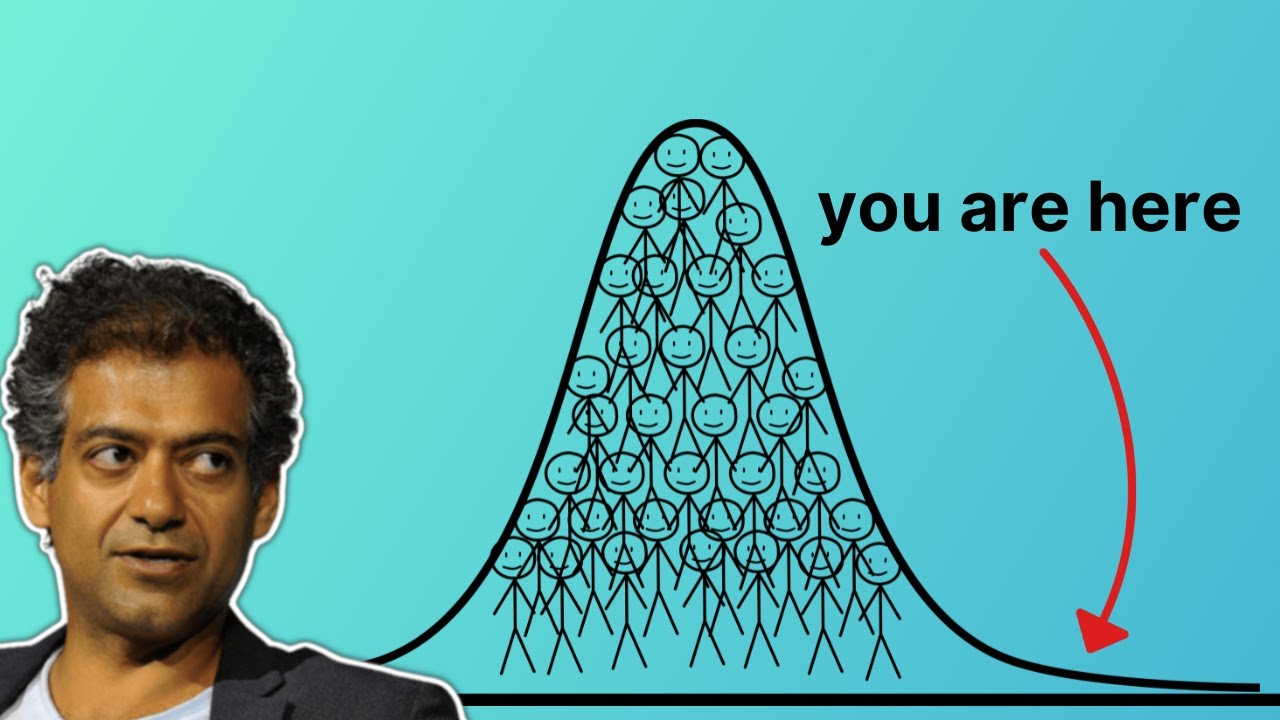
think they're being extra productive and I think they're out of their mind I think when you multitask so much you don't have time to think about anything deeply you are giving the world an advantage you shouldn't practically everybody is drifting into that mistake I didn't succeed in life by intelligence I succeed considered because I have a long attention span bet on the Timeless Navar rant also said all benefits in life come from compound interest whether money relationships love Health activities or habits I only want to be around people I know I'm going to be around
for the rest of my life I only want to work on things I know have long-term payout build yourself a great story Steve Jobs also has an excellent perspective on this he said imagine yourself as an old whole person looking back on your life your life will be a story it will be your story with its highs and lows its heroes and villains it's Forks in the road that mean everything and if you can remember that your life is a story in the making it will help you make those important decisions when you have to
decide between taking the prestigious job that pays well or the off-beat job with no future that makes your heart sink just imagine yourself looking back in your life in 50 years and you will know what path is yours you will give yourself the right advice you will intuitively know if something is part of your story or not one thing I'm frequently told is that I must have a good memory to be able to remember all of these different insights and I find that quite funny because my memory is actually super bad the truth is I
use a searchable database that I've been developing for the past 4 years I call it the doers notebook and it contains nearly 2,000 Timeless insights from the most influential doers and entrepreneurs mainly Source from books interviews and speeches I use it to create all my content and also as a consultant when I have a doubt or problem in my business because I can search any keyword and get a list of relevant insights which I can then use to make better decisions I actually made a video where I go through the list of insights I got
for the keywords sales and creative so if you want to get better at sales or learn to be more creative and also see all the features of the database and how you can get access then definitely check out the video you can go to the video by clicking on the first link below in the description

![Naval Ravikant - The Most Important Skill to Get Rich (Remastered) [w/ Mr Beast and C. Palihapitiya]](https://img.youtube.com/vi/8NHIdiUzMUI/maxresdefault.jpg)


![Naval Ravikant - The 3 MOST DANGEROUS LIES about Success [w/ MrBeast, Kapil Gupta & Mohnish Pabrai]](https://img.youtube.com/vi/INi4CdIPH5w/maxresdefault.jpg)