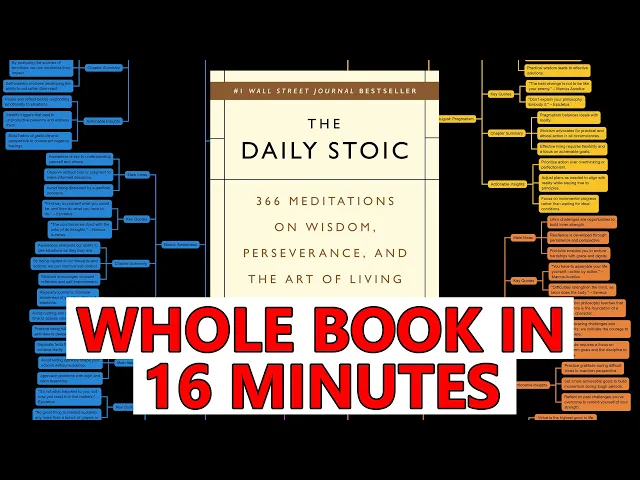
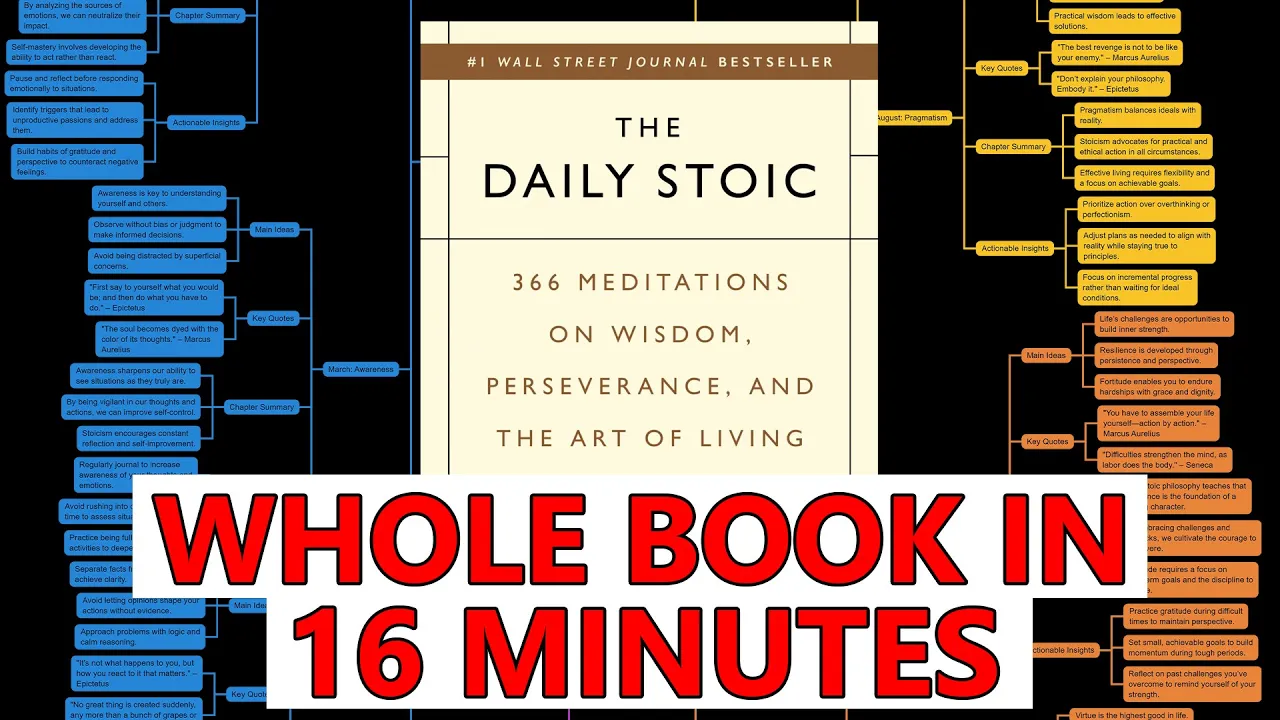
are about to fully understand the daily stoic this will give you sustained resilience peace under pressure and honest relationships let's have a productive life part one the discipline of perception January introduction to stoicism and Clarity today we're diving into the First theme from The Daily stoic which is Clarity Clarity is all about focusing on what's in your control and learning to see things as they truly are without the haze of emotions or assumptions clouding your judgment the stoics believe that much of life's struggles come from misjudging or misinterpreting events rather than the events themselves Marcus
Aurelius reminds us you have power over your mind not outside events realize this and you will find strength Clarity helps us make better decisions and avoid unnecessary stress imagine dealing with a challenging coworker if you waste energy trying to control their behavior you'll only get frustrated instead focus on what you can control your reaction and how you choose to respond this principle is simple but powerful start each day by reflecting on what's in your power to change and practice mindfulness to stay focused on what truly matters avoid distractions and don't let yourself get derailed by
external chaos with a calm and deliberate mind Clarity becomes your greatest Ally please don't forget to like the video and subscribe to the channel thank you February passions and emotions February introduces the challenge of managing passions and emotions emotions when unchecked can distort reality and lead us to impulsive decisions stoicism teaches us to handle them with reason and self-discipline Marcus Aurelius once said how much more harmful are the consequences of anger and grief than the circumstances that aroused them in us this quote reminds us that it's not just what happens to us but how we
internalize and react to it that determines our emotional state let's say you're stuck in traffic late for an important meeting anger and frustration might bubble up but what will that achieve by reflecting on your emotions you can recognize they stem from wanting control over something uncontrollable pause take a deep breath and remind yourself of what really matters identify the triggers that spark your passions and work to neutralize them before they take over build habits that help you stay grounded like gratitude journaling or or reframing problems as opportunities over time you'll cultivate the peace and resilience
to face life's challenges calmly March awareness March focuses on awareness the Cornerstone of understanding yourself and the world around you awareness sharpens your ability to observe situations objectively free from bias or superficial distractions as epic tetus said first say to yourself what you would be and then do what you have to do this emphasizes self-awareness as the starting point for growth think about your daily interactions how often do you truly listen to others or even to your own thoughts practicing awareness means paying close attention without rushing to conclusions for example if a friend seems distant
avoid assuming they're upset with you instead observe reflect and respond thoughtfully journaling can help you track your emotions and identify patterns in your behavior take time to assess situations objectively and practice being fully present the more aware you become the better you'll understand yourself and the people around you improving your decisions and relationships April unbiased thought April challenges us to separate facts from assumptions and approach life with unbiased thought often our emotions or preconceived notions influence how we interpret events clouding our ability to think clearly epicus wisely said it's not what happens to you but
how you react to it that matters this principle is a reminder to use reason and calmness in every situation picture facing a criticism at work instead of defensively assuming the worst like your boss being unfair pause and analyze the facts is the feedback valid can it help you improve when you strip away assumptions you gain Clarity and can act more effectively to cultivate unbiased thinking develop a habit of questioning your initial reactions focus on finding Solutions rather than dwelling on problems additionally seek diverse perspectives hearing others viewpoints often illuminates angles you might have missed this
disciplined logical approach will guide you toward better outcomes in any challenge part two the discipline of action May write action let's begin with the theme for May write action stoicism teaches us that virtue isn't just something you think about it's demonstrated through your actions Marcus a I put it perfectly waste no more time arguing what a good man should be be one virtue is lived not debated this means aligning your daily actions with your core values and principles no matter how small those actions may seem think of right action as building your character Brick by
Brick even small consistent actions like lending a hand to a colleague or being honest when it's inconvenient contribute to a meaningful life Zeno reminds us well-being is attained by little and little and nevertheless is no little thing itself to live with Integrity you need constant mindfulness and effort ask yourself every day are my actions today moving me closer to being the person I want to be set clear intentions reflect on whether your choices align with your values and take deliberate steps however small toward personal and social Improvement June problem solving now let's move to June
and explore problem solving the stoic saw challenges not as OB obstacles but as opportunities for growth epicus said the greater the difficulty the more glory in surmounting it it's a reminder that struggle is often a stepping stone to strength similarly senica tells us you should view problems not as obstacles but as opportunities to grow stronger with this mindset every difficulty becomes a chance to refine your resilience when faced with problems start by reframing the situation instead of focusing on what's going wrong ask yourself what can I learn from this what's within my control to change
for example imagine losing a job instead of seeing it solely as a setback consider it an opportunity to re-evaluate your career goals or acquire new skills develop strategies to remain calm under pressure and remember that failure is not the end it's a lesson use those lessons to build a better future and keep practicing resilience by approaching setbacks as challenges to overcome not barriers to avoid July Duty next in July we focus on duty duty is a Cornerstone of stoicism emphasizing responsibility both to yourself and to others Marcus Aurelius urges us to ask at every moment
is this necessary this isn't just about trimming the excess from your life it's about directing your energy toward what truly matters fulfilling your duty brings purpose and when that Duty serves the greater good it also Fosters a sense of fulfillment and resilience living with Duty means embracing your responsibilities with diligence and humility for example if you're a parent your duty might be ensuring your children feel supported and loved or at work it might mean leading by example with Integrity Marcus Aurelius also reminds us dwell on the beauty of Life watch the stars and see yourself
running with them this inspires us to reflect on how our duties connect us to the greater tapestry of life to put this into practice take time to Define your personal and professional responsibilities clearly dedicate effort to serving others without seeking personal gain and reflect regularly on how your daily actions contribute to your larger purpose August pragmatism now we come to August where the focus is pragmatism stoicism is a highly practical philosophy and pragmatism is about doing what works rather than chasing idealized outcomes Marcus Aurelius advises the best revenge is not to be like your enemy
this underscores that you shouldn't let idealism or spite dictate your actions instead do what is effective and virtuous in the moment similarly epic tetus tells us don't explain your philosophy embody it pragmatism is about living your values rather than just speaking about them pragmatism requires adaptability life rarely unfolds exactly as planned so being flexible is crucial for instance if your initial plan for a project faces unexpected delay delays a pragmatic approach might involve revising your strategy without compromising your values prioritize action over overthinking or perfectionism adjust your plans as needed staying grounded in reality while
keeping your principles intact remember it's better to make incremental progress than to wait for perfect conditions that may never come by focusing on what's achievable you can continue moving forward no matter the circumstances part three the discipline of will September fortitude and resilience let's start with September which emphasizes fortitude and resilience the stoics teach us that life's challenges aren't just hardships to endure they're opportunities to build inner strength Marcus Aurelius said you have to assemble your life yourself action by action this means that every moment every choice is a chance to grow stronger similarly senica
reminds us difficulty strengthen the mind as labor does the body challenges then are like weights at the gym they may be heavy but they make us stronger with each lift resilience is developed through persistence and perspective imagine facing a difficult project at work or a personal setback instead of being overwhelmed focus on what the situation can teach you set small achievable goals to build momentum and practice gratitude to maintain a balanced perspective reflect on past challenges you've overcome to remind yourself of your strength fortitude isn't just about surviving tough times it's about facing them with
Grace and dignity while keeping your long-term goals in view October virtue and kindness October shifts our Focus to Virtue and kindness virtue according to the stoics is the highest good in life it's not just about personal Excellence it's also about contributing to the well-being of others Marcus aelius said the only wealth which you will keep forever is the wealth you have given away kindness and compassion are integral parts of a virtuous character another reminder from Marcus kindness is Invincible even in the face of hostility kindness has the power to disarm and build Bridges acts of
kindness aren't grand gestures they can be small everyday actions that enhance relationships and Foster mutual respect for example take a moment to listen to someone without judgment or offer help without expecting anything in return stoicism encourages kindness even in difficult situations think of a heated argument instead of escalating it approach the conflict with empathy and a willingness to understand the other person's perspective by focusing on being a positive influence in your community you not only live virtuously but also Inspire others to do the same November acceptance and a morod in November we explore the theme
of acceptance and the stoic idea of amorfati or the love of Fate life is full of UN certainties and challenges but stoicism teaches us to accept life as it is epicus advises don't demand that things happen as you wish but wish that they happen as they do and you will go on well this mindset frees you from unnecessary suffering by aligning your expectations with reality Marcus Aurelius adds a blazing fire makes flame and brightness out of everything that is thrown into it in other words every event even the difficult ones can fuel your growth acceptance
doesn't mean passivity it means focusing on what you can control your actions and attitudes rather than what you can't imagine a missed opportunity or a sudden life change instead of resisting reflect on how it can shape you positively practice gratitude for both the good and bad events in your life seeing them as part of a larger picture embracing life fully including its imperfections allows you to find peace and even joy in the face of adversity please don't forget to like the video video And subscribe to the channel thank you December meditation on mortality finally in
December we reflect on mortality this isn't a morbid exercise it's about enhancing your appreciation of Life Marcus Aurelius reminds us you could leave life right now let that determine what you do and say and think recognizing the impermanence of life helps us focus on what truly matters another of his insights is it is not death that a man should fear but he should fear never beginning to live when we understand that life is finite we're more likely to prioritize meaning over trivialities meditating on mortality brings Clarity and purpose to our daily lives imagine if today
were your last what would you regret not doing use this thought to guide your actions build a legacy of virtue and kindness rather than material success Embrace each moment as an opportunity to live fully and authentically by contemplating the end we learn how to live better with purpose gratitude and a deeper connection to what truly matters let's bring everything together with the conclusion of the daily stoic the practice of staying stoic stoicism is often described as a practical philosophy it's not just something you read about it's something you live at its heart it's a guide
for navigating life's challenges with resilience and Purpose By cultivating the disciplines of perception action and will we can create a fulfilling and meaningful life this isn't about perfection it's about progress as heraclitus wisely said character is fate the choices we make every day shape who we are and ultimately our destiny consistency is key to stoicism the principles we've explored Clarity resilience virtue acceptance become powerful tools when practiced regularly imagine starting your day with a simple reflection what's within my control today what virtues can I embody in my actions these small moments of intention repeated daily
accumulate into a life of Greater peace and integrity this aligns beautifully with the Zen proverb to be calm is the highest achievement of the self calmness comes not from avoiding life's difficulties but from facing them with steady purpose to integrate stoicism into your life create daily rituals like journaling or meditation use these moments to reflect on your actions decisions and alignment with stoic principles for example example at the end of each day ask yourself did I act with Integrity did I focus on what I could control this kind of reflection builds self-awareness and keeps you
grounded additionally apply stoic ideas to small everyday decisions whether it's how you handle a stressful situation at work or a moment of impatience and traffic the practice doesn't require Monumental changes it's about subtle consistent Improvement finally don't forget to revisit key stoic texts books like the daily stoic or meditations by Marcus Aurelius aren't meant to be read once and shelv they're companions for Life offering Timeless wisdom you can return to again and again each time you'll find new insights or reminders that resonate with where you are in your journey by staying committed to these practices
stoicism becomes not just a philosophy but a way of life a path to Inner Peace resilience and meaning as we conclude remember that stoicism isn't about mastering life it's about mastering yourself through reflection action and acceptance you can navigate life's storms with Grace and emerge stronger stay committed stay curious and above all stay stoic let's take these lessons forward one day and one action at a time