In every breath, there's a hidden gateway to realms beyond our ordinary senses; an endless dance between body, mind, and spirit. Discover how the simple act of inhaling and exhaling is more than just oxygen exchange; it is a profound doorway to transformation, unity, and the ultimate mystery beyond life itself. Life, as you know it, hinges on a continuous, usually unconscious act: breathing.
You likely move through your day without paying much attention to each inhale and exhale; yet, this simple, repetitive motion is the quiet soundtrack of your existence. When you pause to notice your breath, even for a moment, you might find it comforting or calming, especially in stressful times. But have you ever stopped to consider what happens when that breath ceases altogether?
The instant it halts, something profound occurs: the body that you have inhabited your entire life transitions from animated presence to stillness, and everything you thought you knew about existence is upended. This shift isn't just physical; it's far deeper, involving the unseen core of who you are. In that split second, your identification with the physical world falls away, and your consciousness is set free—free in ways most of us struggle to imagine.
Cultures around the globe have philosophized and spiritualized this moment for centuries, trying to describe or make sense of it. Some portray it as a journey to heaven or Nirvana; others describe it as a cosmic reunion; while scientific perspectives view it as the body's natural endpoint. Regardless of the approach, a shared thread runs through all interpretation: when your breath finally stops, you don't just vanish; rather, you emerge into a reality that transcends the limits of your ordinary senses.
This idea can feel unsettling. Humans spend much of their lives preoccupied with survival, success, and day-to-day demands, rarely pondering the fragility of the breath that ties them to life. In fact, the concept that you might exist beyond physical boundaries can seem too abstract or mystical in a world where science and tangible facts dominate.
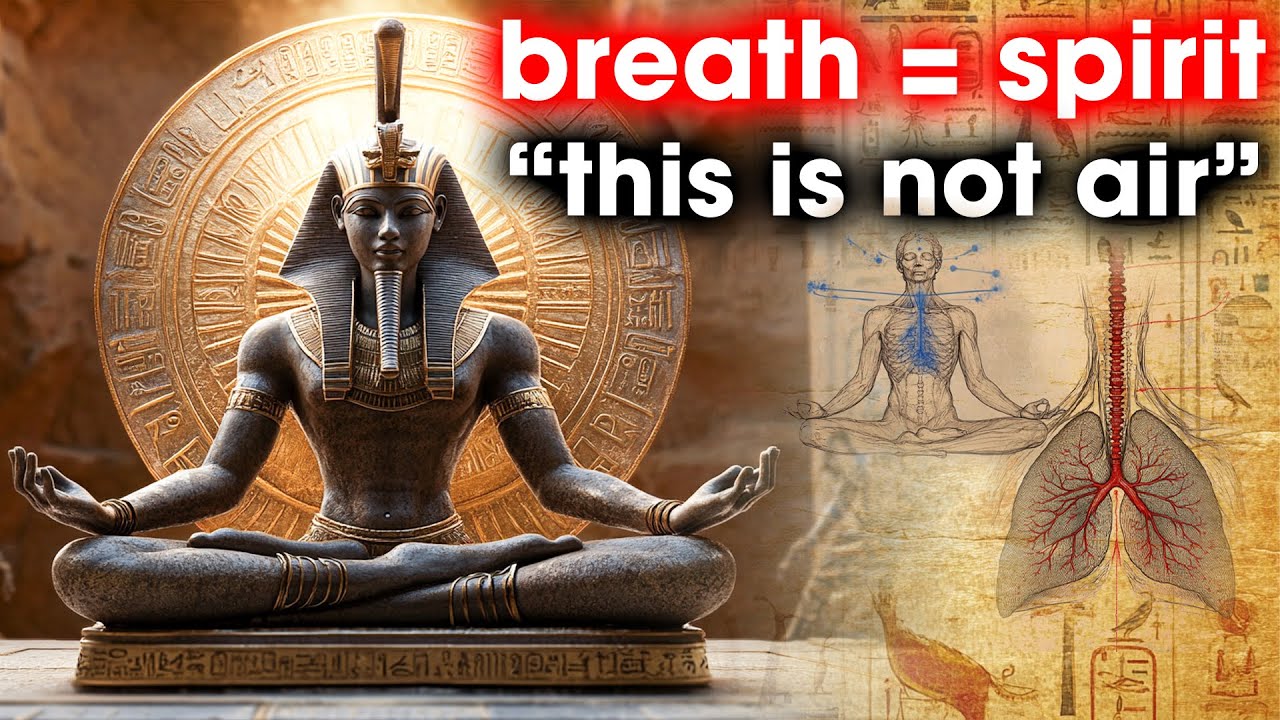
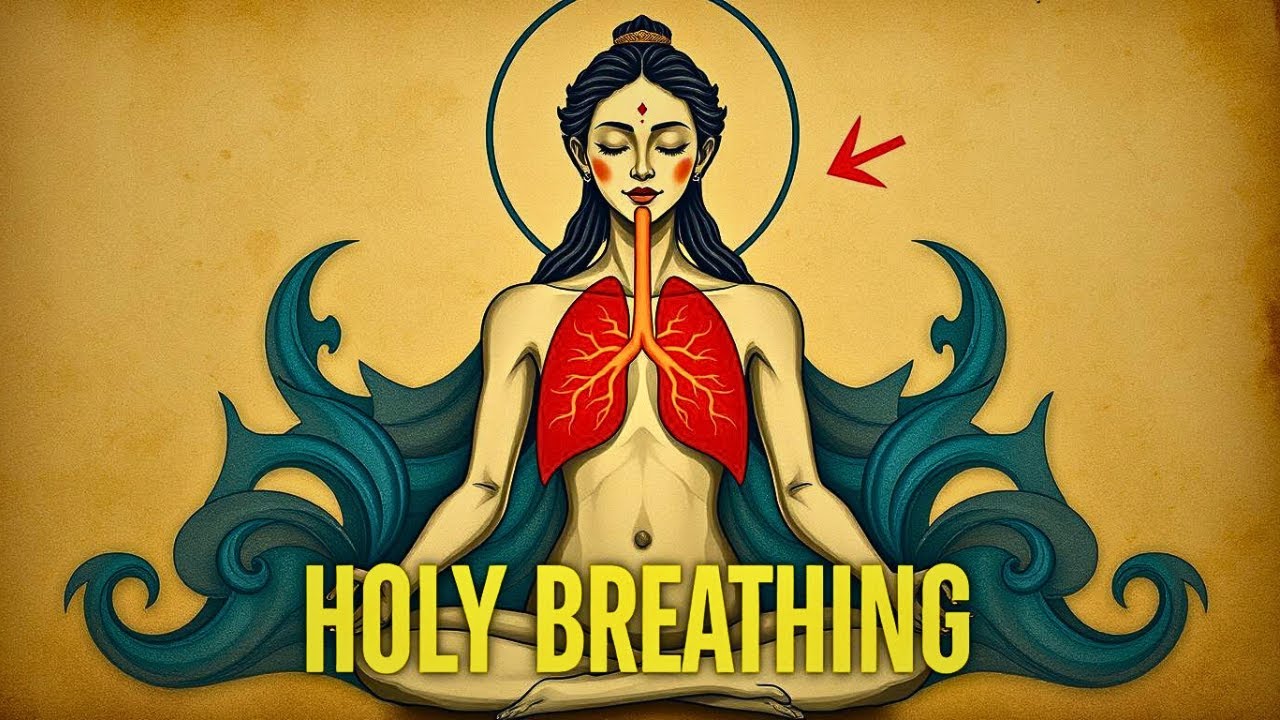
Yet consider the power of breath itself: it's more than a mere exchange of gases; more than just oxygen in and carbon dioxide out. Throughout time, seekers and mystics have described the breath as a conduit to the soul, a vital current of energy that connects you to the vast tapestry of existence. In Sanskrit, the term "Prana" captures this idea perfectly, referring not only to breath but also to the very life force sustaining all living things.
Similarly, in Chinese tradition, "Qi" or "Chi" describes a universal energy that flows through you. With each inhale, in essence, every breath you take is a step in the never-ending dance between the finite and the infinite. When that dance changes and the breath halts, the world around you transforms.
It's as though a veil lifts; you move from the comforting familiarity of a physical body to something abstract, intangible, and yet indescribably real. Many spiritual teachings posit that this transition opens a door to higher realms of consciousness—realms we only catch glimpses of during moments of deep meditation, prayer, or mystical insight. In that space of stillness, as your final exhalation dissolves, all fear and anxiety tied to the mortal coil may dissipate.
If you think about it, the end of breath could be the beginning of another form of existence, one that has been hinted at in near-death experiences, mystical visions, and the collective wisdom of sages who have dedicated their lives to understanding the mysteries beyond our sensory perceptions. Yet there is a paradox here: this ultimate shift does not merely belong to the moment of finality. The potential for that same shift—awakening, expansion, or revelation—lies in every single breath you take now.
You don't have to wait for the end to experience fragments of that heightened state. Indeed, when you consciously connect with your breath, you create a bridge to deeper dimensions of self and being. Think about the times when focusing on breathing has calmed you in a moment of panic or stress; that is just a taste of the transformative power of breath awareness.
Ancient yogis and meditation practitioners developed intricate methods of guiding and mastering the breath, believing that if one could control the breath, one could control the mind. The mind is restless, wandering, and easily distracted by life's demands. But by centering on the inhalation and exhalation, you can anchor yourself in the present.
In these still points—those sweet pauses between in-breath and out-breath—you might feel a glimpse of eternity. Consider that this practice of breath awareness is not restricted to yogis or monastics cloistered in Himalayan caves; it has been adopted in countless forms: mindfulness programs, modern therapy techniques, and even corporate wellness initiatives. Research on controlled breathing has grown in recent years, revealing measurable benefits: lowered stress hormones, reduced anxiety, and enhanced emotional resilience.
A psychology study might show that participants practicing slow, intentional breathing could reduce their physiological arousal, leading to calmer states and clearer thinking. Through every inhale, you draw upon a reservoir of potential healing energy, and with each exhale, you can let go of tensions, worries, and burdens. This is the alchemy of breath, turning air into a tool for inner transformation.
There is a reason spiritual teachers often instruct their students to take a deep breath before reacting; that single breath can realign your inner world, offering a moment of reflection before you respond to external triggers. In that fleeting instant, you tap into the heart of what it means to be mindful, alert to the miraculous now. Yet as incredible as the experience of conscious breathing can be, it also hints at deeper mysteries.
In many spiritual traditions, the period between inhalation and exhalation is considered a sacred gap—a moment brimming with the infinite. Yogis liken it to a threshold between the finite self and the boundless cosmic consciousness. Christian mystics have.
. . Referred to silent contemplative prayer in a similar way, emphasizing that in the hush between breaths, one can sense the Divine.
Zen practitioners likewise might describe a meditative state of emptiness, where thoughts dissipate and only pure awareness remains. All these traditions, in their own vocabulary, teach that the breath is both a practical anchor for daily living and a spiritual doorway to be crossed with courage and curiosity. What, then, does it mean to let that breath go entirely?
Is it a terrifying cliff from which you tumble into oblivion, or is it a gentle release into a realm of unity? Humanity's oldest stories, whether in the Vedas or the Bible, often reassure that life continues in a new dimension after the final breath. Perhaps it's a dimension less bound by linear time, where you rejoin a source of love and wisdom that has no beginning or end.
The man who traveled the world in an ancient parable, perpetually searching for the meaning of life, might find that his endless quest is only satisfied at the point where his earthly journey concludes. Only then does he realize that the meaning he sought was always accessible in the present moment, in every breath—had he only paused long enough to notice. The key wasn't the final breath itself, but the surrender, the letting go, the acceptance that he was part of an immense cosmic interplay.
On a very practical level, breath is intimately tied to emotion. Notice how your breathing shifts when you're upset, afraid, or joyful: rapid, shallow breaths for anxiety; long sighs of relief when a burden lifts; slow, gentle patterns when you are deeply relaxed. This makes sense biologically; the autonomic nervous system reacts to our internal and external environment, adjusting the breath accordingly.
However, we rarely consider how we can reverse-engineer this process. By controlling and guiding our breathing, we can significantly influence our emotional and mental states. Indeed, that is one reason breathwork practices have been increasingly integrated into psychotherapy, mental health treatments, as well as in daily routines for personal growth.
The importance of breath runs through ancient cultures like a golden thread. In Egypt, the breath of life was depicted in hieroglyphics as something bestowed by the gods. Indigenous tribes worldwide have used breath-centered rituals to enter trance states and connect with ancestral spirits.
In cabalistic Jewish traditions, each breath can be considered a hidden name of the Divine, a direct communion with the sacred. These cultural stories and practices point to a universal understanding: breath isn't merely functional; it's mystical—a direct channel to the source of creation. The notion that the breath is alive with divine power may sound poetic to the modern mind, but if you look at it symbolically, it resonates deeply with personal experience.
Every living being shares in this rhythmic exchange of oxygen, carbon dioxide, and more subtle energies, weaving us into a global tapestry of interdependence. Yet, what is the shift we speak of when the breath has stopped for good? Is it merely a biological event, or is it laden with symbolic meaning?
For many, this shift is the ultimate moment of release—a liberation from the constraints of the body, a final surrender into the cosmic ocean. Different faiths and philosophies paint this release in diverse colors: Hindus speak of moksha, the liberation from the cycle of rebirth; Buddhists of nirvana, the extinguishing of the fires of craving and delusion; Christians of heaven and an eternal union with Divine love. Though each path offers unique narratives and images, they circle back to a shared essence: the breath stopping is not an erasure but a transmutation, carrying you forward into a state beyond worldly comprehension.
The deep irony is that we often wait until life's end to explore what might be discovered in the quiet presence of our breath. In everyday living, we become so consumed by noise, social media, endless to-do lists, ambitions, and anxiety that we forget this fundamental tether to our essence. The practice of mindful breathing teaches that the portal to something eternal or transcendent is available here and now, in each ordinary second.
For a moment, imagine stopping whatever you are doing and simply focusing on your next inhalation. Feel the air pass through your nostrils, expand your chest, fill your lungs. Notice how your body responds with subtle shifts in muscles and posture.
Then, watch the exhalation—the letting go. As you repeat this, you are effectively entering a conversation with life itself, one that's been happening in the background all along. It's like tuning into a frequency you hadn't noticed.
Over time, these quiet intervals can accumulate, giving you glimpses of a dimension outside the chatter of thoughts and the urgency of tasks. Ancient yogis often took this practice to extremes, developing abilities that baffle modern observers: regulating heart rate, lowering metabolism, or entering deep states of stillness for hours or days at a time. They demonstrated that, through mastery of breath, the body could do what seemed impossible.
More important than the display of these powers, however, was the underlying message: you are far more than the physical form; you can tap into layers of consciousness that break free from usual perception. Breath is the doorway, and once you learn how to step through, you realize that ordinary reality is just a fraction of a much wider cosmic landscape. The real adventure begins when you stop identifying entirely with the constraints of your body and mind.
Another profound point is the pause that each cycle of breath contains—almost secretly—two pauses: one just after you inhale and one just after you exhale. These pauses can be so fleeting that you might overlook them unless you are meditating or practicing breathwork. But within these gaps is a domain of pure potential—like a cosmic still point, where neither the in-breath nor the out-breath has taken hold.
Might call it the void, the zero point, the emptiness that paradoxically contains all. Yogic and meditative traditions often instruct disciples to dwell consciously in these pauses, to taste the subtle essence that arises when everything else is momentarily suspended. It can be a moment of micro-transcendence, a faint echo of the grand shift we associate with the final breath.
Moreover, this awareness can shape how you approach fear—fear of dying, fear of loss, fear of the unknown. When you understand the breath as an infinite cycle, a universal rhythm, you see that stopping might not be the end but a transition. Attuning yourself to the life force in each breath also means you're training yourself to be less attached to fleeting phenomena.
Emotions, thoughts, and sensations come and go, much like breaths. This realization fosters a sense of peace, a capacity to witness life's changes with equanimity rather than clinging desperately to pleasure or recoiling from pain. You come to see both as waves passing through the ocean of your being.
In that sense, it's not just about physiological respiration; the breath symbolizes every form of taking in and letting go in your life. You breathe in experiences, relationships, knowledge, and you release them as you grow and change. Holding on too tightly can suffocate you, just as physically holding your breath induces discomfort.
True well-being emerges from this balanced flow of receiving and releasing. If you carry that understanding, then the moment the breath stops for the last time may be approached not as a catastrophe but as a culmination of natural cycles, like a perfect rest at the end of a lifetime of melodies or the final stillness after a series of waves. Sometimes, this perspective invites a radical shift in how you live day-to-day.
When you recognize that each breath is precious and that it connects you to a cosmic pulse, your priorities can transform. Petty grievances might lose their urgency; moments of genuine connection become more meaningful. Gratitude can blossom for even the smallest experiences—a simple breeze on your face, a single sip of water, the spark of understanding in a friend's eyes.
By grounding yourself in breath, you cultivate mindfulness that extends far beyond the meditation cushion. You carry it into every conversation, every challenge, every triumph, and every sorrow, seeing them as part of a grand tapestry woven from threads of ephemeral experience. Yet, even as we grow to appreciate the breath's power, we shouldn't dismiss the human fear of death or the natural grief that comes when someone's breath finally stops.
These reactions are a deeply ingrained part of our protective instincts and emotional bonds. Pain and loss are real, but perhaps an expanded awareness of breath can also help us navigate sorrow with more compassion for ourselves and others. When someone dear to us passes, we might take solace in the idea that their essence is returning to a broader wholeness.
They are not gone so much as transformed, continuing a cosmic journey that we too will one day undertake. As we consider this cosmic perspective, we step back to reflect on the teachings that have emerged throughout human history. They might differ in language or symbolism, but they converge on the notion that the moment your breath stops is not your annihilation; instead, it's an unveiling, a crossing, or reunion with something vast in life.
Glimpsing the sacred nature of breath can be a practice in remembering who you truly are beneath layers of identity, habit, and social conditioning. People who meditate, who pray, who practice breath work often report that this consistent exploration dissolves the boundary between their ordinary sense of self and a luminous, infinite awareness. Curiously, many of these individuals lose their dread of death, describing it instead as a friend or a passage, a natural event like a sunset.
Still, this doesn't mean we idealize death or seek it prematurely; rather, it suggests that by acknowledging the depth of the breath's significance, you also begin to cherish life more fully. Every day you awaken with breath in your lungs is an opportunity to experience, learn, and grow. Each moment is a chance to practice presence, to refine your awareness, to cultivate loving-kindness.
Life itself becomes an invitation to step into a conscious relationship with the life force that animates you. You realize that you have a say in how your energy moves, how you respond to challenges, and how you shape the atmosphere around you. If you have ever sat on a quiet beach watching the ocean waves, you might have sensed a parallel to your own breathing pattern.
The waves roll in, crest, and then recede. If the tide stops, the beach doesn't cease to exist, but it shifts in a way that changes the entire landscape. Something similar happens when your personal tide, the breath, stops; your presence in physical form draws to a close, but your deeper nature—that awareness that has danced through every inhale and exhale—expands into boundless ocean.
From that vantage point, the fearsome aspect of the cessation might dissolve into awe. Some spiritual texts say that the real tragedy is not death, but failing to notice the miracle of each breath while alive. In everyday life, you can experiment with noticing your breath as a conscious act.
Even once an hour, pausing for a moment to take a slow, thoughtful inhale and exhale can reintroduce you to an inner calm and clarity. You might find that problems or worries that seemed overwhelming a minute ago appear more manageable. Anger might subside, replaced by understanding or compassion.
The mind might unclench, allowing new insights or creative sparks to surface. Over days and weeks of consistently revisiting the breath, these little shifts accumulate, gradually altering your baseline state. People who commit to breath-centered mindfulness often say they become less reactive, more patient, and more openhearted.
These transformations have ripple effects, improving relationships, work. . .
Performance and overall life satisfaction. This interior work—simply paying attention to something so basic—can have far-reaching spiritual implications. Many of us wait for big events, like near-death experiences or life-shaking crises, to awaken to deeper truths; yet, the invitation is always here, in the gentle motion of your lungs.
You don't need to race off to remote mountains or sign up for extreme spiritual quests to discover the big picture; it's all contained in the small miracle of your next breath. The ancient texts remind us that if we cannot find wonder in the ordinary, no extraordinary spectacle will truly satiate our yearning for the sublime. Imagine living with a daily awareness that your next breath is not guaranteed.
That might sound daunting, but it can also inspire a fuller participation in life. Realizing that every inhale is a gift can make you more present, more grateful, and more open to love. It can also galvanize you to reconcile lingering conflicts, pursue passions that align with your heart, and live with greater authenticity.
Rather than being morbid, this daily reflection on the inevitability of the final breath can be a profound motivator to embrace your life's purpose. And when the final breath does come—whenever that may be—you may be better prepared for that transition, carrying within you a sense of acceptance rather than dread. Interestingly, even modern scientific inquiries into consciousness hint at possibilities that we do not fully grasp.
Research into near-death experiences, for instance, reveals common threads of heightened awareness, peace, and encounters with a radiant presence. While skeptics argue that these phenomena stem from neurological processes, others see them as evidence that consciousness can function independently of the body. Whichever angle you take, the discussion itself underscores how little we truly understand about the nature of consciousness and the role of breath in anchoring it to the material realm.
The scientific method, though robust, focuses primarily on empirical data, leaving room for the intangible aspects of life that are more difficult to quantify, but no less real to those who experience them. Throughout your life, your breath is a loyal companion, whether you pay attention to it or not. It's there in your moments of laughter and sorrow, in your triumphs and defeats.
It's there when you're falling asleep at night, and there when you take that first morning stretch. It's so constant that it blends into the background like the hum of a distant fan; yet, beneath its simplicity lies a mystical dimension. Each breath is woven into the vast cycles of nature: the exchange of gases with plants, the swirling of atmospheric patterns, and the micro-interplay of energy that extends far beyond our atmosphere.
When the breath finally stops, you don't sever your connection to the cosmos; you transform it. As you reflect on these ideas, perhaps you'll notice yourself breathing just a little more consciously, taking a few extra seconds to marvel at how the air enters and leaves your body. You might feel a stirring of peace or a subtle tingling of energy that wasn't visible to you before.
Maybe in the hush of these moments, an insight arises that you and the world are not two separate things, but one seamless flow mirrored in the in-breath and out-breath. And in that knowing, fear might loosen its grip, replaced by a curious sense of wonder about what lies beyond the threshold. Imagine how society might shift if people could collectively recognize the deeper significance of breath.
If each individual, at least a few times a day, paused to honor this life-giving act, to remember their connection to the whole of existence, perhaps hostility and discord would lessen. Perhaps we would see more empathy, more cooperation, more understanding—that every person is navigating the same fundamental miracle of being alive right now, with lungs that fill and empty. This shared experience might become a unifying force rather than a forgettable routine.
Indeed, social movements that incorporate breath work or group meditation often attest to a palpable sense of unity and harmony among participants—a powerful taste of what communal consciousness could be. And so, when that defining moment arrives, when the breath is no longer drawn, it might be approached as a continuation—a grand merging with what you've been connected to all along. It's not about the denial of physical death; we must acknowledge and respect its gravity.
But perhaps we can also see it as a sacred crossing—like stepping through a doorway that has been open all this time. Birth introduces you to the physical realm; breath keeps you engaged within it, and the cessation of breath releases you back into a vaster mystery. If you've explored the terrain of breath while living, that mystery may feel less forbidding and more like returning home.
Whether you subscribe to a particular religion or walk a purely secular path, the invitation remains: explore the power of your breath while you still have it; because within it resides the blueprint for what might unfold next. Even if you regard death as simply the end—a cessation without further metaphysical promise—there is still value in harnessing the breath to cultivate presence, peace, and compassion in the here and now. The quality of your life experiences improves when you live with greater awareness, and for those who hold a belief in a continuity of consciousness, each breath is an investment in preparing for a graceful transition—one that's less encumbered by fear or regret.
Reflect on what it would be like to watch your own breath without urgency, to observe it as it is—neither pushing nor pulling. You might find that your pulse slows, the tension in your muscles softens, and your mind begins to settle like sediment in a calm pool of water. Perhaps you'll discover that thinking incessantly about your daily problems is less productive than stepping into a space of.
. . Stillness and allowing insight to arise organically; or maybe you will find a deeper capacity for empathy and kindness in your interactions with others, recognizing that they too share this delicate dance of breath, equally susceptible to joy and pain.
In a fast-paced world often driven by external rewards and deadlines, pausing for breath can feel like an act of resistance or rebellion. You push the pause button on the world's frenetic pace and reclaim your inherent right to be fully present. In doing so, you might even challenge societal norms that demand constant productivity, reminding yourself and others that being is as important as doing.
Ironically, the more mindful you become of your breath, the more efficiently you might handle responsibilities, as clarity and concentration grow out of that calm center. The breath isn't just a break; it's a power source, fueling you with renewed focus and vitality. To live in this mindful awareness daily is not always easy, but incremental steps can weave this consciousness into your routine.
A few minutes at the start or end of your day can yield profound benefits over time. It may become second nature: standing in line at the store, you observe your breath; sitting in traffic, you tune into its rhythm. Even when feeling anger or frustration, you return to the wave of inhale-exhale to diffuse the tension.
This is how you integrate a centuries-old wisdom into modern living. It's not about escaping your life, but about deepening your engagement with it. The greatest teachers, from the Buddha to Christ, emphasize the kingdom of heaven or enlightenment as something accessible in the present moment, not in some distant realm.
And what more direct route to the present is there than the breath? Ultimately, when the final breath arrives, all these moments of practice may coalesce into a serene acceptance. You'll have spent your life exploring the spaces between breaths, glimpsing the vast silence into which you now fully enter.
It may be challenging for those who remain behind; for loved ones to cope with your absence, but perhaps even they can find solace in recognizing that you have merged into the source from which all breath arises. The expression of your life, your interactions, your contributions, your unique spark becomes part of a larger narrative. In that sense, though the breath stops, your essence resonates through the cosmos in ways both tangible and intangible.
And so, the invitation stands: use each breath as a teacher, a portal, a reminder. Let it guide you to see the hidden wonders of everyday life, to face the inevitability of change with openness rather than dread, and to cultivate a loving awareness that includes everyone and everything around you. By doing so, you step into a state of wholeness that doesn't end when your breathing does.
Life's fundamental rhythm will continue to resonate like a universal heartbeat, and your consciousness, which has learned to move in harmony with that rhythm, will find its rightful place in the grand unfolding of existence. In essence, you recognize that you have always been part of something limitless, and the final breath simply confirms what was true all along: you are not just the one breathing; you are the breath, interwoven with the entire cosmos.