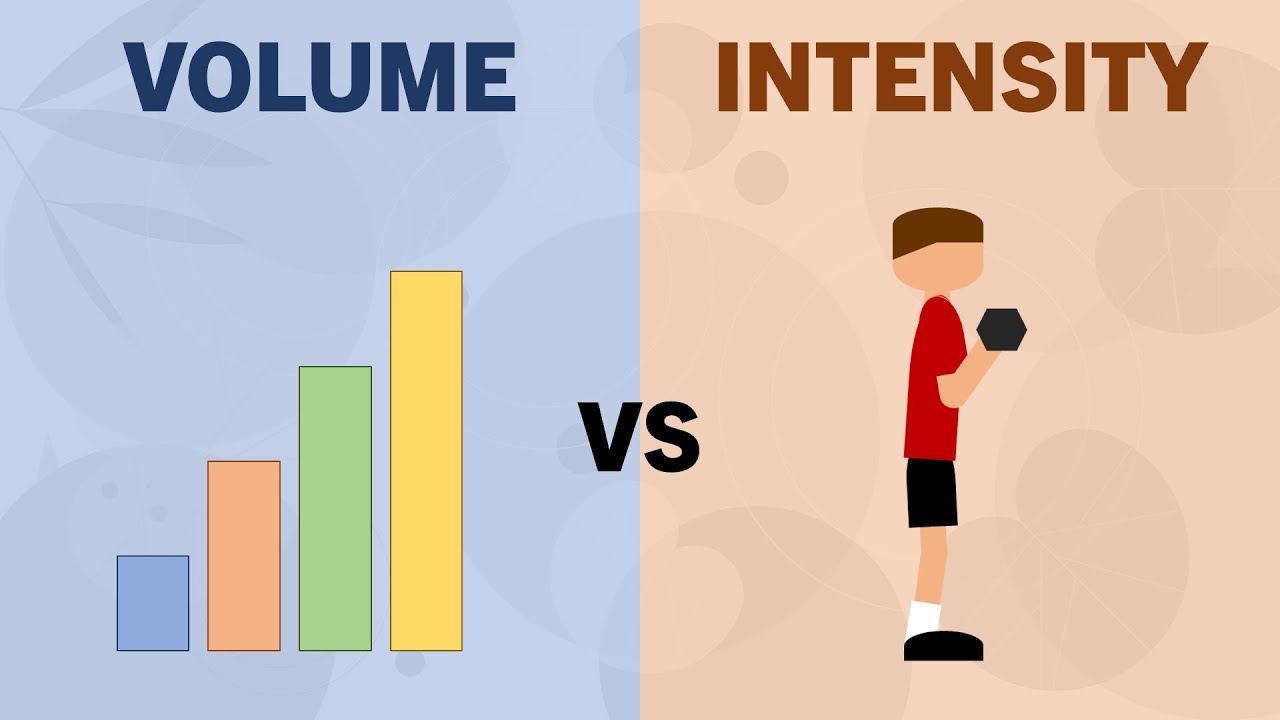
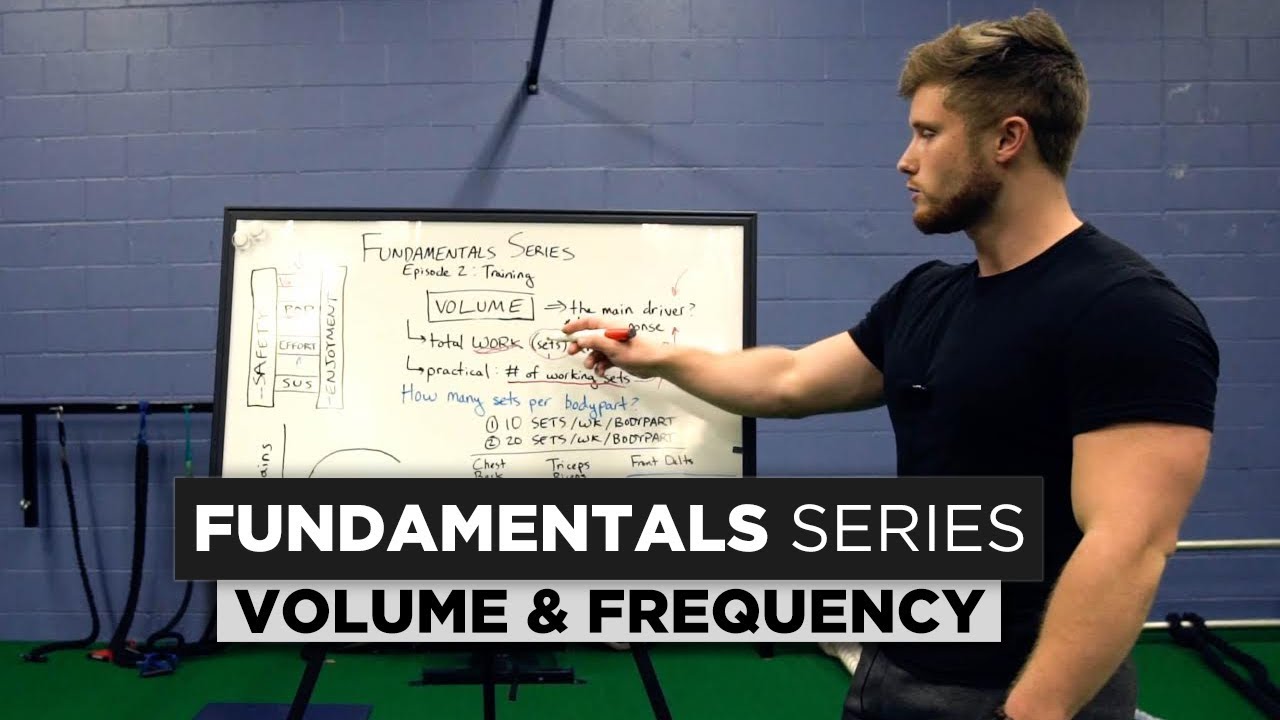
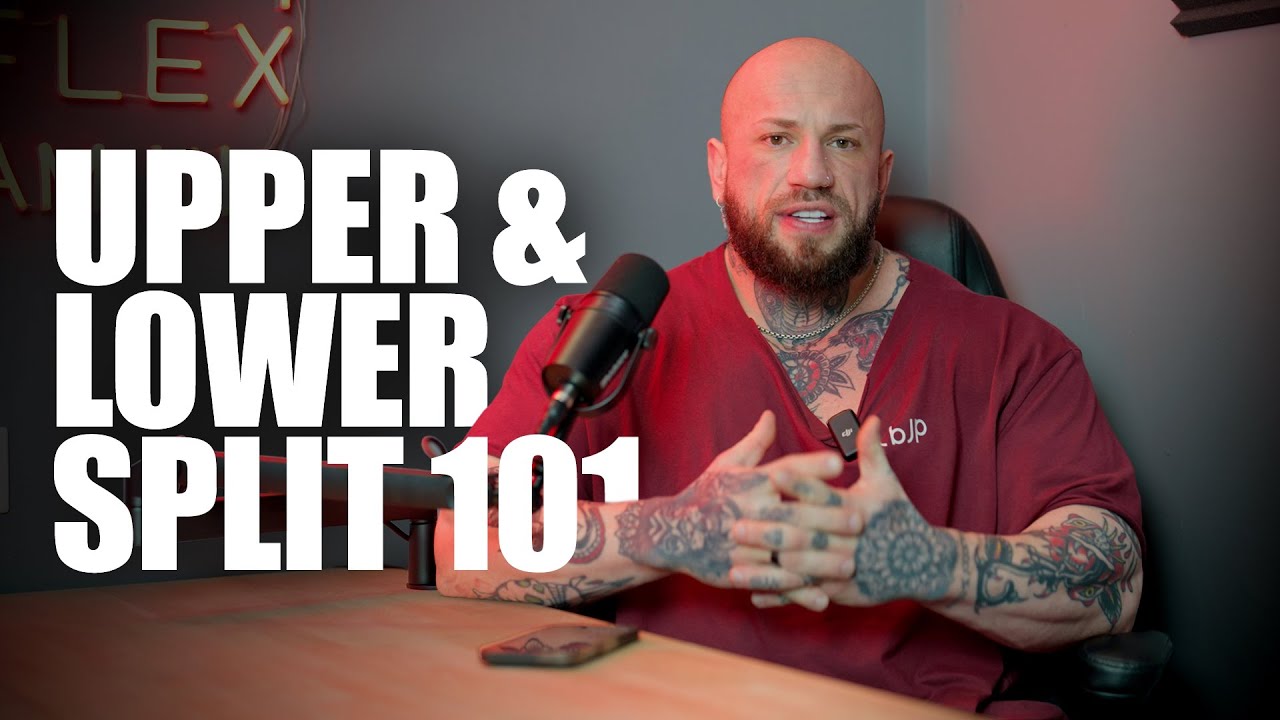
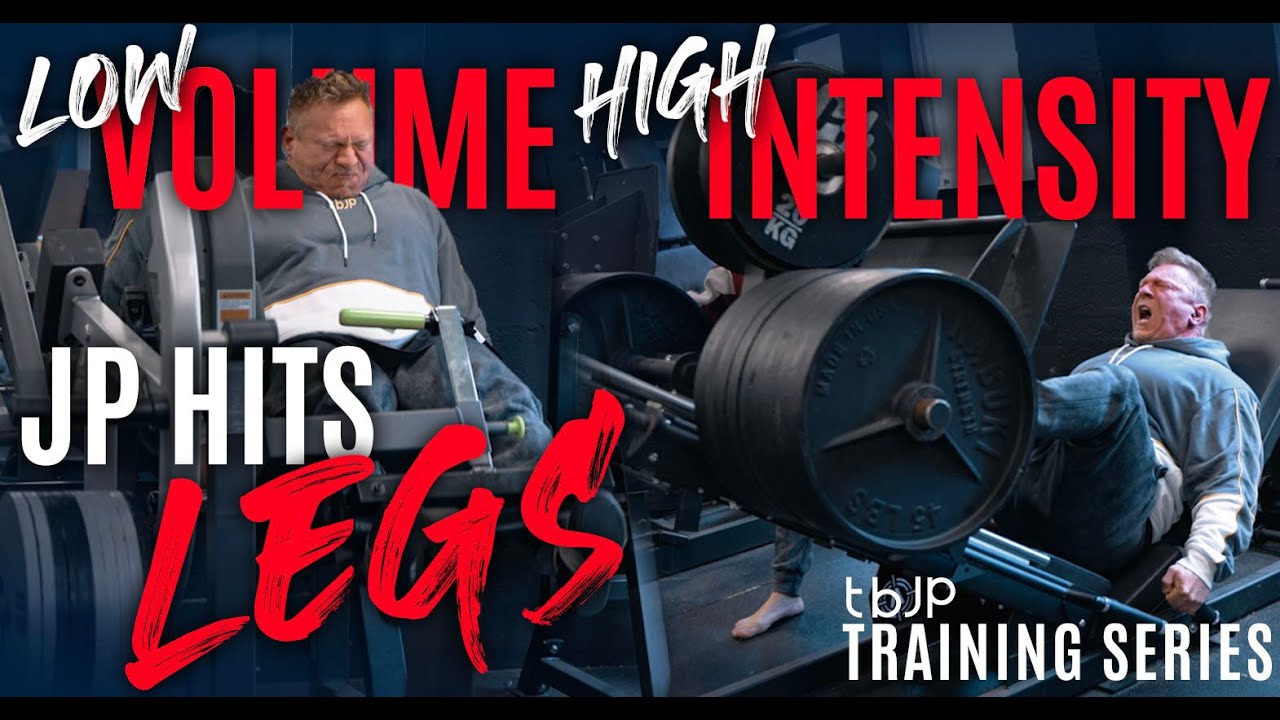
what is up guys welcome to episode two of the Train by JP education Series today we're going to cover volume frequency intensity and the balance between those three kind of pillars that will contribute to you understanding how to auto regulate your own training splits so what is what does that mean what I just said it means that everyone will have needs that will need to be adjusted as you maneuver through your training so let me give you an example if you decide to pick full body training based on your development you will not need much
volume to make progress because your development is quite low and like I said I kind of explained in my previous video that it will only take one to two sets on a body part to elicit a response that brings about good hypertrophy when that training volume is incredibly low the damage that occurs from that training is incredibly low which means recovery is very efficient and you can do that training every other day so your frequency is very very high now what's the advantage of that let's take a beginner that only needs that level of volume
and they compare themselves to a beginner that decides to pick a split body part routine so we've got beginner a we've got we're going to be these both have the same needs but beginner a chooses a full body split and then they expose themselves to let's just say on average three times a week or over two weeks it would be seven times um of training your body part over two weeks the individual that's chosen the split body part routine only exposes themselves to two stimulus over those two weeks so we've got seven lots of stimulus
versus two every time that you expose yourself to that stimulus you make a small step forward in progress so when we think over four weeks beginner a has exposed themselves to 14 lots of stimulus beginner B has only exposed themselves to four and again we extrapolate that into two months 28 versus eight etc etc if you do that math over a year which I haven't done and I I can't be asked to get that wrong off the top of my head but you can see the numbers are quite Stark in terms of their difference and
this is why training to your needs is so important because if you do not train to your needs you're going to limit your progress hugely and then again the only situation where this wouldn't be the case is that you just really really don't enjoy full body training but it's quite hard to argue the rate of progress in terms of difference because if over a two-month period we have 28 stimulus and let's say every single stimulus gives you a tiny bit of muscle gain versus eight at the end of those two months the reason that you're
doing this is to look better and then feel better and whatnot you look at beginner a and as beginning to be if I look at beginner a I'm thinking [ __ ] that dude is making progress so much faster than me although I don't enjoy full body training I I do want to kind of speed up this process at the rate at which I'm making progress so it might be worth me considering that training split because realistically it's actually more akin to my needs right now we've gone through a whole year of training in this
fashion and beginner A's needs have now changed and it now requires slightly more volume per body part to bring about the additional hypertrophy response when he increases that volume he also now increases his recovery demand so now he needs three or four sets on the body part when we train something at three or four that sets in a body part we cannot then train it at the same level of frequency because we can't recover in just two sleeps to be able to hit that again now although Doms is not a reflection of like kind of
a a shall I train shall I not train if after kind of four very hard sets on the body part if after two sleeps you're like you know what that body part's not ready to train again you can't train at that frequency so frequency will be adjusted as a reflection of your volume and as your volume increases because you need more volume because your development is increased which is another topic we'll get into again but just for now stands true because we cannot just rely on entirely low volumes to get to our progress but that's
not our end progress in terms of our goal but that's not to misconstrue that what I'm saying is that as you keep adding volume you keep growing because there is going to be an upper shelf to that but again we're getting it a little bit ahead as we increase our volume our frequency decreases so then this is where then it would be potentially an upper lower training split and then with that we're then training for something maybe every three sleeps because we would trade trade upper lower rest upper lower rest up lower rest again as
our need for slightly more volume increases and instead of now just being four sets it might be six and this is where we then we would try and push ball legs because we would potentially try and push pull legs rest Push Pull legs rest so as our volume increases our frequency decreases so this is just the point I'm trying to make the relationship between volume and frequency is key so and then your volume needs a reflection of your development and then your frequency will adjust so this is the fluidity component to training because from week
to week you might be able to do more volume and recover fine whereas some weeks you might really struggle with your recovery and then your volume will decrease but your frequency needs to stay the same because just your recovery capabilities are kind of changing as your development increases and your strength increases and your ability to train hard increases now where does the intensity component come into this if you're training everything to failure your recovery demands are going to be quite High and this is probably one of the rare situations where I do have a kind
of a firm absolute opinion and that is that we do need to train body parts to failure um again I'm going to get into another video that we will call effective reps that we cover this specifically but just for intensive purposes here we're going to consider all of our training to be failure training and when I say that it means that you cannot complete a concentric rep on your own without assistance okay so that's Trend to failure um and with the relationship of volume frequency intensity these are the three things that we need to always
balance when we structure our training program but let's just again Circle back to understanding that as volume as volume increases frequency decreases and then intensity will scale potentially up or down depending on your recovery capabilities so what I mean by that component is that we can then go beyond failure when our recovery capabilities are incredible now what do I deem to be the biggest factor that could influence our recovery capabilities there are a lot but I would say the thing that sits at the top over a long period of time would be our caloric status
if we're in a caloric Surplus our recovery capabilities are extremely efficient which means that we can take things Beyond failure by doing potentially forced reps by doing rest pauses by doing Drop sets and we can increase our stimulus and recover and make progress during a caloric deficit we're going to struggle to do this when we take a step back and then look at what factors what influences recovery as a whole um I would say chloric status is at the top when it comes to kind of your longitudinal approach to training so then in a caloric
deficit we don't add things that increase the intensity on a short-term basis the things that are going to go into influence our recovery and then our ability to increase our intensity or whatnot would be sleep hydration stress your macro and micronutrient intake so again when I break down to kind of macro level um it would be the percentage to which you need carbohydrates or fats um so there are going to be lots of things that influence your recovery on a short-term status but if we can manage those really really well so being consistent with your
sleep being consistent with your hydration being consistent with your mineral intake which will impact your hydration etc etc um again we'll get into that uh these are going to impact your ability to recover but I I wanted this video to kind of reinforce the idea that your volume frequency and intensity are extremely interlinked and that this is very important to understand the relationship between the three just to effectively structure your full body training your upper lower training your push pull legs training and your split body part training because if you don't understand the fact that
these are the three elements that will enable you to effectively structure those trainings you're going to fall down in regards to getting the most stimulus that you can or potentially over training or potentially mismanaging your progress because we we only have a certain amount of time and let's not waste it like oh I want you to be able to watch these videos and immediately step forward in your progress because you now have a greater understanding of the bigger picture and each video that we do I want you to come away from it and think okay
I know a little bit more and I can apply this immediately to myself or to my clients and I can start moving forward so this this is the volume frequency intensity video the next one that will get stuck into will be specifically how this idea applies to full body training and then how we lay out full body training and then we'll do the same for upper lower training pushable legs training split body part training and then we'll start to talk about how to maneuver between the training sessions and how to monitor our rate of progress
and how to adjust our volume and frequency independently in accordance with each split that we select so I hope again that video is useful for you useful for you guys um any help you need comment section or again trained by JP Forum section you can hit me in either of those and I hope you like the video and if you do subscribe to the channel cheers guys