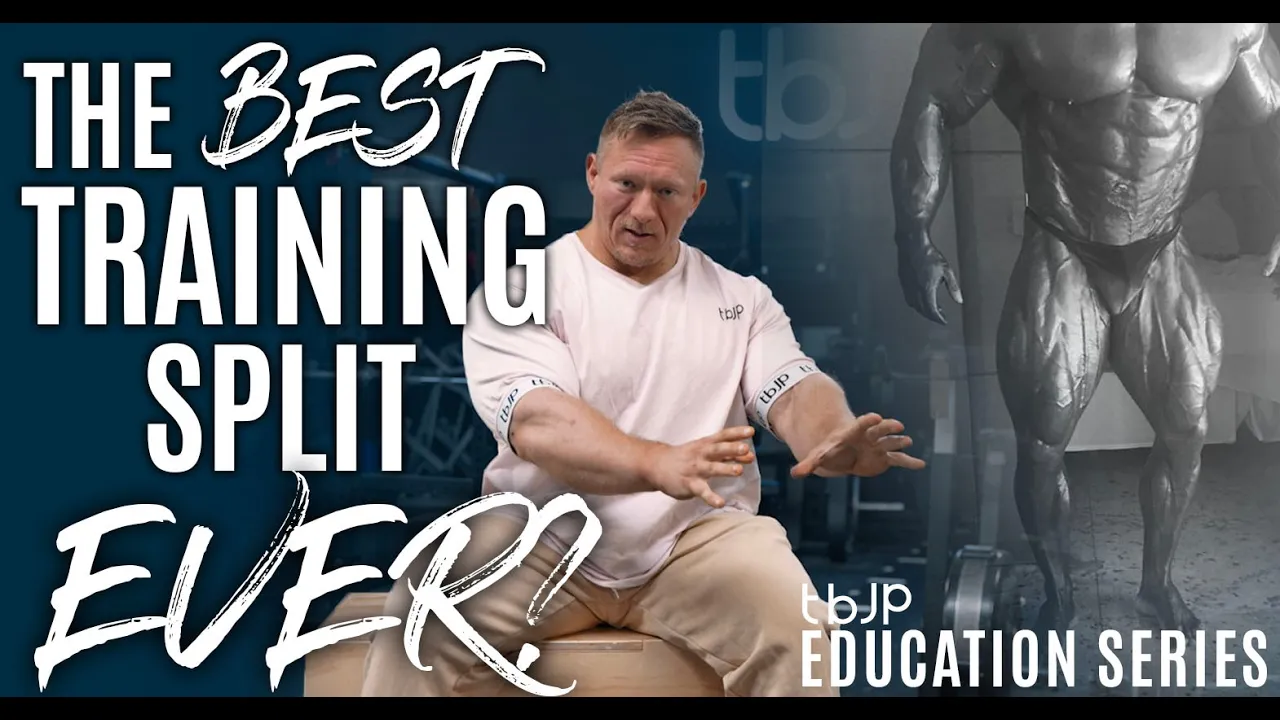
what is up guys welcome back to the education series on YouTube did you fall for the slightly click-baity title um if you did sorry no sorry uh it's funny because for those of you that haven't watched the first two videos if you check back video one there's me hopping on saying that there is no best trading split and there is absolutely no best trainings but however what we're going to cover today probably most likely is the best training split for a large majority of people and it's also going to be the training split that I
would Hazard to Guess that the majority of you haven't tried and that's full body training and I understand for a multitude of reasons why you may not have tried it I believe it to be the hardest style of training it's quite demanding mentally it's quite demanding there's no arm day there's no fun day there's no even a push that even in a push day for me is like that's an easy day um even a pool day really although I I enjoy training equally so even for me I leg day's like yeah [ __ ] bring
it um are you meant to swear in the first few minutes of a YouTube video apparently you are I don't know I think I just swore in the first three minutes so um I understand my full body for some people is is not going to be the one but I am going to explain now why you really should give this training split a go and then you can make that decision for yourself if right now in this period of time it is the best trainer spirit for you but before we get stuck into that something
that's important for me to do that we very very rarely see when people do these kind of content videos is actually just taking a moment to thank those that allowed them to have the educational content that they that they do have because everyone learns from somewhere that doesn't it doesn't just happen that you come to these ideas but sadly we very rarely see people give others credit for what they've learned and I always wonder why that is um because to me giving credit is a strength I think it it shows that you are able to
say hey firstly I don't know it all because if anyone has that perspective quite frankly they're an idiot and secondly it shows that that you're very aware that without those people you wouldn't be where you are and I think that's really really very important and I would say it's a single most important thing that we do not see in the industry today and there are there are two people first and foremost so this isn't going to be some big long thank you but it's important for me to do this because I know for a fact
that without these individuals I wouldn't be sitting here um on this content box giving you the information um Dante trudell firstly I I started reading Dante's work when I was 16 17. I was obsessed with it I'm still out um Dante to me is is the goat of training methodology I believe that he was so far ahead in his thinking and the information that he was able to put across was so phenomenal that it changed bodybuilding um I was entirely obsessed with this content I still am um and he's one of the very few human
beings that when he speaks whatever he has to say on any topic I'm just gonna listen and just absorb and just take a moment to to consider his opinions on things um so for those of you that aren't familiar with Dante which which could be some of you I would advise heading over to intensemuscle.com and finding all of the content that you can find under the username dog crap that's Dante's uh handle at the time and read all of it just all of it when I was on that Forum I never used to post I
just used to read read and read and read and read and read and then the second person that I would say taught me I have whenever I'm asked I would say this this person taught me everything I know when it comes to bodybuilding physiology and that's Dr Scott simison um who I was fortunate enough to have a coach as a coach for a very long time and also I'm extremely fortunate to to call a friend um ah and again a fantastic individual that um that really it further Advanced our understanding of bodybuilding and between the
two of them I utilize all of their training methodologies and I took what I felt was incredibly useful for me and then I applied it to kind of my own processes and then formulated my own opinions which is now what I'm putting putting forward to you guys and then that's one of the things that I'm encouraging you to do to take what is useful because I don't agree with everything Dante says there are some aspects that I just don't like and I don't agree with everything sponsors so I but largely I agree with their their
outlooks and their perspectives entirely but there were just little bits here and there I'm like okay we're through like my own training and and coaching my own clients that I then came to think okay that could maybe be adjusted um and that's what I'm encouraging you guys to do so that was a an important thank you and what I in doing that what I encourage you guys to do is to have the kind of the the respect for those that you learn from to consistently kind of pass that praise forward I think it's important um
because what I would love in 20 years time is Dante and Scott to still be recognized as individuals the have made that difference because I know without them my content wouldn't have come about and hopefully I can make a dent in people's kind of knowledge in the same way that they were able to so it will start somewhere and they will have individuals that they will kind of thank and acknowledge too um I actually don't know who they are because those two were such incredible thinkers um that uh I think that they were they were
pretty ahead of the curve um so right that's out of the way hopefully you haven't clicked off the video because um we're gonna get into the important part so the best training split ever question mark it's a good question full body training why could this be the best training ever so I talked about it in the previous video that when we think about the opportunities that we create for hypertrophy that when we train in an every other day fashion we create a stimulus that we recover from and we grow that we then set up seven
opportunities for growth over a two-week period I've said that's because three and a half opportunities for growth a week just sounds weird so seven opportunities over a two week period so when we actually equate that to a year I did work it out this time it's 182 opportunities for growth if we train a split body part are we going to train once a week that's 52 opportunities for growth at the end of the year if an individual has done something 182 times versus 52 times I believe the difference is going to be stuck I used
that word in the last video I I think that that's an appropriate description I think it's going to be very very apparent and for that reason and that reason alone I want this to be a training split that you consider and try because if you do I can guarantee that in six months time and you stick to it in the kind of the manner that we're going to outline in this video you will have made especially if you've been kind of fluffing around with your splits and whatnot you will have made more progress in six
months than you probably have done in the last two years that I can assure you and that's been consistent feedback from those that have kind of been a little bit lost with their programming when they've kind of got stuck into the full body idea they've then stepped forward unbelievably so that's that's what I that's what I really want you guys to do because it it hurts my soul when I see people a little bit lost and confused because they're potentially following the wrong advice in the sense that they're they're looking at what the pros do
and they're trying to emulate that whereas it's just not applicable whatsoever because you're leaving so much progress on the table we want 182 opportunities of growth per year so how do we make that happen um through loss of trial and error uh testing out different volumes and combinations of rep ranges I settled on just the idea that for each exercise that we do we only do one working set that is it which is going to seem really low however what's important that you guys do in this process is that you logbook your training so the
set that you take to failure you write down the exact rate and Reps that you do when you come to repeat that exercise prior to the session I want you to look at your logbook and look at the weight on the Reps that you did and before you go into this session you're going to know that you're going to beat that in some fashion you're either going to add a very small amount of weight or you're going to increase it by a rep or you're going to do both and in the beginning phases when I
say beginning for the first six months of this that's going to occur session on session without fail provided that you focus on your recovery your recovery needs appropriately and we touched on that a little bit before as well so that's just been consistent with your sleep consistent with your hydration consistent with your minerals managing your stress levels and eating appropriately focus on those things log book your sessions and progress your lifts if you can do that the progress is going to be unbelievable and you're going to not waste any time to the point where in
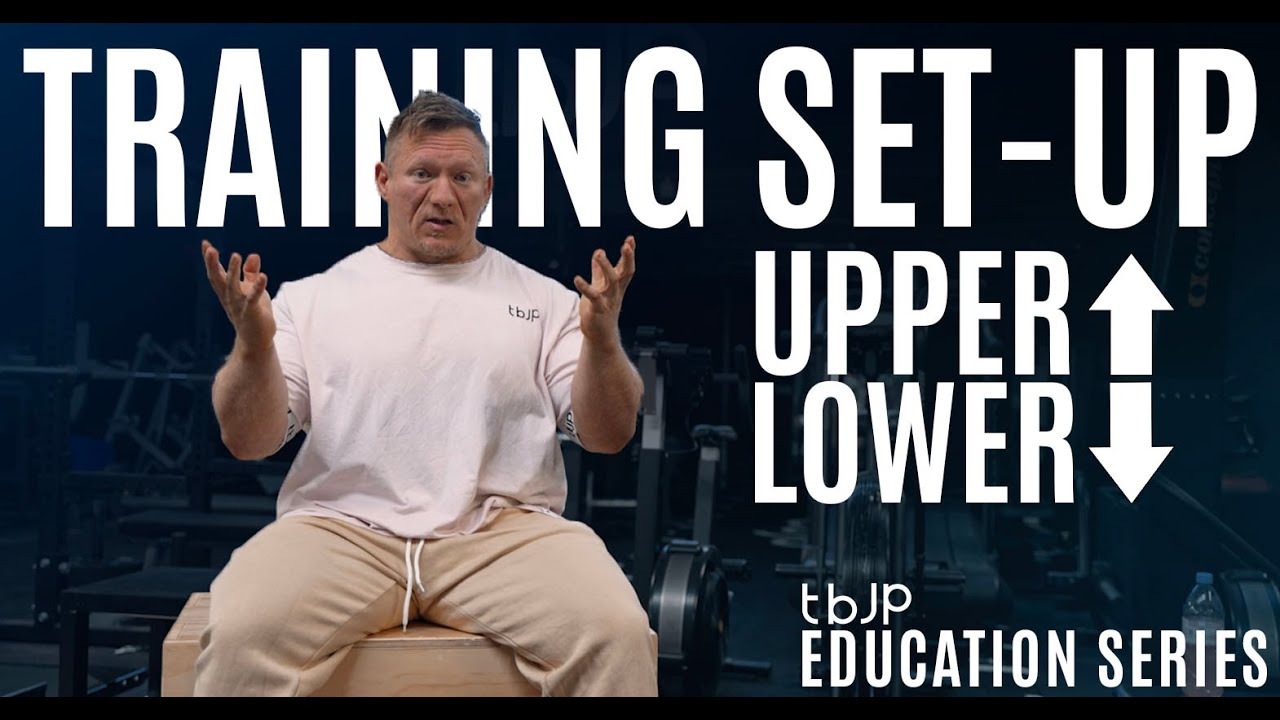
six months everyone is going to be saying to you holy [ __ ] like what are you doing like and they're going to want to then jump on board with what you're doing so how do we set this up date of grab a pen and paper as well by the way guys so day one we're gonna do heavy upper body and light lower body now the reason why I favor that approach is that as we move from session to session undulating the rep ranges in that way so heavy and light I feel like creates a
greater amount of longevity for progression because we're not just sticking in one rep range all the time and um I believe that undulation of rep ranges just allows you to then stretch out the effectiveness of this training program so we're going to do heavy upper body like lower body how does that look we're going to pick one chest Focus movement we're then going to pick one shoulder focused movement one tricep Focus movement these are all compound movements by the way we're then going to pick one lat bias movement one upper back thickness Focus movement and
then we're going to add one side delt isolation movement which is is one that I pull in and out of this bit and I'll explain why pronouncing and then one bicep isolation and one tricep isolation after that we then do one hamstring curl one quad compound one leg extension or quad isolation and then one calf raise that is it it's gonna seem like extremely low volume and for a lot of you you're not going to understand how the volume can be so low but I'm telling you now that when you aren't advanced you do not
need much stimulus to make progress all you need to do is consistently expose yourself to new loads at new reps it doesn't have to be multiple sets this is key the current literature about minimum volume requirements per week for training is absolute junk it is useless literature like and please take this from someone that isn't just a meathead because yes I'm a meathead but equally I have an undergrad in sports science from the best sports science university in the world which is Loughborough University and our masters in exercise physiology from Manchester University so understand the
science as well and I'm telling you now that the volume literature is garbage and the reason for that is because it entirely disregards the idea of someone that trains hard consistently because if you are able to consistently progress your logbook over a period of time you're going to expose yourself to loads that you have never done before at reps you've never done before consistently over a six month year period And every single time you expose your body to that novel stimulus there will be an equal opposite reaction in regards to muscular hypertrophy that is fact
so with that in mind we don't need multiple sets all we need is a novel stimulus so please please understand that the novel stimulus is key how do we hold ourselves accountable to the novel stimulus we log book our Jimmy sessions and then before going into that gym session we look at our logbook and we say to ourselves okay that's what I've got to do today and that's the hard part because over six months you're all of a sudden going to look at your doctor and you're going to think [ __ ] but the moment
you do that yes good I loved that moment because I knew that I am then getting into sessions that really changed my physique because I could look at it and think holy [ __ ] I've got to do that leg press today and I've got to do that chest press today and that shoulder press holy smokes this session is going to be hard and I assure you that when you are in that spot these sessions are going to be so physically demanding that you're not going to do want to do more than one set per
body part now the important thing again to focus on before we get into more specifics of the session is the standardization aspect of your logbooking so yes we're focusing on a new way for new reps but that cannot ever be at the sake of altering your form again I can't stress that enough guys we aren't just trying to increase our logbook for the sake of being able to write a new number in it what we're trying to create is a constant novel stimulus so that means that the weight on the bar creates a new internal
stimulus so the external stimulus creates a new internal stimulus they have to constantly equate which means there can never be an altering of your form which means standardization is key so between session to session and essentially rep to rep every single one must look the same and you must hold yourself accountable to that it is not a win in terms of your log work if you alter your form let me repeat that it is not a win you have not successfully nailed that training session if you come away from altering your form a win is
one more rep or a slight increase in weight even if it's just a 0.5 kg one pound increase with standardized form job done great set ticket off on to the next how does the training how does the training split look we're going to run through it quickly uh through pieces that we have in the gym so for my chest movement I would pick a prime incline for my shoulder movement I would pick a high incline Smith or a high incline dumbbell press for my tricep movement I would pick a dip or a narrow Smith Press
for my shoulder isolation movement I would pick a cable lateral race then for my tricep isolation I'd pick a single armed tricep push down and then for my bicep isolation I pick a cable count and for my leg work I pick a seated hamstring curl for my quad compound I'd pick a leg press then I would put a leg extension for my quad isolation and then I finished with the tire place a standing cup after that I would then pick a cable ab crunch so jot all those down the upper body work all in the
six to ten rep range the arm stuff you can increase the rep range on that slightly maybe we could just go eight to twelve we don't need to be doing citrap online just from a elbow joint health perspective and then for the legwork the lower body work I want you to focus on working in a 15 to 25 rep range every aspect is that so we we wash out our our body work and then we move on to our lower Bodywork warming up is important that your body is extremely ready to do the work but
you do not waste energy so how does that look let's say that for our 10 rep chest press movement I can do we just say just for ease I can do five plates aside on the movement so I'm gonna hop on and I'm gonna do just one plate for 10 12 reps I'm then going to do depending on how I feel that day let's say this is a day where I feel a bit tight and a bit a bit at risk and then I'm going to do one and a half plates I'm gonna jump by
half a plate and I'm gonna do six or seven reps then I'm going to do two plates and we'll do four or five reps then I'm gonna do two and a half plates and do two or three reps then I'm gonna do three plates and again just two or three reps three and a half plates one or two reps four plates one or two reps four and a half plates one rep I have warmed up now Lots the total amount of warm-up repetitions I've done is a lot more than enough but I have wasted absolutely
no energy and I've taken 90 seconds to two minutes and probably 90 seconds between warm-up sets don't rush that part because you're going to create too much fatigue then five plates ten reps to failure that's my first work now because I've done all of that pressing movement I'm now extremely warm for what would be my Smith Press so the amount of warm ups I need to do on that are now a lot less so let's say for my home can I Smith I do three plates aside for 10 reps again I would do one I
would do one plate and I would probably just do three or four reps I would then go straight to two plates and I just do one or two reps and then I'd probably then just do two and a half plates and I'd just do a rep so I haven't done three warm-ups on that one I'm not ready to work again Now we move on to the dip for the dip I might only need two warm-up sets because again everything I've done so far has fully prepared me that I then don't need to waste much time
or energy so let's say for my dip I'm gonna dip two plates hanging off me for the chain with the belt for 10 reps um I'm gonna do body weight for just three or four reps and be like yeah Everything feels great because I've done a ton of warm up I've done a couple of steps to failure I'm ready to rock I'm then just going to do a plate for again just one or two reps yeah Everything feels good I'm in the groove let's work so I've only done two warm-ups for that one when it
comes into the lateral I'd probably do one warm-up set uh I probably literally just do three or four reps on maybe one or two pins down from what I'm about to work on and also the same for the tricep and the bicep movements um like again it would just be one or two warm-up sets for the back work I'm probably going to start again with my warm-ups um because yes and very very warm but I haven't then specifically contracted those muscles so for the lat focused one I'm probably gonna do the same amount of warm-ups
as I did for my chest boot I'm probably going to do maybe five or six move-ups and just creeping up as I go but then for my back thickness I'm probably only going to do two or three warm-ups because it feels very good and I'm ready to rock so just bear that in mind with your with your warm-ups so again just to recap how that how that upper body day looks so we go chest move shoulder move tricep move lateral move then where you put your arm work is going to be a bit personal dependent
but I quite often like then going lat move back thickness move then coming back to a tricep move then a bicep move and then moving on to my leg work that's kind of one of my favorite ways to do things but you can equally put your triceps before your back work and your biceps at the end before going to your love anyway and then when you do the next training session I want you to flip the order which you do things in that you will now do heavy lower body and light upper body so the
rep ranges are six to ten we can say for the heavy work and we can do 15 to 25 for the light so we're going to do heavy upper light lower on a Monday and then we're going to do heavy lower light upper on a Wednesday and then on the Friday we're going to flip it back around again I want you to pick entirely different exercises on the Wednesday that you did to the Monday and then again I want you to pick entirely different exercises again on the next session that starts heavy upper light lower
and then again entirely different so we've got four entirely different training sessions so you've got full body a b c and d or one two three and four whatever you want to call it once you've completed all four sessions that's when you go back to session one and you beat your logbook numbers for that exercise I guarantee without a shadow of a doubt that you will progress your lifts if for some reason you don't you haven't efficiently focused on the things that influence recovery if you don't focus on those things even with the most optimal
thought out training like we've kind of just gone through you will not make progress they are very very very very important focus on those you as you get further along your ability to make progress Narrows which means then your flexibility in terms of errors with your recovery factors becomes even narrower again as a beginner you could probably eat pretty poorly sleep fairly averagely Etc and still make progress but for some of you you will need to be accurate from the word go again there is inter-individuality to that some people are Freaks and they're just going
to make progress because they're naturally more athletic they're naturally more robust for others you're going to have to be very accurate suck it up that's just the way it is now I went back through some of my old content when I made these videos previously and I just kind of skimmed over some of the questions I was consistently asked and I thought I'd cover some of those now one of the common questions was how do I know if this split is suitable for me in 2016 I did a variation of this training um and it
was under Dr Scott Stevenson's coaching and it was called fortitude training but it is full body training I trained I trained full body three times a week um and that was a very Advanced stage of my own personal bodybuilding I competed that year at 248 pounds we can put a picture here or here I don't know at some point for that um and there's 248 pounds at five foot six so my level of development there was pretty high I was able to make progress the whole way through that year that was a six month prep
on that training split it worked perfectly I wanted to go back to that split to then further allow myself to understand that training despite being an advanced trainee I didn't care whether it was right or wrong going into it I just wanted to learn and it was really important year for me and I learned a lot about training by exposing myself to I've trained full body before when I was 16 17 when I was playing rugby and it was under um the supervision of strength and conditioning coaches because that was just the most efficient way
for us to train we're trained full body or we train upper lower splits so it was very used to that way of training but it was also extremely small when I was 16 17 and the specificity wasn't for building muscles for just increasing strength in responsive power but nonetheless I thought if I'm going to learn really learn I'm going to to do full body training because if I don't expose myself to it at this level of musculature how can I then do these content videos if I didn't do that training for six months how could
I then talk about it with any real understanding and that I believe if you take your training seriously and if you're a coach is a very very good reason to consider this split what where I would kind of potentially rule some guys out because you don't have to be as obsessed with the learning aspect as I was um for me the learning part was was the was again it was everything to me because I just wanted to understand every component of training as I possibly could because I didn't want there to be any gaps where
I couldn't answer a question that was training related um so for a very long time it was just a pure Obsession of mine for some of you you might not have that level of obsession which is totally fine um and if you already have a really advanced level of musculature and you need quite a lot of detailed focused work this is where I wouldn't advise trying to revisit that full body training um it's just not going to be necessary for you and in that instance you will regress but for that I'm talking really really high
level guys and girls ones that are already Pros they already understand their own training means that's the difference for a lot of you watching this you aren't going to understand your own training needs if you even have the question in your head I don't know what the best way for me to train is I'm telling you now that you need to do this split okay and that's going to be probably 90 of you watching this content you aren't going to have that certainty because you haven't explored all those things in your mind yet to reach
that level of musculature try this spit you will be very very pleased that you did and this could very well be the best split for you but equally if it's not you've then understood the recovery requirements for the split and it's going to allow you then as a coach or someone that offers further advice which for a large majority of us now we're all doing some kind of coaching to some extent I think every bodybuilder that does bodybuilding is coaching someone else at some point so then you're going to gather knowledge and information that then
allows you to share which is a good thing try this bit guys this is this is a very very useful way for you to make training progressions I think I covered everything in terms of questions there that you might possibly ask if I missed anything please ask me specific questions to this topic like one of the things that's popping up a lot in the comments section is um what do you think about such and such and that's probably going to be something that I cover in five or six videos time and it's entirely unrelated to
this topic keep it narrowed down on this topic and then you're gonna help yourself a lot more if you can think of relevant questions for this and then if you get stuck into this training and you get a certain period through and then you have a question come back and comment on it I'll be in the comments Non-Stop and I'll make sure that everything is is covered appropriately and that you guys are not left in the dark when you have questions because I'm not just going to put out a split like this and then not
follow up and make sure that anyone that is using it doesn't have the appropriate help it's like I said to you guys this is essentially a paid service that we are doing for free so if you need help you're going to get it I hope this was helpful um as always all that jazz like comment subscribe whatever else notifications you've got to do turn them on and yeah we'll keep these coming guys cheers