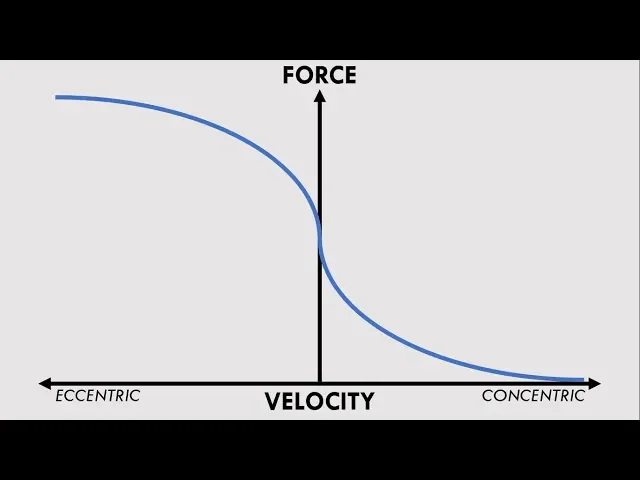
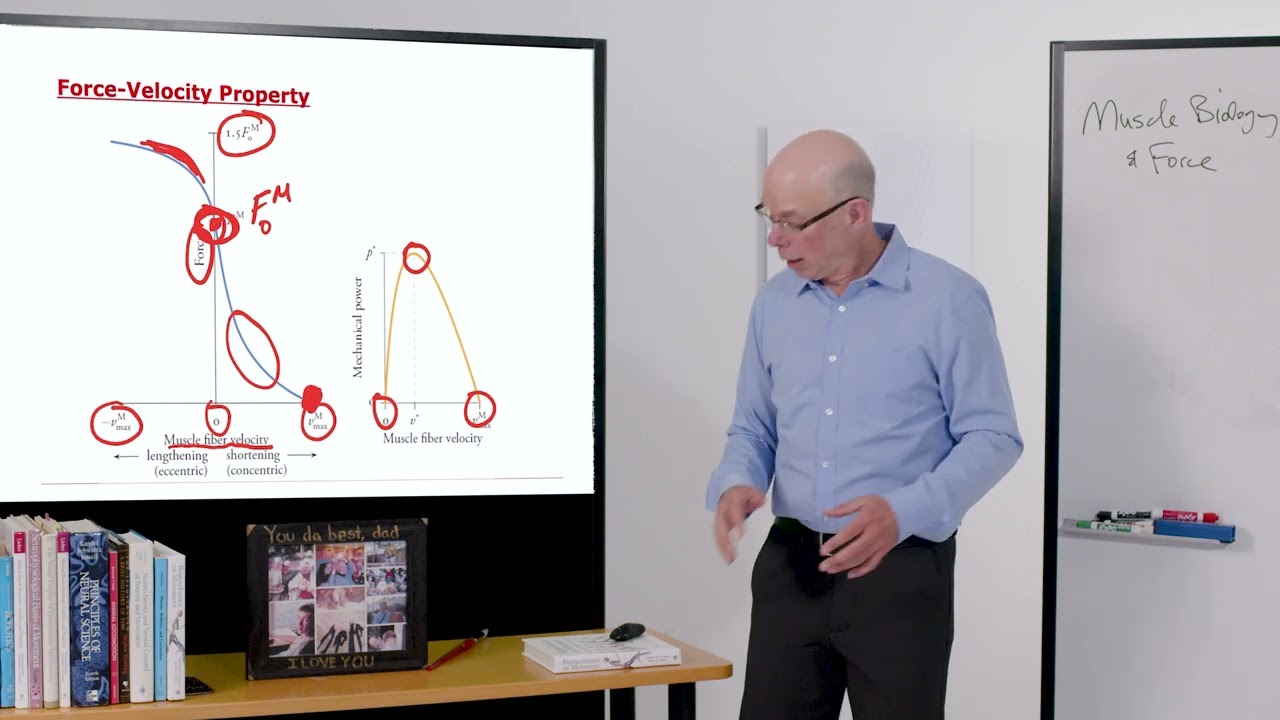
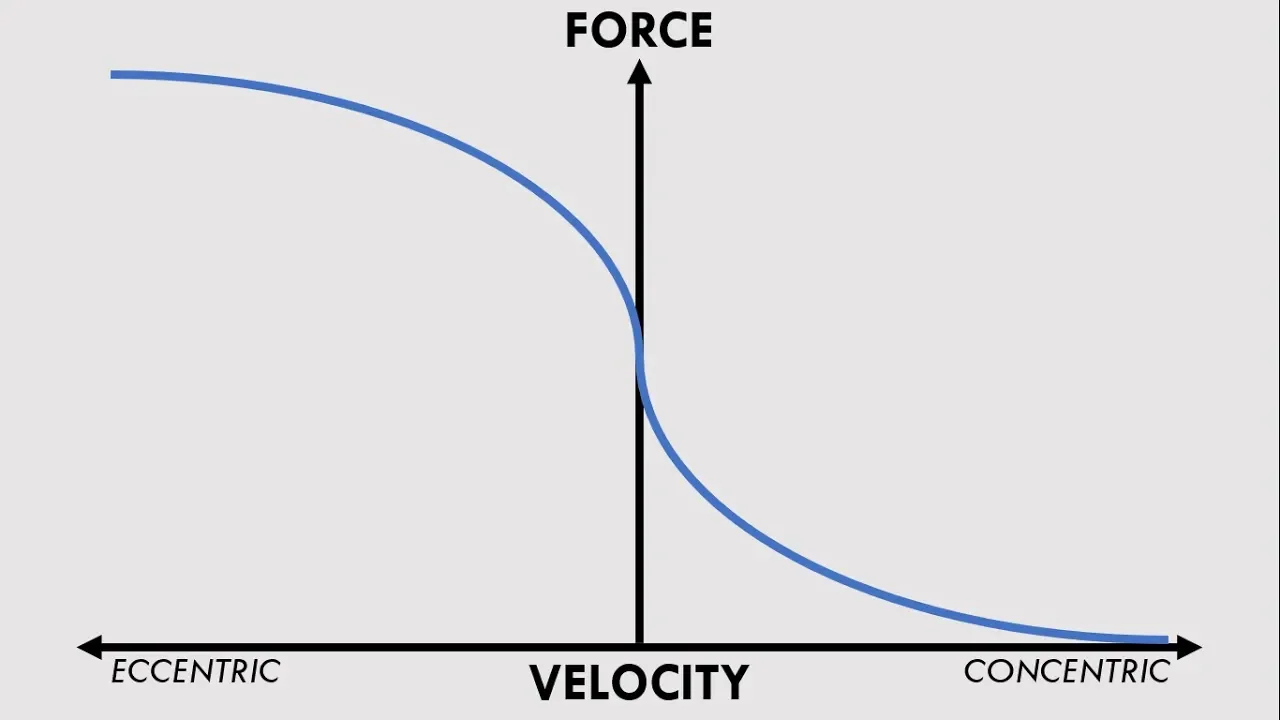
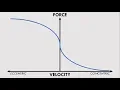
hi everyone Peter here from flow high performance and in this video we'll be covering the meaning and implications of the force velocity relationship the force velocity relationship has two parts the concentric portion and the II centric portion while the relationship is essentially the same for both it can be somewhat confusing to understand therefore we will cover the concentric portion first followed by the eccentric portion the concentric portion of the force velocity relationship is fairly intuitive concentric muscle actions are when the muscle shorten and produce force this is the typical lifting portion of exercise for example
when we stand up from the squat or lift the weight in a benchpress essentially the concentric muscle actions force and velocity have an inverse relationship with regards to athletic exercises this means that when force is high the velocity is low and when force is low velocity can be high to demonstrate this point practically let's take any fundamental barbell exercise such as a squat or bench press when the barbell is loaded with a relatively heavy weight it will move slowly even if the athlete tries to move it as fast as possible however the force produced will
be very high since the weight is heavy now if we load a relatively light weight for the same athlete and ask them to lift it as fast as possible it can be moved much quicker because the load is lighter if we reduce the weight even more the athlete can move this weight even faster again this relationship is easy to understand and makes intuitive sense now moving on to the e centric portion of the force velocity relationship an eccentric muscle action is when the muscle lengthens as it produces force for example this would occur when we
lower the weight down in a squat or lower ourself down from a pull-up during this phase force and velocity have the opposite relationship that concentrate muscle actions have this is because we can actually produce more force eccentric Li than concentrically for example you can lower more weight than your one rep max down under control in a bench press but you can't press it back up and the more and more load that is lifted eccentric Li the harder and harder it is to control because of this the weight can't be controlled as slowly eccentric Li with
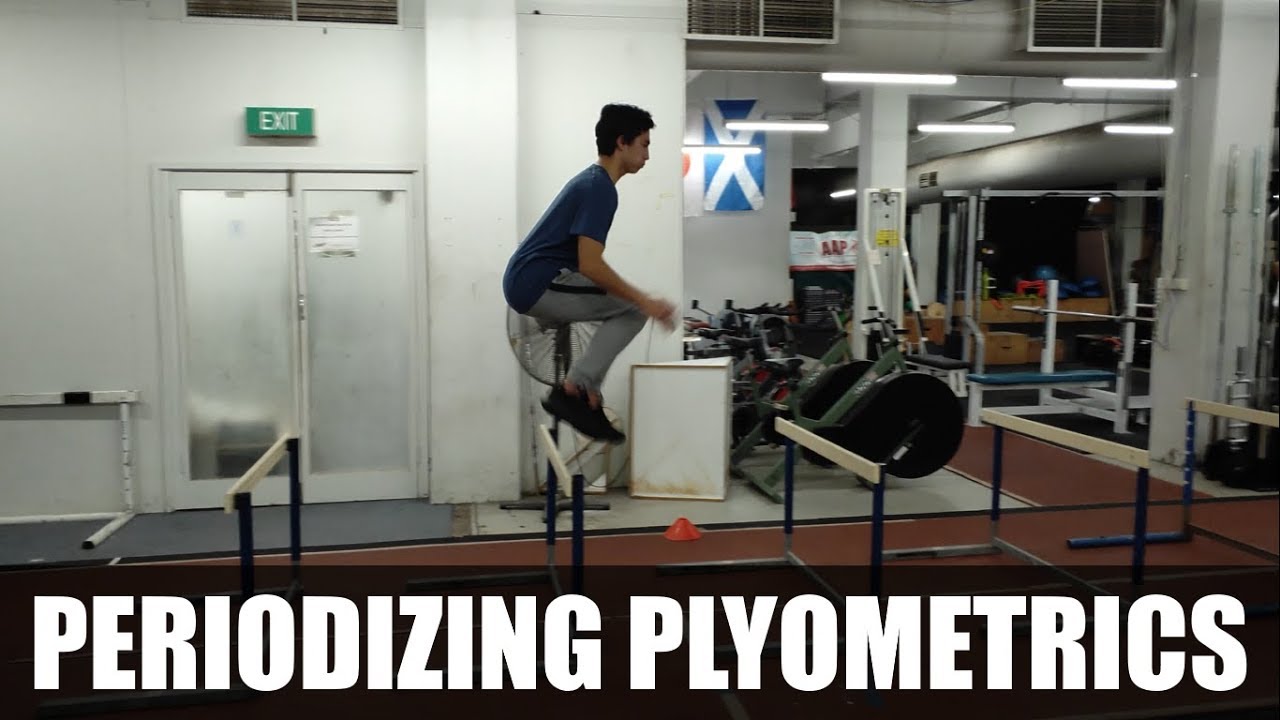
very heavy loads therefore the velocity increases so as force increases velocity of movement also increases so what does all this mean for athletic training essentially different athletic qualities exist on different parts of the force velocity relationship for example exercises such as maximal speed running and plyometrics would have very high velocity muscle contractions and the lowest potential force production while heavy weight lifting exercises would require much higher forces with very low contraction velocities and exercise such as a power clean or a way to jump may exist somewhere between these two extremes so we can target different
qualities based on how much we load and exercise and use velocity specific exercises to transfer better to sport performance for example we perform a squat jump for power development we can load the exercise more or less to alter its force velocity profile lighter weights will allow velocity to be faster and for the athlete to jump higher heavier loads will mean that more force will be produced although velocity and jump height will be reduced however it is important to ensure that regardless of the load used the intent should always be to move as fast as possible
when training for athletic performance thanks for watching and hopefully you got something out of this video remember to subscribe if you haven't already you